

- Industry Size (2026)
- USD 80.78 Bn
- Forecast (2036)
- USD 174.41 Bn
- CAGR (2026 to 2036)
- 8.0%
Bathroom Cabinets Market Size, Market Forecast and Outlook By FMI
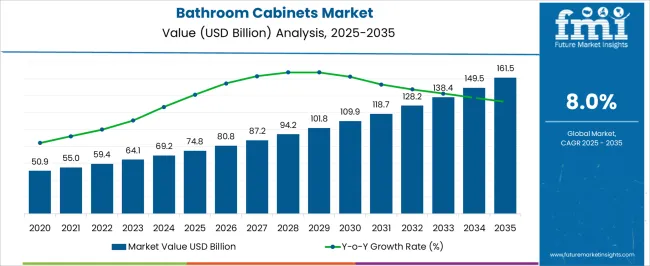
The bathroom cabinets market was valued at USD 74.80 billion in 2025, projected to reach USD 80.78 billion in 2026, and is forecast to expand to USD 174.41 billion by 2036 at a 8.0% CAGR. Residential construction growth in Asia Pacific and bathroom renovation cycles in mature housing markets sustain demand for bathroom cabinetry across wall-mounted and floor-standing configurations. Modular bathroom design trends and compact urban housing layouts are driving specification of space-efficient cabinet systems with integrated storage, mirror, and lighting functions. Material preferences are shifting from solid wood toward engineered wood, PVC, and metal-glass composites that withstand humidity better at competitive price points.
Summary of Bathroom Cabinets Market
- Market Snapshot
- The bathroom cabinets market is valued at USD 74.80 billion in 2025 and is projected to reach USD 174.41 billion by 2036.
- The industry is expected to grow at a 8.0% CAGR from 2026 to 2036, creating an incremental opportunity of USD 93.62 billion.
- The market operates across residential construction and renovation channels where design specification, material durability in humid environments, and price-tier positioning determine brand competitiveness.
- Demand and Growth Drivers
- Demand is driven by residential construction growth in China, India, and Southeast Asia where new housing completions require bathroom cabinet installations as standard fit-out components.
- Bathroom renovation cycles in mature housing markets across North America and Europe generate replacement demand as homeowners upgrade aging cabinetry for aesthetic and functional improvement.
- Compact urban housing design in high-density residential markets creates demand for space-efficient wall-mounted cabinet systems with integrated mirror, lighting, and organizational features.
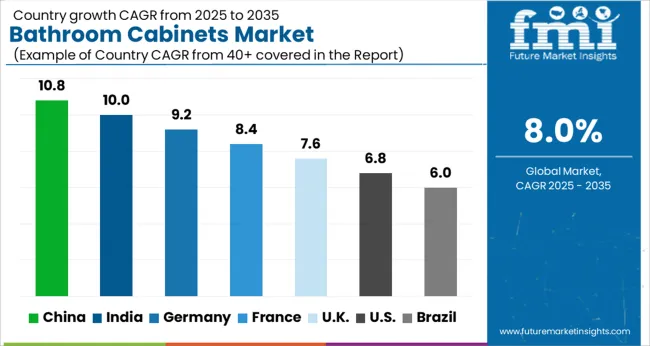
- As per FMI, among countries tracked, China leads at 10.8% CAGR, followed by India at 10.0%, Germany at 9.2%, France at 8.4%, and UK at 7.6%.
- Product and Segment View
- The market includes wall-mounted and floor-standing bathroom cabinets manufactured from wood, engineered wood, PVC, and metal-glass composites across residential and commercial specifications.
- Applications span new residential construction fit-out, commercial building bathroom installations, and residential renovation and replacement projects.
- Based on FMI's bathroom cabinets market report, With Mirror Bathroom Cabinets leads by Type with 53.0% share in 2026.
- Bathroom Cabinets in Wood leads by Material with 49.0% share in 2026.
- The scope includes market scope includes bathroom cabinets across all material types, mounting configurations, and application channels. the analysis covers global and r. Excluded are bathroom mirrors without integrated cabinet storage are excluded.
- Geography and Competitive Outlook
- China and India are the fastest-growing markets, while Brazil and USA remain mature demand bases with replacement-cycle purchasing patterns.
- Competition is shaped by manufacturing scale, distribution networks, and compliance capabilities, with key players including Geberit AG, Roca Sanitario, S.A, Nilkamal Limited, Duravit AG, Laufen Bathrooms AG.
- Analyst Opinion at FMI
- Rahul Pandita, Principal Consultant for Building Products at FMI, opines: 'In my analysis, I have observed that bathroom cabinet manufacturers who maintain both cost-optimized builder-grade product lines and design-differentiated renovation-grade lines will capture demand across the construction cycle. Those limited to a single tier face revenue concentration risk during construction downturns or renovation spending contractions. The shift from solid wood to engineered materials is lowering barriers to entry in the economy tier, which intensifies price competition and favors manufacturers with scale advantages.'
- Strategic Implications / Executive Takeaways
- Manufacturers must develop humidity-resistant engineered material product lines to compete in the growing economy and mid-range tiers driven by new construction in emerging markets.
- Renovation-focused brands should invest in modular cabinet systems with integrated lighting and smart storage features to differentiate from commodity alternatives in mature market renovation channels.
- Distribution partners must build inventory positions in pre-assembled vanity cabinet systems to meet the growing consumer preference for installation-ready products over flat-pack alternatives.
As per FMI, the bathroom cabinets market is transitioning from a builder-grade commodity segment toward a design-differentiated category where modularity, material finish quality, and integrated functionality command consumer premiums. Residential developers in urban markets are upgrading standard bathroom cabinet specifications to attract buyers in competitive housing markets. The renovation channel, which generates the majority of replacement demand in mature economies, increasingly favors pre-assembled vanity cabinet systems over custom carpentry solutions.
Country-level growth trajectories vary based on local regulatory frameworks and industrial maturity. China leads the expansion at 10.8% CAGR, followed by India at 10.0%, Germany at 9.2%, France at 8.4%, UK at 7.6%, USA at 6.8%, Brazil at 6.0%. Mature markets such as Brazil and USA continue to generate steady replacement demand while China and India benefit from expanding capacity and industrial investment.
Bathroom Cabinets Market Key Takeaways
| Metric | Details |
|---|---|
| Industry Size (2026) | USD 80.78 billion |
| Industry Value (2036) | USD 174.41 billion |
| CAGR (2026-2036) | 8.0% |
Source: Future Market Insights, 2026
Bathroom Cabinets Market Definition
Bathroom cabinets are storage furniture units designed for installation in residential and commercial bathrooms, manufactured from wood, engineered wood, PVC, metal, and composite materials. Product types include wall-mounted and floor-standing configurations. The market serves residential housing construction, commercial building fit-out, and renovation applications.
Bathroom Cabinets Market Inclusions
Market scope includes bathroom cabinets across all material types, mounting configurations, and application channels. The analysis covers global and regional market sizes, forecast period 2026 to 2036, segmentation by type, material, product, application, and geography.
Bathroom Cabinets Market Exclusions
Bathroom mirrors without integrated cabinet storage are excluded. Vanity countertops and basin units sold separately from cabinet bodies are omitted. Custom-built bathroom carpentry not manufactured as modular or pre-assembled cabinet products is excluded.
Bathroom Cabinets Market Research Methodology
- Primary Research: Analysts engaged with procurement managers, manufacturing engineers, and supply chain directors to map the decision triggers driving product upgrades and supplier qualification cycles in the bathroom cabinets space.
- Desk Research: Data collection aggregated regulatory filings, trade statistics, industry standards ratification schedules, and publicly available financial disclosures from leading participants.
- Market-Sizing and Forecasting: Baseline values derive from a bottom-up aggregation of production volumes and trade flows, applying region-specific adoption curves to project future demand velocity.
- Data Validation and Update Cycle: Projections are tested against publicly reported capital expenditure guidance and production capacity announcements from leading industry participants.
Bathroom Cabinets Market Drivers, Restraints, Opportunities
Future Market Insights analysis identifies the bathroom cabinets market as a dual-channel category where new construction drives volume growth in developing markets and renovation drives value growth in mature markets. The market exists at its current valuation because bathroom storage is a functional requirement in every residential and commercial bathroom, and cabinetry is the standard solution for integrating storage, mirror, and organizational functions in a moisture-exposed environment.
The tension in this market lies between the premiumization trend in renovation and the cost compression pressure in new construction. Renovation consumers in developed markets are willing to pay for design-differentiated, premium-material cabinets that upgrade their bathroom aesthetics. New construction developers in emerging markets prioritize cost-efficient, humidity-resistant cabinets that meet functional specifications at competitive price points. Manufacturers that serve both channels need distinct product lines for each demand profile.
- Asian residential construction scale: China and India together account for the largest share of global residential housing completions, and each new unit requires bathroom cabinet installation. Developer specification standards in urban markets are upgrading from basic builder-grade cabinets to mid-range and premium product tiers to differentiate housing offerings.
- Renovation cycle demand: As per FMI, bathroom renovation is the second most common home improvement project in mature housing markets. Average bathroom cabinet replacement cycles of 12 to 18 years in the United States and Europe generate predictable demand volumes that are less cyclical than new construction.
- Engineered material shift: PVC and engineered wood bathroom cabinets are displacing solid wood in humidity-exposed installations where moisture resistance, dimensional stability, and lower cost provide functional and economic advantages. FMI analysts note this material shift lowers the average selling price per unit while expanding total addressable volume.
Bathroom Cabinets Market Key Takeaways
Power in the bathroom cabinets value chain is distributed between large integrated bathroom brands that control specification access in commercial and developer channels, and regional manufacturers that serve renovation and retail demand through distribution networks. Global brands hold pricing power in premium tiers, while regional manufacturers compete on cost and delivery speed in mid-range and economy segments.
Pricing asymmetry separates economy-tier PVC and engineered wood cabinets, priced for volume-driven new construction, from premium solid wood and designer-finish cabinets that command three to five times higher per-unit prices in the renovation and luxury residential channels.
Sourcing fragility exists in the concentration of bathroom cabinet manufacturing in China, where integrated wood processing, PVC extrusion, and metal fabrication clusters produce the majority of global output. Trade policy changes and shipping cost volatility directly affect delivered pricing in import-dependent markets.
Brand and compliance risks center on formaldehyde emission standards for engineered wood products and moisture resistance certification. Cabinets that fail emission testing in regulated markets face import restrictions. Products that degrade prematurely in humid bathroom environments generate warranty claims and brand damage.
Geographic leverage reflects construction and renovation activity patterns. China leads growth through massive residential construction programs. India follows with urban housing expansion and growing middle-class renovation spending. Germany and France drive European demand through renovation-focused bathroom upgrade cycles. The United States sustains steady demand through both new construction and renovation channels. Brazil represents emerging growth from housing development programs.
For C-suite executives, the bathroom cabinets market is a construction-linked category where growth tracks residential housing starts in developing markets and renovation spending in mature markets. The strategic question is whether to position for volume in the new construction channel with cost-optimized products, or for margin in the renovation channel with design-differentiated premium lines, or to maintain dual-channel capability.
Key Success Factors Driving the Bathroom Cabinets Market
The industry is seeing a gradual increase in the number of bathroom renovations and remodeling due to a greater awareness of bathroom décor among consumers and a higher standard of living is expected to grow the market for bathroom cabinets. Materials used in custom countertops, such as engineered wood, cherry wood, granite, marble, etc., are experiencing a surge in demand. The broad range of patterns offered by these products, the reasonable price point, and their ability to be used in a wide variety of applications are all factors that are expected to stimulate strong growth during the forecast period.
Since mobile phone penetration is increasing, the online market is expected to grow exponentially as customers move towards devices such as smartphones for shopping for everyday items. Businesses are now establishing online business channels to acquire new customers, instead of relying on a single-dimensional approach. In response, e-commerce has become one of the world's fastest-growing industries. With the growth of the e-commerce industry over the past few years, players have shifted their strategies to meet the growing demands of customers by focusing on having an omnichannel presence that caters to the needs of products, services, and so on.
Technological innovation and Designer Furniture are expected to Grow Market Demand for Bathroom Cabinets
Consumers are seeking out new design ideas and aesthetic experiences in bathroom cabinets, which makes the market for bathroom cabinets grow. In addition, the growing number of millennials who are tech-savvy has contributed to the growth of the market in recent years.
An analysis of the real estate market revealed that 77 percent of these young buyers are looking for homes with advanced features. Smart home automation systems are currently the hottest gadgets. The market is expected to grow steadily as consumers' demand for sensor cabinets and digital cabinets in bathrooms is expected to continue to grow. For instance, AXENT has ushered in a new era of artificial intelligence that is well-suited to the youth. The AXENT Group has officially launched its first fully-intelligent bathroom cabinet in the world. It has been a challenging but exciting project that the AXENT team has been working on, resulting in an invention that is revolutionizing the bathroom industry.
Key Challenges Slowing Growth in the Bathroom Cabinets Market
Labor and raw material costs are expected to pose a challenge to the market in the coming years. Providing seamless customer experiences and internal processes is a challenge for a growing number of local market players and active stakeholders. Increasing maintenance issues as well as changes in humidity are likely to hamper the growth of these markets.
Segmental Analysis
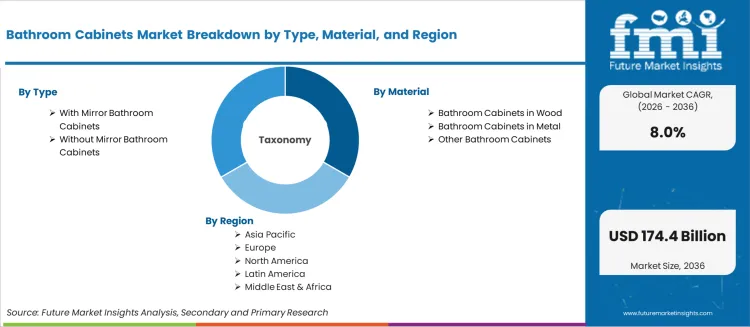
The market is segmented by Type, Material, Product, and Application and region. By Type, the market is divided into With Mirror Bathroom Cabinets and Without Mirror Bathroom Cabinets. In terms of Material, the market is classified into Bathroom Cabinets in Wood, Bathroom Cabinets in Metal, and Other Bathroom Cabinets. Based on Product, the market is segmented into Single Door Bathroom Cabinets and Multi Door Bathroom Cabinets. By Application, the market is divided into Residential Bathroom Cabinets and Commercial Bathroom Cabinets. Regionally, the market is classified into North America, Latin America, Western Europe, Eastern Europe, Balkan & Baltic Countries, Russia & Belarus, Central Asia, East Asia, South Asia & Pacific, and the Middle East & Africa.
Insights into the With Mirror Bathroom Cabinets Type Segment
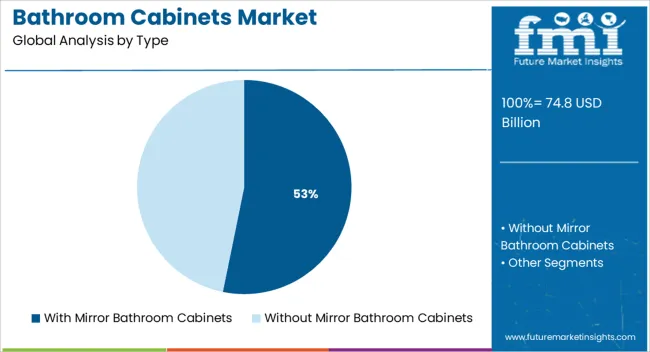
The with mirror bathroom cabinets segment is anticipated to hold 53.20% of the market share by 2026, establishing itself as the most prominent type. This dominance is supported by the dual functionality offered by these cabinets which combine storage and reflective surface utility in a single structure.
The integration of mirrors not only enhances spatial perception in compact bathrooms but also adds to design cohesion. Consumer preference for minimalistic fixtures that maximize usability has led to increased installations in both residential and commercial settings.
Furthermore, the growing popularity of LED integrated mirror cabinets and smart mirror features is strengthening this segment’s position in modern bathroom design applications.
Insights into the Bathroom Cabinets in Wood Material Segment
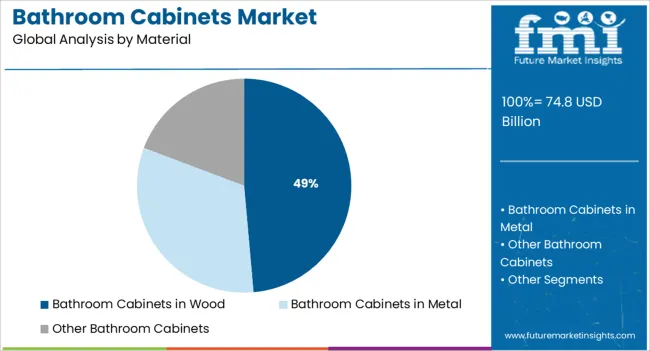
The wood material segment is expected to account for 48.60% of total revenue by 2026, making it the leading choice within the material category. This preference is driven by the aesthetic warmth, durability, and customization possibilities offered by wooden cabinetry.
Consumers value the visual richness and timeless appeal of wood, particularly in premium bathroom interiors. Advances in waterproof coatings and engineered wood alternatives have also improved resistance to moisture and humidity, addressing traditional maintenance concerns.
The flexibility of wood to complement both contemporary and traditional styles has widened its adoption across global markets, further reinforcing its leading share in the material segment.
Insights into the Single Door Bathroom Cabinets Product Segment
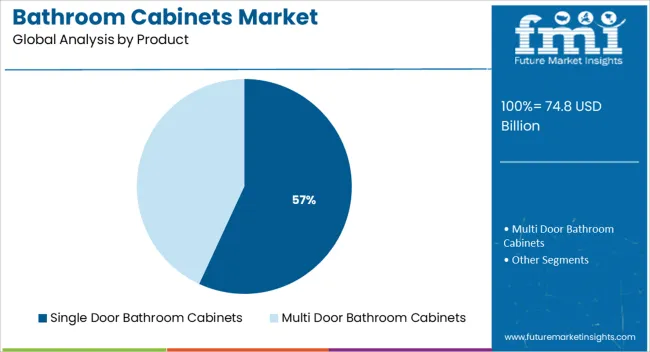
The single door bathroom cabinets segment is projected to represent 56.90% of overall market share by 2026 under the product category, positioning it as the dominant format. This popularity is attributed to its space saving design, affordability, and easy installation, making it ideal for compact and mid sized bathrooms.
These cabinets offer sufficient storage for daily essentials without overwhelming the space, aligning with modern lifestyle needs and design preferences. Manufacturers have responded to demand by offering a range of finishes, styles, and mounting options that suit a variety of bathroom layouts.
The continued focus on compact living solutions and efficient use of wall space is expected to sustain demand for single door variants across residential and commercial applications.
Top Countries Producing and Purchasing Bathroom Cabinets
How does North America Contribute to Global Bathroom Cabinet Production?
Innovation and Technologies to Drive Growth in the Bathroom Cabinet Sector
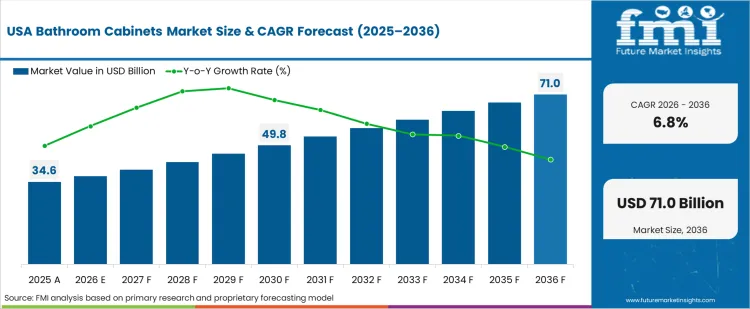
North America held a significant share of the market in 2026, with the USA having the largest revenue contribution in the market. According to forecasts, North America will have a leading market share in bathroom cabinet sales. Smart bathroom cabinet products have high revenue-generating potential in countries such as the USA, and Canada, where consumers are willing to spend more on these products. Sensor technology-enabled bathroom cabinets also offer greater convenience to consumers, thus multiplying the value of the USA market by 2.5X within the next decade.
Due to the rise in residential projects and luxury hotels, as well as house renovations and construction, this region is experiencing an increase in demand for products. Further, the regional market is expected to grow in the coming years as a result of increasing demand for high-priced and multifunctioning bathroom cabinets in the hospitality sector, in addition to key manufacturers' efforts to innovate raw materials and incorporate advanced technologies into their manufacturing processes.
What Makes Europe a Lucrative Market for Bathroom Cabinets?
European Region will spearhead Bathroom Cabinet Production in Near Future
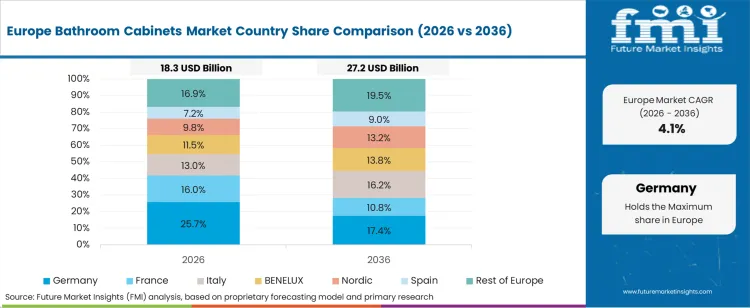
European bathroom cabinets will grow at a compound annual growth rate of more than 9.6% between 2026 and 2036. Consumer inclinations toward interior decorations and rising disposable incomes are expected to propel the European bathroom cabinet market during the forecast period.
European consumers are moving towards modern design patterns and vivid colors for bathroom cabinets, which is likely to drive the market for European bathroom cabinets. A surge in demand for sustainable wooden cabinets as well as an increase in the use of mirror wall cabinets is expected to boost the market. Over the years, manufacturers have developed products that are eco-friendlier, versatile, durable, and easy to install.
The German market is considered to be one of the most important markets in the European region for bathroom cabinets. High-quality and advanced cabinet products are available in the country, including mirrored bathroom cabinets and digital wall cabinets for bathrooms. Another key factor that contributes to the growth of the market in the region is the significant amount of consumer spending on the construction of residential and commercial properties is expected to grow the market. Low-interest rates and state investments are factors contributing to the growth of the construction industry. German bathroom cabinet market growth is mainly influenced by the rapidly expanding residential infrastructure requirements that are expected to increase in the coming years.
How are Bathroom Cabinets Impacting the Market in the Asia Pacific Region?
Changing Demographics and Economic Growth to Create Demand for Bathroom Cabinets
According to market research, Asia Pacific is the most attractive market for bathroom cabinets. With a revenue share of 39%, the bathroom cabinets market continues to dominate the Asia Pacific market. With the rise in the middle-class population and the willingness of consumers to spend on premium bathroom cabinet products, bathroom cabinet demand is expected to grow positively in the near future. According to predictions, the Indian bathroom cabinets market will grow by 2X by 2026 due to the increase in consumer spending and the recent trend of home renovations in the market.
Lifestyles in emerging markets, such as China and India, are expected to change rapidly due to urbanization, which will boost regional markets' growth in the coming years. Increasing demand for modern and elegant bathroom styles, as well as large commercial bathroom settings with mirrors, is expected to enhance the market for bathroom cabinets in this region.
Bathroom Cabinets Market Analysis by Type, Material, and End Use
What is the Most Lucrative Product Type in the Bathroom Cabinets Market?
Increasing Demand for Compact Furniture Will Lead to High Revenues in the Bathroom Cabinet Market
Based on product type the bathroom cabinet market is segmented into single-door and multi-door cabinets. According to the forecast, multi-door cabinets will grow at a CAGR of 6.9% from 2026 to 2036. Changing individual preferences, as well as accessibility to a variety of designs and materials are expected to increase consumer interest in multi-door bathroom cabinets. On a global scale, it is predicted that consumer comfort usage and aesthetics will be some of the factors that will positively impact the global demand for comfort products in the bathroom cabinets market.
As a result of urban housing development's-imposed preference for smaller spaces in order to enhance the living experience of residents, compact furniture for multi-purpose use is in high demand. The multifunctional nature of multi-door cabinets, which have a variety of uses, contributed greatly to the growth of the industry by making them much more attractive to consumers.
What is Driving the Popularity of Residential Bathroom Cabinets?
Modern and Elegant Designs Drive the Market for Bathroom Cabinets to Grow in Residential Segments
Residential bathroom cabinets accounted for more than 76% of sales of global market revenue in 2026. Residential bathroom cabinets are expected to grow at a CAGR of 12% during the forecast period. As a result of technological advancements and aesthetic enhancements over the past few years in the residential segment, there has been an increase in feature sets that can serve multiple purposes and impressive stylings to the consumers in the market. The urbanization of the world and the growth of the population have increased the demand for housing, which has led to smaller living spaces and a stronger real estate market.
A wide range of patterns and reliability are among the reasons why most consumers favor mirrored single-door cabinets. Increasing demand for new home development and renovations of existing homes has led to rapid growth in the residential market over the past few years. Increasing economic conditions and high standards of living among people, especially in developing regions, are likely to result in the market demand for bathroom cabinets increasing significantly in the near future.
Start-up Landscape in the Bathroom Cabinets Industry
What is the Contribution of New Entrants to the Bathroom Cabinet Market?
Startups are increasingly entering the market for bathroom cabinets to meet the needs of consumers in the commercial and residential sectors. Innovative cabinet companies are also known for providing innovative designs and technologies to manufacture and design bathroom cabinets. In recent years, startups have started providing a variety of solutions to the bathroom cabinets market, from online solutions to offline solutions.
Some of the start-ups in the bathroom cabinets market include-
- Sihe.com was established in 2000, in Shanghai, China. The firm is an online retailer that sells cabinets, tables, kitchen tiles, kitchen hardware, kitchen appliances, flooring, sanitary ware, bathroom hardware, bathroom tile, bathroom cabinet, etc. A broad range of products is sold on their platform, including those from domestic and international brands. A manufacturer of engineered wood flooring, Sihe Wood (Shanghai New Sihe Wood Co.) provides its products online through Sihe.com.
- Cabinet Core was founded in 2024, in Ireland. The firm is SaaS-driven authoring software designed for cabinet manufacturers. Using the application, manufacturers can design cabinets for kitchens, bathrooms, bedrooms, and offices. This application allows users to perform 3D rendering, generate furniture quotes, add shelves, doors, partitions, and drawers, and manage errors.
- The Cabinet World was founded in 2001, in Farmington, United States. A first-to-market online retailer, Cabinet World offers its products under a private label brand for kitchen and bathroom cabinets. A wide range of products is offered by this company, including kitchen cabinets, bathroom vanities, doors, etc. Additionally, the company offers custom-made services to homeowners.
- Cabinetry can be customized by selecting the material, design, dimensions, etc., and it can also be viewed in 3D. It provides free shipping on all orders above $2.5k.
Competitive Landscape of the Bathroom Cabinets Market
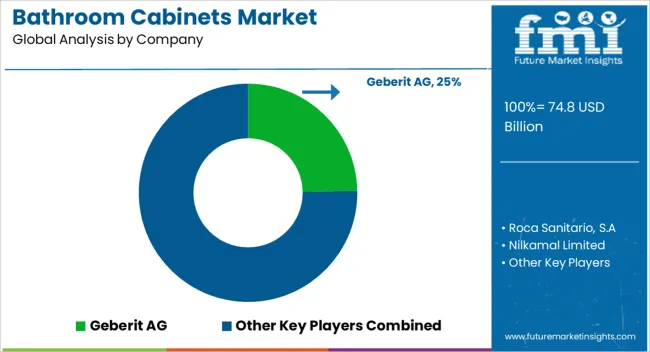
Bathroom cabinet manufacturers are aiming to meet changing consumer demands by offering innovative product designs. Leading manufacturers are working with reputed brands to launch new products that target a wider audience. For instance,
- Geberit has enhanced its Geberit ONE and iCon series through a number of product enhancements based on the company's sanitary technology expertise and design capabilities. A variety of individual design options are available with the Geberit ONE washbasin cabinet and wash tops, such as single and double washbasins or washbasins with minimalist wash tops. With the launch of the new series, there will be three new types of washbasins to choose from - a standard washbasin, slim washbasins in various sizes, lay-on washbasins in two shapes, rectangular basins, and bowl basins.
- A VitrA Bathrooms showroom has opened in Mumbai, strengthening its presence in the Indian market after opening flagship showrooms in London and Dubai. A 5500-square-foot bathroom experience center in the western suburbs offers a lot more than just a bathroom. Designed for the unique challenges of its clients, VitrA Bathrooms Mumbai Showroom is a unique combination of design inspiration, technical support, and exhibition space. Arik Levy, Ross Lovegrove, Terri Pecora, Claudio Bellini, and Arik Levy are among the designers collaborating on the showroom's designer bathroom collections.
Scope of the Report
| Metric | Value |
|---|---|
| Quantitative Units | USD 80.78 billion to USD 174.41 billion, at a CAGR of 8.0% |
| Market Definition | Bathroom cabinets are storage furniture units designed for installation in residential and commercial bathrooms, manufactured from wood, engineered wood, PVC, metal, and composite materials. Product types include wall-mounted and floor-standing configurations. The market serves residential housing construction, commercial building fit-out, and renovation applications. |
| Segmentation | Type: With Mirror Bathroom Cabinets, Without Mirror Bathroom Cabinets; Material: Bathroom Cabinets in Wood, Bathroom Cabinets in Metal, Other Bathroom Cabinets; Product: Single Door Bathroom Cabinets, Multi Door Bathroom Cabinets; Application: Residential Bathroom Cabinets, Commercial Bathroom Cabinets |
| Regions Covered | North America, Latin America, Europe, East Asia, South Asia, Oceania, Middle East & Africa |
| Countries Covered | China, India, Germany, France, UK, USA, Brazil, and 40 plus countries |
| Key Companies Profiled | Geberit AG, Roca Sanitario, S.A, Nilkamal Limited, Duravit AG, Laufen Bathrooms AG, W. Schneider+Co AG, HiB, Emco Group, Roper Rhodes Ltd, FAB Glass, VitrA Bathrooms, The Cabinet World, Cabinet Core, Sihe.com |
| Forecast Period | 2026 to 2036 |
| Approach | Forecasting models apply a bottom-up methodology starting with global installed base metrics and projecting conversion rates to specialized applications. Cross-validation uses publicly reported expenditure guidance from leading industry participants. |
Top Investment Segments in the Bathroom Cabinets Market Industry Survey
By Type:
- With Mirror Bathroom Cabinets
- Without Mirror Bathroom Cabinets
By Material:
- Bathroom Cabinets in Wood
- Bathroom Cabinets in Metal
- Other Bathroom Cabinets
By Product:
- Single Door Bathroom Cabinets
- Multi Door Bathroom Cabinets
By Application:
- Residential Bathroom Cabinets
- Commercial Bathroom Cabinets
By Region:
- North America Bathroom Cabinets Market
- Latin America Bathroom Cabinets Market
- Europe Bathroom Cabinets Market
- Asia Pacific Bathroom Cabinets Market
- MEA Bathroom Cabinets Market
Bibliography
- 1. European Committee for Standardization. (2024). EN 14749:2024 Domestic and kitchen furniture: Safety requirements and test methods. CEN.
- 2. United States Environmental Protection Agency. (2024). Formaldehyde emission standards for composite wood products (TSCA Title VI). USA EPA.
- 3. International Organization for Standardization. (2023). ISO 7170:2023 Furniture: Storage units: Determination of stability. ISO.
- 4. National Bureau of Statistics of China. (2024). Annual residential housing completions data. NBS.
- 5. Organisation for Economic Co-operation and Development. (2024). Housing construction and renovation indicators. OECD.
- 6. Bureau of Indian Standards. (2024). IS 4020:2024 Furniture: General safety requirements. BIS.
This bibliography is provided for reader reference. The full Future Market Insights report contains the complete reference list with primary research documentation.
Frequently Asked Questions
How large is the demand for Bathroom Cabinets in the global market in 2026?
Demand for bathroom cabinets in the global market is estimated to be valued at USD 80.78 billion in 2026.
What will be the market size of Bathroom Cabinets in the global market by 2036?
Market size for bathroom cabinets is projected to reach USD 174.41 billion by 2036.
What is the expected demand growth for Bathroom Cabinets in the global market between 2026 and 2036?
Demand for bathroom cabinets is expected to grow at a CAGR of 8.0% between 2026 and 2036.
Which Type is poised to lead global sales by 2026?
With Mirror Bathroom Cabinets accounts for 53.0% in 2026 based on undefined.
How is the role of Bathroom Cabinets in Wood in driving Bathroom Cabinets adoption in 2026?
Bathroom Cabinets in Wood holds 49.0% of Material share in 2026, driven by undefined.
What is driving demand in China?
China leads growth at 10.8% CAGR, supported by largest residential construction program globally creating massive volume demand for bathroom cabinets across all material and price tiers.
What is India's growth outlook in this report?
India is projected to grow at a CAGR of 10.0% during 2026 to 2036.
What is Bathroom Cabinets Market and what is it mainly used for?
Bathroom cabinets are storage furniture units designed for installation in residential and commercial bathrooms, manufactured from wood, engineered wood, PVC, metal, and composite materials. Product types include wall-mounted and floor-standing configurations.
Preview the report firsthand - request a free sample
Get SampleGet the brochure for pricing and purchase details.
Get PDFTable of Content
- Executive Summary
- Global Market Outlook
- Demand-side Trends
- Supply-side Trends
- Technology Roadmap Analysis
- Analysis and Recommendations
- Market Overview
- Market Coverage / Taxonomy
- Market Definition / Scope / Limitations
- Research Methodology
- Chapter Orientation
- Analytical Lens and Working Hypotheses
- Market Structure, Signals, and Trend Drivers
- Benchmarking and Cross-market Comparability
- Market Sizing, Forecasting, and Opportunity Mapping
- Research Design and Evidence Framework
- Desk Research Programme (Secondary Evidence)
- Company Annual and Sustainability Reports
- Peer-reviewed Journals and Academic Literature
- Corporate Websites, Product Literature, and Technical Notes
- Earnings Decks and Investor Briefings
- Statutory Filings and Regulatory Disclosures
- Technical White Papers and Standards Notes
- Trade Journals, Industry Magazines, and Analyst Briefs
- Conference Proceedings, Webinars, and Seminar Materials
- Government Statistics Portals and Public Data Releases
- Press Releases and Reputable Media Coverage
- Specialist Newsletters and Curated Briefings
- Sector Databases and Reference Repositories
- FMI Internal Proprietary Databases and Historical Market Datasets
- Subscription Datasets and Paid Sources
- Social Channels, Communities, and Digital Listening Inputs
- Additional Desk Sources
- Expert Input and Fieldwork (Primary Evidence)
- Primary Modes
- Qualitative Interviews and Expert Elicitation
- Quantitative Surveys and Structured Data Capture
- Blended Approach
- Why Primary Evidence is Used
- Field Techniques
- Interviews
- Surveys
- Focus Groups
- Observational and In-context Research
- Social and Community Interactions
- Stakeholder Universe Engaged
- C-suite Leaders
- Board Members
- Presidents and Vice Presidents
- R&D and Innovation Heads
- Technical Specialists
- Domain Subject-matter Experts
- Scientists
- Physicians and Other Healthcare Professionals
- Governance, Ethics, and Data Stewardship
- Research Ethics
- Data Integrity and Handling
- Primary Modes
- Tooling, Models, and Reference Databases
- Desk Research Programme (Secondary Evidence)
- Data Engineering and Model Build
- Data Acquisition and Ingestion
- Cleaning, Normalisation, and Verification
- Synthesis, Triangulation, and Analysis
- Quality Assurance and Audit Trail
- Market Background
- Market Dynamics
- Drivers
- Restraints
- Opportunity
- Trends
- Scenario Forecast
- Demand in Optimistic Scenario
- Demand in Likely Scenario
- Demand in Conservative Scenario
- Opportunity Map Analysis
- Product Life Cycle Analysis
- Supply Chain Analysis
- Investment Feasibility Matrix
- Value Chain Analysis
- PESTLE and Porter’s Analysis
- Regulatory Landscape
- Regional Parent Market Outlook
- Production and Consumption Statistics
- Import and Export Statistics
- Market Dynamics
- Global Market Analysis 2021 to 2025 and Forecast, 2026 to 2036
- Historical Market Size Value (USD Million) Analysis, 2021 to 2025
- Current and Future Market Size Value (USD Million) Projections, 2026 to 2036
- Y-o-Y Growth Trend Analysis
- Absolute $ Opportunity Analysis
- Global Market Pricing Analysis 2021 to 2025 and Forecast 2026 to 2036
- Global Market Analysis 2021 to 2025 and Forecast 2026 to 2036, By Type
- Introduction / Key Findings
- Historical Market Size Value (USD Million) Analysis By Type , 2021 to 2025
- Current and Future Market Size Value (USD Million) Analysis and Forecast By Type , 2026 to 2036
- With Mirror Bathroom Cabinets
- Without Mirror Bathroom Cabinets
- With Mirror Bathroom Cabinets
- Y-o-Y Growth Trend Analysis By Type , 2021 to 2025
- Absolute $ Opportunity Analysis By Type , 2026 to 2036
- Global Market Analysis 2021 to 2025 and Forecast 2026 to 2036, By Material
- Introduction / Key Findings
- Historical Market Size Value (USD Million) Analysis By Material, 2021 to 2025
- Current and Future Market Size Value (USD Million) Analysis and Forecast By Material, 2026 to 2036
- Bathroom Cabinets in Wood
- Bathroom Cabinets in Metal
- Other Bathroom Cabinets
- Bathroom Cabinets in Wood
- Y-o-Y Growth Trend Analysis By Material, 2021 to 2025
- Absolute $ Opportunity Analysis By Material, 2026 to 2036
- Global Market Analysis 2021 to 2025 and Forecast 2026 to 2036, By Product
- Introduction / Key Findings
- Historical Market Size Value (USD Million) Analysis By Product, 2021 to 2025
- Current and Future Market Size Value (USD Million) Analysis and Forecast By Product, 2026 to 2036
- Single Door Bathroom Cabinets
- Multi Door Bathroom Cabinets
- Single Door Bathroom Cabinets
- Y-o-Y Growth Trend Analysis By Product, 2021 to 2025
- Absolute $ Opportunity Analysis By Product, 2026 to 2036
- Global Market Analysis 2021 to 2025 and Forecast 2026 to 2036, By Application
- Introduction / Key Findings
- Historical Market Size Value (USD Million) Analysis By Application, 2021 to 2025
- Current and Future Market Size Value (USD Million) Analysis and Forecast By Application, 2026 to 2036
- Residential Bathroom Cabinets
- Commercial Bathroom Cabinets
- Residential Bathroom Cabinets
- Y-o-Y Growth Trend Analysis By Application, 2021 to 2025
- Absolute $ Opportunity Analysis By Application, 2026 to 2036
- Global Market Analysis 2021 to 2025 and Forecast 2026 to 2036, By Region
- Introduction
- Historical Market Size Value (USD Million) Analysis By Region, 2021 to 2025
- Current Market Size Value (USD Million) Analysis and Forecast By Region, 2026 to 2036
- North America
- Latin America
- Western Europe
- Eastern Europe
- East Asia
- South Asia and Pacific
- Middle East & Africa
- Market Attractiveness Analysis By Region
- North America Market Analysis 2021 to 2025 and Forecast 2026 to 2036, By Country
- Historical Market Size Value (USD Million) Trend Analysis By Market Taxonomy, 2021 to 2025
- Market Size Value (USD Million) Forecast By Market Taxonomy, 2026 to 2036
- By Country
- USA
- Canada
- Mexico
- By Type
- By Material
- By Product
- By Application
- By Country
- Market Attractiveness Analysis
- By Country
- By Type
- By Material
- By Product
- By Application
- Key Takeaways
- Latin America Market Analysis 2021 to 2025 and Forecast 2026 to 2036, By Country
- Historical Market Size Value (USD Million) Trend Analysis By Market Taxonomy, 2021 to 2025
- Market Size Value (USD Million) Forecast By Market Taxonomy, 2026 to 2036
- By Country
- Brazil
- Chile
- Rest of Latin America
- By Type
- By Material
- By Product
- By Application
- By Country
- Market Attractiveness Analysis
- By Country
- By Type
- By Material
- By Product
- By Application
- Key Takeaways
- Western Europe Market Analysis 2021 to 2025 and Forecast 2026 to 2036, By Country
- Historical Market Size Value (USD Million) Trend Analysis By Market Taxonomy, 2021 to 2025
- Market Size Value (USD Million) Forecast By Market Taxonomy, 2026 to 2036
- By Country
- Germany
- UK
- Italy
- Spain
- France
- Nordic
- BENELUX
- Rest of Western Europe
- By Type
- By Material
- By Product
- By Application
- By Country
- Market Attractiveness Analysis
- By Country
- By Type
- By Material
- By Product
- By Application
- Key Takeaways
- Eastern Europe Market Analysis 2021 to 2025 and Forecast 2026 to 2036, By Country
- Historical Market Size Value (USD Million) Trend Analysis By Market Taxonomy, 2021 to 2025
- Market Size Value (USD Million) Forecast By Market Taxonomy, 2026 to 2036
- By Country
- Russia
- Poland
- Hungary
- Balkan & Baltic
- Rest of Eastern Europe
- By Type
- By Material
- By Product
- By Application
- By Country
- Market Attractiveness Analysis
- By Country
- By Type
- By Material
- By Product
- By Application
- Key Takeaways
- East Asia Market Analysis 2021 to 2025 and Forecast 2026 to 2036, By Country
- Historical Market Size Value (USD Million) Trend Analysis By Market Taxonomy, 2021 to 2025
- Market Size Value (USD Million) Forecast By Market Taxonomy, 2026 to 2036
- By Country
- China
- Japan
- South Korea
- By Type
- By Material
- By Product
- By Application
- By Country
- Market Attractiveness Analysis
- By Country
- By Type
- By Material
- By Product
- By Application
- Key Takeaways
- South Asia and Pacific Market Analysis 2021 to 2025 and Forecast 2026 to 2036, By Country
- Historical Market Size Value (USD Million) Trend Analysis By Market Taxonomy, 2021 to 2025
- Market Size Value (USD Million) Forecast By Market Taxonomy, 2026 to 2036
- By Country
- India
- ASEAN
- Australia & New Zealand
- Rest of South Asia and Pacific
- By Type
- By Material
- By Product
- By Application
- By Country
- Market Attractiveness Analysis
- By Country
- By Type
- By Material
- By Product
- By Application
- Key Takeaways
- Middle East & Africa Market Analysis 2021 to 2025 and Forecast 2026 to 2036, By Country
- Historical Market Size Value (USD Million) Trend Analysis By Market Taxonomy, 2021 to 2025
- Market Size Value (USD Million) Forecast By Market Taxonomy, 2026 to 2036
- By Country
- Kingdom of Saudi Arabia
- Other GCC Countries
- Turkiye
- South Africa
- Other African Union
- Rest of Middle East & Africa
- By Type
- By Material
- By Product
- By Application
- By Country
- Market Attractiveness Analysis
- By Country
- By Type
- By Material
- By Product
- By Application
- Key Takeaways
- Key Countries Market Analysis
- USA
- Pricing Analysis
- Market Share Analysis, 2025
- By Type
- By Material
- By Product
- By Application
- Canada
- Pricing Analysis
- Market Share Analysis, 2025
- By Type
- By Material
- By Product
- By Application
- Mexico
- Pricing Analysis
- Market Share Analysis, 2025
- By Type
- By Material
- By Product
- By Application
- Brazil
- Pricing Analysis
- Market Share Analysis, 2025
- By Type
- By Material
- By Product
- By Application
- Chile
- Pricing Analysis
- Market Share Analysis, 2025
- By Type
- By Material
- By Product
- By Application
- Germany
- Pricing Analysis
- Market Share Analysis, 2025
- By Type
- By Material
- By Product
- By Application
- UK
- Pricing Analysis
- Market Share Analysis, 2025
- By Type
- By Material
- By Product
- By Application
- Italy
- Pricing Analysis
- Market Share Analysis, 2025
- By Type
- By Material
- By Product
- By Application
- Spain
- Pricing Analysis
- Market Share Analysis, 2025
- By Type
- By Material
- By Product
- By Application
- France
- Pricing Analysis
- Market Share Analysis, 2025
- By Type
- By Material
- By Product
- By Application
- India
- Pricing Analysis
- Market Share Analysis, 2025
- By Type
- By Material
- By Product
- By Application
- ASEAN
- Pricing Analysis
- Market Share Analysis, 2025
- By Type
- By Material
- By Product
- By Application
- Australia & New Zealand
- Pricing Analysis
- Market Share Analysis, 2025
- By Type
- By Material
- By Product
- By Application
- China
- Pricing Analysis
- Market Share Analysis, 2025
- By Type
- By Material
- By Product
- By Application
- Japan
- Pricing Analysis
- Market Share Analysis, 2025
- By Type
- By Material
- By Product
- By Application
- South Korea
- Pricing Analysis
- Market Share Analysis, 2025
- By Type
- By Material
- By Product
- By Application
- Russia
- Pricing Analysis
- Market Share Analysis, 2025
- By Type
- By Material
- By Product
- By Application
- Poland
- Pricing Analysis
- Market Share Analysis, 2025
- By Type
- By Material
- By Product
- By Application
- Hungary
- Pricing Analysis
- Market Share Analysis, 2025
- By Type
- By Material
- By Product
- By Application
- Kingdom of Saudi Arabia
- Pricing Analysis
- Market Share Analysis, 2025
- By Type
- By Material
- By Product
- By Application
- Turkiye
- Pricing Analysis
- Market Share Analysis, 2025
- By Type
- By Material
- By Product
- By Application
- South Africa
- Pricing Analysis
- Market Share Analysis, 2025
- By Type
- By Material
- By Product
- By Application
- USA
- Market Structure Analysis
- Competition Dashboard
- Competition Benchmarking
- Market Share Analysis of Top Players
- By Regional
- By Type
- By Material
- By Product
- By Application
- Competition Analysis
- Competition Deep Dive
- Geberit AG
- Overview
- Product Portfolio
- Profitability by Market Segments (Product/Age /Sales Channel/Region)
- Sales Footprint
- Strategy Overview
- Marketing Strategy
- Product Strategy
- Channel Strategy
- Roca Sanitario, S.A
- Nilkamal Limited
- Duravit AG
- Laufen Bathrooms AG
- W. Schneider+Co AG
- HiB
- Emco Group
- Roper Rhodes Ltd
- FAB Glass
- VitrA Bathrooms
- The Cabinet World
- Cabinet Core
- Sihe.com
- Geberit AG
- Competition Deep Dive
- Assumptions & Acronyms Used


