

- Market Size (2026)
- USD 9.4 Bn
- Forecast (2036)
- USD 15.5 Bn
- CAGR (2026 to 2036)
- 9.8%
Hostel Market Size, Market Forecast and Outlook By FMI
Summary of the Hostel Market
- Demand and Growth Drivers
- Affordable travel demand is expected to support hostel stays as students and young travelers manage trip costs.
- Backpacking circuits and short domestic trips support occupancy across city and leisure destinations.
- Digital booking tools help guests compare prices and ratings through online travel platforms before reservations.
- Shared kitchens and social lounges support guest value as hostels compete with budget hotels.
- Product and Segment View
- Private Room is expected to be a leading accommodation format as guests seek privacy with lower stay cost.
- Online Booking leads booking channel demand, supported by mobile reservations and instant availability.
- Domestic Tourist is estimated to lead tourist type demand as short trips support frequent hostel use.
- Independent Traveler is estimated to lead tour type demand as solo planning supports flexible stay selection.
- Geography and Competitive Outlook
- India remains an important growth country because youth travel and domestic tourism circuits support this market.
- Thailand is expected to maintain strong hostel demand through backpacker networks and budget leisure travel.
- The United States is projected to expand at a measured rate as established accommodation supply limits quick growth.
- Companies with booking reach and consistent guest experience are expected to defend share across major hostel hubs.
- Analyst Opinion
- Ronak Shah, Principal Consultant at FMI says, “Hostel demand is moving toward a mixed lodging model as private rooms add comfort and online booking improves visibility. Operators with strong digital access and consistent guest service can manage price-sensitive demand better. Safety upgrades and practical room improvements support stronger conversion across young travelers.”
- Hostel Market Value Analysis
- The hostel market is moving from a low cost dormitory model into a budget accommodation category with private rooms and shared social spaces.
- Adoption comes from students and backpackers. Solo travelers and short stay domestic tourists add more demand.
- The market benefits from online booking platforms as travelers compare prices and ratings before choosing a stay. Location and room availability add more support.
- Demand comes from hostel operators adding private rooms and digital check ins. Shared kitchens and coworking areas add more support as hostels compete with budget hotels.
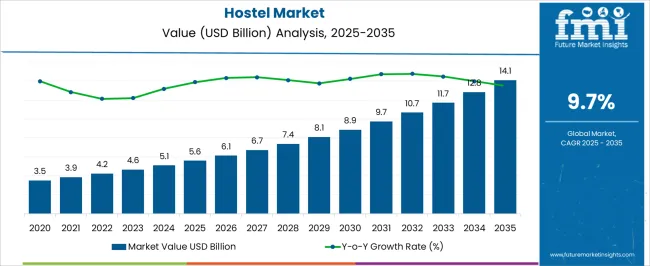
Key Takeaways
| Metric | Value |
|---|---|
| Market Size (2025) | USD 5.6 Billion |
| Market Size (2036) | USD 15.5 Billion |
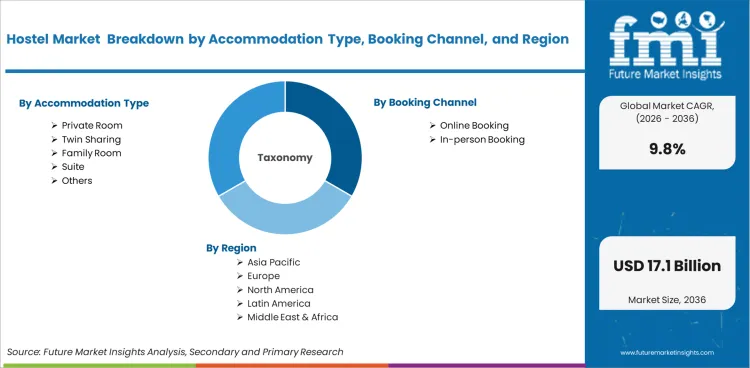
| CAGR (2026–2036) | 9.8% |
| Incremental Opportunity (2026–2036) | USD 9.4 Billion |
| Leading Distribution Channel (2026) | Online Booking |
| Online Booking Share (2026) | 55% |
| Highlight | India at 7.6% and Thailand at 7.2% are the fastest-expanding country markets in the forecast period |
Hostel Market Definitiont
The hostel market includes budget accommodation services offered through shared rooms and private rooms for domestic and international travelers. Many properties operate near city centers and serve guests comparing hostel stays with alternative accommodation choices before booking. Hostel operators serve students and backpackers through affordable lodging with shared social spaces and flexible booking options.
Hostel Market Inclusions
Market scope encompasses commercially operated hostel accommodation services categorized by accommodation type, booking channel and tourist type. Coverage includes private room, twin sharing and family room demand across online travel channels used for hostel reservations. Revenue sizing covers domestic tourist and international tourist stays across tour type, consumer orientation and age group from 2026 to 2036.
Hostel Market Exclusions
The scope does not include conventional hotels, serviced apartments or student dormitories without commercial traveler access. Short-term rentals are excluded unless they operate under a hostel accommodation model comparable with short-term vacation rental supply. Foodservice revenue and local tour income are excluded unless directly bundled into hostel accommodation receipts.
Hostel Market Research Methodology
- Primary Research: FMI analysts spoke with hostel operators, accommodation platform managers, travel service providers, and budget travel specialists across important travel markets.
- Desk Research: Combined data from hostel booking patterns, youth travel demand, accommodation pricing, and regional tourism activity.
- Market sizing and forecasting: Added revenue from private rooms, shared rooms, online bookings, in-person bookings, domestic tourists, and international tourists from the bottom up with regional adoption curves.
- Data validation: Cross-checked estimates against hostel occupancy patterns, booking channel trends, country-level tourism movement, and operator-level accommodation revenue indicators.
Why is the Hostel Market Expanding?
- Budget travelers are choosing hostels for lower room cost and social spaces near city-center travel districts.
- Private rooms are broadening hostel appeal among guests seeking personal space and affordable stays during short trips.
- Digital booking platforms improve visibility for hostel operators as travelers compare prices and guest ratings before reservations.
Affordable lodging demand is increasing as travelers look for social stays and controlled room cost. Hostel operators benefit from guests seeking access to city centers at a price below full service hotel rates. Private rooms add value for travelers seeking privacy and comfort inside budget accommodation. Alternative accommodation demand supports this trend as guests compare cost and experience before booking.
Hostels support education travel and short domestic trips across major cities. Students and young professionals use hostels for temporary stays near campuses and business districts. Shared lounges and coworking corners help properties serve digital nomads while keeping a hostel model rather than a full co living format. Boutique hostels and poshtels expand the potential guest base across urban travel.
Digital platforms increase market access through price comparison and guest reviews. Hostel operators use online booking tools to fill beds and manage private-room inventory during peak periods. Guests evaluate cleanliness, safety and location before selecting a property. Review performance remains important as hostels compete with budget hotels and short-term rentals in crowded destinations.
Market Segmentation Analysis
- Online Booking is estimated to account for 55% share in 2026, supported by mobile reservations and real-time availability.
- Domestic Tourist is projected to represent 52.7% share in 2026, due to short trips and regional travel demand.
- Private Room is expected to hold 33.1% share in 2026 as comfort and privacy improve hostel appeal.
The hostel market is divided into accommodation type, booking channel, tourist type, tour type and age group. Accommodation type includes private room, twin sharing, family room, suite and other stay formats. Booking channel covers online booking and in-person booking. Tourist type includes domestic tourist and international tourist. Tour type covers independent traveler, group trip, family trip, student trip and corporate traveler. Age group coverage includes 15 to 25 Years, 26 to 35 Years, 36 to 45 Years and 46 to 55 Years.
Insights into the Private Room Accommodation Segment
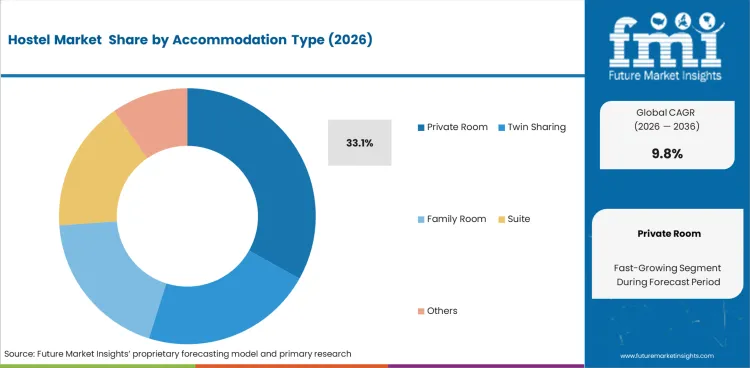
- Private Room is estimated to account for 33.1% share in 2026, as privacy and comfort demand are increasing.
- Operators use upgraded bedding and en-suite options to improve room value while keeping shared hostel features.
Insights into the Online Booking Channel Segment
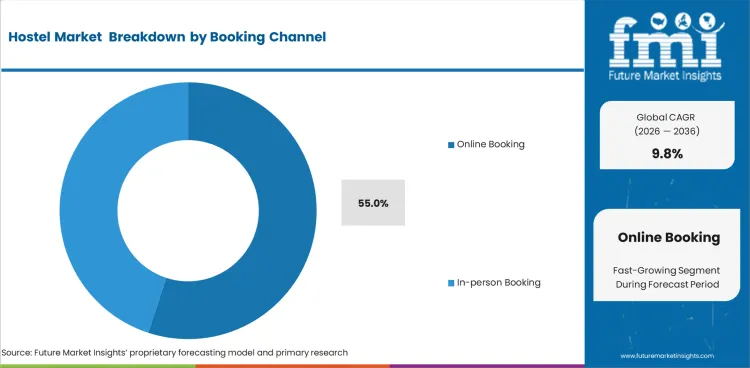
- Online Booking is expected to command 55% share in 2026 as travelers compare price and reviews before booking.
- Mobile booking supports conversion for hostels with visible ratings and current room availability.
Insights into the Domestic Tourist Segment
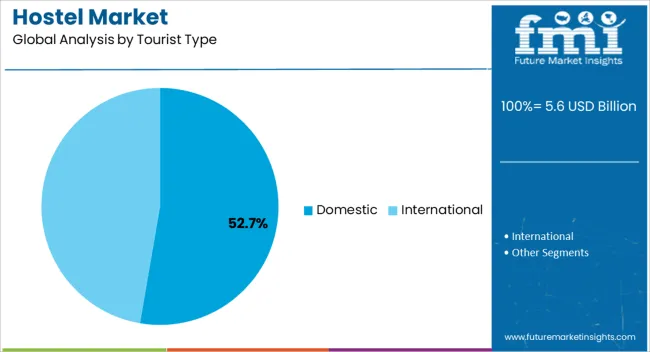
- Domestic Tourist is projected to represent 52.7% share in 2026, reflecting local trips and regional mobility.
- Domestic guests use hostels for education visits and short leisure stays across city centers.
Insights into the Independent Traveler Segment
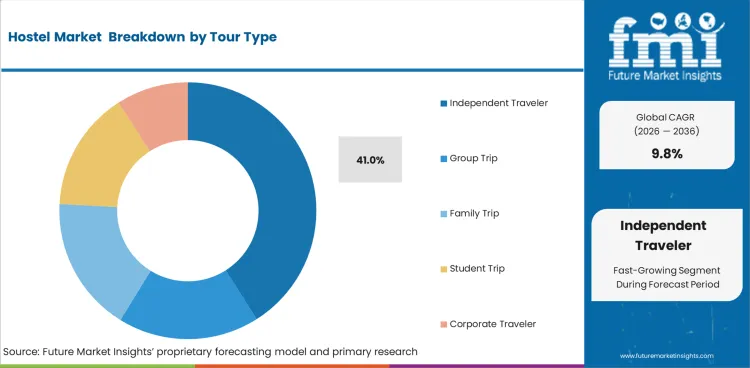
- Independent Traveler is estimated to account for 41.0% share in 2026, due to solo trip planning and flexible booking.
- Solo guests value common spaces and local information as hostels keep urban travel affordable.
Insights into the 26 to 35 Years Age Group Segment
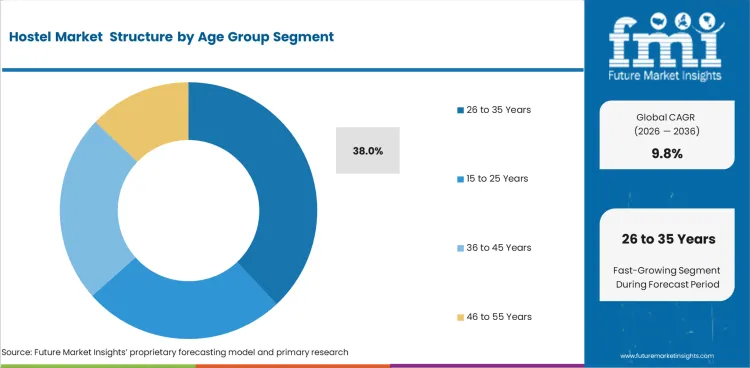
- The 26 to 35 Years group is estimated to capture 38.0% share in 2026, because of increased mobile-first travel behavior.
- This age group often balances work flexibility with budget travel across city and leisure destinations.
Hostel Market Drivers, Restraints, and Opportunities
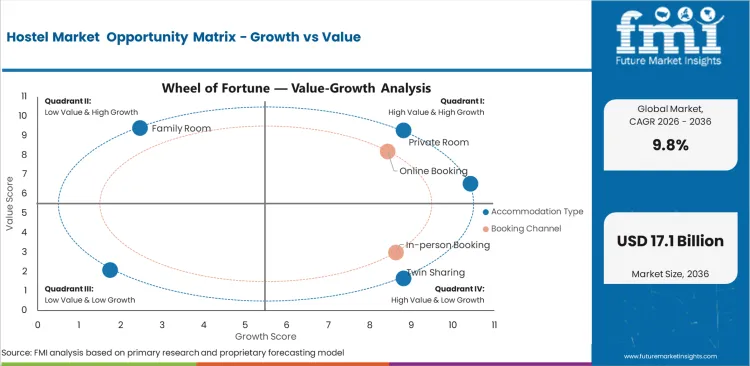
- Budget travel and youth mobility create steady demand for hostel beds across cities and cultural destinations.
- Higher upgrade costs and licensing rules can slow expansion among independent hostel operators.
- Digital booking tools and automated guest services create room for better occupancy management.
The hostel market advances as travelers seek affordable stays with social access and practical locations. Operators benefit from private-room demand as guests seek comfort inside lower-cost lodging formats. Cost pressure is a key restraint as safety systems and plumbing upgrades require capital spending. The opportunity favors properties combining booking visibility and reliable service for community-based guest experiences.
Affordable Travel and Social Stay Demand
Budget travel supports hostel adoption as guests manage trip cost and keep access to central locations. Students and young professionals often choose hostels for short stays near campuses and transport hubs. Backpackers use hostels for social connection and destination knowledge during low-cost travel. Tourism demand across cultural and leisure destinations supports hostel use in major visitor cities. Shared kitchens and common rooms help hostels maintain value against budget hotels.
Digital Booking and Guest Operations
Digital booking supports demand control and lower service workload across hostel staff. Automated check ins and online payments reduce staffing pressure during late arrivals and high volume booking periods. Guest messaging improves stay preparation and reduces front desk questions across routine service tasks. Operators with reliable digital systems can adjust rates during local events and peak weekends. This improves room use and helps operators work with lean service staff.
Analysis of Hostel Market by Key Countries
.webp "Top Country Growth Comparison Hostel Market Cagr (2026 2036)")
| Country | CAGR |
|---|---|
| United States | 4.8% |
| India | 7.6% |
| United Kingdom | 5.4% |
| Spain | 5.9% |
| Thailand | 7.2% |
Source: Future Market Insights, 2026.
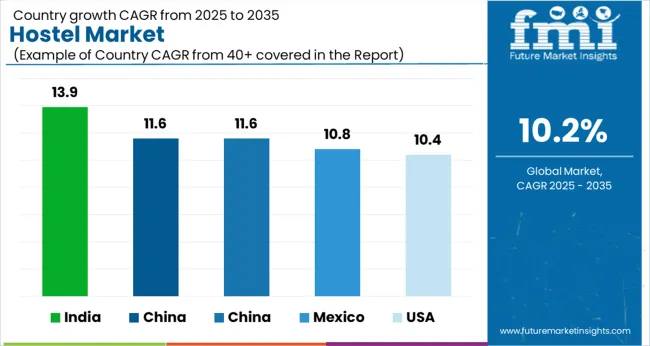
Hostel Market CAGR Analysis by Country
- India is projected to expand at 7.6% CAGR through 2036, supported by domestic travel and backpacking corridors.
- Thailand is expected to advance at 7.2% CAGR through 2036, due to inbound tourism and budget stays.
- Spain is projected to grow at 5.9% CAGR through 2036, because of cultural travel and coastal leisure.
- United Kingdom demand is forecast to rise at 5.4% CAGR, as city-break travel supports hostel use.
- United States demand is expected to expand at 4.8% CAGR through 2036 under mature lodging conditions.
Country level demand varies with tourism corridors and student mobility across regional markets. Urban hotel pricing also influences country level demand patterns within competitive hospitality environments. High-expansion markets have stronger youth travel and backpacker demand. Mature countries expand at a slower pace as existing lodging supply already serves many budget travelers. Hostel performance is strongest in destinations with transport access and visible online booking demand.
Demand Outlook for the Hostel Market in the United States
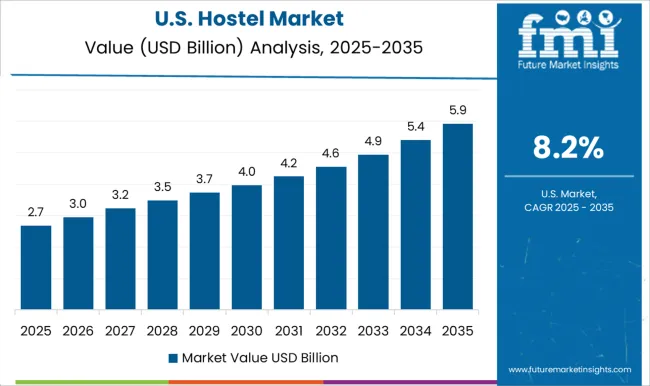
The United States hostel sector is predicted to expand at 4.8% CAGR by 2036. Student mobility and academic tourism support demand in college towns and major cities. Remote workers support flexible stays across cities with shared living formats. Established hotel supply limits faster expansion across many urban markets.
- Academic travel supports semester hostel demand near major education hubs.
- Urban hotel prices encourage budget travelers to compare hostel stays with lower-cost lodging.
- Shared community spaces support flexible use by remote workers and solo travelers.
Future Outlook for the Hostel Market in India
The hostel industry India is expected to record a 7.6% CAGR over the forecast years as domestic travel and youth mobility expand. Backpacker circuits across Rajasthan and Goa support hostel demand among youth travelers. Wellness travel and education trips add demand across city and leisure locations. Transport access improves hostel use beyond major metro markets.
- Youth travel supports hostel demand across city centers and leisure destinations.
- Backpacker corridors increase room demand in Rajasthan and Goa during active travel seasons.
- Domestic tourism campaigns support affordable stays across regional destinations.
Opportunity Analysis of the Hostel Market in the United Kingdom
United Kingdom hostel industry is projected to advance at 5.4% CAGR between 2026 to 2036. London and Edinburgh support budget stays as high hotel rates influence traveler decisions. Boutique hostel formats and digital check-ins improve acceptance among city-break travelers. Transport links support short stays across Manchester and Glasgow.
- High urban hotel prices support hostel demand in London and Edinburgh.
- Digital check-ins improve guest convenience across organized hostel properties.
- City-break tourism supports short-stay demand among students and budget travelers.
Sales Analysis of the Hostel Market in Spain
Spain hostel sector is forecast to expand at 5.9% CAGR during the assessment period as cultural tourism and coastal travel support hostel stays. Barcelona and Madrid attract backpackers seeking affordable access to central districts. Festival travel supports seasonal demand in major cities with limited low-cost accommodation. Structured lodging rules require operators to manage service quality and compliance discipline.
- Cultural tourism supports hostel use in Barcelona and Madrid across active travel seasons.
- Coastal leisure demand supports hostel stays near beach destinations and transport links.
- Digital systems help operators manage bookings during festival and holiday periods.
In-depth Analysis of the Hostel Market in Thailand
Hostel industry in Thailand is estimated to grow at 7.2% CAGR through 2036 as backpacker networks support steady hostel use. Bangkok and Chiang Mai attract budget travelers seeking central locations and social accommodation. Coastal islands support demand from leisure travelers seeking low cost stays near activity zones. Low cost airlines improve access for international budget travelers entering key destinations.
- Backpacker networks support hostel occupancy across Bangkok and Chiang Mai.
- Coastal islands create steady demand for budget accommodation near leisure districts.
- Digital nomads support longer stays in hostels with coworking and social spaces.
Competitive Landscape and Strategic Positioning
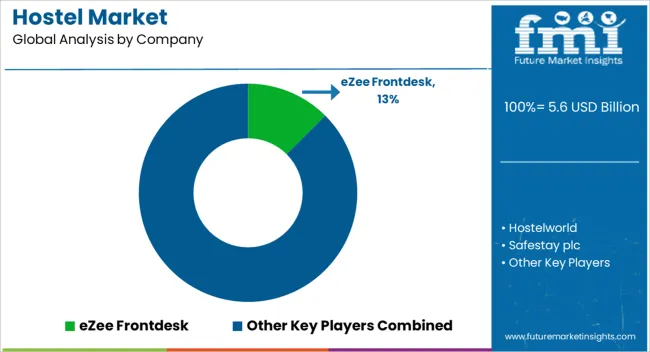
- Competition is fragmented across branded chains and independent hostels. Booking platforms also contribute to competitive fragmentation within the broader lodging market.
- Hostelworld competes through digital discovery and traveler community tools across booking journeys.
- Generator Hostels and A&O Hotels and Hostels compete through network scale and consistent property standards.
- Smaller hostels compete through local character and neighborhood knowledge in specific destinations.
Competition focuses on room affordability and booking visibility within cost-conscious lodging markets. Guest experience also plays a central role in shaping competition across diverse lodging providers. Branded chains use standardized service and recognizable property formats to build guest trust across cities. Independent hostels rely on local identity and social atmosphere to protect repeat demand. Booking platforms influence discovery as travelers compare ratings and location before making reservations. Hybrid hostel concepts overlap with boutique hotel formats through private rooms and upgraded common areas.
Digital engagement is a core competitive tool across hostel operations. Operators use mobile messaging and online payment systems to manage guests before arrival. Review management affects booking conversion as guests filter properties by cleanliness and safety. New entrants add café spaces and coworking corners to increase guest spending beyond bed sales. Properties with reliable operations and social programming are better placed to convert young travelers.
Entry barriers differ by city and property model. Urban licensing rules and renovation costs can slow new hostel openings in dense visitor districts. Property location also affects performance since guests value access to transport and attractions. Organized hostel groups can invest in systems and brand standards across multiple destinations. Independent operators need strong service discipline to compete with chain-backed properties.
Key Companies in the Hostel Market
- Major hostel companies include Hostelworld Generator Hostels A&O Hotels and Hostels Selina Safestay YHA Hostels and Meininger Hotels competing through booking reach and property scale.
- Regional operators include Stayokay St Christopher’s Inn Khaosan Hostels and Green Tortoise Hostel relying on local identity guest programming and strong review scores for occupancy.
- Technology providers include eZee Frontdesk and Room Master, supporting reservations check-ins and room inventory control as online booking guides hostel operations across properties globally.
Competitive Benchmarking: Hostel Market
| Company | Booking Reach | Guest Experience | Property Network | Geographic Footprint |
|---|---|---|---|---|
| Hostelworld | High | Medium | Platform-based | Global |
| Generator Hostels | Medium | High | Strong | Europe and USA |
| A&O Hotels and Hostels | Medium | High | Strong | Europe |
| Selina | Medium | High | Strong | Global |
| Safestay | Medium | Medium | Moderate | Europe |
| YHA Hostels | Medium | Medium | Strong | UK and global affiliations |
| Meininger Hotels | Medium | High | Strong | Europe |
| Stayokay | Low | Medium | Moderate | Netherlands |
| St Christopher’s Inn | Medium | Medium | Moderate | Europe |
| Khaosan Hostels | Low | Medium | Moderate | Asia |
Source: Future Market Insights, 2026.
Key Developments in the Hostel Market
- In August 2024, Generator and Freehand Hotels entered a strategic development partnership with Dusit Hotels and Resorts to expand hybrid hostel and lifestyle accommodation models across Europe, the USA, Asia, and the Middle East.
- In October 2024, a&o Hostels announced its first expansion into Belgium with the opening of a&o Antwerpen Centraal, adding a 516-bed property and supporting its European hostel network expansion.
Key Players in the Hostel Market
Major Global Players:
- Hostelworld
- Generator Hostels
- A&O Hotels and Hostels
- Selina
- Safestay
- YHA Hostels
- Meininger Hotels
Regional and Independent Players:
- Stayokay
- St Christopher’s Inn
- Khaosan Hostels
- Green Tortoise Hostel
- London Backpackers
- Newquay Backpackers
- Travellers House
Technology and Service Providers:
- eZee Frontdesk
- Room Master
- WOKSEN
Report Scope and Coverage
| Parameter | Details |
|---|---|
| Quantitative Units | USD 6.1 billion to USD 15.5 billion, at a CAGR of 9.8% |
| Market Definition | Hostel Market covers shared and private budget accommodation for travelers seeking affordable stays and social facilities. |
| Regions Covered | North America, Latin America, Europe, East Asia, South Asia and Pacific, Middle East and Africa |
| Countries Covered | United States, India, United Kingdom, Spain, Thailand and other countries |
| Key Companies Profiled | Hostelworld, Generator Hostels, A&O Hotels and Hostels, Selina, Safestay, YHA Hostels, Meininger Hotels |
| Forecast Period | 2026 to 2036 |
| Approach | Hybrid bottom-up and top-down methodology based on hostel revenue patterns and regional adoption curves. |
Hostel Market by Segments
Hostel Market Segmented by Accommodation Type:
Private Room
Twin Sharing
Family Room
Suite
Others
Hostel Market Segmented by Booking Channel:
Online Booking
In-person Booking
Hostel Market Segmented by Tourist Type:
Domestic Tourist
International Tourist
Hostel Market Segmented by Tour Type:
Independent Traveler
Group Trip
Family Trip
Student Trip
Corporate Traveler
Hostel Market Segmented by Consumer Orientation:
Men
Women
Children
Hostel Market Segmented by Age Group:
15 to 25 Years
26 to 35 Years
36 to 45 Years
46 to 55 Years
Hostel Market by Region:
- North America
- USA
- Canada
- Mexico
- Latin America
- Brazil
- Chile
- Rest of Latin America
- Europe
- Germany
- UK
- Italy
- Spain
- France
- Rest of Europe
- East Asia
- China
- Japan
- South Korea
- South Asia and Pacific
- India
- ASEAN
- Australia & New Zealand
- Rest of South Asia and Pacific
- Middle East and Africa
- Saudi Arabia
- Other GCC Countries
- South Africa
- Rest of Middle East and Africa
Research Sources and Bibliography
- Generator Hostels. (2024, August 28). Generator and Freehand Hotels cement strategic development partnership with Dusit Hotels and Resorts.
- a&o Hostels. (2024, October 23). a&o Hostels expand in Belgium with opening of a&o Antwerpen Centraal.
- Organisation for Economic Co-operation and Development. (2024, July 8). Tourism policy responses and affordable travel accommodation: Impacts on youth mobility and urban tourism. OECD.
- Selina Hospitality PLC. (2024, April 1). Hybrid hostel concepts: Co-living, co-working, and lifestyle travel markets. Selina Hospitality PLC.
This Report Answers
- What is the current and future size of the hostel market between 2026 and 2036?
- How fast is the hostel market expected to expand during the forecast period?
- Which accommodation type is likely to lead the market by 2026?
- Which booking channel is expected to account for the highest demand by 2026?
- What factors are supporting demand for hostel stays across global travel markets?
- How are online booking systems influencing hostel demand and operator performance?
- Which countries are projected to record faster expansion through 2036?
- Who are the key companies active in the hostel market?
- How does FMI estimate and validate the hostel market forecast?
Frequently Asked Questions
What is the global market demand for Hostel Market in 2026?
In 2026, the global market for hostel stays is expected to be worth USD 6.1 billion.
How big will the Hostel Market be in 2036?
By 2036, the hostel market is expected to be worth USD 15.5 billion across global accommodation revenues.
How much will demand for hostel stays expand between 2026 and 2036?
Between 2026 and 2036, demand for hostel stays is expected to expand at a CAGR of 9.8%.
Which accommodation type is likely to lead the world by 2026?
Private Room will account for 33.1% share in 2026 as travelers seek privacy with budget pricing.
Which booking channel is expected to lead the hostel market in 2026?
Online Booking is expected to command 55% share in 2026 across hostel booking channel demand.
What is supporting demand in India?
India is projected to expand at 7.6% CAGR through 2036 as domestic travel and backpacking corridors improve.
How does FMI make the Hostel Market forecast and check it?
Hostel Market includes commercial lodging properties offering shared rooms and private rooms for budget-oriented traveler stays.
How does FMI make the Hostel Market forecast and check it?
Forecasting models use a hybrid bottom-up and top-down approach with revenue checks across segments and regions.
Preview the report firsthand - request a free sample
Get SampleGet the brochure for pricing and purchase details.
Get PDFTable of Content
- Executive Summary
- Global Market Outlook
- Demand-side Trends
- Supply-side Trends
- Technology Roadmap Analysis
- Analysis and Recommendations
- Market Overview
- Market Coverage / Taxonomy
- Market Definition / Scope / Limitations
- Research Methodology
- Chapter Orientation
- Analytical Lens and Working Hypotheses
- Market Structure, Signals, and Trend Drivers
- Benchmarking and Cross-market Comparability
- Market Sizing, Forecasting, and Opportunity Mapping
- Research Design and Evidence Framework
- Desk Research Programme (Secondary Evidence)
- Company Annual and Sustainability Reports
- Peer-reviewed Journals and Academic Literature
- Corporate Websites, Product Literature, and Technical Notes
- Earnings Decks and Investor Briefings
- Statutory Filings and Regulatory Disclosures
- Technical White Papers and Standards Notes
- Trade Journals, Industry Magazines, and Analyst Briefs
- Conference Proceedings, Webinars, and Seminar Materials
- Government Statistics Portals and Public Data Releases
- Press Releases and Reputable Media Coverage
- Specialist Newsletters and Curated Briefings
- Sector Databases and Reference Repositories
- FMI Internal Proprietary Databases and Historical Market Datasets
- Subscription Datasets and Paid Sources
- Social Channels, Communities, and Digital Listening Inputs
- Additional Desk Sources
- Expert Input and Fieldwork (Primary Evidence)
- Primary Modes
- Qualitative Interviews and Expert Elicitation
- Quantitative Surveys and Structured Data Capture
- Blended Approach
- Why Primary Evidence is Used
- Field Techniques
- Interviews
- Surveys
- Focus Groups
- Observational and In-context Research
- Social and Community Interactions
- Stakeholder Universe Engaged
- C-suite Leaders
- Board Members
- Presidents and Vice Presidents
- R&D and Innovation Heads
- Technical Specialists
- Domain Subject-matter Experts
- Scientists
- Physicians and Other Healthcare Professionals
- Governance, Ethics, and Data Stewardship
- Research Ethics
- Data Integrity and Handling
- Primary Modes
- Tooling, Models, and Reference Databases
- Desk Research Programme (Secondary Evidence)
- Data Engineering and Model Build
- Data Acquisition and Ingestion
- Cleaning, Normalisation, and Verification
- Synthesis, Triangulation, and Analysis
- Quality Assurance and Audit Trail
- Market Background
- Market Dynamics
- Drivers
- Restraints
- Opportunity
- Trends
- Scenario Forecast
- Demand in Optimistic Scenario
- Demand in Likely Scenario
- Demand in Conservative Scenario
- Opportunity Map Analysis
- Product Life Cycle Analysis
- Supply Chain Analysis
- Investment Feasibility Matrix
- Value Chain Analysis
- PESTLE and Porter’s Analysis
- Regulatory Landscape
- Regional Parent Market Outlook
- Production and Consumption Statistics
- Import and Export Statistics
- Market Dynamics
- Global Market Analysis 2021 to 2025 and Forecast, 2026 to 2036
- Historical Market Size Value (USD Million) Analysis, 2021 to 2025
- Current and Future Market Size Value (USD Million) Projections, 2026 to 2036
- Y-o-Y Growth Trend Analysis
- Absolute $ Opportunity Analysis
- Global Market Pricing Analysis 2021 to 2025 and Forecast 2026 to 2036
- Global Market Analysis 2021 to 2025 and Forecast 2026 to 2036, By Accommodation Type
- Introduction / Key Findings
- Historical Market Size Value (USD Million) Analysis By Accommodation Type , 2021 to 2025
- Current and Future Market Size Value (USD Million) Analysis and Forecast By Accommodation Type , 2026 to 2036
- Private Room
- Twin Sharing
- Family Room
- Suite
- Others
- Private Room
- Y-o-Y Growth Trend Analysis By Accommodation Type , 2021 to 2025
- Absolute $ Opportunity Analysis By Accommodation Type , 2026 to 2036
- Global Market Analysis 2021 to 2025 and Forecast 2026 to 2036, By Booking Channel
- Introduction / Key Findings
- Historical Market Size Value (USD Million) Analysis By Booking Channel, 2021 to 2025
- Current and Future Market Size Value (USD Million) Analysis and Forecast By Booking Channel, 2026 to 2036
- Online Booking
- In-person Booking
- Online Booking
- Y-o-Y Growth Trend Analysis By Booking Channel, 2021 to 2025
- Absolute $ Opportunity Analysis By Booking Channel, 2026 to 2036
- Global Market Analysis 2021 to 2025 and Forecast 2026 to 2036, By Tourist Type
- Introduction / Key Findings
- Historical Market Size Value (USD Million) Analysis By Tourist Type, 2021 to 2025
- Current and Future Market Size Value (USD Million) Analysis and Forecast By Tourist Type, 2026 to 2036
- Domestic Tourist
- International Tourist
- Domestic Tourist
- Y-o-Y Growth Trend Analysis By Tourist Type, 2021 to 2025
- Absolute $ Opportunity Analysis By Tourist Type, 2026 to 2036
- Global Market Analysis 2021 to 2025 and Forecast 2026 to 2036, By Tour Type
- Introduction / Key Findings
- Historical Market Size Value (USD Million) Analysis By Tour Type, 2021 to 2025
- Current and Future Market Size Value (USD Million) Analysis and Forecast By Tour Type, 2026 to 2036
- Independent Traveler
- Group Trip
- Family Trip
- Student Trip
- Corporate Traveler
- Independent Traveler
- Y-o-Y Growth Trend Analysis By Tour Type, 2021 to 2025
- Absolute $ Opportunity Analysis By Tour Type, 2026 to 2036
- Global Market Analysis 2021 to 2025 and Forecast 2026 to 2036, By Age Group
- Introduction / Key Findings
- Historical Market Size Value (USD Million) Analysis By Age Group, 2021 to 2025
- Current and Future Market Size Value (USD Million) Analysis and Forecast By Age Group, 2026 to 2036
- 26 to 35 Years
- 15 to 25 Years
- 36 to 45 Years
- 46 to 55 Years
- 26 to 35 Years
- Y-o-Y Growth Trend Analysis By Age Group, 2021 to 2025
- Absolute $ Opportunity Analysis By Age Group, 2026 to 2036
- Global Market Analysis 2021 to 2025 and Forecast 2026 to 2036, By Region
- Introduction
- Historical Market Size Value (USD Million) Analysis By Region, 2021 to 2025
- Current Market Size Value (USD Million) Analysis and Forecast By Region, 2026 to 2036
- North America
- Latin America
- Western Europe
- Eastern Europe
- East Asia
- South Asia and Pacific
- Middle East & Africa
- Market Attractiveness Analysis By Region
- North America Market Analysis 2021 to 2025 and Forecast 2026 to 2036, By Country
- Historical Market Size Value (USD Million) Trend Analysis By Market Taxonomy, 2021 to 2025
- Market Size Value (USD Million) Forecast By Market Taxonomy, 2026 to 2036
- By Country
- USA
- Canada
- Mexico
- By Accommodation Type
- By Booking Channel
- By Tourist Type
- By Tour Type
- By Age Group
- By Country
- Market Attractiveness Analysis
- By Country
- By Accommodation Type
- By Booking Channel
- By Tourist Type
- By Tour Type
- By Age Group
- Key Takeaways
- Latin America Market Analysis 2021 to 2025 and Forecast 2026 to 2036, By Country
- Historical Market Size Value (USD Million) Trend Analysis By Market Taxonomy, 2021 to 2025
- Market Size Value (USD Million) Forecast By Market Taxonomy, 2026 to 2036
- By Country
- Brazil
- Chile
- Rest of Latin America
- By Accommodation Type
- By Booking Channel
- By Tourist Type
- By Tour Type
- By Age Group
- By Country
- Market Attractiveness Analysis
- By Country
- By Accommodation Type
- By Booking Channel
- By Tourist Type
- By Tour Type
- By Age Group
- Key Takeaways
- Western Europe Market Analysis 2021 to 2025 and Forecast 2026 to 2036, By Country
- Historical Market Size Value (USD Million) Trend Analysis By Market Taxonomy, 2021 to 2025
- Market Size Value (USD Million) Forecast By Market Taxonomy, 2026 to 2036
- By Country
- Germany
- UK
- Italy
- Spain
- France
- Nordic
- BENELUX
- Rest of Western Europe
- By Accommodation Type
- By Booking Channel
- By Tourist Type
- By Tour Type
- By Age Group
- By Country
- Market Attractiveness Analysis
- By Country
- By Accommodation Type
- By Booking Channel
- By Tourist Type
- By Tour Type
- By Age Group
- Key Takeaways
- Eastern Europe Market Analysis 2021 to 2025 and Forecast 2026 to 2036, By Country
- Historical Market Size Value (USD Million) Trend Analysis By Market Taxonomy, 2021 to 2025
- Market Size Value (USD Million) Forecast By Market Taxonomy, 2026 to 2036
- By Country
- Russia
- Poland
- Hungary
- Balkan & Baltic
- Rest of Eastern Europe
- By Accommodation Type
- By Booking Channel
- By Tourist Type
- By Tour Type
- By Age Group
- By Country
- Market Attractiveness Analysis
- By Country
- By Accommodation Type
- By Booking Channel
- By Tourist Type
- By Tour Type
- By Age Group
- Key Takeaways
- East Asia Market Analysis 2021 to 2025 and Forecast 2026 to 2036, By Country
- Historical Market Size Value (USD Million) Trend Analysis By Market Taxonomy, 2021 to 2025
- Market Size Value (USD Million) Forecast By Market Taxonomy, 2026 to 2036
- By Country
- China
- Japan
- South Korea
- By Accommodation Type
- By Booking Channel
- By Tourist Type
- By Tour Type
- By Age Group
- By Country
- Market Attractiveness Analysis
- By Country
- By Accommodation Type
- By Booking Channel
- By Tourist Type
- By Tour Type
- By Age Group
- Key Takeaways
- South Asia and Pacific Market Analysis 2021 to 2025 and Forecast 2026 to 2036, By Country
- Historical Market Size Value (USD Million) Trend Analysis By Market Taxonomy, 2021 to 2025
- Market Size Value (USD Million) Forecast By Market Taxonomy, 2026 to 2036
- By Country
- India
- ASEAN
- Australia & New Zealand
- Rest of South Asia and Pacific
- By Accommodation Type
- By Booking Channel
- By Tourist Type
- By Tour Type
- By Age Group
- By Country
- Market Attractiveness Analysis
- By Country
- By Accommodation Type
- By Booking Channel
- By Tourist Type
- By Tour Type
- By Age Group
- Key Takeaways
- Middle East & Africa Market Analysis 2021 to 2025 and Forecast 2026 to 2036, By Country
- Historical Market Size Value (USD Million) Trend Analysis By Market Taxonomy, 2021 to 2025
- Market Size Value (USD Million) Forecast By Market Taxonomy, 2026 to 2036
- By Country
- Kingdom of Saudi Arabia
- Other GCC Countries
- Turkiye
- South Africa
- Other African Union
- Rest of Middle East & Africa
- By Accommodation Type
- By Booking Channel
- By Tourist Type
- By Tour Type
- By Age Group
- By Country
- Market Attractiveness Analysis
- By Country
- By Accommodation Type
- By Booking Channel
- By Tourist Type
- By Tour Type
- By Age Group
- Key Takeaways
- Key Countries Market Analysis
- USA
- Pricing Analysis
- Market Share Analysis, 2025
- By Accommodation Type
- By Booking Channel
- By Tourist Type
- By Tour Type
- By Age Group
- Canada
- Pricing Analysis
- Market Share Analysis, 2025
- By Accommodation Type
- By Booking Channel
- By Tourist Type
- By Tour Type
- By Age Group
- Mexico
- Pricing Analysis
- Market Share Analysis, 2025
- By Accommodation Type
- By Booking Channel
- By Tourist Type
- By Tour Type
- By Age Group
- Brazil
- Pricing Analysis
- Market Share Analysis, 2025
- By Accommodation Type
- By Booking Channel
- By Tourist Type
- By Tour Type
- By Age Group
- Chile
- Pricing Analysis
- Market Share Analysis, 2025
- By Accommodation Type
- By Booking Channel
- By Tourist Type
- By Tour Type
- By Age Group
- Germany
- Pricing Analysis
- Market Share Analysis, 2025
- By Accommodation Type
- By Booking Channel
- By Tourist Type
- By Tour Type
- By Age Group
- UK
- Pricing Analysis
- Market Share Analysis, 2025
- By Accommodation Type
- By Booking Channel
- By Tourist Type
- By Tour Type
- By Age Group
- Italy
- Pricing Analysis
- Market Share Analysis, 2025
- By Accommodation Type
- By Booking Channel
- By Tourist Type
- By Tour Type
- By Age Group
- Spain
- Pricing Analysis
- Market Share Analysis, 2025
- By Accommodation Type
- By Booking Channel
- By Tourist Type
- By Tour Type
- By Age Group
- France
- Pricing Analysis
- Market Share Analysis, 2025
- By Accommodation Type
- By Booking Channel
- By Tourist Type
- By Tour Type
- By Age Group
- India
- Pricing Analysis
- Market Share Analysis, 2025
- By Accommodation Type
- By Booking Channel
- By Tourist Type
- By Tour Type
- By Age Group
- ASEAN
- Pricing Analysis
- Market Share Analysis, 2025
- By Accommodation Type
- By Booking Channel
- By Tourist Type
- By Tour Type
- By Age Group
- Australia & New Zealand
- Pricing Analysis
- Market Share Analysis, 2025
- By Accommodation Type
- By Booking Channel
- By Tourist Type
- By Tour Type
- By Age Group
- China
- Pricing Analysis
- Market Share Analysis, 2025
- By Accommodation Type
- By Booking Channel
- By Tourist Type
- By Tour Type
- By Age Group
- Japan
- Pricing Analysis
- Market Share Analysis, 2025
- By Accommodation Type
- By Booking Channel
- By Tourist Type
- By Tour Type
- By Age Group
- South Korea
- Pricing Analysis
- Market Share Analysis, 2025
- By Accommodation Type
- By Booking Channel
- By Tourist Type
- By Tour Type
- By Age Group
- Russia
- Pricing Analysis
- Market Share Analysis, 2025
- By Accommodation Type
- By Booking Channel
- By Tourist Type
- By Tour Type
- By Age Group
- Poland
- Pricing Analysis
- Market Share Analysis, 2025
- By Accommodation Type
- By Booking Channel
- By Tourist Type
- By Tour Type
- By Age Group
- Hungary
- Pricing Analysis
- Market Share Analysis, 2025
- By Accommodation Type
- By Booking Channel
- By Tourist Type
- By Tour Type
- By Age Group
- Kingdom of Saudi Arabia
- Pricing Analysis
- Market Share Analysis, 2025
- By Accommodation Type
- By Booking Channel
- By Tourist Type
- By Tour Type
- By Age Group
- Turkiye
- Pricing Analysis
- Market Share Analysis, 2025
- By Accommodation Type
- By Booking Channel
- By Tourist Type
- By Tour Type
- By Age Group
- South Africa
- Pricing Analysis
- Market Share Analysis, 2025
- By Accommodation Type
- By Booking Channel
- By Tourist Type
- By Tour Type
- By Age Group
- USA
- Market Structure Analysis
- Competition Dashboard
- Competition Benchmarking
- Market Share Analysis of Top Players
- By Regional
- By Accommodation Type
- By Booking Channel
- By Tourist Type
- By Tour Type
- By Age Group
- Competition Analysis
- Competition Deep Dive
- Hostelworld
- Overview
- Product Portfolio
- Profitability by Market Segments (Product/Age /Sales Channel/Region)
- Sales Footprint
- Strategy Overview
- Marketing Strategy
- Product Strategy
- Channel Strategy
- Generator Hostels
- A&O Hotels and Hostels
- Selina
- Safestay
- YHA Hostels
- Meininger Hotels
- Stayokay
- St Christopher’s Inn
- Khaosan Hostels
- Green Tortoise Hostel
- London Backpackers
- Newquay Backpackers
- Travellers House
- eZee Frontdesk
- Room Master
- WOKSEN
- Hostelworld
- Competition Deep Dive
- Assumptions & Acronyms Used


