

- Industry Size (2025)
- USD 83.7 Mn
- Forecast (2035)
- USD 118.1 Mn
- CAGR (2025 to 2035)
- 3.5%
Solketal Market Size and Share Forecast Outlook 2025 to 2035
The solketal market is experiencing steady expansion, supported by its growing relevance in green chemistry, bio-based solvents, and pharmaceutical applications. Industry communications and academic publications have highlighted solketal’s effectiveness as a versatile, biodegradable compound derived from glycerol, particularly valued for its ability to enhance fuel stability and serve as a solvent or intermediate in chemical synthesis.
Regulatory emphasis on reducing volatile organic compounds (VOCs) and promoting sustainable chemical alternatives has accelerated solketal adoption across multiple industries. The pharmaceutical and personal care sectors are increasingly integrating solketal in formulations requiring low-toxicity, stable compounds that meet environmental compliance standards.
Innovations in production processes and catalyst systems have improved yield efficiency, making high-purity solketal more commercially viable. Additionally, investments in glycerol valorization, driven by biodiesel industry byproducts, have strengthened supply chains for solketal manufacturing. As end-user industries continue to shift toward bio-based and environmentally friendly ingredients, solketal is expected to play an expanding role, particularly in pharmaceuticals, specialty chemicals, and fuel additives.
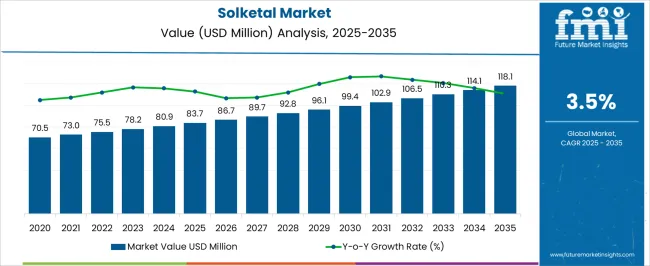
Quick Stats for Solketal Market
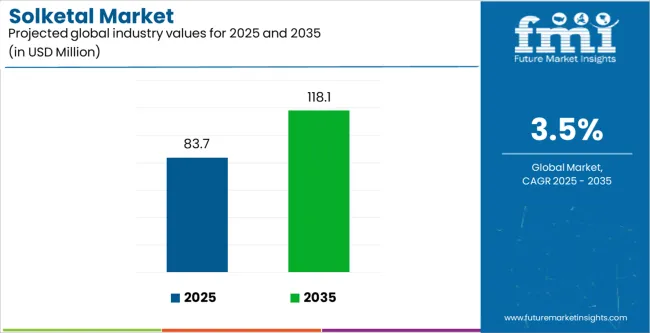
- Solketal Market Industry Value (2025): USD 83.7 million
- Solketal Market Forecast Value (2035): USD 118.1 million
- Solketal Market Forecast CAGR: 3.5%
- Leading Segment in Solketal Market in 2025: ">98% (41.7%)
- Key Growth Region in Solketal Market: North America, Asia-Pacific, Europe
- Top Key Players in Solketal Market: GLACONCHEMIE GmbH, Sigma Aldrich, Thermo Fisher Scientific Inc, Loba Biotech GmbH, TCI EUROPE N.V., Alfa Aesar, CM Fine Chemical, Beyond Industries, Hangzhou ICH Biofarm, Chemos GmbH
| Metric | Value |
|---|---|
| Solketal Market Estimated Value in (2025 E) | USD 83.7 million |
| Solketal Market Forecast Value in (2035 F) | USD 118.1 million |
| Forecast CAGR (2025 to 2035) | 3.5% |
Segmental Analysis
The market is segmented by Purity, Application, and End Use Industry and region. By Purity, the market is divided into >98%, 0.98, and 96-97%. In terms of Application, the market is classified into Pharmaceutical Intermediate, Solvent, Biofuel, and Others. Based on End Use Industry, the market is segmented into Pharmaceutical Industry, Cosmetics And Personal Care, Food And Beverage Industry, Chemical Manufacturing, Paints And Coatings, and Others. Regionally, the market is classified into North America, Latin America, Western Europe, Eastern Europe, Balkan & Baltic Countries, Russia & Belarus, Central Asia, East Asia, South Asia & Pacific, and the Middle East & Africa.
Insights into the Purity Segment: >98%
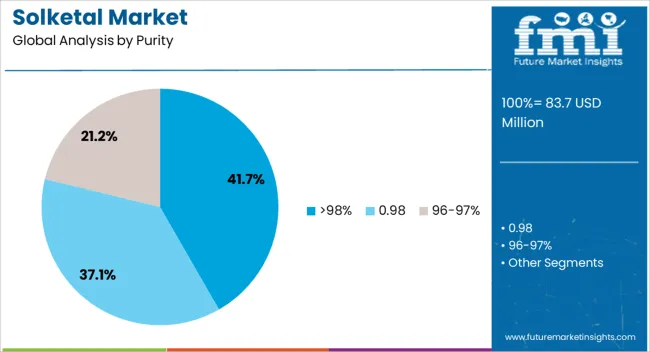
The >98% purity segment is projected to account for 41.7% of the solketal market revenue in 2025, maintaining its position as the dominant purity level due to stringent quality requirements across end-use industries. High-purity solketal has been favored in pharmaceutical and fine chemical applications where consistency, low impurity content, and high stability are critical.
Technical documentation and supplier specifications have emphasized the need for ≥98% purity to ensure compatibility with active pharmaceutical ingredients and minimize unwanted reactions during synthesis. Advances in purification techniques, such as molecular distillation and membrane separation, have enabled cost-effective production of >98% purity grades at scale.
Moreover, regulatory compliance frameworks in drug manufacturing and cosmetic formulations have further reinforced the adoption of high-purity inputs. As solketal continues to gain traction in sensitive chemical applications, the demand for >98% purity is expected to grow, supported by manufacturers’ focus on meeting international pharmacopeial and industrial standards.
Insights into the Application Segment: Pharmaceutical Intermediate
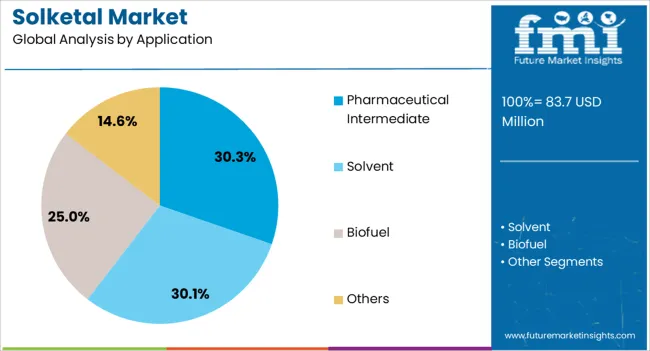
The Pharmaceutical Intermediate segment is expected to represent 30.3% of the solketal market revenue in 2025, establishing itself as the leading application area. This growth has been attributed to solketal’s role in synthesizing active pharmaceutical compounds, particularly where stable, bio-based intermediates are required.
Research articles and formulation studies have underscored solketal’s favorable solubility, reactivity, and compatibility with other excipients, making it a suitable choice for drug development pipelines. Its protective ketal group has been utilized in multi-step organic synthesis, offering advantages in yield improvement and reaction control.
Pharmaceutical companies have integrated solketal in laboratory-scale and commercial-scale reactions due to its low toxicity profile and reduced environmental impact. Moreover, as green chemistry principles gain importance in drug manufacturing, solketal has emerged as a viable alternative to petroleum-derived solvents and intermediates. This trend, coupled with increasing regulatory pressure for cleaner synthesis routes, is expected to reinforce the segment’s growth in the coming years.
Insights into the End Use Industry Segment: Pharmaceutical Industry
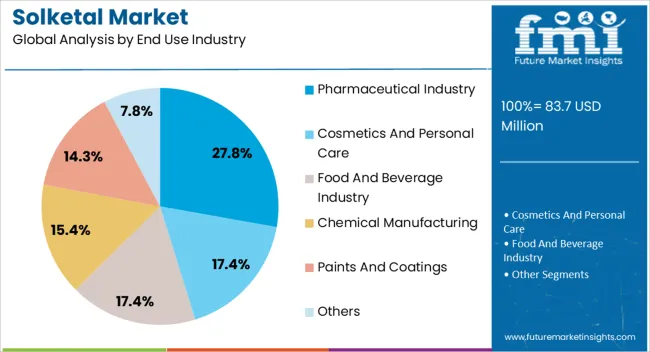
The Pharmaceutical Industry segment is projected to contribute 27.8% of the solketal market revenue in 2025, leading among end-use sectors due to solketal’s expanding utility in drug formulation and synthesis. The demand for eco-friendly and biocompatible ingredients has led pharmaceutical manufacturers to adopt solketal in preformulation studies, intermediate synthesis, and as a solvent for active compound processing.
Regulatory documentation and industry updates have indicated a growing preference for excipients that support sustainability targets and toxicological safety. Additionally, solketal’s capacity to stabilize moisture-sensitive drugs and act as a reaction medium has increased its relevance in both generic and proprietary drug development.
The segment’s growth has also been supported by research-driven initiatives aimed at substituting traditional solvents with greener alternatives, particularly in North America and Europe. With rising investment in green pharmaceutical manufacturing and continuous regulatory scrutiny, the Pharmaceutical Industry segment is expected to retain its leading share in the solketal market.
Key Industry Highlights
Focus on Targeted Drug Delivery Systems Increases Demand
Pharmaceutical research is moving towards personalized medicine and targeted drug delivery systems, creating opportunities for using solketal in drug formulations. This solvent has roles in protecting certain parts of chemicals during their production and could be used in drug delivery systems. Using this solvent can help make drugs more stable, easier for the body to absorb, and easier for patients to take regularly.
This makes pharmaceutical products better and differentiates them in the healthcare sector. Because of this shift towards personalized medicine, there is an evident demand in pharmaceuticals. This rise in demand is helping the healthcare sector grow.
Integration into Green Building Materials can be Opportunistic
The construction industry is also focusing on getting more sustainable. This tendency is leading to a higher need for eco-friendly building materials. This solvent can play a role in this by being part of sustainable materials like bioplastics, adhesives, or coatings.
These materials offer advantages such as better durability, insulation, or resistance to moisture. To tap into this demand, solketal suppliers can work with architects, engineers, and construction companies. By doing so, they can find opportunities in the green building sector and support the development of environmentally friendly urban areas.
Vertical Integration in the Value Chain Can Create Opportunities
Vertical integration in this solvents value chain can offer compelling advantages, notably cost efficiency and streamlined supply chain management. By extending operations backward into glycerol refining and solvent production, biodiesel firms gain a dependable raw material source and potential cost reductions.
Furthermore, forward integration into sectors like pharmaceuticals and cosmetics unlocks opportunities for added value and a competitive edge. This approach can ensure supply chain stability. It can help to get greater control over production processes and enhance positioning. This integration can foster growth and profitability in the solketal market.
2020 to 2024 Global Solketal Sales Outlook Compared to Demand Forecast from 2025 to 2035
The industry recorded substantial sales between 2020 and 2025. The revenue generated in 2020 was USD 83.7 million, and in 2025 was USD 78.8 billion. The industry expanded at a 2.20% CAGR during this period. The push for greener solutions across industries has been instrumental for growth in past years.
Regulations and concerns for the environment are prompting industries to go green. Support from the government has led to greater investments and innovations in renewable chemical technologies. Initiatives like carbon pricing mechanisms and renewable energy mandates create a favorable environment. This regulatory support has, therefore, stimulated the industry’s expansion significantly.
The solketal market expansion is estimated at a 3.5% CAGR through 2035. Research institutions and pharmaceutical companies are in constant pursuit of making breakthroughs in chemicals and science. The industry can greatly benefit from the advancements and new applications. Like, in the agriculture sector, this solvent is being explored as a pesticide intermediate.
Developing differentiated products with enhanced performance and functionality can lead to more revenues. Maintaining high-quality standards can be beneficial. Adhering to regulations like Registration, Evaluation, Authorization and Restriction of Chemicals in Europe and Food and Drug Administration in the United States guidelines can also contribute to this advantage.
Country-wise Insights
This section covers the future forecast for the solketal industry in the top three countries. Information on regions like North America, Europe, Asia Pacific, and others is granulated, focusing on the top countries. India is predicted to stay at the forefront in Asia Pacific, with a CAGR of 5.2% through 2035. China to follow closely behind, expanding at a 3.9% CAGR till 2035. Spain to follow next, with a 2.6% CAGR estimated for 2025 to 2035.
| Countries | CAGR 2025 to 2035 |
|---|---|
| India | 5.2% |
| China | 3.9% |
| Spain | 2.6% |
Government Programs for Renewable Energy Foster Growth in India
Demand for solketal in India is set to amplify at a 5.2% CAGR through 2035. The Indian government programs promote renewable energy, like the National Biofuel Policy 2025. India’s biodiesel blending mandate increased from 30% to 35% in 2025. This means more biodiesel production and thus more glycerol, a key ingredient in making the solvent. Additionally, the pharmaceutical sector is growing fast, and this solvent is being used in drug formulations.
The personal care and cosmetics industry is also expanding due to rising incomes, with the solvent being used in these products. India is also adopting green chemistry practices, and bio-based solketal fits well as an environmentally friendly option. These factors together stimulate the solketal market in India.
Bhagvati Agricultures is a prominent solketal manufacturer in India. The company offers a range of specialty chemicals and invests in sustainable manufacturing processes for reduced environmental impact.
Focus on Sustainable Chemical Production Helps the Industry to Prosper in China
Sales of solketal in China are on track to rise at a 3.9% CAGR through 2035. China's chemical industry is shifting towards sustainability, and this solvent, being eco-friendly and renewable, fits into this trend. Technological advancements in China have improved production processes, making them more accessible for manufacturers and driving expansion.
Solvent’s compatibility with advanced materials makes it attractive for various industries like automotive and aerospace. Additionally, China's massive investment in biotechnology is opportunistic for solketal market players in areas like drug delivery and environmental protection. This translates to growth as companies seek innovative solutions.
Nanjing Chemical Reagent Co. Ltd. and Hebei Jingbo New Material Technology Co. Ltd. are the top solketal manufacturers in China. These companies focus on serving the pharmaceutical and agrochemical industries. They invest in research and development to improve product quality and manufacturing efficiency.
Strong Presence in Renewable Energy Nurtures the Industry in Spain
The solketal market growth in Spain is estimated at a 2.6% CAGR through 2035. Spain's strong presence in renewable energy, supported by government initiatives, drives the demand as a byproduct of biodiesel production. The country's emphasis on the bioeconomy aligns with the solvent’s renewable sourcing, fostering growth through incentives and funding programs.
Spain's leadership in chemical innovation encourages the exploration of bio-based solketal in various industries. This leads to growth through research and development. Spain's strategic location provides opportunities for manufacturers to expand their reach and growth beyond national borders.
Category-wise Insights
This section takes a closer look at the market segmentation of solketal products. The research highlights that based on purity, over 98% solketal is highly preferred in the industry. The segment holds 41.7% of industry shares in 2025. Under the application category, the pharmaceuticals segment bags the leading solketal market shares in 2025.
The >98% Purity Segment Holds the Top Shares
| Segment | >98% (Purity) |
|---|---|
| Value Share (2025) | 41.7% |
The more than 98% purity segment holds the leading solketal market shares in 2025. Industries like pharmaceuticals and electronics require solketal with purity levels above 98% to meet stringent standards. High-purity solketal ensure product quality and consistency, essential for compliance with regulations and quality control measures. Its use improves process efficiency, reducing waste and enhancing yield.
Advanced applications, including those in electronics and biotechnology, demand high-purity solvents for compatibility and reliability. Suppliers offering high-purity ones differentiate themselves. They prosper in building brand reputation and meeting consumer expectations for quality and safety.
Pharmaceutical Intermediate Continues to be the Leading Application
| Segment | Pharmaceutical Intermediate (Application) |
|---|---|
| Value Share (2025) | 30.3% |
The pharmaceutical intermediate application segment captures the leading solketal market shares in 2025. This solvents chirality enables its use in chiral synthesis, which is vital for producing enantiomerically pure pharmaceutical intermediates.
The solvent also enhances drug stability and bioavailability, contributing to improved therapeutic outcomes. Its versatility extends to drug formulation, enabling the development of novel delivery systems and dosage forms. Compliance with regulatory standards and its role in pharmaceutical innovation drives the demand for this solvent as a key intermediate in drug development and production.
Competition Outlook
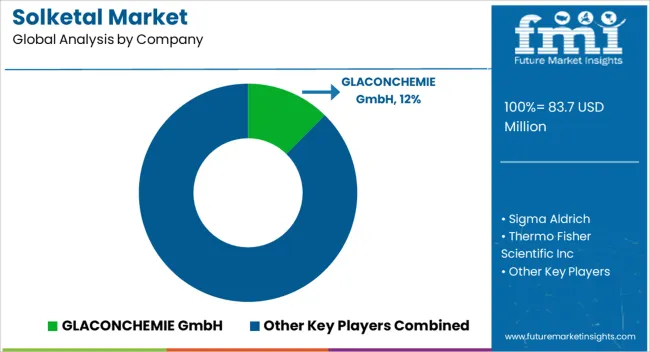
Global leaders in the solketal market include Solvay S.A. and Merck KGaA, as well as developing companies such as Chemos GmbH & Co. KG and Hangzhou DayangChem Co. Distribution firms such as Tokyo Chemical Industry Co., Ltd., and AK Scientific, Inc. also play important roles. Competition centers around innovation, product differentiation, and regulatory compliance, which leads to partnerships and investment in research and development. Sustainability and regulatory compliance continue to influence client preferences, hence affecting the competitive environment.
Industry Update
Advancements have been made in the valorization of biodiesel by-product glycerol to solketal. This can be done via homogenous and heterogenous acid catalysts. The application of the nano and MOF catalyst can lead to long-term environmentally friendly and highly effective biodiesel technology.
Leading Solketal Brands
- Solvay S.A.
- Merck KGaA
- Tokyo Chemical Industry Co., Ltd.
- Chemos GmbH & Co. KG
- Thermo Fisher Scientific Inc.
- Alfa Aesar
- Avantor, Inc.
- TCI America
- AK Scientific, Inc.
- Hangzhou DayangChem Co. Ltd.
Key Segments of Market Report
By Purity:
The sector is trifurcated into 96 to 98%, 98%, and >98% based on purity.
By Application:
Solketal finds application as solvent, pharmaceutical intermediate, biofuel, and others.
By End Use Industry:
End-use industries present in the market are cosmetics and personal care, food and beverage, pharmaceutical, chemical manufacturing, paints and coatings, and others.
By Region:
Regional analysis of the market has been conducted in the countries of North America, Latin America, Europe, East Asia, South Asia & Pacific, and Middle East & Africa (MEA).
Frequently Asked Questions
How big is the solketal market in 2025?
The global solketal market is estimated to be valued at USD 83.7 million in 2025.
What will be the size of solketal market in 2035?
The market size for the solketal market is projected to reach USD 118.1 million by 2035.
How much will be the solketal market growth between 2025 and 2035?
The solketal market is expected to grow at a 3.5% CAGR between 2025 and 2035.
What are the key product types in the solketal market?
The key product types in solketal market are >98%, 0.98 and 96-97%.
Which application segment to contribute significant share in the solketal market in 2025?
In terms of application, pharmaceutical intermediate segment to command 30.3% share in the solketal market in 2025.
Preview the report firsthand - request a free sample
Get SampleGet the brochure for pricing and purchase details.
Get PDFTable of Content
- Executive Summary
- Global Market Outlook
- Demand-side Trends
- Supply-side Trends
- Technology Roadmap Analysis
- Analysis and Recommendations
- Market Overview
- Market Coverage / Taxonomy
- Market Definition / Scope / Limitations
- Market Background
- Market Dynamics
- Drivers
- Restraints
- Opportunity
- Trends
- Scenario Forecast
- Demand in Optimistic Scenario
- Demand in Likely Scenario
- Demand in Conservative Scenario
- Opportunity Map Analysis
- Product Life Cycle Analysis
- Supply Chain Analysis
- Investment Feasibility Matrix
- Value Chain Analysis
- PESTLE and Porter’s Analysis
- Regulatory Landscape
- Regional Parent Market Outlook
- Production and Consumption Statistics
- Import and Export Statistics
- Market Dynamics
- Global Market Analysis 2020-2024 and Forecast, 2025-2035
- Historical Market Size Value (USD Million) Analysis, 2020-2024
- Current and Future Market Size Value (USD Million) Projections, 2025-2035
- Y-o-Y Growth Trend Analysis
- Absolute $ Opportunity Analysis
- Global Market Pricing Analysis 2020-2024 and Forecast 2025-2035
- Global Market Analysis 2020-2024 and Forecast 2025-2035, By Purity
- Introduction / Key Findings
- Historical Market Size Value (USD Million) Analysis By Purity , 2020-2024
- Current and Future Market Size Value (USD Million) Analysis and Forecast By Purity , 2025-2035
- >98%
- 0.98
- 96-97%
- Y-o-Y Growth Trend Analysis By Purity , 2020-2024
- Absolute $ Opportunity Analysis By Purity , 2025-2035
- Global Market Analysis 2020-2024 and Forecast 2025-2035, By Application
- Introduction / Key Findings
- Historical Market Size Value (USD Million) Analysis By Application, 2020-2024
- Current and Future Market Size Value (USD Million) Analysis and Forecast By Application, 2025-2035
- Pharmaceutical Intermediate
- Solvent
- Biofuel
- Others
- Y-o-Y Growth Trend Analysis By Application, 2020-2024
- Absolute $ Opportunity Analysis By Application, 2025-2035
- Global Market Analysis 2020-2024 and Forecast 2025-2035, By End Use Industry
- Introduction / Key Findings
- Historical Market Size Value (USD Million) Analysis By End Use Industry, 2020-2024
- Current and Future Market Size Value (USD Million) Analysis and Forecast By End Use Industry, 2025-2035
- Pharmaceutical Industry
- Cosmetics And Personal Care
- Food And Beverage Industry
- Chemical Manufacturing
- Paints And Coatings
- Others
- Y-o-Y Growth Trend Analysis By End Use Industry, 2020-2024
- Absolute $ Opportunity Analysis By End Use Industry, 2025-2035
- Global Market Analysis 2020-2024 and Forecast 2025-2035, By Region
- Introduction
- Historical Market Size Value (USD Million) Analysis By Region, 2020-2024
- Current Market Size Value (USD Million) Analysis and Forecast By Region, 2025-2035
- North America
- Latin America
- Western Europe
- Eastern Europe
- East Asia
- South Asia and Pacific
- Middle East & Africa
- Market Attractiveness Analysis By Region
- North America Market Analysis 2020-2024 and Forecast 2025-2035, By Country
- Historical Market Size Value (USD Million) Trend Analysis By Market Taxonomy, 2020-2024
- Market Size Value (USD Million) Forecast By Market Taxonomy, 2025-2035
- By Country
- U.S.
- Canada
- Mexico
- By Purity
- By Application
- By End Use Industry
- By Country
- Market Attractiveness Analysis
- By Country
- By Purity
- By Application
- By End Use Industry
- Key Takeaways
- Latin America Market Analysis 2020-2024 and Forecast 2025-2035, By Country
- Historical Market Size Value (USD Million) Trend Analysis By Market Taxonomy, 2020-2024
- Market Size Value (USD Million) Forecast By Market Taxonomy, 2025-2035
- By Country
- Brazil
- Chile
- Rest of Latin America
- By Purity
- By Application
- By End Use Industry
- By Country
- Market Attractiveness Analysis
- By Country
- By Purity
- By Application
- By End Use Industry
- Key Takeaways
- Western Europe Market Analysis 2020-2024 and Forecast 2025-2035, By Country
- Historical Market Size Value (USD Million) Trend Analysis By Market Taxonomy, 2020-2024
- Market Size Value (USD Million) Forecast By Market Taxonomy, 2025-2035
- By Country
- Germany
- U.K.
- Italy
- Spain
- France
- Nordic
- BENELUX
- Rest of Western Europe
- By Purity
- By Application
- By End Use Industry
- By Country
- Market Attractiveness Analysis
- By Country
- By Purity
- By Application
- By End Use Industry
- Key Takeaways
- Eastern Europe Market Analysis 2020-2024 and Forecast 2025-2035, By Country
- Historical Market Size Value (USD Million) Trend Analysis By Market Taxonomy, 2020-2024
- Market Size Value (USD Million) Forecast By Market Taxonomy, 2025-2035
- By Country
- Russia
- Poland
- Hungary
- Balkan & Baltic
- Rest of Eastern Europe
- By Purity
- By Application
- By End Use Industry
- By Country
- Market Attractiveness Analysis
- By Country
- By Purity
- By Application
- By End Use Industry
- Key Takeaways
- East Asia Market Analysis 2020-2024 and Forecast 2025-2035, By Country
- Historical Market Size Value (USD Million) Trend Analysis By Market Taxonomy, 2020-2024
- Market Size Value (USD Million) Forecast By Market Taxonomy, 2025-2035
- By Country
- China
- Japan
- South Korea
- By Purity
- By Application
- By End Use Industry
- By Country
- Market Attractiveness Analysis
- By Country
- By Purity
- By Application
- By End Use Industry
- Key Takeaways
- South Asia and Pacific Market Analysis 2020-2024 and Forecast 2025-2035, By Country
- Historical Market Size Value (USD Million) Trend Analysis By Market Taxonomy, 2020-2024
- Market Size Value (USD Million) Forecast By Market Taxonomy, 2025-2035
- By Country
- India
- ASEAN
- Australia & New Zealand
- Rest of South Asia and Pacific
- By Purity
- By Application
- By End Use Industry
- By Country
- Market Attractiveness Analysis
- By Country
- By Purity
- By Application
- By End Use Industry
- Key Takeaways
- Middle East & Africa Market Analysis 2020-2024 and Forecast 2025-2035, By Country
- Historical Market Size Value (USD Million) Trend Analysis By Market Taxonomy, 2020-2024
- Market Size Value (USD Million) Forecast By Market Taxonomy, 2025-2035
- By Country
- Kingdom of Saudi Arabia
- Other GCC Countries
- Turkiye
- South Africa
- Other African Union
- Rest of Middle East & Africa
- By Purity
- By Application
- By End Use Industry
- By Country
- Market Attractiveness Analysis
- By Country
- By Purity
- By Application
- By End Use Industry
- Key Takeaways
- Key Countries Market Analysis
- U.S.
- Pricing Analysis
- Market Share Analysis, 2024
- By Purity
- By Application
- By End Use Industry
- Canada
- Pricing Analysis
- Market Share Analysis, 2024
- By Purity
- By Application
- By End Use Industry
- Mexico
- Pricing Analysis
- Market Share Analysis, 2024
- By Purity
- By Application
- By End Use Industry
- Brazil
- Pricing Analysis
- Market Share Analysis, 2024
- By Purity
- By Application
- By End Use Industry
- Chile
- Pricing Analysis
- Market Share Analysis, 2024
- By Purity
- By Application
- By End Use Industry
- Germany
- Pricing Analysis
- Market Share Analysis, 2024
- By Purity
- By Application
- By End Use Industry
- U.K.
- Pricing Analysis
- Market Share Analysis, 2024
- By Purity
- By Application
- By End Use Industry
- Italy
- Pricing Analysis
- Market Share Analysis, 2024
- By Purity
- By Application
- By End Use Industry
- Spain
- Pricing Analysis
- Market Share Analysis, 2024
- By Purity
- By Application
- By End Use Industry
- France
- Pricing Analysis
- Market Share Analysis, 2024
- By Purity
- By Application
- By End Use Industry
- India
- Pricing Analysis
- Market Share Analysis, 2024
- By Purity
- By Application
- By End Use Industry
- ASEAN
- Pricing Analysis
- Market Share Analysis, 2024
- By Purity
- By Application
- By End Use Industry
- Australia & New Zealand
- Pricing Analysis
- Market Share Analysis, 2024
- By Purity
- By Application
- By End Use Industry
- China
- Pricing Analysis
- Market Share Analysis, 2024
- By Purity
- By Application
- By End Use Industry
- Japan
- Pricing Analysis
- Market Share Analysis, 2024
- By Purity
- By Application
- By End Use Industry
- South Korea
- Pricing Analysis
- Market Share Analysis, 2024
- By Purity
- By Application
- By End Use Industry
- Russia
- Pricing Analysis
- Market Share Analysis, 2024
- By Purity
- By Application
- By End Use Industry
- Poland
- Pricing Analysis
- Market Share Analysis, 2024
- By Purity
- By Application
- By End Use Industry
- Hungary
- Pricing Analysis
- Market Share Analysis, 2024
- By Purity
- By Application
- By End Use Industry
- Kingdom of Saudi Arabia
- Pricing Analysis
- Market Share Analysis, 2024
- By Purity
- By Application
- By End Use Industry
- Turkiye
- Pricing Analysis
- Market Share Analysis, 2024
- By Purity
- By Application
- By End Use Industry
- South Africa
- Pricing Analysis
- Market Share Analysis, 2024
- By Purity
- By Application
- By End Use Industry
- U.S.
- Market Structure Analysis
- Competition Dashboard
- Competition Benchmarking
- Market Share Analysis of Top Players
- By Regional
- By Purity
- By Application
- By End Use Industry
- Competition Analysis
- Competition Deep Dive
- GLACONCHEMIE GmbH
- Overview
- Product Portfolio
- Profitability by Market Segments (Product/Age /Sales Channel/Region)
- Sales Footprint
- Strategy Overview
- Marketing Strategy
- Product Strategy
- Channel Strategy
- Sigma Aldrich
- Thermo Fisher Scientific Inc
- Loba Biotech GmbH
- TCI EUROPE N.V.
- Alfa Aesar
- CM Fine Chemical
- Beyond Industries
- Hangzhou ICH Biofarm
- Chemos GmbH
- GLACONCHEMIE GmbH
- Competition Deep Dive
- Assumptions & Acronyms Used
- Research Methodology


