

- Industry Size (2025)
- USD 6.8 Bn
- Forecast (2035)
- USD 21.9 Bn
- CAGR (2025 to 2035)
- 12.4%
Germany Culinary Tourism Market Size and Share Forecast Outlook 2025 to 2035
The Germany Culinary Tourism Market is experiencing steady expansion supported by the growing global interest in authentic gastronomic experiences and regional food traditions. The market growth is primarily influenced by travelers seeking immersive cultural connections through local cuisines, food festivals, and regional beverages. Increasing awareness about food-based travel experiences, supported by social media influence and lifestyle shifts toward experiential tourism, is encouraging higher participation in culinary travel.
Germany’s diverse culinary landscape, ranging from traditional Bavarian delicacies to innovative Michelin-starred dining, continues to attract both domestic and international tourists. Government initiatives to promote regional gastronomy, local produce, and wine tourism have further boosted the market’s visibility.
The future outlook remains positive as the integration of technology, sustainable tourism practices, and cross-cultural culinary collaborations enhance the overall travel experience As culinary tourism becomes a major motivator for international travel, Germany is positioned as one of Europe’s key destinations for food enthusiasts, with sustained growth expected across key market segments.
Quick Stats for Germany Culinary Tourism Market
- Germany Culinary Tourism Market Industry Value (2025): USD 6.8 billion
- Germany Culinary Tourism Market Forecast Value (2035): USD 21.9 billion
- Germany Culinary Tourism Market Forecast CAGR: 12.4%
- Leading Segment in Germany Culinary Tourism Market in 2025: Restaurants (30.0%)
- Key Growth Region in Germany Culinary Tourism Market: North America, Asia-Pacific, Europe
- Top Key Players in Germany Culinary Tourism Market: Withlocals, Fork & Walk Tours Munich, VOC - Vereinte Ostdeutsche Compagnie GmbH, Travelxsite, Discover Bohemia Tours, Fat Tire Tours Berlin, Henry Heidelberg Tours, A Friend in Berlin, Räucherspeziatlitäten Pfau, Wie schmeckt meine Stadt, Opatrip.com Germany, Essence of Berlin, Tripaneer, Goway Travel
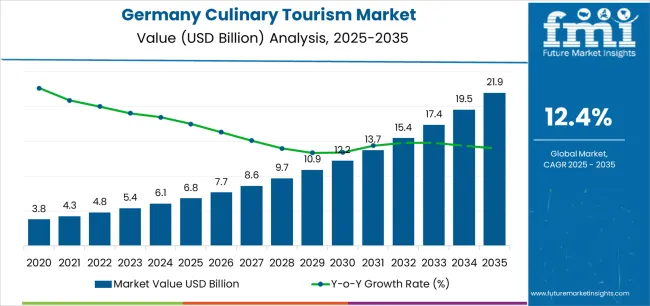
| Metric | Value |
|---|---|
| Germany Culinary Tourism Market Estimated Value in (2025 E) | USD 6.8 billion |
| Germany Culinary Tourism Market Forecast Value in (2035 F) | USD 21.9 billion |
| Forecast CAGR (2025 to 2035) | 12.4% |
Segmental Analysis
The market is segmented by Activity Type, Booking Channel, Tourist Type, Tour Type, Consumer Orientation, and Age Group and region. By Activity Type, the market is divided into Restaurants, Culinary Trials, Cooking Classes, Food Festivals, and Others. In terms of Booking Channel, the market is classified into Online Booking, Phone Booking, and In Person Booking. Based on Tourist Type, the market is segmented into International and Domestic. By Tour Type, the market is divided into Independent Traveler, Package Traveler, and Tour Group. By Consumer Orientation, the market is segmented into Women and Men. By Age Group, the market is segmented into 26 To 35 Years, 15 To 25 Years, 36 To 45 Years, 46 To 55 Years, 56 To 65 Years, and 66 To 75 Years. Regionally, the market is classified into North America, Latin America, Western Europe, Eastern Europe, Balkan & Baltic Countries, Russia & Belarus, Central Asia, East Asia, South Asia & Pacific, and the Middle East & Africa.
Insights into the Restaurants Activity Type Segment
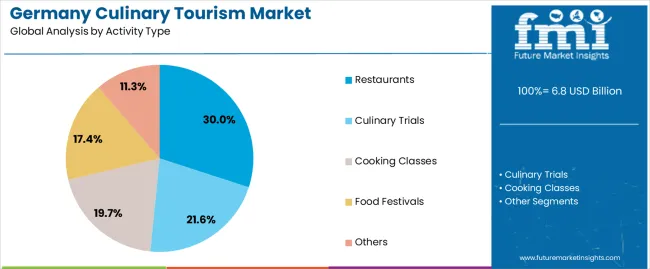
The restaurants activity type segment is projected to hold 30.00% of the Germany culinary tourism market revenue share in 2025, making it a leading contributor to market growth. This dominance is attributed to the increasing preference for dining experiences that highlight authentic regional flavors and local ingredients. The segment’s expansion is supported by Germany’s well-established culinary infrastructure, encompassing traditional eateries, gourmet restaurants, and fine dining establishments.
Visitors are increasingly drawn to unique dining environments that showcase the country’s cultural identity through food. The rise in culinary festivals, chef-led events, and tasting tours has further amplified restaurant-based tourism.
Additionally, the growing emphasis on organic ingredients and farm-to-table concepts has enhanced the appeal of dining experiences among conscious travelers The consistent investment in restaurant quality, service, and innovation has reinforced the restaurant segment’s leading position within Germany’s culinary tourism landscape.
Insights into the Online Booking Channel Segment
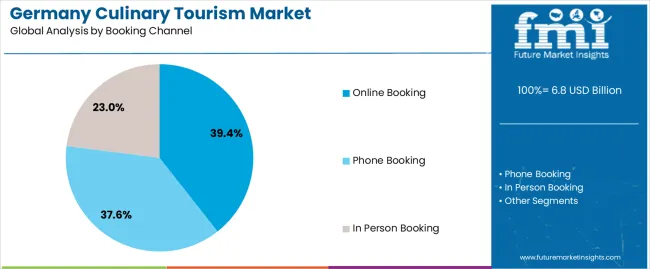
The online booking channel segment is expected to account for 39.40% of the Germany culinary tourism market revenue in 2025, solidifying its leading position. The segment’s growth is being driven by increasing digitalization and the widespread adoption of mobile platforms for travel planning and booking. Tourists are increasingly using online portals to discover, compare, and reserve culinary experiences, offering convenience and transparency.
The integration of real-time availability, digital payments, and customer reviews has strengthened the confidence of travelers opting for online bookings. The trend toward personalized culinary itineraries curated through digital platforms has also contributed to the segment’s prominence.
Additionally, social media platforms and travel apps play a pivotal role in inspiring tourists through visual content and influencer recommendations The efficiency, accessibility, and flexibility offered by digital channels continue to attract a growing number of culinary travelers, reinforcing the leadership of the online booking segment.
Insights into the International Tourist Type Segment
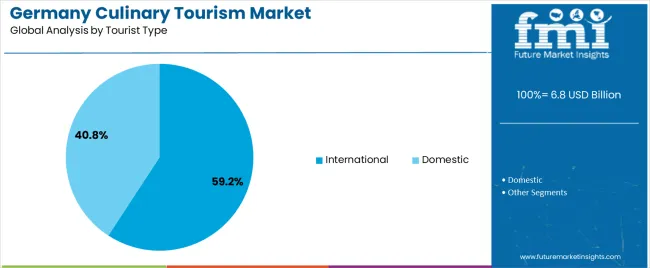
The international tourist type segment is projected to capture 59.20% of the Germany culinary tourism market revenue share in 2025, making it the leading contributor to overall market growth. This dominance is influenced by the rising influx of international visitors drawn to Germany’s diverse culinary heritage and cultural richness. The increasing popularity of food-based itineraries among global travelers has positioned Germany as a key destination within Europe’s culinary map.
The segment’s growth is also supported by improved air connectivity, promotional campaigns by tourism boards, and international collaborations between chefs and restaurants. Travelers from neighboring countries and long-haul destinations are contributing significantly to culinary-focused visits, particularly in major cities and wine-producing regions.
Furthermore, the rising trend of combining gastronomy with leisure and cultural exploration has fueled higher participation from international tourists As global demand for authentic and high-quality culinary experiences continues to expand, this segment remains central to the market’s ongoing development and growth trajectory.
Comparison of Culinary Tourism Sales (2020 to 2024) vs Forecast to 2035
Germany is well-known throughout the world for its tourist destinations and food. The main trend influencing the German culinary tourism business is the availability of local food in cafés, restaurants, and other establishments. More culinary excursions are being requested by the public as they want to learn more about the cuisine of the nation.
As a result, more cafés and restaurants are attempting to provide customers with foods that are unique to that city or region of Germany. Additionally, the government is promoting more cooking workshops and festivals, which has helped to grow the market for culinary tourism in Germany. The market for culinary tourism in Germany is anticipated to expand by 12.4% between 2025 and 2035.
Growing Popularity of Local Food Tourism in Germany
The tourism sector in Germany is growing rapidly due to the beautiful locations present across the country. Nowadays, vacationing tourists are more interested in learning about the culture and cuisine of the country.
Germany has a wide variety of cuisines to offer tourists. The tourism industry in Germany offers self-guided food tours. In addition, the tourism industry that promotes culinary tourism in Germany helps create employment in the tourism sector, thereby promoting culinary traditions in Germany.
Quaint Cafes and Local Eateries Boosting Culinary Tourism in Germany
The German government is taking the initiative to boost the culinary tourism sector by supporting culinary tourism through food museums, cooking classes, food festivals, and online and offline marketing. By promoting regional foods and ingredients, the government keeps the region's wealth intact. Together, they are collaborating with neighborhood cafes and eateries by providing adequate funding for expansion.
Demand for Locally Produced Wine Driving Culinary Tourism in Germany
Winemaking and tasting are one of the most popular culinary tourism activities in Germany. Tourists in Germany are keen to explore wineries and vineyards to learn more about the wine-making process and enjoy delicious culinary delicacies and local dishes at these sites.
For instance, the Rheingau region is known for its Riesling grapes, the region offers wine-tasting opportunities to tourists. Travellers can visit wineries like Schloss Johannisberg and Kloster Eberbach, which provide both historical insights and exquisite wine tastings.
Germany hosts wine festivals, such as Winzerfest, the 11-day wine festival that takes place every year in the first two weeks of September, and it includes numerous wine specialist producers to offer their best wines.
Cooking Classes Rising as a Culinary Tourism Trend in Germany
German residents offer cooking classes where one can learn how to make fresh Brot & Brötchen, choose the best products or ingredients, and buy them in local markets. Across the country, cooking classes are growing in popularity. Competition for these courses is strong, fluent English speakers and those who lead these courses are preferred for experience-based German cooking lessons.
Local food festivals attract more international tourists. These food festivals promote local dishes and wines. Germany has always been famous for its culture, cuisine, and wine, which makes it an attractive destination for cultural tourism in Europe.
Category-wise Insights in the Germany Culinary Tourism Market
Which Activity Type is the More Preferred by Traveller?
Tourists in Germany are Keen on Local Food Tourism
| Activity Type | Restaurants |
|---|---|
| Value Share (2025) | 27.6% |
Based on activity type, restaurants are expected to emerge as the most lucrative segment in the German culinary tourism market. In Germany, local cuisine and dishes have been available at restaurants and cafés. In recent years, restaurants have started to advertise gourmet meals and cooking schools.
Which Tourist Type Will Lead the German Culinary Tourism Market?
International Tourists Will Fuel the Germany Culinary Tourism Market
| Tourist Type | International |
|---|---|
| Value Share (2035) | 59.2% |
International visitors that travel to Germany for their vacations like taking culinary tours to explore the cultural heritage of the country. In order to meet the demand of foreign visitors, tour operators provide excursions to local locations that serve regional specialties.
Which Booking Channel is Prominent in the German Culinary Tourism Market?
Online Booking Channel is Most Preferred Booking Channel in Market
| Booking Channel | Online Booking |
|---|---|
| Value Share (2035) | 39.4% |
In terms of booking channels, the online booking channel is the most preferred by the culinary tourist. The online booking channel is often picked by tourists due to its convenience and accessibility, allowing travellers to make reservations from anywhere at any time.
Additionally, online platforms often provide exclusive deals and comprehensive information about culinary tours, cooking classes, and wine tasting events, making it easier for tourists to plan their trips. The widespread use of smartphones and the internet further supports this trend, making online booking the go-to choice for many culinary tourists.
the online booking channel is the most preferred by the culinary tourist. The online booking channel is chosen by tourists due to its conveniences and accessibility, allowing travellers to make bookings from any location, at any given time.
Also, it is easier for tourists to access detailed information about culinary tours and other related services such as cooking classes and wine tasting services through online platforms. Smartphones and internet usage also help in the growth of the online booking channel.
Competitive Landscape of the Germany Culinary Tourism Market
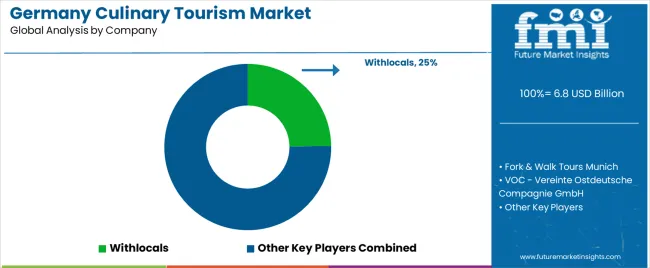
The German culinary tourism market is consolidated with many small-scale and large players that are competing to offer tours to food festivals, cooking classes in certain cities, and samples of all the well-known German delicacies to tourists. Utilizing numerous online platforms and social media.
Recent Developments:
- A six-day fest dedicated to the humble but irresistible pretzel, the Speyerer Brezelfest is held during the second week of July. A pretzel queen is chosen, and there’s also a colorful parade during which delectable pretzels are tossed into the crowds. Fireworks, live music, rides, games, and a running race (Brezelfestlauf) round out the event.
- Every September, the pretty southwestern spa town of Bad Dürkheim hosts the world’s largest wine festival, the Dürkheimer Wurstmarkt. More than 300 types of wine flow during the nine-day event. You’ll find sparkling Sekt, as well as flavorful white varietals like Riesling, Silvaner, and Gewürztraminer.
- The Bavarian cooking class takes one inside a local’s 150-year-old farmhouse in Oberaudorf, while you learn firsthand how to make a Bavarian-style dinner. Learn to make strudel and schnitzel, with one sip of Bavarian beer and local schnapps, and then take home the recipes and skills to do it again after their trip.
Many emerging companies are making a mark in the German culinary tourism market. They are offering food delivery services, platforms to book culinary tours, and ride-booking services to assist tourists in booking experience-based activities in the country.
For instance
- Fork & Walk Tours Munich and Fat Tire Tours Berlin have expanded their offerings to include more immersive culinary experiences, such as guided food tours and cooking classes.
- German start-up Quandoo offers online channels to find, explore, and reserve local restaurants and eateries across various cities in Germany.
- FlixBus is a German app-based aggregator for booking bus tickets that offers self-branded bus operators providing intercity bus routes. The app also offers real-time tracking and shows available food-based activities at nearby locations.
Scope and Coverage of the Germany Culinary Tourism Market Report
| Attribute | Details |
|---|---|
| Forecast Period | 2025 to 2035 |
| Historical Data Available for | 2020 to 2025 |
| Market Analysis | USD Million for Value |
| Key Country Covered | Germany |
| Key Segments Covered | Activity Type, Booking Channel, Tourist Type, Tour Type, Customer Orientation, Age Group . |
| Key Companies Profiled | Fork & Walk Tours Munich; VOC - Vereinte Ostdeutsche Compagnie GmbH; Withlocals; Travelxsite; Discover Bohemia Tours; Fat Tire Tours Berlin; Henry Heidelberg Tours; A Friend in Berlin; Räucherspeziatlitäten Pfau; Wie schmeckt meine Stadt; Opatrip.com Germany; Travelxsite; Essence of Berlin; Tripaneer; Goway Travel |
| Report Coverage | Market Forecast, Company Share Analysis, Competition Intelligence, DROT Analysis, Market Dynamics and Challenges, and Strategic Growth Initiatives |
| Customization & Pricing | Available upon Request |
Top Segments Studied in the Germany Culinary Tourism Market by Category
By Activity Type, Germany Culinary Tourism Market is segmented as:
- Culinary Trials
- Cooking Classes
- Restaurants
- Food Festivals
- Others
By Booking Channel, Germany Culinary Tourism Market is segmented as:
- Phone Booking
- Online Booking
- In Person Booking
By Tourist Type, Germany Culinary Tourism Market is segmented as:
- Domestic
- International
By Tour Type, Germany Culinary Tourism Market is segmented as:
- Independent Traveler
- Package Traveler
- Tour Group
By Consumer Orientation, Germany Culinary Tourism Market is segmented as:
- Men
- Women
By Age Group, Germany Culinary Tourism Market is segmented as:
- 15 to 25 Years
- 26 to 35 Years
- 36 to 45 Years
- 46 to 55 Years
- 56 to 65 Years
- 66 to 75 Years
Frequently Asked Questions
How big is the germany culinary tourism market in 2025?
The global germany culinary tourism market is estimated to be valued at USD 6.8 billion in 2025.
What will be the size of germany culinary tourism market in 2035?
The market size for the germany culinary tourism market is projected to reach USD 21.9 billion by 2035.
How much will be the germany culinary tourism market growth between 2025 and 2035?
The germany culinary tourism market is expected to grow at a 12.4% CAGR between 2025 and 2035.
What are the key product types in the germany culinary tourism market?
The key product types in germany culinary tourism market are restaurants, culinary trials, cooking classes, food festivals and others.
Which booking channel segment to contribute significant share in the germany culinary tourism market in 2025?
In terms of booking channel, online booking segment to command 39.4% share in the germany culinary tourism market in 2025.
Preview the report firsthand - request a free sample
Get SampleGet the brochure for pricing and purchase details.
Get PDFTable of Content
- Executive Summary
- Global Market Outlook
- Demand-side Trends
- Supply-side Trends
- Technology Roadmap Analysis
- Analysis and Recommendations
- Market Overview
- Market Coverage / Taxonomy
- Market Definition / Scope / Limitations
- Market Background
- Market Dynamics
- Drivers
- Restraints
- Opportunity
- Trends
- Scenario Forecast
- Demand in Optimistic Scenario
- Demand in Likely Scenario
- Demand in Conservative Scenario
- Opportunity Map Analysis
- Product Life Cycle Analysis
- Supply Chain Analysis
- Investment Feasibility Matrix
- Value Chain Analysis
- PESTLE and Porter’s Analysis
- Regulatory Landscape
- Regional Parent Market Outlook
- Production and Consumption Statistics
- Import and Export Statistics
- Market Dynamics
- Global Market Analysis 2020 to 2025 and Forecast, 2025 to 2035
- Historical Market Size Value (USD Million) Analysis, 2020 to 2025
- Current and Future Market Size Value (USD Million) Projections, 2025 to 2035
- Y-o-Y Growth Trend Analysis
- Absolute $ Opportunity Analysis
- Global Market Pricing Analysis 2020 to 2025 and Forecast 2025 to 2035
- Global Market Analysis 2020 to 2025 and Forecast 2025 to 2035, By Activity Type
- Introduction / Key Findings
- Historical Market Size Value (USD Million) Analysis By Activity Type , 2020 to 2025
- Current and Future Market Size Value (USD Million) Analysis and Forecast By Activity Type , 2025 to 2035
- Restaurants
- Culinary Trials
- Cooking Classes
- Food Festivals
- Others
- Y-o-Y Growth Trend Analysis By Activity Type , 2020 to 2025
- Absolute $ Opportunity Analysis By Activity Type , 2025 to 2035
- Global Market Analysis 2020 to 2025 and Forecast 2025 to 2035, By Booking Channel
- Introduction / Key Findings
- Historical Market Size Value (USD Million) Analysis By Booking Channel, 2020 to 2025
- Current and Future Market Size Value (USD Million) Analysis and Forecast By Booking Channel, 2025 to 2035
- Online Booking
- Phone Booking
- In Person Booking
- Y-o-Y Growth Trend Analysis By Booking Channel, 2020 to 2025
- Absolute $ Opportunity Analysis By Booking Channel, 2025 to 2035
- Global Market Analysis 2020 to 2025 and Forecast 2025 to 2035, By Tourist Type
- Introduction / Key Findings
- Historical Market Size Value (USD Million) Analysis By Tourist Type, 2020 to 2025
- Current and Future Market Size Value (USD Million) Analysis and Forecast By Tourist Type, 2025 to 2035
- International
- Domestic
- Y-o-Y Growth Trend Analysis By Tourist Type, 2020 to 2025
- Absolute $ Opportunity Analysis By Tourist Type, 2025 to 2035
- Global Market Analysis 2020 to 2025 and Forecast 2025 to 2035, By Tour Type
- Introduction / Key Findings
- Historical Market Size Value (USD Million) Analysis By Tour Type, 2020 to 2025
- Current and Future Market Size Value (USD Million) Analysis and Forecast By Tour Type, 2025 to 2035
- Independent Traveler
- Package Traveler
- Tour Group
- Y-o-Y Growth Trend Analysis By Tour Type, 2020 to 2025
- Absolute $ Opportunity Analysis By Tour Type, 2025 to 2035
- Global Market Analysis 2020 to 2025 and Forecast 2025 to 2035, By Consumer Orientation
- Introduction / Key Findings
- Historical Market Size Value (USD Million) Analysis By Consumer Orientation, 2020 to 2025
- Current and Future Market Size Value (USD Million) Analysis and Forecast By Consumer Orientation, 2025 to 2035
- Women
- Men
- Y-o-Y Growth Trend Analysis By Consumer Orientation, 2020 to 2025
- Absolute $ Opportunity Analysis By Consumer Orientation, 2025 to 2035
- Global Market Analysis 2020 to 2025 and Forecast 2025 to 2035, By Age Group
- Introduction / Key Findings
- Historical Market Size Value (USD Million) Analysis By Age Group, 2020 to 2025
- Current and Future Market Size Value (USD Million) Analysis and Forecast By Age Group, 2025 to 2035
- 26 To 35 Years
- 15 To 25 Years
- 36 To 45 Years
- 46 To 55 Years
- 56 To 65 Years
- 66 To 75 Years
- Y-o-Y Growth Trend Analysis By Age Group, 2020 to 2025
- Absolute $ Opportunity Analysis By Age Group, 2025 to 2035
- Global Market Analysis 2020 to 2025 and Forecast 2025 to 2035, By Region
- Introduction
- Historical Market Size Value (USD Million) Analysis By Region, 2020 to 2025
- Current Market Size Value (USD Million) Analysis and Forecast By Region, 2025 to 2035
- North America
- Latin America
- Western Europe
- Eastern Europe
- East Asia
- South Asia and Pacific
- Middle East & Africa
- Market Attractiveness Analysis By Region
- North America Market Analysis 2020 to 2025 and Forecast 2025 to 2035, By Country
- Historical Market Size Value (USD Million) Trend Analysis By Market Taxonomy, 2020 to 2025
- Market Size Value (USD Million) Forecast By Market Taxonomy, 2025 to 2035
- By Country
- USA
- Canada
- Mexico
- By Activity Type
- By Booking Channel
- By Tourist Type
- By Tour Type
- By Consumer Orientation
- By Age Group
- By Country
- Market Attractiveness Analysis
- By Country
- By Activity Type
- By Booking Channel
- By Tourist Type
- By Tour Type
- By Consumer Orientation
- By Age Group
- Key Takeaways
- Latin America Market Analysis 2020 to 2025 and Forecast 2025 to 2035, By Country
- Historical Market Size Value (USD Million) Trend Analysis By Market Taxonomy, 2020 to 2025
- Market Size Value (USD Million) Forecast By Market Taxonomy, 2025 to 2035
- By Country
- Brazil
- Chile
- Rest of Latin America
- By Activity Type
- By Booking Channel
- By Tourist Type
- By Tour Type
- By Consumer Orientation
- By Age Group
- By Country
- Market Attractiveness Analysis
- By Country
- By Activity Type
- By Booking Channel
- By Tourist Type
- By Tour Type
- By Consumer Orientation
- By Age Group
- Key Takeaways
- Western Europe Market Analysis 2020 to 2025 and Forecast 2025 to 2035, By Country
- Historical Market Size Value (USD Million) Trend Analysis By Market Taxonomy, 2020 to 2025
- Market Size Value (USD Million) Forecast By Market Taxonomy, 2025 to 2035
- By Country
- Germany
- UK
- Italy
- Spain
- France
- Nordic
- BENELUX
- Rest of Western Europe
- By Activity Type
- By Booking Channel
- By Tourist Type
- By Tour Type
- By Consumer Orientation
- By Age Group
- By Country
- Market Attractiveness Analysis
- By Country
- By Activity Type
- By Booking Channel
- By Tourist Type
- By Tour Type
- By Consumer Orientation
- By Age Group
- Key Takeaways
- Eastern Europe Market Analysis 2020 to 2025 and Forecast 2025 to 2035, By Country
- Historical Market Size Value (USD Million) Trend Analysis By Market Taxonomy, 2020 to 2025
- Market Size Value (USD Million) Forecast By Market Taxonomy, 2025 to 2035
- By Country
- Russia
- Poland
- Hungary
- Balkan & Baltic
- Rest of Eastern Europe
- By Activity Type
- By Booking Channel
- By Tourist Type
- By Tour Type
- By Consumer Orientation
- By Age Group
- By Country
- Market Attractiveness Analysis
- By Country
- By Activity Type
- By Booking Channel
- By Tourist Type
- By Tour Type
- By Consumer Orientation
- By Age Group
- Key Takeaways
- East Asia Market Analysis 2020 to 2025 and Forecast 2025 to 2035, By Country
- Historical Market Size Value (USD Million) Trend Analysis By Market Taxonomy, 2020 to 2025
- Market Size Value (USD Million) Forecast By Market Taxonomy, 2025 to 2035
- By Country
- China
- Japan
- South Korea
- By Activity Type
- By Booking Channel
- By Tourist Type
- By Tour Type
- By Consumer Orientation
- By Age Group
- By Country
- Market Attractiveness Analysis
- By Country
- By Activity Type
- By Booking Channel
- By Tourist Type
- By Tour Type
- By Consumer Orientation
- By Age Group
- Key Takeaways
- South Asia and Pacific Market Analysis 2020 to 2025 and Forecast 2025 to 2035, By Country
- Historical Market Size Value (USD Million) Trend Analysis By Market Taxonomy, 2020 to 2025
- Market Size Value (USD Million) Forecast By Market Taxonomy, 2025 to 2035
- By Country
- India
- ASEAN
- Australia & New Zealand
- Rest of South Asia and Pacific
- By Activity Type
- By Booking Channel
- By Tourist Type
- By Tour Type
- By Consumer Orientation
- By Age Group
- By Country
- Market Attractiveness Analysis
- By Country
- By Activity Type
- By Booking Channel
- By Tourist Type
- By Tour Type
- By Consumer Orientation
- By Age Group
- Key Takeaways
- Middle East & Africa Market Analysis 2020 to 2025 and Forecast 2025 to 2035, By Country
- Historical Market Size Value (USD Million) Trend Analysis By Market Taxonomy, 2020 to 2025
- Market Size Value (USD Million) Forecast By Market Taxonomy, 2025 to 2035
- By Country
- Kingdom of Saudi Arabia
- Other GCC Countries
- Turkiye
- South Africa
- Other African Union
- Rest of Middle East & Africa
- By Activity Type
- By Booking Channel
- By Tourist Type
- By Tour Type
- By Consumer Orientation
- By Age Group
- By Country
- Market Attractiveness Analysis
- By Country
- By Activity Type
- By Booking Channel
- By Tourist Type
- By Tour Type
- By Consumer Orientation
- By Age Group
- Key Takeaways
- Key Countries Market Analysis
- USA
- Pricing Analysis
- Market Share Analysis, 2025
- By Activity Type
- By Booking Channel
- By Tourist Type
- By Tour Type
- By Consumer Orientation
- By Age Group
- Canada
- Pricing Analysis
- Market Share Analysis, 2025
- By Activity Type
- By Booking Channel
- By Tourist Type
- By Tour Type
- By Consumer Orientation
- By Age Group
- Mexico
- Pricing Analysis
- Market Share Analysis, 2025
- By Activity Type
- By Booking Channel
- By Tourist Type
- By Tour Type
- By Consumer Orientation
- By Age Group
- Brazil
- Pricing Analysis
- Market Share Analysis, 2025
- By Activity Type
- By Booking Channel
- By Tourist Type
- By Tour Type
- By Consumer Orientation
- By Age Group
- Chile
- Pricing Analysis
- Market Share Analysis, 2025
- By Activity Type
- By Booking Channel
- By Tourist Type
- By Tour Type
- By Consumer Orientation
- By Age Group
- Germany
- Pricing Analysis
- Market Share Analysis, 2025
- By Activity Type
- By Booking Channel
- By Tourist Type
- By Tour Type
- By Consumer Orientation
- By Age Group
- UK
- Pricing Analysis
- Market Share Analysis, 2025
- By Activity Type
- By Booking Channel
- By Tourist Type
- By Tour Type
- By Consumer Orientation
- By Age Group
- Italy
- Pricing Analysis
- Market Share Analysis, 2025
- By Activity Type
- By Booking Channel
- By Tourist Type
- By Tour Type
- By Consumer Orientation
- By Age Group
- Spain
- Pricing Analysis
- Market Share Analysis, 2025
- By Activity Type
- By Booking Channel
- By Tourist Type
- By Tour Type
- By Consumer Orientation
- By Age Group
- France
- Pricing Analysis
- Market Share Analysis, 2025
- By Activity Type
- By Booking Channel
- By Tourist Type
- By Tour Type
- By Consumer Orientation
- By Age Group
- India
- Pricing Analysis
- Market Share Analysis, 2025
- By Activity Type
- By Booking Channel
- By Tourist Type
- By Tour Type
- By Consumer Orientation
- By Age Group
- ASEAN
- Pricing Analysis
- Market Share Analysis, 2025
- By Activity Type
- By Booking Channel
- By Tourist Type
- By Tour Type
- By Consumer Orientation
- By Age Group
- Australia & New Zealand
- Pricing Analysis
- Market Share Analysis, 2025
- By Activity Type
- By Booking Channel
- By Tourist Type
- By Tour Type
- By Consumer Orientation
- By Age Group
- China
- Pricing Analysis
- Market Share Analysis, 2025
- By Activity Type
- By Booking Channel
- By Tourist Type
- By Tour Type
- By Consumer Orientation
- By Age Group
- Japan
- Pricing Analysis
- Market Share Analysis, 2025
- By Activity Type
- By Booking Channel
- By Tourist Type
- By Tour Type
- By Consumer Orientation
- By Age Group
- South Korea
- Pricing Analysis
- Market Share Analysis, 2025
- By Activity Type
- By Booking Channel
- By Tourist Type
- By Tour Type
- By Consumer Orientation
- By Age Group
- Russia
- Pricing Analysis
- Market Share Analysis, 2025
- By Activity Type
- By Booking Channel
- By Tourist Type
- By Tour Type
- By Consumer Orientation
- By Age Group
- Poland
- Pricing Analysis
- Market Share Analysis, 2025
- By Activity Type
- By Booking Channel
- By Tourist Type
- By Tour Type
- By Consumer Orientation
- By Age Group
- Hungary
- Pricing Analysis
- Market Share Analysis, 2025
- By Activity Type
- By Booking Channel
- By Tourist Type
- By Tour Type
- By Consumer Orientation
- By Age Group
- Kingdom of Saudi Arabia
- Pricing Analysis
- Market Share Analysis, 2025
- By Activity Type
- By Booking Channel
- By Tourist Type
- By Tour Type
- By Consumer Orientation
- By Age Group
- Turkiye
- Pricing Analysis
- Market Share Analysis, 2025
- By Activity Type
- By Booking Channel
- By Tourist Type
- By Tour Type
- By Consumer Orientation
- By Age Group
- South Africa
- Pricing Analysis
- Market Share Analysis, 2025
- By Activity Type
- By Booking Channel
- By Tourist Type
- By Tour Type
- By Consumer Orientation
- By Age Group
- USA
- Market Structure Analysis
- Competition Dashboard
- Competition Benchmarking
- Market Share Analysis of Top Players
- By Regional
- By Activity Type
- By Booking Channel
- By Tourist Type
- By Tour Type
- By Consumer Orientation
- By Age Group
- Competition Analysis
- Competition Deep Dive
- Withlocals
- Overview
- Product Portfolio
- Profitability by Market Segments (Product/Age /Sales Channel/Region)
- Sales Footprint
- Strategy Overview
- Marketing Strategy
- Product Strategy
- Channel Strategy
- Fork & Walk Tours Munich
- VOC - Vereinte Ostdeutsche Compagnie GmbH
- Travelxsite
- Discover Bohemia Tours
- Fat Tire Tours Berlin
- Henry Heidelberg Tours
- A Friend in Berlin
- Räucherspeziatlitäten Pfau
- Wie schmeckt meine Stadt
- Opatrip.com Germany
- Essence of Berlin
- Tripaneer
- Goway Travel
- Withlocals
- Competition Deep Dive
- Assumptions & Acronyms Used
- Research Methodology


