

- Industry Size (2025)
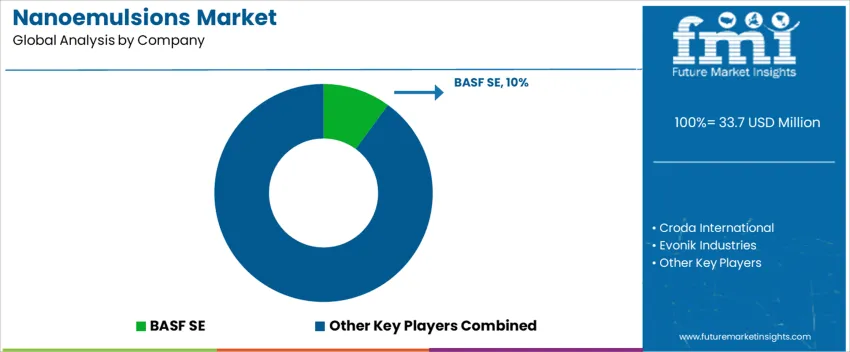
- USD 33.7 Mn
- Forecast (2035)
- USD 90.6 Mn
- CAGR (2025 to 2035)
- 10.4%
Nanoemulsions Market Forecast and Outlook 2025 to 2035
The global nanoemulsions market is expected to grow from USD 33.7 million in 2025 to USD 90.6 million by 2035, at a compound annual growth rate (CAGR) of 10.4%. This growth represents an absolute increase of USD 56.9 million over the forecast period, expanding by more than 2.7 times. The market's expansion is driven primarily by rising demand for nanoemulsions in pharmaceutical, food, and cosmetic applications. Nanoemulsions are widely used to enhance the solubility and bioavailability of poorly soluble compounds, making them essential for improving drug delivery and extending the shelf life of various products.
In pharmaceuticals, nanoemulsions are gaining traction for their targeted drug delivery systems, particularly in the treatment of chronic diseases and the delivery of active ingredients to specific sites within the body. The food industry is utilizing nanoemulsions to encapsulate sensitive nutrients, improving stability and bioavailability in functional foods and beverages. In cosmetics, nanoemulsions are used to enhance ingredient penetration and stability in skin care and hair care products. As production technologies improve and the regulatory environment becomes more favorable, nanoemulsions are expected to play an increasingly important role in these industries, driving continued market growth. The market value is projected to reach USD 50.1 million by 2030, with steady growth continuing through 2035.
Quick Stats for Nanoemulsions Market
- Nanoemulsions Market Value (2025): USD 33.7 million
- Nanoemulsions Market Forecast Value (2035): USD 90.6 million
- Nanoemulsions Market Forecast CAGR: 10.4%
- Leading Product Form in Nanoemulsions Market: Liquid (Solution)
- Key Growth Regions in Nanoemulsions Market: Asia Pacific, Europe, and North America
- Top Players in Nanoemulsions Market: BASF SE, Croda International, Evonik Industries, Symrise (incl. IFF/Givaudan actives), Dow / Dow Inc., Ashland, Clariant, Seppic
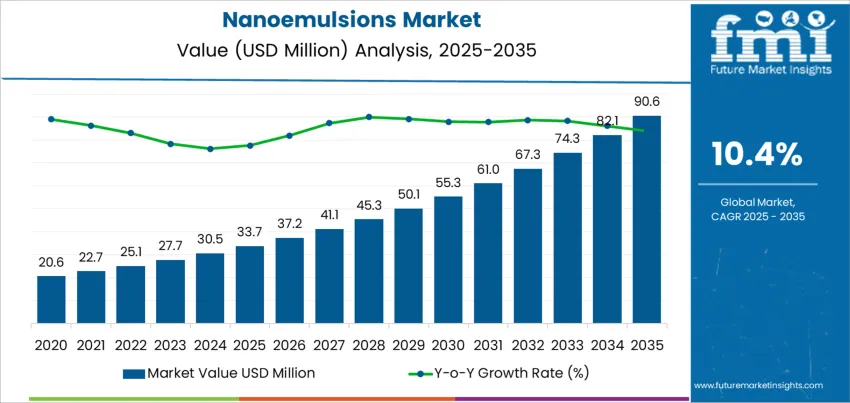
Nanoemulsions Market Year-over-Year Forecast (2025-2035)
Between 2025 and 2030, the nanoemulsions market is projected to grow from USD 33.7 million to USD 50.1 million, resulting in a value increase of USD 16.4 million, which represents 46.7% of the total forecast growth for the decade. This phase of development will be shaped by rising demand for nanoemulsions in pharmaceuticals, food, and cosmetic industries. In pharmaceuticals, the demand is driven by the need for improved drug delivery systems and enhanced bioavailability of poorly soluble drugs. In food, nanoemulsions are increasingly used to encapsulate sensitive nutrients, improving stability and shelf life. The cosmetics sector is utilizing nanoemulsions to enhance ingredient delivery and product performance, particularly in skin care and hair care formulations.
From 2030 to 2035, the market is forecast to grow from USD 50.1 million to USD 90.6 million, adding another USD 40.5 million, which constitutes 53.3% of the overall ten-year expansion. This period is expected to see significant growth in the pharmaceutical sector, driven by increased adoption of nanoemulsions in targeted drug delivery and advanced therapies. The food and beverage industry will continue to see strong demand, particularly in functional food formulations. In cosmetics, nanoemulsions will become even more integral for high-performance skin care and hair care solutions. Advancements in formulation techniques and growing consumer demand for more effective and stable products will drive this phase of market expansion.
Nanoemulsions Market Key Takeaways
| Metric | Value |
|---|---|
| Market Value (2025) | USD 33.7 million |
| Market Forecast Value (2035) | USD 90.6 million |
| Forecast CAGR (2025-2035) | 10.4% |
Why is the Nanoemulsions Market Growing?
The nanoemulsions market is expanding due to their versatile applications across various industries, including pharmaceuticals, cosmetics, and food. Nanoemulsions are used to enhance the delivery of active ingredients, improving their solubility and bioavailability. In the pharmaceutical sector, they are particularly valuable in drug delivery systems, enabling the efficient transportation of hydrophobic compounds. In cosmetics, nanoemulsions help to enhance the stability and efficacy of skincare products. Similarly, in the food industry, they offer improved flavors and nutritional benefits, driving adoption in food and beverage formulations.
Advancements in nanotechnology and manufacturing processes have contributed to the growing demand for nanoemulsions. Innovations in production techniques, such as high-pressure homogenization, have made it possible to produce stable nanoemulsions at scale, which has further driven their commercial viability. Additionally, increasing consumer awareness of the benefits of nanoemulsion-based products, such as improved effectiveness and enhanced sensory experiences, has boosted their demand across various sectors.
The widespread adoption of nanoemulsions faces challenges such as high production costs and regulatory hurdles. The complexity of formulating stable nanoemulsions, along with concerns over long-term safety and potential environmental impacts, may slow down growth in some regions. Despite these challenges, ongoing research, technological advancements, and increasing demand for more efficient product delivery systems are expected to overcome these obstacles, fostering continued growth in the nanoemulsions market.
How are End Use Segments and Product Forms Structuring the Global Nanoemulsions Landscape?
Global demand for nanoemulsions is shaped by end use application and product form, with significant concentration in regions such as East Asia, Western Europe, and North America. Skin care leads with a 11.9% share, driven by innovations in formulations focused on barrier repair, hydration, and skin protection. Other key segments include body care, hair care, sun care, color cosmetics, men’s grooming, baby and kids care, and dermocosmetic or professional care, distributed across both mass and professional channels. On the product form side, powders account for a 16.0% share, alongside granules/agglomerates, flakes, pellets/prills, liquid solutions, high-active liquid concentrates, dispersions, emulsions, pastes, gels, wax/solid blocks, and oils. These trends reflect the growing importance of stability, formulation versatility, and efficient product delivery systems across regional manufacturing hubs.
Why Does Skin Care Hold the Largest Share in Global Nanoemulsion Usage?
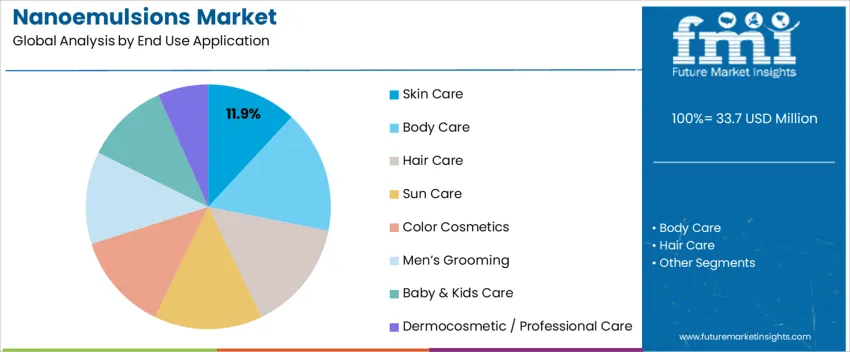
Skin care accounts for 11.9% of global nanoemulsion usage, driven by increasing consumer interest in microbiome-focused formulations and effective skin protection. Nanoemulsions are commonly incorporated into facial cleansers, serums, toners, and moisturizers, where the extended skin contact enhances functional benefits such as hydration balance and improved skin texture. Demand is particularly strong in South Korea, Japan, the USA, and Western Europe, where rapid innovation in dermocosmetics drives adoption across both clinical and mass retail categories. Furthermore, skin care products benefit from higher active ingredient concentrations compared to rinse-off formats like body and hair care. Dermocosmetic and professional brands rely on nanoemulsions for targeted product positioning, particularly in anti-aging, acne treatment, and post-procedure care. Ongoing product development in regions like France, Germany, and the USA continues to emphasize nanoemulsion technology to create differentiated, high-performance cosmetic products within regulated markets.
Why Does Powder Form Dominate Product Positioning in the Global Nanoemulsions Market?
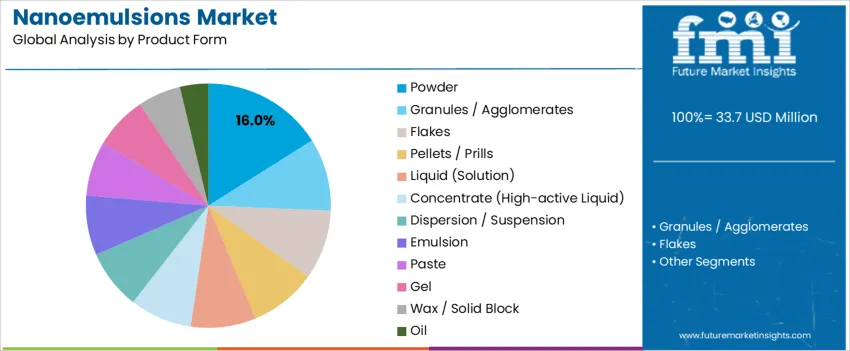
Powder form holds a 16.0% share of global nanoemulsion demand, primarily due to its superior shelf stability, reduced moisture exposure, and consistent performance in formulations. Powders enable precise dosing across various product forms like emulsions, gels, and masks, ensuring consistent batch performance across large-scale production in Asia, Europe, and North America. Powder formats also offer logistical advantages, improving transport efficiency by reducing leakage risk and minimizing refrigeration requirements during global shipping. Contract manufacturers prefer powders due to their compatibility with automated blending systems, enhancing predictable quality retention across different climate conditions. Regulatory documentation and microbial specifications are more standardized for powdered inputs in export markets, further solidifying powder’s dominance in the global nanoemulsion sector.
What is Shaping the Nanoemulsions Sector Worldwide?
Nanoemulsions are being shaped by rising demand for efficient delivery systems across pharmaceuticals, cosmetics, food and beverages, and nutraceuticals. Their unique ability to encapsulate and deliver both hydrophobic and hydrophilic compounds with enhanced stability and bioavailability drives broad interest. Advances in formulation and emulsification technologies such as high‑pressure homogenization, ultrasonication, and low‑energy phase inversion methods are making nanoemulsions more feasible to produce. Growing consumer demand for enhanced efficacy, better absorption, and more consistent performance of active ingredients pushes companies to adopt nanoemulsion-based solutions. At the same time technical challenges around stability, large‑scale production, regulatory compliance, and shelf‑life need to be addressed for wider adoption.
Which Factors Are Driving Global Demand for Nanoemulsions?
Demand is rising as industries seek improved bioavailability and controlled delivery of active molecules across applications. In pharmaceuticals nanoemulsions enhance drug solubility and absorption especially for poorly water‑soluble drugs. In cosmetics nanoemulsions enable deeper skin penetration and more effective release of active ingredients like antioxidants or UV-protectants, improving product performance and user experience. In food and nutraceuticals, they help incorporate lipophilic vitamins, flavors or nutrients into water‑based products and protect sensitive compounds from degradation, improving stability and digestibility. Rising interest in premium formulations and clean, efficient delivery systems further accelerates the shift toward nanoemulsions.
What Constraints Are Limiting Wider Adoption of Nanoemulsions?
Formulation complexity and stability concerns remain significant constraints. Nanoemulsions can be kinetically stable but are thermodynamically unstable, meaning over time they may phase‑separate, especially under storage or varying temperature conditions. Manufacturing at scale is challenging because achieving consistent droplet size distribution requires advanced equipment such as high‑pressure homogenizers or microfluidic processors adding to cost and complexity. Regulatory and safety considerations also slow adoption especially for ingestible or topical products when active ingredients are involved, or when emulsifiers/surfactants need to meet strict safety standards. Sensory, taste or texture issues in food products and potential consumer concerns about “nano” ingredients further hinder acceptance in some markets.
Which Key Trends Are Redefining Nanoemulsions Globally?
One trend is increasing use of nanoemulsions in personalized and advanced drug delivery systems including oral, topical, intranasal or ocular formulations exploiting their flexibility and absorption advantages. In cosmetics, brands are shifting toward lighter, more transparent, easily absorbed formulations with nanoemulsions to deliver active compounds more effectively for skincare, sun care, and anti‑aging products. In food and nutraceutical sectors there is growing exploration of nanoemulsions to fortify beverages or foods with lipophilic nutrients (vitamins, antioxidants) and to mask unpleasant tastes or odors of bioactives. On the production side, advances in low‑energy and microfluidic emulsification methods are beginning to reduce cost and energy needs, making nanoemulsion fabrication more scalable and sustainable.
What is the Global Growth Outlook for the Nanoemulsions Industry by Country?
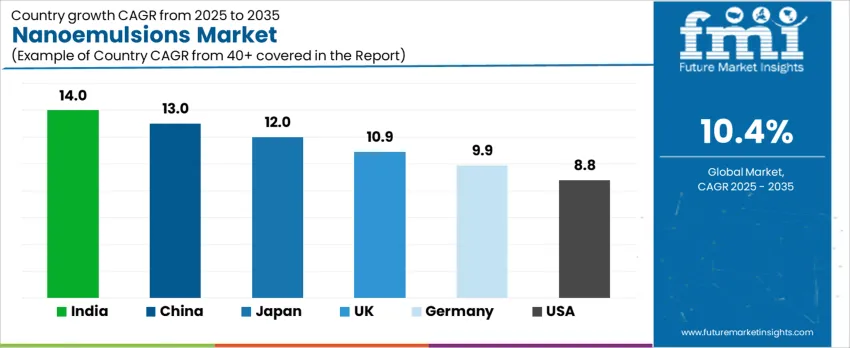
| Country | CAGR (%) |
|---|---|
| India | 14.0% |
| China | 13.0% |
| Japan | 12.0% |
| UK | 10.9% |
| Germany | 9.9% |
| USA | 8.8% |
The nanoemulsions industry is witnessing strong global growth, led by India with a 14.0% CAGR, driven by increasing demand for advanced drug delivery systems, functional foods, and cosmetics. China follows with a 13.0% CAGR, supported by expanding healthcare infrastructure and rising consumer interest in beauty and wellness products. Japan’s growth at 12.0% reflects a strong emphasis on precision delivery systems in pharmaceuticals and nutraceuticals. The UK and Germany show a steady growth of 10.9% and 9.9% respectively, fueled by high adoption of nanoemulsions in pharmaceuticals and personal care. The USA, while showing a moderate growth rate of 8.8%, benefits from technological innovation and applications in drug formulations and consumer products.
What is Driving the Nanoemulsions Industry Growth in India?
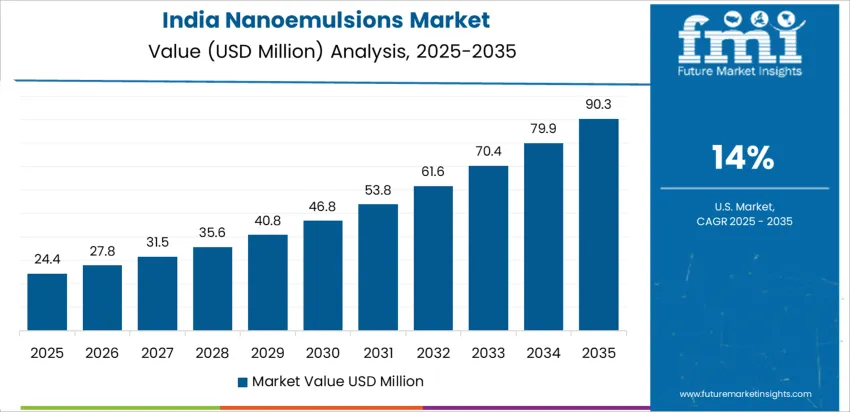
India’s nanoemulsions industry is experiencing rapid growth, with a projected 14.0% CAGR through 2035. This growth is primarily driven by the increasing demand for advanced drug delivery systems, functional foods, and cosmetics. The rising awareness of health and wellness, particularly in urban and semi-urban regions, is encouraging greater consumption of dietary supplements and personalized skincare products. India’s strong pharmaceutical and biotechnology sectors are making significant strides in developing innovative nanoemulsion technologies for precise drug delivery. Moreover, the expanding e-commerce sector is providing consumers with better access to wellness products, driving market demand. Local manufacturing initiatives are further improving product availability and pricing. As more people seek effective health solutions and enhanced beauty treatments, India’s nanoemulsions sector is poised for continued growth.
What is Fueling Nanoemulsions Industry Expansion in China?
China is witnessing impressive growth in the nanoemulsions industry, with a 13.0% CAGR expected through 2035. Strong demand in the pharmaceutical, personal care, and nutraceutical sectors is driving this expansion. The growing interest in targeted drug delivery and advanced skincare formulations is fueling the adoption of nanoemulsion technologies. In China, domestic pharmaceutical companies and biotech firms are investing heavily in enhancing fermentation and nanoemulsion production capabilities. Additionally, the country’s expanding middle class is increasing its consumption of health supplements, especially in tier-one and tier-two cities. Nanoemulsion-based products, such as those used in beauty and wellness, are gaining popularity due to their ability to improve absorption and effectiveness. China’s regulatory environment and expanding healthcare infrastructure are also supporting the industry’s growth.
What Factors are Contributing to Nanoemulsions Market Growth in Japan?
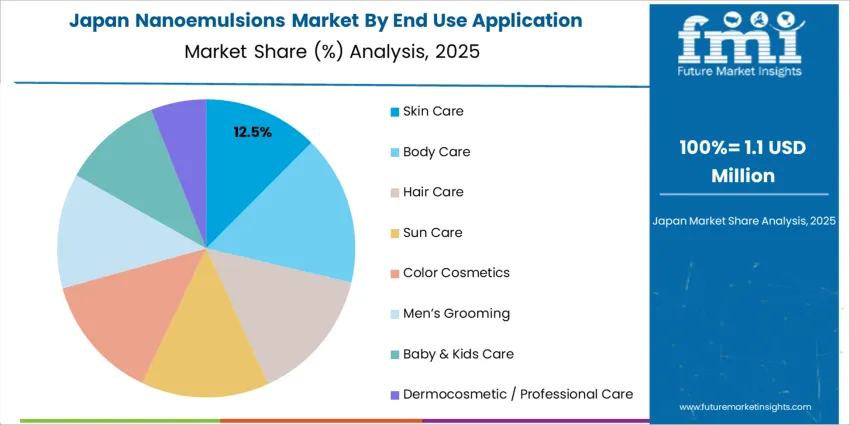
Japan is experiencing steady growth in the nanoemulsions industry, with a projected 12.0% CAGR through 2035. The country’s strong emphasis on advanced pharmaceutical technologies and high-quality personal care products is driving this expansion. Nanoemulsions are increasingly being used in drug delivery systems for more effective treatments and in skincare products to address specific skin concerns. Japan’s aging population is a significant factor in the growing demand for health supplements, particularly those designed for targeted absorption and improved efficacy. The integration of nanoemulsions into everyday products, including functional foods and nutraceuticals, further supports the market’s growth. As the Japanese population remains health-conscious and beauty-focused, demand for nanoemulsion-based innovations is expected to continue rising.
What is Sustaining Nanoemulsions Growth in the UK?
The UK’s nanoemulsions industry is growing at a steady pace, with a CAGR of 10.9% through 2035. The country’s growing focus on preventive wellness, functional foods, and personalized skincare is driving demand for nanoemulsion-based products. Nanoemulsions are being increasingly adopted in pharmaceuticals for advanced drug delivery and in cosmetics for improved bioavailability. As consumers seek more effective wellness solutions, especially within the aging population, nanoemulsion technology offers a reliable solution for targeted health and beauty benefits. Additionally, the rise of e-commerce and the increasing availability of nanoemulsion-based products through retail pharmacies and supermarkets further support the sector’s growth. With strong regulatory standards and innovation in personalized treatments, the UK is poised for continued growth in the nanoemulsions market.
What is Driving Stable Nanoemulsions Industry Growth in Germany?
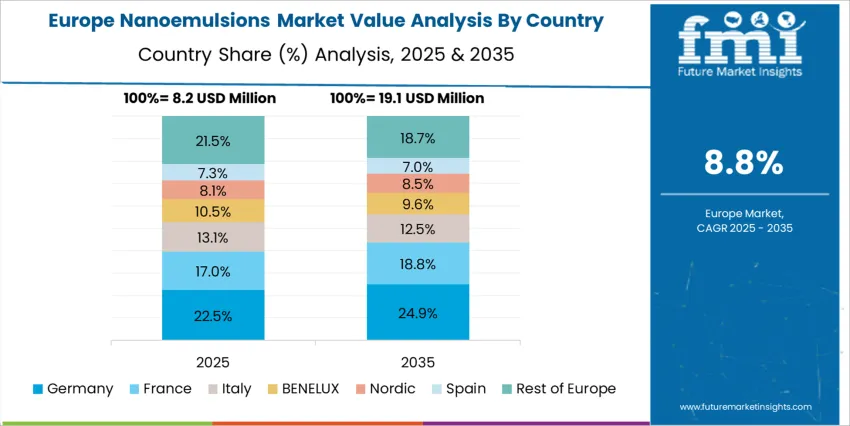
Germany is witnessing a steady 9.9% CAGR in the nanoemulsions industry through 2035. The country’s well-established pharmaceutical and healthcare sectors are increasingly adopting nanoemulsion technologies for enhanced drug delivery and targeted treatments. Nanoemulsions are particularly popular in medical and clinical applications, where precision and efficacy are essential. The growing demand for nutraceuticals and functional foods, especially among the aging population, is also contributing to market growth. Additionally, Germany’s strict regulatory framework ensures high-quality standards for nanoemulsion products, which boosts consumer confidence. Pharmaceutical companies and cosmetics manufacturers are investing in nanoemulsion-based innovations to improve the stability and effectiveness of their products. As health-consciousness and demand for specialized treatments continue to rise, Germany’s nanoemulsion market is positioned for steady expansion.
What is Supporting the Nanoemulsions Industry Growth in the USA?
The USA’s nanoemulsions industry is experiencing moderate growth, with an expected CAGR of 8.8% through 2035. The market is driven by the increasing demand for advanced drug delivery systems, particularly in pharmaceuticals, and the growing popularity of personalized skincare. While the market is mature, innovation remains a key focus, with advancements in nanoemulsion technologies aimed at enhancing the efficacy of existing products. Capsules, gummies, and powders are the leading formats in the dietary supplement market, while targeted skin treatments are gaining traction in the personal care sector. The use of subscription models for health and beauty products, along with medical recommendations for gut health, is also driving repeat consumption. The USA’s well-developed healthcare infrastructure supports stable growth, though market penetration limits rapid volume expansion.
What is Driving the Demand for Nanoemulsions Globally and Who Are the Key Players Shaping the Industry?
The demand for nanoemulsions is rising globally due to their ability to enhance the solubility and bioavailability of active ingredients in a variety of applications, including pharmaceuticals, cosmetics, and food. Nanoemulsions enable efficient delivery of bioactive compounds, offering superior performance in drug delivery, skincare products, and functional foods. As industries focus on improving product effectiveness and consumer health, nanoemulsions provide a promising solution. The growing trend towards personalized health and beauty products, coupled with advancements in nanoemulsion technology, is accelerating their adoption across various sectors.
Key players shaping the nanoemulsions industry include BASF SE, Croda International, Evonik Industries, Symrise (including IFF/Givaudan active ingredient businesses), Dow Inc., Ashland, Clariant, and Seppic. BASF SE holds a significant share of 10.0%, leading the way in the development and supply of nanoemulsions. These industry leaders leverage their extensive research, manufacturing expertise, and global distribution networks to dominate the market. Smaller companies also play a role by offering niche solutions for specific applications, ensuring a dynamic and competitive market landscape.
The development of nanoemulsions is also supported by significant advancements in formulation technologies and processing methods. These include improvements in stability, ease of absorption, and the ability to carry both hydrophilic and lipophilic compounds in a single formulation. In pharmaceuticals, nanoemulsions are particularly beneficial for targeted drug delivery and controlled release, further increasing their demand. As the importance of enhancing the bioavailability of poorly soluble compounds becomes more evident, nanoemulsions continue to see widespread adoption, particularly in the nutraceutical and cosmeceutical markets.
Key Players in the Nanoemulsions Market
- BASF SE
- Croda International
- Evonik Industries
- Symrise (incl. IFF/Givaudan actives)
- Dow / Dow Inc.
- Ashland
- Clariant
- Seppic
Scope of Report
| Items | Values |
|---|---|
| Quantitative Units (2025) | USD million |
| End Use Application | Skin Care, Body Care, Hair Care, Sun Care, Color Cosmetics, Men’s Grooming, Baby & Kids Care, Dermocosmetic / Professional Care |
| Product Form | Powder, Granules / Agglomerates, Flakes, Pellets / Prills, Liquid (Solution), Concentrate (High-active Liquid), Dispersion / Suspension, Emulsion, Paste, Gel, Wax / Solid Block, Oil |
| Regions Covered | North America, Europe, East Asia, South Asia, Latin America, Middle East & Africa, Eastern Europe |
| Countries Covered | USA, China, Japan, South Korea, India, Germany, UK, France, Italy, Brazil, Argentina, Mexico, Saudi Arabia, South Africa, Russia, others |
| Key Companies Profiled | BASF SE, Croda International, Evonik Industries, Symrise (including IFF/Givaudan actives), Dow / Dow Inc., Ashland, Clariant, Seppic / Others (Lubrizol, Lonza, Inolex), Other regional and niche suppliers |
| Additional Attributes | Dollar by sales by end use application and product form; regional CAGR and growth outlook; multi-strain formulation adoption; clinical validation and regulatory compliance tracking; distribution channels including retail, DTC, e-commerce, and institutional buyers; product form prevalence in powders, liquids, and emulsions; regional preference for strain libraries; supply chain logistics for cold chain and ambient stability; strain survivability, CFU consistency, and shelf-life performance; innovation trends including prebiotic/postbiotic combinations, non-dairy matrices, and personalized nutrition; competitive positioning of global vs regional suppliers. |
Nanoemulsions Market by Key Segments
End Use Application:
- Skin Care
- Body Care
- Hair Care
- Sun Care
- Color Cosmetics
- Men’s Grooming
- Baby & Kids Care
- Dermocosmetic / Professional Care
Product Form:
- Powder
- Granules / Agglomerates
- Flakes
- Pellets / Prills
- Liquid (Solution)
- Concentrate (High-active Liquid)
- Dispersion / Suspension
- Emulsion
- Paste
- Gel
- Wax / Solid Block
- Oil
Region:
- Asia Pacific
- China
- Japan
- South Korea
- India
- Australia & New Zealand
- ASEAN
- Rest of Asia Pacific
- Europe
- Germany
- United Kingdom
- France
- Italy
- Spain
- Nordic
- BENELUX
- Rest of Europe
- North America
- United States
- Canada
- Mexico
- Latin America
- Brazil
- Chile
- Rest of Latin America
- Middle East & Africa
- Kingdom of Saudi Arabia
- Other GCC Countries
- Turkey
- South Africa
- Other African Union
- Rest of Middle East & Africa
Frequently Asked Questions
How big is the nanoemulsions market in 2025?
The global nanoemulsions market is estimated to be valued at USD 33.7 million in 2025.
What will be the size of nanoemulsions market in 2035?
The market size for the nanoemulsions market is projected to reach USD 90.6 million by 2035.
How much will be the nanoemulsions market growth between 2025 and 2035?
The nanoemulsions market is expected to grow at a 10.4% CAGR between 2025 and 2035.
What are the key product types in the nanoemulsions market?
The key product types in nanoemulsions market are skin care, body care, hair care, sun care, color cosmetics, men’s grooming, baby & kids care and dermocosmetic / professional care.
Which product form segment to contribute significant share in the nanoemulsions market in 2025?
In terms of product form , powder segment to command 16.0% share in the nanoemulsions market in 2025.
Preview the report firsthand - request a free sample
Get SampleGet the brochure for pricing and purchase details.
Get PDFTable of Content
- Executive Summary
- Global Market Outlook
- Demand-side Trends
- Supply-side Trends
- Technology Roadmap Analysis
- Analysis and Recommendations
- Market Overview
- Market Coverage / Taxonomy
- Market Definition / Scope / Limitations
- Market Background
- Market Dynamics
- Drivers
- Restraints
- Opportunity
- Trends
- Scenario Forecast
- Demand in Optimistic Scenario
- Demand in Likely Scenario
- Demand in Conservative Scenario
- Opportunity Map Analysis
- Product Life Cycle Analysis
- Supply Chain Analysis
- Investment Feasibility Matrix
- Value Chain Analysis
- PESTLE and Porter’s Analysis
- Regulatory Landscape
- Regional Parent Market Outlook
- Production and Consumption Statistics
- Import and Export Statistics
- Market Dynamics
- Global Market Analysis 2020 to 2024 and Forecast, 2025 to 2035
- Historical Market Size Value (USD Million) Analysis, 2020 to 2024
- Current and Future Market Size Value (USD Million) Projections, 2025 to 2035
- Y-o-Y Growth Trend Analysis
- Absolute $ Opportunity Analysis
- Global Market Pricing Analysis 2020 to 2024 and Forecast 2025 to 2035
- Global Market Analysis 2020 to 2024 and Forecast 2025 to 2035, By End Use Application
- Introduction / Key Findings
- Historical Market Size Value (USD Million) Analysis By End Use Application , 2020 to 2024
- Current and Future Market Size Value (USD Million) Analysis and Forecast By End Use Application , 2025 to 2035
- Skin Care
- Body Care
- Hair Care
- Sun Care
- Color Cosmetics
- Men’s Grooming
- Baby & Kids Care
- Dermocosmetic / Professional Care
- Y-o-Y Growth Trend Analysis By End Use Application , 2020 to 2024
- Absolute $ Opportunity Analysis By End Use Application , 2025 to 2035
- Global Market Analysis 2020 to 2024 and Forecast 2025 to 2035, By Product Form
- Introduction / Key Findings
- Historical Market Size Value (USD Million) Analysis By Product Form, 2020 to 2024
- Current and Future Market Size Value (USD Million) Analysis and Forecast By Product Form, 2025 to 2035
- Powder
- Granules / Agglomerates
- Flakes
- Pellets / Prills
- Liquid (Solution)
- Concentrate (High-active Liquid)
- Dispersion / Suspension
- Emulsion
- Paste
- Gel
- Wax / Solid Block
- Y-o-Y Growth Trend Analysis By Product Form, 2020 to 2024
- Absolute $ Opportunity Analysis By Product Form, 2025 to 2035
- Global Market Analysis 2020 to 2024 and Forecast 2025 to 2035, By Region
- Introduction
- Historical Market Size Value (USD Million) Analysis By Region, 2020 to 2024
- Current Market Size Value (USD Million) Analysis and Forecast By Region, 2025 to 2035
- North America
- Latin America
- Western Europe
- Eastern Europe
- East Asia
- South Asia and Pacific
- Middle East & Africa
- Market Attractiveness Analysis By Region
- North America Market Analysis 2020 to 2024 and Forecast 2025 to 2035, By Country
- Historical Market Size Value (USD Million) Trend Analysis By Market Taxonomy, 2020 to 2024
- Market Size Value (USD Million) Forecast By Market Taxonomy, 2025 to 2035
- By Country
- USA
- Canada
- Mexico
- By End Use Application
- By Product Form
- By Country
- Market Attractiveness Analysis
- By Country
- By End Use Application
- By Product Form
- Key Takeaways
- Latin America Market Analysis 2020 to 2024 and Forecast 2025 to 2035, By Country
- Historical Market Size Value (USD Million) Trend Analysis By Market Taxonomy, 2020 to 2024
- Market Size Value (USD Million) Forecast By Market Taxonomy, 2025 to 2035
- By Country
- Brazil
- Chile
- Rest of Latin America
- By End Use Application
- By Product Form
- By Country
- Market Attractiveness Analysis
- By Country
- By End Use Application
- By Product Form
- Key Takeaways
- Western Europe Market Analysis 2020 to 2024 and Forecast 2025 to 2035, By Country
- Historical Market Size Value (USD Million) Trend Analysis By Market Taxonomy, 2020 to 2024
- Market Size Value (USD Million) Forecast By Market Taxonomy, 2025 to 2035
- By Country
- Germany
- UK
- Italy
- Spain
- France
- Nordic
- BENELUX
- Rest of Western Europe
- By End Use Application
- By Product Form
- By Country
- Market Attractiveness Analysis
- By Country
- By End Use Application
- By Product Form
- Key Takeaways
- Eastern Europe Market Analysis 2020 to 2024 and Forecast 2025 to 2035, By Country
- Historical Market Size Value (USD Million) Trend Analysis By Market Taxonomy, 2020 to 2024
- Market Size Value (USD Million) Forecast By Market Taxonomy, 2025 to 2035
- By Country
- Russia
- Poland
- Hungary
- Balkan & Baltic
- Rest of Eastern Europe
- By End Use Application
- By Product Form
- By Country
- Market Attractiveness Analysis
- By Country
- By End Use Application
- By Product Form
- Key Takeaways
- East Asia Market Analysis 2020 to 2024 and Forecast 2025 to 2035, By Country
- Historical Market Size Value (USD Million) Trend Analysis By Market Taxonomy, 2020 to 2024
- Market Size Value (USD Million) Forecast By Market Taxonomy, 2025 to 2035
- By Country
- China
- Japan
- South Korea
- By End Use Application
- By Product Form
- By Country
- Market Attractiveness Analysis
- By Country
- By End Use Application
- By Product Form
- Key Takeaways
- South Asia and Pacific Market Analysis 2020 to 2024 and Forecast 2025 to 2035, By Country
- Historical Market Size Value (USD Million) Trend Analysis By Market Taxonomy, 2020 to 2024
- Market Size Value (USD Million) Forecast By Market Taxonomy, 2025 to 2035
- By Country
- India
- ASEAN
- Australia & New Zealand
- Rest of South Asia and Pacific
- By End Use Application
- By Product Form
- By Country
- Market Attractiveness Analysis
- By Country
- By End Use Application
- By Product Form
- Key Takeaways
- Middle East & Africa Market Analysis 2020 to 2024 and Forecast 2025 to 2035, By Country
- Historical Market Size Value (USD Million) Trend Analysis By Market Taxonomy, 2020 to 2024
- Market Size Value (USD Million) Forecast By Market Taxonomy, 2025 to 2035
- By Country
- Kingdom of Saudi Arabia
- Other GCC Countries
- Turkiye
- South Africa
- Other African Union
- Rest of Middle East & Africa
- By End Use Application
- By Product Form
- By Country
- Market Attractiveness Analysis
- By Country
- By End Use Application
- By Product Form
- Key Takeaways
- Key Countries Market Analysis
- USA
- Pricing Analysis
- Market Share Analysis, 2024
- By End Use Application
- By Product Form
- Canada
- Pricing Analysis
- Market Share Analysis, 2024
- By End Use Application
- By Product Form
- Mexico
- Pricing Analysis
- Market Share Analysis, 2024
- By End Use Application
- By Product Form
- Brazil
- Pricing Analysis
- Market Share Analysis, 2024
- By End Use Application
- By Product Form
- Chile
- Pricing Analysis
- Market Share Analysis, 2024
- By End Use Application
- By Product Form
- Germany
- Pricing Analysis
- Market Share Analysis, 2024
- By End Use Application
- By Product Form
- UK
- Pricing Analysis
- Market Share Analysis, 2024
- By End Use Application
- By Product Form
- Italy
- Pricing Analysis
- Market Share Analysis, 2024
- By End Use Application
- By Product Form
- Spain
- Pricing Analysis
- Market Share Analysis, 2024
- By End Use Application
- By Product Form
- France
- Pricing Analysis
- Market Share Analysis, 2024
- By End Use Application
- By Product Form
- India
- Pricing Analysis
- Market Share Analysis, 2024
- By End Use Application
- By Product Form
- ASEAN
- Pricing Analysis
- Market Share Analysis, 2024
- By End Use Application
- By Product Form
- Australia & New Zealand
- Pricing Analysis
- Market Share Analysis, 2024
- By End Use Application
- By Product Form
- China
- Pricing Analysis
- Market Share Analysis, 2024
- By End Use Application
- By Product Form
- Japan
- Pricing Analysis
- Market Share Analysis, 2024
- By End Use Application
- By Product Form
- South Korea
- Pricing Analysis
- Market Share Analysis, 2024
- By End Use Application
- By Product Form
- Russia
- Pricing Analysis
- Market Share Analysis, 2024
- By End Use Application
- By Product Form
- Poland
- Pricing Analysis
- Market Share Analysis, 2024
- By End Use Application
- By Product Form
- Hungary
- Pricing Analysis
- Market Share Analysis, 2024
- By End Use Application
- By Product Form
- Kingdom of Saudi Arabia
- Pricing Analysis
- Market Share Analysis, 2024
- By End Use Application
- By Product Form
- Turkiye
- Pricing Analysis
- Market Share Analysis, 2024
- By End Use Application
- By Product Form
- South Africa
- Pricing Analysis
- Market Share Analysis, 2024
- By End Use Application
- By Product Form
- USA
- Market Structure Analysis
- Competition Dashboard
- Competition Benchmarking
- Market Share Analysis of Top Players
- By Regional
- By End Use Application
- By Product Form
- Competition Analysis
- Competition Deep Dive
- BASF SE
- Overview
- Product Portfolio
- Profitability by Market Segments (Product/Age /Sales Channel/Region)
- Sales Footprint
- Strategy Overview
- Marketing Strategy
- Product Strategy
- Channel Strategy
- Croda International
- Evonik Industries
- Symrise (incl. IFF/Givaudan actives)
- Dow / Dow Inc.
- Ashland
- Clariant
- Seppic
- BASF SE
- Competition Deep Dive
- Assumptions & Acronyms Used
- Research Methodology


