

- Industry Size (2026)
- USD 781.9 Mn
- Forecast (2036)
- USD 3081.5 Mn
- CAGR (2026 to 2036)
- 14.7%
Nutrigenomic Market Size, Market Forecast and Outlook By FMI
The Nutrigenomic market was valued at USD 722.6 million in 2025, projected to reach USD 781.9 million in 2026, and is forecast to expand to USD 3081.5 million by 2036 at a 14.7% CAGR. Nutrigenomics, the science of how individual genetic variation mediates the relationship between dietary inputs and health outcomes, is transitioning from academic research to commercially deployed consumer health solutions. Expanding access to consumer-grade genetic testing, combined with advances in microbiome analysis and AI-assisted dietary modelling, is enabling nutrigenomic service platforms to deliver personalised supplement and food recommendations at scales previously limited to clinical settings.
Absolute dollar growth of USD 2299.6 million across the forecast period reflects the formation of an entirely new market category rather than incremental expansion of an established one. FMI is of the opinion that the Direct-to-Consumer platform channel, commanding 34.0% of Distribution Channel demand in 2026, will sustain its position as the primary market entry mechanism through the forecast period, as genomic data privacy frameworks mature and consumer willingness to share genetic data with wellness brands increases incrementally. The regulatory landscape for nutrigenomic health claims is diverging across major markets, with European markets applying stricter substantiation requirements than North American and Asia Pacific frameworks, creating compliance cost differentials that will shape competitive positioning.
Summary of Nutrigenomic Market
- Nutrigenomic Market Definition
- The Nutrigenomic market covers commercial products and services that use genetic and microbiome data to personalise dietary supplement regimens, functional food recommendations, and nutritional protocols for consumer and clinical applications.
- Demand Drivers in the Market
- Falling consumer genomic testing costs have expanded the addressable market for personalised nutrition services beyond early-adopter demographics to mainstream wellness consumers in North America, Europe, and Australasia.
- Growing preventive health awareness among adults over 40, particularly regarding metabolic syndrome, cardiovascular risk, and cognitive decline, is driving demand for genomics-guided supplement and dietary protocols that standard population-level recommendations cannot deliver.
- Healthcare system cost pressures in Germany, Japan, and Australia are creating institutional interest in nutrigenomic-based preventive nutrition programmes as a mechanism to reduce downstream chronic disease treatment expenditure.
- Key Segments Analyzed in the FMI Report
- Personalized Nutritional Supplements hold 36.2% of Product Type demand in 2026, representing the highest-revenue expression of nutrigenomic science in commercially available consumer products.
- Dietary Supplements constitute 34.7% of End Use Application demand in 2026, as the primary purchasing category through which consumers access genomics-informed nutritional interventions.
- Direct-to-Consumer Platforms account for 34.0% of Distribution Channel demand in 2026, enabling genomic testing and supplement fulfilment within a single consumer relationship framework.
- Analyst Opinion at FMI
- Nandini Roy Choudhury, Principal Consultant for Food & Beverage industry growth ceiling is determined by regulatory clarity on genomic health claims rather than by consumer demand or technology availability. Platforms that secure substantiated claim approvals in European markets will achieve a durable premium positioning relative to unregulated DTC competitors, as healthcare professionals increasingly differentiate between validated and unvalidated personalised nutrition services when making referral decisions.
- Strategic Implications / Executive Takeaways
- Nutrigenomic platform operators should invest in prospective clinical validation studies to support health claims substantiation filings with EFSA and equivalent authorities, as regulatory-grade evidence will become the primary commercial differentiator over the forecast period.
- Pharmaceutical supplement manufacturers should evaluate partnerships with genetic testing platforms to access genomic data assets that can inform product reformulation and direct personalised supplement subscription revenue.
- Retail pharmacy chains should develop trained staff consultation programmes for nutrigenomic testing kit categories, as consumer confusion between validated genomics-based recommendations and standard wellness products reduces category conversion rates without professional guidance.
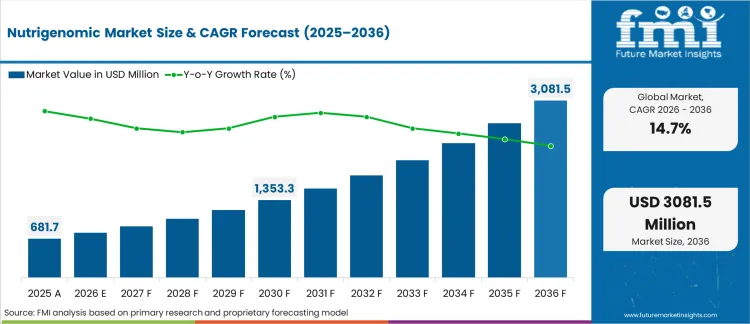
Nutrigenomic Market Key Takeaways
| Metric | Details |
|---|---|
| Industry Size (2026) | USD 781.9 Million |
| Industry Value (2036) | USD 3081.5 Million |
| CAGR (2026-2036) | 14.7% |
| Source | Future Market Insights, 2026 |
As per FMI, Australia leads country-level growth at a 12.5% CAGR through 2036, supported by a well-established preventive health consumer culture and government digital health investment. Germany registers 10.9% growth, anchored by pharmaceutical-grade supplement manufacturing standards and growing healthcare system interest in genomics-guided preventive nutrition. The United States advances at 9.3%, with DTC platform investments by major supplement and testing companies driving consumer adoption across wellness-oriented demographics.
Nutrigenomic Market Definition
The Nutrigenomic market encompasses commercial products and services that apply genomic, epigenomic, and microbiome data to personalise dietary supplement formulations, functional food recommendations, and nutritional intervention protocols. Core offerings include nutrigenomic testing kits, AI-generated personalised supplement regimens, and genomics-informed functional food and beverage products across consumer and clinical settings.
Nutrigenomic Market Inclusions
Market scope covers global and regional revenue estimates for nutrigenomic testing services, personalised supplement products, and genomics-informed functional food applications. The forecast period spans 2026 to 2036, with country-level CAGR analysis and distribution channel breakdown. Consumer data privacy regulatory analysis and health claims substantiation requirements are incorporated as analytical dimensions.
Nutrigenomic Market Exclusions
Standard dietary supplements without genomic personalisation components are excluded from the nutrigenomic market valuation. Clinical genetic testing services provided within healthcare reimbursement systems, pharmaceutical genomics applications, and agricultural biotechnology uses of nutrigenomic science fall outside the defined commercial scope. General wellness apps lacking genomic data integration are also excluded.
Nutrigenomic Market Research Methodology
- Primary Research: Primary Research: FMI analysts conducted interviews with founders and product development leads at DTC nutrigenomic platforms, registered dietitians integrating genomic data in clinical practice, and procurement managers at pharmacy chains carrying nutrigenomic testing kits in the United States, Germany, and Australia.
- Desk Research: Desk Research: European Food Safety Authority nutrigenomics position papers, US Federal Trade Commission guidelines on personalised health product claims, national genomics strategy documents, and published peer-reviewed studies on genomic diet-disease interactions were reviewed.
- Market-Sizing and Forecasting: Market-Sizing and Forecasting: A bottom-up approach aggregates revenue from nutrigenomic test kit sales, personalised supplement subscription revenues, and functional food product lines with documented genomic formulation bases.
- Data Validation and Update Cycle: Data Validation and Update Cycle: Projections were validated against consumer genomics industry transaction data and direct-to-consumer health platform revenue disclosures from company filings and investor presentations.
Key Industry Highlights
Personalized Nutrition Solutions: Tailoring Diets to Individual Genetics
The trend toward individualized nutrition and supplementation is redefining the weight loss and general improvement sector. Businesspersons are using genetic information to develop meal plans tailored towards each person. This approach entails a procedure of testing a person for his/her DNA in order determine his/her genetics on metabolism, intolerances, and health risks.
This way, organizations can advise on a diet appropriate to minimize health risks of heritable diseases including diabetes or heart complications. For instance, Nutrigenomic provides nutrition recommendations based upon the analysis of genetic data; therefore, healthcare employees can establish successful dieting. This trend is growing due to consumers’ growing interest in preventive and personalized health solutions as compared to boilerplate guidance.
Integration of Advanced Technologies in Health Assessments
Advances in technology are changing the ways genetic and nutritive profiling data is processed in order to provide a very accurate health status check. AI and particularly, ML help to interpret intricate genetic and metabolic information to obtain valuable dietary recommendations. Several firms have teamed up with artificial intelligence to go further in understanding the human body and particularly the gut flora: Viome offers clients an analysis of the data and suggests a modification of the diet to improve their health.
These technologies allow for best-practice complimenting dynamic, real-time assessments better in tune with an individual’s current state of health an or well-being. The processes of automation and data modelling bring more accuracy into results, so individual health plans will be more accurate and helpful. Moreover, wearable technology and apps usually enhance these solutions because users can track results and get ongoing guidance.
Expansion of At-Home Genetic Testing Kits
Thanks to home testing, genetic health assessments are now within the reach of many individuals who never thought of them before. These kits enable one to collect samples of DNA and receive a comprehensive analysis of how genes affect his/her diet and associated health complications. bands such as DNAfit and 23andMe have leveraged on this culture to present elaborate testing solutions that depict metabolism, ingestion, and even nutritional custom and fitness preconditions.
This transition from office to home-based practice also marginalize the role of consumers in managing choices of health in their own unique ways. Furthermore, most testing companies provide specific dietary and lifestyle guidelines that align with one’s genes and make it easy to transition from testing to implementation. These products reflect the trend to self-directed management of health that is now popular among the consumers.
Development of Functional Foods Targeting Genetic Profiles
Food products with recommended sets of nutrients that address concerns of an individual based on his/her genes are a fascinating area of convergence of food science and molecular biology. These products are created to have a range of health effects by addressing certain genes linked to such issues as inflammation, heart status, or metabolism.
This nutritional science is carried out by firms such as Metagenics which offers individual foods and nutrient supplements, which are based on these genetic results to supply nutrients that may be missing in an individual’s body or to boost some function of the human body.
For instance, a manipal person suffering from low genetic level of omega-3 may be benefited through once planned diet from omega-3 enriched foods. Not only does it enhance the process of achieving positive health outcomes, but it also changes how consumers approach the food they consume, from more general and associated notions of improvement to directly stated effectiveness.
Emphasis on Gut Health and Microbiome Analysis
Taking care of the gut has become one of the biggest trends for nutritionist companies seeking to establish new layers of the microbiome for improving their dietary solutions. The human body contains billions of bacteria living in a part of the digestive system known as the gut microbiome. Technological advancements in this area include conducting microbial census to determine dysbiosis and prospect foods or supplements that rebalance the gut.
This trend is driven by corporations such as Viome where they conduct microbiome health tests to established the connection between gut flora and diseases such as inflammation, nutrient absorption and even mental health.
These suggestions may direct patients to consume prebiotic products or take probiotics or make some sort of dietary change with relation to the beneficial functioning of the stomach. This focus on the gut shows there is increased societal sensitivity to the complex interactions between nutrition, microbe inhabitants and chronic wellbeing.
Collaboration Between Nutrition and Genetic Research
This molecular-genetic approach in conjunction with the nutritional sciences is rapidly progressing the development of individualized medicine. Through a research proposition from the scientific community, food industries and health care, technologically advanced products that meet health requirements are being developed. For instance, Nestlé Health Science has heavily employed gene information in their nutritional product portfolios to close the research to customer innovation gap.
Such projects might bring together specialists from genetic aspect, information technology specialization, and food industry specialization to work jointly. Partnerships help a process to be completed at a faster pace as evidenced by the fact that they introduced concepts such as customized supplements or functional foods on to the market.
2021 to 2025 Global Nutrigenomic Sales Analysis Compared to Demand Forecasts for 2026 to 2036
The business landcape has been steadily growing from the year 2019 and it’s due to the rising absorptions on individualized nutrition and the improvement in the technologies to make cheaper genetic tests available. There is projected sales approximately 594.3 million by 2024. However, it is envisaged to gain the momentum in the industry where the industry is predicted to grow at 14.7% CAGR in the forecast period from 2024 to 2034.
Future trends of such growth will depend on improvements of genomic analysis, adoption of nutrigenomics into the mainstream health care sector, and increased public health acceptance of purchased personalized diet plans.
Sphere barriers may include the following: Regulatory concerns, data privacy concerns, low clinical.one could also classify them as market barriers as these factors may deter sector participants from engaging in dal [nutrigenomic tests]. However, the longer-term positions the global nutrigenomics industry for steady and progressive growth.
Market Concentration
The industry is characterized by a two-tier structure, which includes both organized and unorganized players. Leading companies such as DSM, BASF SE, Danone S.A., Unilever plc, Genova Diagnostics, Nutrigenomix Inc., Metagenics, Inc., GX Sciences Inc and others some players dominate the organized segment that accounts for 40% of sales in the industry.
Multinational corporations (MNCs) that have target segment revenue greater than 5 million USD belong to these groupings and they maintain their arena presence in this way because they have large volumes of production capacities, high-tech infrastructure and various products.
These well-regulated players have strict distribution networks and can be found in every corner of the world thereby; resulting to huge penetration globally. Their modernized research labs on the other hand enhance innovations enabling them to introduce a range of nutrigenomics with regard to changing trends among health aware consumers who are conscious about their diet.
On the contrary, local participants with target segment revenue below 5 million USD form the unorganized part that contributes up to 60% of total sales within this category. These smaller companies may lack global coverage but are vital for specific areas. Working in niche community allows them offer particular goods fitted for diverse domestic preferences or specialized dietary needs.
In many cases, these entities adjust quickly according to fads in consumer tastes which results into unique and exceptional product mix. This makes sure that there is dynamism as well as competitiveness within industry due to existence of both big and small firms.
This variety brings on board multiple developments along with a wide range of options being made available satisfying different customers across all regions worldwide. This means that the industry has good prospects given its innovative nature coupled with growing trend towards healthier alternatives.
Country wise Insights
The following table shows the estimated growth rates of the significant three geographies sales. USA, Germany and Australia are set to exhibit high consumption, recording CAGRs of 9.3%, 10.9%, and 12.5% respectively, through 2034.
| Countries | CAGR |
|---|---|
| United States | 9.3% |
| Germany | 10.9% |
| Australia | 12.5% |
Source: FMI analysis based on primary research and proprietary forecasting model
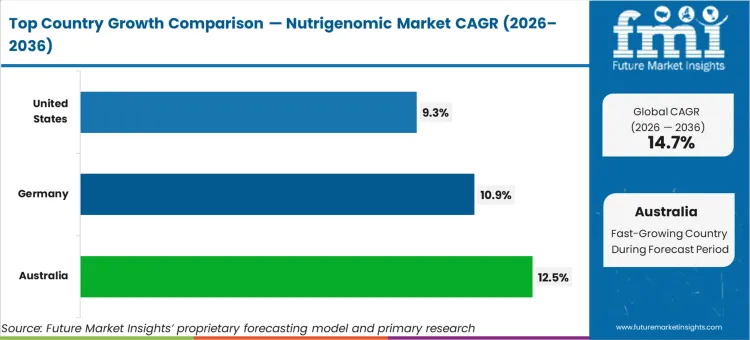
USA: At-Home DNA Testing - The Revolution in Personalized Nutrition
Today, at-home DNA testing kits are a common occurrence in the United States, which has changed consumer’s view on health and nutrition considerably. Organizations such as 23andMe and Viome have made the genetic testing easy, and more individuals can get it. They enable the accumulation of samples at the comfort of one’s home and get detailed results for the carrier statuses of nutrient uptake efficiency, food intolerances, and metabolism.
They have been adopted through convenience as well as the cheap prices which make them easily accessible. Furthermore, most of these reports include precaution on what to eat in the next day’s/weeks and exercise suggestions, giving every person a feeling that they have the power to change. The appeal can be attributed to the transition from conventional nutrition guidance to that of personalised nutrition based on the DNA.
Germany: Integrating Genetic Insights into Fitness and Lifestyle
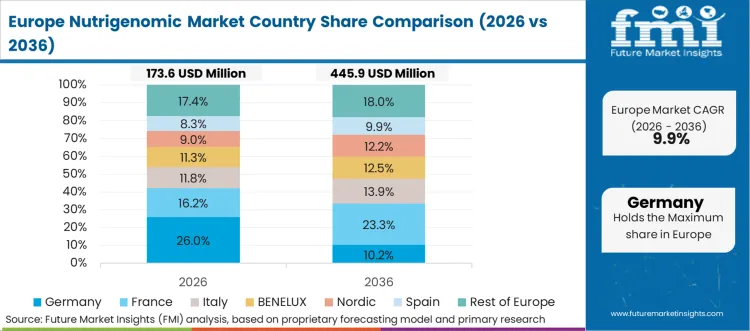
The next focus in the Germany is identified a combination of gene-shopping with continuous improvement of fitness and lifestyle. Leading ones such as DNAFit are leading the way, providing services of which help to identify the best exercises and diet plans based on an individual’s DNA. These solutions do not stop at the question of nutrition: Endurance, regeneration and the effectiveness of muscle building are determined supported by Genetic data.
This is well-liked by the soccer-mad health-oriented people of Germany who look for a proven science to enhance their performance. This is because consumers value the accuracy incorporated in such services, which makes their health goals easy to accomplish, and not by guess-work. Substantial technological advancement and the government support to innovative healthcare technologies together with increasing focus on preventive healthcare have continued to drive this situation.
Australia: Functional Foods for Targeted Health Benefits
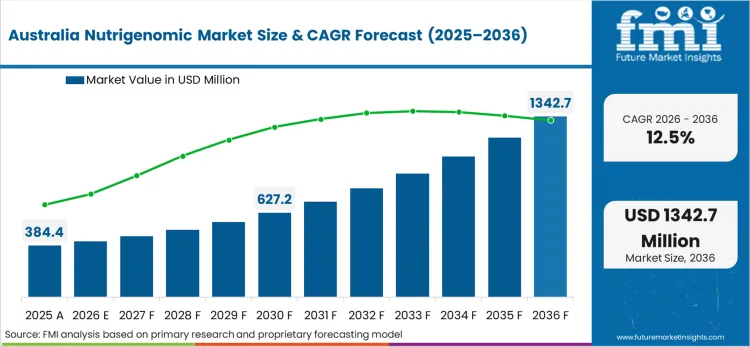
In Australia, there is functional foods that have the attributes of human genetic types; this new worth is changing the model for disease and eating plan. Current trends are curated by companies like Cell-Logic by formulating nutraceuticals and functional food Innovation to cater for genotypes such as inflammation, metabolism or nutrient deficiencies. People of Australia, who have quite a healthy attitude towards themselves and their lives as well, have immediately welcomed this scientifically backed approach.
These foods do not only satisfy the actual human necessities but also provide specific therapeutic effects thus saving a concept known as nutrition as medicine. Altered palates due to the growing sensitivity to gut health have also prompted the uptake of microbiome targeted functional foods including prebiotic and probiotic foods. This has also been further strengthened by Australia’s mature research environment and consumer loyalty to domestic health brands.
Category-wise Insights
Personalized Nutritional Supplements: The Reigning Champion of Tailored Health
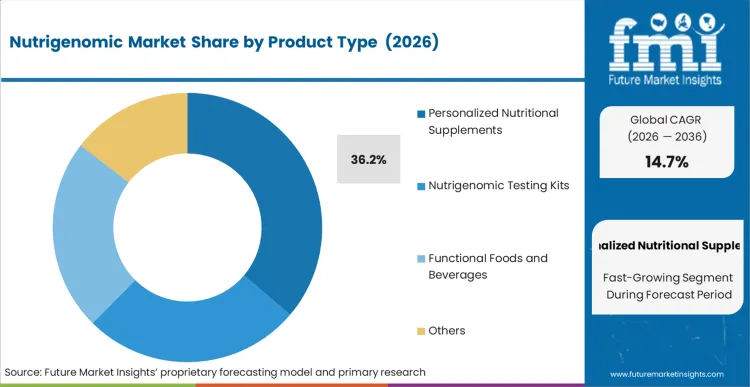
| Segment | Nutritional Supplements (Product Type) |
|---|---|
| Value Share (2024) | 36.2% |
Due to the increased consumer interest in customized Nutraceuticals, the market has made them as a popular market among several novelized healthcare products portfolios. These supplements are designed according to a consumer’s gene type; this makes the improvement of specific health aspects easy, quick and effective.
Unlike the regular multivitamins, they are tailored according to the DNA tests which highlight nutrient metabolism rates, possible deficiencies, or risks of inflammation, oxidative stress and other related problems.
It is also important here to stress that the presented concept fits the modern need for the healthy lifestyle consumers who would prefer to get the safe and efficient treatment. The ability to take supplements in very many ways and at desirable points in the day also boosts their desirability even further.
Some of the firms offering tailored health supplements for instance, Nutrigenomix, Metagenics and others are already using modern scientific genomics to come up with supplements that fit each body type most appropriately.
Disease Prevention: The Cornerstone of Personalized Health Solutions
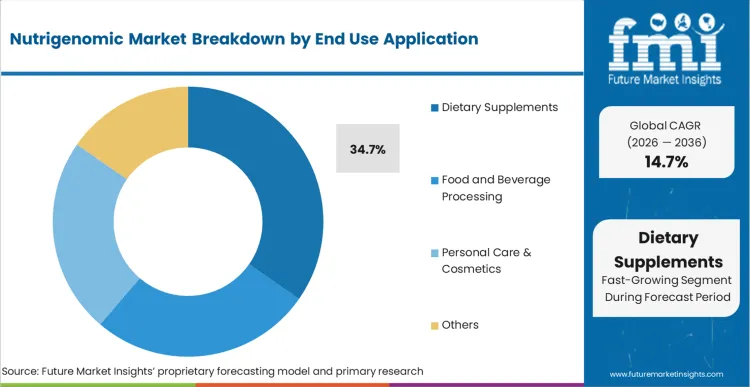
| Segment | Dietary Supplements (End Use Application) |
|---|---|
| Value Share (2024) | 34.7% |
At present, disease prevention is the most emphasized area of application of personalized nutrition, according to the increasing trend of preventive health approach. As consumers and healthcare practitioners become more savvy about the hereditary factors that play a role in diseases and conditions such as diabetes, cardiovascular diseases, and obesity, both groups are prepared to seek out healthcare products and services that reduce health risks before products manifest themselves.
It gets bio informational interpretation for the certain genetic makeup, and according to obtain, receive differentiate diet and other living conditions changes to prevent get the certain health problems. Industry players such as Nutrigenomic and Viome are already piloting this market, with DNA analysis and microbiome testing. These services allow the user to modify the diet, enhance the intake of nutrients and integrate possible loopholes with supplements.
Competition Outlook
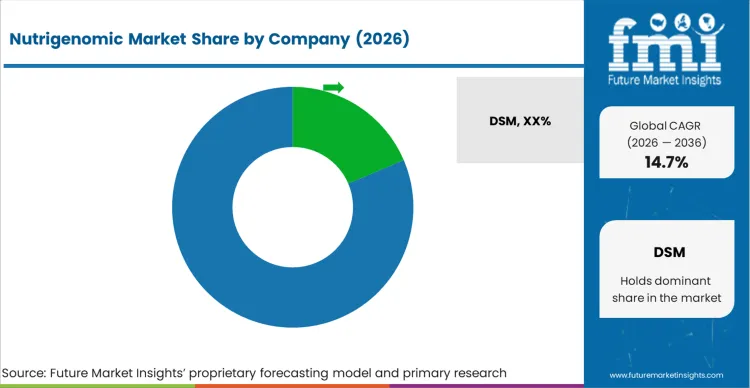
The nutrigenomic products industry mainly driven by increased public awareness on tailored nutrition and the role of genes in influencing health and nutrition. The largest players in global pharma and nutrition are putting a lot of money in innovative research focusing on nutrigenomics products and services. However, as the market progresses the competition between these firms will be stiff.
However, new small specialized firms are also approaching the market with specific nutrigenomic services. The growth in the genomic tech industry and easy availability and increased usage of direct to consumer genetic testing kits are further acting as market drivers.
However, regulatory challenges and data privacy issues may act as headwinds for the industry players for the industry players. In general, the nutrigenomic market still presents large opportunities to firms that will successfully capitalize on the nascent concept of diet customization.
Leading Manufacturers
- DSM
- BASF SE
- Danone S.A.
- Unilever plc
- Genova Diagnostics
- Nutrigenomix Inc.
- Metagenics, Inc.
- GX Sciences Inc.
- Cell-Logic
- Xcode Life Sciences
- Viome
- Orig3n, Inc.
- DNAFit Life Sciences
- Amway Corporation
- Nestlé Health Science
- Herbalife Nutrition Ltd.
- Pathway Genomics Corporation
- Interleukin Genetics, Inc.
- ZOE Ltd
Scope of the Report
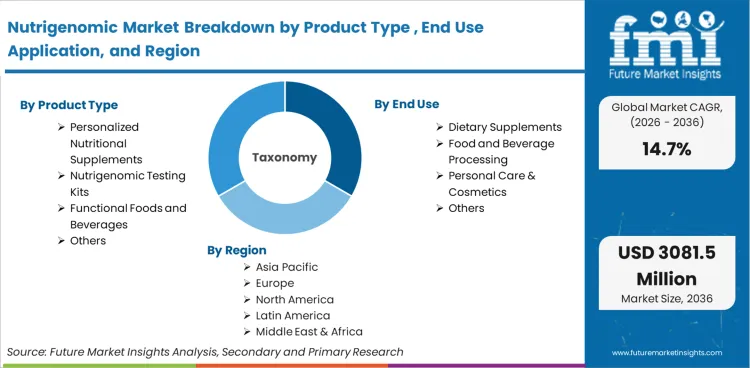
| Metric | Value |
|---|---|
| Quantitative Units | USD 781.9 Million to USD 3081.5 Million, at a CAGR of 14.7% |
| Market Definition | Commercial products and services applying genomic and microbiome data to personalise dietary supplement formulations and nutritional protocols for consumer and clinical settings. |
| Product Type Segmentation | Personalized Nutritional Supplements, Nutrigenomic Testing Kits, Functional Foods and Beverages, Others |
| End Use Application | Dietary Supplements, Food and Beverage Processing, Personal Care and Cosmetics, Others |
| Distribution Channel | Direct-to-Consumer Platforms, Pharmacies and Clinics, Online Retailers, Specialized Nutrigenomic Companies |
| Regions Covered | North America, Latin America, Europe, East Asia, South Asia, Oceania, Middle East & Africa |
| Countries Covered | United States, Germany, Australia, and 40 plus countries |
| Key Companies Profiled | DSM, BASF SE, Danone S.A., Unilever plc, Genova Diagnostics, Nutrigenomix Inc., Metagenics Inc., GX Sciences Inc., Cell-Logic, Xcode Life Sciences, Viome, Orig3n Inc. |
| Forecast Period | 2026 to 2036 |
| Approach | Bottom-up aggregation of testing service revenue, personalised supplement subscription revenue, and functional food product lines with documented genomic formulation bases |
Key Segments of the Report
By Product Type:
By product type industry has been categorised into Nutrigenomic Testing Kits., Personalized Nutritional Supplements, Functional Foods and Beverages, and others.
By End Use Application:
Key applications like Food and Beverage processing, dietary supplements, personal care & cosmetics, Others are included in the report.
By Distribution Channel:
By distribution channel industry has been categorised into Direct-to-Consumer (DTC) Platforms (e.g., 23andMe, Viome), Pharmacies and Clinics, Online Retailers, Specialized Nutrigenomic Companies
By Region:
Industry analysis has been carried out in key countries of North America, Latin America, Europe, Middle East and Africa, East Asia, South Asia, and Oceania.
Bibliography
- 1. European Food Safety Authority. (2024). Nutrigenomics and Health Claims: Scientific Substantiation Framework. EFSA Journal.
- 2. World Health Organization. (2024). Genomics and World Health: Advisory Committee on Health Research Report. WHO.
- 3. National Institutes of Health. (2024). Precision Nutrition Program: Research Initiative Overview. NIH Office of Nutrition Research.
- 4. Australian Government Department of Health. (2024). National Preventive Health Strategy: Genomics and Personalised Nutrition Component. Australian Government.
- 5. Federal Trade Commission. (2024). Guidance on Health Claims for Direct-to-Consumer Genetic Testing Products. FTC Bureau of Consumer Protection.
- This bibliography is provided for reader reference. The full FMI report contains the complete reference list with primary research documentation.
This bibliography is provided for reader reference and is not exhaustive. The full report contains the complete reference list and detailed citations.
Frequently Asked Questions
How large is the Nutrigenomic market in 2026?
The Nutrigenomic market is estimated at USD 781.9 million in 2026.
What will the Nutrigenomic market reach by 2036?
The Nutrigenomic market is projected to reach USD 3081.5 million by 2036.
What CAGR is projected for the Nutrigenomic market?
The Nutrigenomic market is expected to grow at a CAGR of 14.7% from 2026 to 2036.
Which Product Type leads in 2026?
Personalized Nutritional Supplements hold 36.2% of Product Type demand in 2026, representing the primary commercial expression of nutrigenomic science in consumer health markets.
Which End Use Application dominates in 2026?
Dietary Supplements account for 34.7% of End Use Application demand in 2026, as the principal purchasing vehicle for genomics-informed nutritional interventions.
Which Distribution Channel leads in 2026?
Direct-to-Consumer Platforms account for 34.0% of Distribution Channel demand in 2026, enabling integrated genomic testing and supplement fulfilment within a single consumer relationship.
Which country is growing fastest?
Australia is projected to grow at a 12.5% CAGR through 2036, supported by preventive health consumer culture and government digital health investment.
What is excluded from this report?
Standard dietary supplements without genomic personalisation, clinical reimbursement-system genetic testing, pharmaceutical genomics applications, and general wellness apps lacking genomic integration are excluded.
How does FMI build this forecast?
FMI applies a bottom-up model aggregating testing service revenue, personalised supplement subscription revenue, and functional food product lines with documented genomic formulation bases, cross-validated against company filings and investor disclosures.
Preview the report firsthand - request a free sample
Get SampleGet the brochure for pricing and purchase details.
Get PDFTable of Content
- Executive Summary
- Global Market Outlook
- Demand-side Trends
- Supply-side Trends
- Technology Roadmap Analysis
- Analysis and Recommendations
- Market Overview
- Market Coverage / Taxonomy
- Market Definition / Scope / Limitations
- Research Methodology
- Chapter Orientation
- Analytical Lens and Working Hypotheses
- Market Structure, Signals, and Trend Drivers
- Benchmarking and Cross-market Comparability
- Market Sizing, Forecasting, and Opportunity Mapping
- Research Design and Evidence Framework
- Desk Research Programme (Secondary Evidence)
- Company Annual and Sustainability Reports
- Peer-reviewed Journals and Academic Literature
- Corporate Websites, Product Literature, and Technical Notes
- Earnings Decks and Investor Briefings
- Statutory Filings and Regulatory Disclosures
- Technical White Papers and Standards Notes
- Trade Journals, Industry Magazines, and Analyst Briefs
- Conference Proceedings, Webinars, and Seminar Materials
- Government Statistics Portals and Public Data Releases
- Press Releases and Reputable Media Coverage
- Specialist Newsletters and Curated Briefings
- Sector Databases and Reference Repositories
- FMI Internal Proprietary Databases and Historical Market Datasets
- Subscription Datasets and Paid Sources
- Social Channels, Communities, and Digital Listening Inputs
- Additional Desk Sources
- Expert Input and Fieldwork (Primary Evidence)
- Primary Modes
- Observational and In-context Research
- Social and Community Interactions
- Stakeholder Universe Engaged
- C-suite Leaders
- Board Members
- Presidents and Vice Presidents
- R&D and Innovation Heads
- Technical Specialists
- Domain Subject-matter Experts
- Scientists
- Physicians and Other Healthcare Professionals
- Governance, Ethics, and Data Stewardship
- Research Ethics
- Data Integrity and Handling
- Primary Modes
- Tooling, Models, and Reference Databases
- Desk Research Programme (Secondary Evidence)
- Data Engineering and Model Build
- Data Acquisition and Ingestion
- Cleaning, Normalisation, and Verification
- Synthesis, Triangulation, and Analysis
- Quality Assurance and Audit Trail
- Market Background
- Market Dynamics
- Drivers
- Restraints
- Opportunity
- Trends
- Scenario Forecast
- Demand in Optimistic Scenario
- Demand in Likely Scenario
- Demand in Conservative Scenario
- Opportunity Map Analysis
- Product Life Cycle Analysis
- Supply Chain Analysis
- Investment Feasibility Matrix
- Value Chain Analysis
- PESTLE and Porter’s Analysis
- Regulatory Landscape
- Regional Parent Market Outlook
- Production and Consumption Statistics
- Import and Export Statistics
- Market Dynamics
- Global Market Analysis 2021 to 2025 and Forecast, 2026 to 2036
- Historical Market Size Value (USD Million) Analysis, 2021 to 2025
- Current and Future Market Size Value (USD Million) Projections, 2026 to 2036
- Y-o-Y Growth Trend Analysis
- Absolute $ Opportunity Analysis
- Global Market Pricing Analysis 2021 to 2025 and Forecast 2026 to 2036
- Global Market Analysis 2021 to 2025 and Forecast 2026 to 2036, By Product Type
- Introduction / Key Findings
- Historical Market Size Value (USD Million) Analysis By Product Type , 2021 to 2025
- Current and Future Market Size Value (USD Million) Analysis and Forecast By Product Type , 2026 to 2036
- Personalized Nutritional Supplements
- Nutrigenomic Testing Kits
- Functional Foods and Beverages
- Others
- Personalized Nutritional Supplements
- Y-o-Y Growth Trend Analysis By Product Type , 2021 to 2025
- Absolute $ Opportunity Analysis By Product Type , 2026 to 2036
- Global Market Analysis 2021 to 2025 and Forecast 2026 to 2036, By End Use Application
- Introduction / Key Findings
- Historical Market Size Value (USD Million) Analysis By End Use Application, 2021 to 2025
- Current and Future Market Size Value (USD Million) Analysis and Forecast By End Use Application, 2026 to 2036
- Dietary Supplements
- Food and Beverage Processing
- Personal Care & Cosmetics
- Others
- Dietary Supplements
- Y-o-Y Growth Trend Analysis By End Use Application, 2021 to 2025
- Absolute $ Opportunity Analysis By End Use Application, 2026 to 2036
- Global Market Analysis 2021 to 2025 and Forecast 2026 to 2036, By Distribution Channel
- Introduction / Key Findings
- Historical Market Size Value (USD Million) Analysis By Distribution Channel, 2021 to 2025
- Current and Future Market Size Value (USD Million) Analysis and Forecast By Distribution Channel, 2026 to 2036
- Direct-to-Consumer (DTC) Platforms
- Pharmacies and Clinics
- Online Retailers
- Specialized Nutrigenomic Companies
- Direct-to-Consumer (DTC) Platforms
- Y-o-Y Growth Trend Analysis By Distribution Channel, 2021 to 2025
- Absolute $ Opportunity Analysis By Distribution Channel, 2026 to 2036
- Global Market Analysis 2021 to 2025 and Forecast 2026 to 2036, By Region
- Introduction
- Historical Market Size Value (USD Million) Analysis By Region, 2021 to 2025
- Current Market Size Value (USD Million) Analysis and Forecast By Region, 2026 to 2036
- North America
- Latin America
- Western Europe
- Eastern Europe
- East Asia
- South Asia and Pacific
- Middle East & Africa
- Market Attractiveness Analysis By Region
- North America Market Analysis 2021 to 2025 and Forecast 2026 to 2036, By Country
- Historical Market Size Value (USD Million) Trend Analysis By Market Taxonomy, 2021 to 2025
- Market Size Value (USD Million) Forecast By Market Taxonomy, 2026 to 2036
- By Country
- USA
- Canada
- Mexico
- By Product Type
- By End Use Application
- By Distribution Channel
- By Country
- Market Attractiveness Analysis
- By Country
- By Product Type
- By End Use Application
- By Distribution Channel
- Key Takeaways
- Latin America Market Analysis 2021 to 2025 and Forecast 2026 to 2036, By Country
- Historical Market Size Value (USD Million) Trend Analysis By Market Taxonomy, 2021 to 2025
- Market Size Value (USD Million) Forecast By Market Taxonomy, 2026 to 2036
- By Country
- Brazil
- Chile
- Rest of Latin America
- By Product Type
- By End Use Application
- By Distribution Channel
- By Country
- Market Attractiveness Analysis
- By Country
- By Product Type
- By End Use Application
- By Distribution Channel
- Key Takeaways
- Western Europe Market Analysis 2021 to 2025 and Forecast 2026 to 2036, By Country
- Historical Market Size Value (USD Million) Trend Analysis By Market Taxonomy, 2021 to 2025
- Market Size Value (USD Million) Forecast By Market Taxonomy, 2026 to 2036
- By Country
- Germany
- UK
- Italy
- Spain
- France
- Nordic
- BENELUX
- Rest of Western Europe
- By Product Type
- By End Use Application
- By Distribution Channel
- By Country
- Market Attractiveness Analysis
- By Country
- By Product Type
- By End Use Application
- By Distribution Channel
- Key Takeaways
- Eastern Europe Market Analysis 2021 to 2025 and Forecast 2026 to 2036, By Country
- Historical Market Size Value (USD Million) Trend Analysis By Market Taxonomy, 2021 to 2025
- Market Size Value (USD Million) Forecast By Market Taxonomy, 2026 to 2036
- By Country
- Russia
- Poland
- Hungary
- Balkan & Baltic
- Rest of Eastern Europe
- By Product Type
- By End Use Application
- By Distribution Channel
- By Country
- Market Attractiveness Analysis
- By Country
- By Product Type
- By End Use Application
- By Distribution Channel
- Key Takeaways
- East Asia Market Analysis 2021 to 2025 and Forecast 2026 to 2036, By Country
- Historical Market Size Value (USD Million) Trend Analysis By Market Taxonomy, 2021 to 2025
- Market Size Value (USD Million) Forecast By Market Taxonomy, 2026 to 2036
- By Country
- China
- Japan
- South Korea
- By Product Type
- By End Use Application
- By Distribution Channel
- By Country
- Market Attractiveness Analysis
- By Country
- By Product Type
- By End Use Application
- By Distribution Channel
- Key Takeaways
- South Asia and Pacific Market Analysis 2021 to 2025 and Forecast 2026 to 2036, By Country
- Historical Market Size Value (USD Million) Trend Analysis By Market Taxonomy, 2021 to 2025
- Market Size Value (USD Million) Forecast By Market Taxonomy, 2026 to 2036
- By Country
- India
- ASEAN
- Australia & New Zealand
- Rest of South Asia and Pacific
- By Product Type
- By End Use Application
- By Distribution Channel
- By Country
- Market Attractiveness Analysis
- By Country
- By Product Type
- By End Use Application
- By Distribution Channel
- Key Takeaways
- Middle East & Africa Market Analysis 2021 to 2025 and Forecast 2026 to 2036, By Country
- Historical Market Size Value (USD Million) Trend Analysis By Market Taxonomy, 2021 to 2025
- Market Size Value (USD Million) Forecast By Market Taxonomy, 2026 to 2036
- By Country
- Kingdom of Saudi Arabia
- Other GCC Countries
- Turkiye
- South Africa
- Other African Union
- Rest of Middle East & Africa
- By Product Type
- By End Use Application
- By Distribution Channel
- By Country
- Market Attractiveness Analysis
- By Country
- By Product Type
- By End Use Application
- By Distribution Channel
- Key Takeaways
- Key Countries Market Analysis
- USA
- Pricing Analysis
- Market Share Analysis, 2025
- By Product Type
- By End Use Application
- By Distribution Channel
- Canada
- Pricing Analysis
- Market Share Analysis, 2025
- By Product Type
- By End Use Application
- By Distribution Channel
- Mexico
- Pricing Analysis
- Market Share Analysis, 2025
- By Product Type
- By End Use Application
- By Distribution Channel
- Brazil
- Pricing Analysis
- Market Share Analysis, 2025
- By Product Type
- By End Use Application
- By Distribution Channel
- Chile
- Pricing Analysis
- Market Share Analysis, 2025
- By Product Type
- By End Use Application
- By Distribution Channel
- Germany
- Pricing Analysis
- Market Share Analysis, 2025
- By Product Type
- By End Use Application
- By Distribution Channel
- UK
- Pricing Analysis
- Market Share Analysis, 2025
- By Product Type
- By End Use Application
- By Distribution Channel
- Italy
- Pricing Analysis
- Market Share Analysis, 2025
- By Product Type
- By End Use Application
- By Distribution Channel
- Spain
- Pricing Analysis
- Market Share Analysis, 2025
- By Product Type
- By End Use Application
- By Distribution Channel
- France
- Pricing Analysis
- Market Share Analysis, 2025
- By Product Type
- By End Use Application
- By Distribution Channel
- India
- Pricing Analysis
- Market Share Analysis, 2025
- By Product Type
- By End Use Application
- By Distribution Channel
- ASEAN
- Pricing Analysis
- Market Share Analysis, 2025
- By Product Type
- By End Use Application
- By Distribution Channel
- Australia & New Zealand
- Pricing Analysis
- Market Share Analysis, 2025
- By Product Type
- By End Use Application
- By Distribution Channel
- China
- Pricing Analysis
- Market Share Analysis, 2025
- By Product Type
- By End Use Application
- By Distribution Channel
- Japan
- Pricing Analysis
- Market Share Analysis, 2025
- By Product Type
- By End Use Application
- By Distribution Channel
- South Korea
- Pricing Analysis
- Market Share Analysis, 2025
- By Product Type
- By End Use Application
- By Distribution Channel
- Russia
- Pricing Analysis
- Market Share Analysis, 2025
- By Product Type
- By End Use Application
- By Distribution Channel
- Poland
- Pricing Analysis
- Market Share Analysis, 2025
- By Product Type
- By End Use Application
- By Distribution Channel
- Hungary
- Pricing Analysis
- Market Share Analysis, 2025
- By Product Type
- By End Use Application
- By Distribution Channel
- Kingdom of Saudi Arabia
- Pricing Analysis
- Market Share Analysis, 2025
- By Product Type
- By End Use Application
- By Distribution Channel
- Turkiye
- Pricing Analysis
- Market Share Analysis, 2025
- By Product Type
- By End Use Application
- By Distribution Channel
- South Africa
- Pricing Analysis
- Market Share Analysis, 2025
- By Product Type
- By End Use Application
- By Distribution Channel
- USA
- Market Structure Analysis
- Competition Dashboard
- Competition Benchmarking
- Market Share Analysis of Top Players
- By Regional
- By Product Type
- By End Use Application
- By Distribution Channel
- Competition Analysis
- Competition Deep Dive
- DSM
- Overview
- Product Portfolio
- Profitability by Market Segments (Product/Age /Sales Channel/Region)
- Sales Footprint
- Strategy Overview
- Marketing Strategy
- Product Strategy
- Channel Strategy
- BASF SE
- Danone S.A.
- Unilever plc
- Genova Diagnostics
- Nutrigenomix Inc.
- Metagenics, Inc.
- GX Sciences Inc.
- Cell-Logic
- Xcode Life Sciences
- Viome
- Orig3n, Inc.
- DNAFit Life Sciences
- Amway Corporation
- Nestlé Health Science
- Herbalife Nutrition Ltd.
- Pathway Genomics Corporation
- Interleukin Genetics, Inc.
- ZOE Ltd
- DSM
- Competition Deep Dive
- Assumptions & Acronyms Used


