

- Industry Size (2026)
- USD 1.1 Bn
- Forecast (2036):
- USD 3.0 Bn
- CAGR (2026 to 2036)
- 10.4%
Digital Print for Décor Market Forecast and Outlook 2026–2036
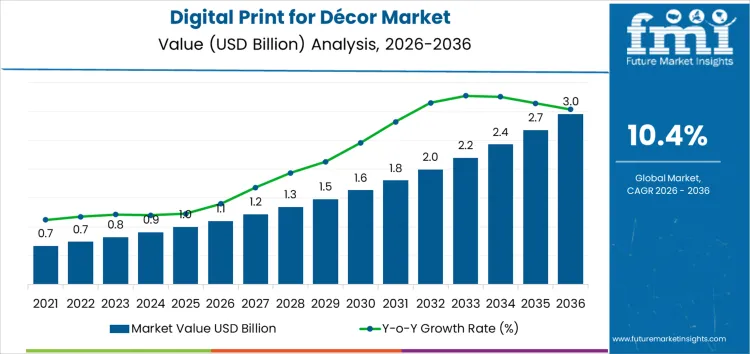
The digital print for décor market is expected to experience steady growth from 2026 to 2036. In 2026, the market value is projected to be USD 1.1 billion, with growth anticipated to reach USD 3.0 billion by 2036. The compound annual growth rate (CAGR) for this market is forecasted at 10.4%, driven by the increasing demand for personalized and innovative décor solutions. Digital printing technology enables the creation of customized, high-quality designs, making it increasingly popular in home décor, commercial spaces, and interior design.
The market's growth is influenced by several factors, including the rising popularity of customization, technological advancements in printing techniques, and the growing demand for sustainable and eco-friendly décor solutions. As digital printing becomes more affordable and accessible, it is expected to drive wider adoption in the décor sector, particularly for wall coverings, textiles, and decorative items. Over the forecast period, the market is expected to expand steadily as the technology continues to evolve and gain traction in various regions.
Quick Stats of the Digital Print for Décor Market
- Digital Print for Décor Market Value (2026): USD 1.1 billion
- Digital Print for Décor Market Forecast Value (2036): USD 3.0 billion
- Digital Print for Décor Market Global Forecast CAGR (2026-2036): 10.4%
- Digital Print for Décor Market Leading Segment: Digital decorative laminates 45%
- Key Growth Regions in Digital Print for Décor Market: China
- Top Players in Digital Print for Décor Market: HP, Durst, Hanway, Monotech Systems, EFI, Roland DG, Koenig & Bauer
What is the Growth Forecast for the Digital Print for Décor Market through 2036?
The growth forecast for the digital print for décor market indicates consistent expansion, with a projected CAGR of 10.4%. Starting at USD 1.1 billion in 2026, the market is expected to increase to USD 1.3 billion in 2027, USD 1.4 billion in 2028, and USD 1.5 billion in 2029. By 2030, the market value is projected to reach USD 1.7 billion, continuing to grow through the decade.
From 2031 to 2036, the market will experience sustained growth, reaching USD 1.8 billion in 2031, USD 2 billion in 2032, and USD 2.2 billion in 2033. The growth will continue, with values increasing to USD 2.4 billion in 2034 and USD 2.7 billion in 2035. By 2036, the market is expected to reach USD 3.0 billion. The saturation point analysis indicates that while growth will continue throughout the forecast period, the pace will gradually slow as the market matures and reaches a broader adoption, with most regions achieving a higher penetration of digital printing technology.
Digital Print for Décor Market Key Takeaways
| Metric | Value |
|---|---|
| Industry Sales Value (2026) | USD 1.1 billion |
| Industry Forecast Value (2036) | USD 3.0 billion |
| Industry Forecast CAGR (2026-2036) | 10.4% |
What Is Driving the Demand for the Digital Print for Décor Market Globally?
The global demand for digital print for décor is being driven by rising interest in personalised, high-quality interior finishes across residential, commercial, and hospitality sectors. Digital printing enables detailed, custom patterns, textures, and imagery on surfaces such as wall coverings, tiles, fabrics, glass, and wood, giving designers and consumers flexibility that traditional analogue methods cannot match. As consumer preferences shift toward unique aesthetics and brands seek differentiation, digital décor printing supports short runs, rapid design changes, and bespoke solutions without the long lead times and tooling costs associated with conventional printing. Growth in home renovation, upscale office build-outs, retail store makeovers, and themed hospitality environments has expanded use cases for digitally printed décor elements, while advances in inkjet technology, colour fidelity, and substrate compatibility have widened the range of materials that can be decorated with durable, high-resolution graphics.
Future demand for digital print for décor is expected to grow as technological innovation and sustainability goals shape product development and adoption. Improvements in digital print speed, resolution, and printhead durability are enhancing quality and throughput, making digital solutions increasingly viable for large format and high-volume applications. Integration with digital design platforms and scalable workflow tools supports faster design iteration, easier colour matching, and seamless integration with customer preferences. Sustainability considerations, such as reduced waste, lower inventory requirements, and on-demand production, align with circular economy priorities, making digital décor printing attractive to manufacturers and installers seeking to minimise excess materials and stock. Expansion of e-commerce and direct-to-consumer décor solutions will also broaden market reach, enabling smaller designers and retailers to offer customised products quickly. Regulatory emphasis on volatile organic compound (VOC) minimisation and safer ink chemistries will influence how products are formulated and marketed, reinforcing growth in eco-certified digital décor printing applications. As demand for personalised, high-impact interior design continues across regions and sectors, the digital print for décor market is positioned for steady global expansion.
What are the Leading Segments in the Global Digital Print for Décor Market?
The global digital print for décor market is segmented by end-use and print format. Among end-use applications, interior décor & furniture leads the market, capturing 42% of the share, followed by flooring & wall panels, mass décor production, tiles & laminates, furniture & panels, and high-end décor. The growth in interior décor & furniture is driven by the demand for customized, visually appealing designs in residential and commercial spaces. On the print format side, digital decorative laminates dominate the market, holding 45% of the share, followed by printed décor sheets, large-format décor prints, and digital tile décor. Digital decorative laminates are popular for their versatility and ability to deliver high-quality, intricate designs for various applications.
What Drives the Growth of Interior Décor & Furniture in the Digital Print for Décor Market?
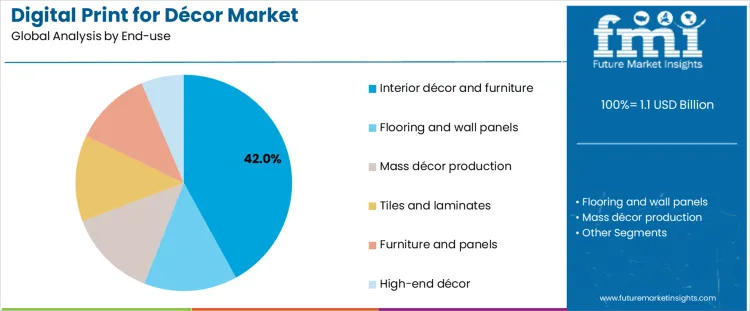
Interior décor & furniture is the leading end-use segment in the digital print for décor market, capturing 42% of the share. The demand for digital printing in this segment is driven by the increasing consumer preference for personalized, high-quality designs in home furnishings and office interiors. Digital print technology allows for intricate, customizable patterns and textures to be applied to furniture surfaces, wall coverings, and other décor elements, offering more flexibility compared to traditional methods. Additionally, the rise in interior design trends that emphasize unique, tailored aesthetics further contributes to the growth of this segment. The ability to use digital printing to produce small batches of customized furniture designs while maintaining cost-effectiveness is also driving its adoption in the furniture industry. As consumers increasingly seek individuality and personalized products, digital print technology’s ability to deliver on these preferences is fueling the growth of interior décor & furniture applications in the digital print for décor market.
What is Driving the Demand for Digital Decorative Laminates in the Digital Print for Décor Market?
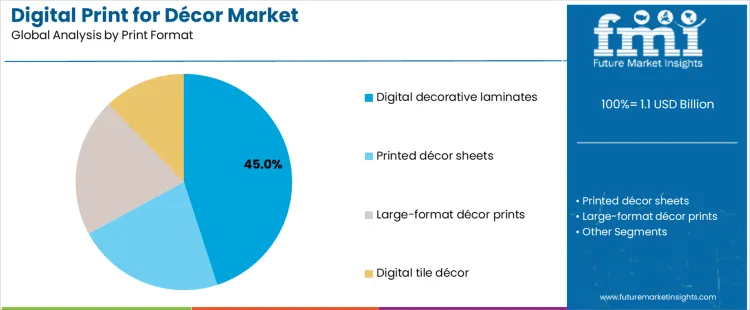
Digital decorative laminates are the leading print format in the digital print for décor market, accounting for 45% of the share. These laminates are preferred due to their durability, versatility, and ability to replicate intricate designs and textures on a variety of surfaces. Digital decorative laminates are widely used in interior décor applications, particularly for furniture, cabinetry, wall panels, and flooring, due to their high-quality finishes and customization potential. The increasing demand for aesthetic and long-lasting materials in both residential and commercial interiors is driving the growth of digital decorative laminates. Additionally, these laminates offer environmental benefits by reducing waste associated with traditional decorative materials, as they can be produced in small batches or on demand, eliminating excess stock. The ability to incorporate high-resolution images, patterns, and textures makes digital decorative laminates an ideal choice for those seeking innovative, customized décor solutions. As the demand for unique, sustainable interior design options continues to rise, digital decorative laminates are expected to remain a dominant format in the market.
What Are the Key Dynamics of the Global Digital Print for Décor Market?
The global digital print for décor market is expanding as interior designers, furniture makers and home décor brands adopt digital printing technologies that enable high-resolution graphics, bespoke designs and cost-effective short runs. Digital print systems allow customization on substrates such as wallpaper, textiles, ceramics and laminates with rapid turnaround and reduced setup costs compared with traditional methods. Growth reflects rising demand for personalised interior aesthetics, growth in residential and commercial renovation projects, and rising e-commerce adoption for customized décor products. Adoption spans residential, hospitality, retail and office environments where unique visual expression enhances space value and consumer appeal.
What are the Key Drivers for the Global Digital Print for Décor Market?
A key driver is increasing consumer demand for customization and unique décor elements that reflect personal style and space identity. Digital print technology enables rapid changes in design without costly tooling or prolonged lead times, making bespoke products more accessible. Advances in print speed, resolution, color accuracy and substrate compatibility widen application opportunities across wallpapers, fabrics, tiles and decorative panels. Growth in home renovation, real estate development and commercial fit-outs supports broader use of digitally printed décor. Adoption is also influenced by rising interest in sustainable print solutions that reduce waste through on-demand production and minimal inventory requirements.
What are the Restraints for the Global Digital Print for Décor Market?
One restraint is the initial investment cost for high-performance digital décor print systems, which may be a barrier for small to mid-sized manufacturers. Integration with existing production workflows and training for operators on advanced digital print systems can require time and resources. Some configuration and color management challenges remain when printing on diverse materials with varied surface properties, affecting consistency across production runs. A perception among traditionalists that digital print cannot fully match the tactile or artisanal qualities of some conventional décor techniques can slow adoption in niche markets. Variability in adoption rates across regions due to differences in technology penetration and capital availability also influences market growth.
What is the Key Trends in the Global Digital Print for Décor Market?
A key trend is fusion of digital printing with smart and interactive elements such as augmented reality (AR) overlays or QR-linked content that enhances user engagement with décor. Suppliers are developing ink systems and print heads that support broader substrate ranges, higher durability and improved color fastness for décor applications. Sustainable ink and substrate combinations that meet environmental standards and low-VOC requirements are gaining traction. Integration of digital print workflows with design software, data analytics and on-demand manufacturing systems is accelerating adoption and reducing lead times. Collaboration between décor designers, technology providers and manufacturers is driving innovation in print-enabled design libraries and customization platforms that simplify creation of compelling aesthetic experiences.
What is the Country-Wise Analysis of the Digital Print for Décor Market?
The digital print for décor market is expected to grow steadily, driven by the increasing demand for customized, high-quality décor solutions in residential, commercial, and hospitality sectors. Digital printing technology allows for more creative and detailed designs, offering consumers a wide range of personalized décor options, including wall art, window treatments, flooring, and furniture. High-growth markets like China and India are experiencing strong demand due to rapid urbanization, growing disposable incomes, and a shift towards more personalized and modern interior designs. Developed markets such as the USA, Germany, and Brazil are also witnessing steady growth, supported by innovations in digital printing technology and the increasing preference for sustainable, cost-effective décor solutions.
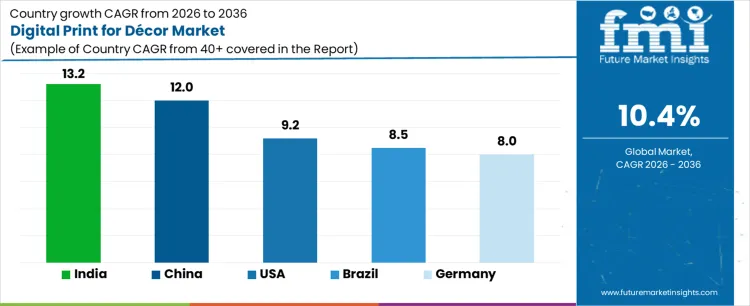
| Country | CAGR (%) |
|---|---|
| China | 12 |
| India | 13.2 |
| United States | 9.2 |
| Germany | 8 |
| Brazil | 8.5 |
What is the Growth Outlook for the Digital Print for Décor Market in China?
The digital print for décor market in China is expected to grow at a strong pace, with a projected CAGR of 12%. China’s rapidly expanding urban centers, growing middle class, and rising demand for personalized and modern décor solutions are key drivers of this market growth. As consumers increasingly seek customized, high-quality décor items, digital printing technology is becoming more popular in home and office interiors. The adoption of digital print for décor is also being fueled by innovations in printing technology that allow for more intricate designs, faster production times, and a broader range of materials. China’s rapidly expanding e-commerce sector, where consumers are increasingly purchasing home décor online, further supports this market’s growth.
What is the Market Outlook for the Digital Print for Décor Market in India?
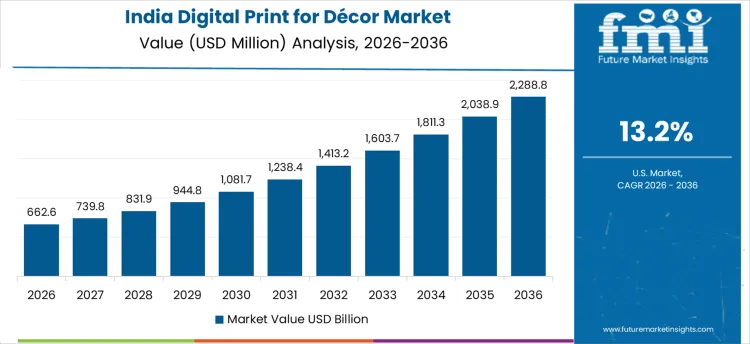
The digital print for décor market in India is projected to grow at the highest rate, with a projected CAGR of 13.2%. India’s growing urban population, rising disposable incomes, and increasing interest in modern, customized décor solutions are driving demand for digital print décor. The preference for personalized home interiors, combined with the availability of high-quality, affordable digital printing services, is further fueling market growth. The growing trend of online shopping and e-commerce in India is also contributing to the rise of digital print décor, as consumers increasingly purchase customized products for their homes and businesses. As digital printing technology continues to improve and become more affordable, India is expected to see significant growth in this market.
What is the Growth Forecast for the Digital Print for Décor Market in the United States?
The digital print for décor market in the United States is expected to grow steadily, with a projected CAGR of 9.2%. In the U.S., consumers are increasingly looking for unique, customized décor solutions, and digital printing technology is providing a more accessible way to create personalized designs. As the demand for modern, high-quality home and commercial décor increases, digital print décor is becoming a popular option in residential and commercial settings. The U.S. market is also supported by a growing interest in sustainability, as digital printing offers more eco-friendly options compared to traditional methods. The market is expected to expand steadily as consumers continue to prioritize creativity, personalization, and quality in their décor choices.
What is the Market Outlook for the Digital Print for Décor Market in Germany?
The digital print for décor market in Germany is projected to grow at a steady pace, with a projected CAGR of 8%. Germany’s strong focus on innovation, quality, and sustainability is driving the demand for digital print décor solutions. As German consumers increasingly seek personalized and creative ways to decorate their homes and businesses, digital printing technology is becoming a preferred option. The demand for customized wall art, furniture, and other home décor items is rising, further fueling the growth of this market. Additionally, Germany’s commitment to sustainability is pushing the adoption of eco-friendly digital printing methods, contributing to the market’s steady expansion. The digital print for décor market in Germany is expected to continue growing in line with these trends.
What are the Growth Prospects for the Digital Print for Décor Market in Brazil?
The digital print for décor market in Brazil is expected to grow at a moderate pace, with a projected CAGR of 8.5%. Brazil’s growing middle class, increasing urbanization, and rising interest in personalized décor solutions are driving the demand for digital print décor. As Brazilian consumers become more interested in creative, customized home and office interiors, digital printing technology is gaining traction. The growth of the online shopping sector and the increasing availability of digital printing services are further boosting market demand. While the growth rate in Brazil may be slower compared to other regions, the market for digital print décor is expected to continue expanding as consumers seek more affordable and innovative ways to personalize their spaces.
What is the Competitive Landscape for the Digital Print for Décor Market?
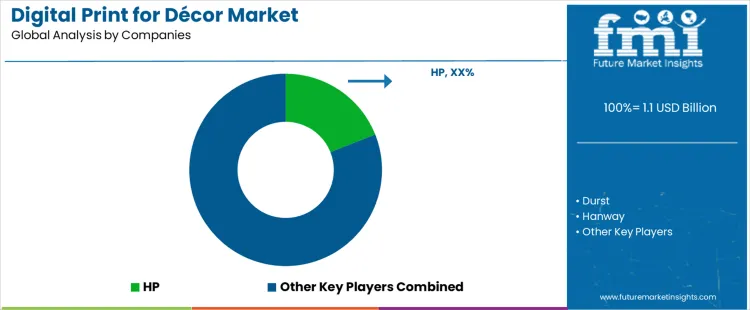
The digital print for décor market is growing rapidly as consumers and industries seek innovative, customizable, and sustainable printing solutions for interior décor and design. HP leads the market with its advanced digital printing technologies, offering high-quality, customizable solutions for décor applications. Their focus on performance, sustainability, and innovation has positioned them as a dominant player. Durst, Hanway, and Monotech Systems are key competitors, each providing specialized digital print solutions for décor. Durst focuses on industrial-scale digital printing for décor materials, while Hanway and Monotech Systems offer cost-effective, high-performance solutions for a variety of décor applications.
EFI, Roland DG, and Koenig & Bauer further contribute to the competitive landscape by offering a range of digital printing technologies for décor. EFI delivers high-quality printing systems that meet the demand for precision and customization in décor applications, while Roland DG offers versatile solutions for smaller-scale, customizable décor projects. Koenig & Bauer focuses on advanced printing technologies that enhance décor design options and production efficiency. These companies compete by focusing on technological innovation, product quality, and their ability to meet the growing demand for digital print solutions in the décor market.
Key Players of the Digital Print for Décor Market
- HP
- Durst
- Hanway
- Monotech Systems
- EFI
- Roland DG
- Koenig & Bauer
Scope of the Report
| Items | Values |
|---|---|
| Quantitative Units (2026) | USD Billion |
| End-use | Interior Décor & Furniture, Flooring & Wall Panels, Mass Décor Production, Tiles & Laminates, Furniture & Panels, High-End Décor |
| Print Format / Type | Digital Decorative Laminates, Printed Décor Sheets, Large-Format Décor Prints, Digital Tile Décor, Others |
| Substrate | Paper, Vinyl, Wood-Based Panels, Decorative Papers, Paper & PVC, Ceramic & Paper Substrates |
| Technology | High-Resolution Inkjet Décor Printing, UV-Curable Ink Systems, High-Speed Single-Pass Printing, Cost-Efficient Digital Presses |
| Companies | HP, Durst, Hanway, Monotech Systems, EFI, Roland DG, Koenig & Bauer |
| Regions Covered | North America, Latin America, Western Europe, Eastern Europe, South Asia and Pacific, East Asia, Middle East & Africa |
| Countries Covered | United States, Canada, Mexico, Brazil, Argentina, Germany, France, United Kingdom, Italy, Spain, Netherlands, China, India, Japan, South Korea, ANZ, GCC Countries, South Africa |
| Additional Attributes | Dollar by sales by end-use, print format/type, substrate, technology, and region. Includes market trends in digital print for décor, focusing on digital decorative laminates, printed décor sheets, and large-format décor prints. Highlights the role of inkjet printing, UV-curable ink systems, and digital presses in interior décor, tiles, laminates, and furniture. Focus on performance, cost-effectiveness, sustainability, market share, and competitive positioning of key companies in the décor printing market. |
Digital Print for Décor Market Segmentation
End-use:
- Interior décor & furniture
- Flooring & wall panels
- Mass décor production
- Tiles & laminates
- Furniture & panels
- High-end décor
Print Format / Type:
- Digital decorative laminates
- Printed décor sheets
- Large-format décor prints
- Digital tile décor
- Others
Substrate:
- Paper, vinyl, wood-based panels
- Decorative papers
- Paper & PVC
- Ceramic & paper substrates
- Others
Technology:
- High-resolution inkjet décor printing
- UV-curable ink systems
- High-speed single-pass printing
- Cost-efficient digital presses
- Others
Region:
- Asia Pacific
- China
- Japan
- South Korea
- India
- Australia & New Zealand
- ASEAN
- Rest of Asia Pacific
- Europe
- Germany
- United Kingdom
- France
- Italy
- Spain
- Nordic
- BENELUX
- Rest of Europe
- North America
- United States
- Canada
- Mexico
- Latin America
- Brazil
- Chile
- Rest of Latin America
- Middle East & Africa
- Kingdom of Saudi Arabia
- Other GCC Countries
- Turkey
- South Africa
- Other African Union
- Rest of Middle East & Africa
Frequently Asked Questions
How big is the digital print for décor market in 2026?
The global digital print for décor market is valued at USD 1.1 billion in 2026.
What will be the size of the digital print for décor market in 2036?
The market is projected to reach USD 3.0 billion by 2036.
How fast will the digital print for décor market grow between 2026 and 2036?
The market will grow at a CAGR of 10.4% from 2026 to 2036.
Which segment leads the digital print for décor market in 2026?
Digital decorative laminates lead the market with a 45% share in 2026.
Who are the major players in the digital print for décor market?
Key players include HP, Durst, Hanway, Monotech Systems, EFI, Roland DG, and Koenig & Bauer.
Preview the report firsthand - request a free sample
Get SampleGet the brochure for pricing and purchase details.
Get PDFTable of Content
- Executive Summary
- Global Market Outlook
- Demand-side Trends
- Supply-side Trends
- Technology Roadmap Analysis
- Analysis and Recommendations
- Market Overview
- Market Coverage / Taxonomy
- Market Definition / Scope / Limitations
- Market Background
- Market Dynamics
- Drivers
- Restraints
- Opportunity
- Trends
- Scenario Forecast
- Demand in Optimistic Scenario
- Demand in Likely Scenario
- Demand in Conservative Scenario
- Opportunity Map Analysis
- Product Life Cycle Analysis
- Supply Chain Analysis
- Investment Feasibility Matrix
- Value Chain Analysis
- PESTLE and Porter’s Analysis
- Regulatory Landscape
- Regional Parent Market Outlook
- Production and Consumption Statistics
- Import and Export Statistics
- Market Dynamics
- Global Market Analysis 2021 to 2025 and Forecast, 2026 to 2036
- Historical Market Size Value (USD Million) Analysis, 2021 to 2025
- Current and Future Market Size Value (USD Million) Projections, 2026 to 2036
- Y-o-Y Growth Trend Analysis
- Absolute $ Opportunity Analysis
- Global Market Pricing Analysis 2021 to 2025 and Forecast 2026 to 2036
- Global Market Analysis 2021 to 2025 and Forecast 2026 to 2036, By End-use
- Introduction / Key Findings
- Historical Market Size Value (USD Million) Analysis By End-use , 2021 to 2025
- Current and Future Market Size Value (USD Million) Analysis and Forecast By End-use , 2026 to 2036
- Interior décor and furniture
- Flooring and wall panels
- Mass décor production
- Tiles and laminates
- Furniture and panels
- High-end décor
- Interior décor and furniture
- Y-o-Y Growth Trend Analysis By End-use , 2021 to 2025
- Absolute $ Opportunity Analysis By End-use , 2026 to 2036
- Global Market Analysis 2021 to 2025 and Forecast 2026 to 2036, By Print Format
- Introduction / Key Findings
- Historical Market Size Value (USD Million) Analysis By Print Format, 2021 to 2025
- Current and Future Market Size Value (USD Million) Analysis and Forecast By Print Format, 2026 to 2036
- Digital decorative laminates
- Printed décor sheets
- Large-format décor prints
- Digital tile décor
- Digital decorative laminates
- Y-o-Y Growth Trend Analysis By Print Format, 2021 to 2025
- Absolute $ Opportunity Analysis By Print Format, 2026 to 2036
- Global Market Analysis 2021 to 2025 and Forecast 2026 to 2036, By Substrate
- Introduction / Key Findings
- Historical Market Size Value (USD Million) Analysis By Substrate, 2021 to 2025
- Current and Future Market Size Value (USD Million) Analysis and Forecast By Substrate, 2026 to 2036
- Paper, vinyl, wood-based panels
- Decorative papers
- Paper & PVC
- Ceramic & paper substrates
- Paper, vinyl, wood-based panels
- Y-o-Y Growth Trend Analysis By Substrate, 2021 to 2025
- Absolute $ Opportunity Analysis By Substrate, 2026 to 2036
- Global Market Analysis 2021 to 2025 and Forecast 2026 to 2036, By Technology
- Introduction / Key Findings
- Historical Market Size Value (USD Million) Analysis By Technology, 2021 to 2025
- Current and Future Market Size Value (USD Million) Analysis and Forecast By Technology, 2026 to 2036
- High-resolution inkjet décor printing
- UV-curable ink systems
- High-speed single-pass printing
- Cost-efficient digital presses
- High-resolution inkjet décor printing
- Y-o-Y Growth Trend Analysis By Technology, 2021 to 2025
- Absolute $ Opportunity Analysis By Technology, 2026 to 2036
- Global Market Analysis 2021 to 2025 and Forecast 2026 to 2036, By Region
- Introduction
- Historical Market Size Value (USD Million) Analysis By Region, 2021 to 2025
- Current Market Size Value (USD Million) Analysis and Forecast By Region, 2026 to 2036
- North America
- Latin America
- Western Europe
- Eastern Europe
- East Asia
- South Asia and Pacific
- Middle East & Africa
- Market Attractiveness Analysis By Region
- North America Market Analysis 2021 to 2025 and Forecast 2026 to 2036, By Country
- Historical Market Size Value (USD Million) Trend Analysis By Market Taxonomy, 2021 to 2025
- Market Size Value (USD Million) Forecast By Market Taxonomy, 2026 to 2036
- By Country
- USA
- Canada
- Mexico
- By End-use
- By Print Format
- By Substrate
- By Technology
- By Country
- Market Attractiveness Analysis
- By Country
- By End-use
- By Print Format
- By Substrate
- By Technology
- Key Takeaways
- Latin America Market Analysis 2021 to 2025 and Forecast 2026 to 2036, By Country
- Historical Market Size Value (USD Million) Trend Analysis By Market Taxonomy, 2021 to 2025
- Market Size Value (USD Million) Forecast By Market Taxonomy, 2026 to 2036
- By Country
- Brazil
- Chile
- Rest of Latin America
- By End-use
- By Print Format
- By Substrate
- By Technology
- By Country
- Market Attractiveness Analysis
- By Country
- By End-use
- By Print Format
- By Substrate
- By Technology
- Key Takeaways
- Western Europe Market Analysis 2021 to 2025 and Forecast 2026 to 2036, By Country
- Historical Market Size Value (USD Million) Trend Analysis By Market Taxonomy, 2021 to 2025
- Market Size Value (USD Million) Forecast By Market Taxonomy, 2026 to 2036
- By Country
- Germany
- UK
- Italy
- Spain
- France
- Nordic
- BENELUX
- Rest of Western Europe
- By End-use
- By Print Format
- By Substrate
- By Technology
- By Country
- Market Attractiveness Analysis
- By Country
- By End-use
- By Print Format
- By Substrate
- By Technology
- Key Takeaways
- Eastern Europe Market Analysis 2021 to 2025 and Forecast 2026 to 2036, By Country
- Historical Market Size Value (USD Million) Trend Analysis By Market Taxonomy, 2021 to 2025
- Market Size Value (USD Million) Forecast By Market Taxonomy, 2026 to 2036
- By Country
- Russia
- Poland
- Hungary
- Balkan & Baltic
- Rest of Eastern Europe
- By End-use
- By Print Format
- By Substrate
- By Technology
- By Country
- Market Attractiveness Analysis
- By Country
- By End-use
- By Print Format
- By Substrate
- By Technology
- Key Takeaways
- East Asia Market Analysis 2021 to 2025 and Forecast 2026 to 2036, By Country
- Historical Market Size Value (USD Million) Trend Analysis By Market Taxonomy, 2021 to 2025
- Market Size Value (USD Million) Forecast By Market Taxonomy, 2026 to 2036
- By Country
- China
- Japan
- South Korea
- By End-use
- By Print Format
- By Substrate
- By Technology
- By Country
- Market Attractiveness Analysis
- By Country
- By End-use
- By Print Format
- By Substrate
- By Technology
- Key Takeaways
- South Asia and Pacific Market Analysis 2021 to 2025 and Forecast 2026 to 2036, By Country
- Historical Market Size Value (USD Million) Trend Analysis By Market Taxonomy, 2021 to 2025
- Market Size Value (USD Million) Forecast By Market Taxonomy, 2026 to 2036
- By Country
- India
- ASEAN
- Australia & New Zealand
- Rest of South Asia and Pacific
- By End-use
- By Print Format
- By Substrate
- By Technology
- By Country
- Market Attractiveness Analysis
- By Country
- By End-use
- By Print Format
- By Substrate
- By Technology
- Key Takeaways
- Middle East & Africa Market Analysis 2021 to 2025 and Forecast 2026 to 2036, By Country
- Historical Market Size Value (USD Million) Trend Analysis By Market Taxonomy, 2021 to 2025
- Market Size Value (USD Million) Forecast By Market Taxonomy, 2026 to 2036
- By Country
- Kingdom of Saudi Arabia
- Other GCC Countries
- Turkiye
- South Africa
- Other African Union
- Rest of Middle East & Africa
- By End-use
- By Print Format
- By Substrate
- By Technology
- By Country
- Market Attractiveness Analysis
- By Country
- By End-use
- By Print Format
- By Substrate
- By Technology
- Key Takeaways
- Key Countries Market Analysis
- USA
- Pricing Analysis
- Market Share Analysis, 2025
- By End-use
- By Print Format
- By Substrate
- By Technology
- Canada
- Pricing Analysis
- Market Share Analysis, 2025
- By End-use
- By Print Format
- By Substrate
- By Technology
- Mexico
- Pricing Analysis
- Market Share Analysis, 2025
- By End-use
- By Print Format
- By Substrate
- By Technology
- Brazil
- Pricing Analysis
- Market Share Analysis, 2025
- By End-use
- By Print Format
- By Substrate
- By Technology
- Chile
- Pricing Analysis
- Market Share Analysis, 2025
- By End-use
- By Print Format
- By Substrate
- By Technology
- Germany
- Pricing Analysis
- Market Share Analysis, 2025
- By End-use
- By Print Format
- By Substrate
- By Technology
- UK
- Pricing Analysis
- Market Share Analysis, 2025
- By End-use
- By Print Format
- By Substrate
- By Technology
- Italy
- Pricing Analysis
- Market Share Analysis, 2025
- By End-use
- By Print Format
- By Substrate
- By Technology
- Spain
- Pricing Analysis
- Market Share Analysis, 2025
- By End-use
- By Print Format
- By Substrate
- By Technology
- France
- Pricing Analysis
- Market Share Analysis, 2025
- By End-use
- By Print Format
- By Substrate
- By Technology
- India
- Pricing Analysis
- Market Share Analysis, 2025
- By End-use
- By Print Format
- By Substrate
- By Technology
- ASEAN
- Pricing Analysis
- Market Share Analysis, 2025
- By End-use
- By Print Format
- By Substrate
- By Technology
- Australia & New Zealand
- Pricing Analysis
- Market Share Analysis, 2025
- By End-use
- By Print Format
- By Substrate
- By Technology
- China
- Pricing Analysis
- Market Share Analysis, 2025
- By End-use
- By Print Format
- By Substrate
- By Technology
- Japan
- Pricing Analysis
- Market Share Analysis, 2025
- By End-use
- By Print Format
- By Substrate
- By Technology
- South Korea
- Pricing Analysis
- Market Share Analysis, 2025
- By End-use
- By Print Format
- By Substrate
- By Technology
- Russia
- Pricing Analysis
- Market Share Analysis, 2025
- By End-use
- By Print Format
- By Substrate
- By Technology
- Poland
- Pricing Analysis
- Market Share Analysis, 2025
- By End-use
- By Print Format
- By Substrate
- By Technology
- Hungary
- Pricing Analysis
- Market Share Analysis, 2025
- By End-use
- By Print Format
- By Substrate
- By Technology
- Kingdom of Saudi Arabia
- Pricing Analysis
- Market Share Analysis, 2025
- By End-use
- By Print Format
- By Substrate
- By Technology
- Turkiye
- Pricing Analysis
- Market Share Analysis, 2025
- By End-use
- By Print Format
- By Substrate
- By Technology
- South Africa
- Pricing Analysis
- Market Share Analysis, 2025
- By End-use
- By Print Format
- By Substrate
- By Technology
- USA
- Market Structure Analysis
- Competition Dashboard
- Competition Benchmarking
- Market Share Analysis of Top Players
- By Regional
- By End-use
- By Print Format
- By Substrate
- By Technology
- Competition Analysis
- Competition Deep Dive
- HP
- Overview
- Product Portfolio
- Profitability by Market Segments (Product/Age /Sales Channel/Region)
- Sales Footprint
- Strategy Overview
- Marketing Strategy
- Product Strategy
- Channel Strategy
- Durst
- Hanway
- Monotech Systems
- EFI
- Roland DG
- Koenig & Bauer
- HP
- Competition Deep Dive
- Assumptions & Acronyms Used
- Research Methodology


