

- CAGR (2025 to 2035)
- 4.3%
FFS Rigid Films Market Size and Share Analysis Forecast Outlook 2035
Manufacturers in the FFS rigid films market drive growth by delivering high-performance, cost-effective, and sustainable packaging solutions. They use advanced materials and production techniques to serve industries such as food and beverage, healthcare, and personal care.
The global FFS rigid films market will exceed USD 38.4 billion by 2035, growing at a compound annual growth rate (CAGR) of 4.3%. Companies focus on eco-friendly practices, innovation, and operational efficiency to meet consumer and industrial demands.
Business houses are widening the market through recyclable and durable packaging material. Multilayer extrusion and barrier film technologies enable advanced manufacturing processes to give brands more opportunities for high customization, product protection, and waste reduction. Manufacturers work in close coordination with industries to comply with regulatory standards to ensure consumer safety.
| Attribute | Details |
|---|---|
| Projected Value by 2035 | USD 38.4 billion |
| CAGR (2025 to 2035) | 4.3% |
Market Overview of the FFS Rigid Films Market
Factors Driving Market Growth
- Sustainability: Businesses adopt recyclable and lightweight films to align with global environmental goals.
- Technological Advancements: Companies design high-barrier properties and advanced sealing technologies for the integrity of products.
- Consumer Demand for Convenience: FFS rigid films streamline packaging processes and enhance durability and freshness.
- Cost Efficiency: These films minimize packaging waste and reduce the operational costs.
- E-commerce Growth: The growing demand for secure and aesthetically appealing packaging solutions boosts the market's growth.
Market Share & Industry Share
| Category | Market Share (%) |
|---|---|
| Top 3 Players (Klöckner Pentaplast, Amcor, Berry Global) | 13% |
| Rest of Top 5 Players (Toray, Sealed Air) | 08% |
| Next 5 of Top 10 Players | 04% |
Type of Player & Industry Share
| Type of Player | Market Share (%) |
|---|---|
| Top 10 Players | 25% |
| Next 20 Players | 43% |
| Remaining Players | 37% |
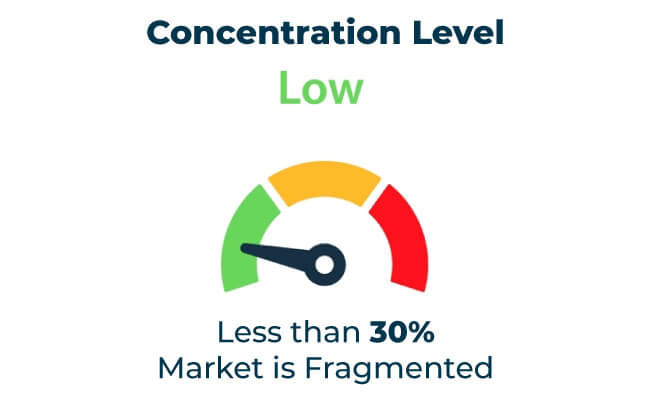
Market Concentration
Year-on-Year Leaders
- Klöckner Pentaplast: Innovates high-barrier films for food and healthcare applications.
- Amcor: Focuses on lightweight and recyclable rigid films.
- Berry Global: Develops cost-effective and durable FFS rigid film solutions.
Emerging Technologies
- High-Barrier Films: Enhance shelf life and protect sensitive goods.
- Recyclable Films: Improve sustainability with eco-friendly materials and designs.
- Smart Packaging: Incorporate QR codes and indicators for tracking and freshness monitoring.
- Multilayer Extrusion: Provide advanced film structures for increased durability and performance.
Sustainability Trends
- Recyclability: Companies use recyclable and biodegradable materials to reduce environmental impact.
- Energy Efficiency: Manufacturers adopt energy-efficient production technologies to lower emissions.
- Waste Reduction: Businesses minimize packaging waste by optimizing material usage.
Consumer Trends
- Demand for Convenience: Consumers prefer lightweight, resealable, and user-friendly packaging.
- Eco-Conscious Choices: Shoppers prioritize sustainable and recyclable packaging options.
- Product Protection: Buyers value packaging that ensures freshness and prevents contamination.
Regulatory Insights
- North America: Enforces strict recycling and waste reduction standards for packaging materials.
- Europe: Encourages green films with high sustainability standards.
- Asia-Pacific: Sees increasing demand for economical, strong, and sustainable FFS rigid films.
Export Opportunities
There is vast export potential in the emerging markets of Asia-Pacific, Africa, and Latin America. The regions require safe, sustainable, and attractive packaging solutions. Exporters can take advantage of growing consumer markets and government policies that encourage recyclable materials.
Obstacles and Opportunities
Obstacles
- High Initial Investments: High capital investment is needed in advanced manufacturing technologies.
- Recycling Challenges: Difficulties in inhomogeneous recyclability in certain regions restrict the recovery of materials.
- Compliance Variability: Market entry gets more complicated due to different regulations across countries.
Opportunities
- Sustainability Growth: Growth in consumer demand for green packaging.
- E-Commerce Expansion: Increased online sales boost the demand for protective and durable packing.
- Technological Innovation: Advanced designs in film can be used to allow customization and enhance functionality.
Market Context
In-House vs. Contract Packaging
- In-House Packaging: The more control companies have over production in-house, the better the quality, efficiency, and cost control. This method suits large-scale production with special needs.
- Contract Packaging: Outsourcing allows for flexibility and access to special technologies that would be unaffordable otherwise, ideal for companies with fluctuating needs or capital.
Regional Analysis
| Region | North America |
|---|---|
| Market Share (%) | 30% |
| Key Drivers | Focuses on sustainability and advanced barrier technologies. |
| Region | Europe |
|---|---|
| Market Share (%) | 35% |
| Key Drivers | Adopts eco-friendly practices and high-barrier solutions. |
| Region | Asia-Pacific |
|---|---|
| Market Share (%) | 25% |
| Key Drivers | Expanding with increasing demand for cost-effective packaging. |
| Region | Other Regions |
|---|---|
| Market Share (%) | 10% |
| Key Drivers | Markets expand with growing demand for rugged, sustainable packaging. |
End-User Segment Analysis
- Food and Beverage: Dominates the market with applications in fresh produce, dairy, and ready meals.
- Healthcare: Uses FFS films for sterile and secure pharmaceutical packaging.
- Personal Care: Relies on durable films for cosmetics and hygiene product packaging.
- Industrial Goods: Adopts rigid films for protective and bulk packaging solutions.
Future Roadmap
The FFS rigid films market will grow through sustainability, advanced manufacturing techniques, and customization. Companies investing in biodegradable materials and lightweight designs will gain competitive advantages. Growth in e-commerce and global trade will open opportunities for market players.
Market KPI
- Regional Revenue Growth: Tracks performance in Asia-Pacific and Europe.
- Sustainability Metrics: Measures the share of recyclable materials in production.
- End-User Adoption Rates: Monitors demand across food, healthcare, and industrial sectors.
Who Shaped the Year
- Klöckner Pentaplast: Leads with high-barrier and recyclable film innovations.
- Amcor: Develops lightweight, cost-efficient rigid film solutions.
- Berry Global: Tracks demand across food, healthcare, and industrial sectors.
Tier-Wise Company Analysis
| Tier | Key Companies |
|---|---|
| Tier 1 | Klöckner Pentaplast, Amcor, Berry Global |
| Tier 2 | Toray, Sealed Air |
| Tier 3 | Mondi, Flex Films |
Key Vendor Initiatives
- Klöckner Pentaplast: Invests in high-barrier films and energy-efficient production.
- Amcor: Expands its recyclable and lightweight product portfolio.
- Berry Global: Introduces cost-effective, durable solutions for food and healthcare packaging.
Conclusion
The FFS rigid films market is growing steadily as sustainability, innovation, and operational efficiency drive trends. Companies prioritizing eco-friendly practices, advanced manufacturing, and market expansion maintain leadership positions. Automation and recycling advancements enhance efficiency and reduce environmental impact.
Appendix
Key Definitions
- FFS Rigid Films: High-performance films that are used for packaging through a form-fill-seal process on various applications.
- High-Barrier Films: Films offering high barriers for use against moisture, oxygen, and light.
- Recyclable Films: Packaging materials which can be retreated and reused.
Abbreviations
- CAGR: Compound Annual Growth Rate
- EU: European Union
Methodology
This report is an integration of primary research, secondary data, and expert insights. Analysts verified the findings by conducting interviews with industry professionals and end-users. The methodology is designed to ensure a holistic and accurate market perspective.
Market Definition
The FFS rigid films market refers to the production and application of durable, high-barrier, and customizable films for industries such as food, healthcare, and personal care. These films offer sustainability, efficiency, and product protection.
Top Segments Studied in the FFS Rigid Films Market Outlook
By End-User:
- Food and Beverage
- Healthcare
- Personal Care
- Industrial Goods
By Region:
- North America
- Europe
- Asia-Pacific
- Other Regions
Frequently Asked Questions
What are FFS rigid films?
FFS rigid films are high-performance packaging materials used in form-fill-seal processes. They are designed to offer durability, protection, and customization for industries like food, healthcare, and personal care.
Why are FFS rigid films gaining popularity?
These films provide key benefits such as extended shelf life, reduced material waste, and cost efficiency, making them an attractive option for industries with high packaging demands.
What are the sustainability trends in this market?
Companies are prioritizing recyclable materials, biodegradable solutions, and energy-efficient production to meet global sustainability goals.
Which regions have the most growth potential?
Asia-Pacific, Europe, and North America are key growth regions due to rising demand for sustainable packaging and the expansion of the food and healthcare industries.
How do emerging technologies impact this market?
Technologies like high-barrier films, smart packaging, and multilayer extrusion improve product protection, extend shelf life, and offer new customization opportunities.
What challenges do manufacturers face?
High capital investments, recycling limitations in certain regions, and navigating complex global regulations are some of the major challenges in this market.
Preview the report firsthand - request a free sample
Get SampleGet the brochure for pricing and purchase details.
Get PDFTable of Content
- Executive Summary
- Market Overview
- Market Growth Drivers
- Market Size and Forecast
- Vendor Performance
- Global Market Share & Industry Share
- Type of Player & Industry Share
- Market Concentration
- Year-on-Year Leaders
- Technology Trends
- Sustainability Trends
- Consumer Trends
- Regulatory Insights
- Export Opportunities
- Challenges and Opportunities
- Market Context
- Regional Analysis
- End-User Segment Analysis
- Future Roadmap
- Market KPI
- Who Shaped the Year
- Tier-Wise Company Analysis
- Key Vendor Initiatives
- Conclusion
- Appendix
- Methodology
- Market Definition
- FAQs


