

- Industry Size (2026)
- USD 2.7 Bn
- Forecast (2036)
- USD 3.9 Bn
- CAGR (2026 to 2036)
- 4.9%
Recarburizers Market Forecast and Outlook 2026 to 2036
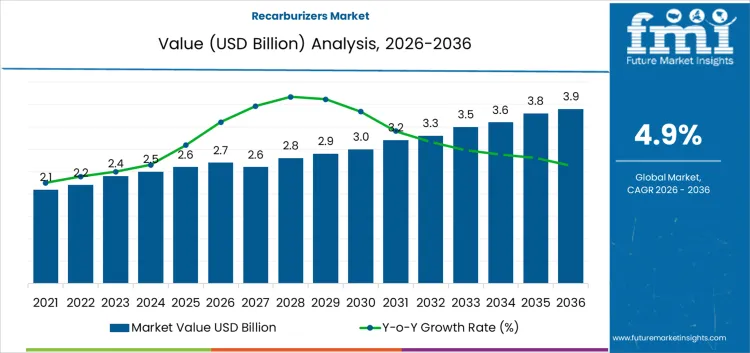
The recarburizers market is projected to reach USD 3.9 billion by 2036, growing at a CAGR of 4.9% from its 2026 size of USD 2.7 billion. The capital intensity required for expansion in this market will be driven by the need for specialized production facilities and compliance with environmental regulations. Return timelines are likely to vary, as investments in capacity expansion and technological improvements may take several years to achieve full profitability, especially given the cyclical nature of demand from the steel and foundry industries.
Investment selectivity will become crucial, as companies assess the stability and growth potential of end-user industries, particularly those focused on infrastructure and automotive. Strategic decisions will revolve around balancing capital expenditure with projected demand growth. Investors will be guided by the market’s relatively stable demand and the long-term nature of capital-intensive projects, ensuring that expansion is both economically viable and aligned with industry cycles.
Quick Stats for the Recarburizers Market
- Recarburizers Market Value (2026): USD 2.7 billion
- Recarburizers Market Forecast Value (2036): USD 3.9 billion
- Recarburizers Market Global Forecast CAGR (2026-2036): 4.9%
- Recarburizers Market Leading Segment: Steelmaking (52%)
- Key Growth Regions in Recarburizers Market: India
- Top Players in Recarburizers Market: Rain Carbon, Oxbow Carbon, GrafTech International, Tokai Carbon, Elkem Carbon, Asbury Carbons, Phillips 66 (Specialty Coke), Energoprom Group, Shandong Hisea
What is the Acceleration & Deceleration Pattern for the Recarburizers Market through 2036?
The acceleration and deceleration pattern of the recarburizers market will reflect steady growth with a slight acceleration in the earlier years, followed by a more stable expansion phase as the market matures. Initially, the market will experience gradual acceleration, with values increasing from USD 2.7 billion in 2026 to USD 2.9 billion by 2028. This early acceleration is driven by increased adoption of recarburizers in steel production and the ongoing demand for high-quality metal products.
After 2028, the market will experience a deceleration phase, with more stable annual increases, rising from USD 3.2 billion in 2030 to USD 3.6 billion in 2032. This deceleration is reflective of the market reaching a more mature phase, where growth continues but at a slower pace as demand stabilizes. The market will then continue to expand gradually, reaching USD 3.9 billion by 2036. This growth pattern highlights both the early-stage expansion driven by increasing adoption and the longer-term stabilization as industries optimize their use of recarburizers in production processes.
Recarburizers Market Key Takeaways
| Metric | Value |
|---|---|
| Industry Sales Value (2026) | USD 2.7 billion |
| Industry Forecast Value (2036) | USD 3.9 billion |
| Industry Forecast CAGR (2026-2036) | 4.9% |
What Is Driving the Recarburizers Market?
Historically, the recarburizers market developed from the steel and ironmaking industries’ need to control carbon content during melting and refining processes. Recarburizers are carbon rich additives used to adjust the carbon levels in molten metal, particularly in cast irons and steels, to achieve desired mechanical properties. In early steelmaking, coke and coal were primary carbon sources, but as electric arc furnaces (EAFs) and ladle refining technologies advanced, there was growing demand for precise and consistent carbon adjustment. Traditional carbon additions from coke breeze or anthracite exhibited variability in carbon content and introduced impurities such as sulfur and ash.
Metallurgical engineers began sourcing refined recarburizer materials such as petroleum coke, graphite, and micropellets that provided high carbon content with lower impurities for improved metallurgical control. Initial adoption was most pronounced in foundries and EAF operations where recycled scrap and variable feedstock compositions made carbon adjustment critical to product quality. These early applications established performance expectations for recarburizers in enhancing tensile strength, hardness, and castability while minimizing adverse effects on other alloying elements.
Future demand for recarburizers is expected to be shaped by continued expansion of steel and cast metal production, increasing use of electric arc furnace technology, and tighter quality standards in end use applications such as automotive, construction, and heavy machinery. Growth factors include increased scrap recycling, which often requires greater carbon correction due to inconsistent scrap chemistry, and rising production of high strength materials that depend on controlled carbon profiles for performance.
Advances in recarburizer formulations will improve carbon recovery rates, reduce impurity levels, and support cleaner production methods aligned with environmental regulations that limit slag volume and emissions. Foundries producing ductile iron, gray iron, and alloy steels will continue to depend on recarburizers to meet stringent mechanical property requirements. Barriers include fluctuations in raw material prices, competition from alternative carbon sources, and the need for precise process control to avoid over carburization. Long term market expansion will depend on how effectively recarburizer producers deliver consistent, high purity carbon sources that align with evolving metallurgical processes and quality expectations across a broad range of metal products.
What are the Key Segments in the Recarburizers Market?
The Recarburizers market is segmented into product types and applications. Product types include calcined petroleum coke (CPC), graphitized petroleum coke (GPC), synthetic graphite recarburizer, and others, with CPC holding the largest market share at 48%. Application segments include steelmaking, foundries (cast iron), non-ferrous metallurgy, and others, with steelmaking being the largest segment at 52%. The market growth is driven by the increasing demand for high-quality recarburizers in industrial processes, particularly in the steel industry, where they are used to adjust the carbon content of molten metal. The steel industry’s need for precise carbon control and the growing use of recarburizers in other metal production processes are key factors influencing market growth. Key regions driving the market include North America, Europe, and Asia Pacific, where steel production and metal industries are expanding and modernizing.
What is Driving Growth in the Calcined Petroleum Coke (CPC) Segment?
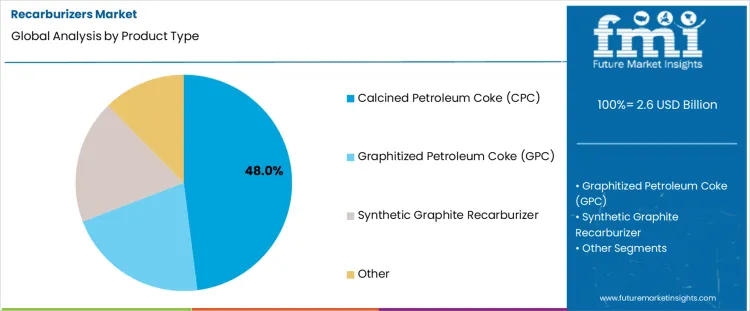
Calcined petroleum coke (CPC) is the leading product type in the Recarburizers market, accounting for 48% of the market share. This growth is driven by CPC's high carbon content and its effectiveness in raising the carbon levels in steel and other metal products, making it an essential material in the production process. In steelmaking, where precise control over carbon content is crucial, CPC is widely used as a recarburizer to adjust the carbon levels in molten steel, ensuring the desired properties in the final product. CPC is also used in foundries for cast iron production and non-ferrous metallurgy.
Its low sulfur content and high purity make it suitable for use in high-performance applications, further driving its adoption. As the global demand for steel continues to rise, particularly in regions such as Asia Pacific, the demand for CPC is expected to grow. The ongoing development and modernization of industrial sectors, including automotive, construction, and infrastructure, are also contributing to the increased use of CPC in recarburization processes. Additionally, CPC's cost-effectiveness and ability to produce high-quality steel make it the preferred choice in many applications, further solidifying its position as the dominant product type in the market.
What is Driving the Demand for Steelmaking in the Recarburizers Market?
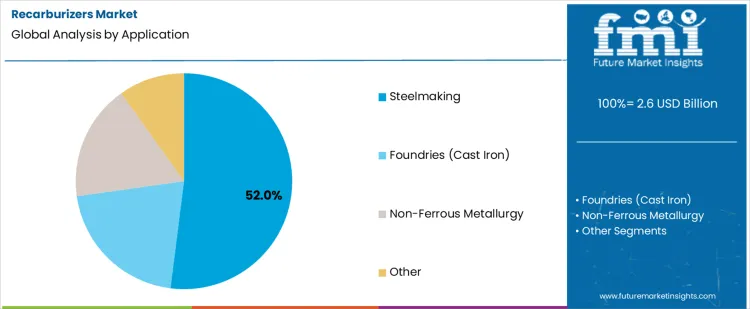
Steelmaking is the largest application segment in the Recarburizers market, representing 52% of the market share. This demand is driven by the critical role that recarburizers, particularly CPC, play in maintaining the desired carbon content in steel, a key factor in determining the material's strength, hardness, and overall quality. As the steel industry continues to grow, particularly in emerging economies, the need for high-quality, cost-effective recarburization methods increases. Recarburizers are used extensively in electric arc furnaces (EAFs) and blast furnaces, where the precise addition of carbon is essential for controlling the steel's properties.
Steelmaking, particularly in regions like Asia Pacific and North America, is a significant driver of market demand, as the global steel production industry remains vital for infrastructure, construction, automotive, and manufacturing industries. Additionally, the focus on producing high-strength, high-quality steel to meet the needs of various industrial applications, including advanced manufacturing and construction, is further fueling the growth of recarburizers in steelmaking. As global industrialization and urbanization continue, the steelmaking sector is expected to maintain its dominance in the recarburizers market, driving sustained demand for high-quality CPC and other recarburizing materials.
What are the Key Dynamics in the Recarburizers Market?
The recarburizers market is expanding as the demand for high-quality steel and other alloys increases across various industries such as automotive, construction, and manufacturing. Recarburizers are carbon additives used in the production of steel and cast iron to adjust or restore carbon content in the molten metal. They help improve the overall strength, hardness, and ductility of steel, making them crucial in the production of high-performance materials. The growth of the recarburizers market is driven by the increasing demand for high-strength steel in automotive manufacturing, infrastructure development, and the growing trend toward producing more durable and high-quality metal products. Additionally, the growing industrialization in emerging economies and the increased use of recarburizers in electric arc furnace (EAF) steelmaking are contributing to market growth.
What are the Key Drivers of Growth in the Recarburizers Market?
Several factors are driving the growth of the recarburizers market. The primary driver is the booming demand for steel in various industries such as automotive, construction, and manufacturing, where high-strength, durable materials are required. Recarburizers play a critical role in the steelmaking process by controlling the carbon content of steel, improving its performance and quality. The rise in infrastructure projects, particularly in developing economies, is further fueling the demand for steel and, consequently, recarburizers. The increasing adoption of electric arc furnaces (EAF) for steel production, which requires precise control over the carbon content of the molten metal, is another key factor driving market growth.
As electric arc furnace technology gains popularity due to its energy efficiency and lower carbon emissions compared to traditional blast furnaces, the need for recarburizers in EAF steelmaking is also rising. Additionally, the growing focus on producing high-quality, specialized steel alloys for industries such as aerospace and automotive, where precise material properties are essential, is further increasing the demand for recarburizers.
What are the Key Restraints in the Recarburizers Market?
Despite the positive growth prospects, the recarburizers market faces several challenges. One of the key restraints is the volatility of raw material prices, as recarburizers are primarily derived from petroleum coke, which can experience significant price fluctuations due to changes in crude oil prices. These price fluctuations can make the production of recarburizers more expensive, potentially raising the cost of steel production. Another challenge is the environmental impact of recarburizer production. The production of petroleum coke, the most common raw material for recarburizers, is associated with carbon emissions, which can raise sustainability concerns.
Additionally, the shift toward alternative steelmaking technologies that use less carbon-intensive processes, such as hydrogen-based direct reduction or scrap recycling, could reduce the demand for recarburizers in the future. Another restraint is the limited availability of high-quality recarburizer feedstock, as the quality of petroleum coke and other raw materials can vary, affecting the consistency and performance of the final product. Finally, the growing emphasis on reducing carbon emissions in industries such as steel manufacturing may lead to stricter regulations, which could affect the market for carbon-intensive materials like recarburizers.
What are the Key Trends in the Recarburizers Market?
Several trends are shaping the recarburizers market. One key trend is the increasing demand for high-quality, high-performance steel in industries such as automotive, aerospace, and construction. This trend is driving the need for precise control over the carbon content in steel, which can be achieved through the use of recarburizers. Another significant trend is the growing focus on sustainable and low-carbon steel production. As the steel industry seeks to reduce its carbon footprint, there is a shift toward more energy-efficient steelmaking processes, such as electric arc furnaces (EAF) and scrap-based recycling, where the use of recarburizers is growing.
There is also a rising trend toward using alternative sources for recarburizers, such as biomass-based carbon sources, to reduce the reliance on petroleum coke and mitigate environmental concerns. Additionally, technological advancements in recarburizer production, such as improved processing techniques to enhance the efficiency and performance of recarburizers, are expected to drive market growth. The increasing adoption of advanced materials in industries like automotive and machinery, which require specific metallurgical properties, is also driving the demand for recarburizers. As industries strive for higher-quality, stronger, and more durable materials, the recarburizer market is expected to expand, particularly in regions with rapidly growing manufacturing and infrastructure sectors.
What is the Country-Wise Analysis of the Recarburizers Market?
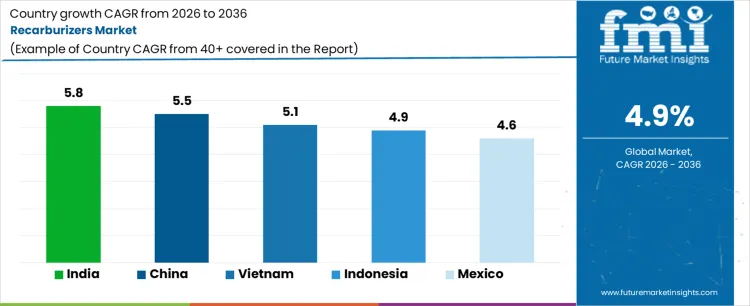
The recarburizers market is growing due to the increasing demand for high-quality carbon materials in industries such as steel manufacturing, foundries, and other sectors that require carbon additives to enhance material properties. Recarburizers, which are used to adjust the carbon content in the molten metal, play a vital role in improving the quality and strength of the final product. The market is driven by the growing industrialization, particularly in emerging economies, and the increasing demand for high-performance steel and metal products. Key countries such as India, China, Vietnam, Indonesia, and Mexico are witnessing growth in the recarburizers market, influenced by local industrial growth, manufacturing capacities, and technological advancements.
| Country | CAGR (%) |
|---|---|
| India | 5.8 |
| China | 5.5 |
| Vietnam | 5.1 |
| Indonesia | 4.9 |
| Mexico | 4.6 |
What is Driving the Growth of the Recarburizers Market in India?
India’s recarburizers market is growing at a CAGR of 5.8%, the highest among the countries analyzed. This growth is primarily driven by India’s expanding steel industry and the increasing demand for high-quality steel products. As India continues to strengthen its position as one of the world’s largest steel producers, the need for recarburizers to adjust the carbon content in steel production is rising. The country’s growing industrial base and focus on improving manufacturing processes in steel, foundries, and other metal industries contribute to the growing demand for recarburizers. As India continues to invest in infrastructure and industrialization, the demand for high-quality steel and the need for recarburizers will continue to drive market growth.
How is the Recarburizers Market Performing in China?
China’s recarburizers market is growing at a CAGR of 5.5%. As the largest steel producer in the world, China is a key player in the recarburizers market, driven by the strong demand for high-quality steel and metal products. The country’s industrial growth and emphasis on improving steel manufacturing technologies are contributing to the demand for recarburizers. China’s expanding manufacturing sector, particularly in heavy industries such as construction and automotive, also requires high-quality carbon additives to ensure the strength and durability of the final products. With the continued development of industrial infrastructure and the need for advanced metallurgical processes, China’s recarburizers market is expected to grow steadily.
What Factors are Shaping the Recarburizers Market in Vietnam?
Vietnam’s recarburizers market is growing at a CAGR of 5.1%. The market is driven by the country’s expanding steel industry, which has seen significant growth in recent years due to increased infrastructure development and industrial production. As Vietnam’s manufacturing sector continues to grow, the demand for high-quality steel products and, by extension, recarburizers is increasing. Vietnam’s industrial expansion, coupled with government initiatives to boost manufacturing efficiency and production quality, is contributing to the growing need for recarburizers in steel production. The adoption of advanced metallurgical technologies and the need for high-performance materials in the automotive and construction sectors are further driving the growth of this market.
How is the Recarburizers Market Evolving in Indonesia?
Indonesia’s recarburizers market is growing at a CAGR of 4.9%. As the country’s industrial and manufacturing sectors expand, the demand for high-quality steel and metal products is increasing, which in turn is driving the need for recarburizers. The growth in Indonesia’s infrastructure development, particularly in the construction and automotive industries, is contributing to the rising demand for recarburizers. Additionally, Indonesia’s growing focus on improving its steel production capabilities and adopting advanced manufacturing technologies is enhancing the need for high-quality carbon additives. The recarburizers market in Indonesia is expected to continue its gradual growth as the country strengthens its industrial base.
What is Contributing to the Growth of the Recarburizers Market in Mexico?
Mexico’s recarburizers market is growing at a CAGR of 4.6%. Mexico’s growing manufacturing sector, particularly in automotive, steel, and construction, is driving the demand for recarburizers. The country’s increasing focus on improving industrial processes and adopting advanced technologies in steel production is contributing to the demand for high-quality carbon additives. As Mexico continues to expand its industrial infrastructure and strengthens its position as a key player in the North American manufacturing sector, the need for recarburizers in steel and metal production will continue to rise. With government initiatives aimed at improving industrial efficiency and sustainability, the market for recarburizers in Mexico is expected to grow steadily.
What is the Competitive Landscape for the Recarburizers Market?
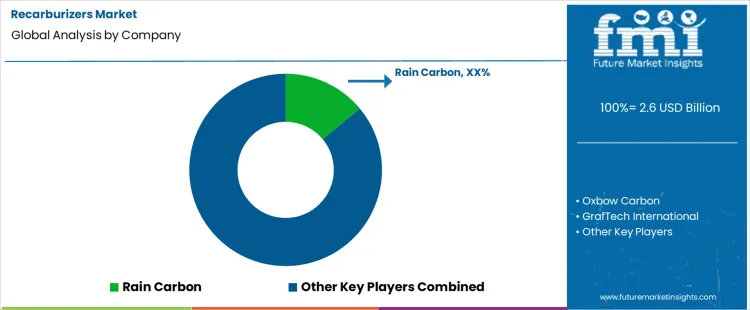
The recarburizers market is driven by the increasing demand for high-quality carbon materials in industries such as steel production, foundries, and manufacturing. Rain Carbon leads the market, offering high-performance recarburizers that are crucial in controlling carbon content in steel production, ensuring optimal material properties. The company’s focus on sustainable practices and innovation has solidified its position as a market leader. Oxbow Carbon is a significant player, supplying recarburizers that cater to various industrial applications, including steel production and aluminum manufacturing. Their commitment to providing consistent and high-quality products enables them to maintain a competitive edge.
GrafTech International is also heavily involved in the market, offering recarburizers that meet the stringent demands of the steel industry, focusing on performance and cost efficiency. Tokai Carbon provides specialized recarburizers for use in steelmaking processes, emphasizing product quality and consistency. Elkem Carbon plays a crucial role by offering high-quality recarburizers that support various industrial processes, especially in steel and metal production, with a focus on improving efficiency and reducing costs. Asbury Carbons contributes to the market with its extensive range of recarburizers, providing tailored solutions for different sectors, including steel and foundries. Phillips 66 (Specialty Coke) supplies high-quality recarburizers, focusing on enhancing product performance in metal production, particularly in the steel industry. Energoprom Group and Shandong Hisea are also strong competitors, offering a range of recarburizers aimed at meeting the growing demand for quality carbon materials in global manufacturing and steel production.
In the competitive landscape, companies focus on innovation, product differentiation, and expanding market reach to stay competitive. Rain Carbon continues to lead with its high-quality recarburizers that meet the evolving needs of the steel and metal industries. Oxbow Carbon enhances its offerings by improving product consistency and developing sustainable sourcing methods. GrafTech International focuses on providing cost-effective solutions without compromising on performance, enabling manufacturers to optimize their operations. Tokai Carbon invests in technology to ensure the production of recarburizers with superior quality and consistency, meeting the demanding needs of the steel industry.
Elkem Carbon’s strategy includes improving the efficiency of its recarburizers, reducing production costs, and expanding into new markets. Asbury Carbons continues to diversify its product range, offering customized recarburizer solutions to meet specific industry needs. Phillips 66 (Specialty Coke) focuses on enhancing its recarburizer offerings by integrating new technologies and maintaining a reliable supply chain. Energoprom Group and Shandong Hisea emphasize producing high-quality recarburizers at competitive prices, aiming to capture market share in emerging and established markets. These strategies, combined with the increasing demand for high-quality carbon materials in various industries, position these companies to lead the growing recarburizers market.
Key Players of the Recarburizers Market
- Rain Carbon
- Oxbow Carbon
- GrafTech International
- Tokai Carbon
- Elkem Carbon
- Asbury Carbons
- Phillips 66 (Specialty Coke)
- Energoprom Group
- Shandong Hisea
Scope of the Report
| Items | Values |
|---|---|
| Quantitative Units (2026) | USD Billion |
| Product Type | Calcined Petroleum Coke (CPC), Graphitized Petroleum Coke (GPC), Synthetic Graphite Recarburizer, Other |
| Application | Steelmaking, Foundries (Cast Iron), Non-Ferrous Metallurgy, Other |
| Carbon Content | 90-95% C, 95-98% C, Above 98% C, Other |
| By Sales Channel | Direct to Mills or Foundries, Traders or Exporters, Distributors, Other |
| Companies | Rain Carbon, Oxbow Carbon, GrafTech International, Tokai Carbon, Elkem Carbon, Asbury Carbons, Phillips 66 (Specialty Coke), Energoprom Group, Shandong Hisea |
| Regions Covered | North America, Latin America, Western Europe, Eastern Europe, South Asia and Pacific, East Asia, Middle East & Africa |
| Countries Covered | United States, Canada, Mexico, Brazil, Argentina, Germany, France, United Kingdom, Italy, Spain, Netherlands, China, India, Japan, South Korea, ANZ, GCC Countries, South Africa |
| Additional Attributes | Dollar sales by product type, application, carbon content, and sales channel. Includes market trends towards higher carbon content recarburizers, cost-effectiveness, regulatory compliance, and the role of recarburizers in enhancing metal production processes. |
Recarburizers Market Segmentation
Product Type
- Calcined Petroleum Coke (CPC)
- Graphitized Petroleum Coke (GPC)
- Synthetic Graphite Recarburizer
- Other
Application
- Steelmaking
- Foundries (Cast Iron)
- Non-Ferrous Metallurgy
- Other
Carbon Content
- 90-95% C
- 95-98% C
- Above 98% C
- Other
By Sales Channel
- Direct to Mills or Foundries
- Traders or Exporters
- Distributors
- Other
Region
- Asia Pacific
- China
- Japan
- India
- Australia & New Zealand
- ASEAN
- Rest of Asia Pacific
- Europe
- Germany
- United Kingdom
- France
- Italy
- Spain
- Nordic
- BENELUX
- Rest of Europe
- North America
- United States
- Canada
- Mexico
- Latin America
- Brazil
- Argentina
- Rest of Latin America
- Middle East & Africa
- Kingdom of Saudi Arabia
- Other GCC Countries
- South Africa
- Rest of Middle East & Africa
Bibliography
- International Organization for Standardization. (2023). Steel and steel products — Determination of carbon content — Infrared absorption method (ISO 4931:2023). International Organization for Standardization.
- International Organization for Standardization. (2023). Founding materials — Test methods for metallurgical coke (ISO 3808:2023). International Organization for Standardization.
- World Steel Association. (2023). Steel Statistical Yearbook 2023. World Steel Association.
- United Nations Economic Commission for Europe. (2024). Recommendations on the Transport of Dangerous Goods: Recarburizing Materials (ECE/TRANS/300). United Nations.
- European Committee for Standardization. (2023). Steel and iron — Sampling and preparation of samples for the determination of chemical composition (EN 10052:2023). European Committee for Standardization.
Frequently Asked Questions
How big is the recarburizers market in 2026?
The global recarburizers market is estimated to be valued at USD 2.7 billion in 2026.
What will be the size of recarburizers market in 2036?
The market size for the recarburizers market is projected to reach USD 3.9 billion by 2036.
How much will be the recarburizers market growth between 2026 and 2036?
The recarburizers market is expected to grow at a 4.9% CAGR between 2026 and 2036.
What are the key product types in the recarburizers market?
The key product types in recarburizers market are calcined petroleum coke (cpc), graphitized petroleum coke (gpc), synthetic graphite recarburizer and other.
Which application segment to contribute significant share in the recarburizers market in 2026?
In terms of application, steelmaking segment to command 52.0% share in the recarburizers market in 2026.
Preview the report firsthand - request a free sample
Get SampleGet the brochure for pricing and purchase details.
Get PDFTable of Content
- Executive Summary
- Global Market Outlook
- Demand-side Trends
- Supply-side Trends
- Technology Roadmap Analysis
- Analysis and Recommendations
- Market Overview
- Market Coverage / Taxonomy
- Market Definition / Scope / Limitations
- Market Background
- Market Dynamics
- Drivers
- Restraints
- Opportunity
- Trends
- Scenario Forecast
- Demand in Optimistic Scenario
- Demand in Likely Scenario
- Demand in Conservative Scenario
- Opportunity Map Analysis
- Product Life Cycle Analysis
- Supply Chain Analysis
- Investment Feasibility Matrix
- Value Chain Analysis
- PESTLE and Porter’s Analysis
- Regulatory Landscape
- Regional Parent Market Outlook
- Production and Consumption Statistics
- Import and Export Statistics
- Market Dynamics
- Global Market Analysis 2021 to 2025 and Forecast, 2026 to 2036
- Historical Market Size Value (USD Million) Analysis, 2021 to 2025
- Current and Future Market Size Value (USD Million) Projections, 2026 to 2036
- Y-o-Y Growth Trend Analysis
- Absolute $ Opportunity Analysis
- Global Market Pricing Analysis 2021 to 2025 and Forecast 2026 to 2036
- Global Market Analysis 2021 to 2025 and Forecast 2026 to 2036, By Product Type
- Introduction / Key Findings
- Historical Market Size Value (USD Million) Analysis By Product Type , 2021 to 2025
- Current and Future Market Size Value (USD Million) Analysis and Forecast By Product Type , 2026 to 2036
- Calcined Petroleum Coke (CPC)
- Graphitized Petroleum Coke (GPC)
- Synthetic Graphite Recarburizer
- Other
- Calcined Petroleum Coke (CPC)
- Y-o-Y Growth Trend Analysis By Product Type , 2021 to 2025
- Absolute $ Opportunity Analysis By Product Type , 2026 to 2036
- Global Market Analysis 2021 to 2025 and Forecast 2026 to 2036, By Application
- Introduction / Key Findings
- Historical Market Size Value (USD Million) Analysis By Application, 2021 to 2025
- Current and Future Market Size Value (USD Million) Analysis and Forecast By Application, 2026 to 2036
- Steelmaking
- Foundries (Cast Iron)
- Non-Ferrous Metallurgy
- Other
- Steelmaking
- Y-o-Y Growth Trend Analysis By Application, 2021 to 2025
- Absolute $ Opportunity Analysis By Application, 2026 to 2036
- Global Market Analysis 2021 to 2025 and Forecast 2026 to 2036, By Carbon Content
- Introduction / Key Findings
- Historical Market Size Value (USD Million) Analysis By Carbon Content, 2021 to 2025
- Current and Future Market Size Value (USD Million) Analysis and Forecast By Carbon Content, 2026 to 2036
- 95-98% C
- 90-95% C
- Above 98% C
- Other
- 95-98% C
- Y-o-Y Growth Trend Analysis By Carbon Content, 2021 to 2025
- Absolute $ Opportunity Analysis By Carbon Content, 2026 to 2036
- Global Market Analysis 2021 to 2025 and Forecast 2026 to 2036, By By Sales Channel
- Introduction / Key Findings
- Historical Market Size Value (USD Million) Analysis By By Sales Channel, 2021 to 2025
- Current and Future Market Size Value (USD Million) Analysis and Forecast By By Sales Channel, 2026 to 2036
- Direct to Mills or Foundries
- Traders or Exporters
- Distributors
- Other
- Direct to Mills or Foundries
- Y-o-Y Growth Trend Analysis By By Sales Channel, 2021 to 2025
- Absolute $ Opportunity Analysis By By Sales Channel, 2026 to 2036
- Global Market Analysis 2021 to 2025 and Forecast 2026 to 2036, By Region
- Introduction
- Historical Market Size Value (USD Million) Analysis By Region, 2021 to 2025
- Current Market Size Value (USD Million) Analysis and Forecast By Region, 2026 to 2036
- North America
- Latin America
- Western Europe
- Eastern Europe
- East Asia
- South Asia and Pacific
- Middle East & Africa
- Market Attractiveness Analysis By Region
- North America Market Analysis 2021 to 2025 and Forecast 2026 to 2036, By Country
- Historical Market Size Value (USD Million) Trend Analysis By Market Taxonomy, 2021 to 2025
- Market Size Value (USD Million) Forecast By Market Taxonomy, 2026 to 2036
- By Country
- USA
- Canada
- Mexico
- By Product Type
- By Application
- By Carbon Content
- By By Sales Channel
- By Country
- Market Attractiveness Analysis
- By Country
- By Product Type
- By Application
- By Carbon Content
- By By Sales Channel
- Key Takeaways
- Latin America Market Analysis 2021 to 2025 and Forecast 2026 to 2036, By Country
- Historical Market Size Value (USD Million) Trend Analysis By Market Taxonomy, 2021 to 2025
- Market Size Value (USD Million) Forecast By Market Taxonomy, 2026 to 2036
- By Country
- Brazil
- Chile
- Rest of Latin America
- By Product Type
- By Application
- By Carbon Content
- By By Sales Channel
- By Country
- Market Attractiveness Analysis
- By Country
- By Product Type
- By Application
- By Carbon Content
- By By Sales Channel
- Key Takeaways
- Western Europe Market Analysis 2021 to 2025 and Forecast 2026 to 2036, By Country
- Historical Market Size Value (USD Million) Trend Analysis By Market Taxonomy, 2021 to 2025
- Market Size Value (USD Million) Forecast By Market Taxonomy, 2026 to 2036
- By Country
- Germany
- UK
- Italy
- Spain
- France
- Nordic
- BENELUX
- Rest of Western Europe
- By Product Type
- By Application
- By Carbon Content
- By By Sales Channel
- By Country
- Market Attractiveness Analysis
- By Country
- By Product Type
- By Application
- By Carbon Content
- By By Sales Channel
- Key Takeaways
- Eastern Europe Market Analysis 2021 to 2025 and Forecast 2026 to 2036, By Country
- Historical Market Size Value (USD Million) Trend Analysis By Market Taxonomy, 2021 to 2025
- Market Size Value (USD Million) Forecast By Market Taxonomy, 2026 to 2036
- By Country
- Russia
- Poland
- Hungary
- Balkan & Baltic
- Rest of Eastern Europe
- By Product Type
- By Application
- By Carbon Content
- By By Sales Channel
- By Country
- Market Attractiveness Analysis
- By Country
- By Product Type
- By Application
- By Carbon Content
- By By Sales Channel
- Key Takeaways
- East Asia Market Analysis 2021 to 2025 and Forecast 2026 to 2036, By Country
- Historical Market Size Value (USD Million) Trend Analysis By Market Taxonomy, 2021 to 2025
- Market Size Value (USD Million) Forecast By Market Taxonomy, 2026 to 2036
- By Country
- China
- Japan
- South Korea
- By Product Type
- By Application
- By Carbon Content
- By By Sales Channel
- By Country
- Market Attractiveness Analysis
- By Country
- By Product Type
- By Application
- By Carbon Content
- By By Sales Channel
- Key Takeaways
- South Asia and Pacific Market Analysis 2021 to 2025 and Forecast 2026 to 2036, By Country
- Historical Market Size Value (USD Million) Trend Analysis By Market Taxonomy, 2021 to 2025
- Market Size Value (USD Million) Forecast By Market Taxonomy, 2026 to 2036
- By Country
- India
- ASEAN
- Australia & New Zealand
- Rest of South Asia and Pacific
- By Product Type
- By Application
- By Carbon Content
- By By Sales Channel
- By Country
- Market Attractiveness Analysis
- By Country
- By Product Type
- By Application
- By Carbon Content
- By By Sales Channel
- Key Takeaways
- Middle East & Africa Market Analysis 2021 to 2025 and Forecast 2026 to 2036, By Country
- Historical Market Size Value (USD Million) Trend Analysis By Market Taxonomy, 2021 to 2025
- Market Size Value (USD Million) Forecast By Market Taxonomy, 2026 to 2036
- By Country
- Kingdom of Saudi Arabia
- Other GCC Countries
- Turkiye
- South Africa
- Other African Union
- Rest of Middle East & Africa
- By Product Type
- By Application
- By Carbon Content
- By By Sales Channel
- By Country
- Market Attractiveness Analysis
- By Country
- By Product Type
- By Application
- By Carbon Content
- By By Sales Channel
- Key Takeaways
- Key Countries Market Analysis
- USA
- Pricing Analysis
- Market Share Analysis, 2025
- By Product Type
- By Application
- By Carbon Content
- By By Sales Channel
- Canada
- Pricing Analysis
- Market Share Analysis, 2025
- By Product Type
- By Application
- By Carbon Content
- By By Sales Channel
- Mexico
- Pricing Analysis
- Market Share Analysis, 2025
- By Product Type
- By Application
- By Carbon Content
- By By Sales Channel
- Brazil
- Pricing Analysis
- Market Share Analysis, 2025
- By Product Type
- By Application
- By Carbon Content
- By By Sales Channel
- Chile
- Pricing Analysis
- Market Share Analysis, 2025
- By Product Type
- By Application
- By Carbon Content
- By By Sales Channel
- Germany
- Pricing Analysis
- Market Share Analysis, 2025
- By Product Type
- By Application
- By Carbon Content
- By By Sales Channel
- UK
- Pricing Analysis
- Market Share Analysis, 2025
- By Product Type
- By Application
- By Carbon Content
- By By Sales Channel
- Italy
- Pricing Analysis
- Market Share Analysis, 2025
- By Product Type
- By Application
- By Carbon Content
- By By Sales Channel
- Spain
- Pricing Analysis
- Market Share Analysis, 2025
- By Product Type
- By Application
- By Carbon Content
- By By Sales Channel
- France
- Pricing Analysis
- Market Share Analysis, 2025
- By Product Type
- By Application
- By Carbon Content
- By By Sales Channel
- India
- Pricing Analysis
- Market Share Analysis, 2025
- By Product Type
- By Application
- By Carbon Content
- By By Sales Channel
- ASEAN
- Pricing Analysis
- Market Share Analysis, 2025
- By Product Type
- By Application
- By Carbon Content
- By By Sales Channel
- Australia & New Zealand
- Pricing Analysis
- Market Share Analysis, 2025
- By Product Type
- By Application
- By Carbon Content
- By By Sales Channel
- China
- Pricing Analysis
- Market Share Analysis, 2025
- By Product Type
- By Application
- By Carbon Content
- By By Sales Channel
- Japan
- Pricing Analysis
- Market Share Analysis, 2025
- By Product Type
- By Application
- By Carbon Content
- By By Sales Channel
- South Korea
- Pricing Analysis
- Market Share Analysis, 2025
- By Product Type
- By Application
- By Carbon Content
- By By Sales Channel
- Russia
- Pricing Analysis
- Market Share Analysis, 2025
- By Product Type
- By Application
- By Carbon Content
- By By Sales Channel
- Poland
- Pricing Analysis
- Market Share Analysis, 2025
- By Product Type
- By Application
- By Carbon Content
- By By Sales Channel
- Hungary
- Pricing Analysis
- Market Share Analysis, 2025
- By Product Type
- By Application
- By Carbon Content
- By By Sales Channel
- Kingdom of Saudi Arabia
- Pricing Analysis
- Market Share Analysis, 2025
- By Product Type
- By Application
- By Carbon Content
- By By Sales Channel
- Turkiye
- Pricing Analysis
- Market Share Analysis, 2025
- By Product Type
- By Application
- By Carbon Content
- By By Sales Channel
- South Africa
- Pricing Analysis
- Market Share Analysis, 2025
- By Product Type
- By Application
- By Carbon Content
- By By Sales Channel
- USA
- Market Structure Analysis
- Competition Dashboard
- Competition Benchmarking
- Market Share Analysis of Top Players
- By Regional
- By Product Type
- By Application
- By Carbon Content
- By By Sales Channel
- Competition Analysis
- Competition Deep Dive
- Rain Carbon
- Overview
- Product Portfolio
- Profitability by Market Segments (Product/Age /Sales Channel/Region)
- Sales Footprint
- Strategy Overview
- Marketing Strategy
- Product Strategy
- Channel Strategy
- Oxbow Carbon
- GrafTech International
- Tokai Carbon
- Elkem Carbon
- Asbury Carbons
- Phillips 66 (Specialty Coke)
- Energoprom Group
- Shandong Hisea
- Rain Carbon
- Competition Deep Dive
- Assumptions & Acronyms Used
- Research Methodology


