

- Industry Size (2026)
- USD 1.1 Bn
- Forecast (2036)
- USD 4.1 Bn
- CAGR (2026 to 2036)
- 13.80%
Shared Middle-Mile Network-as-a-Service Market Forecast and Outlook 2026 to 2036
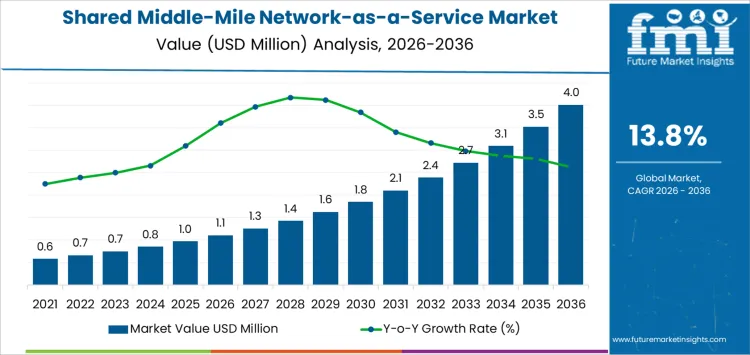
The market for shared middle-mile network-as-a-service is expected to grow from USD 1.1 billion in 2026 to USD 4.1 billion by 2036, reflecting a compound annual growth rate (CAGR) of 13.8%. Shared middle-mile networks enable businesses to leverage an integrated, multi-user logistics network, optimizing transportation and distribution channels for goods between central hubs, distribution centers, and retailers. This model supports cost-effective, scalable solutions, particularly as companies seek to improve supply chain efficiency and reduce transportation costs. The growth in demand for such services is driven by increasing e-commerce activities, rising customer expectations for faster deliveries, and the need for flexible, on-demand logistics solutions.
Quick Stats for Shared Middle-Mile Network-as-a-Service Market
- Shared Middle-Mile Network-as-a-Service Market Value (2026): USD 1.1 billion
- Shared Middle-Mile Network-as-a-Service Market Forecast Value (2036): USD 4.1 billion
- Shared Middle-Mile Network-as-a-Service Market Global Forecast CAGR (2026–2036): 13.80%
- Top End User by Share in Shared Middle-Mile Network-as-a-Service Market: E-Commerce & Retail (47%)
- Key Growth Regions in Shared Middle-Mile Network-as-a-Service Market: India, China, USA, Brazil, Germany
- Top Players in Shared Middle-Mile Network-as-a-Service Market: C.H. Robinson, Flexport, Project44, Convoy, Shopify Fulfillment Network (SFN)
The market is further fueled by the growing need for businesses to adopt collaborative logistics strategies to optimize resources and reduce carbon footprints. Shared networks also provide greater access to advanced technologies and infrastructure without the high capital investment typically required for individual company-owned logistics networks. As companies increasingly focus on sustainability and cost efficiency, the adoption of shared middle-mile networks is expected to expand, offering businesses a way to scale operations without compromising on speed or flexibility.
What is the Growth Forecast for the Shared Middle-Mile Network-as-a-Service Market through 2036?
The rolling CAGR analysis for the shared middle-mile network-as-a-service market shows steady and consistent growth throughout the forecast period, with a noticeable acceleration in the middle years. Starting at USD 1.1 billion in 2026, the market grows to USD 1.3 billion in 2027 and USD 1.5 billion in 2028, reflecting early-stage adoption of shared middle-mile services as businesses begin to embrace the model’s cost-saving and scalability benefits.
From 2028 to 2030, the market experiences a moderate acceleration, reaching USD 1.6 billion in 2029 and USD 1.9 billion in 2030. This period marks a shift as shared middle-mile networks gain wider traction, with more businesses seeking integrated logistics solutions to optimize delivery times and reduce operational costs. By 2035, the market is projected to reach USD 3.3 billion, driven by increasing collaboration among businesses and enhanced demand for shared logistics infrastructure. By 2036, the market is expected to reach USD 4.1 billion, with rolling CAGR analysis indicating that the adoption of shared middle-mile network services will experience an even more pronounced acceleration as businesses continue to adopt collaborative logistics models and integrate advanced technology into their operations.
Shared Middle-Mile Network-as-a-Service Market Key Takeaways
| Metric | Value |
|---|---|
| Industry Sales Value (2026) | USD 1.1 billion |
| Industry Forecast Value (2036) | USD 4.1 billion |
| Industry Forecast CAGR (2026-2036) | 13.8% |
What Is Driving the Demand for Shared Middle Mile Network as a Service Globally?
The global demand for shared middle mile network as a service is driven by the need to improve efficiency and lower costs in freight transportation between distribution hubs, warehouses, and cross dock facilities. Middle mile operations are a critical link between supply origins and last mile delivery, and they can be costly, fragmented, and under utilised when each operator manages its own dedicated transport network. Shared network as a service models allow multiple shippers and logistics providers to collaborate on a common transport network, pooling capacity, optimising routes, and balancing loads. This reduces empty miles and improves asset utilisation while lowering capital and operational expenses. Growth in e commerce, omni channel fulfilment, and demand for faster delivery timelines have increased pressure on middle mile capacity, encouraging stakeholders to explore shared solutions that leverage data driven planning, consolidated freight loads, and flexible network access. These models also help carriers and logistics firms adapt to fluctuating demand without the need for significant investment in dedicated fleets or infrastructure.
Future demand for shared middle mile network as a service is expected to grow as logistics networks continue to evolve toward collaborative and platform based models. Advances in digital platforms, cloud computing, and real time data integration make it easier to coordinate shared transport resources across multiple stakeholders. As supply chains become more interconnected, shippers and carriers will increasingly prioritise solutions that offer visibility, scalability, and cost predictability. Regulatory focus on emissions and sustainability may also support shared models, since consolidating loads and reducing redundant trips can lower carbon output. The pace of adoption will depend on the willingness of industry participants to share capacity, the development of trusted digital ecosystems, and the ability of service providers to offer transparent pricing and performance measurement. Overall, the shift toward shared logistics infrastructure and service models will sustain growth in the middle mile network as a service market as global supply chains seek greater resilience and efficiency.
What Are the Key Segments in Shared Middle-Mile Network-as-a-Service Market?
The shared middle-mile network-as-a-service market is segmented by service type and end-user. Managed shared carrier networks lead the service type segment with 41% of the market share, offering efficient transportation solutions across multiple clients. E-commerce & retail dominates the end-user segment with 47%, reflecting the growing need for shared, flexible logistics services in these industries. The market is expanding as businesses seek to optimize their middle-mile logistics with cost-effective, collaborative solutions.
Which Service Type Drives Shared Middle-Mile Network-as-a-Service Market Demand Globally?
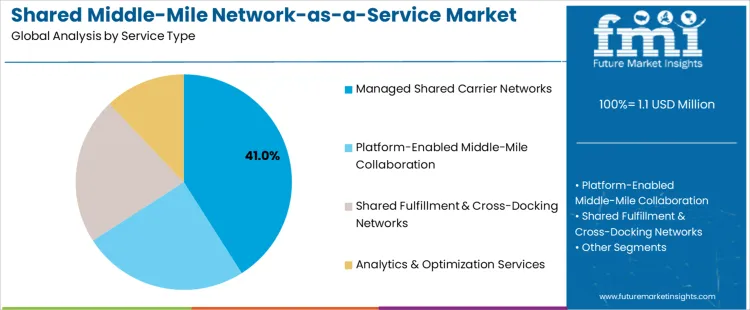
Managed shared carrier networks account for 41% of the market share. These services allow businesses to leverage shared transportation resources across multiple users, leading to reduced costs and improved efficiency in middle-mile logistics. Managed shared carrier networks are ideal for businesses seeking flexibility and scalability in their transportation operations without committing to dedicated assets. By utilizing shared infrastructure and optimizing routes, businesses can reduce operational costs and improve delivery speed. The demand for managed shared carrier networks is particularly strong among companies looking to scale their operations without significantly increasing their logistics overhead. As e-commerce continues to grow and global supply chains become more complex, managed shared carrier networks offer an effective solution to handle the increased demand for cost-efficient, flexible, and timely deliveries.
Which End-User Drives Shared Middle-Mile Network-as-a-Service Market Demand Globally?
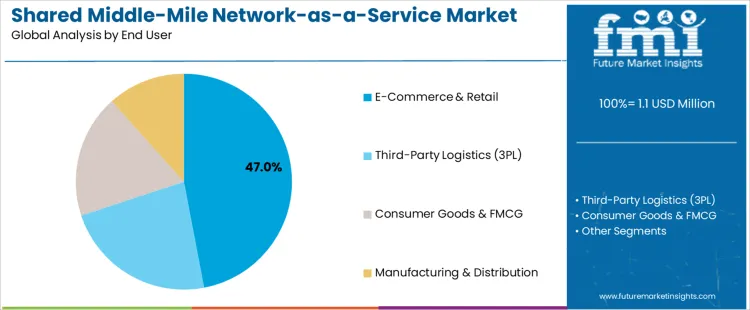
E-commerce & retail leads the end-user segment with 47% of the market share. The rapid growth of e-commerce has led to a significant increase in demand for middle-mile logistics solutions that can efficiently handle high volumes of goods and ensure fast deliveries. Shared middle-mile networks provide e-commerce and retail businesses with scalable and flexible solutions to manage their growing logistics needs. These platforms allow e-commerce companies to optimize their supply chains, reduce delivery costs, and improve their ability to meet consumer expectations for faster shipping. The increasing reliance on third-party logistics providers and shared networks in the retail sector further supports the growth of this segment. While third-party logistics (3PL), consumer goods & FMCG, and manufacturing & distribution also contribute to the market, e-commerce & retail remain the dominant segment due to the large-scale operations and the need for efficient and cost-effective middle-mile solutions in this sector.
What are the Key Dynamics of the Global Shared Middle Mile Network as a Service Market?
The global shared middle mile network as a service market is expanding as logistics and supply chain players seek solutions that improve utilisation of transport infrastructure between distribution hubs and regional fulfilment centres. Shared middle mile services enable multiple shippers and carriers to access pooled capacity, optimise routing and lower cost per shipment. Growth reflects expansion of e commerce, rising demand for rapid delivery and pressure to reduce operating expenses. Providers of network as a service platforms integrate planning, visibility and collaboration tools that help participants coordinate movements and unlock efficiencies across shared transport networks worldwide.
What are the Key Drivers for the Global Shared Middle Mile Network as a Service Market?
A primary driver is the need to improve cost efficiency in logistics operations amid rising fuel, labour and facility expenses. Shared middle mile networks reduce empty runs and under utilised capacity by matching freight demand and available assets across participants. Growth in e commerce and omni channel fulfilment increases volumes that must be moved between distribution centres and regional hubs, encouraging adoption of shared solutions. Technological advancements in digital platforms that support real time tracking, dynamic load matching and data analytics enhance network performance and decision support. Collaborative emphasis among shippers, carriers and third party logistics providers fuels interest in network as a service models.
What are the Restraints for the Global Shared Middle Mile Network as a Service Market?
One restraint is the organisational complexity of integrating shared network platforms with existing transportation management systems and operational processes. Variation in technology maturity and data quality across participants can limit the effectiveness of shared planning and visibility. Small and mid sized carriers may face barriers due to cost or skills required to adopt and manage network as a service solutions. Concerns about data sharing, competitive sensitivity and platform governance can affect willingness to participate in shared networks. Differences in regional supply chain practices and regulatory environments may also slow harmonised adoption in some markets.
What is the Key Trends in the Global Shared Middle Mile Network as a Service Market?
A key trend is the rise of platform based ecosystems that connect shippers, carriers, fulfilment centres and service providers to enable coordinated use of middle mile capacity. Adoption of cloud native and API enabled network platforms enhances scalability and integration with other supply chain systems. Use of advanced analytics and machine learning within these platforms supports predictive usage patterns, demand forecasting and smarter load matching. Interest in sustainability goals drives participation in shared networks that reduce miles travelled and improve asset efficiency. Partnerships between logistics technology firms and industry stakeholders are expanding shared service footprints and enabling broader participation across regions and vertical markets.
What is the Country-Wise Outlook for Shared Middle-Mile Network-as-a-Service?
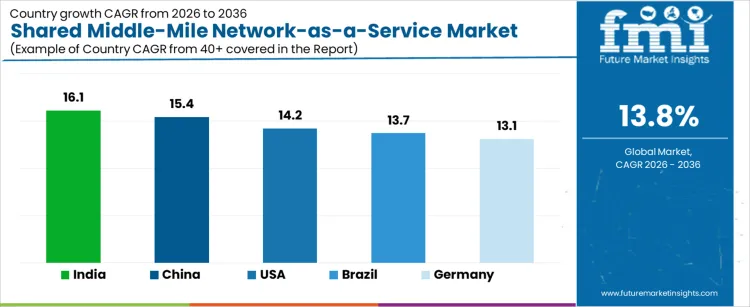
The Shared Middle-Mile Network-as-a-Service market is seeing substantial growth as logistics and supply chain operations increasingly rely on shared, digital, and scalable network services. Countries like India, China, and the USA are leading the adoption of middle-mile network services, driven by the growth of e-commerce, advancements in logistics technologies, and the demand for cost-effective and flexible transportation solutions. Shared network models allow businesses to optimize their middle-mile logistics by leveraging a centralized, collaborative infrastructure, reducing costs and improving delivery speed. As industries continue to embrace shared, data-driven platforms for logistics optimization, the market is expected to expand rapidly across these regions.
| Country | CAGR (2026–2036) |
|---|---|
| India | 16.1% |
| China | 15.4% |
| USA | 14.2% |
| Brazil | 13.7% |
| Germany | 13.1% |
What is Driving the Growth of Shared Middle-Mile Network-as-a-Service in India?
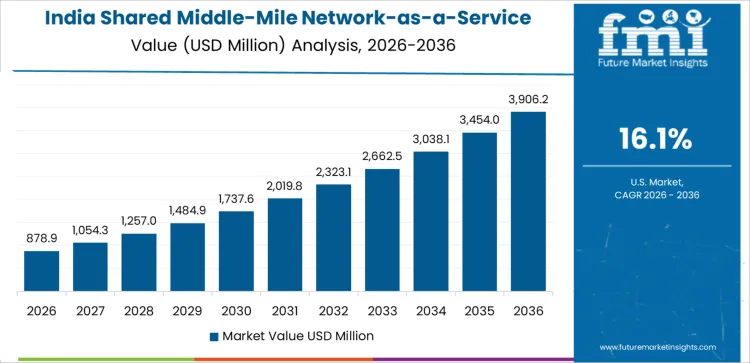
India’s Shared Middle-Mile Network-as-a-Service market is projected to grow at a CAGR of 16.1%. The rapid growth of India’s e-commerce sector, combined with the need for more efficient and cost-effective logistics solutions, is driving the adoption of shared network services. As businesses in India look for ways to optimize their supply chains, shared middle-mile networks offer a flexible, scalable solution to meet the demands of high-volume transportation while reducing costs. With a growing focus on digital transformation and the increasing need for collaboration between logistics providers, the market for shared network services is expected to continue its upward trajectory in India.
What is Contributing to the Growth of Shared Middle-Mile Network-as-a-Service in China?
China’s Shared Middle-Mile Network-as-a-Service market is expected to grow at a CAGR of 15.4%. As China remains one of the largest e-commerce markets in the world, the demand for efficient and cost-effective logistics solutions continues to rise. Shared middle-mile networks, which enable businesses to access a centralized infrastructure for transportation services, are becoming increasingly popular due to their ability to reduce operational costs and improve delivery times. The growth of digital logistics platforms and the increasing adoption of data-driven decision-making in China’s logistics sector are key drivers of the market. As businesses look for innovative ways to manage middle-mile transportation, shared network services are playing an increasingly central role.
What is Driving the Shared Middle-Mile Network-as-a-Service Market Growth in the USA?
The USA’s Shared Middle-Mile Network-as-a-Service market is projected to grow at a CAGR of 14.2%. The need for more flexible, scalable, and cost-efficient logistics solutions is driving the adoption of shared middle-mile networks across the country. As e-commerce continues to grow and demand for faster deliveries increases, businesses are seeking ways to optimize their transportation networks. Shared middle-mile network services provide a solution by enabling multiple companies to utilize a centralized, shared logistics infrastructure, improving delivery speed and reducing costs. With the growing focus on digitalization in the logistics sector and the rise of collaborative, technology-driven platforms, the market for network-as-a-service solutions is expected to expand steadily in the USA.
What is Influencing the Growth of Shared Middle-Mile Network-as-a-Service in Brazil?
Brazil’s Shared Middle-Mile Network-as-a-Service market is projected to grow at a CAGR of 13.7%. The expanding e-commerce sector in Brazil, along with the growing need for cost-effective and efficient logistics solutions, is driving the adoption of shared middle-mile networks. These services enable businesses to streamline their transportation operations, reduce costs, and improve delivery speeds by leveraging a shared infrastructure. As Brazil’s logistics industry continues to evolve and digital transformation accelerates, shared network services are becoming a vital component of the supply chain. With growing pressure to optimize operations and meet the demands of consumers, Brazil’s market for shared middle-mile network services is expected to continue its strong growth.
What is Contributing to the Growth of Shared Middle-Mile Network-as-a-Service in Germany?
Germany’s Shared Middle-Mile Network-as-a-Service market is expected to grow at a CAGR of 13.1%. As Germany continues to embrace digitalization and innovation in its logistics sector, the demand for shared middle-mile network services is rising. The country’s strong e-commerce sector, combined with its focus on optimizing logistics operations, is driving the adoption of these services. Shared networks enable businesses to reduce transportation costs, improve efficiency, and shorten delivery times by utilizing a centralized infrastructure for middle-mile logistics. Germany’s commitment to sustainability and its push for reducing carbon emissions also play a role in the growing market for shared network services, as companies seek greener solutions to meet environmental regulations and consumer expectations.
What is the Competitive Landscape for the Shared Middle Mile Network as a Service Market?
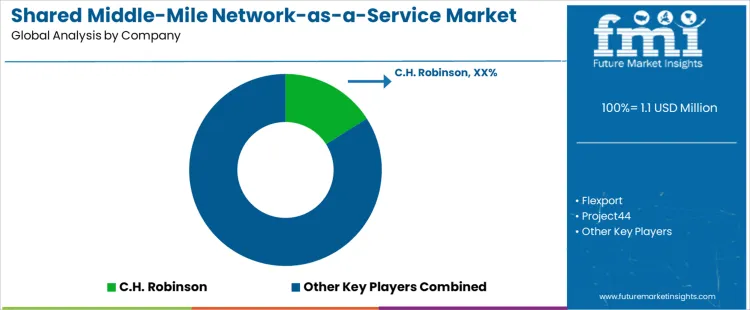
Global demand for shared middle mile network as a service solutions is rising as retailers, brands and logistics providers seek more efficient and cost effective ways to move goods between distribution centres and last mile hubs. The middle mile remains one of the most expensive and complex segments of the supply chain because it directly affects delivery speed, inventory positioning and transportation costs. Growth in e commerce, omnichannel fulfilment and customer expectations for faster delivery timelines pushes companies to leverage shared networks rather than maintain excess proprietary capacity. Shared network as a service models help spread asset utilisation across participants, reduce empty miles and improve planning through pooled transport resources. Sustainability goals also strengthen adoption because higher utilisation typically lowers environmental impact per unit moved. Shippers across North America, Europe and Asia Pacific are increasingly open to collaborative middle mile services that tap real time visibility, predictive planning and asset sharing to improve responsiveness and resource efficiency.
On the supply side, a group of logistics, freight technology and fulfillment platform companies compete to lead this emerging segment. C.H. Robinson is recognised as a leading player with deep industry experience, broad carrier relationships and data driven network optimisation capabilities. Other key competitors include Flexport, Project44, Convoy and Shopify Fulfillment Network (SFN), each bringing distinct strengths. Flexport leverages global freight forwarding and integrated logistics, Project44 focuses on real time visibility and predictive analytics, Convoy offers asset light freight network services and SFN integrates fulfilment and transport for direct to consumer brands. Competition among these suppliers centers on coverage breadth, technology integration, real time data quality, ease of onboarding and ability to lower costs while maintaining delivery performance. Providers that combine scalable network infrastructure, strong analytics, seamless integration with enterprise systems and transparent performance metrics are best positioned to capture growth as shared middle mile network as a service models expand.
Key Players of the Shared Middle-Mile Network-as-a-Service Market
- C.H. Robinson
- Flexport
- Project44
- Convoy
- Shopify Fulfillment Network (SFN)
Scope of the Report
| Items | Values |
|---|---|
| Quantitative Units (2026) | USD Million |
| Service Type | Managed Shared Carrier Networks, Platform-Enabled Middle-Mile Collaboration, Shared Fulfillment & Cross-Docking Networks, Analytics & Optimization Services |
| End User | E-Commerce & Retail, Third-Party Logistics (3PL), Consumer Goods & FMCG, Manufacturing & Distribution |
| Companies | C.H. Robinson, Flexport, Project44, Convoy, Shopify Fulfillment Network (SFN) |
| Regions Covered | North America, Latin America, Western Europe, Eastern Europe, South Asia and Pacific, East Asia, Middle East & Africa |
| Countries Covered | United States, Canada, Mexico, Brazil, Argentina, Germany, France, United Kingdom, Italy, Spain, Netherlands, China, India, Japan, South Korea, ANZ, GCC Countries, South Africa |
| Additional Attributes | Dollar by sales by service type, end-user, and region. Includes market trends in shared middle-mile network-as-a-service, performance in e-commerce, 3PL, FMCG, and manufacturing, demand for collaborative platforms, cost-effectiveness, sustainability practices, regulatory compliance, market share and competitive positioning of key companies, and the role of shared networks in optimizing logistics, reducing costs, and improving supply chain flexibility across industries. |
Key Segments in the Shared Middle-Mile Network-as-a-Service Market
Service Type:
- Managed Shared Carrier Networks
- Platform Enabled Middle Mile Collaboration
- Shared Fulfillment & Cross Docking Networks
- Analytics & Optimization Services
End User:
- E Commerce & Retail
- Third Party Logistics (3PL)
- Consumer Goods & FMCG
- Manufacturing & Distribution
Region:
- Asia Pacific
- China
- India
- Japan
- South Korea
- ASEAN
- Rest of Asia Pacific
- Europe
- Germany
- United Kingdom
- France
- Italy
- Spain
- Nordic
- BENELUX
- Rest of Europe
- North America
- United States
- Canada
- Mexico
- Latin America
- Brazil
- Chile
- Rest of Latin America
- Middle East & Africa
- Kingdom of Saudi Arabia
- Other GCC Countries
- Turkey
- South Africa
- Other African Union
- Rest of Middle East & Africa
Frequently Asked Questions
How big is the shared middle-mile network-as-a-service market in 2026?
The global shared middle-mile network-as-a-service market is estimated to be valued at USD 1.1 million in 2026.
What will be the size of shared middle-mile network-as-a-service market in 2036?
The market size for the shared middle-mile network-as-a-service market is projected to reach USD 4.0 million by 2036.
How much will be the shared middle-mile network-as-a-service market growth between 2026 and 2036?
The shared middle-mile network-as-a-service market is expected to grow at a 13.8% CAGR between 2026 and 2036.
What are the key product types in the shared middle-mile network-as-a-service market?
The key product types in shared middle-mile network-as-a-service market are managed shared carrier networks, platform‑enabled middle‑mile collaboration, shared fulfillment & cross‑docking networks and analytics & optimization services.
Which end user segment to contribute significant share in the shared middle-mile network-as-a-service market in 2026?
In terms of end user, e‑commerce & retail segment to command 47.0% share in the shared middle-mile network-as-a-service market in 2026.
Preview the report firsthand - request a free sample
Get SampleGet the brochure for pricing and purchase details.
Get PDFTable of Content
- Executive Summary
- Global Market Outlook
- Demand-side Trends
- Supply-side Trends
- Technology Roadmap Analysis
- Analysis and Recommendations
- Market Overview
- Market Coverage / Taxonomy
- Market Definition / Scope / Limitations
- Market Background
- Market Dynamics
- Drivers
- Restraints
- Opportunity
- Trends
- Scenario Forecast
- Demand in Optimistic Scenario
- Demand in Likely Scenario
- Demand in Conservative Scenario
- Opportunity Map Analysis
- Product Life Cycle Analysis
- Supply Chain Analysis
- Investment Feasibility Matrix
- Value Chain Analysis
- PESTLE and Porter’s Analysis
- Regulatory Landscape
- Regional Parent Market Outlook
- Production and Consumption Statistics
- Import and Export Statistics
- Market Dynamics
- Global Market Analysis 2021 to 2025 and Forecast, 2026 to 2036
- Historical Market Size Value (USD Million) Analysis, 2021 to 2025
- Current and Future Market Size Value (USD Million) Projections, 2026 to 2036
- Y-o-Y Growth Trend Analysis
- Absolute $ Opportunity Analysis
- Global Market Pricing Analysis 2021 to 2025 and Forecast 2026 to 2036
- Global Market Analysis 2021 to 2025 and Forecast 2026 to 2036, By Service Type
- Introduction / Key Findings
- Historical Market Size Value (USD Million) Analysis By Service Type , 2021 to 2025
- Current and Future Market Size Value (USD Million) Analysis and Forecast By Service Type , 2026 to 2036
- Managed Shared Carrier Networks
- Platform‑Enabled Middle‑Mile Collaboration
- Shared Fulfillment & Cross‑Docking Networks
- Analytics & Optimization Services
- Y-o-Y Growth Trend Analysis By Service Type , 2021 to 2025
- Absolute $ Opportunity Analysis By Service Type , 2026 to 2036
- Global Market Analysis 2021 to 2025 and Forecast 2026 to 2036, By End User
- Introduction / Key Findings
- Historical Market Size Value (USD Million) Analysis By End User, 2021 to 2025
- Current and Future Market Size Value (USD Million) Analysis and Forecast By End User, 2026 to 2036
- E‑Commerce & Retail
- Third‑Party Logistics (3PL)
- Consumer Goods & FMCG
- Manufacturing & Distribution
- Y-o-Y Growth Trend Analysis By End User, 2021 to 2025
- Absolute $ Opportunity Analysis By End User, 2026 to 2036
- Global Market Analysis 2021 to 2025 and Forecast 2026 to 2036, By Region
- Introduction
- Historical Market Size Value (USD Million) Analysis By Region, 2021 to 2025
- Current Market Size Value (USD Million) Analysis and Forecast By Region, 2026 to 2036
- North America
- Latin America
- Western Europe
- Eastern Europe
- East Asia
- South Asia and Pacific
- Middle East & Africa
- Market Attractiveness Analysis By Region
- North America Market Analysis 2021 to 2025 and Forecast 2026 to 2036, By Country
- Historical Market Size Value (USD Million) Trend Analysis By Market Taxonomy, 2021 to 2025
- Market Size Value (USD Million) Forecast By Market Taxonomy, 2026 to 2036
- By Country
- USA
- Canada
- Mexico
- By Service Type
- By End User
- By Country
- Market Attractiveness Analysis
- By Country
- By Service Type
- By End User
- Key Takeaways
- Latin America Market Analysis 2021 to 2025 and Forecast 2026 to 2036, By Country
- Historical Market Size Value (USD Million) Trend Analysis By Market Taxonomy, 2021 to 2025
- Market Size Value (USD Million) Forecast By Market Taxonomy, 2026 to 2036
- By Country
- Brazil
- Chile
- Rest of Latin America
- By Service Type
- By End User
- By Country
- Market Attractiveness Analysis
- By Country
- By Service Type
- By End User
- Key Takeaways
- Western Europe Market Analysis 2021 to 2025 and Forecast 2026 to 2036, By Country
- Historical Market Size Value (USD Million) Trend Analysis By Market Taxonomy, 2021 to 2025
- Market Size Value (USD Million) Forecast By Market Taxonomy, 2026 to 2036
- By Country
- Germany
- UK
- Italy
- Spain
- France
- Nordic
- BENELUX
- Rest of Western Europe
- By Service Type
- By End User
- By Country
- Market Attractiveness Analysis
- By Country
- By Service Type
- By End User
- Key Takeaways
- Eastern Europe Market Analysis 2021 to 2025 and Forecast 2026 to 2036, By Country
- Historical Market Size Value (USD Million) Trend Analysis By Market Taxonomy, 2021 to 2025
- Market Size Value (USD Million) Forecast By Market Taxonomy, 2026 to 2036
- By Country
- Russia
- Poland
- Hungary
- Balkan & Baltic
- Rest of Eastern Europe
- By Service Type
- By End User
- By Country
- Market Attractiveness Analysis
- By Country
- By Service Type
- By End User
- Key Takeaways
- East Asia Market Analysis 2021 to 2025 and Forecast 2026 to 2036, By Country
- Historical Market Size Value (USD Million) Trend Analysis By Market Taxonomy, 2021 to 2025
- Market Size Value (USD Million) Forecast By Market Taxonomy, 2026 to 2036
- By Country
- China
- Japan
- South Korea
- By Service Type
- By End User
- By Country
- Market Attractiveness Analysis
- By Country
- By Service Type
- By End User
- Key Takeaways
- South Asia and Pacific Market Analysis 2021 to 2025 and Forecast 2026 to 2036, By Country
- Historical Market Size Value (USD Million) Trend Analysis By Market Taxonomy, 2021 to 2025
- Market Size Value (USD Million) Forecast By Market Taxonomy, 2026 to 2036
- By Country
- India
- ASEAN
- Australia & New Zealand
- Rest of South Asia and Pacific
- By Service Type
- By End User
- By Country
- Market Attractiveness Analysis
- By Country
- By Service Type
- By End User
- Key Takeaways
- Middle East & Africa Market Analysis 2021 to 2025 and Forecast 2026 to 2036, By Country
- Historical Market Size Value (USD Million) Trend Analysis By Market Taxonomy, 2021 to 2025
- Market Size Value (USD Million) Forecast By Market Taxonomy, 2026 to 2036
- By Country
- Kingdom of Saudi Arabia
- Other GCC Countries
- Turkiye
- South Africa
- Other African Union
- Rest of Middle East & Africa
- By Service Type
- By End User
- By Country
- Market Attractiveness Analysis
- By Country
- By Service Type
- By End User
- Key Takeaways
- Key Countries Market Analysis
- USA
- Pricing Analysis
- Market Share Analysis, 2025
- By Service Type
- By End User
- Canada
- Pricing Analysis
- Market Share Analysis, 2025
- By Service Type
- By End User
- Mexico
- Pricing Analysis
- Market Share Analysis, 2025
- By Service Type
- By End User
- Brazil
- Pricing Analysis
- Market Share Analysis, 2025
- By Service Type
- By End User
- Chile
- Pricing Analysis
- Market Share Analysis, 2025
- By Service Type
- By End User
- Germany
- Pricing Analysis
- Market Share Analysis, 2025
- By Service Type
- By End User
- UK
- Pricing Analysis
- Market Share Analysis, 2025
- By Service Type
- By End User
- Italy
- Pricing Analysis
- Market Share Analysis, 2025
- By Service Type
- By End User
- Spain
- Pricing Analysis
- Market Share Analysis, 2025
- By Service Type
- By End User
- France
- Pricing Analysis
- Market Share Analysis, 2025
- By Service Type
- By End User
- India
- Pricing Analysis
- Market Share Analysis, 2025
- By Service Type
- By End User
- ASEAN
- Pricing Analysis
- Market Share Analysis, 2025
- By Service Type
- By End User
- Australia & New Zealand
- Pricing Analysis
- Market Share Analysis, 2025
- By Service Type
- By End User
- China
- Pricing Analysis
- Market Share Analysis, 2025
- By Service Type
- By End User
- Japan
- Pricing Analysis
- Market Share Analysis, 2025
- By Service Type
- By End User
- South Korea
- Pricing Analysis
- Market Share Analysis, 2025
- By Service Type
- By End User
- Russia
- Pricing Analysis
- Market Share Analysis, 2025
- By Service Type
- By End User
- Poland
- Pricing Analysis
- Market Share Analysis, 2025
- By Service Type
- By End User
- Hungary
- Pricing Analysis
- Market Share Analysis, 2025
- By Service Type
- By End User
- Kingdom of Saudi Arabia
- Pricing Analysis
- Market Share Analysis, 2025
- By Service Type
- By End User
- Turkiye
- Pricing Analysis
- Market Share Analysis, 2025
- By Service Type
- By End User
- South Africa
- Pricing Analysis
- Market Share Analysis, 2025
- By Service Type
- By End User
- USA
- Market Structure Analysis
- Competition Dashboard
- Competition Benchmarking
- Market Share Analysis of Top Players
- By Regional
- By Service Type
- By End User
- Competition Analysis
- Competition Deep Dive
- C.H. Robinson
- Overview
- Product Portfolio
- Profitability by Market Segments (Product/Age /Sales Channel/Region)
- Sales Footprint
- Strategy Overview
- Marketing Strategy
- Product Strategy
- Channel Strategy
- Flexport
- Project44
- Convoy
- Shopify Fulfillment Network (SFN)
- C.H. Robinson
- Competition Deep Dive
- Assumptions & Acronyms Used
- Research Methodology


