

- Industry Size (2026)
- USD 1.1 Bn
- Forecast (2036)
- USD 2.7 Bn
- CAGR (2026 to 2036)
- 9.3%
Spill Containment Systems Market Forecast and Outlook 2026 to 2036
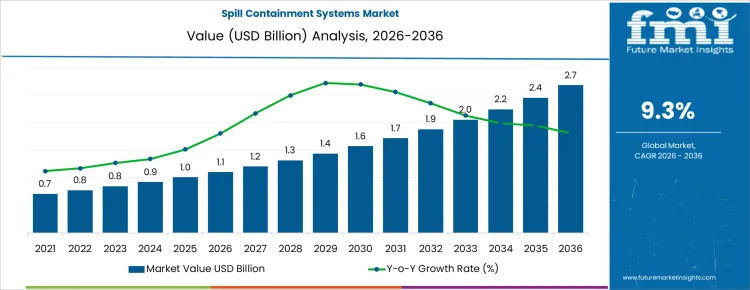
The spill containment systems market is projected to grow from USD 1.1 billion in 2026 to USD 2.7 billion by 2036, with a CAGR of 9.3%. This growth is primarily driven by the increasing regulatory emphasis on preventing hazardous spills and protecting the environment. The chemical & oil storage sector leads the market with a 40% share, driven by the high risk of spills in facilities handling hazardous liquids like chemicals and oils. The demand for bunds, berms, and pallets dominates the market at 45%, thanks to their ability to contain spills effectively across various industrial settings. These systems are crucial for preventing hazardous liquids from contaminating the environment, particularly in storage facilities, manufacturing plants, and warehouses.
Quick Stats for Spill Containment Systems Market
- Spill Containment Systems Market Value (2026): USD 1.1 billion
- Spill Containment Systems Market Forecast Value (2036): USD 2.7 billion
- Spill Containment Systems Market Forecast CAGR: 9.3%
- Top Containment Type in Spill Containment Systems Market: Bunds, berms & pallets
- Key Growth Regions in Spill Containment Systems Market: India, China, USA, Brazil, Germany
- Key Players in Spill Containment Systems Market: Justrite, Eagle Manufacturing, Denios, Jiangsu Safety Tech, Nilkamal, TRUSCO Nakayama
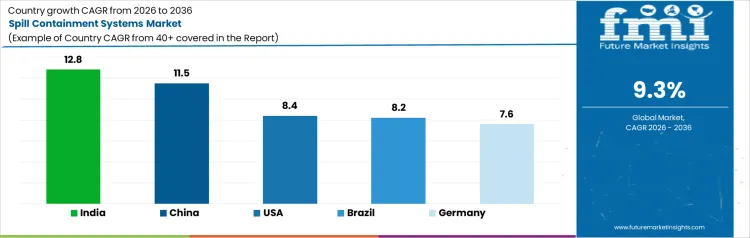
In terms of regional growth, India is leading with a 12.8% CAGR, driven by rapid industrialization and a growing focus on environmental protection. China follows with 11.5%, supported by the country’s expansive industrial base and stringent environmental regulations. The USA grows at 8.4%, reflecting increasing regulatory compliance and environmental safety awareness across industries like oil and gas and chemicals. Germany, with its robust environmental policies, is expanding at 7.6%, while Brazil grows at 8.2%, driven by industrial growth and the need for better spill management solutions in key sectors such as oil & gas and mining. As global environmental standards become stricter, the demand for spill containment systems is expected to rise across all regions, ensuring continued market expansion.
Spill Containment Systems Market Key Takeaways
| Metric | Value |
|---|---|
| Industry Value (2026) | USD 1.1 billion |
| Forecast Value (2036) | USD 2.7 billion |
| Forecast CAGR (2026 to 2036) | 9.3% |
How is the Global Spill Containment Systems Sector Advancing?
The global spill containment systems market is growing steadily as industries and regulators prioritize environmental protection, workplace safety, and compliance with stringent spill prevention standards. Spill containment systems are structural and engineered solutions such as bunds, secondary containment pallets, drip trays, and impervious barriers designed to capture leaks or spills of hazardous liquids such as fuels, chemicals, and oils before they reach soil or water bodies. Traditional containment methods often relied on reactive cleanup after an incident, but proactive containment infrastructure has become essential for risk-averse operators and regulated facilities to prevent environmental damage and costly regulatory violations.
Demand is rising across sectors including oil and gas, petrochemicals, manufacturing, transportation, and utilities, where the potential impact of hazardous spills on ecosystems and local communities is significant. Advances in materials science and design have improved containment effectiveness, durability, and ease of installation. Innovations include modular systems that can be scaled for various facility sizes, reinforced materials that withstand aggressive chemical exposure, and integrated monitoring technologies that detect leaks earlier. These enhancements help organizations reduce potential liabilities and support broader environmental, health, and safety (EHS) strategies.
Facility owners are increasingly investing in containment infrastructure as part of comprehensive risk management plans that reduce downtime, protect assets, and maintain community trust. Challenges such as upfront capital costs, maintenance requirements, and variability in regional compliance standards may influence adoption rates. Despite these factors, the emphasis on preventing hazardous releases and minimizing environmental impact will sustain demand for advanced spill containment systems globally.
What Is the Segment-Wise Analysis for the Global Spill Containment Systems Market?
The global spill containment systems market is segmented by end-use and containment type. Chemical & oil storage leads the market with a 40% share, followed by industrial safety, manufacturing plants, and warehousing & logistics. These sectors are highly dependent on spill containment systems to manage hazardous materials and prevent environmental contamination. In terms of containment type, bunds, berms, and pallets dominate the market with a 45% share, followed by spill pallets & decks, portable containment, and modular spill decks.
How Do Chemical & Oil Storage Lead the Global Spill Containment Systems Market?
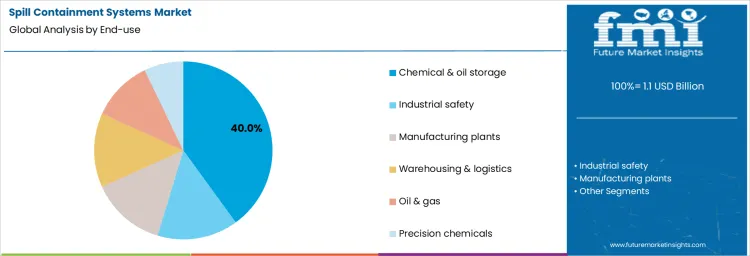
Chemical & oil storage leads the global spill containment systems market with a 40% share due to the high risk of spills in industries dealing with hazardous liquids. Storage facilities that handle chemicals, oils, and other hazardous substances require effective containment systems to prevent spills from contaminating the environment and ensuring compliance with stringent safety regulations. Spill containment systems, such as bunds, berms, and spill pallets, are essential in these industries to minimize the environmental impact of potential spills. As regulatory pressure and the need for green practices increase, the demand for reliable spill containment solutions in chemical and oil storage facilities continues to grow, driving the market forward.
Why Do Bunds, Berms & Pallets Hold the Largest Market Share in the Global Spill Containment Systems Market?
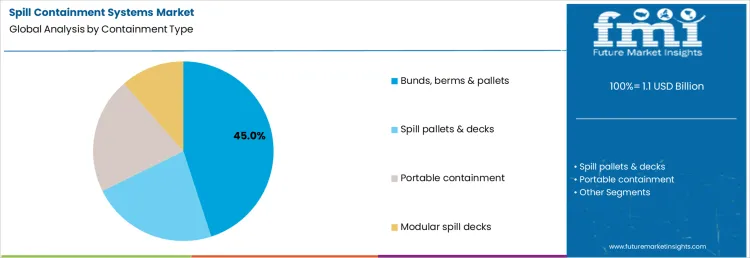
Bunds, berms, and pallets hold the largest share of 45% in the global spill containment systems market due to their proven ability to provide robust containment for hazardous materials in a wide range of industrial settings. These systems are highly effective in preventing spills from spreading, offering an immediate solution to control and contain spills in storage areas, manufacturing plants, and warehouses. Their versatility and cost-effectiveness make them the preferred choice for many industries, particularly in chemical & oil storage, where spill containment is a critical safety requirement. With growing awareness of environmental responsibility, bunds, berms, and pallets continue to dominate the market as essential spill management solutions.
What is Shaping the Spill Containment Systems Market?
The spill containment systems market is growing as industries strengthen environmental protection and workplace safety practices. Facilities handling hazardous liquids, fuels, and chemicals from manufacturing and oil & gas to transportation and warehousing are adopting containment systems to prevent soil, water, and air contamination. Regulatory frameworks worldwide mandate spill prevention measures and emergency preparedness, prompting investments in bunded pallets, secondary containment berms, portable barriers, and containment trays. Rising environmental awareness, heavy fines for non-compliance, and corporate durability commitments are increasing adoption of robust systems that minimize spill impact and support operational continuity.
What Are the Key Drivers for the Spill Containment Systems Market?
The spill containment systems market is driven by stringent environmental and safety regulations that require facilities to prevent and manage hazardous liquid releases. Government agencies and industry standards bodies enforce rules on secondary containment for chemical storage tanks, drums, and bulk containers to reduce risks of soil and water pollution. Corporations are also under pressure to meet ESG goals, pushing investment in proactive spill infrastructure. Rapid industrialization, expanding chemical and petroleum sectors, and increased public awareness of environmental damage from spills further accelerate demand. Costly cleanup liabilities motivate companies to install containment systems as part of risk mitigation strategies.
What Are the Main Restraints Impacting the Spill Containment Systems Market?
Growth of the spill containment systems market is limited by cost and infrastructure challenges, especially for small and mid-sized enterprises. High-quality containment solutions, including engineered bunds and custom secondary containment structures, can require significant capital investment and ongoing maintenance expenses. In some regions, limited technical expertise and awareness of best practices hinder proper planning and installation. Variability in local regulatory requirements adds complexity for multinational operators, who must tailor systems to different standards. Space constraints at retrofit sites can make implementation difficult, reducing adoption in older facilities without suitable layout flexibility.
What is the Growth Outlook for the Spill Containment Systems Market by Country?
| Country | CAGR (%) |
|---|---|
| USA | 8.4% |
| Germany | 7.6% |
| China | 11.5% |
| India | 12.8% |
| Brazil | 8.2% |
The spill containment systems market is seeing steady growth, with India leading at a 12.8% CAGR, driven by the rapid industrialization and increased regulatory focus on environmental protection. China follows with 11.5%, fueled by industrial expansion and a strong push for compliance with environmental standards. The USA’s market grows at 8.4%, supported by increasing regulations and a need for efficient spill containment in key industries. Germany’s market grows at 7.6%, driven by strong environmental regulations and growing awareness of safety in industrial sectors. Brazil’s market grows at 8.2%, supported by industrial growth and a heightened awareness of environmental safety and spill management.
What is the Growth Outlook for the Spill Containment Systems Market in India?
India’s spill containment systems market is growing at 12.8%, driven by rapid industrialization and increased focus on workplace safety and environmental protection. As India’s industrial sectors such as chemicals, manufacturing, and pharmaceuticals continue to expand, there is a rising demand for effective spill containment solutions to manage hazardous materials. The Indian government’s emphasis on improving environmental safety and reducing pollution is pushing industries to adopt spill containment systems to comply with growing regulations. This demand is further fueled by the need for compliance with safety standards and global environmental norms. As urbanization and industrial activities increase, the demand for reliable spill containment solutions in India is expected to continue growing, with industries prioritizing durability and environmental responsibility.
What is the Growth Outlook for the Spill Containment Systems Market in China?
China’s spill containment systems market is growing at 11.5%, driven by the country’s rapid industrial expansion and increasing focus on environmental protection. As China continues to be a global manufacturing hub, sectors such as energy, chemicals, and manufacturing are facing mounting pressure to adopt spill containment solutions to comply with stricter regulations. The government’s focus on reducing industrial pollution and improving workplace safety is accelerating the adoption of spill management systems. With industrial growth expected to continue, China’s demand for spill containment systems is poised to rise, fueled by increasing regulatory compliance and the need for efficient solutions to mitigate environmental risks. As the country modernizes its industrial infrastructure, the spill containment systems market is expected to grow robustly.
What is the Growth Outlook for the Spill Containment Systems Market in the USA?
The USA’s spill containment systems market is growing at 8.4%, supported by increasing awareness of environmental safety and stricter regulations across various industries. The demand for spill containment solutions is particularly strong in industries such as oil and gas, chemicals, and manufacturing, where hazardous material spills can lead to significant environmental and financial impacts. With growing regulatory pressures and heightened awareness of the environmental risks associated with spills, industries are turning to advanced spill containment systems. These systems are essential for maintaining compliance with environmental standards, reducing workplace hazards, and preventing contamination. As environmental safety remains a priority in the USA, the market for spill containment systems is expected to continue expanding, with a focus on innovation and durability.
What is the Growth Outlook for the Spill Containment Systems Market in Germany?
Germany’s spill containment systems market is growing at 7.6%, driven by stringent environmental regulations and a strong commitment to durability and workplace safety. Germany, a leader in industrial manufacturing, faces increasing pressure to adopt spill containment systems to meet both national and European Union environmental standards. The country’s industrial sectors, particularly chemicals, automotive, and energy, require efficient solutions to handle spills and prevent environmental contamination. As Germany continues to focus on reducing environmental risks and improving safety standards, the demand for spill containment systems will likely increase. With growing corporate responsibility and regulatory compliance in mind, the market for spill containment systems in Germany is expected to grow steadily, with increasing adoption of green technologies.
What is the Growth Outlook for the Spill Containment Systems Market in Brazil?
Brazil’s spill containment systems market is growing at 8.2%, supported by the increasing industrial activity in sectors such as oil and gas, mining, and chemicals. As Brazil’s industrial base expands, the need for spill containment solutions to manage hazardous materials and prevent environmental contamination is becoming more critical. With the Brazilian government’s growing focus on environmental protection, industries are compelled to adopt spill containment systems to comply with local and international regulations. The rise in industrial production and export activities, particularly in high-risk sectors, is further fueling the market’s growth. As Brazil continues to focus on durability and safety, the spill containment systems market is expected to grow steadily, driven by regulatory compliance and environmental awareness.
How Are Companies Competing in the Spill Containment Systems Market?
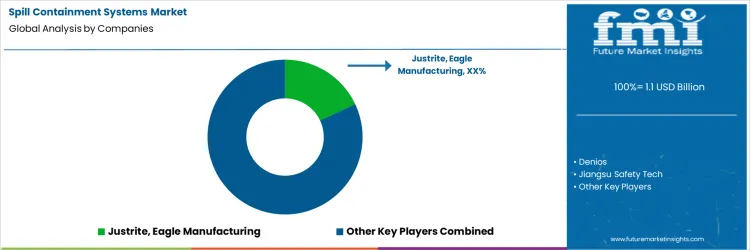
In the spill containment systems market Justrite, Eagle Manufacturing, Denios, Jiangsu Safety Tech, Nilkamal, local OEMs, and TRUSCO Nakayama are positioned with product brochures that emphasize robust secondary containment, regulatory compliance, and ease of installation. Justrite materials present modular containment solutions designed for drums, totes, and chemical storage areas, with clear diagrams and capacity charts that help safety teams specify correct systems. Performance features and regulatory alignment are described with guidance on matching containment size to facility risk. Eagle Manufacturing brochures highlight heavy‑duty steel and polyethylene systems engineered for industrial environments. Specs and usage scenarios are included to support decisions in manufacturing and logistics settings.
Denios collateral focuses on engineered spill containment units with integrated shelving, sump capacity, and customizable options. Technical summaries and imagery illustrate versatility and durability. Jiangsu Safety Tech product briefs present cost‑effective containment platforms with emphasis on build quality and local compliance. Quick reference guides assist buyers in selecting appropriate configurations based on volume and chemical class. Nilkamal literature showcases molded containment solutions tailored to regional needs with performance specs and installation notes. Local OEMs are featured with flexible, regionally adapted designs and quick turnaround production that appeal to custom requirements.
TRUSCO Nakayama brochures describe specialized containment systems with a focus on compact design and ease of use, with simple charts showing sump capacities and deployment areas. Across all firms product materials stress load‑bearing specifications, chemical resistance, and ease of maintenance. Competitive strategies are shaped by innovation in containment design, clarity of technical documentation, and support resources that help compliance officers and safety managers choose solutions that reduce risk and meet regulatory standards. Emphasis on modular options, material durability, and documented performance is used to influence adoption in safety‑sensitive environments.
Key Players in Spill Containment Systems Market
- Justrite, Eagle Manufacturing
- Denios
- Jiangsu Safety Tech
- Nilkamal
- Local OEMs
- TRUSCO Nakayama
Scope of Report
| Items | Values |
|---|---|
| Quantitative Units (2026) | USD billion |
| End-use Application | Chemical & oil storage, Industrial safety, Manufacturing plants, Warehousing & logistics, Oil & gas, Precision chemicals |
| Containment Type | Bunds, berms & pallets, Spill pallets & decks, Portable containment, Modular spill decks |
| Regions Covered | Asia Pacific, Europe, North America, Latin America, Middle East & Africa |
| Countries Covered | USA, China, Japan, South Korea, India, Australia & New Zealand, ASEAN, Germany, UK, France, Italy, Spain, Nordic, BENELUX, Brazil, Chile, Mexico, Saudi Arabia, Other GCC Countries, Turkey, South Africa, Other African Union |
| Key Companies Profiled | Justrite, Eagle Manufacturing, Denios, Jiangsu Safety Tech, Nilkamal, Local OEMs, TRUSCO Nakayama |
| Additional Attributes | Dollar sales by application, containment type, and region; regional CAGR and growth outlook; distribution channels including logistics providers; innovation trends in spill control; competitive positioning of global vs regional suppliers. |
Spill Containment Systems Market by Segments
End-use
- Chemical & oil storage
- Industrial safety
- Manufacturing plants
- Warehousing & logistics
- Oil & gas
- Precision chemicals
Containment Type
- Bunds, berms & pallets
- Spill pallets & decks
- Portable containment
- Modular spill decks
Region:
- Asia Pacific
- China
- Japan
- South Korea
- India
- Australia & New Zealand
- ASEAN
- Rest of Asia Pacific
- Europe
- Germany
- United Kingdom
- France
- Italy
- Spain
- Nordic
- BENELUX
- Rest of Europe
- North America
- United States
- Canada
- Mexico
- Latin America
- Brazil
- Chile
- Rest of Latin America
- Middle East & Africa
- Kingdom of Saudi Arabia
- Other GCC Countries
- Turkey
- South Africa
- Other African Union
- Rest of Middle East & Africa
Frequently Asked Questions
How big is the spill containment systems market in 2026?
The global spill containment systems market is estimated to be valued at USD 1.1 billion in 2026.
What will be the size of spill containment systems market in 2036?
The market size for the spill containment systems market is projected to reach USD 2.7 billion by 2036.
How much will be the spill containment systems market growth between 2026 and 2036?
The spill containment systems market is expected to grow at a 9.3% CAGR between 2026 and 2036.
What are the key end-use applications in the spill containment systems market?
The key product types in spill containment systems market are chemical & oil storage, industrial safety, manufacturing plants, warehousing & logistics, oil & gas and precision chemicals.
Which containment type segment to contribute significant share in the spill containment systems market in 2026?
In terms of containment type, bunds, berms & pallets segment to command 45.0% share in the spill containment systems market in 2026.
Preview the report firsthand - request a free sample
Get SampleGet the brochure for pricing and purchase details.
Get PDFTable of Content
- Executive Summary
- Global Market Outlook
- Demand-side Trends
- Supply-side Trends
- Technology Roadmap Analysis
- Analysis and Recommendations
- Market Overview
- Market Coverage / Taxonomy
- Market Definition / Scope / Limitations
- Market Background
- Market Dynamics
- Drivers
- Restraints
- Opportunity
- Trends
- Scenario Forecast
- Demand in Optimistic Scenario
- Demand in Likely Scenario
- Demand in Conservative Scenario
- Opportunity Map Analysis
- Product Life Cycle Analysis
- Supply Chain Analysis
- Investment Feasibility Matrix
- Value Chain Analysis
- PESTLE and Porter’s Analysis
- Regulatory Landscape
- Regional Parent Market Outlook
- Production and Consumption Statistics
- Import and Export Statistics
- Market Dynamics
- Global Market Analysis 2021 to 2025 and Forecast, 2026 to 2036
- Historical Market Size Value (USD Million) Analysis, 2021 to 2025
- Current and Future Market Size Value (USD Million) Projections, 2026 to 2036
- Y-o-Y Growth Trend Analysis
- Absolute $ Opportunity Analysis
- Global Market Pricing Analysis 2021 to 2025 and Forecast 2026 to 2036
- Global Market Analysis 2021 to 2025 and Forecast 2026 to 2036, By End-use
- Introduction / Key Findings
- Historical Market Size Value (USD Million) Analysis By End-use , 2021 to 2025
- Current and Future Market Size Value (USD Million) Analysis and Forecast By End-use , 2026 to 2036
- Chemical & oil storage
- Industrial safety
- Manufacturing plants
- Warehousing & logistics
- Oil & gas
- Precision chemicals
- Y-o-Y Growth Trend Analysis By End-use , 2021 to 2025
- Absolute $ Opportunity Analysis By End-use , 2026 to 2036
- Global Market Analysis 2021 to 2025 and Forecast 2026 to 2036, By Containment Type
- Introduction / Key Findings
- Historical Market Size Value (USD Million) Analysis By Containment Type, 2021 to 2025
- Current and Future Market Size Value (USD Million) Analysis and Forecast By Containment Type, 2026 to 2036
- Bunds, berms & pallets
- Spill pallets & decks
- Portable containment
- Modular spill decks
- Y-o-Y Growth Trend Analysis By Containment Type, 2021 to 2025
- Absolute $ Opportunity Analysis By Containment Type, 2026 to 2036
- Global Market Analysis 2021 to 2025 and Forecast 2026 to 2036, By Region
- Introduction
- Historical Market Size Value (USD Million) Analysis By Region, 2021 to 2025
- Current Market Size Value (USD Million) Analysis and Forecast By Region, 2026 to 2036
- North America
- Latin America
- Western Europe
- Eastern Europe
- East Asia
- South Asia and Pacific
- Middle East & Africa
- Market Attractiveness Analysis By Region
- North America Market Analysis 2021 to 2025 and Forecast 2026 to 2036, By Country
- Historical Market Size Value (USD Million) Trend Analysis By Market Taxonomy, 2021 to 2025
- Market Size Value (USD Million) Forecast By Market Taxonomy, 2026 to 2036
- By Country
- USA
- Canada
- Mexico
- By End-use
- By Containment Type
- By Country
- Market Attractiveness Analysis
- By Country
- By End-use
- By Containment Type
- Key Takeaways
- Latin America Market Analysis 2021 to 2025 and Forecast 2026 to 2036, By Country
- Historical Market Size Value (USD Million) Trend Analysis By Market Taxonomy, 2021 to 2025
- Market Size Value (USD Million) Forecast By Market Taxonomy, 2026 to 2036
- By Country
- Brazil
- Chile
- Rest of Latin America
- By End-use
- By Containment Type
- By Country
- Market Attractiveness Analysis
- By Country
- By End-use
- By Containment Type
- Key Takeaways
- Western Europe Market Analysis 2021 to 2025 and Forecast 2026 to 2036, By Country
- Historical Market Size Value (USD Million) Trend Analysis By Market Taxonomy, 2021 to 2025
- Market Size Value (USD Million) Forecast By Market Taxonomy, 2026 to 2036
- By Country
- Germany
- UK
- Italy
- Spain
- France
- Nordic
- BENELUX
- Rest of Western Europe
- By End-use
- By Containment Type
- By Country
- Market Attractiveness Analysis
- By Country
- By End-use
- By Containment Type
- Key Takeaways
- Eastern Europe Market Analysis 2021 to 2025 and Forecast 2026 to 2036, By Country
- Historical Market Size Value (USD Million) Trend Analysis By Market Taxonomy, 2021 to 2025
- Market Size Value (USD Million) Forecast By Market Taxonomy, 2026 to 2036
- By Country
- Russia
- Poland
- Hungary
- Balkan & Baltic
- Rest of Eastern Europe
- By End-use
- By Containment Type
- By Country
- Market Attractiveness Analysis
- By Country
- By End-use
- By Containment Type
- Key Takeaways
- East Asia Market Analysis 2021 to 2025 and Forecast 2026 to 2036, By Country
- Historical Market Size Value (USD Million) Trend Analysis By Market Taxonomy, 2021 to 2025
- Market Size Value (USD Million) Forecast By Market Taxonomy, 2026 to 2036
- By Country
- China
- Japan
- South Korea
- By End-use
- By Containment Type
- By Country
- Market Attractiveness Analysis
- By Country
- By End-use
- By Containment Type
- Key Takeaways
- South Asia and Pacific Market Analysis 2021 to 2025 and Forecast 2026 to 2036, By Country
- Historical Market Size Value (USD Million) Trend Analysis By Market Taxonomy, 2021 to 2025
- Market Size Value (USD Million) Forecast By Market Taxonomy, 2026 to 2036
- By Country
- India
- ASEAN
- Australia & New Zealand
- Rest of South Asia and Pacific
- By End-use
- By Containment Type
- By Country
- Market Attractiveness Analysis
- By Country
- By End-use
- By Containment Type
- Key Takeaways
- Middle East & Africa Market Analysis 2021 to 2025 and Forecast 2026 to 2036, By Country
- Historical Market Size Value (USD Million) Trend Analysis By Market Taxonomy, 2021 to 2025
- Market Size Value (USD Million) Forecast By Market Taxonomy, 2026 to 2036
- By Country
- Kingdom of Saudi Arabia
- Other GCC Countries
- Turkiye
- South Africa
- Other African Union
- Rest of Middle East & Africa
- By End-use
- By Containment Type
- By Country
- Market Attractiveness Analysis
- By Country
- By End-use
- By Containment Type
- Key Takeaways
- Key Countries Market Analysis
- USA
- Pricing Analysis
- Market Share Analysis, 2025
- By End-use
- By Containment Type
- Canada
- Pricing Analysis
- Market Share Analysis, 2025
- By End-use
- By Containment Type
- Mexico
- Pricing Analysis
- Market Share Analysis, 2025
- By End-use
- By Containment Type
- Brazil
- Pricing Analysis
- Market Share Analysis, 2025
- By End-use
- By Containment Type
- Chile
- Pricing Analysis
- Market Share Analysis, 2025
- By End-use
- By Containment Type
- Germany
- Pricing Analysis
- Market Share Analysis, 2025
- By End-use
- By Containment Type
- UK
- Pricing Analysis
- Market Share Analysis, 2025
- By End-use
- By Containment Type
- Italy
- Pricing Analysis
- Market Share Analysis, 2025
- By End-use
- By Containment Type
- Spain
- Pricing Analysis
- Market Share Analysis, 2025
- By End-use
- By Containment Type
- France
- Pricing Analysis
- Market Share Analysis, 2025
- By End-use
- By Containment Type
- India
- Pricing Analysis
- Market Share Analysis, 2025
- By End-use
- By Containment Type
- ASEAN
- Pricing Analysis
- Market Share Analysis, 2025
- By End-use
- By Containment Type
- Australia & New Zealand
- Pricing Analysis
- Market Share Analysis, 2025
- By End-use
- By Containment Type
- China
- Pricing Analysis
- Market Share Analysis, 2025
- By End-use
- By Containment Type
- Japan
- Pricing Analysis
- Market Share Analysis, 2025
- By End-use
- By Containment Type
- South Korea
- Pricing Analysis
- Market Share Analysis, 2025
- By End-use
- By Containment Type
- Russia
- Pricing Analysis
- Market Share Analysis, 2025
- By End-use
- By Containment Type
- Poland
- Pricing Analysis
- Market Share Analysis, 2025
- By End-use
- By Containment Type
- Hungary
- Pricing Analysis
- Market Share Analysis, 2025
- By End-use
- By Containment Type
- Kingdom of Saudi Arabia
- Pricing Analysis
- Market Share Analysis, 2025
- By End-use
- By Containment Type
- Turkiye
- Pricing Analysis
- Market Share Analysis, 2025
- By End-use
- By Containment Type
- South Africa
- Pricing Analysis
- Market Share Analysis, 2025
- By End-use
- By Containment Type
- USA
- Market Structure Analysis
- Competition Dashboard
- Competition Benchmarking
- Market Share Analysis of Top Players
- By Regional
- By End-use
- By Containment Type
- Competition Analysis
- Competition Deep Dive
- Justrite, Eagle Manufacturing
- Overview
- Product Portfolio
- Profitability by Market Segments (Product/Age /Sales Channel/Region)
- Sales Footprint
- Strategy Overview
- Marketing Strategy
- Product Strategy
- Channel Strategy
- Denios
- Jiangsu Safety Tech
- Nilkamal
- Local OEMs
- TRUSCO Nakayama
- Justrite, Eagle Manufacturing
- Competition Deep Dive
- Assumptions & Acronyms Used
- Research Methodology


