

Demand for Egg-Free Dressing in USA Forecast and Outlook 2025 to 2035
The demand for egg-free dressing in the USA is set to grow from USD 532.7 million in 2025 to USD 847.3 million by 2035, with a forecasted CAGR of 4.8%. This growth is driven by the increasing popularity of plant-based, allergen-free, and vegan diets. Consumers are opting for egg-free alternatives due to health concerns, ethical reasons, and food allergies. These dressings cater to the demand for clean-label and plant-based foods, offering solutions for those with dietary restrictions or preferences. The expansion of foodservice offerings and the availability of alternative ingredients like aquafaba and plant-based emulsifiers are improving the taste, texture, and stability of egg-free dressings, making them more appealing. With increasing awareness of food allergies, especially in children, and the growing trend towards sustainable, allergen-free options, the demand for egg-free dressings in both retail and foodservice is expected to continue rising.
Quick Stats of the Demand for Egg-Free Dressing in USA
- Demand for Egg-Free Dressing in USA Value (2025): USD 532.7 million
- Demand for Egg-Free Dressing in USA Forecast Value (2035): USD 847.3 million
- Demand for Egg-Free Dressing in USA Forecast CAGR (2025-2035): 4.8%
- Demand for Egg-Free Dressing in USA Leading Type: Ranch Dressing
- Demand for Egg-Free Dressing in USA Key Growth Regions: West USA, South USA, Northeast USA, Midwest USA
- Demand for Egg-Free Dressing in USA Top Players: Dr. Oetker, Kraft Heinz, McCormick, Unilever, American Garden
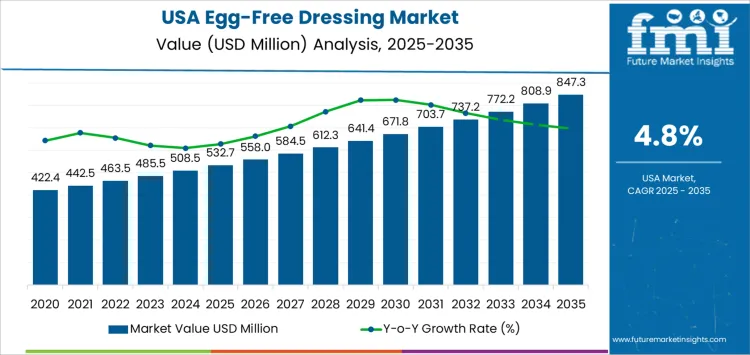
Regionally, West USA leads the demand for egg-free dressings, growing at a 5.5% CAGR, driven by the region's focus on plant-based eating and health-conscious consumers. South USA follows with a 4.9% CAGR, as the demand for allergen-free alternatives and healthier options increases. Northeast USA shows a 4.4% CAGR, supported by a growing interest in wellness and plant-based diets, while Midwest USA sees moderate growth at 3.8%, driven by health awareness and foodservice sector adoption. Ranch dressing leads the demand at 30%, followed by vinaigrettes, Caesar dressing, and others, with the foodservice sector accounting for half of the total demand. Leading companies like Dr. Oetker, Kraft Heinz, and Unilever are focusing on product innovation to meet the rising demand for plant-based, allergen-free alternatives in the USA.
Demand for Egg-Free Dressing in USA Key Takeaways
| Metric | Value |
|---|---|
| Demand for Egg-Free Dressing in USA Value (2025) | USD 532.7 million |
| Demand for Egg-Free Dressing in USA Forecast Value (2035) | USD 847.3 million |
| Demand for Egg-Free Dressing in USA Forecast CAGR (2025-2035) | 4.8% |
Why is the Demand for Egg-Free Dressing in USA Growing?
The demand for egg-free dressing in the USA is growing due to the rising trend of plant-based, allergen-free, and vegan diets. Consumers are increasingly seeking alternatives to traditional dressings that contain eggs, driven by health concerns, ethical considerations, and food allergies. Egg-free dressings offer a solution for individuals who have egg allergies or follow vegan and vegetarian lifestyles. These products cater to the growing demand for clean-label and plant-based foods, with many consumers preferring natural, recognizable ingredients in their food choices.
Key drivers for this growth include the expanding popularity of plant-based eating, spurred by the desire to reduce animal product consumption for health, environmental, and ethical reasons. The foodservice and retail sectors are responding to this shift by offering a wider range of egg-free dressing options, such as mayonnaise, ranch, and vinaigrettes, to meet the needs of health-conscious and environmentally aware consumers. The development of alternative ingredients, such as aquafaba (chickpea brine) and various plant-based emulsifiers, has improved the taste, texture, and stability of egg-free dressings, making them more appealing and accessible.
Further growth is driven by the increasing awareness of food allergies, as egg allergies are common, especially among children. This has encouraged manufacturers to create egg-free alternatives without compromising on flavor or texture. Despite these favorable trends, challenges such as the need for ingredient innovation and competition from traditional, egg-based dressings may limit broader adoption. The continued shift toward plant-based, allergen-friendly foods is expected to drive steady growth in the demand for egg-free dressings in the USA through 2035.
What is the Segment-Wise Analysis of Demand for Egg-Free Dressing in USA?
Demand for egg-free dressing in the USA is segmented by type, application, packaging, distribution channel, and region. By type, ranch dressing leads with 30% of the demand, followed by vinaigrettes, Caesar dressing, blue cheese dressing, and Thousand Island dressing. In terms of application, food service accounts for 50% of the demand, with household and industrial applications making up the remaining share. Regarding packaging, demand is divided between bulk and retail packaging. Distribution channels include B2B, B2C, and online retailing. Regionally, demand is spread across West USA, South USA, Northeast USA, and Midwest USA.
How Does Ranch Dressing Lead the Demand for Egg-Free Dressing in USA?
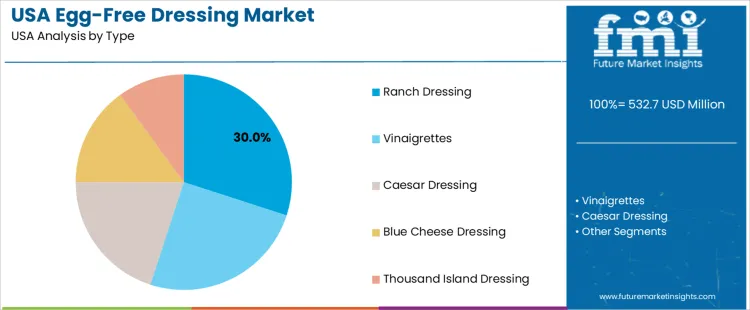
Ranch dressing accounts for 30% of the demand for egg-free dressing in the USA, driven by its widespread popularity and versatility across various culinary applications. Known for its creamy texture and mild flavor, ranch dressing complements a wide range of dishes, from salads to dipping sauces, making it a consumer favorite. The growing preference for egg-free alternatives, driven by health-conscious choices, dietary restrictions, and food allergies, is further fueling the demand for egg-free ranch dressing. This dressing is especially popular in the food service industry, particularly in restaurants and fast-food chains, where it is commonly used in menu items and as a side dip. As the trend toward healthier, allergen-free options continues to rise, egg-free ranch dressing is expected to remain a dominant choice in the industry. With an expanding consumer base seeking cleaner, plant-based ingredients, ranch dressing continues to lead the demand for egg-free alternatives.
How Does Food Service Lead the Demand for Egg-Free Dressing in USA?
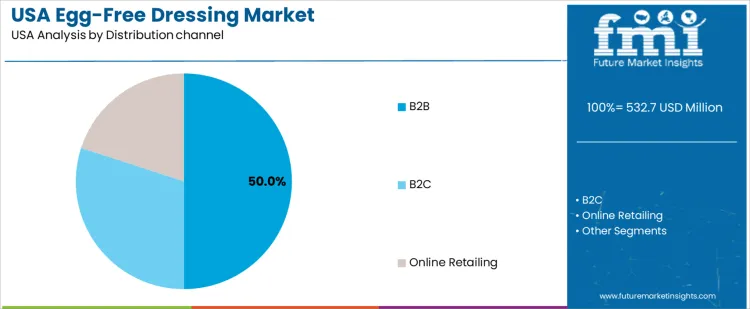
Food service accounts for 50% of the demand for egg-free dressing in the USA, driven by its essential role in the food industry. With increasing consumer demand for healthier, plant-based, and allergen-free options, egg-free dressings have become a key ingredient in restaurants, catering services, and food chains. These dressings provide versatility, as they can be used in a wide range of dishes, from salads and sandwiches to dips and wraps, appealing to both health-conscious customers and those with dietary restrictions. As more people seek egg-free alternatives due to allergies, vegan preferences, and lifestyle choices, the demand for these dressings in food service continues to grow. The ability to offer allergen-free and vegan options enables food service businesses to cater to a broader, more diverse customer base. As the demand for plant-based, sustainable food options increases, food service remains the leading application for egg-free dressings in the industry.
What are the Key Trends, Drivers, and Restraints in Demand for Egg‑Free Dressing in USA?
Many dressings and mayonnaise alternatives originally formulated with egg are now being replaced by egg‑free versions to serve people with egg allergies, dietary restrictions, or ethical preferences. Egg‑free dressings use plant‑derived emulsifiers and proteins to replicate texture and taste. The rise of vegan and vegetarian lifestyles, along with increased concern for animal welfare and environmental impact of animal‑derived food, support growth. On the other hand, restraints include competition from traditional egg‑based dressings and the challenge of matching flavor, texture and shelf‑life. Some egg‑free formulations may be perceived as less authentic in taste or quality compared with conventional dressings. Price sensitivity and consumer resistance to taste difference may limit adoption in certain segments.
Why is Demand for Egg‑Free Dressing Growing in USA
Demand for egg‑free dressing in the USA is growing because consumers increasingly seek healthier, allergen‑friendly, and sustainable food options. Growing awareness of egg allergies and intolerances pushes people to choose egg‑free condiments. Vegetarian and vegan diets are becoming more common, especially among younger demographics valuing ethical eating and lower environmental impact. For many households and foodservice providers, egg‑free dressings offer flexibility usable in salads, sandwiches, sauces while accommodating diverse dietary needs. The convenience of ready‑to‑use plant-based dressings expands their appeal. Also as food processors and restaurants incorporate more vegan and allergen‑free options to cater to demand, egg‑free dressings become more visible and accessible. Overall, shifting dietary preferences and rising health consciousness accelerate egg‑free dressing adoption across retail and foodservice channels.
How are Technological & Industry Innovations Driving Egg‑Free Dressing Demand in USA
Innovations in food formulation and processing technology have enabled egg‑free dressings to improve in taste, texture, stability and shelf life boosting their acceptance among mainstream consumers. Advances in plant‑based emulsifiers, novel proteins (e.g. from soy, pea, aquafaba), and optimized oil‑water mixtures help replicate the creamy consistency and mouthfeel of traditional egg‑based dressings. Improved clean‑label and non‑GMO formulations meet consumer demand for transparency and perceived naturalness. Packaging advances such as squeezable bottles, single‑serve pouches, and ready‑to‑use formats enhance convenience and portability. As manufacturers expand variety of flavors and formulations (low‑fat, low‑calorie, gluten‑free, allergen‑free), egg‑free dressings appeal to a broader audience beyond vegans, including flexitarians and health‑conscious eaters. These innovations reduce the sensory gap with conventional dressings, making egg‑free options more competitive.
What are the Key Challenges and Risks That Could Limit Egg‑Free Dressing Demand in USA?
Matching the taste, mouthfeel and shelf‑stability of traditional egg‑based dressings remains difficult; some consumers may find plant‑based versions inferior. Production costs for high‑quality emulsifiers or novel proteins may be higher, leading to premium pricing that deters price‑sensitive buyers. Regulatory or labelling issues around what constitutes “mayonnaise” or “dressing” when eggs are omitted may cause confusion; this has been a concern for egg‑free mayonnaise in the past. Supply chain constraints for plant‑based ingredient sourcing, and variability in raw material quality, can affect consistency. Mainstream consumers loyal to classic egg‑based condiments may resist switching, limiting penetration beyond niche, health‑conscious, or vegan segments.
What is the Regional Demand Outlook for Egg-Free Dressing in USA?
| Region | CAGR (%) |
|---|---|
| West USA | 5.5% |
| South USA | 4.9% |
| Northeast USA | 4.4% |
| Midwest USA | 3.8% |
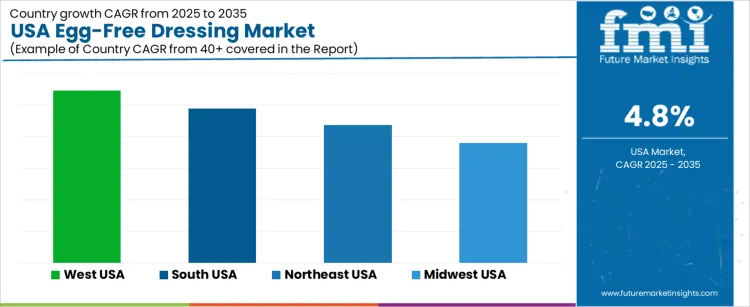
Demand for egg-free dressing in the USA is growing steadily, with West USA leading at a 5.5% CAGR, driven by the region’s focus on plant-based diets and health-conscious eating. South USA follows with a 4.9% CAGR, supported by an increasing number of consumers seeking allergen-free alternatives and healthier options. Northeast USA shows a 4.4% CAGR, fueled by a focus on wellness and growing dietary preferences for plant-based, allergen-free foods. Midwest USA experiences a 3.8% CAGR, with moderate growth driven by increasing health awareness and foodservice sector adoption. As dietary needs shift and the demand for cleaner, healthier alternatives rises, egg-free dressings will continue to gain popularity across the USA.
How is Demand for Egg-Free Dressing Growing in West USA?
West USA leads the demand for egg-free dressing, growing at a 5.5% CAGR. The region’s diverse consumer base and focus on health-conscious eating are key drivers of this growth. States like California, known for their plant-based food movement, have a high demand for egg-free alternatives in dressings, as consumers continue to seek vegan, dairy-free, and egg-free options. The growing trend towards plant-based diets, driven by both health and environmental concerns, is pushing consumers towards egg-free products. The region’s large foodservice industry, including restaurants and cafés, is increasingly adopting egg-free dressings to cater to a wide range of dietary preferences and restrictions. As the demand for sustainable, allergen-free, and healthier food products continues to rise, egg-free dressings are becoming a staple in both retail and foodservice sectors. With increasing awareness of food allergies and dietary needs, demand for egg-free dressing in West USA is expected to continue growing steadily.
Why is Demand for Egg-Free Dressing Rising in South USA?
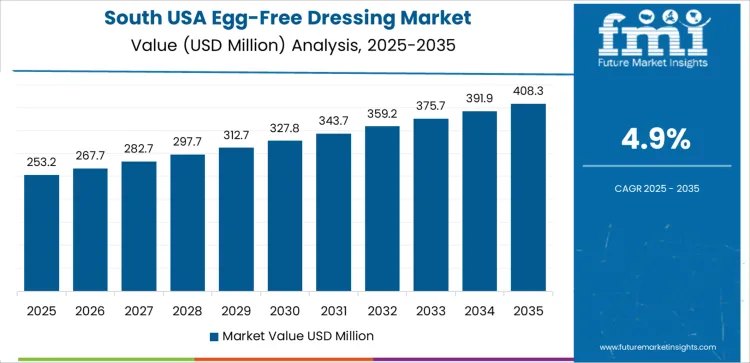
South USA is experiencing steady demand for egg-free dressing, with a 4.9% CAGR. The region’s growing interest in plant-based food options, combined with the increasing number of people seeking allergen-free alternatives, is contributing to this rise in demand. States like Texas and Florida are seeing an increasing number of consumers opting for egg-free and vegan options in their diets, especially in response to concerns over cholesterol and sustainability. The South’s expanding foodservice sector is catering to these dietary preferences by offering egg-free dressings in restaurants, delis, and grocery stores. The demand for healthier, cleaner-label options, combined with the region’s diverse population, is further driving the adoption of egg-free products. As consumers become more health-conscious and eco-aware, the trend towards egg-free and plant-based foods is expected to continue, with the South seeing steady growth in egg-free dressing consumption across both retail and foodservice industrys.
How is Demand for Egg-Free Dressing Expanding in Northeast USA?
Northeast USA is seeing steady demand for egg-free dressing, with a 4.4% CAGR. The region’s focus on health and wellness, along with the increasing number of consumers seeking allergen-free and plant-based food options, is driving the adoption of egg-free dressings. States like New York and Massachusetts have large populations of individuals with dietary restrictions, including vegans and those allergic to eggs, leading to higher demand for alternatives. The region’s food culture, which places a strong emphasis on convenience and diversity, is supporting the growth of egg-free dressings in superindustrys, restaurants, and cafes. The growing interest in clean-label products and the rising popularity of plant-based diets is contributing to the demand for healthier options. As consumers continue to prioritize food products with fewer allergens and more sustainable ingredients, the adoption of egg-free dressings in the Northeast will continue to expand, particularly in both retail and dining sectors.
Why is Demand for Egg-Free Dressing Growing in Midwest USA?
Midwest USA is experiencing moderate demand for egg-free dressing, with a 3.8% CAGR. The region’s growing focus on health and nutrition, combined with an increasing awareness of food allergies and dietary restrictions, is contributing to the rise in demand for egg-free alternatives. States like Illinois, Michigan, and Ohio are seeing more consumers opting for egg-free products due to concerns about cholesterol and the shift towards plant-based eating. The Midwest’s large foodservice industry is also adopting egg-free dressings to cater to a broader range of customers, including those with vegan or allergy-sensitive diets. As consumers in the Midwest become more conscious of their dietary choices and seek cleaner, healthier options, the demand for egg-free dressings is expected to continue growing steadily. With more superindustrys and restaurants offering egg-free options, the Midwest is embracing this trend, making egg-free dressings more widely available and accessible to consumers across the region.
What is the Competitive Landscape of Egg-Free Dressing Demand in USA?
Demand for egg-free dressing in the USA is growing as consumers increasingly seek plant-based, allergy-friendly, and vegan alternatives to traditional salad dressings. The rise of health-conscious eating, combined with growing dietary restrictions and preferences for cleaner, more sustainable ingredients, is driving the demand for egg-free dressings. These dressings cater to a wide range of dietary needs, including vegan, vegetarian, and egg-allergic consumers, contributing to their popularity in both households and foodservice.
Other significant players in the industry include Kraft Heinz, McCormick, Unilever, and American Garden. Kraft Heinz focuses on providing a variety of egg-free dressings that balance flavor and dietary preferences, while McCormick offers dressings made with high-quality, plant-based ingredients. Unilever, with its extensive portfolio, offers egg-free options under well-known brands like Hellmann’s, ensuring availability across retail and foodservice channels. American Garden specializes in providing affordable, egg-free dressings that cater to a broad audience. As competition in the industry intensifies, these companies are focusing on product innovation, expanding their plant-based offerings, and aligning with consumer preferences for healthier, allergen-free alternatives in the USA.
Key Players in USA Egg-Free Dressing Demand
- Dr. Oetker
- Kraft Heinz
- McCormick
- Unilever
- American Garden
Scope of Report
| Items | Values |
|---|---|
| Quantitative Units (2025) | USD million |
| Key Segments | Ranch Dressing, Vinaigrettes, Caesar Dressing, Blue Cheese Dressing, Thousand Island Dressing |
| Application | Food Service, Household, Industrial |
| Packaging | Bulk, Retail |
| Distribution Channels | B2B, B2C, Online Retailing |
| Regions Covered | West USA, South USA, Northeast USA, Midwest USA |
| Key Companies Profiled | Dr. Oetker, Kraft Heinz, McCormick, Unilever, American Garden |
| Additional Attributes | Dollar sales by product type and packaging; regional CAGR and growth trends; increasing demand for egg-free options in households and foodservice applications. |
USA Egg-Free Dressing Demand by Key Segments
Type
- Ranch Dressing
- Vinaigrettes
- Caesar Dressing
- Blue Cheese Dressing
- Thousand Island Dressing
Application
- Food Service
- Household
- Industrial
Packaging
- Bulk
- Retail
Distribution channel
- B2B
- B2C
- Online Retailing
Region
- West USA
- South USA
- Northeast USA
- Midwest USA
Frequently Asked Questions
How big is the demand for egg-free dressing in USA in 2025?
The demand for egg-free dressing in USA is estimated to be valued at USD 532.7 million in 2025.
What will be the size of egg-free dressing in USA in 2035?
The market size for the egg-free dressing in USA is projected to reach USD 847.3 million by 2035.
How much will be the demand for egg-free dressing in USA growth between 2025 and 2035?
The demand for egg-free dressing in USA is expected to grow at a 4.8% CAGR between 2025 and 2035.
What are the key product types in the egg-free dressing in USA?
The key product types in egg-free dressing in USA are ranch dressing, vinaigrettes, caesar dressing, blue cheese dressing and thousand island dressing.
Which application segment is expected to contribute significant share in the egg-free dressing in USA in 2025?
In terms of application, food service segment is expected to command 50.0% share in the egg-free dressing in USA in 2025.
Preview the report firsthand - request a free sample
Get SampleGet the brochure for pricing and purchase details.
Get PDFTable of Content
- Executive Summary
- USA Market Outlook
- Demand-side Trends
- Supply-side Trends
- Technology Roadmap Analysis
- Analysis and Recommendations
- Market Overview
- Market Coverage / Taxonomy
- Market Definition / Scope / Limitations
- Market Background
- Market Dynamics
- Drivers
- Restraints
- Opportunity
- Trends
- Scenario Forecast
- Demand in Optimistic Scenario
- Demand in Likely Scenario
- Demand in Conservative Scenario
- Opportunity Map Analysis
- Product Life Cycle Analysis
- Supply Chain Analysis
- Investment Feasibility Matrix
- Value Chain Analysis
- PESTLE and Porter’s Analysis
- Regulatory Landscape
- Regional Parent Market Outlook
- Production and Consumption Statistics
- Import and Export Statistics
- Market Dynamics
- USA Market Analysis 2020 to 2024 and Forecast, 2025 to 2035
- Historical Market Size Value (USD Million) Analysis, 2020 to 2024
- Current and Future Market Size Value (USD Million) Projections, 2025 to 2035
- Y-o-Y Growth Trend Analysis
- Absolute $ Opportunity Analysis
- USA Market Pricing Analysis 2020 to 2024 and Forecast 2025 to 2035
- USA Market Analysis 2020 to 2024 and Forecast 2025 to 2035, By Type
- Introduction / Key Findings
- Historical Market Size Value (USD Million) Analysis By Type , 2020 to 2024
- Current and Future Market Size Value (USD Million) Analysis and Forecast By Type , 2025 to 2035
- Ranch Dressing
- Vinaigrettes
- Caesar Dressing
- Blue Cheese Dressing
- Thousand Island Dressing
- Y-o-Y Growth Trend Analysis By Type , 2020 to 2024
- Absolute $ Opportunity Analysis By Type , 2025 to 2035
- USA Market Analysis 2020 to 2024 and Forecast 2025 to 2035, By Application
- Introduction / Key Findings
- Historical Market Size Value (USD Million) Analysis By Application, 2020 to 2024
- Current and Future Market Size Value (USD Million) Analysis and Forecast By Application, 2025 to 2035
- Food Service
- Household
- Industrial
- Y-o-Y Growth Trend Analysis By Application, 2020 to 2024
- Absolute $ Opportunity Analysis By Application, 2025 to 2035
- USA Market Analysis 2020 to 2024 and Forecast 2025 to 2035, By Packaging
- Introduction / Key Findings
- Historical Market Size Value (USD Million) Analysis By Packaging, 2020 to 2024
- Current and Future Market Size Value (USD Million) Analysis and Forecast By Packaging, 2025 to 2035
- Bulk
- Retail
- Y-o-Y Growth Trend Analysis By Packaging, 2020 to 2024
- Absolute $ Opportunity Analysis By Packaging, 2025 to 2035
- USA Market Analysis 2020 to 2024 and Forecast 2025 to 2035, By Distribution channel
- Introduction / Key Findings
- Historical Market Size Value (USD Million) Analysis By Distribution channel, 2020 to 2024
- Current and Future Market Size Value (USD Million) Analysis and Forecast By Distribution channel, 2025 to 2035
- B2B
- B2C
- Online Retailing
- Y-o-Y Growth Trend Analysis By Distribution channel, 2020 to 2024
- Absolute $ Opportunity Analysis By Distribution channel, 2025 to 2035
- Market Structure Analysis
- Competition Dashboard
- Competition Benchmarking
- Market Share Analysis of Top Players
- By Regional
- By Type
- By Application
- By Packaging
- By Distribution channel
- Competition Analysis
- Competition Deep Dive
- Dr. Oetker
- Overview
- Product Portfolio
- Profitability by Market Segments (Product/Age /Sales Channel/Region)
- Sales Footprint
- Strategy Overview
- Marketing Strategy
- Product Strategy
- Channel Strategy
- Kraft Heinz
- McCormick
- Unilever
- American Garden
- Dr. Oetker
- Competition Deep Dive
- Assumptions & Acronyms Used
- Research Methodology


