

- Industry Size (2026)
- USD 760 Mn
- Forecast (2036)
- USD 1980 Mn
- CAGR (2026 to 2036)
- 10%
Zero-Waste Tote Formats Market Forecast and Outlook 2026 to 2036
The zero-waste tote formats market is projected to experience consistent growth from 2026 to 2036. In 2026, the market value is expected to be USD 760 million, with steady growth expected, reaching USD 1,980 million by 2036. The compound annual growth rate (CAGR) for the period is forecasted to be 10%, driven by increasing consumer demand for sustainable and eco-friendly alternatives to traditional packaging. The market growth will be influenced by the rising awareness of environmental issues and a shift toward reusable, zero-waste solutions.
Over the forecast period, the market will see incremental growth, especially in the first half of the decade. As more companies and consumers adopt zero-waste tote formats for their convenience and environmental benefits, the market will experience a gradual but steady increase. In the latter part of the decade, the market will reach its peak value, reflecting a maturing demand for these products.
Quick Stats of the Zero-Waste Tote Formats Market
- Zero-Waste Tote Formats Market Value (2026): USD 760 million
- Zero-Waste Tote Formats Market Forecast Value (2036): USD 1,980 million
- Zero-Waste Tote Formats Market Global Forecast CAGR (2026-2036): 10%
- Zero-Waste Tote Formats Market Leading Segment: Technology (High-cycle durability & washability) 55%
- Key Growth Regions in Zero-Waste Tote Formats Market: China
- Top Players in Zero-Waste Tote Formats Market: IFCO, Schoeller Allibert, Qingdao tote manufacturers, Nilkamal, Local OEMs, Sekisui, Orbis
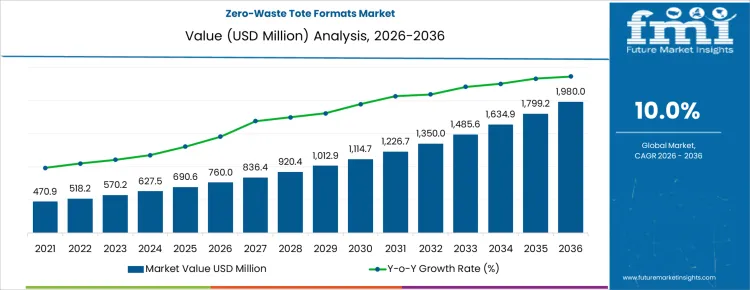
What is the Growth Forecast for the Zero-Waste Tote Formats Market through 2036?
The growth forecast for the zero-waste tote formats market indicates steady market share gains, with a projected CAGR of 10%. Starting at USD 760 million in 2026, the market will see gradual year-on-year growth, reaching USD 836 million in 2027, USD 919.6 million in 2028, and USD 1,011.6 million in 2029. By 2030, the market is expected to grow to USD 1,112.7 million, continuing its expansion throughout the decade.
From 2031 to 2036, the market will continue to gain market share, with values increasing to USD 1,224 million in 2031, USD 1,346.4 million in 2032, and USD 1,481 million in 2033. The market will maintain steady growth through 2034, reaching USD 1,629.1 million, followed by USD 1,792 million in 2035. By 2036, the market is projected to reach USD 1,980 million, reflecting a consistent upward trend and significant market share gain throughout the forecast period.
Zero-Waste Tote Formats Market Key Takeaways
| Metric | Value |
|---|---|
| Industry Sales Value (2026) | USD 760 million |
| Industry Forecast Value (2036) | USD 1,980 million |
| Industry Forecast CAGR (2026-2036) | 10% |
What Is Driving the Demand for the Zero Waste Tote Formats Market Globally?
The global demand for zero waste tote formats is driven by increasing environmental awareness, regulatory pressure to reduce single use packaging, and shifting consumer expectations for sustainable alternatives. Zero waste totes are designed for repeated use, made from durable, recyclable, or compostable materials, and often integrated into circular systems that support reuse, return, and minimal environmental footprint. In retail, grocery, fashion, and general merchandise sectors, consumers are rejecting single use plastic bags and lightweight carriers in favour of robust totes that can withstand multiple shopping trips, deliveries, or storage cycles. Retailers and brands are encouraging this shift to meet extended producer responsibility (EPR) requirements, waste reduction mandates, and corporate sustainability commitments that emphasise material reduction and resource efficiency. Municipal policies and legislation in regions across Europe, Asia Pacific, Latin America, and the Middle East restricting disposable bag use and incentivising reuse are reinforcing this trend, making zero waste totes a practical solution for reducing landfill burden and lowering consumer waste. Growth in direct to consumer and omni channel retail also supports uptake, as these channels benefit from packaging formats that combine durability with brand visibility and customer convenience.
Future demand for zero waste tote formats is expected to grow as circular economy principles become more embedded in supply chains and consumer behaviour. Advances in materials science, including high strength recycled textiles, bio based polymers, and innovative fabrication techniques, will expand options that balance performance, sustainability, and cost. Systems that integrate digital tracking, deposit return incentives, and shared reuse networks will improve asset circulation and lower barriers to adoption by making it easier for consumers to participate in tote reuse programmes. Retailers and service providers are likely to embed zero waste totes into loyalty, subscription, and delivery services, reinforcing habitual use and reducing reliance on disposable alternatives. Sustainability reporting standards and procurement policies that prioritise reusable packaging solutions will further encourage adoption across sectors. As consumers increasingly prioritise experiences and value in addition to environmental impact, zero waste totes that combine functional performance with visible sustainability credentials are expected to see rising uptake. Continued innovation that enhances durability, ease of cleaning, and multi purpose utility will support steady global market expansion.
What are the Leading Segments in the Global Zero-Waste Tote Formats Market?
The global zero-waste tote formats market is segmented by material and technology. Among materials, PP, recycled PET fabrics lead the market, capturing 50% of the share, followed by HDPE/PP, recycled PP, and PP. The use of recycled PET fabrics in tote bags is driven by the demand for eco-friendly, sustainable materials that contribute to reducing plastic waste. On the technology side, high-cycle durability & washability is the dominant technology, holding 55% of the share, followed by pooling & reverse logistics, high-volume manufacturing, and cost-efficient molding. High-cycle durability & washability is highly sought after in tote bags for their ability to withstand multiple uses and washes, making them ideal for long-term, sustainable use.
What Drives the Growth of PP, Recycled PET Fabrics in the Zero-Waste Tote Formats Market?
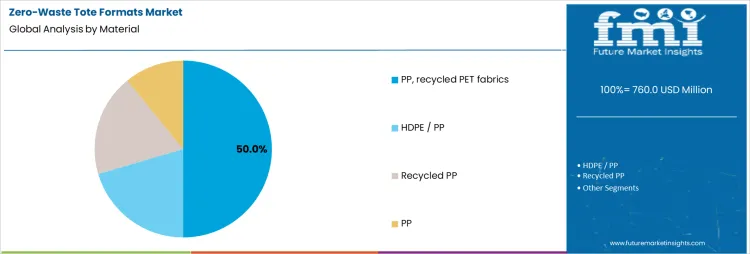
PP, recycled PET fabrics are the leading material in the zero-waste tote formats market, holding 50% of the share. This material is preferred for its environmental benefits and suitability for creating durable, reusable, and sustainable tote bags. Recycled PET fabrics, derived from post-consumer waste like plastic bottles, help reduce plastic waste and promote a circular economy. These fabrics are lightweight, strong, and versatile, making them ideal for tote bags that need to endure repeated use while maintaining their appearance. As consumers become increasingly eco-conscious and governments impose regulations to reduce single-use plastics, the demand for zero-waste solutions like reusable tote bags made from recycled materials continues to rise. The use of recycled PET also meets the growing consumer demand for products made from sustainable and recycled materials, positioning it as the preferred choice for eco-friendly tote bags. The trend toward sustainable living and reducing waste further supports the growth of PP, recycled PET fabrics in the market, making it a dominant material segment.
What is Driving the Demand for High-Cycle Durability & Washability in the Zero-Waste Tote Formats Market?
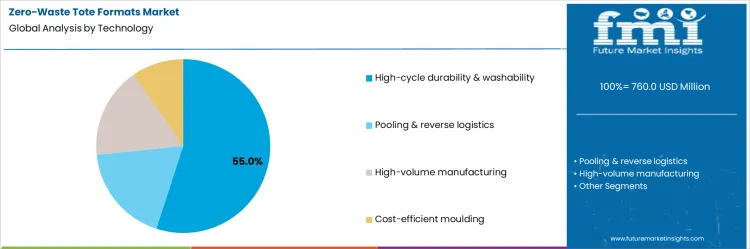
High-cycle durability & washability is the leading technology in the zero-waste tote formats market, capturing 55% of the share. This technology is highly valued because it ensures that tote bags made from sustainable materials can withstand frequent use and washing without degrading in quality. Tote bags with high-cycle durability are essential for consumers who prioritize reusable items, as they can endure wear and tear over time, making them a practical and long-lasting alternative to single-use bags. The demand for bags that are durable, washable, and capable of handling heavy loads is growing, particularly as consumers shift toward more sustainable and long-term solutions. The combination of durability and washability is critical for ensuring that zero-waste totes continue to perform well after multiple uses, contributing to their appeal in both everyday use and commercial applications. As the market for sustainable products grows, the need for tote bags with high-cycle durability and washability remains a driving force, ensuring that this technology maintains its dominant position in the market.
What is the Key Dynamics of the Global Zero Waste Tote Formats Market?
The global zero waste tote formats market is growing as brands, retailers and consumers adopt reusable, durable carrying solutions that reduce single use bag waste and support circular packaging strategies. Zero waste totes include robust materials such as recycled PET, organic cotton and engineered textiles tailored for repeated use in shopping, e commerce returns, delivery and everyday transport. Growth is influenced by sustainability commitments, regulatory actions to restrict disposable plastic bags, and rising consumer demand for environmentally responsible alternatives that balance performance, convenience and long term value across regions worldwide.
What are the Key Drivers for the Global Zero Waste Tote Formats Market?
A key driver is heightened environmental awareness and pressure on businesses to reduce plastic pollution and meet corporate social responsibility goals. Consumers increasingly prioritise reusable and long lasting products, influencing purchasing behaviour toward zero waste tote formats that can replace single use carriers. Regulatory frameworks that impose fees or bans on disposable bags reinforce demand for durable totes. Retailers and e commerce platforms integrate reusable totes to boost brand perception and reduce packaging waste in fulfilment operations. Innovation in sustainable textiles, recycled content, and lifecycle design supports performance characteristics such as strength, washability and packability that meet user expectations.
What are the Restraints for the Global Zero Waste Tote Formats Market?
One restraint is the higher upfront cost of zero waste tote formats compared with low cost single use bags, which may limit adoption in cost sensitive segments or regions with limited disposable income. Producers and retailers may hesitate to invest in inventory of reusable formats without clear reuse programmes or consumer return incentives. Variability in material sourcing, certification and quality standards can complicate specification of truly sustainable totes, creating potential confusion among buyers. Operational challenges in managing return and reuse logistics, cleaning protocols and lifecycle tracking also affect feasibility for some businesses, particularly in fragmented retail networks.
What is the Key Trends in the Global Zero Waste Tote Formats Market?
A key trend is integration of digital tools such as QR codes and mobile apps that support tracking of tote reuse cycles, incentivise returns, and link consumers to sustainability metrics. Brands are designing modular, collapsible and multi purpose tote formats that enhance usability and storage convenience across shopping, travel and daily routines. Growth of collaborative reuse networks and shared economy models encourages pooling of tote assets among retailers and partners to maximise utilisation and reduce idle stock. Investment in certified recycled, upcycled and bio based materials aligns with circular design principles. Education campaigns and loyalty programmes that promote responsible consumption further amplify market traction for zero waste tote solutions.
What is the Country-Wise Analysis of the Zero-Waste Tote Formats Market?
The zero-waste tote formats market is projected to experience steady growth, driven by increasing consumer demand for sustainable, eco-friendly packaging solutions. Zero-waste tote bags, which are reusable, durable, and made from environmentally friendly materials, are becoming a popular choice among consumers and businesses that prioritize sustainability. The growth of this market is supported by rising environmental awareness, regulations targeting plastic waste reduction, and the increasing adoption of sustainable products across various sectors, including retail, fashion, and food. High-growth markets like China and India are witnessing strong demand, fueled by rapid urbanization, growing middle-class populations, and increasing consumer focus on sustainability. Developed markets such as the USA, Germany, and Brazil are also experiencing steady growth, driven by consumer preference for eco-friendly products and governmental push for waste reduction.
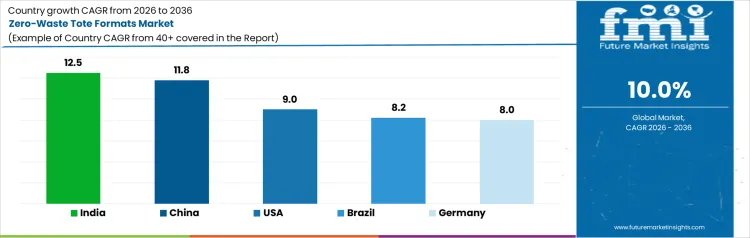
| Country | CAGR (%) |
|---|---|
| China | 11.8 |
| India | 12.5 |
| United States | 9 |
| Germany | 8 |
| Brazil | 8.2 |
What is the Growth Outlook for the Zero-Waste Tote Formats Market in China?
The zero-waste tote formats market in China is expected to grow at a strong pace, with a projected CAGR of 11.8%. As China’s urbanization accelerates and its middle class expands, consumer demand for sustainable, eco-friendly products is rising. The country’s increasing focus on reducing plastic waste and enhancing sustainability in everyday products is fueling the adoption of reusable totes. With growing environmental concerns, the Chinese government has implemented several regulations targeting single-use plastics, further driving the demand for zero-waste alternatives. As e-commerce and retail sectors expand, the need for sustainable packaging solutions like zero-waste tote formats is expected to grow rapidly in China.
What is the Market Outlook for the Zero-Waste Tote Formats Market in India?
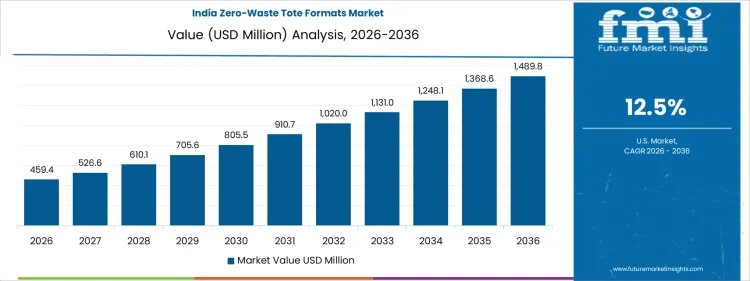
The zero-waste tote formats market in India is projected to grow at the highest rate, with a projected CAGR of 12.5%. India’s growing population and rising disposable incomes are contributing to increasing consumer demand for eco-friendly products. As the country grapples with plastic waste management issues, the demand for reusable and sustainable packaging options is on the rise. Zero-waste totes are becoming a popular alternative in various industries, particularly retail, fashion, and food packaging. The Indian government’s initiatives to curb plastic waste and promote sustainability are expected to further boost the adoption of zero-waste products. As awareness of environmental issues grows, the market for zero-waste tote formats in India is poised for rapid expansion.
What is the Growth Forecast for the Zero-Waste Tote Formats Market in the United States?
The zero-waste tote formats market in the United States is projected to grow steadily, with a projected CAGR of 9%. In the USA, consumer preference for eco-friendly products continues to rise, particularly in the wake of increasing environmental concerns and the growing movement to reduce single-use plastic waste. Zero-waste tote bags are becoming a staple in many sectors, including retail, grocery shopping, and fashion. As more businesses commit to sustainability, the demand for reusable and sustainable packaging solutions like zero-waste totes is increasing. The growth of e-commerce and the shift toward conscious consumerism further support steady market growth in the USA.
What is the Market Outlook for the Zero-Waste Tote Formats Market in Germany?
The zero-waste tote formats market in Germany is expected to grow steadily, with a projected CAGR of 8%. Germany, known for its strong environmental policies and commitment to sustainability, is seeing increasing demand for eco-friendly packaging solutions, including zero-waste tote bags. As German consumers become more conscious of the environmental impact of their purchases, the popularity of reusable, durable products is rising. The country’s retail and fashion sectors are major drivers of this trend, as businesses seek to meet growing consumer demand for sustainable packaging. With Germany’s focus on reducing waste and plastic use, the market for zero-waste tote formats is expected to continue its steady growth.
What are the Growth Prospects for the Zero-Waste Tote Formats Market in Brazil?
The zero-waste tote formats market in Brazil is expected to grow at a moderate pace, with a projected CAGR of 8.2%. In Brazil, rising consumer awareness of environmental issues, coupled with government regulations aimed at reducing plastic waste, is driving demand for sustainable products like zero-waste totes. The retail and fashion industries in Brazil are increasingly adopting eco-friendly packaging alternatives to meet consumer preferences for reusable products. As the market for sustainable goods expands, the adoption of zero-waste totes is expected to increase, particularly in urban areas. While the growth rate in Brazil may be slower compared to other regions, the demand for eco-friendly packaging solutions will continue to drive steady market expansion.
What is the Competitive Landscape for the Zero-Waste Tote Formats Market?
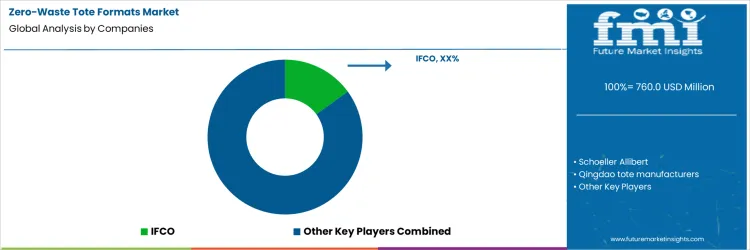
The zero-waste tote formats market is growing as industries seek sustainable, reusable packaging solutions that minimize environmental impact. IFCO leads the market with its innovative zero-waste tote formats, offering durable, reusable totes that support sustainability and efficiency in various sectors, including retail, logistics, and food packaging. Their commitment to sustainability and their established global presence position them as a dominant player in the market. Schoeller Allibert, Qingdao tote manufacturers, and Nilkamal are significant competitors, each providing specialized zero-waste tote solutions. Schoeller Allibert focuses on providing high-quality, reusable totes, while Qingdao tote manufacturers and Nilkamal offer cost-effective solutions tailored to meet the growing demand for sustainable packaging.
Local OEMs, Sekisui, and Orbis contribute further to the competitive landscape with their zero-waste tote formats. Sekisui provides innovative and sustainable packaging solutions that enhance the efficiency and durability of reusable totes, while Orbis offers a wide range of durable, reusable packaging solutions designed to reduce waste and improve logistics. These companies compete based on product innovation, sustainability, and their ability to meet the increasing demand for environmentally friendly, durable packaging solutions across various industries.
Key Players of the Zero-Waste Tote Formats Market
- IFCO
- Schoeller Allibert
- Qingdao tote manufacturers
- Nilkamal
- Local OEMs
- Sekisui
- Orbis
Scope of the Report
| Items | Values |
|---|---|
| Quantitative Units (2025) | USD Million |
| End-use | Retail & Grocery, Supermarkets & Pooling, E-Commerce Fulfillment, Kirana & Local Retail, Food Distribution, High-Quality Reuse |
| Packaging Format / Type | Reusable Totes & Bins, Collapsible Totes, Stackable Totes, Lightweight Totes, Others |
| Material | PP, Recycled PET Fabrics, HDPE / PP, Recycled PP |
| Technology | High-Cycle Durability & Washability, Pooling & Reverse Logistics, High-Volume Manufacturing, Cost-Efficient Moulding |
| Companies | IFCO, Schoeller Allibert, Qingdao Tote Manufacturers, Nilkamal, Local OEMs, Sekisui, Orbis |
| Regions Covered | North America, Latin America, Western Europe, Eastern Europe, South Asia and Pacific, East Asia, Middle East & Africa |
| Countries Covered | United States, Canada, Mexico, Brazil, Argentina, Germany, France, United Kingdom, Italy, Spain, Netherlands, China, India, Japan, South Korea, ANZ, GCC Countries, South Africa |
| Additional Attributes | Dollar by sales by end-use, packaging format/type, material, technology, and region. Includes market trends in zero-waste tote formats, focusing on reusable totes, collapsible totes, and stackable totes. Highlights the role of high-cycle durability, pooling logistics, and cost-efficient moulding in retail, e-commerce, and food distribution. Focus on sustainability, performance, regulatory compliance, market share, and competitive positioning of key companies in the zero-waste packaging market. |
Zero-Waste Tote Formats Market Segmentation
End-use:
- Retail & grocery
- Supermarkets & pooling
- E-commerce fulfilment
- Kirana & local retail
- Food distribution
- High-quality reuse
Packaging Format / Type:
- Reusable totes & bins
- Collapsible totes
- Stackable totes
- Lightweight totes
- Others
Material:
- PP, recycled PET fabrics
- HDPE / PP
- Recycled PP
- PP
- Others
Technology:
- High-cycle durability & washability
- Pooling & reverse logistics
- High-volume manufacturing
- Cost-efficient moulding
- Others
Region:
- Asia Pacific
- China
- Japan
- South Korea
- India
- Australia & New Zealand
- ASEAN
- Rest of Asia Pacific
- Europe
- Germany
- United Kingdom
- France
- Italy
- Spain
- Nordic
- BENELUX
- Rest of Europe
- North America
- United States
- Canada
- Mexico
- Latin America
- Brazil
- Chile
- Rest of Latin America
- Middle East & Africa
- Kingdom of Saudi Arabia
- Other GCC Countries
- Turkey
- South Africa
- Other African Union
- Rest of Middle East & Africa
Frequently Asked Questions
How big is the zero-waste tote formats market in 2026?
The global zero-waste tote formats market is estimated to be valued at USD 760.0 million in 2026.
What will be the size of zero-waste tote formats market in 2036?
The market size for the zero-waste tote formats market is projected to reach USD 1,980.0 million by 2036.
How much will be the zero-waste tote formats market growth between 2026 and 2036?
The zero-waste tote formats market is expected to grow at a 10.0% CAGR between 2026 and 2036.
What are the key product types in the zero-waste tote formats market?
The key product types in zero-waste tote formats market are retail & grocery, supermarkets & pooling, e-commerce fulfilment, kirana & local retail, food distribution and high-quality reuse.
Which packaging format or type segment to contribute significant share in the zero-waste tote formats market in 2026?
In terms of packaging format or type, reusable totes & bins segment to command 45.0% share in the zero-waste tote formats market in 2026.
Preview the report firsthand - request a free sample
Get SampleGet the brochure for pricing and purchase details.
Get PDFTable of Content
- Executive Summary
- Global Market Outlook
- Demand-side Trends
- Supply-side Trends
- Technology Roadmap Analysis
- Analysis and Recommendations
- Market Overview
- Market Coverage / Taxonomy
- Market Definition / Scope / Limitations
- Market Background
- Market Dynamics
- Drivers
- Restraints
- Opportunity
- Trends
- Scenario Forecast
- Demand in Optimistic Scenario
- Demand in Likely Scenario
- Demand in Conservative Scenario
- Opportunity Map Analysis
- Product Life Cycle Analysis
- Supply Chain Analysis
- Investment Feasibility Matrix
- Value Chain Analysis
- PESTLE and Porter’s Analysis
- Regulatory Landscape
- Regional Parent Market Outlook
- Production and Consumption Statistics
- Import and Export Statistics
- Market Dynamics
- Global Market Analysis 2021 to 2025 and Forecast, 2026 to 2036
- Historical Market Size Value (USD Million) Analysis, 2021 to 2025
- Current and Future Market Size Value (USD Million) Projections, 2026 to 2036
- Y-o-Y Growth Trend Analysis
- Absolute $ Opportunity Analysis
- Global Market Pricing Analysis 2021 to 2025 and Forecast 2026 to 2036
- Global Market Analysis 2021 to 2025 and Forecast 2026 to 2036, By End-use
- Introduction / Key Findings
- Historical Market Size Value (USD Million) Analysis By End-use , 2021 to 2025
- Current and Future Market Size Value (USD Million) Analysis and Forecast By End-use , 2026 to 2036
- Retail & grocery
- Supermarkets & pooling
- E-commerce fulfilment
- Kirana & local retail
- Food distribution
- High-quality reuse
- Y-o-Y Growth Trend Analysis By End-use , 2021 to 2025
- Absolute $ Opportunity Analysis By End-use , 2026 to 2036
- Global Market Analysis 2021 to 2025 and Forecast 2026 to 2036, By Packaging Format or Type
- Introduction / Key Findings
- Historical Market Size Value (USD Million) Analysis By Packaging Format or Type, 2021 to 2025
- Current and Future Market Size Value (USD Million) Analysis and Forecast By Packaging Format or Type, 2026 to 2036
- Reusable totes & bins
- Collapsible totes
- Stackable totes
- Lightweight totes
- Y-o-Y Growth Trend Analysis By Packaging Format or Type, 2021 to 2025
- Absolute $ Opportunity Analysis By Packaging Format or Type, 2026 to 2036
- Global Market Analysis 2021 to 2025 and Forecast 2026 to 2036, By Material
- Introduction / Key Findings
- Historical Market Size Value (USD Million) Analysis By Material, 2021 to 2025
- Current and Future Market Size Value (USD Million) Analysis and Forecast By Material, 2026 to 2036
- PP, recycled PET fabrics
- HDPE / PP
- Recycled PP
- PP
- Y-o-Y Growth Trend Analysis By Material, 2021 to 2025
- Absolute $ Opportunity Analysis By Material, 2026 to 2036
- Global Market Analysis 2021 to 2025 and Forecast 2026 to 2036, By Technology
- Introduction / Key Findings
- Historical Market Size Value (USD Million) Analysis By Technology, 2021 to 2025
- Current and Future Market Size Value (USD Million) Analysis and Forecast By Technology, 2026 to 2036
- High-cycle durability & washability
- Pooling & reverse logistics
- High-volume manufacturing
- Cost-efficient moulding
- Y-o-Y Growth Trend Analysis By Technology, 2021 to 2025
- Absolute $ Opportunity Analysis By Technology, 2026 to 2036
- Global Market Analysis 2021 to 2025 and Forecast 2026 to 2036, By Region
- Introduction
- Historical Market Size Value (USD Million) Analysis By Region, 2021 to 2025
- Current Market Size Value (USD Million) Analysis and Forecast By Region, 2026 to 2036
- North America
- Latin America
- Western Europe
- Eastern Europe
- East Asia
- South Asia and Pacific
- Middle East & Africa
- Market Attractiveness Analysis By Region
- North America Market Analysis 2021 to 2025 and Forecast 2026 to 2036, By Country
- Historical Market Size Value (USD Million) Trend Analysis By Market Taxonomy, 2021 to 2025
- Market Size Value (USD Million) Forecast By Market Taxonomy, 2026 to 2036
- By Country
- USA
- Canada
- Mexico
- By End-use
- By Packaging Format or Type
- By Material
- By Technology
- By Country
- Market Attractiveness Analysis
- By Country
- By End-use
- By Packaging Format or Type
- By Material
- By Technology
- Key Takeaways
- Latin America Market Analysis 2021 to 2025 and Forecast 2026 to 2036, By Country
- Historical Market Size Value (USD Million) Trend Analysis By Market Taxonomy, 2021 to 2025
- Market Size Value (USD Million) Forecast By Market Taxonomy, 2026 to 2036
- By Country
- Brazil
- Chile
- Rest of Latin America
- By End-use
- By Packaging Format or Type
- By Material
- By Technology
- By Country
- Market Attractiveness Analysis
- By Country
- By End-use
- By Packaging Format or Type
- By Material
- By Technology
- Key Takeaways
- Western Europe Market Analysis 2021 to 2025 and Forecast 2026 to 2036, By Country
- Historical Market Size Value (USD Million) Trend Analysis By Market Taxonomy, 2021 to 2025
- Market Size Value (USD Million) Forecast By Market Taxonomy, 2026 to 2036
- By Country
- Germany
- UK
- Italy
- Spain
- France
- Nordic
- BENELUX
- Rest of Western Europe
- By End-use
- By Packaging Format or Type
- By Material
- By Technology
- By Country
- Market Attractiveness Analysis
- By Country
- By End-use
- By Packaging Format or Type
- By Material
- By Technology
- Key Takeaways
- Eastern Europe Market Analysis 2021 to 2025 and Forecast 2026 to 2036, By Country
- Historical Market Size Value (USD Million) Trend Analysis By Market Taxonomy, 2021 to 2025
- Market Size Value (USD Million) Forecast By Market Taxonomy, 2026 to 2036
- By Country
- Russia
- Poland
- Hungary
- Balkan & Baltic
- Rest of Eastern Europe
- By End-use
- By Packaging Format or Type
- By Material
- By Technology
- By Country
- Market Attractiveness Analysis
- By Country
- By End-use
- By Packaging Format or Type
- By Material
- By Technology
- Key Takeaways
- East Asia Market Analysis 2021 to 2025 and Forecast 2026 to 2036, By Country
- Historical Market Size Value (USD Million) Trend Analysis By Market Taxonomy, 2021 to 2025
- Market Size Value (USD Million) Forecast By Market Taxonomy, 2026 to 2036
- By Country
- China
- Japan
- South Korea
- By End-use
- By Packaging Format or Type
- By Material
- By Technology
- By Country
- Market Attractiveness Analysis
- By Country
- By End-use
- By Packaging Format or Type
- By Material
- By Technology
- Key Takeaways
- South Asia and Pacific Market Analysis 2021 to 2025 and Forecast 2026 to 2036, By Country
- Historical Market Size Value (USD Million) Trend Analysis By Market Taxonomy, 2021 to 2025
- Market Size Value (USD Million) Forecast By Market Taxonomy, 2026 to 2036
- By Country
- India
- ASEAN
- Australia & New Zealand
- Rest of South Asia and Pacific
- By End-use
- By Packaging Format or Type
- By Material
- By Technology
- By Country
- Market Attractiveness Analysis
- By Country
- By End-use
- By Packaging Format or Type
- By Material
- By Technology
- Key Takeaways
- Middle East & Africa Market Analysis 2021 to 2025 and Forecast 2026 to 2036, By Country
- Historical Market Size Value (USD Million) Trend Analysis By Market Taxonomy, 2021 to 2025
- Market Size Value (USD Million) Forecast By Market Taxonomy, 2026 to 2036
- By Country
- Kingdom of Saudi Arabia
- Other GCC Countries
- Turkiye
- South Africa
- Other African Union
- Rest of Middle East & Africa
- By End-use
- By Packaging Format or Type
- By Material
- By Technology
- By Country
- Market Attractiveness Analysis
- By Country
- By End-use
- By Packaging Format or Type
- By Material
- By Technology
- Key Takeaways
- Key Countries Market Analysis
- USA
- Pricing Analysis
- Market Share Analysis, 2025
- By End-use
- By Packaging Format or Type
- By Material
- By Technology
- Canada
- Pricing Analysis
- Market Share Analysis, 2025
- By End-use
- By Packaging Format or Type
- By Material
- By Technology
- Mexico
- Pricing Analysis
- Market Share Analysis, 2025
- By End-use
- By Packaging Format or Type
- By Material
- By Technology
- Brazil
- Pricing Analysis
- Market Share Analysis, 2025
- By End-use
- By Packaging Format or Type
- By Material
- By Technology
- Chile
- Pricing Analysis
- Market Share Analysis, 2025
- By End-use
- By Packaging Format or Type
- By Material
- By Technology
- Germany
- Pricing Analysis
- Market Share Analysis, 2025
- By End-use
- By Packaging Format or Type
- By Material
- By Technology
- UK
- Pricing Analysis
- Market Share Analysis, 2025
- By End-use
- By Packaging Format or Type
- By Material
- By Technology
- Italy
- Pricing Analysis
- Market Share Analysis, 2025
- By End-use
- By Packaging Format or Type
- By Material
- By Technology
- Spain
- Pricing Analysis
- Market Share Analysis, 2025
- By End-use
- By Packaging Format or Type
- By Material
- By Technology
- France
- Pricing Analysis
- Market Share Analysis, 2025
- By End-use
- By Packaging Format or Type
- By Material
- By Technology
- India
- Pricing Analysis
- Market Share Analysis, 2025
- By End-use
- By Packaging Format or Type
- By Material
- By Technology
- ASEAN
- Pricing Analysis
- Market Share Analysis, 2025
- By End-use
- By Packaging Format or Type
- By Material
- By Technology
- Australia & New Zealand
- Pricing Analysis
- Market Share Analysis, 2025
- By End-use
- By Packaging Format or Type
- By Material
- By Technology
- China
- Pricing Analysis
- Market Share Analysis, 2025
- By End-use
- By Packaging Format or Type
- By Material
- By Technology
- Japan
- Pricing Analysis
- Market Share Analysis, 2025
- By End-use
- By Packaging Format or Type
- By Material
- By Technology
- South Korea
- Pricing Analysis
- Market Share Analysis, 2025
- By End-use
- By Packaging Format or Type
- By Material
- By Technology
- Russia
- Pricing Analysis
- Market Share Analysis, 2025
- By End-use
- By Packaging Format or Type
- By Material
- By Technology
- Poland
- Pricing Analysis
- Market Share Analysis, 2025
- By End-use
- By Packaging Format or Type
- By Material
- By Technology
- Hungary
- Pricing Analysis
- Market Share Analysis, 2025
- By End-use
- By Packaging Format or Type
- By Material
- By Technology
- Kingdom of Saudi Arabia
- Pricing Analysis
- Market Share Analysis, 2025
- By End-use
- By Packaging Format or Type
- By Material
- By Technology
- Turkiye
- Pricing Analysis
- Market Share Analysis, 2025
- By End-use
- By Packaging Format or Type
- By Material
- By Technology
- South Africa
- Pricing Analysis
- Market Share Analysis, 2025
- By End-use
- By Packaging Format or Type
- By Material
- By Technology
- USA
- Market Structure Analysis
- Competition Dashboard
- Competition Benchmarking
- Market Share Analysis of Top Players
- By Regional
- By End-use
- By Packaging Format or Type
- By Material
- By Technology
- Competition Analysis
- Competition Deep Dive
- IFCO
- Overview
- Product Portfolio
- Profitability by Market Segments (Product/Age /Sales Channel/Region)
- Sales Footprint
- Strategy Overview
- Marketing Strategy
- Product Strategy
- Channel Strategy
- Schoeller Allibert
- Qingdao tote manufacturers
- Nilkamal
- Local OEMs
- Sekisui
- Orbis
- IFCO
- Competition Deep Dive
- Assumptions & Acronyms Used
- Research Methodology


