

- Industry Size (2026)
- USD 835.4 Mn
- Forecast (2036)
- USD 1658.8 Mn
- CAGR (2026 to 2036)
- 7.1%
Active Air Dams and Aero Flaps Market Forecast and Outlook 2026 to 2036
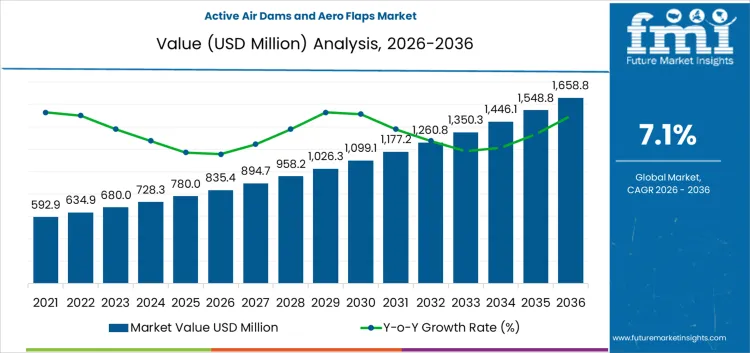
The active air dams and aero flaps market is likely to be valued at USD 835.4 million in 2026 and is projected to reach USD 1,658.8 million by 2036, reflecting a CAGR of 7.1%. Market outcomes are shaped by procurement strategies that prioritize certified aerodynamic performance and compatibility with multiple vehicle platforms. Buyer risk aversion is reflected in the preference for established suppliers with validated product reliability. High switching costs and integration complexity reinforce vendor lock-in, particularly for OEMs aligning these components with electronic control systems.
Suppliers capturing substantial value are those providing fully validated, multi-platform aerodynamic systems with documented durability and thermal performance. Adoption is influenced by vehicle production schedules, regional regulations, and aftermarket support requirements. Smaller providers are constrained by certification processes and the need to align with complex vehicle electronics. Operational outcomes are determined by system integration reliability, compliance with safety standards, and supplier support capabilities rather than unit volume alone.
Quick Stats of the Active Air Dams and Aero Flaps Market
- Active Air Dams and Aero Flaps Market Value (2026): USD 835.4 million
- Active Air Dams and Aero Flaps Forecast Value (2036): USD 1,658.8 million
- Active Air Dams and Aero Flaps Forecast CAGR 2026 to 2036: 7.1%
- Leading Product Type in Active Air Dams and Aero Flaps Market: Active air dam systems (46 % share)
- Leading Actuation Type in Active Air Dams and Aero Flaps Market: Electric motor actuation (52 % share)
- Key Growth Regions in Active Air Dams and Aero Flaps Market: China, India, South Korea, USA, Germany
- Top Players in Active Air Dams and Aero Flaps Market: Magna International, FORVIA, Plastic Omnium, Valeo, Continental, Hyundai Mobis, SMP (Standard Motor Products), Aisin, Denso, IAC Group
What is the Growth Forecast for Active Air Dams and Aero Flaps Market through 2036?
Between 2026 and 2031, the active air dams and aero flaps market is projected to grow from USD 835.4 million to USD 1,099 million, an increase of USD 263.6 million, reflecting a CAGR of 7.1%. Growth is driven by adoption across passenger vehicles, SUVs, and commercial vehicles, where active aerodynamic systems improve efficiency and performance. Expansion is supported by increasing demand for fuel economy, reduced drag, and enhanced vehicle stability. Suppliers focus on lightweight materials, precise actuation mechanisms, and integration with vehicle control systems. OEM adoption and aftermarket upgrades further contribute to market growth.
From 2031 to 2036, the market is expected to expand from USD 1,099 million to USD 1,658.8 million, adding USD 559.8 million. Growth is fueled by broader implementation of active aerodynamic solutions, increasing electric vehicle penetration, and rising consumer demand for improved performance and efficiency. Market drivers include aerodynamic optimization, regulatory pressure on emissions, and technological advances in actuation and materials. Competitive advantage favors suppliers offering high-precision systems, validated reliability, and strong OEM partnerships.
Active Air Dams and Aero Flaps Market Key Takeaways
| Metric | Value |
|---|---|
| Market Value (2026) | USD 835.4 million |
| Forecast Value (2036) | USD 1,658.8 million |
| Forecast CAGR 2026 to 2036 | 7.10% |
How Are Fasteners Enabling Active Air Dams and Aero Flaps?
Active air dams and aero flaps are increasingly adopted to improve vehicle aerodynamics, reduce drag, and enhance fuel efficiency or range in passenger and commercial vehicles. Historically, conventional fixed aerodynamic components offered limited performance and could not adapt to changing driving conditions. Modern designs incorporate movable flaps and air dams, secured using high-strength fasteners that ensure reliable operation under vibration, thermal expansion, and repeated actuation. Automotive OEMs, aerodynamic component suppliers, and EV manufacturers prioritize fastening reliability, corrosion resistance, and precise alignment. Early adoption focused on premium and performance vehicles, while current demand spans mainstream passenger cars, SUVs, and electric vehicles driven by efficiency targets, regulatory standards, and dynamic aerodynamic optimization. Fastener strength, torque retention, and environmental durability influence selection.
Increasing fuel efficiency regulations, aerodynamic performance requirements, and vehicle electrification are shaping market growth. Compared with traditional fixed mounts, modern fasteners for active components emphasize high load-bearing capacity, vibration resistance, and long-term durability under repeated actuation. Cost structures depend on material quality, manufacturing precision, and surface treatment, concentrating margins among suppliers delivering certified, high-performance fasteners. OEMs adopt these solutions to maintain operational reliability, improve vehicle efficiency, and ensure aerodynamic components function optimally. By 2036, advanced fasteners for active air dams and aero flaps are expected to become standard across passenger and electric vehicles, supporting aerodynamic performance, energy efficiency, and component longevity.
How Are Product Types Shaping Adoption of Active Air Dams and Aero Flaps in Modern Vehicles?
The demand for active air dams and aero flaps is segmented by product type and actuation method. Product types include active air dam systems, active aero flaps, and active grille shutters with aerodynamic focus. Actuation types include electric motors, pneumatic systems, and electromechanical linear actuators. Adoption is influenced by aerodynamic efficiency, fuel economy goals, and thermal management for engine and brake systems. Uptake is driven by vehicle class, performance requirements, and regulatory emissions standards. Product type and actuation selection depend on weight, response speed, and integration with vehicle electronic control units, ensuring reliable, durable, and efficient airflow management across passenger, performance, and commercial vehicles.
Why Are Active Air Dam Systems Leading the Product Type Segment?
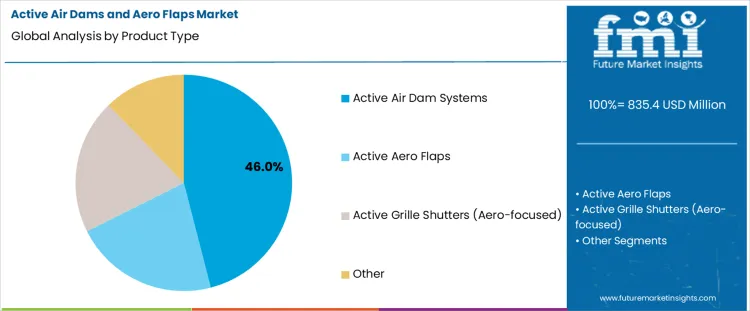
Active air dam systems account for approximately 46% of total product type demand, making them the largest category. These systems optimize airflow under the vehicle, reducing drag while improving cooling for engine and brake components. Adoption is driven by the need to balance aerodynamic efficiency with component thermal management and stability at highway speeds. Operational procedures include sensor monitoring of vehicle speed, deployment calibration, and periodic inspection of linkage and hinge mechanisms. Air dam systems must resist vibration, debris impact, and temperature variations. Their use improves fuel efficiency, enhances high-speed stability, and supports emission reduction targets in both passenger and light commercial vehicles.
Mechanical and functional factors further reinforce adoption. Systems must maintain precise actuation under load shifts, rapid deceleration, and road irregularities. Active air dams lead because they provide predictable airflow control, integrate with vehicle ECU systems, and improve energy efficiency. Their adoption enhances operational performance, reduces drag-related fuel consumption, and supports regulatory compliance while maintaining structural durability over the vehicle’s lifespan.
Why Is Electric Motor Actuation Representing the Largest Segment in Active Aerodynamic Devices?
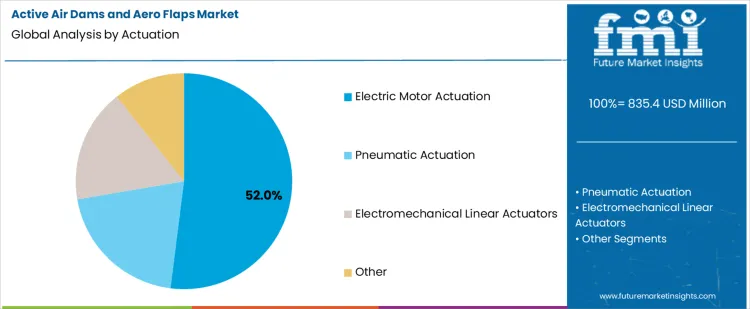
Electric motor actuation accounts for approximately 52% of total actuation demand, making it the leading segment. Adoption is driven by precise, repeatable motion control, low energy consumption, and compatibility with modern vehicle electronics. Electric actuators offer rapid response to speed changes, enabling dynamic airflow adjustments for drag reduction, cooling, and vehicle stability. Operational procedures include electrical system integration, signal calibration, and diagnostic monitoring to ensure accurate deployment. These actuators support modular designs, allowing retrofitting and servicing without extensive mechanical modification.
Thermal and operational considerations reinforce adoption. Actuators must function reliably under temperature extremes, vibration, and moisture exposure. Electric motor actuation leads because it provides high accuracy, reduces maintenance, and allows seamless integration with hybrid and electric powertrains. Adoption ensures energy-efficient aerodynamic performance, consistent airflow management, and operational reliability across passenger cars, SUVs, and performance vehicles, meeting both manufacturer and regulatory performance standards.
How Are Active Airflow Devices Enhancing Vehicle Aerodynamics?
Active air dams and aero flaps are increasingly adopted in passenger vehicles, SUVs, and sports cars to dynamically manage airflow, reduce drag, and improve fuel efficiency. Adoption is strongest in regions with high automotive production, strict fuel economy standards, and performance-focused vehicle segments. Components are selected for response speed, durability, and integration with vehicle control systems. Growth is driven by regulatory fuel efficiency targets, consumer demand for improved driving performance, and the need to balance cooling and aerodynamic efficiency. Investment focuses on actuator precision, material resilience, and integration with vehicle electronics. OEMs prioritize components that optimize airflow, maintain stability, and adapt to varying driving conditions.
Why Are Regional Emission Standards and Aerodynamic Efficiency Goals Driving Adoption?
Demand is influenced by local fuel economy mandates, CO2 reduction requirements, and high-speed vehicle performance expectations. Manufacturers adopt active air dams and aero flaps to adjust airflow dynamically, reduce drag, and maintain engine cooling efficiency. Components offering rapid actuation, durability under thermal stress, and seamless integration with vehicle control systems gain preference. Adoption is concentrated in regions with high vehicle speed regulations and efficiency-driven vehicle design. Fuel efficiency, dynamic stability, and responsive airflow management drive procurement rather than cost. Suppliers delivering reliable, fast-acting components gain advantage among OEMs and tier-one automotive integrators.
What Factors Restrict Broader Deployment of Active Airflow Components?
High component costs, precision manufacturing requirements, and electronic integration complexity limit adoption. Performance can degrade under repeated actuation, vibration, or extreme temperatures. Integration with multiple vehicle systems, including braking and cooling, requires calibration and testing. Smaller manufacturers or regions with lower regulatory pressure on efficiency adopt solutions more slowly. These factors concentrate early deployment among high-performance vehicle segments, premium OEMs, and regions with stringent fuel economy requirements.
How Are Mechanical Design and Control Precision Shaping Market Dynamics?
Fast-acting actuators, lightweight materials, and precision linkages are engineered to maintain stability while responding to aerodynamic needs. Collaboration between component suppliers, vehicle engineers, and control system developers ensures reliable operation, integration accuracy, and durability. Pilot testing evaluates response time, aerodynamic impact, and long-term resilience before full-scale production. Torque calibration, wear monitoring, and material selection maintain consistent performance. Focus is on airflow optimization, vehicle stability, and adaptive performance rather than cost or production volume. These approaches enable broader adoption of active air dams and aero flaps across regional and global automotive applications.
What is the Demand for Active Air Dams and Aero Flaps by Country?
| Country | CAGR (%) |
|---|---|
| China | 7.8% |
| India | 7.2% |
| USA | 6.1% |
| Germany | 5.8% |
| South Korea | 6.4% |
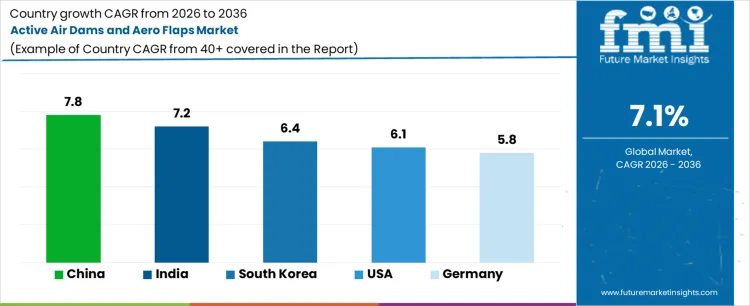
Demand for active air dams and aero flaps is rising as automotive manufacturers integrate advanced aerodynamic solutions to improve fuel efficiency, vehicle stability, and performance. China leads with a 7.8% CAGR, driven by growing passenger and commercial vehicle production and adoption of performance-enhancing aerodynamic components. India follows at 7.2%, supported by expansion of domestic automotive manufacturing and demand for efficiency-focused vehicle designs. South Korea grows at 6.4%, shaped by integration of active aero components in high-performance and electric vehicles. The USA records 6.1% growth, reflecting fleet modernization and adoption in commercial and premium vehicles. Germany shows 5.8% CAGR, influenced by mature automotive markets and incremental adoption of active aerodynamic systems.
How is China experiencing growth in the active air dams and aero flaps market?
China is experiencing growth at a CAGR of 7.8%, supported by adoption of active air dams and aero flaps market solutions to improve vehicle aerodynamic performance, fuel efficiency, and stability at high speeds. Manufacturers and suppliers are producing components optimized for lightweight construction, durability, and seamless integration with automotive body systems. Demand is concentrated in automotive production hubs, R&D centers, and high-performance vehicle assembly facilities. Investments focus on material performance, aerodynamic efficiency, and compliance with automotive standards rather than large-scale deployment. Growth reflects increasing vehicle production, industrial adoption of aerodynamic technologies, and focus on energy efficiency in automotive design.
- Aerodynamic efficiency drives adoption.
- Components optimize fuel efficiency and vehicle stability.
- Automotive hubs and R&D centers concentrate demand.
- Material performance and standards compliance guide investment.
How is India witnessing growth in the active air dams and aero flaps market?
India is witnessing growth at a CAGR of 7.2%, fueled by adoption of active air dams and aero flaps market solutions to enhance vehicle aerodynamics, energy efficiency, and operational performance. Manufacturers and suppliers are deploying components optimized for lightweight design, durability, and integration with automotive body systems. Demand is concentrated in automotive manufacturing hubs, high-performance vehicle assembly facilities, and R&D centers. Investments prioritize material quality, aerodynamic performance, and compliance with automotive safety and efficiency standards rather than fleet-scale deployment. Growth reflects rising vehicle production, adoption of aerodynamic enhancements, and industrial focus on fuel efficiency.
- Vehicle aerodynamics drives adoption.
- Components enhance fuel efficiency and stability.
- Automotive hubs and assembly facilities concentrate demand.
- Material quality and standards compliance guide investment.
How is the United States experiencing growth in the active air dams and aero flaps market?
United States is experiencing growth at a CAGR of 6.1%, supported by adoption of active air dams and aero flaps market solutions to improve vehicle performance, stability, and energy efficiency. Manufacturers and suppliers are producing components optimized for lightweight construction, durability, and integration with body and chassis systems. Demand is concentrated in automotive manufacturing hubs, R&D centers, and high-performance vehicle assembly facilities. Investments focus on material durability, aerodynamic efficiency, and adherence to automotive standards rather than large-scale deployment. Growth reflects industrial adoption of aerodynamic technologies, increasing vehicle production, and focus on energy-efficient design.
- Vehicle performance drives adoption.
- Components optimize stability and energy efficiency.
- Automotive hubs and R&D centers concentrate demand.
- Material durability and standards compliance guide investment.
How is Germany witnessing growth in the active air dams and aero flaps market?
Germany is witnessing growth at a CAGR of 5.8%, fueled by adoption of active air dams and aero flaps market solutions to enhance vehicle aerodynamics, fuel efficiency, and operational stability. Manufacturers and suppliers are deploying components optimized for lightweight design, durability, and seamless integration with body systems. Demand is concentrated in automotive production hubs, high-performance vehicle assembly facilities, and R&D centers. Investments prioritize material quality, aerodynamic performance, and compliance with automotive safety standards rather than fleet-scale deployment. Growth reflects industrial adoption of energy-efficient designs, vehicle production expansion, and adoption of advanced aerodynamic components.
- Aerodynamic design drives adoption.
- Components enhance fuel efficiency and vehicle stability.
- Production hubs and assembly facilities concentrate demand.
- Material quality and safety compliance guide investment.
How is South Korea experiencing growth in the active air dams and aero flaps market?
South Korea is experiencing growth at a CAGR of 6.4%, supported by adoption of active air dams and aero flaps market solutions to improve vehicle aerodynamics, energy efficiency, and operational performance. Manufacturers and suppliers are producing components optimized for durability, lightweight design, and integration with body and chassis systems. Demand is concentrated in automotive production hubs, high-performance vehicle assembly facilities, and R&D centers. Investments focus on material performance, aerodynamic efficiency, and compliance with automotive standards rather than large-scale deployment. Growth reflects industrial adoption of advanced aerodynamic technologies, rising vehicle production, and focus on energy-efficient design.
- Vehicle aerodynamics drives adoption.
- Components optimize fuel efficiency and stability.
- Production hubs and R&D centers concentrate demand.
- Material performance and compliance guide investment.
Who Competes in the Active Air Dams and Aero Flaps Market and What Defines Their Capabilities?
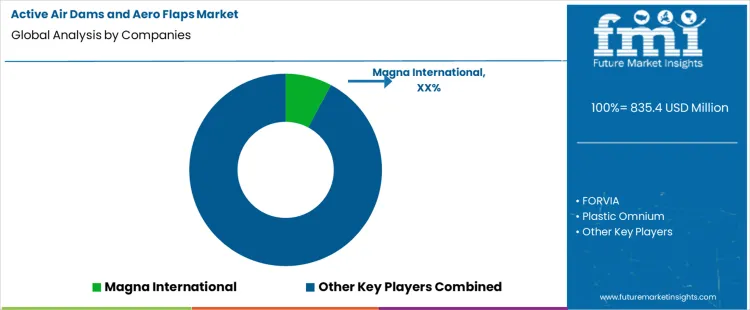
Competition in the active air dams and aero flaps market is defined by aerodynamic performance, actuation reliability, and integration with vehicle control systems. Magna International supplies active air dams and aero flaps engineered for dynamic airflow management, structural durability, and seamless integration with vehicle electronics. FORVIA develops actuation systems for flaps and air dams optimized for thermal and aerodynamic efficiency in diverse vehicle platforms. Plastic Omnium provides modular systems combining lightweight materials with precision actuation for fuel efficiency and drag reduction. Valeo delivers aerodynamically optimized flaps with integrated sensors for dynamic vehicle control. Continental develops air management components for integration with advanced driver assistance and energy optimization systems.
Hyundai Mobis supplies active flaps and air dams engineered for energy efficiency and robustness in varying environmental conditions. SMP (Standard Motor Products) provides electromechanical actuation systems suitable for airflow control in vehicle underbodies. Aisin delivers lightweight flap assemblies with high operational reliability. Denso develops actuated aerodynamic components compatible with multiple vehicle architectures. IAC Group provides modular air management systems optimized for airflow control and integration with cooling and aerodynamic systems. Other regional and specialty suppliers focus on lightweight materials, precise actuation, and integration with vehicle energy management systems. Competitive differentiation arises from aerodynamic efficiency, actuator reliability, material durability, integration capability, and responsiveness to dynamic vehicle control inputs.
Key Players in the Active Air Dams and Aero Flaps Market
- Magna International
- FORVIA
- Plastic Omnium
- Valeo
- Continental
- Hyundai Mobis
- SMP (Standard Motor Products)
- Aisin
- Denso
- IAC Group
Scope of the Report
| Items | Values |
|---|---|
| Quantitative Units (2026) | USD million |
| Product Type | Active Air Dam Systems, Active Aero Flaps, Active Grille Shutters (Aero-focused), Other |
| Actuation | Electric Motor Actuation, Pneumatic Actuation, Electromechanical Linear Actuators, Other |
| Vehicle Type | Passenger Cars, SUVs and Crossovers, Light Commercial Vehicles, Performance Vehicles |
| Sales Channel | OEM Fitment, Aftermarket Retrofit, Service Replacement, Other |
| Region | Asia Pacific, Europe, North America, Latin America, Middle East & Africa |
| Key Countries Covered | China, India, USA, Germany, South Korea |
| Key Companies Profiled | Magna International, FORVIA, Plastic Omnium, Valeo, Continental, Hyundai Mobis, SMP (Standard Motor Products), Aisin, Denso, IAC Group |
| Additional Attributes | Dollar sales by product type, actuation, and vehicle type; regional CAGR, volume and value growth projections; adoption across passenger, SUV, LCV, and performance vehicle segments; focus on aerodynamic efficiency, thermal and mechanical durability, and integration with vehicle control systems; margins concentrated among suppliers delivering certified, high-performance fasteners and actuation systems; competitive advantage from OEM partnerships, validated operational reliability, and multi-platform aerodynamic system integration. |
Active Air Dams and Aero Flaps Market Segmentation
Product Type:
- Active Air Dam Systems
- Active Aero Flaps
- Active Grille Shutters (Aero-focused)
- Other
Actuation:
- Electric Motor Actuation
- Pneumatic Actuation
- Electromechanical Linear Actuators
- Other
Vehicle Type:
- Passenger Cars
- SUVs and Crossovers
- Light Commercial Vehicles
- Performance Vehicles
Sales Channel:
- OEM Fitment
- Aftermarket Retrofit
- Service Replacement
- Other
Region:
- Asia Pacific
- China
- Japan
- South Korea
- India
- Australia & New Zealand
- ASEAN
- Rest of Asia Pacific
- Europe
- Germany
- United Kingdom
- France
- Italy
- Spain
- Nordic
- BENELUX
- Rest of Europe
- North America
- United States
- Canada
- Mexico
- Latin America
- Brazil
- Chile
- Rest of Latin America
- Middle East & Africa
- Kingdom of Saudi Arabia
- Other GCC Countries
- Turkey
- South Africa
- Other African Union
- Rest of Middle East & Africa
Bibliography
- United Nations Economic Commission for Europe. (2023). UN Regulation No. 26: Uniform provisions concerning the approval of vehicles with regard to their external projections.
- United Nations Economic Commission for Europe. (2024). UN Regulation No. 127: Pedestrian safety performance—Supplement 3 to the 03 series of amendments.
- United Nations Economic Commission for Europe. (2021). UN Regulation No. 42: Uniform provisions concerning the approval of vehicles with regard to their front and rear protective devices.
- National Highway Traffic Safety Administration. (2024). 49 CFR Part 581: Bumper standard.
- National Highway Traffic Safety Administration. (2024). 49 CFR § 571.301: Standard No. 301—Fuel system integrity.
Frequently Asked Questions
How big is the active air dams and aero flaps market in 2026?
The global active air dams and aero flaps market is estimated to be valued at USD 835.4 million in 2026.
What will be the size of active air dams and aero flaps market in 2036?
The market size for the active air dams and aero flaps market is projected to reach USD 1,658.8 million by 2036.
How much will be the active air dams and aero flaps market growth between 2026 and 2036?
The active air dams and aero flaps market is expected to grow at a 7.1% CAGR between 2026 and 2036.
What are the key product types in the active air dams and aero flaps market?
The key product types in active air dams and aero flaps market are active air dam systems, active aero flaps, active grille shutters (aero-focused) and other.
Which actuation segment to contribute significant share in the active air dams and aero flaps market in 2026?
In terms of actuation, electric motor actuation segment to command 52.0% share in the active air dams and aero flaps market in 2026.
Preview the report firsthand - request a free sample
Get SampleGet the brochure for pricing and purchase details.
Get PDFTable of Content
- Executive Summary
- Global Market Outlook
- Demand-side Trends
- Supply-side Trends
- Technology Roadmap Analysis
- Analysis and Recommendations
- Market Overview
- Market Coverage / Taxonomy
- Market Definition / Scope / Limitations
- Market Background
- Market Dynamics
- Drivers
- Restraints
- Opportunity
- Trends
- Scenario Forecast
- Demand in Optimistic Scenario
- Demand in Likely Scenario
- Demand in Conservative Scenario
- Opportunity Map Analysis
- Product Life Cycle Analysis
- Supply Chain Analysis
- Investment Feasibility Matrix
- Value Chain Analysis
- PESTLE and Porter’s Analysis
- Regulatory Landscape
- Regional Parent Market Outlook
- Production and Consumption Statistics
- Import and Export Statistics
- Market Dynamics
- Global Market Analysis 2021 to 2025 and Forecast, 2026 to 2036
- Historical Market Size Value (USD Million) Analysis, 2021 to 2025
- Current and Future Market Size Value (USD Million) Projections, 2026 to 2036
- Y-o-Y Growth Trend Analysis
- Absolute $ Opportunity Analysis
- Global Market Pricing Analysis 2021 to 2025 and Forecast 2026 to 2036
- Global Market Analysis 2021 to 2025 and Forecast 2026 to 2036, By Product Type
- Introduction / Key Findings
- Historical Market Size Value (USD Million) Analysis By Product Type , 2021 to 2025
- Current and Future Market Size Value (USD Million) Analysis and Forecast By Product Type , 2026 to 2036
- Active Air Dam Systems
- Active Aero Flaps
- Active Grille Shutters (Aero-focused)
- Other
- Active Air Dam Systems
- Y-o-Y Growth Trend Analysis By Product Type , 2021 to 2025
- Absolute $ Opportunity Analysis By Product Type , 2026 to 2036
- Global Market Analysis 2021 to 2025 and Forecast 2026 to 2036, By Actuation
- Introduction / Key Findings
- Historical Market Size Value (USD Million) Analysis By Actuation, 2021 to 2025
- Current and Future Market Size Value (USD Million) Analysis and Forecast By Actuation, 2026 to 2036
- Electric Motor Actuation
- Pneumatic Actuation
- Electromechanical Linear Actuators
- Other
- Electric Motor Actuation
- Y-o-Y Growth Trend Analysis By Actuation, 2021 to 2025
- Absolute $ Opportunity Analysis By Actuation, 2026 to 2036
- Global Market Analysis 2021 to 2025 and Forecast 2026 to 2036, By Vehicle Type
- Introduction / Key Findings
- Historical Market Size Value (USD Million) Analysis By Vehicle Type, 2021 to 2025
- Current and Future Market Size Value (USD Million) Analysis and Forecast By Vehicle Type, 2026 to 2036
- Passenger Cars
- SUVs and Crossovers
- Light Commercial Vehicles
- Performance Vehicles
- Passenger Cars
- Y-o-Y Growth Trend Analysis By Vehicle Type, 2021 to 2025
- Absolute $ Opportunity Analysis By Vehicle Type, 2026 to 2036
- Global Market Analysis 2021 to 2025 and Forecast 2026 to 2036, By Sales Channel
- Introduction / Key Findings
- Historical Market Size Value (USD Million) Analysis By Sales Channel, 2021 to 2025
- Current and Future Market Size Value (USD Million) Analysis and Forecast By Sales Channel, 2026 to 2036
- OEM Fitment
- Aftermarket Retrofit
- Service Replacement
- Other
- OEM Fitment
- Y-o-Y Growth Trend Analysis By Sales Channel, 2021 to 2025
- Absolute $ Opportunity Analysis By Sales Channel, 2026 to 2036
- Global Market Analysis 2021 to 2025 and Forecast 2026 to 2036, By Region
- Introduction
- Historical Market Size Value (USD Million) Analysis By Region, 2021 to 2025
- Current Market Size Value (USD Million) Analysis and Forecast By Region, 2026 to 2036
- North America
- Latin America
- Western Europe
- Eastern Europe
- East Asia
- South Asia and Pacific
- Middle East & Africa
- Market Attractiveness Analysis By Region
- North America Market Analysis 2021 to 2025 and Forecast 2026 to 2036, By Country
- Historical Market Size Value (USD Million) Trend Analysis By Market Taxonomy, 2021 to 2025
- Market Size Value (USD Million) Forecast By Market Taxonomy, 2026 to 2036
- By Country
- USA
- Canada
- Mexico
- By Product Type
- By Actuation
- By Vehicle Type
- By Sales Channel
- By Country
- Market Attractiveness Analysis
- By Country
- By Product Type
- By Actuation
- By Vehicle Type
- By Sales Channel
- Key Takeaways
- Latin America Market Analysis 2021 to 2025 and Forecast 2026 to 2036, By Country
- Historical Market Size Value (USD Million) Trend Analysis By Market Taxonomy, 2021 to 2025
- Market Size Value (USD Million) Forecast By Market Taxonomy, 2026 to 2036
- By Country
- Brazil
- Chile
- Rest of Latin America
- By Product Type
- By Actuation
- By Vehicle Type
- By Sales Channel
- By Country
- Market Attractiveness Analysis
- By Country
- By Product Type
- By Actuation
- By Vehicle Type
- By Sales Channel
- Key Takeaways
- Western Europe Market Analysis 2021 to 2025 and Forecast 2026 to 2036, By Country
- Historical Market Size Value (USD Million) Trend Analysis By Market Taxonomy, 2021 to 2025
- Market Size Value (USD Million) Forecast By Market Taxonomy, 2026 to 2036
- By Country
- Germany
- UK
- Italy
- Spain
- France
- Nordic
- BENELUX
- Rest of Western Europe
- By Product Type
- By Actuation
- By Vehicle Type
- By Sales Channel
- By Country
- Market Attractiveness Analysis
- By Country
- By Product Type
- By Actuation
- By Vehicle Type
- By Sales Channel
- Key Takeaways
- Eastern Europe Market Analysis 2021 to 2025 and Forecast 2026 to 2036, By Country
- Historical Market Size Value (USD Million) Trend Analysis By Market Taxonomy, 2021 to 2025
- Market Size Value (USD Million) Forecast By Market Taxonomy, 2026 to 2036
- By Country
- Russia
- Poland
- Hungary
- Balkan & Baltic
- Rest of Eastern Europe
- By Product Type
- By Actuation
- By Vehicle Type
- By Sales Channel
- By Country
- Market Attractiveness Analysis
- By Country
- By Product Type
- By Actuation
- By Vehicle Type
- By Sales Channel
- Key Takeaways
- East Asia Market Analysis 2021 to 2025 and Forecast 2026 to 2036, By Country
- Historical Market Size Value (USD Million) Trend Analysis By Market Taxonomy, 2021 to 2025
- Market Size Value (USD Million) Forecast By Market Taxonomy, 2026 to 2036
- By Country
- China
- Japan
- South Korea
- By Product Type
- By Actuation
- By Vehicle Type
- By Sales Channel
- By Country
- Market Attractiveness Analysis
- By Country
- By Product Type
- By Actuation
- By Vehicle Type
- By Sales Channel
- Key Takeaways
- South Asia and Pacific Market Analysis 2021 to 2025 and Forecast 2026 to 2036, By Country
- Historical Market Size Value (USD Million) Trend Analysis By Market Taxonomy, 2021 to 2025
- Market Size Value (USD Million) Forecast By Market Taxonomy, 2026 to 2036
- By Country
- India
- ASEAN
- Australia & New Zealand
- Rest of South Asia and Pacific
- By Product Type
- By Actuation
- By Vehicle Type
- By Sales Channel
- By Country
- Market Attractiveness Analysis
- By Country
- By Product Type
- By Actuation
- By Vehicle Type
- By Sales Channel
- Key Takeaways
- Middle East & Africa Market Analysis 2021 to 2025 and Forecast 2026 to 2036, By Country
- Historical Market Size Value (USD Million) Trend Analysis By Market Taxonomy, 2021 to 2025
- Market Size Value (USD Million) Forecast By Market Taxonomy, 2026 to 2036
- By Country
- Kingdom of Saudi Arabia
- Other GCC Countries
- Turkiye
- South Africa
- Other African Union
- Rest of Middle East & Africa
- By Product Type
- By Actuation
- By Vehicle Type
- By Sales Channel
- By Country
- Market Attractiveness Analysis
- By Country
- By Product Type
- By Actuation
- By Vehicle Type
- By Sales Channel
- Key Takeaways
- Key Countries Market Analysis
- USA
- Pricing Analysis
- Market Share Analysis, 2025
- By Product Type
- By Actuation
- By Vehicle Type
- By Sales Channel
- Canada
- Pricing Analysis
- Market Share Analysis, 2025
- By Product Type
- By Actuation
- By Vehicle Type
- By Sales Channel
- Mexico
- Pricing Analysis
- Market Share Analysis, 2025
- By Product Type
- By Actuation
- By Vehicle Type
- By Sales Channel
- Brazil
- Pricing Analysis
- Market Share Analysis, 2025
- By Product Type
- By Actuation
- By Vehicle Type
- By Sales Channel
- Chile
- Pricing Analysis
- Market Share Analysis, 2025
- By Product Type
- By Actuation
- By Vehicle Type
- By Sales Channel
- Germany
- Pricing Analysis
- Market Share Analysis, 2025
- By Product Type
- By Actuation
- By Vehicle Type
- By Sales Channel
- UK
- Pricing Analysis
- Market Share Analysis, 2025
- By Product Type
- By Actuation
- By Vehicle Type
- By Sales Channel
- Italy
- Pricing Analysis
- Market Share Analysis, 2025
- By Product Type
- By Actuation
- By Vehicle Type
- By Sales Channel
- Spain
- Pricing Analysis
- Market Share Analysis, 2025
- By Product Type
- By Actuation
- By Vehicle Type
- By Sales Channel
- France
- Pricing Analysis
- Market Share Analysis, 2025
- By Product Type
- By Actuation
- By Vehicle Type
- By Sales Channel
- India
- Pricing Analysis
- Market Share Analysis, 2025
- By Product Type
- By Actuation
- By Vehicle Type
- By Sales Channel
- ASEAN
- Pricing Analysis
- Market Share Analysis, 2025
- By Product Type
- By Actuation
- By Vehicle Type
- By Sales Channel
- Australia & New Zealand
- Pricing Analysis
- Market Share Analysis, 2025
- By Product Type
- By Actuation
- By Vehicle Type
- By Sales Channel
- China
- Pricing Analysis
- Market Share Analysis, 2025
- By Product Type
- By Actuation
- By Vehicle Type
- By Sales Channel
- Japan
- Pricing Analysis
- Market Share Analysis, 2025
- By Product Type
- By Actuation
- By Vehicle Type
- By Sales Channel
- South Korea
- Pricing Analysis
- Market Share Analysis, 2025
- By Product Type
- By Actuation
- By Vehicle Type
- By Sales Channel
- Russia
- Pricing Analysis
- Market Share Analysis, 2025
- By Product Type
- By Actuation
- By Vehicle Type
- By Sales Channel
- Poland
- Pricing Analysis
- Market Share Analysis, 2025
- By Product Type
- By Actuation
- By Vehicle Type
- By Sales Channel
- Hungary
- Pricing Analysis
- Market Share Analysis, 2025
- By Product Type
- By Actuation
- By Vehicle Type
- By Sales Channel
- Kingdom of Saudi Arabia
- Pricing Analysis
- Market Share Analysis, 2025
- By Product Type
- By Actuation
- By Vehicle Type
- By Sales Channel
- Turkiye
- Pricing Analysis
- Market Share Analysis, 2025
- By Product Type
- By Actuation
- By Vehicle Type
- By Sales Channel
- South Africa
- Pricing Analysis
- Market Share Analysis, 2025
- By Product Type
- By Actuation
- By Vehicle Type
- By Sales Channel
- USA
- Market Structure Analysis
- Competition Dashboard
- Competition Benchmarking
- Market Share Analysis of Top Players
- By Regional
- By Product Type
- By Actuation
- By Vehicle Type
- By Sales Channel
- Competition Analysis
- Competition Deep Dive
- Magna International
- Overview
- Product Portfolio
- Profitability by Market Segments (Product/Age /Sales Channel/Region)
- Sales Footprint
- Strategy Overview
- Marketing Strategy
- Product Strategy
- Channel Strategy
- FORVIA
- Plastic Omnium
- Valeo
- Continental
- Hyundai Mobis
- SMP (Standard Motor Products)
- Aisin
- Denso
- IAC Group
- Magna International
- Competition Deep Dive
- Assumptions & Acronyms Used
- Research Methodology


