

Beverage Can Ends Market Size and Share Forecast Outlook from 2025 to 2035
The global beverage can ends market is very competitive and fragmented, with companies classified into Tier 1, Tier 2, and Tier 3 depending on market presence and strategic positioning.
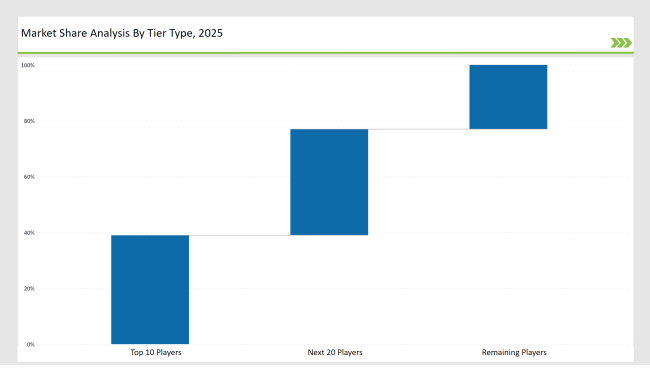
Tier 1 players are Crown Holdings, Ball Corporation, and Ardagh Group, holding 39% of the market. These companies dominate through the use of advanced manufacturing techniques, sustainable aluminum materials, and a strong distribution network to meet the demands of the beverage industry.
Tier 2 players include Canpack, Silgan Holdings, and CPMC Holdings, which account for around 38% of the market. These players focus on cost-effective, customizable can end solutions tailored for regional beverage producers and mid-sized enterprises. These players strengthen their market presence by expanding production capacity and incorporating smart packaging technologies.
Tier 3, which consists of regional manufacturers and niche startups, accounts for 23% market share. Here, the offerings are innovative as well as more environmentally friendly such as lightweight can ends and easy-open designs, and they enjoy flexibility in changing market demands as well as regulation on sustainability.
Vendor Performance in Easy-Open Ends, Stay-On Tabs, and Full Aperture Designs
Global Market Share by Key Players (2025)
| Category | Market Share (%) |
|---|---|
| Top 3 (Crown Holdings, Ball Corporation, Ardagh Group) | 18% |
| Rest of Top 5 (Canpack, Silgan Holdings) | 13% |
| Next 5 of Top 10 (CPMC Holdings, Envases Group, ORG Technology, Baosteel Packaging, Easy Open Lid Group) | 8% |
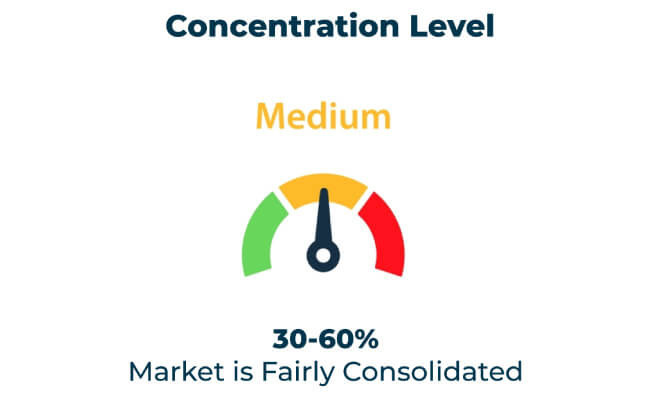
Market Concentration, 2025E Among Aluminum and Steel Can End Manufacturers
Segment Analysis by Diameter, Closure Type, and Beverage Category
Targeted End-user Key Industries
The beverage can ends market serves industries such as
- Carbonated Soft Drinks: Lightweight, easy-open can ends ensure convenience and freshness.
- Alcoholic Beverages: Premium can end designs enhance branding and product appeal.
- Energy & Sports Drinks: Innovative resealable can ends improve portability and usability.
Vendor-Focused Product Categories
Vendors offer specialized products to meet evolving industry needs
- Standard Easy-Open Can Ends: Designed for soft drinks and beer, ensuring convenience.
- Resealable Can Ends: Developed for on-the-go consumers, particularly in the energy drinks sector.
- Eco-Friendly Can Ends: Made from lightweight and recyclable aluminum to support sustainability.
Manufacturers integrate automation, AI-driven production monitoring, and material optimization to enhance efficiency while sustainability remains a major driver of innovation in the beverage packaging industry.
Who Shaped the Year – Innovations in Reduced Weight and Double-Seam Integrity
This section highlights the key players that led innovation and growth in the beverage can ends market in 2025. Companies introduced lightweight aluminum can ends to reduce environmental impact. Manufacturers invested in AI-driven quality control to improve efficiency.
Firms expanded production capacity to meet the increasing demand for premium and eco-friendly can end solutions. Businesses developed smart labeling technologies to enhance traceability and branding.
Year on Year Leaders
- Crown Holdings: Expanded sustainable aluminum can end production with high-recyclability materials.
- Ball Corporation: Launched ultra-lightweight can ends to reduce material use and carbon footprint.
- Ardagh Group: Invested in AI-driven defect detection for higher quality control.
- Canpack: Enhanced customization capabilities with premium can end embossing and coatings.
- Silgan Holdings: Developed resealable can end solutions for energy drinks and craft beverages.
- CPMC Holdings: Focused on biodegradable can end liners to support sustainability.
- Envases Group: Strengthened production capacity in Latin America to meet rising demand.
Recommendations for Technology Suppliers in Line Compatibility and Sustainability
- Sustainability Trends: Lightweight and fully recyclable can ends are in high demand.
- Customization and Niche Offerings: Unique embossing, coatings, and resealable solutions enhance brand appeal.
- Technological Advancements: AI-based defect detection and automation improve production efficiency.
- Regional Growth Dynamics: Asia-Pacific leads in production expansion, while North America and Europe focus on premium and sustainable can end solutions.
Tier-Wise Vendor Classification, 2025 Based on Volume and Industry Penetration
| Tier Type | Example of Key Players |
|---|---|
| Tier 1 | Crown Holdings, Ball Corporation, Ardagh Group |
| Tier 2 | Canpack, Silgan Holdings, CPMC Holdings |
| Tier 3 | Envases Group, ORG Technology, niche startups |
Key Company Initiatives in Colored Tabs, Reclosable Ends, and Decorative Coatings
| Manufacturer | Latest Developments |
|---|---|
| Crown Holdings | In January 2024, launched ultra-lightweight aluminum can ends. |
| Ball Corporation | In March 2024, introduced AI-powered quality control for defect detection. |
| Ardagh Group | In June 2024, expanded production capacity for premium beverage can ends. |
| Canpack | In February 2024, deployed advanced embossing and branding customization for beverage cans. |
| Silgan Holdings | In July 2024, developed resealable can ends for on-the-go convenience. |
| CPMC Holdings | In April 2024, focused on biodegradable can end solutions. |
| Envases Group | In August 2024, strengthened production in Latin America to meet increasing demand. |
Vendor Insights on Hygiene, Pull Force, and Sourcing Diversification
- Crown Holdings: A leader in sustainable and lightweight can end manufacturing.
- Ball Corporation: Innovates in AI-driven defect detection and material optimization.
- Ardagh Group: Invests in premium can end production with advanced embossing.
- Canpack: Specializes in high-quality branding and customization for beverage cans.
- Silgan Holdings: Develops resealable can ends to enhance consumer convenience.
- CPMC Holdings: Leads in biodegradable and eco-friendly can end solutions.
- Envases Group: Expands production to meet growing demand in emerging markets.
Future Roadmap for Smart-Tagged, Recycled-Content, and Circular Can End Solutions
The industry is transforming with AI-driven production monitoring, sustainable materials, and customized branding solutions. Manufacturers optimize energy-efficient processes to reduce emissions. Companies invest in returnable and lightweight can end systems to support circular economy initiatives.
Engineers develop resealable and easy-open can ends for improved convenience. Firms enhance digital printing for branding and traceability. Emerging innovations will drive further investments in next-generation beverage can end technologies.
Segmentation of the Beverage Can Ends Market by Material, Opening Type, and Application
By Product Type:
- Standard Easy-Open Can Ends
- Resealable Can Ends
- Eco-Friendly Can Ends
By End-user:
- Carbonated Soft Drinks
- Alcoholic Beverages
- Energy & Sports Drinks
Frequently Asked Questions
Who are the key manufacturers in the Beverage Can Ends Market?
Crown Holdings, Ball Corporation, Ardagh Group, Canpack, and Silgan Holdings lead the market.
What is the share of the tier-1 players in the beverage can ends market?
The tier-1 players collectively hold about 39% of the global market.
What drives innovation in the beverage can ends industry?
AI-based quality control, sustainable materials, and customization drive innovation.
What is the contribution of Tier-3 companies in the beverage can ends industry?
Tier-3 companies, including startups and regional players, contribute 23% by offering localized and specialized solutions.
Preview the report firsthand - request a free sample
Get SampleGet the brochure for pricing and purchase details.
Get PDFTable of Content
- Executive Summary
- Market Overview
- Key Growth Drivers
- Company Performance
- Market Concentration
- Segmented Analysis
- Key Highlights from the Forecast
- Tier-Wise Company Classification
- Key Company Initiatives
- Recommendations for Brands
- Future Roadmap
- FAQs


