

- Industry Size (2026)
- USD 4.5 Bn
- Forecast (2036)
- USD 30.7 Bn
- CAGR (2026 to 2036)
- 21.1%
eSports Market Size, Market Forecast and Outlook By FMI
The eSports market is expected to be valued at USD 4.5 billion in 2026 and is projected to reach USD 30.7 billion by 2036. The market is set to register a 21.1% CAGR during the forecast period. MOBA games are expected to lead game genre with approximately 28.7% share, while mobile eSports is anticipated to expand at 27.6% CAGR through 2036.
Summary of the eSports Market
- Demand and Growth Drivers
- Competitive gaming participation is expected to increase as streaming platforms widen access to tournaments.
- Sponsorship activity is likely to strengthen as brands use eSports to reach younger digital audiences.
- Mobile gaming expansion is anticipated to support faster adoption across India and other emerging markets.
- Product and Segment View
- MOBA games are expected to lead due to organized tournaments and large international fan communities.
- Mobile eSports is likely to expand faster because smartphones make competitive gaming more accessible.
- Sponsorships and advertising are anticipated to remain important as leagues and teams seek scalable revenue.
- Geography and Competitive Outlook
- India is expected to lead country-level growth due to mobile-first gaming and rising sponsorship investment.
- Saudi Arabia is likely to expand strongly through Vision 2030 gaming initiatives and large eSports events.
- Companies with stronger tournament operations and fan engagement platforms are anticipated to improve market position.
- Analyst Opinion
- Sudip saha, Co-founder at Future Market Insights, suggests, “The eSports market is moving toward mobile-led competition and brand-funded audience growth. Platforms and teams are likely to gain when they combine high-quality events, regional fan communities, and stronger streaming monetization.”
- eSports Market Value Analysis
- The eSports market is shifting from tournament-led gaming into a broader digital entertainment category.
- Demand is likely to rise as mobile gaming and live streaming make competitive play easier to access.
- Sponsorship revenue is expected to improve as brands increase spending on gaming-focused audience engagement.
- Spending is anticipated to remain supported by mobile eSports, media rights, and professional league development.
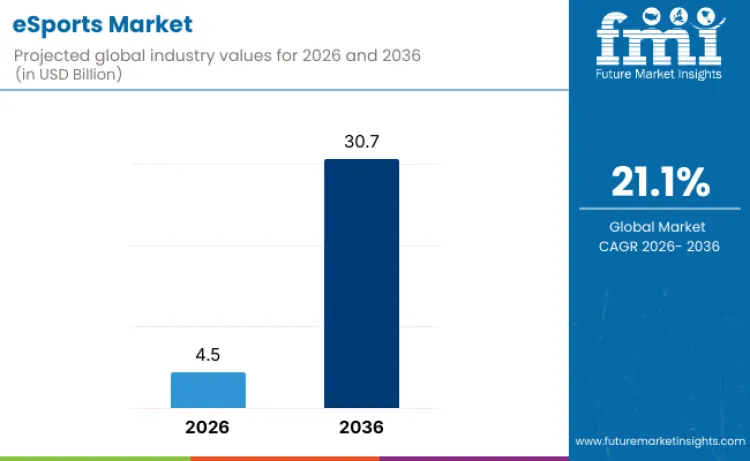
Key Takeaways, Market Size, and Forecast
| Metric | Value |
|---|---|
| Market Size (2026) | USD 4.5 Billion |
| Market Size (2036) | USD 30.7 Billion |
| CAGR (2026–2036) | 21.1% |
| Leading Revenue (2026) | MOBA Games |
| MOBA Games Share (2026) | ~28.7% |
| Fastest-Growing Segment | Mobile ESports |
| Mobile ESports CAGR | 27.6% |
| Fastest-Growing Country | India |
| India CAGR | 26.7% |
eSports market Key takeaways
| Metric | Value |
|---|---|
| Market Value (2026) | USD 4.5 billion |
| Market Forecast Value (2036) | USD 30.7 billion |
| Forecast CAGR (2026-2036) | 21.1% |
How Are the Segments Classified in the eSports Market?
The eSports Market between 2026 and 2036 is segmented to capture the diversity of gaming genres, platforms, and revenue streams driving global growth. By game genre, the industry includes Multiplayer Online Battle Arena (MOBA), First-Person Shooter (FPS), Battle Royale, Sports Simulation, Fighting Games, Real-Time Strategy (RTS), and Racing Games, reflecting different competitive structures, fan engagement levels, and monetization potential. Platforms are segmented into PC-based, console-based, and mobile eSports, highlighting differences in accessibility, user experience, and regional adoption.
Revenue streams are classified as Sponsorships and Advertising, Media Rights, Merchandise and Ticket Sales, Publisher Fees, Streaming Revenue, and Prize Pool and Wagering, representing the main ways industry players generate income. Geographically, the industry spans North America, Latin America, East Asia, South Asia & Pacific, Western Europe, Eastern Europe, and the Middle East and Africa, with developed regions leading adoption and emerging regions showing rapid growth due to digital penetration, tournament infrastructure, and mobile gaming expansion.
Which Game Genre Holds the Largest Share in the eSports Market?
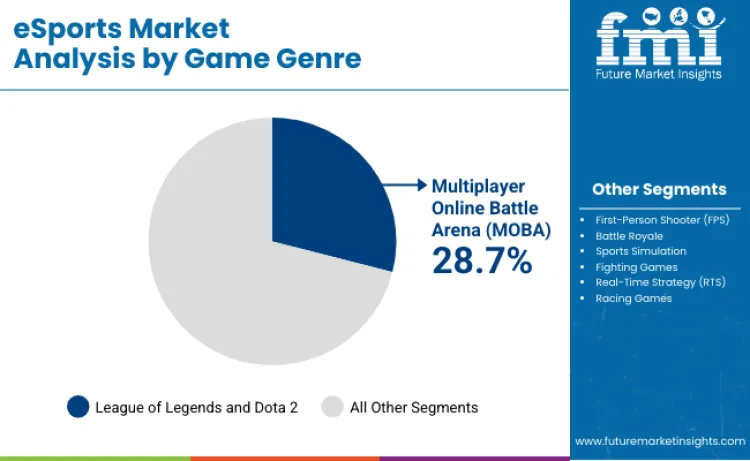
MOBA games, including League of Legends and Dota 2, are projected to hold the largest share in the eSports Market through 2026 and 2036, capturing around 28.7% of global revenue in 2026. Their dominance stems from strategic gameplay depth, organized international tournaments, and highly engaged communities. Events such as the League of Legends World Championship and Dota 2’s The International attract millions of viewers, driving sponsorships, media rights, and advertising revenue. MOBA titles also lead collegiate and professional competitive circuits, reinforcing their profitability and broad recognition. With sustained fan engagement, established competitive ecosystems, and consistent viewership growth, MOBA games are expected to remain the top-performing genre over the next decade, representing the cornerstone of the global eSports revenue mix.
Which Platform Is Driving the Fastest Growth in the eSports Market?
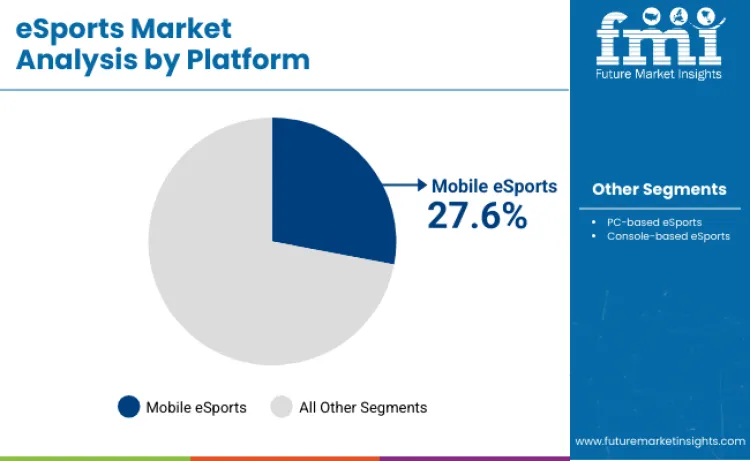
Mobile eSports is expected to record the fastest growth in the eSports Market, expanding by approximately 27.6% per year between 2026 and 2036. The segment benefits from growing smartphone penetration, affordable internet access, and popular mobile-first titles such as PUBG Mobile, Arena of Valor, and Free Fire. Growth is particularly strong in developing regions like India, Southeast Asia, and Latin America, where PC and console access is limited. Developers are increasingly focusing on mobile-optimized gameplay and tournament accessibility to boost participation and viewership. Mobile platforms offer convenience, affordability, and broad reach, positioning them as the fastest-growing segment and a critical driver of global eSports expansion over the next decade.
What Are the Key Trends Shaping the eSports Market?
The eSports Market is shaped by trends such as expanding tournament infrastructure, streaming platform growth, and emerging technologies like virtual reality (VR) and blockchain gaming. Game developers are focused on high-quality graphics, immersive gameplay, and seamless streaming to engage both casual and professional players. Streaming platforms enhance global access and provide direct fan interactions while generating advertising revenue. The integration of blockchain-based features and NFTs is creating new monetization opportunities through digital collectibles and in-game assets. These developments strengthen audience engagement, professionalize competitive circuits, and diversify revenue models, positioning the eSports Market for sustained global growth through 2036.
How Are Sponsorships and Investments Driving Growth in the eSports Market Across Countries?
Countries like the USA, China, South Korea, and European nations are driving eSports Market growth through large-scale sponsorships and strategic investments. Partnerships between brands such as Adidas, Pepsi, LG UltraGear, and Porsche with major eSports organizations underscore the importance of corporate support in expanding professional leagues, tournament infrastructure, and global fan bases. These investments facilitate event organization, prize funding, and marketing initiatives while increasing regional adoption in emerging markets across South Asia and Latin America. Sponsorships and investments directly influence market expansion, viewership engagement, and professional opportunities, creating a robust growth framework for the global eSports Market between 2026 and 2036.
What Are the Key Risks in the eSports Market?
The eSports Market faces risks including dependency on sponsorship revenue, cybersecurity threats, and increasing competition. Sponsorships and advertising constitute the primary income source, making teams and leagues vulnerable to economic fluctuations or marketing budget reallocations. Cybersecurity concerns threaten tournament platforms, player accounts, and streaming infrastructure, with breaches potentially harming reputation and fan engagement. Market saturation from new teams, leagues, and game titles may dilute sponsorships and fragment audiences. To mitigate these risks, organizations need to prioritize differentiated content, operational integrity, and resilient business models to sustain long-term growth in the global eSports Market through 2036.
Which Countries Are Leading the Growth of the eSports Market?
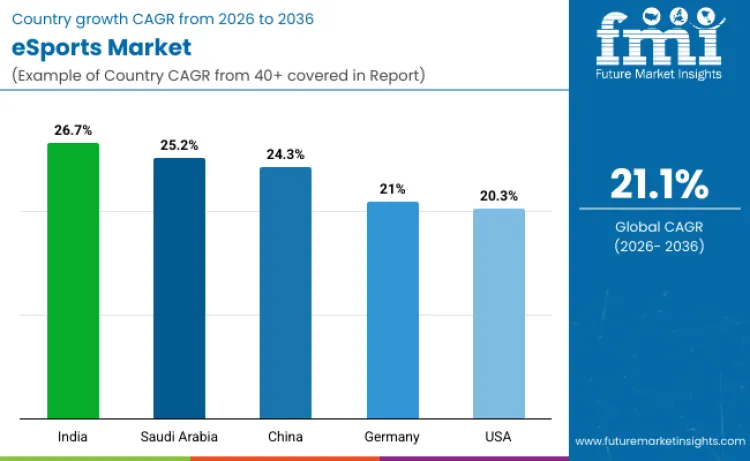
The global eSports market is accelerating due to rising mobile gaming adoption, increased sponsorship investment, and expanding streaming platforms. India leads with a 26.7% CAGR, fueled by affordable smartphones, 5G network expansion, and mobile-first competitive titles like PUBG Mobile and Free Fire. China follows at 24.3%, powered by government-backed professional leagues and dominance of Tencent and NetEase games. Saudi Arabia shows a 25.2% CAGR with Vision 2030 initiatives, esports festivals, and local team development. Germany grows at 21.0%, driven by Gamescom, professional teams, and robust infrastructure. The USA records 20.3% CAGR, supported by professional leagues, streaming platforms, and high broadband penetration.
| Country | CAGR |
|---|---|
| India | 26.7% |
| China | 24.3% |
| Saudi Arabia | 25.2% |
| Germany | 21.0% |
| USA | 20.3% |
How Is India Shaping eSports Demand Through Mobile Gaming and Sponsorships?
India’s eSports market, expanding at 26.7% CAGR, is propelled by widespread smartphone adoption, affordable internet, and 5G rollout. Mobile-first titles dominate tournaments, while streaming platforms like YouTube Gaming and Loco provide monetization channels. Government initiatives like Digital India and Startup India support gaming startups, infrastructure, and professional leagues. Sponsorships from global brands such as Red Bull, Intel, and ASUS fuel investments. Growing youth engagement and regional tournaments strengthen grassroots eSports. Combined with rising internet penetration and mobile gaming accessibility, India is positioned as the fastest-growing eSports market through 2036.
What Factors Are Driving China’s eSports Market Expansion?
China’s eSports market is growing at a 24.3% CAGR, led by over 500 million online gamers and strong government support for professional leagues. Top developers like Tencent and NetEase dominate competitive titles, while franchised leagues such as the League of Legends Pro League set global standards. Investments in arenas, training facilities, and cloud gaming infrastructure expand participation. Widespread 5G adoption and mobile gaming accessibility boost player engagement. Revenue streams from sponsorship, media rights, and live streaming further drive growth. China’s policy backing, digital ecosystem, and gamer culture ensure sustained market expansion through 2036.
Why Is Saudi Arabia Emerging as a High-Growth eSports Market?
Saudi Arabia posts a 25.2% CAGR in eSports, driven by Vision 2030 investments and government-backed digital entertainment initiatives. Events like Gamers8, professional teams like Team Falcons, and investment in 5G networks support competitive play and streaming quality. Sponsorships from global companies including Activision Blizzard, Electronic Arts, and Nintendo strengthen local leagues. Youth engagement, mobile and console gaming accessibility, and digital infrastructure growth contribute to adoption. The country’s focus on professional leagues, esports schools, and cloud gaming platforms makes Saudi Arabia a strategic and rapidly growing eSports market through 2036.
How Is Germany Supporting eSports Through Infrastructure and Events?
Germany’s eSports market grows at a 21.0% CAGR, fueled by a strong gaming audience exceeding 44 million, government support, and world-class infrastructure. International events like Gamescom, local competitive teams, and professional studios such as Crytek and Ubisoft Blue Byte drive engagement. Streaming platforms and tournaments across PC and console maintain robust sponsorship and revenue streams. Investment in digital infrastructure, professional gaming education, and audience development underpins sustained growth. Germany’s combination of infrastructure, policy support, and a vibrant gaming ecosystem positions it as a leading European eSports market through 2036.
What Is Driving the USA’s eSports Market Growth?
The USA’s eSports market records a 20.3% CAGR, anchored by professional leagues including the Call of Duty League and Overwatch League, alongside streaming platforms such as Twitch and YouTube Gaming. Over 215 million gamers, high broadband penetration, and corporate investments drive market expansion. Mobile, console, and PC tournaments attract sponsorships from Nike, Red Bull, and other global brands. Cloud gaming, 5G adoption, and enhanced streaming infrastructure improve participation and engagement. Continuous innovation in gaming content, infrastructure, and professional development ensures the USA remains a top eSports market through 2036.
How Are Companies Competing in the Global eSports Market?
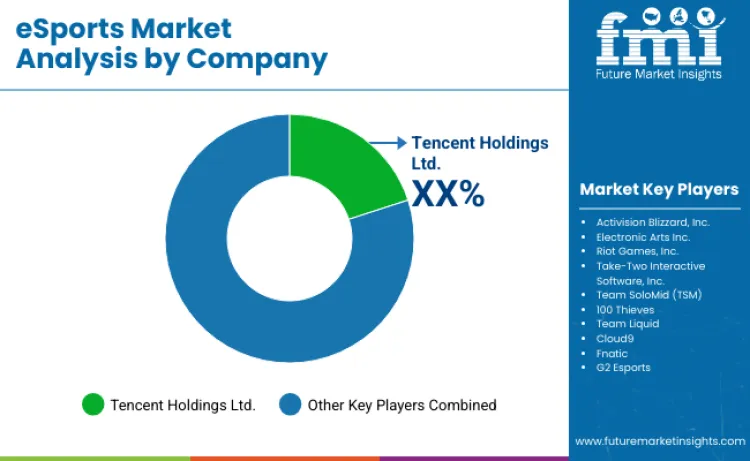
The global eSports market is highly dynamic, driven by major event organizers, professional leagues, and team operators competing to attract fans, sponsors, and media partnerships. Leading organizations such as ESL FACEIT Group, Qiddiya, and Oddin.gg maintain strong positions by delivering large-scale tournaments, global streaming coverage, and innovative fan engagement experiences. Their expertise in event management and digital platform integration enables them to create high-impact, interactive competitions that appeal to audiences worldwide.
Sponsors and brand partnerships play a crucial role in shaping competition. Companies like Adidas, Pepsi, LG UltraGear, and Jaguar Land Rover collaborate with events and leagues to enhance visibility and reach, making sponsorship alignment a key differentiator. Organizations that can build strong, mutually beneficial partnerships with top brands tend to gain a competitive edge in market positioning and fan loyalty.
Emerging players and regional teams are also influencing the industry by offering niche events, localized fan experiences, and innovative content formats. This creates pressure on established operators to continuously improve production quality, streaming technology, and audience interaction.
Market dynamics favor organizations that can combine high-quality event production, engaging digital experiences, and strong brand collaborations. Differentiation through unique tournaments, compelling storytelling, and interactive fan features is essential. Cybersecurity management and content integrity have become critical components of maintaining trust and sustaining competitive advantage in the fast-growing eSports ecosystem.
Key Market Players
- Tencent Holdings Ltd.
- Activision Blizzard, Inc.
- Electronic Arts Inc.
- Riot Games, Inc.
- Take-Two Interactive Software, Inc.
- Team SoloMid (TSM)
- 100 Thieves
- Team Liquid
- Cloud9
- Fnatic
- G2 Esports
- FaZe Clan
- NRG Esports
- Gen.G Esports
- Envy Gaming
- Evil Geniuses
- SK Telecom T1
- OpTic Gaming
- ESL Gaming
Scope of Report
| Attribute | Details |
|---|---|
| Current Market Value (2026) | USD 4.5 billion |
| Projected Market Value (2036) | USD 30.7 billion |
| Forecast CAGR (2026 to 2036) | 21.1% |
| Market Analysis Parameters | Revenue in USD billion |
| By Game Genre | Multiplayer Online Battle Arena (MOBA), First-Person Shooter (FPS), Battle Royale, Sports Simulation, Fighting Games, Real-Time Strategy (RTS), Racing Games |
| By Platform | PC-based eSports, Console-based eSports, Mobile eSports |
| By Revenue Stream | Sponsorships & Advertising, Media Rights, Merchandise & Ticket Sales, Publisher Fees, Streaming Revenue, Prize Pool & Wagering |
| Regions Covered | North America, Latin America, East Asia, South Asia & Pacific, Western Europe, Eastern Europe, Middle East & Africa |
| Countries Covered | United States, Japan, Germany, India, United Kingdom, France, Italy, Brazil, Canada, South Korea, Australia, Spain, Netherlands, Saudi Arabia, Switzerland |
| Key Players | Team SoloMid (TSM), 100 Thieves, Team Liquid, Cloud9, Fnatic, G2 Esports, FaZe Clan, NRG Esports, Gen.G Esports, Envy Gaming |
| Additional Attributes | Integration of AR/VR technologies, Cloud gaming platforms, 5G connectivity, AI-driven analytics, eSports in education |
Key Segments
By Application:
- Platform
- Service
By Streaming Type:
- On-demand
- Live
By Revenue Stream:
- Media Rights
- Game Publisher Fee
- Sponsorship
- Digital Advertisement
- Tickets and Merchandise
By Region:
- North America
- Latin America
- Europe
- Asia Pacific
- Middle East and Africa
Frequently Asked Questions
What is the future of the global eSports industry?
The global eSports industry is projected to grow at a CAGR of 21.1% between 2026 and 2036.
What will the worth of the global eSports industry be in 2026?
The global eSports industry is estimated to be valued at USD 4.5 billion in 2026.
What will the worth of the global eSports industry be by 2036?
The global eSports industry is anticipated to reach USD 30.7 billion by 2036.
Which region is predicted to showcase the highest CAGR during the forecast period?
South Asia & Pacific is expected to record the highest CAGR of 23.4% between 2026 and 2036.
Who are the key manufacturers in the global eSports industry?
The key players operating in the global eSports industry include Electronic Arts Inc., Riot Games, Tencent Holding Limited, Activision Blizzard, Inc., Microsoft, Google, Valve Corporation, Modern Times Group (MTG), NVIDIA Corporation, and HTC Corporation.
Preview the report firsthand - request a free sample
Get SampleGet the brochure for pricing and purchase details.
Get PDFTable of Content
- Executive Summary
- Industry Overview 2026 to 2036
- Key Market Highlights
- Growth Drivers and Opportunities
- Market Overview
- Introduction to eSports Industry
- Market Definition and Scope
- Industry Taxonomy
- Forecast Assumptions and Indicators
- Market Background
- Global Player Base and Fan Engagement
- Digital Infrastructure and Mobile Penetration
- Regulatory and Policy Frameworks
- Technological Trends in Gaming and Streaming
- eSports Market Analysis 2026 to 2036
- Market Value and Revenue Forecast
- Segment-wise Growth Assessment
- Country-Level Market Trends
- Platform and Genre Adoption Trends
- Market Pricing and Revenue Streams
- Sponsorship and Advertising Trends
- Media Rights Valuation
- Merchandise and Ticket Revenue
- Publisher Fees and Streaming Revenue
- Market Structure Analysis
- Value Chain Overview
- Revenue Generation Models
- Competitive Landscape and Strategies
- Segmentation Analysis by Game Genre
- MOBA (Multiplayer Online Battle Arena)
- First-Person Shooter (FPS)
- Battle Royale
- Sports Simulation
- Fighting Games
- Real-Time Strategy (RTS)
- Racing Games
- Segmentation Analysis by Platform
- PC-based eSports
- Console-based eSports
- Mobile eSports
- Segmentation Analysis by Revenue Stream
- Sponsorships and Advertising
- Media Rights
- Merchandise and Ticket Sales
- Publisher Fees
- Streaming Revenue
- Prize Pool and Wagering
- Regional and Country Analysis
- North America
- Latin America
- East Asia
- South Asia & Pacific
- Western Europe
- Eastern Europe
- Middle East & Africa
- Key Country Growth Assessment
- India
- China
- Saudi Arabia
- Germany
- United States
- Competitive Analysis
- Market Share by Key Players
- Company Profiles and Strategies
- Emerging Players and Niche Segments
- Technological Innovations
- AR/VR Integration
- Cloud Gaming Platforms
- 5G Connectivity
- AI and Analytics Applications
- Assumptions and Acronyms
- Research Methodology


