

- Industry Size (2026)
- USD 1.2 Bn
- Forecast (2036)
- USD 3.3 Bn
- CAGR (2026 to 2036)
- 10.8%
Fermentation-Engineered Monomers for Compostable Film and Rigid Packaging Market Forecast and Outlook 2026 to 2036
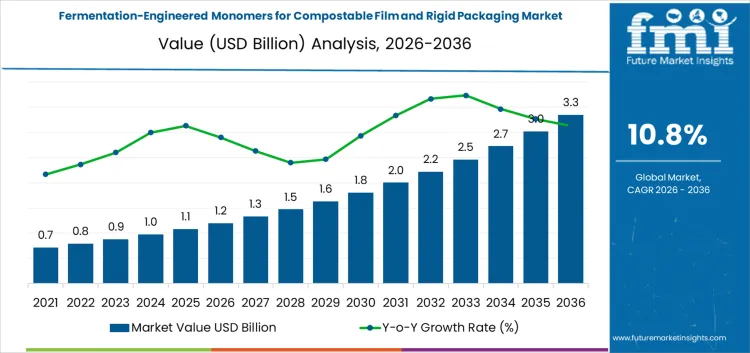
The Fermentation-Engineered Monomers for Compostable Film and Rigid Packaging market is projected to grow from USD 1.2 billion in 2026 to USD 3.3 billion by 2036, reflecting a compound annual growth rate (CAGR) of 10.8%. Dominant players in this market defend their pricing power through economies of scale, advanced R&D, and established production processes, which allow them to offer competitive pricing while maintaining product quality. High entry barriers, including the significant capital investment required for fermentation technology and regulatory approvals, limit new entrants and allow established players to secure a strong foothold. Additionally, the complexity of meeting both sustainability goals and packaging performance standards further restricts market access. Despite these challenges, fragmentation persists, particularly in the early stages of market development, as smaller players focus on niche applications or regional markets. Over time, this fragmentation may narrow as larger players consolidate market share, but innovation and strategic partnerships will continue to drive competition in specific segments.
Quick Stats of the Fermentation-Engineered Monomers for Compostable Film and Rigid Packaging Market
- Fermentation-Engineered Monomers for Compostable Film and Rigid Packaging Market Value (2026): USD 1.2 billion
- Fermentation-Engineered Monomers for Compostable Film and Rigid Packaging Market Forecast Value (2036): USD 3.3 billion
- Fermentation-Engineered Monomers for Compostable Film and Rigid Packaging Market Global Forecast CAGR (2026-2036): 10.8%
- Fermentation-Engineered Monomers for Compostable Film and Rigid Packaging Market Leading Segment: Packaging Type (Compostable Films & Flexible Packaging) 50%
- Key Growth Regions in Fermentation-Engineered Monomers for Compostable Film and Rigid Packaging Market: USA
- Top Players in Fermentation-Engineered Monomers for Compostable Film and Rigid Packaging Market: NatureWorks LLC, Danimer Scientific, TotalEnergies Corbion, Novamont S.p.A., BASF SE, Arkema (Bio-Based Chemicals), Biomer (PHA producers), CJ Biomaterials, Futamura Chemical Co., Ltd., Trellis Earth Products
What is the Growth Forecast for the Fermentation-Engineered Monomers for Compostable Film and Rigid Packaging Market through 2036?
The 5-year growth block analysis for the fermentation-engineered monomers for compostable film and rigid packaging market reveals strong acceleration in the first half of the forecast period, followed by more stable growth as the market matures. From 2026 to 2031, the market will grow from USD 1.2 billion to USD 2.1 billion, reflecting an increase of USD 0.9 billion over the first five years. This early growth is driven by rising consumer demand for sustainable packaging solutions and regulatory pressures to reduce plastic waste, alongside innovations in fermentation technology that enhance the performance and scalability of compostable packaging.
In the second half of the forecast period, from 2031 to 2036, the market will continue to grow, reaching USD 3.3 billion by 2036, reflecting an absolute growth of USD 1.2 billion. This phase will see more predictable, stable growth as fermentation-engineered monomers become widely adopted across industries seeking eco-friendly alternatives. The focus will shift from early adoption to mainstream integration of compostable films and packaging, with the market benefiting from continued improvements in production efficiency, cost competitiveness, and consumer acceptance of sustainable materials.
Fermentation-Engineered Monomers for Compostable Film and Rigid Packaging Market Key Takeaways
| Metric | Value |
|---|---|
| Industry Sales Value (2026) | USD 1.2 billion |
| Industry Forecast Value (2036) | USD 3.3 billion |
| Industry Forecast CAGR (2026 to 2036) | 10.8% |
What Is Driving the Demand for Fermentation-Engineered Monomers for Compostable Film and Rigid Packaging?
Historical demand for fermentation-engineered monomers has been shaped by the broader shift from fossil-derived plastics to bio-based and biodegradable polymer materials in packaging applications. Conventional plastics used in films, containers, and rigid packaging were developed in the 20th century and dominated the market due to performance and cost advantages. Growing environmental concern about plastic waste accumulation and regulatory pressures on single-use fossil plastics prompted research into renewable alternatives that can break down under composting conditions. Bio-based monomers such as lactic acid and related cyclic esters are produced via microbial fermentation of carbohydrate feedstocks such as corn, sugarcane, or biomass, and these monomers serve as precursors for bioplastic polyesters like polylactic acid (PLA), which are compostable under industrial conditions. PLA has become one of the most commercially viable biodegradable polyesters for packaging films and rigid containers, with production processes that start from fermentation of feedstocks into lactic acid and then polymerise into usable biopolymers. Other microbial fermentation routes yield polyhydroxyalkanoates (PHAs), a family of biodegradable polyesters derived directly from bacterial fermentation that can be tailored for films and compostable rigid packaging. These developments reflected increasing integration of fermentation technology into polymer precursor supply chains and rising interest in renewable packaging materials supported by standardisation and compostability criteria.
Future demand for fermentation-engineered monomers for compostable film and rigid packaging is expected to grow as sustainability imperatives and policy frameworks tighten around plastic waste and lifecycle carbon impact. Bioplastics derived from fermentation-sourced monomers offer pathways to reduce reliance on petrochemical feedstocks and to meet industrial compostability standards, making them relevant for applications where end-of-life recovery and biodegradability are priorities. Growth factors include increasing regulatory restrictions on single-use plastics and incentives for bio-based content in packaging, rising corporate commitments to lower carbon footprints, and advances in fermentation and metabolic engineering that improve yields and cost-competitiveness of renewable monomers. Technical challenges remain in balancing performance properties, production costs, and scalability, but ongoing development in microbial pathways and feedstock diversification supports broader commercialisation. The compostable packaging sector, including films and rigid formats, is influenced by these drivers as industries seek sustainable alternatives capable of satisfying both functional requirements and environmental compliance.
What are the Leading Segments in the Global Fermentation-Engineered Monomers for Compostable Film and Rigid Packaging Market?
The global fermentation-engineered monomers for compostable film and rigid packaging market is segmented by packaging type and end-use application. Among packaging types, compostable films & flexible packaging lead the market, capturing 50% of the share, followed by rigid compostable containers, blown/extruded compostable sheets, and specialty compostable packaging formats. Compostable films and flexible packaging are favored for their versatility and wide application in various industries. On the end-use application side, food & beverage packaging dominates the market, holding 46% of the share, followed by consumer goods & e-commerce packaging, personal care & cosmetics packaging, and industrial & specialty compostable packaging. Food & beverage packaging leads due to the increasing demand for sustainable packaging alternatives in the food industry.
What Drives the Growth of Compostable Films & Flexible Packaging in the Fermentation-Engineered Monomers for Compostable Film and Rigid Packaging Market?
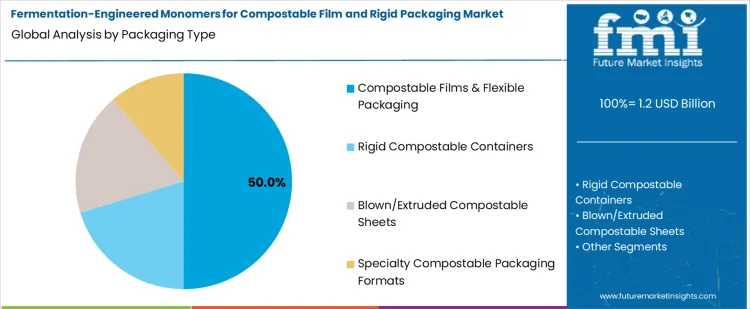
Compostable films & flexible packaging are the leading packaging type in the fermentation-engineered monomers for compostable film and rigid packaging market, holding 50% of the share. This growth is driven by the increasing demand for sustainable packaging solutions in response to the growing concerns over plastic waste and environmental pollution. Flexible packaging is widely used in the food and beverage industry due to its lightweight, cost-effective, and versatile nature. Compostable films made from fermentation-engineered monomers offer an eco-friendly alternative to traditional plastic films, providing the same functionality while being biodegradable or compostable after use. As consumers and companies alike focus on reducing their carbon footprint and waste, the adoption of compostable films is accelerating. Additionally, regulatory pressures on single-use plastics are pushing industries to adopt compostable solutions that align with sustainability goals. Compostable films' ability to maintain food safety, reduce environmental impact, and meet consumer demand for eco-friendly products is ensuring their continued dominance in the market.
What is Driving the Demand for Food & Beverage Packaging in the Fermentation-Engineered Monomers for Compostable Film and Rigid Packaging Market?
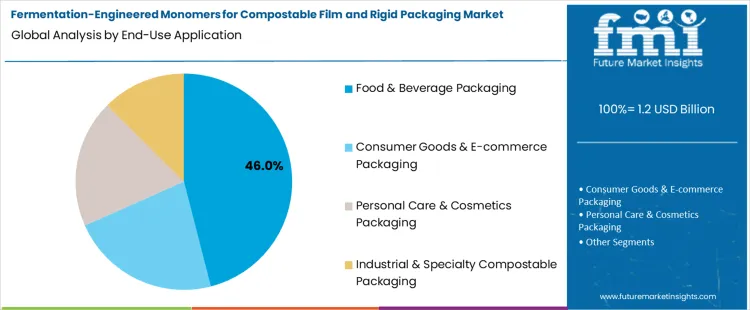
Food & beverage packaging is the leading end-use application in the fermentation-engineered monomers for compostable film and rigid packaging market, capturing 46% of the share. This demand is driven by the food and beverage sector’s growing commitment to sustainability and the increasing consumer preference for eco-friendly packaging options. The food and beverage industry is one of the largest contributors to plastic waste, and as a result, there is a strong push toward adopting compostable and biodegradable packaging alternatives. Fermentation-engineered monomers enable the creation of compostable films and rigid containers that offer the necessary barrier properties to protect food products, ensuring freshness and safety while also meeting sustainability targets. With growing awareness about environmental issues and increasing regulations around plastic packaging, companies in the food and beverage sector are prioritizing the use of compostable materials. This demand is expected to continue rising as brands seek to align with consumer preferences for sustainable packaging, further boosting the adoption of fermentation-engineered monomers in food and beverage packaging applications.
What are the Key Dynamics in the Fermentation-Engineered Monomers for Compostable Film and Rigid Packaging Market?
The fermentation-engineered monomers for compostable film and rigid packaging market is defined by the transition from petrochemical monomers to bio-derived alternatives that support end-of-life compostability. These monomers are produced through controlled microbial processes and serve as building blocks for polymers used in flexible films and rigid packaging components. End users assess products on criteria such as molecular consistency, mechanical performance, and compatibility with existing processing technologies. Regulatory frameworks that encourage renewable content and mandate compostability influence adoption. Feedstock supply, fermentation technology development, and downstream polymer manufacturing capacity shape how these monomers are commercialised.
What are the Main Drivers Supporting Growth in This Market?
Growth in this market is driven by regulatory and industry efforts to reduce reliance on fossil-based plastics and mitigate plastic waste. Standards and policies promoting compostable materials in packaging applications encourage investment in fermentation-derived monomer pathways. Consumer demand for packaging that can return safely to biological cycles supports uptake in both flexible and rigid formats. Advances in fermentation engineering, including improved strain performance and process yields, enhance production economics. Collaboration between biotechnology providers and material manufacturers helps align monomer properties with application requirements, reinforcing market relevance.
What Restraints Are Limiting Market Expansion?
High production costs for fermentation-engineered monomers compared with traditional petrochemical counterparts continue to constrain broader uptake. Variability in biomass feedstock availability and quality affects consistency and cost predictability of bio-derived monomer production. Technical challenges in scaling fermentation processes to industrial levels can slow commercial deployment. Integration of new monomers into existing polymerisation lines may require processing adjustments, adding complexity for packaging producers. Differences in regional compostability standards and certification frameworks can create compliance challenges for suppliers seeking global market reach.
What Emerging Trends Are Shaping the Future of This Market?
Emerging trends include improvements in microbial strain design and metabolic engineering that increase monomer yields and broaden the range of achievable chemical structures. Development of hybrid biopolymer systems that blend fermentation-derived monomers with other renewable materials is gaining interest to enhance performance. Digital tools for lifecycle analysis and material selection are being used to compare environmental impacts and support procurement decisions. Partnerships between research institutions, material scientists, and packaging brands are advancing application-specific solutions. There is rising interest in aligning compostable monomer supply chains with broader circular economy initiatives focused on reducing waste and enabling biological regeneration of materials.
What is the Country-Wise Analysis of the Fermentation-Engineered Monomers for Compostable Film and Rigid Packaging Market?
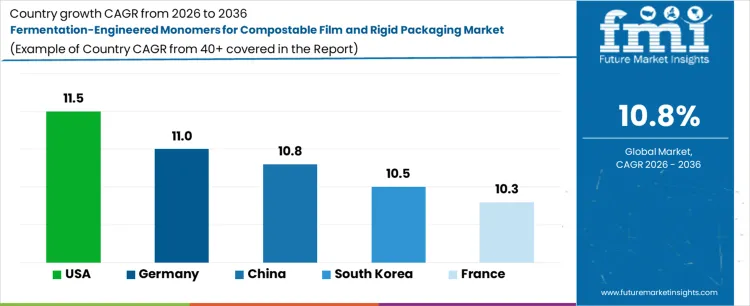
The fermentation-engineered monomers for compostable film and rigid packaging market is expanding rapidly due to the increasing demand for sustainable packaging solutions. These monomers, derived through fermentation processes, are used to create compostable films and packaging materials that reduce reliance on conventional plastics and minimize environmental impact. Developed markets such as the USA, Germany, and France are seeing strong demand for these compostable packaging materials due to their focus on sustainability and regulatory measures aimed at reducing plastic waste. Emerging markets like China and South Korea are also witnessing growth, driven by increasing environmental awareness, government initiatives promoting sustainable packaging, and the need for eco-friendly solutions in manufacturing. As global efforts to reduce plastic pollution and promote a circular economy gain momentum, the market for fermentation-engineered monomers in compostable packaging is expected to grow substantially.
| Country | CAGR (2026-2036) |
|---|---|
| USA | 11.5% |
| Germany | 11% |
| China | 10.8% |
| South Korea | 10.5% |
| France | 10.3% |
What is the Growth Outlook for the Fermentation-Engineered Monomers for Compostable Film and Rigid Packaging Market in the USA?
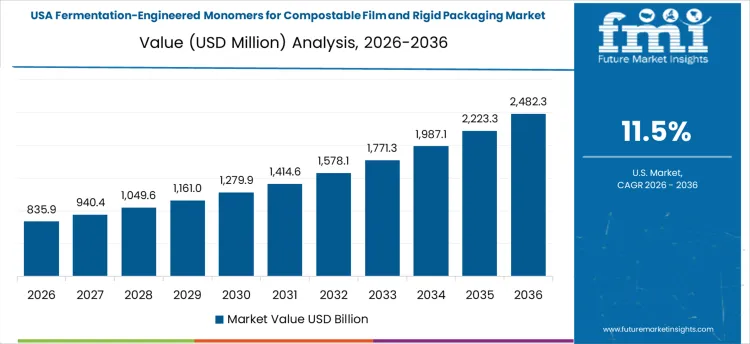
The fermentation-engineered monomers for compostable film and rigid packaging market in the USA is projected to grow steadily, with a projected CAGR of 11.5% from 2026 to 2036. The U.S. is a global leader in sustainability, with growing consumer demand for eco-friendly packaging solutions. As concerns about plastic pollution continue to rise, there is an increasing shift toward compostable and biodegradable packaging alternatives. The U.S. government’s support for environmental regulations and circular economy initiatives, combined with the country’s focus on reducing plastic waste, is driving the adoption of fermentation-engineered monomers in packaging applications. The market is expected to grow steadily as industries across the USA, including food and beverage, cosmetics, and electronics, embrace compostable films and rigid packaging solutions that are derived from sustainable sources.
What is the Market Outlook for the Fermentation-Engineered Monomers for Compostable Film and Rigid Packaging Market in Germany?
Germany is expected to see steady growth in the fermentation-engineered monomers for compostable film and rigid packaging market, with a projected CAGR of 11% from 2026 to 2036. Germany is a global leader in sustainability and green technologies, and the demand for compostable packaging materials is rising as the country pushes for more sustainable packaging solutions. The German government has introduced strict regulations on plastic waste and is actively supporting the adoption of biodegradable and compostable materials. As consumer demand for environmentally friendly packaging increases, industries in Germany, including food and beverage, cosmetics, and consumer electronics, are increasingly turning to compostable films and rigid packaging derived from fermentation-engineered monomers. With a strong regulatory framework supporting sustainability, the market for compostable packaging in Germany is expected to grow steadily.
What is the Growth Forecast for the Fermentation-Engineered Monomers for Compostable Film and Rigid Packaging Market in China?
China is projected to experience steady growth in the fermentation-engineered monomers for compostable film and rigid packaging market, with a projected CAGR of 10.8% from 2026 to 2036. As one of the largest producers of plastic products, China is increasingly focused on reducing plastic pollution and adopting more sustainable packaging alternatives. The government’s push for green development and circular economy practices is driving the demand for compostable and biodegradable packaging solutions. Fermentation-engineered monomers, used to create compostable films and rigid packaging, are gaining popularity in China’s rapidly expanding food, beverage, and retail industries. As the country seeks to balance economic growth with environmental sustainability, the market for these eco-friendly packaging solutions is expected to grow steadily in the coming years.
What is the Market Outlook for the Fermentation-Engineered Monomers for Compostable Film and Rigid Packaging Market in South Korea?
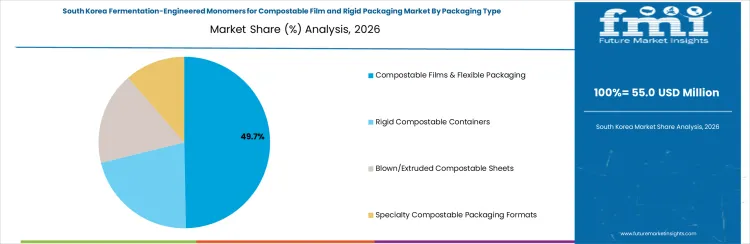
South Korea is expected to see steady growth in the fermentation-engineered monomers for compostable film and rigid packaging market, with a projected CAGR of 10.5% from 2026 to 2036. South Korea has long been committed to sustainability and is increasingly focusing on reducing plastic waste and adopting green technologies in packaging. The market for compostable packaging, including films and rigid packaging made from fermentation-engineered monomers, is growing as South Korean businesses and consumers demand more environmentally responsible alternatives to conventional plastic packaging. Government policies encouraging the use of biodegradable materials, along with consumer awareness of environmental issues, will continue to drive the adoption of these packaging solutions in South Korea. The market for fermentation-engineered monomers is expected to grow steadily, supporting the country’s commitment to sustainability and environmental protection.
What is the Growth Forecast for the Fermentation-Engineered Monomers for Compostable Film and Rigid Packaging Market in France?
France is projected to experience steady growth in the fermentation-engineered monomers for compostable film and rigid packaging market, with a projected CAGR of 10.3% from 2026 to 2036. As a leader in sustainability, France is focused on reducing plastic waste and promoting the use of environmentally friendly packaging materials. The French government has implemented strong regulations to reduce plastic waste and encourage the adoption of biodegradable and compostable materials. With the growing demand for sustainable packaging, industries such as food and beverage, cosmetics, and personal care are increasingly turning to compostable films and rigid packaging derived from fermentation-engineered monomers. The market is expected to continue growing as consumer preferences shift towards eco-friendly products, and as France strengthens its commitment to sustainable packaging solutions.
What is the Competitive Landscape for the Fermentation-Engineered Monomers for Compostable Film and Rigid Packaging Market?
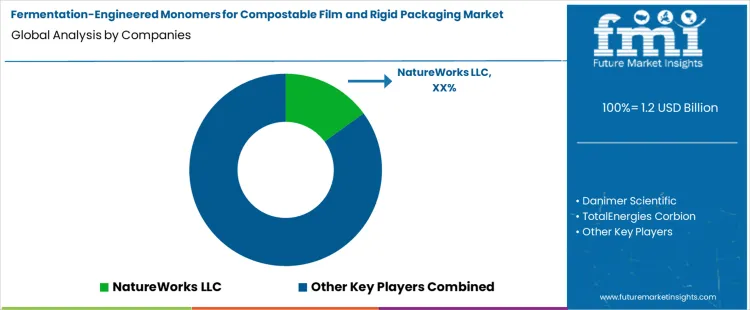
The fermentation-engineered monomers for compostable film and rigid packaging market is growing as the demand for sustainable packaging solutions increases, driven by consumer awareness and regulatory pressure to reduce plastic waste. NatureWorks LLC leads the market with its innovative fermentation-derived monomers, offering high-performance compostable materials used in films and rigid packaging applications. Their focus on sustainability, product innovation, and reducing environmental impact has positioned them as a dominant player in the sector. Danimer Scientific, TotalEnergies Corbion, and Novamont S.p.A. are key competitors, each offering specialized fermentation-engineered monomers designed to create compostable and biodegradable packaging. Danimer Scientific focuses on developing polyhydroxyalkanoate (PHA)-based bioplastics, while TotalEnergies Corbion combines fermentation processes with their advanced polymer technologies to offer sustainable packaging solutions. Novamont S.p.A. is known for its bioplastics derived from renewable resources, contributing to compostable packaging innovation.
BASF SE, Arkema (Bio-Based Chemicals), and Biomer (PHA producers) further contribute to the competitive landscape by offering their own fermentation-engineered monomers for compostable packaging. BASF SE provides sustainable material solutions that focus on compostability, while Arkema develops bio-based chemicals for sustainable plastic alternatives. Biomer specializes in producing PHA-based bioplastics that are biodegradable and compostable. CJ Biomaterials, Futamura Chemical Co., Ltd., and Trellis Earth Products round out the competition with their advanced bio-based and fermentation-engineered solutions for compostable film and rigid packaging applications. These companies compete by focusing on product performance, sustainability, and meeting the growing demand for eco-friendly packaging solutions. As the global push for sustainability in packaging intensifies, the market for fermentation-engineered monomers is expected to grow, driving further innovation and competition in the sector.
Key Players of the Fermentation-Engineered Monomers for Compostable Film and Rigid Packaging Market
- NatureWorks LLC
- Danimer Scientific
- TotalEnergies Corbion
- Novamont S.p.A.
- BASF SE
- Arkema (Bio‑Based Chemicals)
- Biomer (PHA producers)
- CJ Biomaterials
- Futamura Chemical Co., Ltd.
- Trellis Earth Products
Scope of the Report
| Items | Values |
|---|---|
| Quantitative Units (2026) | USD Billion |
| Feedstock Type | Polylactic Acid (PLA) Precursors, Polyhydroxyalkanoate (PHA) Monomers, Bio-Diols & Glycols (e.g., Bio-1,4-BD), Other Fermentation-Derived Monomers, Compostable Copolymer Precursors (e.g., PBAT blends) |
| Packaging Type | Compostable Films & Flexible Packaging, Rigid Compostable Containers, Blown/Extruded Compostable Sheets, Specialty Compostable Packaging Formats |
| End-Use Application | Food & Beverage Packaging, Consumer Goods & E-commerce Packaging, Personal Care & Cosmetics Packaging, Industrial & Specialty Compostable Packaging |
| Companies | NatureWorks LLC, Danimer Scientific, TotalEnergies Corbion, Novamont S.p.A., BASF SE, Arkema (Bio-Based Chemicals), Biomer (PHA producers), CJ Biomaterials, Futamura Chemical Co., Ltd., Trellis Earth Products |
| Regions Covered | North America, Latin America, Western Europe, Eastern Europe, South Asia & Pacific, East Asia, Middle East & Africa |
| Countries Covered | United States, Canada, Mexico, Brazil, Argentina, Germany, France, United Kingdom, Italy, Spain, Netherlands, China, India, Japan, South Korea, ANZ, GCC Countries, South Africa |
| Additional Attributes | Dollar sales by feedstock type, packaging type, end-use application, and region. Includes analysis of market trends in fermentation-engineered monomers for compostable film and rigid packaging, performance of fermentation-derived biopolymers such as PLA and PHA in packaging applications, cost and feedstock sourcing dynamics, regulatory and environmental frameworks affecting compostable materials adoption, competitive positioning and market share of key companies, innovations in monomer fermentation and compostable copolymer precursor technologies, and evaluation of impact on product performance, sustainability credentials, and lifecycle outcomes. |
Fermentation-Engineered Monomers for Compostable Film and Rigid Packaging Market Segmentation
Feedstock Type
- Polylactic Acid (PLA) Precursors
- Polyhydroxyalkanoate (PHA) Monomers
- Bio-Diols & Glycols (e.g., Bio-1,4-BD)
- Other Fermentation-Derived Monomers
- Compostable Copolymer Precursors (e.g., PBAT blends)
Packaging Type
- Compostable Films & Flexible Packaging
- Rigid Compostable Containers
- Blown/Extruded Compostable Sheets
- Specialty Compostable Packaging Formats
End-Use Application
- Food & Beverage Packaging
- Consumer Goods & E-commerce Packaging
- Personal Care & Cosmetics Packaging
- Industrial & Specialty Compostable Packaging
Region
- Asia Pacific
- China
- Japan
- South Korea
- India
- Australia & New Zealand
- ASEAN
- Rest of Asia Pacific
- Europe
- Germany
- United Kingdom
- France
- Italy
- Spain
- Nordic
- BENELUX
- Rest of Europe
- North America
- United States
- Canada
- Mexico
- Latin America
- Brazil
- Chile
- Rest of Latin America
- Middle East & Africa
- Kingdom of Saudi Arabia
- Other GCC Countries
- Turkey
- South Africa
- Other African Union
- Rest of Middle East & Africa
Frequently Asked Questions
How big is the fermentation-engineered monomers for compostable film and rigid packaging market in 2026?
The global fermentation-engineered monomers for compostable film and rigid packaging market is estimated to be valued at USD 1.2 billion in 2026.
What will be the size of fermentation-engineered monomers for compostable film and rigid packaging market in 2036?
The market size for the fermentation-engineered monomers for compostable film and rigid packaging market is projected to reach USD 3.3 billion by 2036.
How much will be the fermentation-engineered monomers for compostable film and rigid packaging market growth between 2026 and 2036?
The fermentation-engineered monomers for compostable film and rigid packaging market is expected to grow at a 10.8% CAGR between 2026 and 2036.
What are the key feedstock types in the fermentation-engineered monomers for compostable film and rigid packaging market?
The key feedstock types in fermentation-engineered monomers for compostable film and rigid packaging market are polylactic acid (PLA) precursors, polyhydroxyalkanoate (PHA) monomers, bio-diols & glycols (e.g., bio-1,4-BD), other fermentation-derived monomers, and compostable copolymer precursors (e.g., PBAT blends).
Which packaging type segment to contribute significant share in the fermentation-engineered monomers for compostable film and rigid packaging market in 2026?
In terms of packaging type, compostable films & flexible packaging segment to command 50.0% share in the fermentation-engineered monomers for compostable film and rigid packaging market in 2026.
Preview the report firsthand - request a free sample
Get SampleGet the brochure for pricing and purchase details.
Get PDFTable of Content
- Executive Summary
- Global Market Outlook
- Demand-side Trends
- Supply-side Trends
- Technology Roadmap Analysis
- Analysis and Recommendations
- Market Overview
- Market Coverage / Taxonomy
- Market Definition / Scope / Limitations
- Market Background
- Market Dynamics
- Drivers
- Restraints
- Opportunity
- Trends
- Scenario Forecast
- Demand in Optimistic Scenario
- Demand in Likely Scenario
- Demand in Conservative Scenario
- Opportunity Map Analysis
- Product Life Cycle Analysis
- Supply Chain Analysis
- Investment Feasibility Matrix
- Value Chain Analysis
- PESTLE and Porter’s Analysis
- Regulatory Landscape
- Regional Parent Market Outlook
- Production and Consumption Statistics
- Import and Export Statistics
- Market Dynamics
- Global Market Analysis 2021 to 2025 and Forecast, 2026 to 2036
- Historical Market Size Value (USD Million) Analysis, 2021 to 2025
- Current and Future Market Size Value (USD Million) Projections, 2026 to 2036
- Y-o-Y Growth Trend Analysis
- Absolute $ Opportunity Analysis
- Global Market Pricing Analysis 2021 to 2025 and Forecast 2026 to 2036
- Global Market Analysis 2021 to 2025 and Forecast 2026 to 2036, By Feedstock Type
- Introduction / Key Findings
- Historical Market Size Value (USD Million) Analysis By Feedstock Type , 2021 to 2025
- Current and Future Market Size Value (USD Million) Analysis and Forecast By Feedstock Type , 2026 to 2036
- Polylactic Acid (PLA) Precursors
- Polyhydroxyalkanoate (PHA) Monomers
- Bio‑Diols & Glycols (e.g., Bio‑1,4‑BD)
- Other Fermentation‑Derived Monomers
- Compostable Copolymer Precursors (e.g., PBAT blends)
- Polylactic Acid (PLA) Precursors
- Y-o-Y Growth Trend Analysis By Feedstock Type , 2021 to 2025
- Absolute $ Opportunity Analysis By Feedstock Type , 2026 to 2036
- Global Market Analysis 2021 to 2025 and Forecast 2026 to 2036, By Packaging Type
- Introduction / Key Findings
- Historical Market Size Value (USD Million) Analysis By Packaging Type, 2021 to 2025
- Current and Future Market Size Value (USD Million) Analysis and Forecast By Packaging Type, 2026 to 2036
- Compostable Films & Flexible Packaging
- Rigid Compostable Containers
- Blown/Extruded Compostable Sheets
- Specialty Compostable Packaging Formats
- Compostable Films & Flexible Packaging
- Y-o-Y Growth Trend Analysis By Packaging Type, 2021 to 2025
- Absolute $ Opportunity Analysis By Packaging Type, 2026 to 2036
- Global Market Analysis 2021 to 2025 and Forecast 2026 to 2036, By End‑Use Application
- Introduction / Key Findings
- Historical Market Size Value (USD Million) Analysis By End‑Use Application, 2021 to 2025
- Current and Future Market Size Value (USD Million) Analysis and Forecast By End‑Use Application, 2026 to 2036
- Food & Beverage Packaging
- Consumer Goods & E‑commerce Packaging
- Personal Care & Cosmetics Packaging
- Industrial & Specialty Compostable Packaging
- Food & Beverage Packaging
- Y-o-Y Growth Trend Analysis By End‑Use Application, 2021 to 2025
- Absolute $ Opportunity Analysis By End‑Use Application, 2026 to 2036
- Global Market Analysis 2021 to 2025 and Forecast 2026 to 2036, By Region
- Introduction
- Historical Market Size Value (USD Million) Analysis By Region, 2021 to 2025
- Current Market Size Value (USD Million) Analysis and Forecast By Region, 2026 to 2036
- North America
- Latin America
- Western Europe
- Eastern Europe
- East Asia
- South Asia and Pacific
- Middle East & Africa
- Market Attractiveness Analysis By Region
- North America Market Analysis 2021 to 2025 and Forecast 2026 to 2036, By Country
- Historical Market Size Value (USD Million) Trend Analysis By Market Taxonomy, 2021 to 2025
- Market Size Value (USD Million) Forecast By Market Taxonomy, 2026 to 2036
- By Country
- USA
- Canada
- Mexico
- By Feedstock Type
- By Packaging Type
- By End‑Use Application
- By Country
- Market Attractiveness Analysis
- By Country
- By Feedstock Type
- By Packaging Type
- By End‑Use Application
- Key Takeaways
- Latin America Market Analysis 2021 to 2025 and Forecast 2026 to 2036, By Country
- Historical Market Size Value (USD Million) Trend Analysis By Market Taxonomy, 2021 to 2025
- Market Size Value (USD Million) Forecast By Market Taxonomy, 2026 to 2036
- By Country
- Brazil
- Chile
- Rest of Latin America
- By Feedstock Type
- By Packaging Type
- By End‑Use Application
- By Country
- Market Attractiveness Analysis
- By Country
- By Feedstock Type
- By Packaging Type
- By End‑Use Application
- Key Takeaways
- Western Europe Market Analysis 2021 to 2025 and Forecast 2026 to 2036, By Country
- Historical Market Size Value (USD Million) Trend Analysis By Market Taxonomy, 2021 to 2025
- Market Size Value (USD Million) Forecast By Market Taxonomy, 2026 to 2036
- By Country
- Germany
- UK
- Italy
- Spain
- France
- Nordic
- BENELUX
- Rest of Western Europe
- By Feedstock Type
- By Packaging Type
- By End‑Use Application
- By Country
- Market Attractiveness Analysis
- By Country
- By Feedstock Type
- By Packaging Type
- By End‑Use Application
- Key Takeaways
- Eastern Europe Market Analysis 2021 to 2025 and Forecast 2026 to 2036, By Country
- Historical Market Size Value (USD Million) Trend Analysis By Market Taxonomy, 2021 to 2025
- Market Size Value (USD Million) Forecast By Market Taxonomy, 2026 to 2036
- By Country
- Russia
- Poland
- Hungary
- Balkan & Baltic
- Rest of Eastern Europe
- By Feedstock Type
- By Packaging Type
- By End‑Use Application
- By Country
- Market Attractiveness Analysis
- By Country
- By Feedstock Type
- By Packaging Type
- By End‑Use Application
- Key Takeaways
- East Asia Market Analysis 2021 to 2025 and Forecast 2026 to 2036, By Country
- Historical Market Size Value (USD Million) Trend Analysis By Market Taxonomy, 2021 to 2025
- Market Size Value (USD Million) Forecast By Market Taxonomy, 2026 to 2036
- By Country
- China
- Japan
- South Korea
- By Feedstock Type
- By Packaging Type
- By End‑Use Application
- By Country
- Market Attractiveness Analysis
- By Country
- By Feedstock Type
- By Packaging Type
- By End‑Use Application
- Key Takeaways
- South Asia and Pacific Market Analysis 2021 to 2025 and Forecast 2026 to 2036, By Country
- Historical Market Size Value (USD Million) Trend Analysis By Market Taxonomy, 2021 to 2025
- Market Size Value (USD Million) Forecast By Market Taxonomy, 2026 to 2036
- By Country
- India
- ASEAN
- Australia & New Zealand
- Rest of South Asia and Pacific
- By Feedstock Type
- By Packaging Type
- By End‑Use Application
- By Country
- Market Attractiveness Analysis
- By Country
- By Feedstock Type
- By Packaging Type
- By End‑Use Application
- Key Takeaways
- Middle East & Africa Market Analysis 2021 to 2025 and Forecast 2026 to 2036, By Country
- Historical Market Size Value (USD Million) Trend Analysis By Market Taxonomy, 2021 to 2025
- Market Size Value (USD Million) Forecast By Market Taxonomy, 2026 to 2036
- By Country
- Kingdom of Saudi Arabia
- Other GCC Countries
- Turkiye
- South Africa
- Other African Union
- Rest of Middle East & Africa
- By Feedstock Type
- By Packaging Type
- By End‑Use Application
- By Country
- Market Attractiveness Analysis
- By Country
- By Feedstock Type
- By Packaging Type
- By End‑Use Application
- Key Takeaways
- Key Countries Market Analysis
- USA
- Pricing Analysis
- Market Share Analysis, 2025
- By Feedstock Type
- By Packaging Type
- By End‑Use Application
- Canada
- Pricing Analysis
- Market Share Analysis, 2025
- By Feedstock Type
- By Packaging Type
- By End‑Use Application
- Mexico
- Pricing Analysis
- Market Share Analysis, 2025
- By Feedstock Type
- By Packaging Type
- By End‑Use Application
- Brazil
- Pricing Analysis
- Market Share Analysis, 2025
- By Feedstock Type
- By Packaging Type
- By End‑Use Application
- Chile
- Pricing Analysis
- Market Share Analysis, 2025
- By Feedstock Type
- By Packaging Type
- By End‑Use Application
- Germany
- Pricing Analysis
- Market Share Analysis, 2025
- By Feedstock Type
- By Packaging Type
- By End‑Use Application
- UK
- Pricing Analysis
- Market Share Analysis, 2025
- By Feedstock Type
- By Packaging Type
- By End‑Use Application
- Italy
- Pricing Analysis
- Market Share Analysis, 2025
- By Feedstock Type
- By Packaging Type
- By End‑Use Application
- Spain
- Pricing Analysis
- Market Share Analysis, 2025
- By Feedstock Type
- By Packaging Type
- By End‑Use Application
- France
- Pricing Analysis
- Market Share Analysis, 2025
- By Feedstock Type
- By Packaging Type
- By End‑Use Application
- India
- Pricing Analysis
- Market Share Analysis, 2025
- By Feedstock Type
- By Packaging Type
- By End‑Use Application
- ASEAN
- Pricing Analysis
- Market Share Analysis, 2025
- By Feedstock Type
- By Packaging Type
- By End‑Use Application
- Australia & New Zealand
- Pricing Analysis
- Market Share Analysis, 2025
- By Feedstock Type
- By Packaging Type
- By End‑Use Application
- China
- Pricing Analysis
- Market Share Analysis, 2025
- By Feedstock Type
- By Packaging Type
- By End‑Use Application
- Japan
- Pricing Analysis
- Market Share Analysis, 2025
- By Feedstock Type
- By Packaging Type
- By End‑Use Application
- South Korea
- Pricing Analysis
- Market Share Analysis, 2025
- By Feedstock Type
- By Packaging Type
- By End‑Use Application
- Russia
- Pricing Analysis
- Market Share Analysis, 2025
- By Feedstock Type
- By Packaging Type
- By End‑Use Application
- Poland
- Pricing Analysis
- Market Share Analysis, 2025
- By Feedstock Type
- By Packaging Type
- By End‑Use Application
- Hungary
- Pricing Analysis
- Market Share Analysis, 2025
- By Feedstock Type
- By Packaging Type
- By End‑Use Application
- Kingdom of Saudi Arabia
- Pricing Analysis
- Market Share Analysis, 2025
- By Feedstock Type
- By Packaging Type
- By End‑Use Application
- Turkiye
- Pricing Analysis
- Market Share Analysis, 2025
- By Feedstock Type
- By Packaging Type
- By End‑Use Application
- South Africa
- Pricing Analysis
- Market Share Analysis, 2025
- By Feedstock Type
- By Packaging Type
- By End‑Use Application
- USA
- Market Structure Analysis
- Competition Dashboard
- Competition Benchmarking
- Market Share Analysis of Top Players
- By Regional
- By Feedstock Type
- By Packaging Type
- By End‑Use Application
- Competition Analysis
- Competition Deep Dive
- NatureWorks LLC
- Overview
- Product Portfolio
- Profitability by Market Segments (Product/Age /Sales Channel/Region)
- Sales Footprint
- Strategy Overview
- Marketing Strategy
- Product Strategy
- Channel Strategy
- Danimer Scientific
- TotalEnergies Corbion
- Novamont S.p.A.
- BASF SE
- Arkema (Bio‑Based Chemicals)
- Biomer (PHA producers)
- CJ Biomaterials
- Futamura Chemical Co., Ltd.
- Trellis Earth Products
- NatureWorks LLC
- Competition Deep Dive
- Assumptions & Acronyms Used
- Research Methodology


