

- Industry Size (2026)
- USD 0.72 Bn
- Forecast (2036)
- USD 1.39 Bn
- CAGR (2026 to 2036)
- 6.8%
Glass Frosting for Packaging Market Size, Market Forecast and Outlook By FMI
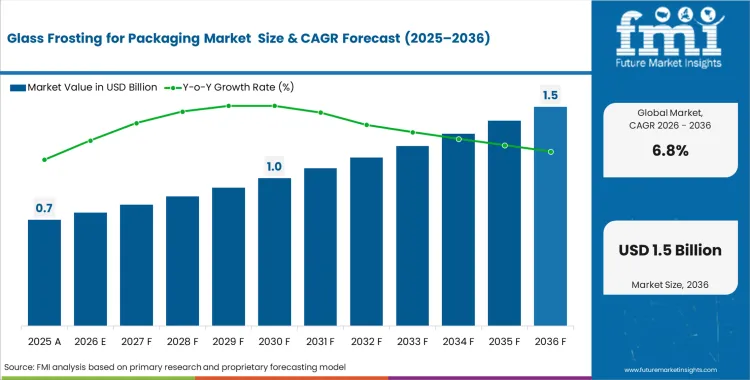
The glass frosting for packaging market was valued at USD 0.68 billion in 2025. The market is projected to reach USD 0.72 billion in 2026 and USD 1.39 billion by 2036, expanding at a CAGR of 6.8% during the forecast period. Spray frosting is expected to lead process type demand with a 34.2% share in 2026. Bottles are projected to remain the leading packaging format with a 51.6% share in 2026. Fragrances are expected to lead end-use demand with a 31.4% share in 2026.
Summary of Glass Frosting for Packaging Market
- Market Snapshot
- The glass frosting for packaging market is valued at USD 0.68 billion in 2025 and is projected to reach USD 1.39 billion by 2036.
- The industry is expected to grow at a 6.8% CAGR from 2026 to 2036, creating an incremental opportunity of USD 0.71 billion.
- The market remains a premium-packaging decoration category, where finish consistency and design execution shape competitiveness.
- Demand and Growth Drivers
- Premium fragrance and beauty brands are using frosted glass to strengthen shelf distinction.
- Decorative demand is increasing as brands pair matte finishes with printing or metallized details.
- Glass keeps its premium image in personal care and beverages, which supports spending on surface decoration.
- Product and Segment View
- The market covers acid-etched, spray-frosted, sandblasted, and hybrid matte finishes applied to bottles, jars, vials, and flacons.
- Spray frosting is expected to lead process type demand with a 34.2% share in 2026.
- Bottles are projected to remain the leading packaging format with a 51.6% share in 2026.
- Geography and Competitive Outlook
- Fragrances are expected to lead end-use demand with a 31.4% share in 2026.
- The report covers North America, Latin America, Western Europe, Eastern Europe, East Asia, South Asia and Pacific, and Middle East and Africa.
- Competition is being shaped by finish precision, repeatability, and integration with adjacent decoration steps.
- Analyst Opinion
- Ismail Sutaria, Senior Consultant at FMI says, "Glass frosting matters where the pack has to signal value before the product is used. The market is expanding as brands treat frosting as part of pack architecture, especially in fragrance and prestige beauty."
Glass Frosting for Packaging Market Definition
The glass frosting for packaging market includes matte and translucent surface-finishing processes applied to packaging-grade glass containers to improve visual softness, tactile quality, and brand distinction. It covers acid etching, spray frosting, sandblasting, masked pattern frosting, and hybrid decorative combinations used on bottles, jars, flacons, and vials. These finishes serve fragrance, cosmetics, premium beverages, pharmaceuticals, and selected specialty-packaging applications where the look of the container influences perceived value.
Glass Frosting for Packaging Market Inclusions
- Sales of decorative frosting and etched-matte finishing services applied to packaging-grade glass containers.
- Revenue from bottles, jars, flacons, vials, and related rigid-pack formats finished through frosting processes.
- Commercial demand across global regions for premium brand packaging programs that use frosted glass presentation.
Glass Frosting for Packaging Market Exclusions
- Architectural, interior, and tabletop decorative glass applications not intended for packaging use.
- Undecorated commodity glass container sales without frosting or matte finishing value addition.
- Plastic, ceramic, or metal decoration processes that do not involve packaging-grade glass.
Glass Frosting for Packaging Market Research Methodology
This study evaluates glass frosting for packaging demand by process type, packaging format, and end-use industry with 2025 as the base year and 2026 to 2036 as the forecast period in value terms. Inputs include packaging regulations, technical references on glass-packaging manufacturing, and company disclosures from premium glass suppliers and decorators. Market estimates are derived through triangulation of premium-pack conversion rates, decoration intensity in beauty and fragrance packaging, rigid-glass usage in selected beverage categories, and outsourcing patterns between glassmakers and decoration specialists.
Key Drivers, Restraints, and Trends in Glass Frosting for Packaging Market
Drivers
Glass frosting is gaining ground because premium brands keep spending on surfaces that lift perceived value without redesigning the base container. In fragrance and prestige beauty, the pack is part of the product story, so finish quality influences how consumers read price position. Frosting also works well with printing and hot stamping, which supports richer decoration programs. The rise of limited editions and gifting formats is adding another layer of demand.
Restraints
Demand remains narrower than mainstream glass packaging because frosting is an added finish rather than a baseline requirement. Process control is critical, since streaking or uneven opacity is visible immediately. Acid-based routes also bring handling and compliance burdens. In more price-sensitive packaging, that extra spend is often hard to justify.
Trends
The market is moving toward finish combinations rather than single-effect decoration. Frosted glass is increasingly paired with sharp graphics, metallic accents, and controlled gradients. Shorter premium runs are also supporting demand, especially in fragrance and beauty. Competitive differentiation is shifting toward repeatable quality and the ability to handle small batches without visible variation.
Segmental Analysis
Glass Frosting for Packaging Market Analysis by Process Type
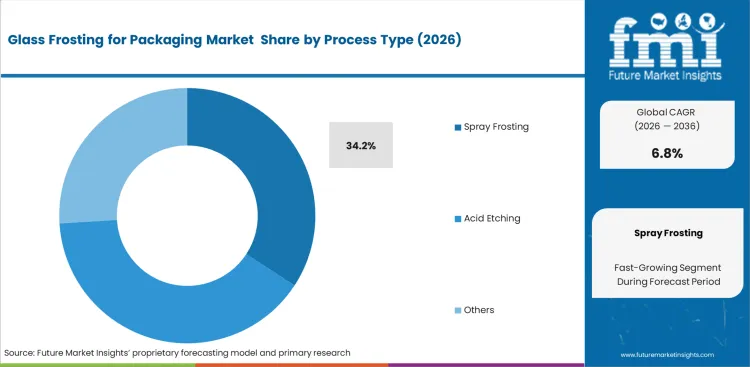
Spray frosting is expected to account for 34.2% of market value in 2026 because it offers decorators good visual control and fits well with multi-step decoration programs. It also supports partial coverage and gradient effects without changing bottle geometry. The segment benefits from premium fragrance and beauty programs where finish precision matters more than raw output.
Glass Frosting for Packaging Market Analysis by End Use Industry
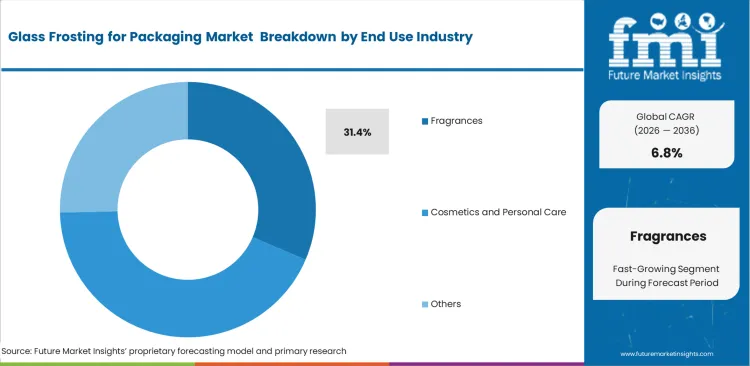
Fragrances are projected to hold 31.4% of demand in 2026 because bottle appearance carries unusual commercial importance in that category. Frosting helps fragrance brands communicate softness and premium positioning while preserving the structure and weight associated with glass. The segment also benefits from gifting occasions, where decorative differentiation matters.
Competitive Aligners for Market Players
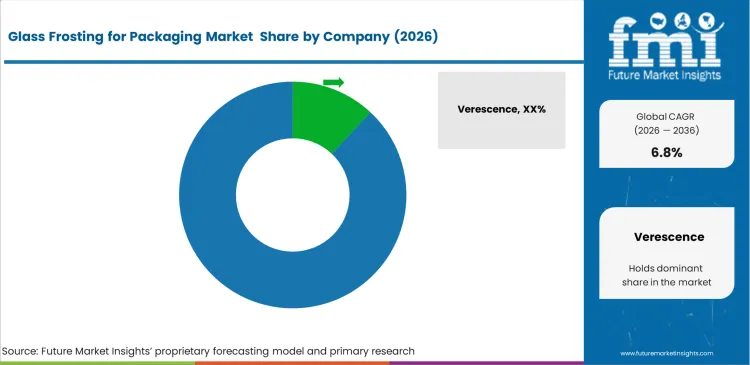
The market is being shaped by decoration capability and customer intimacy. Buyers want partners that can deliver a consistent matte finish across repeat runs and manage reject rates. That favors suppliers with strong process discipline and close coordination between glassmaking and decoration.
Scale still matters, but it matters most when it helps brands launch programs with fewer quality surprises. Large glass groups hold an advantage when they can pair container engineering with decoration support. Specialist decorators remain competitive when they offer tighter finish control or better short-run flexibility. Consequently, competition is centering on execution quality and service reliability, not on capacity alone.
Key Players in Glass Frosting for Packaging Market
- Verescence
- Heinz-Glas
- Pochet du Courval
- SGD Pharma
- Berlin Packaging
- Piramal Glass
- Calaso
- Bormioli Luigi
- Stoelzle Glass Group
- Saverglass
Strategic Outlook by FMI on Glass Frosting for Packaging Market
FMI views glass frosting for packaging as a premium-value niche with healthy expansion potential rather than a mass-volume decorative process. The next phase of growth is likely to come from brands that treat surface finish as part of pack architecture rather than as an extra embellishment. Companies that combine finish precision, batch flexibility, and integration with adjacent decoration steps are likely to shape the market's profit pool through 2036.
Scope of the Report
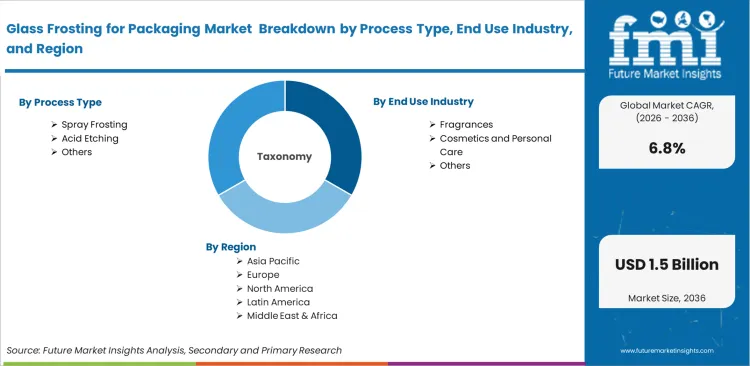
| Metric | Value |
|---|---|
| Market Value | USD 0.68 billion in 2025 to USD 1.39 billion by 2036 |
| CAGR | 6.8% from 2026 to 2036 |
| Base Year | 2025 |
| Forecast Period | 2026 to 2036 |
| Process Type Segmentation | Acid Etching, Spray Frosting, Sandblasting, Hybrid Decoration, Others |
| Packaging Format Segmentation | Bottles, Jars, Vials, Flacons, Others |
| End Use Industry Segmentation | Fragrances, Cosmetics and Personal Care, Premium Beverages, Pharmaceuticals, Others |
| Regions Covered | North America, Latin America, Western Europe, Eastern Europe, East Asia, South Asia and Pacific, Middle East and Africa |
Bibliography
- FEVE. n.d. The Glass Packaging Industry.
- European Commission. 2025. Packaging and Packaging Waste Regulation 2025/40.
- USA Food and Drug Administration. 1999. Guidance for Industry: Container Closure Systems for Packaging Human Drugs and Biologics.
- Verescence. 2025. Sustainability Report 2024-2025.
- HEINZ-GLAS. n.d. Decoration.
- Bormioli Luigi. n.d. Decoration
Frequently Asked Questions
How big is the glass frosting for packaging market?
The glass frosting for packaging market is valued at USD 0.68 billion in 2025 and is projected to reach USD 1.39 billion by 2036.
What is the CAGR of the glass frosting for packaging market?
The glass frosting for packaging market is expected to expand at a CAGR of 6.8% from 2026 to 2036.
Which process type leads the glass frosting for packaging market?
Spray frosting is expected to lead the glass frosting for packaging market by process type with a 34.2% share in 2026.
Which packaging format leads the glass frosting for packaging market?
Bottles are projected to remain the leading packaging format in the glass frosting for packaging market with a 51.6% share in 2026.
Which end-use industry leads the glass frosting for packaging market?
Fragrances are expected to lead end-use demand in the glass frosting for packaging market with a 31.4% share in 2026.
What is driving growth in the glass frosting for packaging market?
Growth in the glass frosting for packaging market is being supported by premium-pack differentiation, demand for tactile decoration, and continued use of glass in prestige personal care and fragrance packaging.
Who are the key companies in the glass frosting for packaging market?
Key companies in the glass frosting for packaging market include Verescence, Heinz-Glas, Pochet du Courval, SGD Pharma, Berlin Packaging, Piramal Glass, and Bormioli Luigi.
Preview the report firsthand - request a free sample
Get SampleGet the brochure for pricing and purchase details.
Get PDFTable of Content
- Executive Summary
- Global Market Outlook
- Demand-side Trends
- Supply-side Trends
- Technology Roadmap Analysis
- Analysis and Recommendations
- Market Overview
- Market Coverage / Taxonomy
- Market Definition / Scope / Limitations
- Research Methodology
- Chapter Orientation
- Analytical Lens and Working Hypotheses
- Market Structure, Signals, and Trend Drivers
- Benchmarking and Cross-market Comparability
- Market Sizing, Forecasting, and Opportunity Mapping
- Research Design and Evidence Framework
- Desk Research Programme (Secondary Evidence)
- Company Annual and Sustainability Reports
- Peer-reviewed Journals and Academic Literature
- Corporate Websites, Product Literature, and Technical Notes
- Earnings Decks and Investor Briefings
- Statutory Filings and Regulatory Disclosures
- Technical White Papers and Standards Notes
- Trade Journals, Industry Magazines, and Analyst Briefs
- Conference Proceedings, Webinars, and Seminar Materials
- Government Statistics Portals and Public Data Releases
- Press Releases and Reputable Media Coverage
- Specialist Newsletters and Curated Briefings
- Sector Databases and Reference Repositories
- FMI Internal Proprietary Databases and Historical Market Datasets
- Subscription Datasets and Paid Sources
- Social Channels, Communities, and Digital Listening Inputs
- Additional Desk Sources
- Expert Input and Fieldwork (Primary Evidence)
- Primary Modes
- Qualitative Interviews and Expert Elicitation
- Quantitative Surveys and Structured Data Capture
- Blended Approach
- Why Primary Evidence is Used
- Field Techniques
- Interviews
- Surveys
- Focus Groups
- Observational and In-context Research
- Social and Community Interactions
- Stakeholder Universe Engaged
- C-suite Leaders
- Board Members
- Presidents and Vice Presidents
- R&D and Innovation Heads
- Technical Specialists
- Domain Subject-matter Experts
- Scientists
- Physicians and Other Healthcare Professionals
- Governance, Ethics, and Data Stewardship
- Research Ethics
- Data Integrity and Handling
- Primary Modes
- Tooling, Models, and Reference Databases
- Desk Research Programme (Secondary Evidence)
- Data Engineering and Model Build
- Data Acquisition and Ingestion
- Cleaning, Normalisation, and Verification
- Synthesis, Triangulation, and Analysis
- Quality Assurance and Audit Trail
- Market Background
- Market Dynamics
- Drivers
- Restraints
- Opportunity
- Trends
- Scenario Forecast
- Demand in Optimistic Scenario
- Demand in Likely Scenario
- Demand in Conservative Scenario
- Opportunity Map Analysis
- Product Life Cycle Analysis
- Supply Chain Analysis
- Investment Feasibility Matrix
- Value Chain Analysis
- PESTLE and Porter’s Analysis
- Regulatory Landscape
- Regional Parent Market Outlook
- Production and Consumption Statistics
- Import and Export Statistics
- Market Dynamics
- Global Market Analysis 2021 to 2025 and Forecast, 2026 to 2036
- Historical Market Size Value (USD Million) Analysis, 2021 to 2025
- Current and Future Market Size Value (USD Million) Projections, 2026 to 2036
- Y-o-Y Growth Trend Analysis
- Absolute $ Opportunity Analysis
- Global Market Pricing Analysis 2021 to 2025 and Forecast 2026 to 2036
- Global Market Analysis 2021 to 2025 and Forecast 2026 to 2036, By Process Type
- Introduction / Key Findings
- Historical Market Size Value (USD Million) Analysis By Process Type , 2021 to 2025
- Current and Future Market Size Value (USD Million) Analysis and Forecast By Process Type , 2026 to 2036
- Spray Frosting
- Acid Etching
- Others
- Spray Frosting
- Y-o-Y Growth Trend Analysis By Process Type , 2021 to 2025
- Absolute $ Opportunity Analysis By Process Type , 2026 to 2036
- Global Market Analysis 2021 to 2025 and Forecast 2026 to 2036, By End Use Industry
- Introduction / Key Findings
- Historical Market Size Value (USD Million) Analysis By End Use Industry, 2021 to 2025
- Current and Future Market Size Value (USD Million) Analysis and Forecast By End Use Industry, 2026 to 2036
- Fragrances
- Cosmetics and Personal Care
- Others
- Fragrances
- Y-o-Y Growth Trend Analysis By End Use Industry, 2021 to 2025
- Absolute $ Opportunity Analysis By End Use Industry, 2026 to 2036
- Global Market Analysis 2021 to 2025 and Forecast 2026 to 2036, By Region
- Introduction
- Historical Market Size Value (USD Million) Analysis By Region, 2021 to 2025
- Current Market Size Value (USD Million) Analysis and Forecast By Region, 2026 to 2036
- North America
- Latin America
- Western Europe
- Eastern Europe
- East Asia
- South Asia and Pacific
- Middle East & Africa
- Market Attractiveness Analysis By Region
- North America Market Analysis 2021 to 2025 and Forecast 2026 to 2036, By Country
- Historical Market Size Value (USD Million) Trend Analysis By Market Taxonomy, 2021 to 2025
- Market Size Value (USD Million) Forecast By Market Taxonomy, 2026 to 2036
- By Country
- USA
- Canada
- Mexico
- By Process Type
- By End Use Industry
- By Country
- Market Attractiveness Analysis
- By Country
- By Process Type
- By End Use Industry
- Key Takeaways
- Latin America Market Analysis 2021 to 2025 and Forecast 2026 to 2036, By Country
- Historical Market Size Value (USD Million) Trend Analysis By Market Taxonomy, 2021 to 2025
- Market Size Value (USD Million) Forecast By Market Taxonomy, 2026 to 2036
- By Country
- Brazil
- Chile
- Rest of Latin America
- By Process Type
- By End Use Industry
- By Country
- Market Attractiveness Analysis
- By Country
- By Process Type
- By End Use Industry
- Key Takeaways
- Western Europe Market Analysis 2021 to 2025 and Forecast 2026 to 2036, By Country
- Historical Market Size Value (USD Million) Trend Analysis By Market Taxonomy, 2021 to 2025
- Market Size Value (USD Million) Forecast By Market Taxonomy, 2026 to 2036
- By Country
- Germany
- UK
- Italy
- Spain
- France
- Nordic
- BENELUX
- Rest of Western Europe
- By Process Type
- By End Use Industry
- By Country
- Market Attractiveness Analysis
- By Country
- By Process Type
- By End Use Industry
- Key Takeaways
- Eastern Europe Market Analysis 2021 to 2025 and Forecast 2026 to 2036, By Country
- Historical Market Size Value (USD Million) Trend Analysis By Market Taxonomy, 2021 to 2025
- Market Size Value (USD Million) Forecast By Market Taxonomy, 2026 to 2036
- By Country
- Russia
- Poland
- Hungary
- Balkan & Baltic
- Rest of Eastern Europe
- By Process Type
- By End Use Industry
- By Country
- Market Attractiveness Analysis
- By Country
- By Process Type
- By End Use Industry
- Key Takeaways
- East Asia Market Analysis 2021 to 2025 and Forecast 2026 to 2036, By Country
- Historical Market Size Value (USD Million) Trend Analysis By Market Taxonomy, 2021 to 2025
- Market Size Value (USD Million) Forecast By Market Taxonomy, 2026 to 2036
- By Country
- China
- Japan
- South Korea
- By Process Type
- By End Use Industry
- By Country
- Market Attractiveness Analysis
- By Country
- By Process Type
- By End Use Industry
- Key Takeaways
- South Asia and Pacific Market Analysis 2021 to 2025 and Forecast 2026 to 2036, By Country
- Historical Market Size Value (USD Million) Trend Analysis By Market Taxonomy, 2021 to 2025
- Market Size Value (USD Million) Forecast By Market Taxonomy, 2026 to 2036
- By Country
- India
- ASEAN
- Australia & New Zealand
- Rest of South Asia and Pacific
- By Process Type
- By End Use Industry
- By Country
- Market Attractiveness Analysis
- By Country
- By Process Type
- By End Use Industry
- Key Takeaways
- Middle East & Africa Market Analysis 2021 to 2025 and Forecast 2026 to 2036, By Country
- Historical Market Size Value (USD Million) Trend Analysis By Market Taxonomy, 2021 to 2025
- Market Size Value (USD Million) Forecast By Market Taxonomy, 2026 to 2036
- By Country
- Kingdom of Saudi Arabia
- Other GCC Countries
- Turkiye
- South Africa
- Other African Union
- Rest of Middle East & Africa
- By Process Type
- By End Use Industry
- By Country
- Market Attractiveness Analysis
- By Country
- By Process Type
- By End Use Industry
- Key Takeaways
- Key Countries Market Analysis
- USA
- Pricing Analysis
- Market Share Analysis, 2025
- By Process Type
- By End Use Industry
- Canada
- Pricing Analysis
- Market Share Analysis, 2025
- By Process Type
- By End Use Industry
- Mexico
- Pricing Analysis
- Market Share Analysis, 2025
- By Process Type
- By End Use Industry
- Brazil
- Pricing Analysis
- Market Share Analysis, 2025
- By Process Type
- By End Use Industry
- Chile
- Pricing Analysis
- Market Share Analysis, 2025
- By Process Type
- By End Use Industry
- Germany
- Pricing Analysis
- Market Share Analysis, 2025
- By Process Type
- By End Use Industry
- UK
- Pricing Analysis
- Market Share Analysis, 2025
- By Process Type
- By End Use Industry
- Italy
- Pricing Analysis
- Market Share Analysis, 2025
- By Process Type
- By End Use Industry
- Spain
- Pricing Analysis
- Market Share Analysis, 2025
- By Process Type
- By End Use Industry
- France
- Pricing Analysis
- Market Share Analysis, 2025
- By Process Type
- By End Use Industry
- India
- Pricing Analysis
- Market Share Analysis, 2025
- By Process Type
- By End Use Industry
- ASEAN
- Pricing Analysis
- Market Share Analysis, 2025
- By Process Type
- By End Use Industry
- Australia & New Zealand
- Pricing Analysis
- Market Share Analysis, 2025
- By Process Type
- By End Use Industry
- China
- Pricing Analysis
- Market Share Analysis, 2025
- By Process Type
- By End Use Industry
- Japan
- Pricing Analysis
- Market Share Analysis, 2025
- By Process Type
- By End Use Industry
- South Korea
- Pricing Analysis
- Market Share Analysis, 2025
- By Process Type
- By End Use Industry
- Russia
- Pricing Analysis
- Market Share Analysis, 2025
- By Process Type
- By End Use Industry
- Poland
- Pricing Analysis
- Market Share Analysis, 2025
- By Process Type
- By End Use Industry
- Hungary
- Pricing Analysis
- Market Share Analysis, 2025
- By Process Type
- By End Use Industry
- Kingdom of Saudi Arabia
- Pricing Analysis
- Market Share Analysis, 2025
- By Process Type
- By End Use Industry
- Turkiye
- Pricing Analysis
- Market Share Analysis, 2025
- By Process Type
- By End Use Industry
- South Africa
- Pricing Analysis
- Market Share Analysis, 2025
- By Process Type
- By End Use Industry
- USA
- Market Structure Analysis
- Competition Dashboard
- Competition Benchmarking
- Market Share Analysis of Top Players
- By Regional
- By Process Type
- By End Use Industry
- Competition Analysis
- Competition Deep Dive
- Verescence
- Overview
- Product Portfolio
- Profitability by Market Segments (Product/Age /Sales Channel/Region)
- Sales Footprint
- Strategy Overview
- Marketing Strategy
- Product Strategy
- Channel Strategy
- Heinz-Glas
- Pochet du Courval
- SGD Pharma
- Berlin Packaging
- Piramal Glass
- Verescence
- Competition Deep Dive
- Assumptions & Acronyms Used


