

- Industry Size (2026)
- USD 68.6 Mn
- Forecast (2036)
- USD 97.7 Mn
- CAGR (2026 to 2036)
- 3.6%
Demand for Beer Line Cooling System in Japan Forecast and Outlook 2026 to 2036
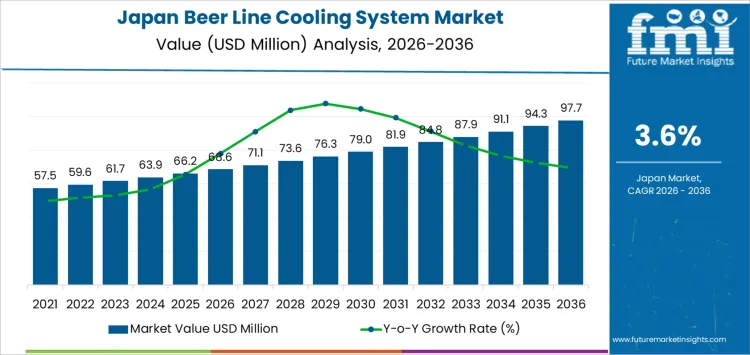
Demand for beer line cooling systems in Japan is growing steadily, projected to increase from USD 68.6 million in 2026 to USD 97.7 million in 2036, at a 3.6% CAGR. Glycol-based systems dominate the segment, accounting for 60% of demand due to their efficiency in maintaining consistent beer temperatures over long distances. These systems are particularly favored in establishments with multiple taps, such as restaurants and bars, ensuring optimal beer temperature and quality. As the craft beer culture grows, these cooling systems are becoming essential for maintaining the freshness of beer in various commercial environments.
Quick Stats of the Demand for Beer Line Cooling System in Japan
- Demand for Beer Line Cooling System in Japan Value (2026): USD 68.6 million
- Demand for Beer Line Cooling System in Japan Forecast Value (2036): USD 97.7 million
- Demand for Beer Line Cooling System in Japan Forecast CAGR (2026 to 2036): 3.6%
- Demand for Beer Line Cooling System in Japan Leading System Type: Glycol-based System
- Demand for Beer Line Cooling System in Japan Key Growth Regions: Kyushu & Okinawa, Kanto, Kansai, Chubu, Tohoku, Rest of Japan
- Demand for Beer Line Cooling System in Japan Top Players: KegWorks, Chicago Faucets, Beerjet, Elkay Manufacturing Company, Continental Refrigerator
In terms of application, restaurants account for 35% of the demand, driven by the need to maintain high-quality draft beer. The growing interest in craft beer and the increasing number of establishments offering draft beer are key drivers for this demand. By end-use, draft beer cooling systems are preferred over bottled beer, reflecting the rise in demand for freshly brewed beer.
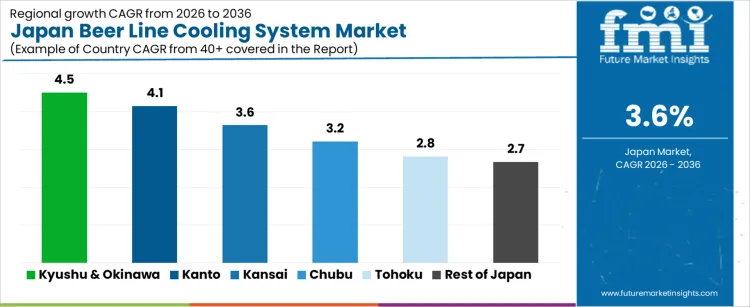
Regionally, Kyushu & Okinawa leads with a 4.5% CAGR, driven by a growing hospitality and tourism industry. Kanto follows with a 4.1% CAGR, bolstered by its urban population and vibrant craft beer scene. Other regions like Kansai, Chubu, and Tohoku also show steady growth, driven by an expanding beer culture and the adoption of advanced cooling solutions in bars, restaurants, and breweries.
Demand for Beer Line Cooling System in Japan Key Takeaways
| Metric | Value |
|---|---|
| Demand for Beer Line Cooling System in Japan Value (2026) | USD 68.6 million |
| Demand for Beer Line Cooling System in Japan Forecast Value (2036) | USD 97.7 million |
| Demand for Beer Line Cooling System in Japan Forecast CAGR (2026 to 2036) | 3.6% |
Why is the Demand for Beer Line Cooling System in Japan Growing?
The demand for beer line cooling systems in Japan is growing due to the increasing need for consistent, high-quality beer service in bars, restaurants, and breweries. Beer line cooling systems are essential for maintaining optimal beer temperature from the keg to the glass, ensuring that the beer stays fresh and flavorful. As the craft beer industry continues to expand in Japan, more establishments are adopting beer line cooling systems to improve the customer experience and meet the growing demand for specialty beers, which often require precise temperature control for optimal flavor.
Key drivers for this growth include the growing number of craft breweries, microbreweries, and beer-focused establishments, where quality control and presentation are key. The rise in consumer preference for fresh, locally brewed beer is pushing businesses to invest in equipment that can maintain the quality of beer during storage and delivery. Adoption of advanced cooling technologies that improve energy efficiency, reduce maintenance costs, and offer digital monitoring options is further boosting demand for these systems.
The increasing trend toward premium and craft beers, as well as the emphasis on sustainable practices in the beverage industry, is driving the demand for more efficient and eco-friendly beer line cooling systems. Despite challenges such as the initial investment cost and the complexity of system installation, the rising interest in high-quality beer and the growth of the craft beer sector in Japan are expected to fuel steady growth in the demand for beer line cooling systems through 2036.
What is the Segment-Wise Analysis of Demand for Beer Line Cooling Systems in Japan?
Demand for beer line cooling systems in Japan is segmented by system type, application, and region. By system type, glycol-based systems lead with 60% of the demand, followed by air-cooled systems. In terms of application, restaurants account for 35% of the demand, with hotels, bars, and households contributing to the remainder. Regionally, demand is distributed across Kyushu & Okinawa, Kanto, Kansai, Chubu, Tohoku, and the rest of Japan.
Why Do Glycol-based Systems Lead the Demand for Beer Line Cooling Systems in Japan?
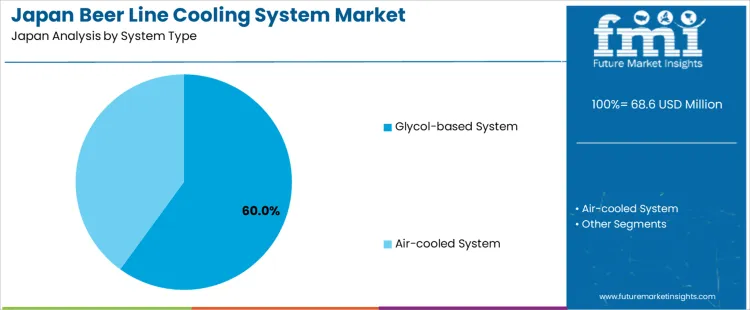
Glycol-based systems account for 60% of the demand for beer line cooling systems in Japan, driven by their superior performance and efficiency in maintaining optimal beer temperatures. These systems are favored for their ability to maintain consistent cooling over long distances, making them ideal for establishments with extensive beer taps, such as restaurants and bars. Glycol-based systems are also more energy-efficient and capable of handling higher volumes of beer, ensuring that beer is served at the perfect temperature and quality. As demand for high-quality, cold beer increases, glycol-based systems remain the top choice in Japan’s beverage service industry, offering reliability and cost-effectiveness for both large-scale operations and smaller establishments.
How Do Restaurants Drive the Demand for Beer Line Cooling Systems in Japan?
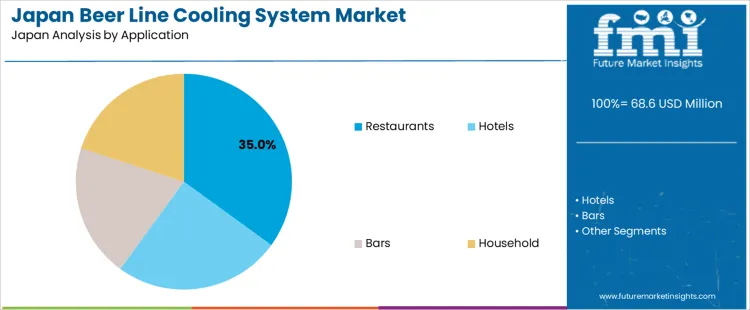
Restaurants account for 35% of the demand for beer line cooling systems in Japan, as they play a key role in ensuring the quality and consistency of beer served to customers. Beer is a popular beverage in Japanese dining establishments, and the demand for cold, fresh beer has led to an increased need for efficient cooling systems. Restaurants require beer line cooling systems to maintain the right temperature and preserve the flavor of beer, particularly in high-volume settings. As the foodservice sector continues to expand and improve its service offerings, the demand for beer line cooling systems, especially glycol-based systems, is expected to grow. This demand is driven by the need for operational efficiency, customer satisfaction, and the desire to deliver high-quality beer in every pour.
What are the Key Trends, Drivers and Restraints in Demand for Beer Line Cooling System in Japan?
Demand for beer line cooling systems in Japan is rising as bars, izakayas, breweries and restaurants seek reliable draft beer quality. These systems keep beer at the optimal temperature from keg to tap, improving taste and reducing foam and waste. Trends include multi‑tap setups and compact systems suitable for small urban venues. Drivers include growth of craft beer and premium draft culture, plus a focus on consistent service.
Why is Demand for Beer Line Cooling System Growing in Japan?
Demand is growing because Japanese consumers increasingly value high‑quality draft beer with stable temperature and flavor. Bars and craft beer establishments compete by offering well‑served pours, making effective cooling systems more essential. As local craft breweries open taprooms and demand multiple beer lines, operators install dedicated cooling to prevent foam, maintain carbonation and reduce waste. The hospitality sector’s pursuit of improved guest experience and repeat business supports this trend. Even smaller venues upgrading their beverage offerings choose efficient line cooling systems to elevate consistency and service quality.
How are Technological and Industry Innovations Driving Beer Line Cooling System Demand in Japan?
Technological improvements are making beer line cooling systems more attractive in Japan. Newer systems offer precise temperature control, energy efficiency and quieter operation suited for intimate hospitality spaces. Multi‑zone cooling allows different beers to be served at their ideal temperatures from a single system. Compact and modular designs fit space‑constrained environments, and smart controls help operators monitor performance and reduce maintenance needs. These innovations make cooling systems easier to install and operate, supporting broader adoption across bars, restaurants and brewery taprooms seeking reliable, high‑quality draft service.
What is the Regional Demand Outlook for Beer Line Cooling System in Japan?
| Region | CAGR (%) |
|---|---|
| Kyushu & Okinawa | 4.5% |
| Kanto | 4.1% |
| Kansai | 3.6% |
| Chubu | 3.2% |
| Tohoku | 2.8% |
| Rest of Japan | 2.7% |
Demand for beer line cooling systems in Japan is growing steadily, with Kyushu & Okinawa leading at a 4.5% CAGR, driven by the region’s expanding hospitality and tourism industries. Kanto follows with a 4.1% CAGR, supported by the large urban population and vibrant craft beer scene. Kansai shows a 3.6% CAGR, fueled by the region’s food culture and increasing popularity of draft beer. Chubu experiences a 3.2% CAGR, with steady growth driven by the region’s growing hospitality sector and interest in fresh draft beer. Tohoku and the rest of Japan see moderate growth at 2.8% and 2.7% CAGR, respectively, as beer consumption and craft beer culture spread across rural areas.
How is Demand for Beer Line Cooling Systems Growing in Kyushu & Okinawa?
Kyushu & Okinawa leads the demand for beer line cooling systems in Japan, growing at a 4.5% CAGR. The region's increasing focus on hospitality, particularly in tourism-driven areas, is a major factor behind this growth. Kyushu’s vibrant food and beverage industry, especially in cities like Fukuoka, has seen rising demand for beer and draft systems in bars, restaurants, and breweries, driving the need for efficient beer line cooling systems. Okinawa's growing tourism industry also plays a role, with a significant number of tourists frequenting local bars and restaurants where draft beer is served. As the hospitality sector continues to grow, the demand for systems that maintain beer quality at optimal temperatures will rise. Region’s emphasis on enhancing food and beverage services is driving adoption, ensuring steady growth in demand for beer line cooling systems.
Why is Demand for Beer Line Cooling Systems Rising in Kanto?
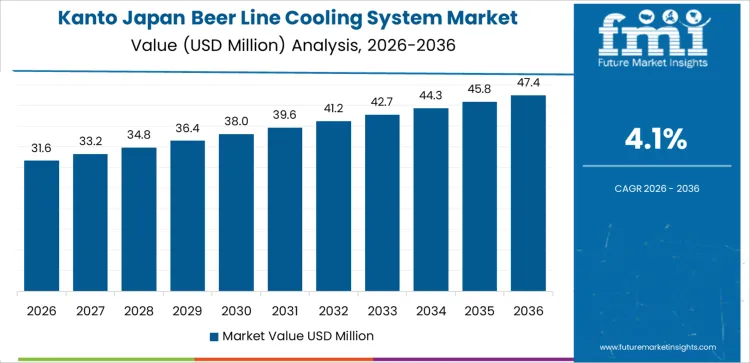
Kanto is experiencing steady demand for beer line cooling systems, growing at a 4.1% CAGR. The region’s large urban population and vibrant hospitality scene, particularly in Tokyo, are key drivers of this demand. The popularity of craft beer and draft beer in bars, restaurants, and hotels is fueling the need for beer line cooling systems to maintain beer quality at ideal serving temperatures. With the increasing number of establishments offering draft beer, the demand for high-quality and reliable beer cooling solutions is growing. = Kanto’s focus on providing high-quality drinking experiences in urban settings is leading to higher adoption of beer line cooling systems to meet consumer expectations for fresh, cold beer. As the craft beer scene continues to evolve in Tokyo and surrounding cities, the demand for efficient and advanced beer line cooling systems will continue to rise steadily.
How is Demand for Beer Line Cooling Systems Expanding in Kansai?
Kansai is seeing moderate demand for beer line cooling systems, growing at a 3.6% CAGR. The region’s strong tourism and food culture, particularly in cities like Osaka and Kyoto, are contributing to the growing need for high-quality draft beer systems in bars, restaurants, and food establishments. Kansai’s growing interest in craft beer and the expansion of bars and eateries offering diverse beverages are driving the demand for beer line cooling systems. As the region’s foodservice and hospitality industries expand, ensuring the freshness and quality of draft beer is becoming increasingly important. As the demand for draft beer continues to rise in Kansai, particularly in popular tourist destinations and metropolitan areas, the need for effective beer line cooling solutions is expected to continue growing steadily.
How is Demand for Beer Line Cooling Systems Growing in Chubu?
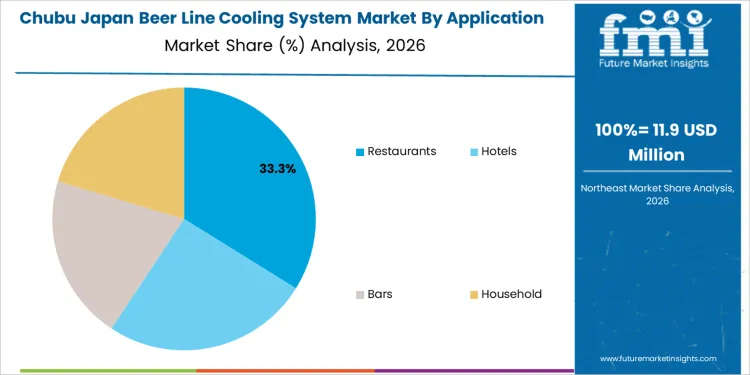
Chubu is experiencing moderate demand for beer line cooling systems, with a 3.2% CAGR. The region’s expanding hospitality sector, particularly in cities like Nagoya, is contributing to the growth in demand for efficient beer cooling solutions. With a focus on enhancing dining experiences and maintaining the quality of draft beer, more restaurants, bars, and hotels in Chubu are adopting beer line cooling systems to serve fresh and chilled beverages. Chubu’s increasing number of microbreweries and bars offering draft beer is also a contributing factor. As consumer preferences continue to shift toward fresh and cold draft beer, demand for beer line cooling systems will continue to rise, particularly as the region embraces higher standards for hospitality and beverage services. Chubu’s diverse food and beverage scene further supports the growing need for advanced cooling systems in the region.
How is Demand for Beer Line Cooling Systems Growing in Tohoku?
Tohoku is seeing moderate demand for beer line cooling systems, growing at a 2.8% CAGR. The region’s beer culture is gradually evolving, with an increasing number of breweries and pubs focusing on offering draft beer. Tohoku’s colder climate and relatively slower hospitality growth compared to other regions are factors influencing the moderate pace of demand for beer line cooling systems. However, as the region continues to develop its tourism and foodservice sectors, particularly in cities like Sendai, the demand for beer line cooling systems is growing steadily. The rising trend of craft beer and an increasing focus on quality in local bars and restaurants is contributing to this growth. As Tohoku’s beer scene continues to expand and more establishments adopt modern draft beer systems, the need for reliable and efficient beer cooling solutions will continue to rise at a moderate pace.
How is Demand for Beer Line Cooling Systems Growing in Rest of Japan?
The rest of Japan is experiencing moderate demand for beer line cooling systems, with a 2.7% CAGR. Although the demand is less concentrated in metropolitan areas, there is a steady rise in beer consumption and the adoption of draft beer in rural and smaller urban settings. As more restaurants, bars, and local breweries in these regions offer draft beer, the need for reliable cooling systems to maintain quality is increasing. The rising popularity of craft beer, coupled with a growing interest in local products, is also driving the adoption of beer line cooling systems. As consumer demand for fresh and cold draft beer expands across these areas, the rest of Japan is expected to see gradual growth in the adoption of beer line cooling solutions. With the craft beer trend spreading outside major cities, demand for such systems will continue to grow, albeit at a slower pace.
What is the Competitive Landscape of Beer Line Cooling System Demand in Japan?
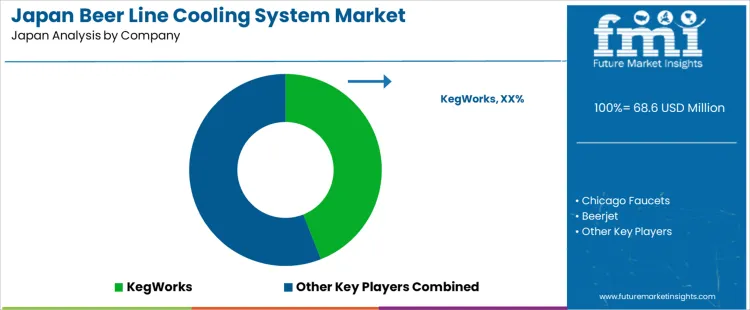
Demand for beer line cooling systems in Japan is growing as the craft beer and hospitality industries continue to expand. These cooling systems are essential for maintaining the ideal temperature of beer as it travels from the keg to the tap, ensuring optimal taste and carbonation. As Japan's beer industry diversifies with a rising preference for craft brews and quality-conscious consumers, the demand for efficient, reliable beer line cooling systems has increased, particularly in bars, restaurants, and breweries.
KegWorks is a leading player in the Japanese industry, offering high-performance beer line cooling systems designed for both commercial and residential use. The company’s strategy focuses on delivering customizable, user-friendly solutions that ensure consistent beer quality and minimize waste. KegWorks' reputation for reliable products and excellent customer support has made it a prominent competitor in Japan's competitive beer dispensing industry.
Chicago Faucets provides durable and efficient beer line cooling systems that are known for their high quality and ease of maintenance. Beerjet specializes in beer line cleaning and cooling systems, focusing on rapid, effective solutions. Elkay Manufacturing Company offers versatile, energy-efficient beer cooling products designed for various commercial applications. Continental Refrigerator focuses on refrigeration solutions, including beer line cooling systems that ensure optimal performance in demanding environments. These companies continue to innovate by offering systems that improve energy efficiency, reduce downtime, and enhance the overall beer serving experience in Japan.
Key Players in Japan Beer Line Cooling System Demand
- KegWorks
- Chicago Faucets
- Beerjet
- Elkay Manufacturing Company
- Continental Refrigerator
Scope of Report
| Items | Values |
|---|---|
| Quantitative Units (2026) | USD million |
| Key Segments | Glycol-based System, Air-cooled System |
| Application | Restaurants, Hotels, Bars, Household |
| End-Use | Draft Beer, Bottled Beer |
| Key Country | Japan |
| Region | Kyushu & Okinawa, Kanto, Kansai, Chubu, Tohoku, Rest of Japan |
| Key Players Profiled | KegWorks, Chicago Faucets, Beerjet, Elkay Manufacturing Company, Continental Refrigerator |
| Additional Attributes | Dollar sales by system type, application, and end-use; regional CAGR and growth trends in beer line cooling system demand in Japan |
Japan Beer Line Cooling System Demand by Key Segments
By System Type:
- Glycol-based System
- Air-cooled System
By Application:
- Restaurants
- Hotels
- Bars
- Household
By End-Use
- Draft Beer
- Bottled Beer
By Region:
- Kyushu & Okinawa
- Kanto
- Kansai
- Chubu
- Tohoku
- Rest of Japan
Frequently Asked Questions
How big is the demand for beer line cooling system in Japan in 2026?
The demand for beer line cooling system in Japan is estimated to be valued at USD 68.6 million in 2026.
What will be the size of beer line cooling system in Japan in 2036?
The market size for the beer line cooling system in Japan is projected to reach USD 97.7 million by 2036.
How much will be the demand for beer line cooling system in Japan growth between 2026 and 2036?
The demand for beer line cooling system in Japan is expected to grow at a 3.6% CAGR between 2026 and 2036.
What are the key product types in the beer line cooling system in Japan?
The key product types in beer line cooling system in Japan are glycol-based system and air-cooled system.
Which application segment is expected to contribute significant share in the beer line cooling system in Japan in 2026?
In terms of application, restaurants segment is expected to command 35.0% share in the beer line cooling system in Japan in 2026.
Preview the report firsthand - request a free sample
Get SampleGet the brochure for pricing and purchase details.
Get PDFTable of Content
- Executive Summary
- Japan Market Outlook
- Demand-side Trends
- Supply-side Trends
- Technology Roadmap Analysis
- Analysis and Recommendations
- Market Overview
- Market Coverage / Taxonomy
- Market Definition / Scope / Limitations
- Market Background
- Market Dynamics
- Drivers
- Restraints
- Opportunity
- Trends
- Scenario Forecast
- Demand in Optimistic Scenario
- Demand in Likely Scenario
- Demand in Conservative Scenario
- Opportunity Map Analysis
- Product Life Cycle Analysis
- Supply Chain Analysis
- Investment Feasibility Matrix
- Value Chain Analysis
- PESTLE and Porter’s Analysis
- Regulatory Landscape
- Regional Parent Market Outlook
- Production and Consumption Statistics
- Import and Export Statistics
- Market Dynamics
- Japan Market Analysis 2021 to 2025 and Forecast, 2026 to 2036
- Historical Market Size Value (USD Million) Analysis, 2021 to 2025
- Current and Future Market Size Value (USD Million) Projections, 2026 to 2036
- Y-o-Y Growth Trend Analysis
- Absolute $ Opportunity Analysis
- Japan Market Pricing Analysis 2021 to 2025 and Forecast 2026 to 2036
- Japan Market Analysis 2021 to 2025 and Forecast 2026 to 2036, By System Type
- Introduction / Key Findings
- Historical Market Size Value (USD Million) Analysis By System Type , 2021 to 2025
- Current and Future Market Size Value (USD Million) Analysis and Forecast By System Type , 2026 to 2036
- Glycol-based System
- Air-cooled System
- Y-o-Y Growth Trend Analysis By System Type , 2021 to 2025
- Absolute $ Opportunity Analysis By System Type , 2026 to 2036
- Japan Market Analysis 2021 to 2025 and Forecast 2026 to 2036, By Application
- Introduction / Key Findings
- Historical Market Size Value (USD Million) Analysis By Application, 2021 to 2025
- Current and Future Market Size Value (USD Million) Analysis and Forecast By Application, 2026 to 2036
- Restaurants
- Hotels
- Bars
- Household
- Y-o-Y Growth Trend Analysis By Application, 2021 to 2025
- Absolute $ Opportunity Analysis By Application, 2026 to 2036
- Japan Market Analysis 2021 to 2025 and Forecast 2026 to 2036, By End-Use
- Introduction / Key Findings
- Historical Market Size Value (USD Million) Analysis By End-Use, 2021 to 2025
- Current and Future Market Size Value (USD Million) Analysis and Forecast By End-Use, 2026 to 2036
- Draft Beer
- Bottled Beer
- Y-o-Y Growth Trend Analysis By End-Use, 2021 to 2025
- Absolute $ Opportunity Analysis By End-Use, 2026 to 2036
- Market Structure Analysis
- Competition Dashboard
- Competition Benchmarking
- Market Share Analysis of Top Players
- By Regional
- By System Type
- By Application
- By End-Use
- Competition Analysis
- Competition Deep Dive
- KegWorks
- Overview
- Product Portfolio
- Profitability by Market Segments (Product/Age /Sales Channel/Region)
- Sales Footprint
- Strategy Overview
- Marketing Strategy
- Product Strategy
- Channel Strategy
- Chicago Faucets
- Beerjet
- Elkay Manufacturing Company
- Continental Refrigerator
- KegWorks
- Competition Deep Dive
- Assumptions & Acronyms Used
- Research Methodology


