

- Industry Size (2025)
- USD 155.7 Mn
- Forecast (2035)
- USD 240.0 Mn
- CAGR (2025 to 2035)
- 4.4%
Demand for Body Firming Creams in Japan Forecast and Outlook 2025 to 2035
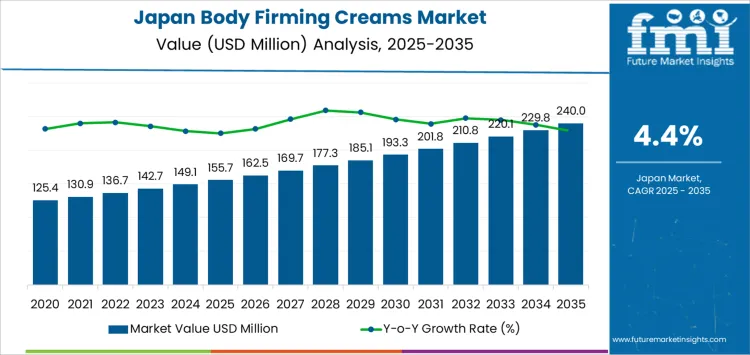
Body firming cream demand in Japan stands at USD 155.7 million in 2025 and is expected to reach USD 240.0 million by 2035 at a CAGR of 4.4%. The category benefits from strong integration into daily skincare routines, aging population dynamics, and rising interest in home-based cosmetic maintenance. Cream-based formats dominate usage due to texture preference and climate suitability, while gel-cream hybrids gain acceptance among younger consumers.
Application focuses on abdomen, thighs, arms, and post-weight management care. Sales concentration remains highest across Kanto, Kinki, and Chubu due to income density and premium beauty retail penetration. Dermatology clinics, brand-owned boutiques, e-commerce platforms, and specialty cosmetic stores shape channel structure. Domestic brands lead volume positioning, while global cosmetic groups anchor premium pricing tiers.
Quick Stats of the Body Firming Creams Industry in Japan
- Body Firming Creams Industry in Japan Value (2025): USD 155.7 million
- Body Firming Creams Industry in Japan Forecast Value (2035): USD 240.0 million
- Body Firming Creams Industry in Japan Forecast CAGR (2025 to 2035): 4.4%
- Leading Product in Body Firming Creams Industry in Japan: Lotion (50%)
- Key Growth Regions in Body Firming Creams Industry in Japan: Kyushu & Okinawa, Kanto, Kansai
- Top Players in Body Firming Creams Industry in Japan: L’Oréal, Beiersdorf, Clarins, Shiseido, Johnson & Johnson
What is the Demand Forecast for Body Firming Creams in Japan through 2035?
Consumption patterns reflect seasonality tied to spring and summer body exposure trends, seasonal promotions, and tourism-driven retail traffic. Packaging innovation centers on airless pumps, travel-size formats, and refill systems that support urban apartment living. Ingredient strategies emphasize plant extracts, caffeine complexes, peptides, and warming agents aligned with sensory performance expectations. Retail pricing is shaped by ingredient sourcing costs, currency movement, and promotional bundling in department stores and online marketplaces.
Import participation remains concentrated in prestige skincare lines from Europe and South Korea. Regional demand outside major metropolitan zones stay stable through pharmacy chains and regional beauty retailers. Through 2035, body firming cream demand in Japan advances through routine-use integration, premium formulation cycles, and steady influence from aesthetic awareness across both core and aging consumer groups.
Body firming cream demand in Japan stands at USD 155.7 million in 2025 and rises to USD 185.1 million by 2030, creating a USD 29.4 million value increase within five years. The expansion from USD 125.4 million in 2020 reflects the steady normalization of targeted body skincare within daily grooming rather than reliance on seasonal body shaping campaigns. Sales momentum is strongest within urban drugstores, dermo-cosmetic counters, and premium home aesthetics brands that position firming products as part of anti-aging maintenance. Repeat purchasing behavior is supported by subscription-based ecommerce and clinic-linked retail that pairs topical firming with massage devices and body contour programs.
From 2030 to 2035, demand advances from USD 185.1 million to USD 240.0 million, adding a larger USD 54.9 million during the later phase. Annual value growth strengthens as mid-aged and senior consumer segments expand sustained usage for skin elasticity management linked to weight fluctuation and age-related collagen decline. Product formulation shifts toward caffeine complexes, peptide systems, and botanical tightening blends that support higher unit pricing. Home beauty device bundling also lifts average order value across digital platforms. Demand gains from inbound tourism return to cosmetic retail districts further raise premium segment sales. By 2035, body firming cream demand in Japan reflects long-cycle skin maintenance behavior rather than short-term appearance correction usage.
Body Firming Creams Industry in Japan Key Takeaways
| Metric | Value |
|---|---|
| Industry Value (2025) | USD 155.7 million |
| Forecast Value (2035) | USD 240.0 million |
| Forecast CAGR (2025 to 2035) | 4.4% |
What Is Driving the Demand for Body Firming Creams in Japan?
The demand for body firming creams in Japan is shaped by long standing skincare discipline, early aging awareness, and the cultural focus on maintaining skin texture over time. Body care traditionally emphasized cleansing and hydration through bathing rituals. Interest in firmness care expanded as facial anti-aging routines extended to arms, abdomen, thighs, and neck. Department store beauty counters, dermatology clinics, and aesthetic salons helped normalize the concept of structural body skincare focused on elasticity and tone support. Urban consumers adopted firming creams as part of post bathing massage routines linked to circulation care and seasonal skin exposure. Bridal preparation, wellness studios, and home fitness culture further supported routine use among women across multiple age groups.
Future demand for body firming creams in Japan will be shaped by population aging, preventive beauty habits, and the blending of cosmetic and dermatology aligned body care. Middle aged consumers are entering firmness maintenance earlier as part of long term skin management rather than late stage correction. Growth will continue through fragrance minimal formulas, sensitive skin positioning, and multi-function products that combine firmness support with moisturization and barrier care.
Refill packaging and subscription delivery will strengthen repeat usage in dense urban markets. Barriers include slow visible result timelines, preference for device based treatments among some consumers, and limited storage space in compact homes. Long term demand will depend on trust in realistic outcomes and daily usability within disciplined Japanese body care routines.
What Is the Demand for Body Firming Creams in Japan by Product Type and Skin Type?
The demand for body firming creams in Japan is shaped by aging demographics, routine body care habits, and preference for lightweight textures suited to humid conditions. Lotion leads by product type due to fast absorption and daily use compatibility. Normal skin leads by skin type because it represents the largest addressable consumer base across mass and premium segments. Procurement is driven by domestic cosmetic brands, private label suppliers, and contract manufacturers serving drugstores and specialty beauty retailers. Import reliance remains present for select peptides and botanical actives. Substitution pressure exists from body serums and massage gels. Demand stability is supported by consistent self-care spending and seasonal product rotation.
Why does lotion dominate the demand for body firming creams in Japan by product type?
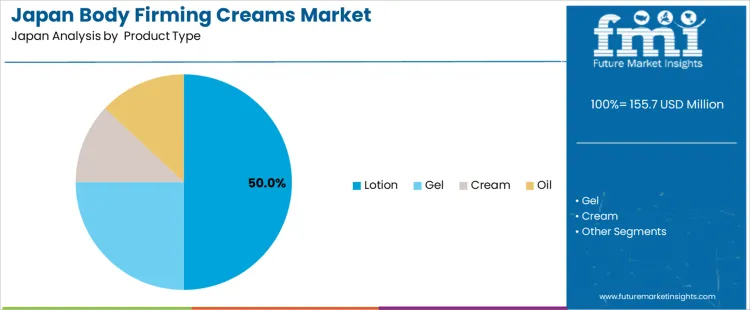
Lotion accounts for 50% of the demand for body firming creams in Japan by product type, reflecting preference for light textures that spread easily and absorb without residue. Consumption intensity is driven by daily after bath routines, summer skin care habits, and layering with other toning products. Usage remains stable because lotions deliver hydration and firming benefits in a single step. Procurement is led by mass beauty brands and private label suppliers supplying drugstores and online platforms. Price sensitivity remains moderate as consumer’s balance texture comfort with perceived efficacy. Specification control emphasizes viscosity stability, uniform dispersion of actives, fast absorption, and non-tack finish for daily use.
Lotion based firming products also generate steady repeat demand through predictable household replacement cycles. Repeat purchasing remains consistent because these products are used daily across all seasons. Buyers favor standardized lotion bases that support variation in fragrance and active concentration without altering core texture. Margin structure remains tight under competition from multifunctional body care products. Regulatory exposure centers on cosmetic labeling, safety testing, and claims substantiation. Import reliance persists for encapsulated actives and skin tightening polymers. Substitution pressure from gels increases during peak summer months, though lotion formats retain dominance across most of the year.
What drives normal skin to lead the demand for body firming creams in Japan by skin type?
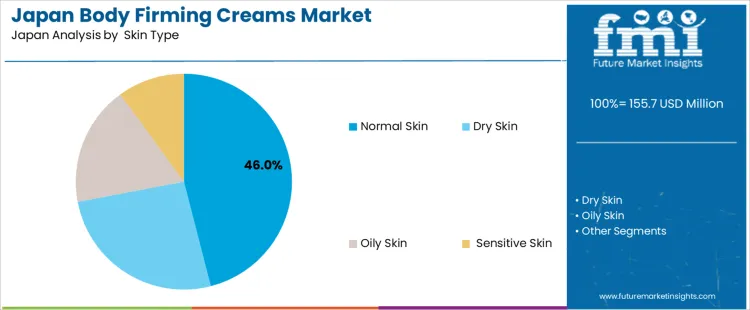
Normal skin represents 46.0% of the demand for body firming creams in Japan by skin type, reflecting its broad presence across the adult population. Consumption intensity is driven by preventive body care use rather than corrective treatment alone. Usage remains stable because consumers with normal skin seek firmness maintenance and tone preservation as part of routine grooming. Procurement is dominated by national cosmetic brands and contract formulators distributing through mass retail and specialty beauty stores. Price sensitivity remains moderate because preventive care products fall within routine discretionary spending. Specification control emphasizes balanced hydration, firmness improvement without occlusion, and compatibility with fragrance and toning actives.
Normal skin focused products also generate consistent repeat demand due to continuous weekly or daily application patterns. Repeat utilization remains predictable across broad age groups and both genders. Buyers favor formulations with wide skin tolerance to minimize irritation risk and return rates. Margin structure remains controlled under frequent promotional activity and private label competition. Regulatory exposure remains limited to standard cosmetic compliance and irritation testing. Import reliance persists for collagen stimulating ingredients and bioactive complexes. Substitution pressure from general body moisturizers exists, though dedicated firming benefits continue to sustain demand within this skin type segment.
What Is Driving the Demand for Body Firming Creams in Japan Daily Skincare Discipline and Seasonal Exposure?
Demand for body firming creams in Japan reflects disciplined skincare habits, seasonal skin exposure, and steady interest in texture refinement over shape transformation. Many users apply firming products after evening bathing to support moisture balance and surface smoothness. Drugstores, variety shops, and brand operated e commerce channels lead distribution. Younger adults focus on arm and waist care while middle age consumers prioritize neck, thigh, and abdomen zones. Product selection favors light texture, low fragrance, and fast clothing safe absorption. Demand rises before summer travel, coastal leisure, and festival seasons. Usage continues at lower pace during winter through routine maintenance cycles.
How Do Post Bath Rituals Structure Body Firming Cream Usage in Japan?
Post bath application frames how firming creams are used across many Japanese households. Warm water exposure softens the stratum surface and supports even spreading without heavy friction. Users apply upward massage strokes focused on circulation sensation rather than visible tightening. Night use dominates since absorption can settle without fabric contact. Hot springs, sento visits, and long tub sessions reinforce this timing pattern on weekends. This ritual connection links firming care with relaxation and body comfort. Demand frequency follows bathing regularity more than fitness schedules or weight control cycles. The practice stays stable across age groups who value calm nightly routines.
How Does Seasonal Visibility Influence Purchasing Timing for Body Firming Creams in Japan?
Seasonal visibility plays a central role in purchase timing for body firming creams in Japan. Short sleeve clothing, swimwear, and lightweight festival outfits expose arms, legs, and collar lines for limited periods each year. Retailers expand shelf space during early summer with cooling textures and lighter scent profiles. Travel bookings, outdoor events, and waterfront leisure align with this shopping rise. Off season demand persists at reduced level through spa visits and wellness gifting. This calendar driven cycle concentrates volume into defined windows rather than steady monthly use. Stock planning follows temperature change and social activity density more than traditional cosmetic.
What is the Demand for Body Firming Creams in Japan by Region?
| Region | CAGR (%) |
|---|---|
| Kyushu & Okinawa | 5.5% |
| Kanto | 5.1% |
| Kansai | 4.5% |
| Chubu | 3.9% |
| Tohoku | 3.5% |
| Rest of Japan | 3.3% |
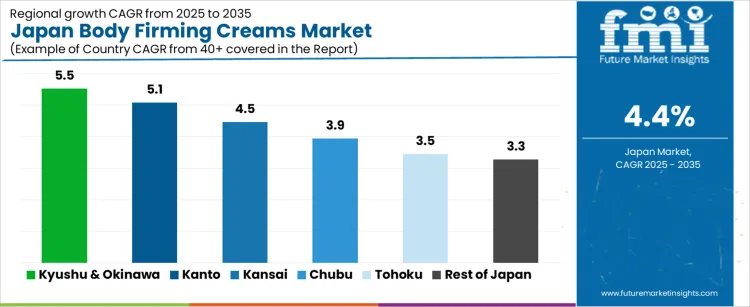
The demand for body firming creams in Japan is expanding steadily across all regions, led by Kyushu and Okinawa at a 5.5% CAGR. Growth in this region is supported by strong resort and spa activity, rising wellness tourism, and higher use of body care products linked to professional treatments. Kanto follows at 5.1%, driven by dense urban populations, premium cosmetic retail networks, and steady adoption among working age consumers.
Kansai records 4.5% growth, reflecting consistent demand from department store brands and specialty beauty chains. Chubu at 3.9% shows moderate uptake linked to regional retail expansion. Tohoku and the Rest of Japan, at 3.5% and 3.3%, reflect slower growth shaped by traditional skincare routines, lower spending on body shaping products, and conservative seasonal purchasing behavior.
How Is Wellness Tourism and Spa Retail Driving Body Firming Cream Demand in Kyushu and Okinawa?
Demand for body firming creams in Kyushu and Okinawa is advancing at a CAGR of 5.5% through 2035, supported by strong spa culture, wellness tourism growth, and steady use of firming products in post treatment skincare routines. Resort spas and beauty clinics record consistent sales of anti cellulite and skin tightening formulations. This region shows higher gifting and seasonal purchase behavior linked to travel flows. Growth remains supported by tropical climate driven skincare routines and increasing availability of premium natural ingredient based firming products in hospitality linked retail outlets.
- Spa retail anchors premium product sales
- Tourism gift purchases support seasonal demand cycles
- Natural ingredient creams gain rising shelf presence
- Post treatment skincare drives repeat customer demand
Why Is Urban Aesthetic Awareness Sustaining Body Firming Cream Growth in Kanto?
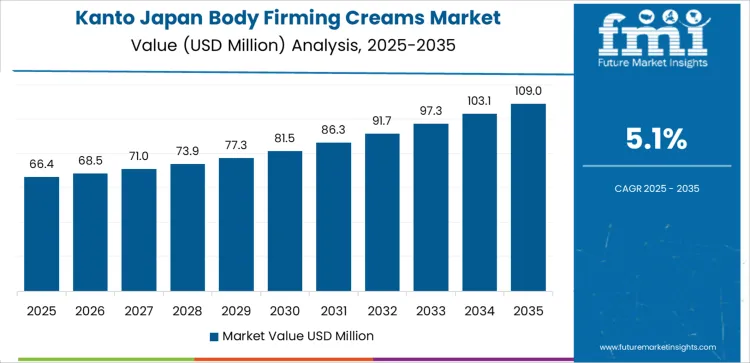
Demand for body firming creams in Kanto is rising at a CAGR of 5.1% through 2035, driven by dense population, high cosmetic awareness, and consistent personal care spending in metropolitan areas. Kanto records strong adoption across daily use firming lotions and targeted treatment creams. Drugstores and digital platforms lead multi pack sales. Growth reflects routine body care integration, rising use after fitness routines, and steady social exposure to skincare trends among working age consumers with stable discretionary income.
- Drugstores sustain high frequency retail turnover
- Digital platforms expand subscription style purchases
- Fitness linked skincare routines support daily usage
- Working age consumers anchor consistent demand
What Is Supporting Controlled Body Firming Cream Adoption Across Kansai?
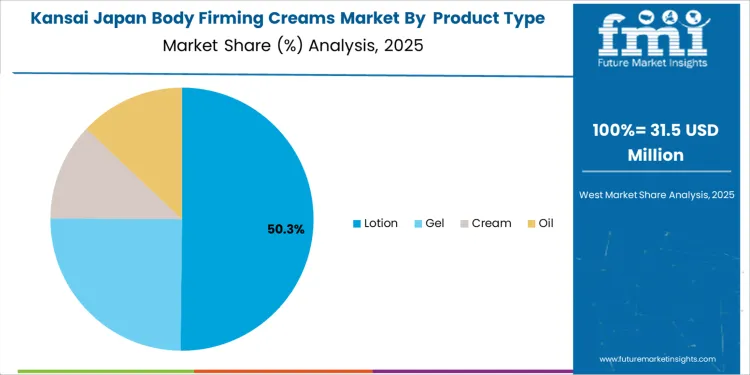
Demand for body firming creams in Kansai is progressing at a CAGR of 4.5% through 2035, supported by stable cosmetic retail, growing interest in body contour care, and steady salon linked recommendations. Kansai shows balanced demand across mid priced and premium firming creams. This region reflects steady product replenishment rather than rapid trend driven spikes. Growth remains linked to beauty salon aftercare routines, seasonal skincare transitions, and consistent household expenditure on personal appearance maintenance.
- Salon aftercare drives targeted product usage
- Mid priced creams dominate volume sales
- Seasonal transitions shape periodic demand growth
- Stable household spending supports market continuity
How Is Value Oriented Skincare Shaping Body Firming Cream Demand in Chubu?
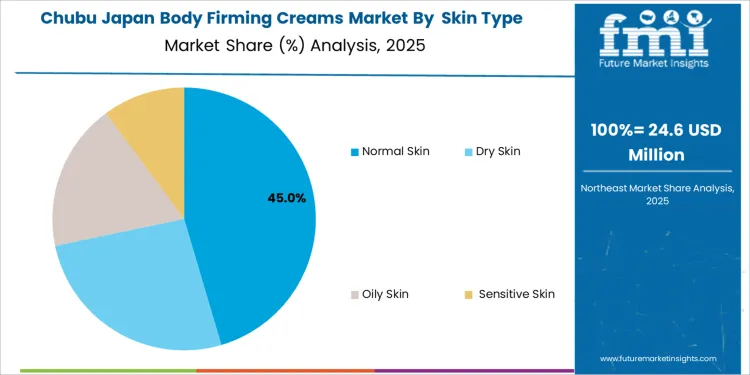
Demand for body firming creams in Chubu is advancing at a CAGR of 3.9% through 2035, supported by mass market personal care retail, workforce driven household consumption, and preference for functional skincare benefits. Chubu shows higher reliance on value priced firming products sold through supermarkets and pharmacies. Demand remains focused on daily moisturizing and light firming formulas rather than intensive treatment creams. Growth reflects steady employment linked income, moderate cosmetic spending, and gradual awareness of preventive skin elasticity care.
- Supermarkets anchor high volume product distribution
- Functional skincare positioning drives everyday usage
- Affordable price tiers support repeat purchases
- Workforce household routines sustain steady demand
Why Is Demographic Aging Moderating Body Firming Cream Growth in Tohoku?
Demand for body firming creams in Tohoku is rising at a CAGR of 3.5% through 2035, supported by stable household skincare spending, increasing use among middle aged consumers, and steady pharmacy based cosmetic availability. Tohoku shows lower impulse driven cosmetic buying. Firming creams remain positioned as treatment oriented skincare rather than beauty enhancement products. Growth remains tied to basic elasticity maintenance, anti dryness needs, and gradual expansion of personal care assortments in regional pharmacies.
- Pharmacies anchor consistent product access
- Middle aged consumer groups sustain treatment demand
- Low impulse buying moderates rapid market shifts
- Anti dryness positioning supports year round usage
How Is Small City Retail Coverage Influencing Body Firming Cream Demand in Rest of Japan?
Demand for body firming creams in Rest of Japan is advancing at a CAGR of 3.3% through 2035, supported by gradual expansion of personal care retail, steady household grooming routines, and limited penetration of premium cosmetic brands. These areas show stronger demand for basic firming lotions sold through general merchandise stores. Growth remains stable and guided by household budget patterns, basic skincare awareness, and slow rollout of specialty beauty retail formats beyond core urban centers.
- General merchandise stores dominate retail distribution
- Basic firming lotions lead product mix
- Household budget control shapes purchase frequency
- Gradual retail expansion guides moderate growth
What Is Driving the Demand for Body Firming Creams in Japan and Which Brands Shape Retail and Clinical Adoption?
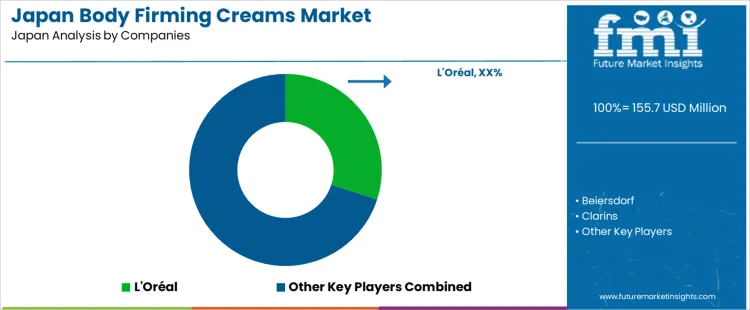
The demand for body firming creams in Japan is shaped by aging demographics, high skin care participation among adult women, and steady preference for non-invasive body contour maintenance. Shiseido holds a central domestic position through premium and masstige brands distributed across department stores, specialty beauty chains, and pharmacy networks. Beiersdorf supports volume demand through body care lines positioned in drugstores with a focus on elasticity and moisture retention.
L Oréal contributes through dermocosmetic and mass brands distributed widely through variety retailers and online platforms. Clarins anchors the spa linked premium segment through salon connected retail and treatment oriented body care programs. Johnson and Johnson participates through skin health brands positioned under sensitive and post procedure care use across hospital adjacent retail.
Product selection in Japan is governed by absorption speed, fragrance restraint, compatibility with daily bathing routines, and long term skin tolerance. Texture preference favors lightweight creams and gels that layer easily with lotions and sunscreens. Buyer preference favors products with documented elasticity support and low irritation risk suitable for year round use. Retail demand rises around spring and summer when body exposure increases in seasonal apparel. Usage also increases during post pregnancy recovery and midlife skin aging management. Distribution strength in urban prefectures drives early adoption of new formulations. Demand visibility reflects inbound tourism recovery in prestige retail, strong repeat purchasing behavior among working age women, and steady expansion of premium body care spending outside facial skin care categories.
Key Players in the Body Firming Creams Industry in Japan
- L'Oréal
- Beiersdorf
- Clarins
- Shiseido
- Johnson & Johnson
Scope of the Report
| Items | Values |
|---|---|
| Quantitative Units (2025) | USD million |
| Product Type | Lotion, Gel, Cream, Oil |
| Skin Type | Normal Skin, Dry Skin, Oily Skin, Sensitive Skin |
| Gender | Male, Female, Unisex |
| Distribution Channel | Online, Offline |
| Region | Kyushu & Okinawa, Kanto, Kansai, Chubu, Tohoku, Rest of Japan |
| Countries Covered | Japan |
| Key Companies Profiled | Shiseido, L’Oréal, Beiersdorf, Clarins, Johnson & Johnson |
| Additional Attributes | Dollar by sales by product type, skin type, gender, and distribution channel; Regional CAGR and growth patterns; Urban versus regional penetration; Seasonality of sales linked to spring/summer exposure; Premium versus mass segment split; Repeat purchase behavior and subscription adoption; Spa and clinic bundling influence; Ingredient strategies including caffeine complexes, peptides, and botanical actives; Packaging innovations such as airless pumps and travel formats; Import reliance for prestige skincare actives; Multi-function formulations combining firming with moisturization and barrier care; Consumer demographics including aging population influence; Retail channel dynamics including department stores, drugstores, and e-commerce; Post-bath ritual and daily skincare integration supporting sustained demand. |
Body Firming Creams Industry in Japan Segmentation
Product Type:
- Lotion
- Gel
- Cream
- Oil
Skin Type:
- Normal Skin
- Dry Skin
- Oily Skin
- Sensitive Skin
Gender:
- Male
- Female
- Unisex
Distribution Channel:
- Online
- Offline
Region:
- Kyushu & Okinawa
- Kanto
- Kansai
- Chubu
- Tohoku
- Rest of Japan
Frequently Asked Questions
How big is the demand for body firming creams in Japan in 2025?
The demand for body firming creams in Japan is estimated to be valued at USD 155.7 million in 2025.
What will be the size of body firming creams in Japan in 2035?
The market size for the body firming creams in Japan is projected to reach USD 240.0 million by 2035.
How much will be the demand for body firming creams in Japan growth between 2025 and 2035?
The demand for body firming creams in Japan is expected to grow at a 4.4% CAGR between 2025 and 2035.
What are the key product types in the body firming creams in Japan?
The key product types in body firming creams in Japan are lotion, gel, cream and oil.
Which skin type segment is expected to contribute significant share in the body firming creams in Japan in 2025?
In terms of skin type, normal skin segment is expected to command 46.0% share in the body firming creams in Japan in 2025.
Preview the report firsthand - request a free sample
Get SampleGet the brochure for pricing and purchase details.
Get PDFTable of Content
- Executive Summary
- Japan Market Outlook
- Demand-side Trends
- Supply-side Trends
- Technology Roadmap Analysis
- Analysis and Recommendations
- Market Overview
- Market Coverage / Taxonomy
- Market Definition / Scope / Limitations
- Market Background
- Market Dynamics
- Drivers
- Restraints
- Opportunity
- Trends
- Scenario Forecast
- Demand in Optimistic Scenario
- Demand in Likely Scenario
- Demand in Conservative Scenario
- Opportunity Map Analysis
- Product Life Cycle Analysis
- Supply Chain Analysis
- Investment Feasibility Matrix
- Value Chain Analysis
- PESTLE and Porter’s Analysis
- Regulatory Landscape
- Regional Parent Market Outlook
- Production and Consumption Statistics
- Import and Export Statistics
- Market Dynamics
- Japan Market Analysis 2020 to 2024 and Forecast, 2025 to 2035
- Historical Market Size Value (USD Million) Analysis, 2020 to 2024
- Current and Future Market Size Value (USD Million) Projections, 2025 to 2035
- Y-o-Y Growth Trend Analysis
- Absolute $ Opportunity Analysis
- Japan Market Pricing Analysis 2020 to 2024 and Forecast 2025 to 2035
- Japan Market Analysis 2020 to 2024 and Forecast 2025 to 2035, By Product Type
- Introduction / Key Findings
- Historical Market Size Value (USD Million) Analysis By Product Type , 2020 to 2024
- Current and Future Market Size Value (USD Million) Analysis and Forecast By Product Type , 2025 to 2035
- Lotion
- Gel
- Cream
- Oil
- Y-o-Y Growth Trend Analysis By Product Type , 2020 to 2024
- Absolute $ Opportunity Analysis By Product Type , 2025 to 2035
- Japan Market Analysis 2020 to 2024 and Forecast 2025 to 2035, By Skin Type
- Introduction / Key Findings
- Historical Market Size Value (USD Million) Analysis By Skin Type, 2020 to 2024
- Current and Future Market Size Value (USD Million) Analysis and Forecast By Skin Type, 2025 to 2035
- Normal Skin
- Dry Skin
- Oily Skin
- Sensitive Skin
- Y-o-Y Growth Trend Analysis By Skin Type, 2020 to 2024
- Absolute $ Opportunity Analysis By Skin Type, 2025 to 2035
- Japan Market Analysis 2020 to 2024 and Forecast 2025 to 2035, By Gender
- Introduction / Key Findings
- Historical Market Size Value (USD Million) Analysis By Gender, 2020 to 2024
- Current and Future Market Size Value (USD Million) Analysis and Forecast By Gender, 2025 to 2035
- Male
- Female
- Unisex
- Y-o-Y Growth Trend Analysis By Gender, 2020 to 2024
- Absolute $ Opportunity Analysis By Gender, 2025 to 2035
- Japan Market Analysis 2020 to 2024 and Forecast 2025 to 2035, By Distribution Channel
- Introduction / Key Findings
- Historical Market Size Value (USD Million) Analysis By Distribution Channel, 2020 to 2024
- Current and Future Market Size Value (USD Million) Analysis and Forecast By Distribution Channel, 2025 to 2035
- Online
- Offline
- Y-o-Y Growth Trend Analysis By Distribution Channel, 2020 to 2024
- Absolute $ Opportunity Analysis By Distribution Channel, 2025 to 2035
- Market Structure Analysis
- Competition Dashboard
- Competition Benchmarking
- Market Share Analysis of Top Players
- By Regional
- By Product Type
- By Skin Type
- By Gender
- By Distribution Channel
- Competition Analysis
- Competition Deep Dive
- L'Oréal
- Overview
- Product Portfolio
- Profitability by Market Segments (Product/Age /Sales Channel/Region)
- Sales Footprint
- Strategy Overview
- Marketing Strategy
- Product Strategy
- Channel Strategy
- Beiersdorf
- Clarins
- Shiseido
- Johnson & Johnson
- L'Oréal
- Competition Deep Dive
- Assumptions & Acronyms Used
- Research Methodology


