

- Industry Size (2025)
- USD 126.4 Mn
- Forecast (2035)
- USD 202.0 Mn
- CAGR (2025 to 2035)
- 4.8%
Demand for Duplication Disc in Japan Forecast and Outlook 2025 to 2035
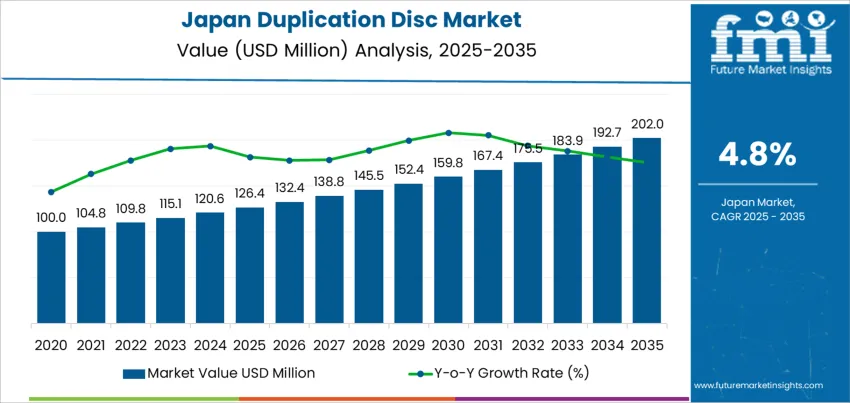
The demand for duplication discs in Japan is expected to grow from USD 126.4 million in 2025 to USD 202.0 million by 2035, reflecting a compound annual growth rate (CAGR) of 4.8%. Duplication discs, used for copying and storing data, are essential in various sectors such as entertainment, media, and data archiving. As the need for data storage continues to grow, the demand for reliable, high-quality duplication discs is expected to increase across both personal and professional sectors.
The entertainment industry remains a significant driver of demand for duplication discs. As media formats evolve, the need for discs to store movies, music, and software remains strong, especially with the demand for physical copies in certain industrys. The rise in digital content creation has spurred the demand for cost-effective duplication solutions, particularly among smaller businesses, independent creators, and educational institutions. The ongoing requirement for archival storage, especially for large volumes of data, will also continue to contribute to growth, as businesses and organizations seek efficient, long-term storage solutions.
Technological advancements in the duplication process, such as increased storage capacity, better reliability, and faster processing times, will also support the demand for these discs. As the demand for physical media persists in various regions, duplication discs will continue to play an important role in media distribution and backup solutions.
Quick Stats of the Demand for Duplication Discs in Japan
- Demand for Duplication Disc in Japan Value (2025): USD 126.4 million
- Demand for Duplication Disc in Japan Forecast Value (2035): USD 202.0 million
- Demand for Duplication Disc in Japan Forecast CAGR (2025-2035): 4.8%
- Demand for Duplication Disc in Japan Leading Disc Type: Printed Disc
- Demand for Duplication Disc in Japan Key Growth Regions: Kyushu & Okinawa, Kanto, Kansai, Chubu, Tohoku, Rest of Japan
- Demand for Duplication Disc in Japan Top Players: Rimage Corporation, Microboards Technology, Primera Technology, Vinpower Digital, Epson
What is the Growth Forecast for the Demand for Duplication Disc in Japan through 2035?
From 2025 to 2030, demand for duplication discs in Japan is expected to grow from USD 126.4 million to USD 159.8 million, adding USD 33.4 million in value. This period will see growth driven by increasing content creation, media distribution, and the need for reliable archival storage. The entertainment industry, which relies heavily on physical media for distributing movies, music, and software, remains a significant driver of demand. The rise in digital content creation and the growing need for cost-effective duplication solutions among smaller businesses, independent creators, and educational institutions will further boost demand. The ongoing need for secure, long-term data storage solutions will also contribute to the growth of duplication discs, particularly in sectors requiring large volumes of archival storage.
From 2030 to 2035, the demand for duplication discs will continue to rise from USD 159.8 million to USD 202.0 million, contributing USD 42.2 million in value. While the industry growth rate may slow slightly as it matures, demand will remain robust. The need for cost-effective and reliable data storage and distribution solutions will continue to sustain growth. Innovations in disc storage technology, such as higher capacity and faster duplication processes, will also support the industry. As physical media remains relevant for certain sectors and regions, the demand for duplication discs will continue to play a key role in media distribution and data archiving throughout this period.
Demand for Duplication Disc in Japan Key Takeaways
| Metric | Value |
|---|---|
| Demand for Duplication Disc in Japan Value (2025) | USD 126.4 million |
| Demand for Duplication Disc in Japan Forecast Value (2035) | USD 202.0 million |
| Demand for Duplication Disc in Japan Forecast CAGR (2025-2035) | 4.8% |
Why is the Demand for Duplication Disc in Japan Growing?
The demand for duplication discs in Japan is growing due to their continued use in data storage, media production, and distribution across various industries. Duplication discs, such as CD, DVD, and Blu-ray discs, are widely used for replicating large volumes of data, software, music, and video content. As the demand for physical media, particularly for archival and distribution purposes, persists, duplication discs remain essential in many sectors including entertainment, education, and corporate data management.
A significant driver behind this growth is the continued use of duplication discs in the entertainment and media industries, where they are used for producing copies of films, music albums, and video games. Despite the rise of digital streaming, there is still a demand for physical copies, particularly for collectors and in regions where internet access may be limited or unreliable. Duplication discs provide a cost-effective and reliable way to distribute media content.
The growth of data storage and archival needs in both the corporate and government sectors is contributing to the demand for duplication discs in Japan. Organizations continue to rely on physical media for long-term data storage and backup, especially for compliance with regulations and for securing critical information. As the need for secure, durable storage solutions grows, duplication discs are expected to remain an important tool in Japan's data management and media distribution systems, with steady demand projected through 2035.
What is the Segment-Wise Analysis of Demand for Duplication Discs in Japan?
Demand for duplication discs in Japan is segmented by disc type and printing technology. By disc type, demand is divided into printed and non-printed discs, with printed discs leading at 45%. The demand is also segmented by printing technology, including inkjet, thermal, and varnish printing, with inkjet accounting for 40% of the demand. Regionally, demand is divided into Kanto, Kinki, Chubu, Kyushu & Okinawa, Tohoku, and the Rest of Japan.
Why are Printed Discs the Leading Product in the Duplication Disc Industry in Japan?
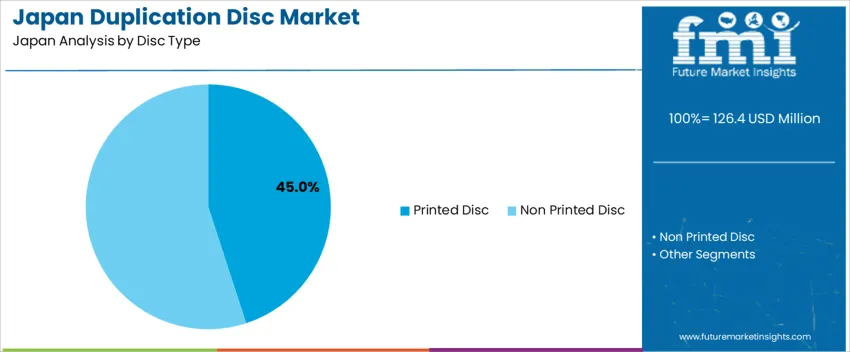
Printed discs account for 45% of the demand for duplication discs in Japan, driven by their key role in labeling and branding. They are ideal for applications where customization is essential, allowing for the printing of images, logos, and text directly onto the surface. As Japan's media and entertainment sectors expand, the need for printed discs increases, particularly for music, video, software, and data storage. The ability to personalize discs makes them popular in both professional and consumer-facing products, where presentation matters. Printed discs offer a clear advertising advantage, making them ideal for businesses looking to differentiate their products. As demand for high-quality, visually distinct media products grows, printed discs continue to dominate the duplication disc industry in Japan, especially where branding and customization are crucial.
How Does Inkjet Printing Technology Dominate the Demand for Duplication Discs in Japan?
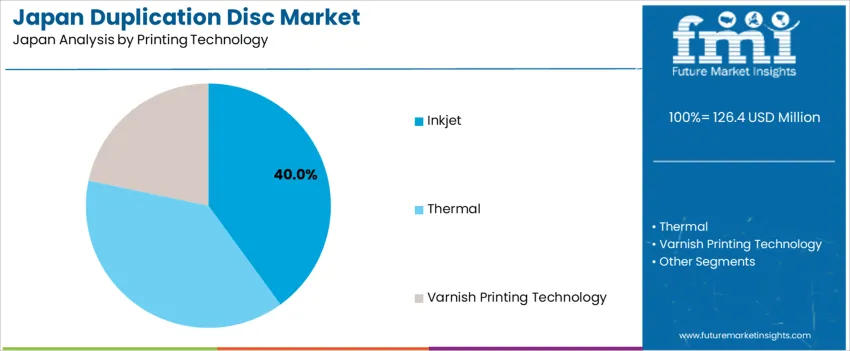
Inkjet printing technology accounts for 40% of the demand for duplication discs in Japan, driven by its cost-effectiveness, versatility, and high-quality output. Inkjet printers enable high-resolution designs to be printed directly onto the surface of duplication discs, making them perfect for projects that require detailed, vibrant images. The popularity of inkjet printing is also due to its ease of use, accessibility, and affordability, particularly for small to medium-scale duplication runs. As consumer demand for customized, high-quality media products rises, inkjet printing technology remains the preferred choice for both personal and commercial uses. Its ability to deliver professional-level results without high overhead costs ensures inkjet printing remains dominant in Japan’s duplication disc industry, catering to both businesses and individual users seeking cost-effective, high-quality printing solutions.
What are the Key Trends, Drivers, and Restraints in Demand for Duplication Discs in Japan?
Demand for duplication discs in Japan including CD‑R, DVD‑R, Blu‑ray, and other recordable/replicated media continues to find support in certain industry niches, despite the strong shift toward digital media. There remains stable demand from sectors such as media production (music, film, video games), corporate training, education, archival storage, and data backup. The need for reliable offline storage, physical media distribution (e.g. for collectors, limited editions, archival content), and legacy‑system compatibility sustains the industry for duplication discs. Widespread adoption of cloud storage, streaming services, and digital distribution reduces overall demand, and concerns about e‑waste act as a restraint on broad growth in Japan.
Why is Demand for Duplication Discs Growing (or Remaining Stable) in Japan?
Even in a digital‑first era, duplication discs remain attractive in Japan for their reliability, offline access, affordability (particularly in bulk duplication), and long‑term data preservation. For media companies releasing CDs, DVDs, or Blu‑rays especially for collectors, limited‑edition releases, or physical media fans duplication discs remain essential. Educational institutions, corporate training departments, and organizations needing secure archival or distribution of video, software, or data also rely on physical discs rather than purely online delivery. For backup and offline storage especially for sensitive or long‑term archival needs discs offer a stable medium that isn’t subject to data loss or online security risks tied to cloud or streaming platforms.
How are Technological & Industry Innovations Driving Duplication Disc Demand in Japan?
Advances in disc manufacturing, printing/duplication technology, and materials have helped maintain the relevance of duplication discs. Modern duplication systems with high‑speed burning, efficient error‑checking, automated production, and high‑quality printing make bulk duplication more cost‑effective and reliable. High-capacity formats such as Blu-ray and newer multi‑layer discs meet growing demands for storage of large data sets or high‑definition content (e.g. 4K video, large datasets), allowing discs to remain viable for media distribution, software packages, or archival purposes. Improvements in disc longevity, error resilience, and compatibility across devices also make duplication discs a dependable choice for long-term storage, distribution, or archival preserving their niche in industrys where physical media is preferred.
What are the Key Challenges and Risks That Could Limit Duplication Disc Demand in Japan?
The shift toward streaming, digital downloads, cloud storage, and online distribution of media, software, and data continues to erode mass-industry demand for physical discs. Consumers and businesses increasingly prefer instant, on‑demand access over maintaining physical media, reducing duplication disc demand. Environmental concerns about plastic media and e‑waste, combined with increasing regulations or consumer preferences for sustainable alternatives, further dampen growth. As hardware manufacturers reduce support for optical media (e.g. fewer disc drives in new PCs/ laptops), compatibility becomes an issue discouraging new buyers. For many modern uses (data backup, sharing, cloud‑based workflows), disc‑based duplication simply can’t compete with the convenience, scalability, and flexibility of digital storage solutions.
What is the Regional Demand Outlook for Duplication Disc in Japan?
| Region | CAGR (%) |
|---|---|
| Kyushu & Okinawa | 6.0% |
| Kanto | 5.5% |
| Kansai | 4.8% |
| Chubu | 4.3% |
| Tohoku | 3.7% |
| Rest of Japan | 3.6% |
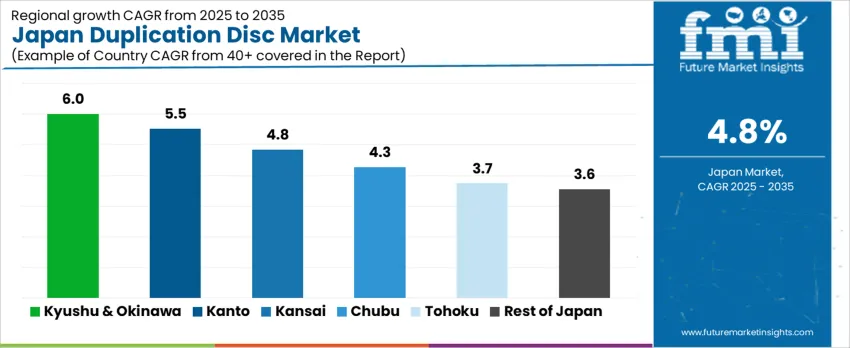
Demand for duplication discs in Japan is growing steadily, with Kyushu & Okinawa leading at a 6.0% CAGR, driven by increasing content production and the tourism sector. Kanto follows with a 5.5% CAGR, supported by its strong media production and distribution hubs. Kansai shows a 4.8% CAGR, driven by its growing entertainment, educational, and business sectors. Chubu experiences a 4.3% CAGR, with rising demand from the manufacturing and educational sectors. Tohoku and the Rest of Japan show moderate growth at 3.7% and 3.6%, respectively, as rural areas increasingly adopt digital media for business and educational purposes. As content production and distribution grow, the demand for duplication discs will continue to rise across Japan.
How is Demand for Duplication Discs Growing in Kyushu & Okinawa?
Kyushu & Okinawa shows the highest demand for duplication discs, growing at a 6.0% CAGR. The region's increasing demand for media storage and distribution, particularly in the entertainment and educational sectors, is a key driver. As businesses, schools, and individuals continue to rely on physical media for data storage, duplication discs remain essential. The growth in local content production, including music, movies, and educational materials, has further contributed to the need for high-quality duplication solutions. The tourism sector in Okinawa also plays a role, as businesses in the hospitality industry often require duplication discs for promotional materials and event recordings. As the demand for reliable media storage and content duplication grows, especially among local producers, Kyushu & Okinawa’s demand for duplication discs is expected to continue its steady rise.
Why is Demand for Duplication Discs Rising in Kanto?
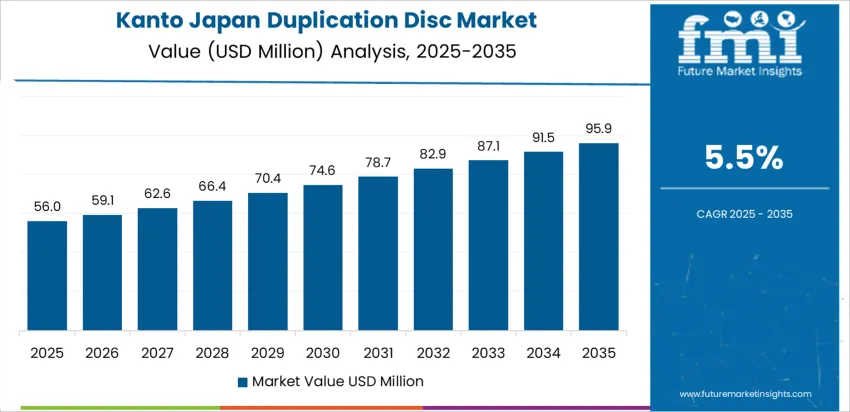
Kanto is experiencing steady demand for duplication discs, growing at a 5.5% CAGR. The region’s strong presence in media production, including film, music, and digital content, drives the need for duplication solutions. With Tokyo as a hub for the entertainment industry, there is significant demand for duplication discs for content distribution, archival storage, and promotional materials. The increasing use of physical media for advertising and distribution in industries such as retail and corporate sectors further boosts the adoption of duplication discs. Kanto's technological advancements and high-speed media production capabilities also support the continued demand for duplication discs, as content creators and businesses rely on efficient, high-quality media storage. As the region continues to lead in media production and distribution, demand for duplication discs remains strong.
How is Demand for Duplication Discs Expanding in Kansai?
Kansai is seeing steady demand for duplication discs, with a 4.8% CAGR. The region’s growing content production sectors, particularly in cities like Osaka and Kyoto, drive the demand for duplication discs, primarily for media storage, data backup, and content distribution. Kansai’s strong entertainment and educational industries further contribute to the need for high-quality duplication solutions. Local producers of music, films, and educational materials rely on duplication discs to distribute content both locally and internationally. As businesses in Kansai expand their use of physical media for advertising purposes, demand for duplication discs continues to grow steadily. The increasing focus on digital media and the need for physical storage options ensure the continued relevance of duplication discs in Kansai’s industry. As demand for media content distribution rises, Kansai’s adoption of duplication discs is expected to remain robust.
Why is Demand for Duplication Discs Growing in Chubu?
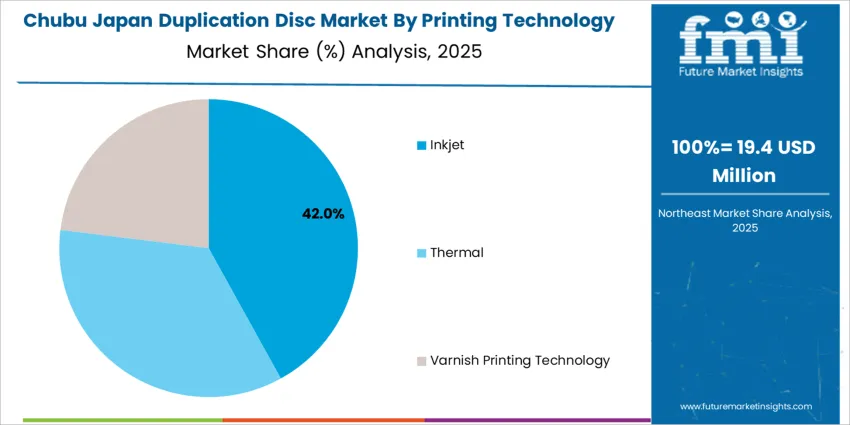
Chubu is experiencing steady demand for duplication discs, growing at a 4.3% CAGR. The region’s diverse industries, including manufacturing, education, and entertainment, are increasingly relying on duplication discs for data storage, backups, and content distribution. Chubu’s growing emphasis on educational materials, including instructional videos and training programs, is contributing to the demand for duplication discs. The region’s strong presence in the automotive and technology sectors drives the need for media storage solutions, particularly for product manuals, software distribution, and promotional materials. The demand for duplication discs is also supported by the increasing use of physical media for business presentations and advertising purposes. As Chubu’s industries and businesses continue to grow, the need for reliable and high-quality duplication solutions will drive steady demand for duplication discs in the region.
How is Demand for Duplication Discs Expanding in Tohoku?
Tohoku is seeing moderate demand for duplication discs, with a 3.7% CAGR. While the industry is smaller compared to more urbanized regions, the growing focus on content production in the region is contributing to an increase in demand for duplication discs. Tohoku’s industries, particularly in the educational and entertainment sectors, are adopting duplication discs for content distribution, storage, and promotional use. The region’s agricultural and manufacturing industries also use duplication discs for product demonstrations and instructional videos. As Tohoku continues to modernize its infrastructure and adopt digital tools, the demand for physical media, including duplication discs, is expected to grow. While growth is slower than in more urban areas, the increasing use of physical media for advertising, training, and content distribution is supporting steady demand in Tohoku.
Why is Demand for Duplication Discs Steady in the Rest of Japan?
The Rest of Japan is experiencing steady demand for duplication discs, growing at a 3.6% CAGR. While the demand in rural and less urbanized areas is smaller compared to major urban centers, there is consistent growth as more local businesses, educational institutions, and media producers adopt duplication discs for data storage, content distribution, and advertising purposes. As access to digital technologies improves in these areas, local businesses are increasingly turning to physical media for promotional purposes, training materials, and product demonstrations. The rise in small-scale content production and distribution in rural areas is driving demand for duplication discs. As businesses in the Rest of Japan seek reliable and cost-effective media storage solutions, demand for duplication discs is expected to grow steadily over the coming years.
What is the Competitive Landscape of Duplication Disc Demand in Japan?
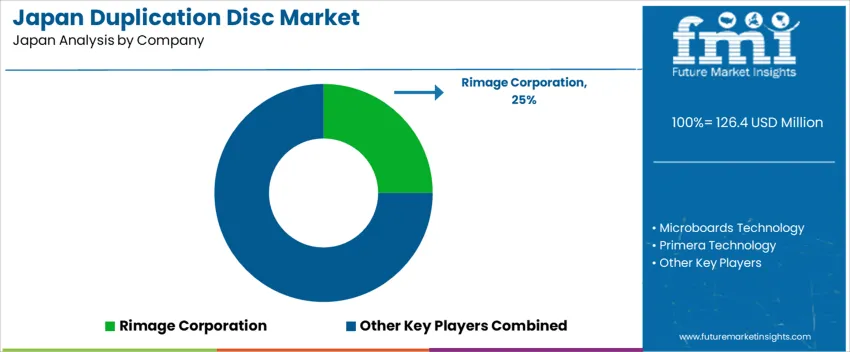
Demand for duplication discs in Japan remains resilient, driven by ongoing needs for reliable data storage, archival media, corporate/educational content distribution, and certain entertainment applications. Despite increasing digital and cloud-based alternatives, optical media retention persists in segments where long-term stability, offline access, and physical distribution matter. As organizations across media, education, healthcare, and enterprise sectors continue to require secure, low-cost, and portable physical backups or distribution media, the industry for duplication discs retains relevance.
Major players in the duplication disc space include Reimage Corporation, Microboards Technology, Primera Technology, Vinpower Digital, and Epson. Rimage Corporation is estimated to hold about 25.0% of the industry share, supplying high-end duplication and publishing systems widely used by media producers, corporate clients, and institutions needing bulk disc replication. The other vendors offer a mix of smaller-scale duplicators, blank media, and publishing systems suitable for enterprises, educational institutions, software distributors, and archival services. Their products serve a range of needs from small-batch duplication to large-volume disc production.
Several factors sustain demand for duplication discs in Japan. First, industries requiring secure offline data distribution and long-term archiving such as education, corporate compliance, media production, and government continue to rely on physical disc media for reliability and data integrity. Second, duplication disc solutions remain cost-effective for bulk production compared to higher-cost alternatives, especially for mid-to-low volume runs. Third, in use-cases where internet or cloud infrastructure may be constrained or data security is paramount, optical discs provide a stable, unalterable format. Vendors compete by offering improvements in duplication speed, error-free replication, reliability, media quality, and cost per disc. As long as these use-cases persist, companies with robust duplication systems and quality media are likely to maintain competitive advantage in Japan’s duplication disc industry.
Key Players in Japan Duplication Disc Demand
- Rimage Corporation
- Microboards Technology
- Primera Technology
- Vinpower Digital
- Epson
Scope of Report
| Items | Values |
|---|---|
| Quantitative Units (2025) | USD million |
| Disc Type | Printed Disc, Non Printed Disc |
| Printing Technology | Inkjet, Thermal, Varnish Printing Technology |
| Region | Kyushu & Okinawa, Kanto, Kansai, Chubu, Tohoku, Rest of Japan |
| Countries Covered | Japan |
| Key Companies Profiled | Rimage Corporation, Microboards Technology, Primera Technology, Vinpower Digital, Epson |
| Additional Attributes | Dollar sales by disc type and printing technology; regional CAGR and adoption trends; advancements in duplication disc technology; demand for high-quality printed and non-printed discs in various industries |
Japan Duplication Disc Demand by Key Segments
Disc Type
- Printed Disc
- Non Printed Disc
Printing Technology
- Inkjet
- Thermal
- Varnish Printing Technology
Region
- Kyushu & Okinawa
- Kanto
- Kansai
- Chubu
- Tohoku
- Rest of Japan
Frequently Asked Questions
How big is the demand for duplication disc in Japan in 2025?
The demand for duplication disc in Japan is estimated to be valued at USD 126.4 million in 2025.
What will be the size of duplication disc in Japan in 2035?
The market size for the duplication disc in Japan is projected to reach USD 202.0 million by 2035.
How much will be the demand for duplication disc in Japan growth between 2025 and 2035?
The demand for duplication disc in Japan is expected to grow at a 4.8% CAGR between 2025 and 2035.
What are the key product types in the duplication disc in Japan?
The key product types in duplication disc in Japan are printed disc and non printed disc.
Which printing technology segment is expected to contribute significant share in the duplication disc in Japan in 2025?
In terms of printing technology, inkjet segment is expected to command 40.0% share in the duplication disc in Japan in 2025.
Preview the report firsthand - request a free sample
Get SampleGet the brochure for pricing and purchase details.
Get PDFTable of Content
- Executive Summary
- Japan Market Outlook
- Demand-side Trends
- Supply-side Trends
- Technology Roadmap Analysis
- Analysis and Recommendations
- Market Overview
- Market Coverage / Taxonomy
- Market Definition / Scope / Limitations
- Market Background
- Market Dynamics
- Drivers
- Restraints
- Opportunity
- Trends
- Scenario Forecast
- Demand in Optimistic Scenario
- Demand in Likely Scenario
- Demand in Conservative Scenario
- Opportunity Map Analysis
- Product Life Cycle Analysis
- Supply Chain Analysis
- Investment Feasibility Matrix
- Value Chain Analysis
- PESTLE and Porter’s Analysis
- Regulatory Landscape
- Regional Parent Market Outlook
- Production and Consumption Statistics
- Import and Export Statistics
- Market Dynamics
- Japan Market Analysis 2020 to 2024 and Forecast, 2025 to 2035
- Historical Market Size Value (USD Million) Analysis, 2020 to 2024
- Current and Future Market Size Value (USD Million) Projections, 2025 to 2035
- Y-o-Y Growth Trend Analysis
- Absolute $ Opportunity Analysis
- Japan Market Pricing Analysis 2020 to 2024 and Forecast 2025 to 2035
- Japan Market Analysis 2020 to 2024 and Forecast 2025 to 2035, By Disc Type
- Introduction / Key Findings
- Historical Market Size Value (USD Million) Analysis By Disc Type , 2020 to 2024
- Current and Future Market Size Value (USD Million) Analysis and Forecast By Disc Type , 2025 to 2035
- Printed Disc
- Non Printed Disc
- Y-o-Y Growth Trend Analysis By Disc Type , 2020 to 2024
- Absolute $ Opportunity Analysis By Disc Type , 2025 to 2035
- Japan Market Analysis 2020 to 2024 and Forecast 2025 to 2035, By Printing Technology
- Introduction / Key Findings
- Historical Market Size Value (USD Million) Analysis By Printing Technology, 2020 to 2024
- Current and Future Market Size Value (USD Million) Analysis and Forecast By Printing Technology, 2025 to 2035
- Inkjet
- Thermal
- Varnish Printing Technology
- Y-o-Y Growth Trend Analysis By Printing Technology, 2020 to 2024
- Absolute $ Opportunity Analysis By Printing Technology, 2025 to 2035
- Market Structure Analysis
- Competition Dashboard
- Competition Benchmarking
- Market Share Analysis of Top Players
- By Regional
- By Disc Type
- By Printing Technology
- Competition Analysis
- Competition Deep Dive
- Rimage Corporation
- Overview
- Product Portfolio
- Profitability by Market Segments (Product/Age /Sales Channel/Region)
- Sales Footprint
- Strategy Overview
- Marketing Strategy
- Product Strategy
- Channel Strategy
- Microboards Technology
- Primera Technology
- Vinpower Digital
- Epson
- Rimage Corporation
- Competition Deep Dive
- Assumptions & Acronyms Used
- Research Methodology


