

- Industry Size (2025)
- USD 2.0 Bn
- Forecast (2035)
- USD 4.7 Bn
- CAGR (2025 to 2035)
- 8.8%
Demand for Proteomics in Japan Forecast and Outlook 2025 to 2035
Demand for proteomics in Japan is projected to grow from USD 2.0 billion in 2025 to USD 4.7 billion by 2035, reflecting a CAGR of 8.8%. In the early years, from 2025 to 2029, the industry shows steady growth, with significant year-on-year increases. By 2026, the demand reaches USD 2.0 billion, followed by USD 2.2 billion in 2027, marking a growth rate of 10.4%.
As the technology continues to advance, the industry expands to USD 2.6 billion in 2028 and USD 2.8 billion by 2030. These early years are driven by strong investments in clinical research, pharmaceutical development, and an increasing emphasis on personalized medicine, where proteomics plays a key role in disease prevention, diagnostics, and treatment.
Quick Stats of the Demand for Proteomics in Japan
- Demand for Proteomics in Japan Value (2025): USD 2.0 billion
- Demand for Proteomics in Japan Forecast Value (2035): USD 4.7 billion
- Demand for Proteomics in Japan Forecast CAGR (2025-2035): 8.8%
- Demand for Proteomics in Japan Leading Component Type: Instruments
- Demand for Proteomics in Japan Key Growth Regions: Kyushu & Okinawa, Kanto, Kansai, Chubu, Tohoku, Rest of Japan
- Demand for Proteomics in Japan Top Players: Thermo Fisher Scientific Inc., Agilent Technologies, Danaher Corporation, GE Healthcare, Bio-Rad Laboratories
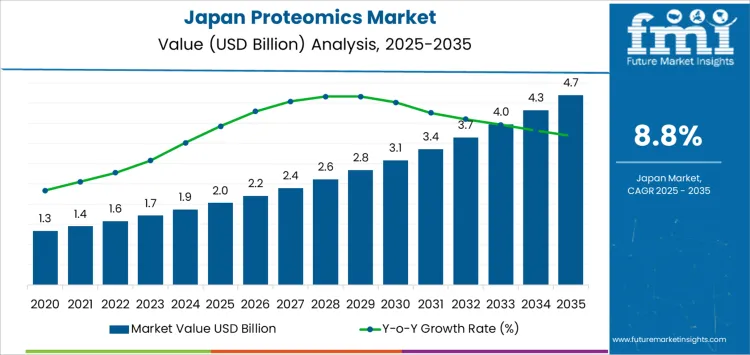
As the industry moves into the 2030s, the demand for proteomics in Japan is expected to maintain robust growth, reaching USD 4.7 billion by 2035. This period is marked by advancements in mass spectrometry, bioinformatics, and high-throughput screening techniques, which will enhance the effectiveness of proteomics in drug discovery and clinical diagnostics. The ongoing focus on personalized healthcare, combined with government initiatives supporting biotechnology research and innovation, will drive demand further.
The rise of precision medicine, which relies heavily on proteomics for understanding disease mechanisms and identifying biomarkers, will contribute to the sector’s continued expansion. This strong growth trajectory through 2035 underscores proteomics' increasing importance in Japan’s healthcare and biotechnology landscape.
Demand for Proteomics in Japan Key Takeaways
| Metric | Value |
|---|---|
| Demand for Proteomics in Japan Value (2025) | USD 2.0 billion |
| Demand for Proteomics in Japan Forecast Value (2035) | USD 4.7 billion |
| Demand for Proteomics in Japan Forecast CAGR (2025-2035) | 8.8% |
Why is the Demand for Proteomics in Japan Growing?
Demand for proteomics in Japan is increasing as the country places a strong emphasis on advancing healthcare and life sciences research. Proteomics, which involves the large-scale study of proteins, plays a critical role in understanding diseases, developing targeted treatments, and improving diagnostics. As Japan’s healthcare system continues to focus on personalized medicine and more precise therapeutic strategies, proteomics is becoming a vital tool for identifying biomarkers and discovering new drug targets. The increasing prevalence of chronic diseases such as cancer, diabetes, and cardiovascular disorders is driving the need for more effective diagnostic tools and therapies, making proteomics an essential area of research.
The growth in demand is also driven by advancements in technologies such as mass spectrometry, high-throughput screening, and bioinformatics, which have enhanced the sensitivity, speed, and accuracy of proteomics research. These innovations allow researchers to analyze complex protein interactions and gain insights into the molecular mechanisms of diseases more efficiently. Moreover, Japan’s commitment to technological innovation and its strong research infrastructure provide an ideal environment for the continued growth of proteomics.
Rising interest in biotechnology and pharmaceuticals is contributing to the expansion of proteomics applications. The pharmaceutical industry in Japan is increasingly leveraging proteomics to identify novel drug candidates, leading to the development of more effective and targeted therapies. With Japan's aging population and the growing focus on precision medicine, the demand for proteomics services and technologies is expected to continue expanding through 2035.
What is the Segment-Wise Analysis of Demand for Proteomics in Japan?
Demand for proteomics in Japan is segmented by component type, end user, technology, and application. By component type, instruments lead the demand at 51%, followed by reagents & kits and core proteomics services. In terms of end users, contract research organizations (CROs) dominate, accounting for 70%, with research & academic institutions and pharma & biotech companies also contributing. The technology segment includes microarray instruments, X-ray crystallography, spectroscopy, chromatography, protein fractionation systems, electrophoresis, and surface plasma resonance systems. In terms of application, proteomics is widely used in drug discovery, clinical diagnosis, and cancer research, driving the demand in the industry.
How Do Instruments Lead the Demand for Proteomics in Japan?
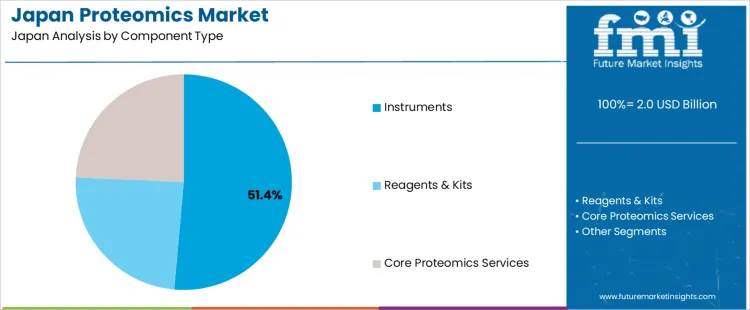
Instruments account for 51% of the demand for proteomics in Japan, driven by their critical role in proteomics research and analysis. These instruments, such as mass spectrometers, protein Analyzers, and liquid chromatography systems, are essential for detecting, identifying, and quantifying proteins in complex biological samples. The demand for instruments is particularly strong in drug discovery and cancer research, where precise and high-throughput analysis is necessary. Instruments are favored for their accuracy, reliability, and efficiency in generating large volumes of data.
As proteomics continues to evolve, technological advancements in instruments enhance the capabilities of researchers and clinical diagnosticians. The strong demand for proteomics instruments is especially evident in contract research organizations (CROs) and pharma companies in Japan, where the need for robust analytical tools to support drug development and personalized medicine is growing. With the rising focus on precision medicine, proteomics instruments remain a key driver of industry growth.
Why Do Contract Research Organizations (CROs) Lead the Demand for Proteomics in Japan?
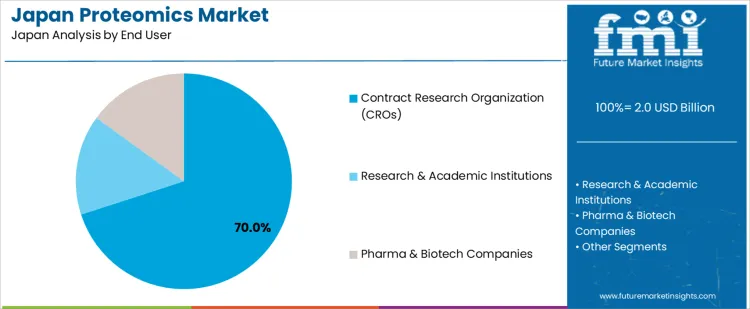
Contract research organizations (CROs) account for 70% of the demand for proteomics in Japan, reflecting their pivotal role in supporting pharmaceutical, biotech, and academic research. CROs are at the forefront of utilizing proteomics technologies for drug discovery, clinical trials, and biomarker development. Their demand for proteomics services, particularly in protein Analysis, mass spectrometry, and drug target identification, drives the industry.
As pharmaceutical companies and biotech firms increasingly outsource research and development tasks, CROs play a key role in providing specialized services to accelerate drug development and clinical trials. The high demand for proteomics in CROs is fueled by the growing need for personalized medicine and targeted therapies, where proteomics data plays a critical role. With Japan's strong emphasis on advancing medical research and innovation, the demand for proteomics services within CROs continues to rise, making them the dominant end-user in the industry.
What are the Key Trends, Drivers, and Restraints in Demand for Proteomics in Japan?
Demand for proteomics in Japan is rising rapidly, driven by expanding biomedical research, growing interest in precision medicine and biomarker-based diagnostics, and strong pharmaceutical/biotech R&D activity. Researchers and drug developers increasingly rely on protein-level analysis (structure, expression, post-translational modifications) to discover disease markers, understand disease mechanisms, and develop targeted therapies.
As population aging increases the burden of chronic and age-related diseases, demand for advanced diagnostics, therapeutics and personalized medicine solutions pushes proteomics adoption. High upfront costs for sophisticated instruments (mass spectrometers, chromatography, microarrays), need for skilled personnel and data-analysis capabilities, and challenges around data management/bioinformatics pose restraints for smaller labs or institutions.
Why is Demand for Proteomics Growing in Japan?
Several factors fuel proteomics uptake in Japan. The country’s advanced R&D infrastructure, strong public- and private-sector funding for biotechnology, and focus on developing next-generation diagnostics and therapies create fertile ground for proteomics. The rise of precision medicine tailoring treatments based on molecular and protein biomarkers increases demand for proteomic profiling and biomarker discovery. Increasing prevalence of chronic diseases (cancer, neurodegenerative disorders, metabolic conditions) and aging population intensifies need for advanced diagnostics, therapeutic development, and disease-mechanism research, all of which rely on proteomics. This drives growth in both academic research and commercial biotech/pharma uses.
How are Technological & Industry Innovations Driving Proteomics Demand in Japan?
Technological advances notably improvements in mass spectrometry, chromatography, high-throughput protein microarrays, bioinformatics tools, and data-analysis software - have made proteomics more accurate, scalable, and actionable. These innovations enhance capabilities for protein quantification, identification of post-translational modifications, interaction mapping, and biomarker validation. As instruments become more sensitive and workflows more streamlined, proteomics becomes viable for diagnostics, drug discovery, and translational research. This reduces the barrier to entry for labs and companies aiming to integrate proteomics into their pipelines, boosting overall demand.
What are the Key Challenges and Risks That Could Limit Proteomics Demand in Japan?
Despite strong growth potential, several challenges may limit broader proteomics adoption. Equipment and reagents (e.g., mass spectrometers, consumables) remain expensive, posing barriers especially for smaller research labs or start-ups. Skilled personnel lab technicians, bioinformaticians, data analysts are needed to handle complex workflows and large data volumes; shortages in such talent can constrain growth. Data management and reproducibility concerns (especially with large proteomic datasets), regulatory and ethical aspects of clinical applications, and the need for standardization in workflows and biomarker validation add complexity. Finally, competition from alternative "omics" approaches (genomics, metabolomics) may influence research priorities and resource allocation.
What is the Regional Demand Outlook for Proteomics in Japan?
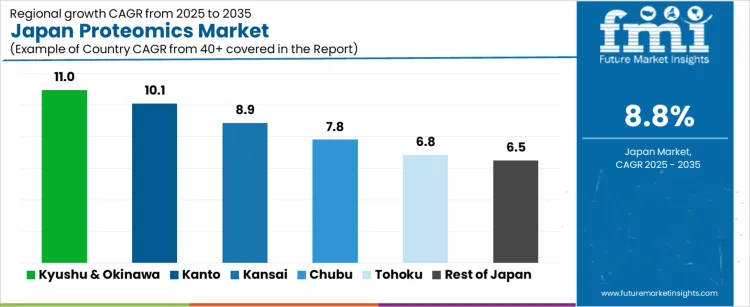
Demand for proteomics in Japan is growing steadily across all regions, with Kyushu & Okinawa leading at an 11.0% CAGR, driven by the region’s investment in biotechnology and life sciences. Kanto follows with a 10.1% CAGR, supported by the region’s advanced research infrastructure and strong presence of biotech and pharmaceutical companies. Kansai shows an 8.9% CAGR, with growing interest from academic institutions and healthcare research.
Chubu experiences a 7.8% CAGR, with demand expanding due to its diverse industrial base, particularly in the pharmaceutical and healthcare sectors. Tohoku and the Rest of Japan see more moderate growth at 6.8% and 6.5%, respectively, as the demand for proteomics technologies gradually increases in these regions.
| Region | CAGR (%) |
|---|---|
| Kyushu & Okinawa | 11.0% |
| Kanto | 10.1% |
| Kansai | 8.9% |
| Chubu | 7.8% |
| Tohoku | 6.8% |
| Rest of Japan | 6.5% |
How is Demand for Proteomics Growing in Kyushu & Okinawa?
Kyushu & Okinawa leads the demand for proteomics, growing at an 11.0% CAGR. The region’s growing biotechnology sector, particularly in Okinawa, has contributed to a surge in demand for advanced technologies such as proteomics. With a focus on life sciences research and medical innovations, Kyushu & Okinawa are positioning themselves as a hub for biotechnology research and development. Okinawa, with its strong emphasis on health and longevity, is increasingly adopting proteomics technologies for health diagnostics, disease prevention, and drug development.
The demand for proteomics in Kyushu & Okinawa is also driven by local universities and research institutes, which are increasingly incorporating these technologies into their studies. As the region continues to invest in biotechnological innovations, demand for proteomics technologies is expected to remain strong, further supporting the growth of life sciences industries in Kyushu & Okinawa.
Why is Demand for Proteomics Rising in Kanto?
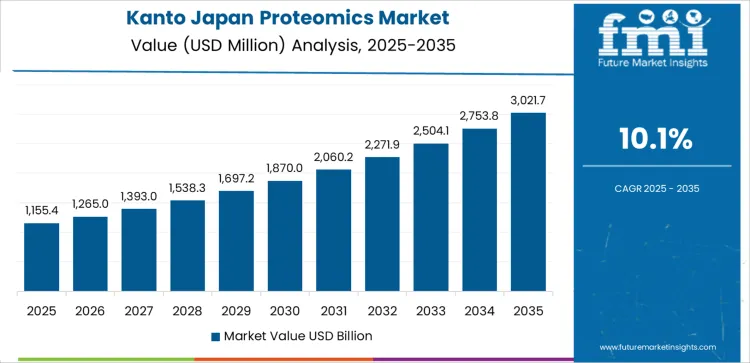
In Kanto, demand for proteomics is rising at a 10.1% CAGR. The region’s strong presence of research institutions, universities, and biotech companies, particularly in Tokyo, contributes to the rapid growth in proteomics adoption. Kanto is a hub for cutting-edge biotechnology and life sciences research, and proteomics plays a critical role in advancing medical diagnostics, personalized medicine, and drug discovery. The region’s pharmaceutical companies are increasingly utilizing proteomics technologies to study protein interactions, disease mechanisms, and therapeutic targets.
Kanto’s healthcare sector is adopting proteomics for improving clinical decision-making and patient care. As the demand for precision medicine and tailored healthcare solutions grows, proteomics is expected to become an integral part of Kanto’s healthcare and biotechnology landscape. The region’s research infrastructure, combined with the increasing interest in life sciences, ensures that Kanto will continue to drive the demand for proteomics technologies.
How is Demand for Proteomics Expanding in Kansai?
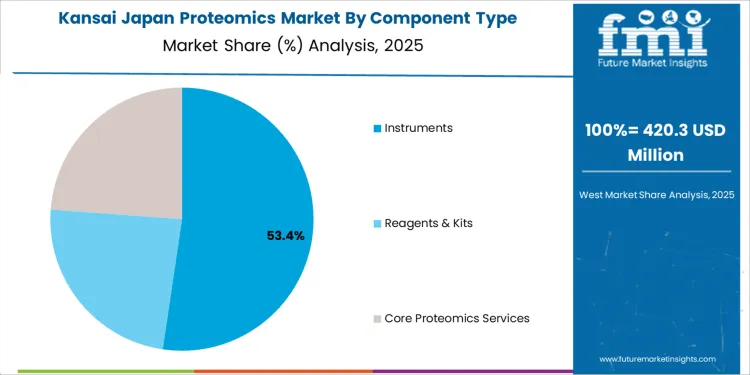
Kansai shows steady demand for proteomics, growing at an 8.9% CAGR. The region’s rich academic and research environment, particularly in cities like Osaka and Kyoto, contributes to the steady adoption of proteomics technologies. Universities and research institutions in Kansai are increasingly incorporating proteomics into their scientific studies, particularly in the areas of biotechnology, pharmacology, and disease research.
The region’s strong pharmaceutical and healthcare sectors are also key drivers of proteomics demand, as companies use these technologies to develop new drugs, improve diagnostics, and study disease pathways. Kansai’s growing emphasis on precision medicine, coupled with its focus on innovative biotechnology solutions, supports the adoption of proteomics across various sectors. As research and development in life sciences continues to expand in Kansai, the demand for proteomics technologies is expected to grow steadily, supporting advancements in healthcare and medical research.
Why is Demand for Proteomics Growing in Chubu?
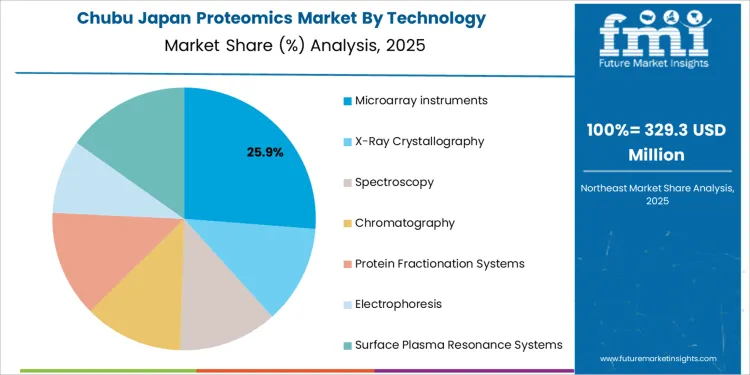
Chubu is experiencing steady demand for proteomics, growing at a 7.8% CAGR. The region’s diverse industrial base, particularly in Nagoya, supports the growing demand for proteomics technologies in both healthcare and biotechnology sectors. Chubu’s pharmaceutical companies are increasingly utilizing proteomics in drug discovery, disease research, and personalized medicine development. As more companies in the region recognize the value of proteomics for understanding protein functions, interactions, and biomarkers, the technology is becoming more integrated into their R&D efforts.
Chubu’s emphasis on technological innovation and its strong research institutions, including universities and biotech startups, contribute to the steady expansion of proteomics applications in the region. As Chubu’s healthcare sector evolves toward more personalized approaches to patient care, proteomics technologies will play a key role in supporting these advances, ensuring steady growth in demand across the region.
How is Demand for Proteomics Expanding in Tohoku?
Tohoku is seeing moderate growth in proteomics demand, with a 6.8% CAGR. While the region’s demand for proteomics is smaller compared to major urban areas, there is a growing interest in adopting these technologies as Tohoku’s biotechnology and healthcare sectors continue to expand. Universities and research institutions in Tohoku are increasingly incorporating proteomics into their studies, particularly in areas related to environmental health, disease prevention, and agriculture.
As the region’s healthcare providers explore more personalized treatments and diagnostic tools, proteomics technologies are becoming more integral in improving patient care. The adoption of proteomics is also supported by government initiatives and investments in regional biotechnology infrastructure. As Tohoku continues to embrace life sciences research and personalized medicine, the demand for proteomics will continue to rise steadily, driven by the region’s expanding healthcare and biotech sectors.
Why is Demand for Proteomics Steady in the Rest of Japan?
The Rest of Japan is experiencing steady demand for proteomics, with a 6.5% CAGR. Although adoption is slower compared to more urbanized regions, there is growing interest in proteomics technologies as smaller cities and rural areas continue to invest in biotechnology and healthcare advancements. As the Rest of Japan focuses on improving healthcare access and quality, proteomics is being increasingly recognized for its potential in diagnostics, disease research, and personalized medicine.
Local universities, research institutes, and healthcare providers are adopting proteomics tools to enhance medical research and patient care. The growing awareness of proteomics in rural areas, coupled with the expansion of digital health solutions, supports steady growth in the sector. While growth is more gradual, the rising demand for advanced medical technologies ensures that the Rest of Japan will continue to see an increase in proteomics adoption, contributing to the overall growth of the life sciences sector.
What is Driving the Demand for Proteomics in Japan and Who Are the Key Providers?
The demand for proteomics the comprehensive study of proteins in cells and tissues, in Japan is rising as researchers and healthcare providers increasingly rely on advanced protein Analysis to understand disease mechanisms, develop diagnostics, and tailor treatments. As proteins are the main functional molecules in biological systems, analyzing them provides more accurate insight into real‑time physiological changes than studying genes alone. Proteomics is gaining traction in drug development, biomarker discovery, and personalized medicine, particularly in Japan, which faces an aging population and rising incidence of chronic diseases.
Key providers active in proteomics supply and services in Japan include Thermo Fisher Scientific Inc., Agilent Technologies, Danaher Corporation, GE Healthcare, and Bio-Rad Laboratories. Thermo Fisher holds a significant share of 37.0%, reflecting its extensive portfolio of mass spectrometry, chromatography, and protein‑analysis instrumentation widely used in Japanese labs and biotech firms. These companies provide crucial tools and reagents that enable detailed protein profiling, high‑throughput analysis, and support both basic research and clinical applications.
The rising adoption of proteomics in Japan is further supported by advances in analytical technologies high‑resolution mass spectrometry, automation, multiplexed assays, and bioinformatics tools which make protein Analysis faster, more sensitive, and more accessible. As Japanese research institutes, hospitals, and pharmaceutical companies increasingly prioritize precision diagnostics and personalized therapies, proteomics is becoming a foundational part of biomedical research and clinical innovation.
Key Players in Japan Proteomics Demand
- Thermo Fisher Scientific Inc.
- Agilent Technologies
- Danaher Corporation
- GE Healthcare
- Bio-Rad Laboratories
Scope of Report
| Items | Values |
|---|---|
| Quantitative Units (2025) | USD billion |
| Component Type | Instruments, Reagents & Kits, Core Proteomics Services |
| Technology | Microarray instruments, X-Ray Crystallography, Spectroscopy, Chromatography, Protein Fractionation Systems, Electrophoresis, Surface Plasma Resonance Systems |
| Application | Drug Discovery, Clinical Diagnosis, Cancer Research |
| End User | Contract Research Organization (CROs), Research & Academic Institutions, Pharma & Biotech Companies |
| Region | Kyushu & Okinawa, Kanto, Kansai, Chubu, Tohoku, Rest of Japan |
| Countries Covered | Japan |
| Key Companies Profiled | Thermo Fisher Scientific Inc., Agilent Technologies, Danaher Corporation, GE Healthcare, Bio-Rad Laboratories |
| Additional Attributes | Dollar sales by technology and application; regional CAGR and growth trends; increasing adoption of proteomics in cancer research and drug discovery; innovations in proteomics platforms and systems |
Japan Proteomics Demand by Key Segments
Component Type
- Instruments
- Reagents & Kits
- Core Proteomics Services
Technology
- Microarray instruments
- X-Ray Crystallography
- Spectroscopy
- Chromatography
- Protein Fractionation Systems
- Electrophoresis
- Surface Plasma Resonance Systems
Application
- Drug Discovery
- Clinical Diagnosis
- Cancer Research
End User
- Contract Research Organization (CROs)
- Research & Academic Institutions
- Pharma & Biotech Companies
Region
- Kyushu & Okinawa
- Kanto
- Kansai
- Chubu
- Tohoku
- Rest of Japan
Frequently Asked Questions
How big is the demand for proteomics in Japan in 2025?
The demand for proteomics in Japan is estimated to be valued at USD 2.0 billion in 2025.
What will be the size of proteomics in Japan in 2035?
The market size for the proteomics in Japan is projected to reach USD 4.7 billion by 2035.
How much will be the demand for proteomics in Japan growth between 2025 and 2035?
The demand for proteomics in Japan is expected to grow at a 8.8% CAGR between 2025 and 2035.
What are the key product types in the proteomics in Japan?
The key product types in proteomics in Japan are instruments, reagents & kits and core proteomics services.
Which technology segment is expected to contribute significant share in the proteomics in Japan in 2025?
In terms of technology, microarray instruments segment is expected to command 27.0% share in the proteomics in Japan in 2025.
Preview the report firsthand - request a free sample
Get SampleGet the brochure for pricing and purchase details.
Get PDFTable of Content
- Executive Summary
- Japan Market Outlook
- Demand-side Trends
- Supply-side Trends
- Technology Roadmap Analysis
- Analysis and Recommendations
- Market Overview
- Market Coverage / Taxonomy
- Market Definition / Scope / Limitations
- Market Background
- Market Dynamics
- Drivers
- Restraints
- Opportunity
- Trends
- Scenario Forecast
- Demand in Optimistic Scenario
- Demand in Likely Scenario
- Demand in Conservative Scenario
- Opportunity Map Analysis
- Product Life Cycle Analysis
- Supply Chain Analysis
- Investment Feasibility Matrix
- Value Chain Analysis
- PESTLE and Porter’s Analysis
- Regulatory Landscape
- Regional Parent Market Outlook
- Production and Consumption Statistics
- Import and Export Statistics
- Market Dynamics
- Japan Market Analysis 2020 to 2024 and Forecast, 2025 to 2035
- Historical Market Size Value (USD Million) Analysis, 2020 to 2024
- Current and Future Market Size Value (USD Million) Projections, 2025 to 2035
- Y-o-Y Growth Trend Analysis
- Absolute $ Opportunity Analysis
- Japan Market Pricing Analysis 2020 to 2024 and Forecast 2025 to 2035
- Japan Market Analysis 2020 to 2024 and Forecast 2025 to 2035, By Component Type
- Introduction / Key Findings
- Historical Market Size Value (USD Million) Analysis By Component Type , 2020 to 2024
- Current and Future Market Size Value (USD Million) Analysis and Forecast By Component Type , 2025 to 2035
- Instruments
- Reagents & Kits
- Core Proteomics Services
- Y-o-Y Growth Trend Analysis By Component Type , 2020 to 2024
- Absolute $ Opportunity Analysis By Component Type , 2025 to 2035
- Japan Market Analysis 2020 to 2024 and Forecast 2025 to 2035, By Technology
- Introduction / Key Findings
- Historical Market Size Value (USD Million) Analysis By Technology, 2020 to 2024
- Current and Future Market Size Value (USD Million) Analysis and Forecast By Technology, 2025 to 2035
- Microarray instruments
- X-Ray Crystallography
- Spectroscopy
- Chromatography
- Protein Fractionation Systems
- Electrophoresis
- Surface Plasma Resonance Systems
- Y-o-Y Growth Trend Analysis By Technology, 2020 to 2024
- Absolute $ Opportunity Analysis By Technology, 2025 to 2035
- Japan Market Analysis 2020 to 2024 and Forecast 2025 to 2035, By Application
- Introduction / Key Findings
- Historical Market Size Value (USD Million) Analysis By Application, 2020 to 2024
- Current and Future Market Size Value (USD Million) Analysis and Forecast By Application, 2025 to 2035
- Drug Discovery
- Clinical Diagnosis
- Cancer Research
- Y-o-Y Growth Trend Analysis By Application, 2020 to 2024
- Absolute $ Opportunity Analysis By Application, 2025 to 2035
- Japan Market Analysis 2020 to 2024 and Forecast 2025 to 2035, By End User
- Introduction / Key Findings
- Historical Market Size Value (USD Million) Analysis By End User, 2020 to 2024
- Current and Future Market Size Value (USD Million) Analysis and Forecast By End User, 2025 to 2035
- Contract Research Organization (CROs)
- Research & Academic Institutions
- Pharma & Biotech Companies
- Y-o-Y Growth Trend Analysis By End User, 2020 to 2024
- Absolute $ Opportunity Analysis By End User, 2025 to 2035
- Market Structure Analysis
- Competition Dashboard
- Competition Benchmarking
- Market Share Analysis of Top Players
- By Regional
- By Component Type
- By Technology
- By Application
- By End User
- Competition Analysis
- Competition Deep Dive
- Agilent Technologies
- Overview
- Product Portfolio
- Profitability by Market Segments (Product/Age /Sales Channel/Region)
- Sales Footprint
- Strategy Overview
- Marketing Strategy
- Product Strategy
- Channel Strategy
- Danaher Corporation
- GE Healthcare
- Bio-Rad Laboratories
- Agilent Technologies
- Competition Deep Dive
- Assumptions & Acronyms Used
- Research Methodology


