

- Industry Size (2025)
- USD 121.3 Mn
- Forecast (2035)
- USD 175.3 Mn
- CAGR (2025 to 2035)
- 3.8%
Demand for Virology in Japan Forecast and Outlook 2025 to 2035
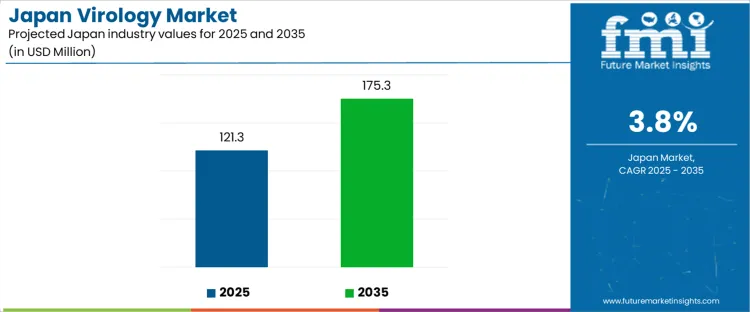
Demand for virology-related treatments and diagnostics in Japan is projected to grow from USD 121.3 million in 2025 to USD 175.3 million by 2035, reflecting a compound annual growth rate (CAGR) of 3.8%. Growth is driven by the continued global focus on infectious diseases, particularly viral infections, and the increasing investment in diagnostic tools, antiviral therapies, and vaccines. As the Japanese population ages, there is a heightened focus on managing viral diseases, including hepatitis, influenza, and emerging viruses. Advancements in virology research, diagnostic technologies, and therapeutic options will support this market’s expansion, as better detection and more effective treatments become available.
Growth is also supported by Japan's strong healthcare infrastructure and ongoing government investments to fight infectious diseases. As the country continues to battle not only endemic viral diseases but also potential new viral outbreaks, the demand for virology-related treatments and diagnostic tools is expected to increase. Furthermore, the integration of new technologies in vaccine development and antiviral drug production will help expand the virology market over the next decade.
Quick Stats of the Demand for Virology in Japan
- Demand for Virology in Japan Value (2025): USD 121.3 million
- Demand for Virology in Japan Forecast Value (2035): USD 175.3 million
- Demand for Virology in Japan Forecast CAGR (2025-2035): 3.8%
- Demand for Virology in Japan Leading Product Type: Diagnostic Tests (46%)
- Demand for Virology in Japan Key Growth Regions: Kyushu & Okinawa, Kanto, Kansai, Chubu, Tohoku, Rest of Japan
- Demand for Virology in Japan Key Players: Pfizer, Tevogen Bio, VerImmune Inc, Takeda Pharmaceuticals, AbbVie
What is the Growth Forecast for the Virology Market through 2035?
Saturation point analysis for the virology market in Japan shows steady growth, with gradual increases in market demand over the forecast period. Starting at USD 121.3 million in 2025, the market shows modest early growth, reaching USD 125.8 million in 2026 and USD 130.5 million in 2027. These early stages reflect the ongoing focus on viral disease management and the adoption of newer, more efficient diagnostics and treatments.
As market matures, growth becomes more stable, with the market reaching USD 135.4 million in 2028, USD 140.5 million in 2029, and USD 145.8 million in 2030. This steady rise indicates that the virology market is reaching a point of gradual maturation, driven by continued adoption of established treatments and diagnostics. By 2035, the market is expected to reach USD 175.3 million, but growth will begin to slow as the market nears saturation. This saturation point reflects the stabilization of demand as key therapies and diagnostics for common viral diseases become well-established, and new infectious threats require less dramatic market shifts. Incremental innovations and ongoing public health needs will increasingly drive the market’s long-term growth.
Key Takeaways of Acrylamide Industry in Japan
| Metric | Value |
|---|---|
| Industry Sales Value (2025) | USD 121.3 million |
| Industry Forecast Value (2035) | USD 175.3 million |
| Industry Forecast CAGR (2025-2035) | 3.8% |
What Is Driving the Demand for Virology in Japan?
Demand for virology in Japan has been shaped by the rising incidence of viral infections and the growing need for diagnostic, therapeutic, and preventive solutions in infectious diseases. Periodic outbreaks of influenza, hepatitis, and other viral infections drive a steady requirement for antiviral drugs, diagnostics and vaccines. The portion of the Japanese infectious disease therapeutics market that relates to viral infections has maintained a dominant share. Improved disease surveillance, greater patient and healthcare provider awareness, and government-level emphasis on infectious disease control contribute to demand for virology services and products. The broader pharmaceutical ecosystem in Japan, characterized by strong consumption of prescription medicines and stable market growth, supports investment and demand in virology-related segments.
Future demand for virology in Japan is likely to increase because of anticipated growth in antiviral therapies, expanded use of diagnostics and molecular testing, and ongoing public health focus on prevention and early detection. Advances in antiviral and vaccine development, along with growing adoption of newer diagnostic technologies, may broaden the scope of virology beyond traditional diseases. An aging population and increased vulnerability to infections may further expand demand for vaccines, treatments, and monitoring. Government support for immunization programs and rising healthcare expenditure are expected to sustain demand for virology solutions.
What Are the Key Segments in Virology Market in Japan?
The virology market in Japan is segmented by product type and application. Diagnostic tests lead the product type segment, holding 46% of the market share. In terms of application, skin and soft tissue infections dominate, accounting for 20% of the market. The increasing need for accurate viral infection detection and effective treatment methods is driving the growth of the virology market in Japan, particularly in diagnostic tests and antiviral therapies.
Which Product Type Drives Virology Demand in Japan?
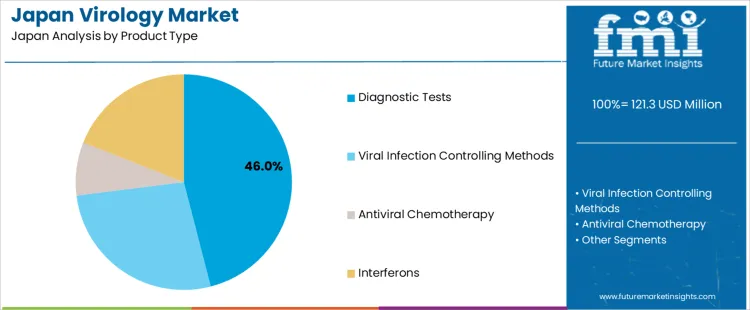
Diagnostic tests are the most significant product type in the virology market in Japan, holding 46% of the market share. These tests are critical for the detection of viral infections, helping healthcare providers identify and diagnose conditions such as influenza, HIV, and hepatitis. Diagnostic tests include PCR (Polymerase Chain Reaction), antigen tests, and serological tests, all of which provide essential information for guiding treatment decisions and controlling viral outbreaks.
The demand for diagnostic tests is driven by the need for timely, accurate diagnoses, particularly in the context of global viral threats such as COVID-19 and seasonal influenza. Viral infection controlling methods, antiviral chemotherapy, and interferons are also important segments, but diagnostic tests remain the dominant product type due to their essential role in managing viral diseases and preventing transmission.
Which Application Drives Virology Demand in Japan?
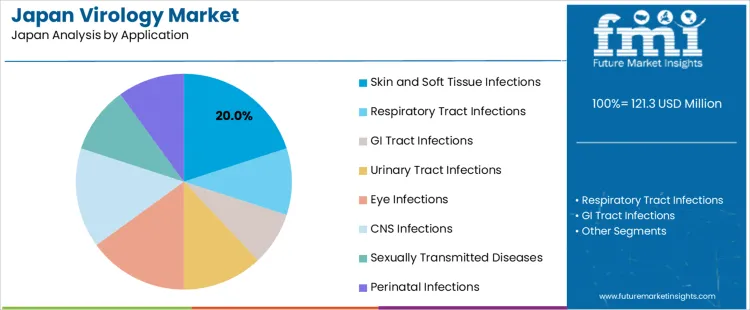
Skin and soft tissue infections are the leading application for virology products in Japan, representing 20% of the market share. Viral skin infections, such as herpes simplex virus (HSV), varicella-zoster virus (VZV), and human papillomavirus (HPV), are common and often require diagnostic testing and antiviral treatments for effective management. The demand for virology products in this area is driven by the high prevalence of these infections and the need for effective antiviral therapies.
Other applications, such as respiratory tract infections, GI tract infections, urinary tract infections, and CNS infections, also contribute to the market, but skin and soft tissue infections remain the primary driver due to the widespread occurrence of viral infections in these areas. The growth of virology diagnostics and treatments is closely linked to the increasing recognition of viral infections as significant contributors to public health issues in Japan.
What is the Demand for Virology in Japan?
The demand for virology in Japan is increasing due to the growing recognition of the importance of virology research in public health. Virology, which involves the study of viruses and their impact on humans, animals, and plants, is crucial for understanding viral diseases and developing vaccines and treatments. As new viruses emerge and existing viruses evolve, the need for advanced virology research, diagnostics, and therapeutic development continues to rise. Japan’s strong healthcare system and research infrastructure make it a leader in virology studies, and the market for virology-related products and services is expanding in response to global health concerns.
What are the Drivers of Demand for Virology in Japan?
Several factors are driving the growing demand for virology in Japan. First, the increasing prevalence of viral infections, including influenza, hepatitis, and the recent COVID-19 pandemic, has heightened the focus on virology research and its role in public health. Second, Japan’s robust healthcare system and government investment in scientific research are supporting the growth of virology studies, particularly in developing vaccines, antiviral therapies, and diagnostic tools.
Third, the rising importance of infectious disease prevention and control, driven by the global nature of pandemics and emerging viruses, is encouraging the demand for more research and advancements in virology. Additionally, the growing use of molecular biology and genetic sequencing in virology is leading to more accurate diagnostics and treatments, further driving the market for virology-related technologies and services.
What are the Restraints on Demand for Virology in Japan?
Despite the growing demand, several challenges may limit the development and application of virology in Japan. One major restraint is the high cost of virology research and technology, particularly for advanced diagnostic tools and vaccine development, which may limit accessibility for smaller research institutions or healthcare providers. Another challenge is the complexity of virology research, which requires highly specialized knowledge, equipment, and long-term investment, making it difficult for some organizations to keep pace with the rapidly evolving field.
Additionally, public concern over the safety and effectiveness of new viral treatments or vaccines, especially following adverse reactions in clinical trials, may reduce trust in new virology-based therapies. Finally, regulatory hurdles and delays in the approval of new virology-related drugs and vaccines can slow progress and affect the availability of life-saving treatments.
What are the Key Trends Influencing Demand for Virology in Japan?
Several key trends are shaping the demand for virology in Japan. One significant trend is the increasing focus on personalized medicine and tailored treatments, which relies heavily on virology research to develop specific therapies for viral infections. Another trend is the growing use of advanced technologies, such as CRISPR gene-editing, artificial intelligence, and high-throughput sequencing, which are transforming virology research and diagnostics, allowing for faster and more accurate virus detection and treatment development.
The rise of global health initiatives and collaborations, particularly in response to pandemics and emerging diseases, is also driving demand for virology expertise and solutions. Additionally, there is a growing emphasis on global viral surveillance, which has highlighted the need for enhanced virology research to monitor and control viral outbreaks. These trends are expected to continue driving the demand for virology in Japan as the field evolves to meet the challenges of an increasingly interconnected world.
What is the Regional Demand Outlook for the Virology Market in Japan?
The Virology market in Japan is projected to experience steady growth, with Kyushu & Okinawa leading the way at a projected CAGR of 4.7%. Kanto follows with a growth rate of 4.3%, while Kansai is expected to grow at 3.8%. Chubu is projected to grow at a rate of 3.3%, while Tohoku and Rest of Japan show more moderate growth, with CAGRs of 2.9% and 2.8%, respectively. As the demand for diagnostic tests, treatments, and vaccines for viral infections increases, particularly in response to the ongoing global health concerns, the market for virology services and products is expected to rise across Japan.
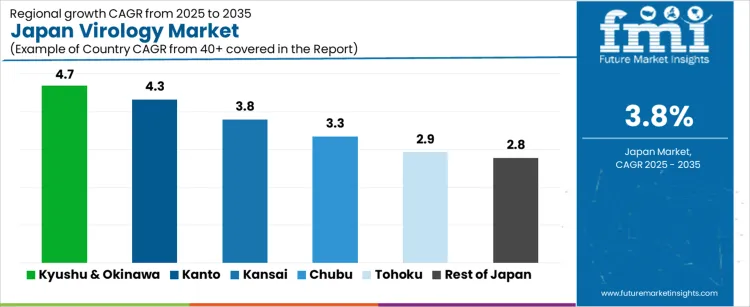
| Region | CAGR (2025-2035) |
|---|---|
| Kyushu & Okinawa | 4.7% |
| Kanto | 4.3% |
| Kansai | 3.8% |
| Chubu | 3.3% |
| Tohoku | 2.9% |
| Rest of Japan | 2.8% |
What is Driving the Growth of Virology in Kyushu & Okinawa?
Kyushu & Okinawa is projected to experience the highest growth in the Virology market, with a projected CAGR of 4.7%. The region’s healthcare systems are increasingly focusing on combating viral diseases and enhancing the availability of diagnostic tools and vaccines. With the rising incidence of viral infections, including respiratory and tropical diseases, healthcare providers in Kyushu & Okinawa are placing greater emphasis on the development and distribution of virology-related treatments. The region’s aging population is also contributing to this growth, as older adults are more susceptible to viral infections and may require more targeted and effective treatments. As healthcare infrastructure continues to expand and improve in the region, the demand for virology products and services is expected to increase.
Why is the Virology Market Expanding in Kanto?
In Kanto, the demand for virology services and products is projected to grow at a CAGR of 4.3%. Kanto, home to Tokyo, Japan's capital and one of the most populous and urbanized areas, has a well-developed healthcare system that supports the increasing need for viral diagnostics and treatments. The high population density, coupled with the ongoing global health challenges, has resulted in greater demand for virology-related services, including viral testing, vaccines, and antiviral treatments. Kanto's healthcare providers are investing in state-of-the-art diagnostic equipment and treatment options to combat a wide variety of viral infections. As the region continues to prioritize public health and the development of innovative healthcare solutions, the market for virology is expected to grow at a steady pace.
How is the Virology Market Growing in Kansai?
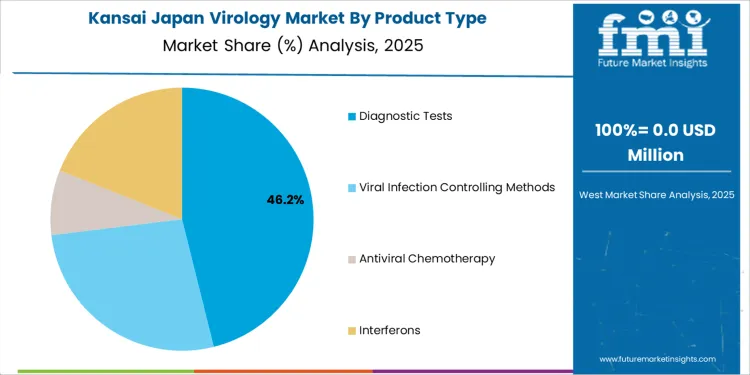
In Kansai, the Virology market is projected to grow at a CAGR of 3.8%. Kansai, which includes major cities like Osaka and Kyoto, has a robust healthcare infrastructure, contributing to the region’s increasing focus on viral disease prevention and treatment. As the incidence of viral infections continues to rise, healthcare providers in Kansai are adopting more advanced diagnostic and therapeutic technologies to manage viral diseases.
Kansai’s large number of hospitals and medical research institutions, along with a growing emphasis on medical tourism, is further fueling the demand for virology services. Additionally, the region’s aging population, which is more vulnerable to viral infections, is driving the demand for vaccines, antivirals, and other virology-related treatments. As the healthcare sector in Kansai continues to evolve, the market for virology services and products is expected to experience steady growth.
What is Contributing to the Growth of Virology in Chubu?
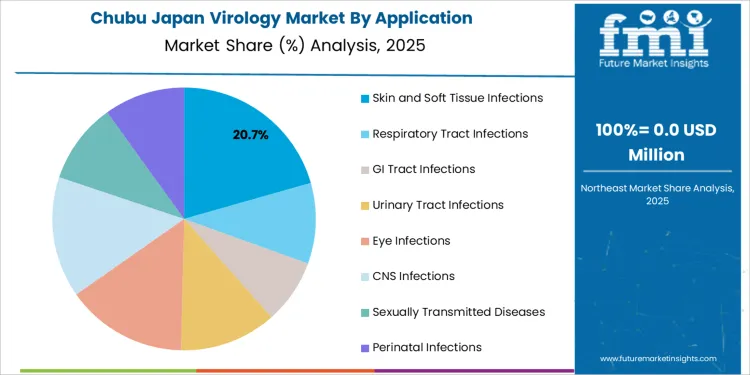
In Chubu, the Virology market is expected to grow at a CAGR of 3.3%. The region’s healthcare system is increasingly focused on the prevention, diagnosis, and treatment of viral diseases, particularly in light of recent global health crises. Cities like Nagoya, with large hospitals and medical centers, are expanding their capacity to handle viral infections through advanced diagnostic tools and antiviral therapies. The rising awareness of the risks associated with viral diseases, combined with the need for more effective healthcare solutions, is driving the demand for virology products in Chubu. The region’s growing healthcare investment, coupled with a focus on preventive healthcare, is contributing to the steady growth of the market.
What is Influencing the Growth of Virology in Tohoku?
In Tohoku, the Virology market is projected to grow at a CAGR of 2.9%. While the growth rate in Tohoku is slower compared to other regions, the increasing focus on viral disease prevention and diagnostics is contributing to gradual market expansion. The region’s healthcare systems are working to improve access to virology-related services, especially in remote and rural areas where healthcare resources may be limited. The increasing prevalence of viral infections among Tohoku’s aging population is further driving the need for better diagnostic tools and antiviral treatments. As healthcare infrastructure improves and awareness of viral diseases continues to grow, the demand for virology products and services in Tohoku is expected to rise steadily.
What is Contributing to the Growth of Virology in Rest of Japan?
In Rest of Japan, the Virology market is expected to grow at a more moderate rate of 2.8%. Although the demand is smaller compared to major urban areas, the region is still experiencing a gradual rise in the adoption of virology services. The growing incidence of viral infections, particularly in rural populations, is driving the demand for more accessible diagnostic and treatment options. Rest of Japan’s healthcare providers are increasingly focusing on offering cost-effective and efficient viral testing and treatment services. As awareness of the importance of early detection and treatment of viral diseases grows in these areas, the market for virology products is expected to continue growing at a steady pace.
What is the Competitive Landscape for Demand for Virology in Japan?
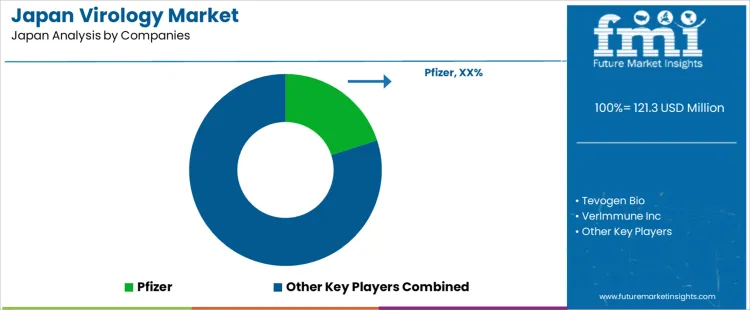
Demand for virology services and treatments in Japan is rising. Increasing incidence of viral infections, including seasonal influenza, hepatitis, respiratory viruses and emerging pathogens, is driving demand for diagnostics, antiviral drugs and preventive therapies. The national focus on infectious-disease control, an ageing population with higher vulnerability to infections, and frequent public-health campaigns support sustained demand for virology-related care. Growth in testing, early detection, and treatment uptake is reinforced by advances in diagnostic technology and expanded access to antiviral therapies. Major global pharma and biotech firms compete in the Japanese virology market. According to your list, Pfizer holds a leading share among the listed companies. Other key players include Tevogen Bio, VerImmune Inc, Takeda Pharmaceuticals, and AbbVie. These firms are active in developing and supplying antiviral drugs, vaccine candidates and therapeutic interventions against viral diseases.
Competition among them is shaped by the breadth and effectiveness of antiviral pipelines, regulatory approvals, ability to address prevalent viral infections (e.g., influenza, hepatitis, viral respiratory infections), supply-chain reliability, and alignment with Japanese healthcare policy and reimbursement protocols. Companies with strong R&D capabilities and the ability to offer safe, effective and accessible virology treatments are positioned to capture growing share as demand expands for virus diagnostics and therapies across Japan.
Key Players of the Virology Industry in Japan
- Pfizer
- Tevogen Bio
- VerImmune Inc
- Takeda Pharmaceuticals
- AbbVie
Scope of the Report
| Items | Details |
|---|---|
| Quantitative Units | USD Million |
| Regions Covered | Japan |
| Product Type | Diagnostic Tests; Viral-Infection Controlling Methods; Antiviral Chemotherapy; Interferons |
| Application | Skin & Soft Tissue Infections; Respiratory Tract Infections; Gastrointestinal (GI) Infections; Urinary Tract Infections; Eye Infections; CNS Infections; Sexually Transmitted Diseases; Perinatal Infections; Others |
| End User | Hospitals; Clinics; Laboratories / Diagnostic Centres; Blood Banks; Pharmacies / Drug Stores |
| Key Companies Profiled | Pfizer; Tevogen Bio; VerImmune Inc.; Takeda Pharmaceuticals; AbbVie |
| Additional Attributes | Dollar sales by product type reflect growing demand especially for diagnostic tests and antiviral therapies, driven by periodic viral outbreaks (influenza, COVID-19, hepatitis, herpes, etc.), rising awareness of infection control, and increased use of molecular diagnostics. Diagnostic-test demand remains robust as labs and hospitals screen for respiratory, GI, and other viral infections; antiviral chemotherapy and infection-control medicines see spikes during epidemics and seasonal outbreaks. Aging population, strong public-health infrastructure, and government support for infectious-disease management underpin steady growth. |
Key Segments in the Demand for Virology in Japan
Product Type
- Diagnostic Tests
- Viral Infection Controlling Methods
- Antiviral Chemotherapy
- Interferons
Application
- Skin and Soft Tissue Infections
- Respiratory Tract Infections
- GI Tract Infections
- Urinary Tract Infections
- Eye Infections
- CNS Infections
- Sexually Transmitted Diseases
- Perinatal Infections
End User
- Hospitals
- Clinics
- Laboratories
- Diagnostic Centres
- Blood Banks
- Pharmacies
Region
- Kyushu & Okinawa
- Kanto
- Kansai
- Chubu
- Tohoku
- Rest of Japan
Frequently Asked Questions
How big is the demand for virology in Japan in 2025?
The demand for virology in Japan is estimated to be valued at USD 121.3 million in 2025.
What will be the size of virology in Japan in 2035?
The market size for the virology in Japan is projected to reach USD 175.3 million by 2035.
How much will be the demand for virology in Japan growth between 2025 and 2035?
The demand for virology in Japan is expected to grow at a 3.8% CAGR between 2025 and 2035.
What are the key product types in the virology in Japan?
The key product types in virology in Japan are diagnostic tests, viral infection controlling methods, antiviral chemotherapy and interferons.
Which application segment is expected to contribute significant share in the virology in Japan in 2025?
In terms of application, skin and soft tissue infections segment is expected to command 20.0% share in the virology in Japan in 2025.
Preview the report firsthand - request a free sample
Get SampleGet the brochure for pricing and purchase details.
Get PDFTable of Content
- Executive Summary
- Japan Market Outlook
- Demand-side Trends
- Supply-side Trends
- Technology Roadmap Analysis
- Analysis and Recommendations
- Market Overview
- Market Coverage / Taxonomy
- Market Definition / Scope / Limitations
- Market Background
- Market Dynamics
- Drivers
- Restraints
- Opportunity
- Trends
- Scenario Forecast
- Demand in Optimistic Scenario
- Demand in Likely Scenario
- Demand in Conservative Scenario
- Opportunity Map Analysis
- Product Life Cycle Analysis
- Supply Chain Analysis
- Investment Feasibility Matrix
- Value Chain Analysis
- PESTLE and Porter’s Analysis
- Regulatory Landscape
- Regional Parent Market Outlook
- Production and Consumption Statistics
- Import and Export Statistics
- Market Dynamics
- Japan Market Analysis 2020 to 2024 and Forecast, 2025 to 2035
- Historical Market Size Value (USD Million) Analysis, 2020 to 2024
- Current and Future Market Size Value (USD Million) Projections, 2025 to 2035
- Y-o-Y Growth Trend Analysis
- Absolute $ Opportunity Analysis
- Japan Market Pricing Analysis 2020 to 2024 and Forecast 2025 to 2035
- Japan Market Analysis 2020 to 2024 and Forecast 2025 to 2035, By Product Type
- Introduction / Key Findings
- Historical Market Size Value (USD Million) Analysis By Product Type , 2020 to 2024
- Current and Future Market Size Value (USD Million) Analysis and Forecast By Product Type , 2025 to 2035
- Diagnostic Tests
- Viral Infection Controlling Methods
- Antiviral Chemotherapy
- Interferons
- Y-o-Y Growth Trend Analysis By Product Type , 2020 to 2024
- Absolute $ Opportunity Analysis By Product Type , 2025 to 2035
- Japan Market Analysis 2020 to 2024 and Forecast 2025 to 2035, By Application
- Introduction / Key Findings
- Historical Market Size Value (USD Million) Analysis By Application, 2020 to 2024
- Current and Future Market Size Value (USD Million) Analysis and Forecast By Application, 2025 to 2035
- Skin and Soft Tissue Infections
- Respiratory Tract Infections
- GI Tract Infections
- Urinary Tract Infections
- Eye Infections
- CNS Infections
- Sexually Transmitted Diseases
- Perinatal Infections
- Y-o-Y Growth Trend Analysis By Application, 2020 to 2024
- Absolute $ Opportunity Analysis By Application, 2025 to 2035
- Japan Market Analysis 2020 to 2024 and Forecast 2025 to 2035, By End User
- Introduction / Key Findings
- Historical Market Size Value (USD Million) Analysis By End User, 2020 to 2024
- Current and Future Market Size Value (USD Million) Analysis and Forecast By End User, 2025 to 2035
- Hospitals
- Clinics
- Laboratories
- Diagnostic Centres
- Blood Banks
- Pharmacies
- Y-o-Y Growth Trend Analysis By End User, 2020 to 2024
- Absolute $ Opportunity Analysis By End User, 2025 to 2035
- Market Structure Analysis
- Competition Dashboard
- Competition Benchmarking
- Market Share Analysis of Top Players
- By Regional
- By Product Type
- By Application
- By End User
- Competition Analysis
- Competition Deep Dive
- Pfizer
- Overview
- Product Portfolio
- Profitability by Market Segments (Product/Age /Sales Channel/Region)
- Sales Footprint
- Strategy Overview
- Marketing Strategy
- Product Strategy
- Channel Strategy
- Tevogen Bio
- VerImmune Inc
- Takeda Pharmaceuticals
- AbbVie
- Pfizer
- Competition Deep Dive
- Assumptions & Acronyms Used
- Research Methodology


