

- Industry Size (2025)
- USD 5.1 Bn
- Forecast (2035)
- USD 9.3 Bn
- CAGR (2025 to 2035)
- 6.2%
Demand for Oxytocin in Japan Forecast and Outlook 2025 to 2035
Demand for oxytocin in Japan is projected to grow from USD 5.1 billion in 2025 to USD 9.3 billion by 2035, reflecting a compound annual growth rate (CAGR) of 6.2%. Growth is driven by the increasing use of oxytocin in medical settings, particularly for labor induction and postpartum hemorrhage management. Oxytocin is a crucial drug in obstetrics, promoting uterine contractions during labor and reducing excessive bleeding after childbirth. The growing focus on maternal health, improvements in healthcare infrastructure, and rising awareness of the benefits of timely medical intervention during childbirth are all contributing factors to the demand for oxytocin.
The market is further supported by Japan's aging population, which leads to a higher incidence of pregnancy-related complications. Additionally, the ongoing advancements in drug formulations and delivery methods are likely to contribute to the increasing adoption of oxytocin in clinical practice. As Japan continues to focus on improving maternal care and reducing maternal mortality, the demand for oxytocin is expected to rise steadily over the next decade.
Quick Stats of the Demand for Oxytocin in Japan
- Demand for Oxytocin in Japan Value (2025): USD 5.1 billion
- Demand for Oxytocin in Japan Forecast Value (2035): USD 9.3 billion
- Demand for Oxytocin in Japan Forecast CAGR (2025-2035): 6.2%
- Demand for Oxytocin in Japan Leading Indication: Postpartum (86%)
- Demand for Oxytocin in Japan Key Growth Regions: Kyushu & Okinawa, Kanto, Kansai, Chubu, Tohoku, Rest of Japan
- Demand for Oxytocin in Japan Key Players: Novartis AG, Pfizer Inc., Fresenius Kabi LLC, Ferring B.V., Hikma Pharmaceuticals PLC
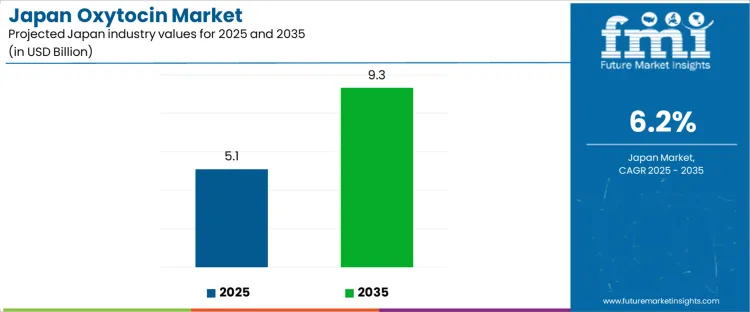
What is the Growth Forecast for the Oxytocin Market through 2035?
The breakpoint analysis for the oxytocin market in Japan indicates a steady growth trajectory with key inflection points marking periods of acceleration. Starting at USD 5.1 billion in 2025, the market increases gradually to USD 5.4 billion in 2026 and USD 5.7 billion in 2027, reflecting early-stage growth as awareness and adoption of oxytocin continue to expand in obstetric care.
The first significant inflection point occurs between 2027 and 2028, where the growth rate begins to accelerate. The market reaches USD 6.1 billion in 2028, followed by USD 6.5 billion in 2029 and USD 6.9 billion in 2030. This acceleration is driven by increased utilization of oxytocin in maternal care, alongside improvements in its administration and formulation. From 2030 onward, the growth continues steadily, with the market reaching USD 7.3 billion in 2031, USD 7.8 billion in 2032, and USD 8.3 billion in 2033. By 2035, the market reaches USD 9.3 billion, showing sustained growth as oxytocin remains a vital part of maternal healthcare practices. The breakpoint analysis highlights key moments where growth accelerates, particularly as innovations in obstetric care and broader adoption of oxytocin lead to higher demand.
Key Takeaways of Oxytocin Industry in Japan
| Metric | Value |
|---|---|
| Industry Sales Value (2025) | USD 5.1 billion |
| Industry Forecast Value (2035) | USD 9.3 billion |
| Industry Forecast CAGR (2025-2035) | 6.2% |
What Is Driving the Demand for Oxytocin in Japan?
The demand for oxytocin in Japan is shaped by continued use of the drug in obstetric care, including labor induction, augmentation, and postpartum haemorrhage prevention and management. Synthetic oxytocin is widely used in maternity hospitals when labour needs medical assistance or when bleeding control is required after delivery. The prevalence of hospital based births and standardised obstetric protocols in Japan support steady demand. Use of oxytocin in labour and delivery remains a foundational component of maternal care, which sustains baseline demand for the drug.
Future demand for oxytocin in Japan is likely to remain at least stable and may grow modestly as maternal care practices continue to emphasize safety of childbirth and postpartum care. If obstetric guidelines maintain or expand use of oxytocin and if awareness of postpartum haemorrhage management stays high, oxytocin demand will persist. Research into novel applications including investigations of oxytocin receptor targeted therapies-for stress, metabolic or other conditions-may broaden usage beyond obstetrics. That potential expansion will depend on clinical evidence, regulatory acceptance, and medical community adoption.
What Are the Key Segments in Oxytocin Market in Japan?
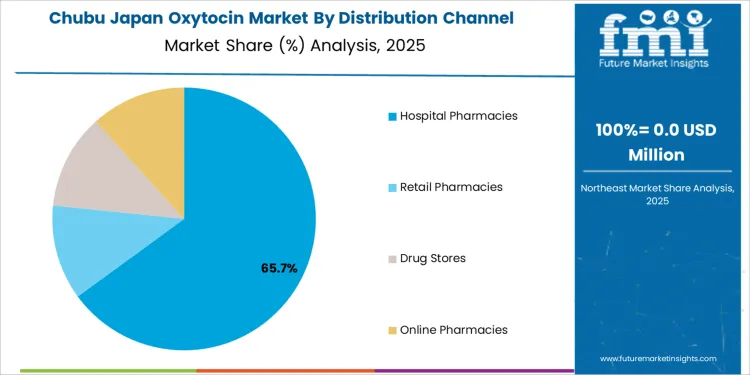
The oxytocin market in Japan is segmented by indication and distribution channel. Postpartum use is the dominant indication, accounting for 86% of the market share. In terms of distribution, hospital pharmacies lead, holding 64.5% of the market share. The demand for oxytocin in Japan is largely driven by its critical role in managing labor and delivery, particularly in the postpartum period to control bleeding and assist with uterine contractions.
Which Indication Drives Oxytocin Demand in Japan?
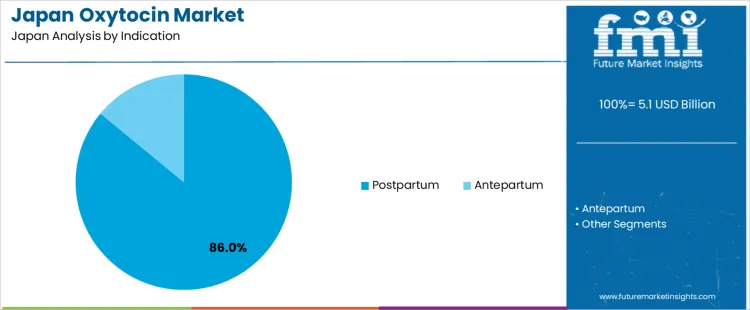
Postpartum is the primary indication for oxytocin, representing 86% of the total demand in Japan. After childbirth, oxytocin is administered to manage postpartum hemorrhage (PPH) and stimulate uterine contractions to help the uterus return to its normal size. This usage is critical for preventing excessive bleeding, a major concern in obstetrics. The significant proportion of the market driven by postpartum care is due to the increasing focus on maternal health and the essential role oxytocin plays in ensuring safe deliveries and recovery. While antepartum use, such as for inducing labor, is also a part of the market, postpartum applications dominate due to the vital need for uterine contraction stimulation following childbirth.
Which Distribution Channel Drives Oxytocin Demand in Japan?
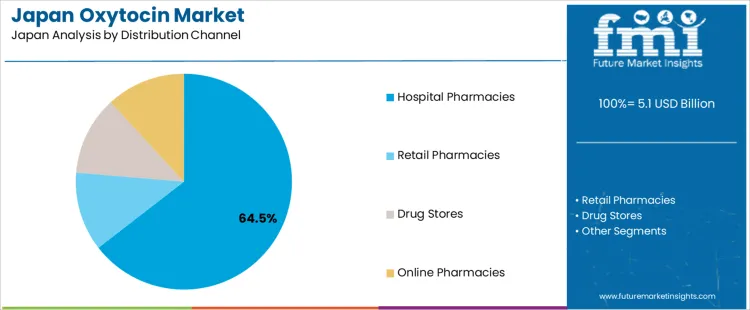
Hospital pharmacies are the leading distribution channel for oxytocin in Japan, accounting for 64.5% of the market share. Hospital pharmacies are the primary source for administering oxytocin during labor and postpartum care, as it is typically given in a clinical setting under medical supervision. Oxytocin is essential in emergency obstetric care, making hospital pharmacies the dominant channel. Retail pharmacies, drug stores, and online pharmacies also contribute to the market, particularly for outpatient use or for patients receiving oxytocin as part of a broader treatment regimen. However, hospital pharmacies remain the central point for dispensing oxytocin due to its critical role in labor management and postpartum care.
What is the Demand for Oxytocin in Japan?
The demand for oxytocin in Japan is growing, primarily driven by its use in obstetrics and gynecology for managing labor and delivery. Oxytocin, a hormone that stimulates uterine contractions, is essential in inducing labor, controlling postpartum hemorrhage, and facilitating breastfeeding. The increasing number of pregnancies, especially in older populations, is contributing to the demand for oxytocin. Additionally, the rising focus on maternal health and advancements in medical care are supporting the use of oxytocin in clinical settings, making it a critical component in ensuring safe childbirth.
What are the Drivers of Demand for Oxytocin in Japan?
Several factors are driving the demand for oxytocin in Japan. First, the increasing number of pregnancies, particularly among older women who may require assistance with labor induction or delivery, is a significant driver. Japan’s aging population and the trend toward delayed childbirth have contributed to higher demand for oxytocin in obstetric care. Second, the growing awareness of maternal health and safety during childbirth is leading to increased use of oxytocin to manage labor complications and reduce the risk of postpartum hemorrhage. Third, advancements in medical techniques, including the use of synthetic oxytocin for controlled and safe induction of labor, are expanding its application. Additionally, the emphasis on improving healthcare outcomes and ensuring safer deliveries is promoting the use of oxytocin in clinical settings.
What are the Restraints on Demand for Oxytocin in Japan?
Despite the growing demand, there are several factors that may limit the use of oxytocin in Japan. One major restraint is the potential for complications associated with its use, such as uterine hyperstimulation or adverse effects on the mother or fetus. These risks can make healthcare providers cautious when using oxytocin, particularly in high-risk pregnancies. Another challenge is the cost of synthetic oxytocin and the need for proper monitoring during administration, which may limit its widespread use in certain settings, particularly in resource-limited areas. Additionally, concerns about the overuse of oxytocin in non-medical settings, such as for elective induction, may lead to a more cautious approach in prescribing it. Finally, variations in medical protocols and guidelines regarding its use in labor induction and postpartum care may impact the consistency of its adoption across healthcare facilities.
What are the Key Trends Influencing Demand for Oxytocin in Japan?
Several key trends are influencing the demand for oxytocin in Japan. One significant trend is the growing focus on improving maternal and neonatal health outcomes, which is driving the use of oxytocin to manage labor and delivery more safely and efficiently. Another trend is the rising demand for controlled and safe labor induction, particularly in older women who are more likely to experience complications during childbirth. The increasing emphasis on evidence-based medicine and standardized care protocols is also contributing to the consistent use of oxytocin in clinical settings. Additionally, the trend toward more personalized and patient-centered care is encouraging healthcare providers to consider oxytocin as a critical component in ensuring positive childbirth experiences. Finally, the ongoing research into the safety and efficacy of oxytocin for various obstetric conditions is expanding its potential applications, further increasing its demand in Japan’s healthcare system.
What is the Regional Demand Outlook for the Oxytocin Market in Japan?
The Oxytocin market in Japan is expected to grow steadily, with Kyushu & Okinawa leading the way at a projected CAGR of 7.8%. Kanto follows closely with a growth rate of 7.2%, while Kansai is expected to grow at 6.3%. Chubu is projected to grow at a rate of 5.5%, while Tohoku and Rest of Japan show more moderate growth, with CAGRs of 4.9% and 4.6%, respectively. Oxytocin, a hormone used in childbirth and lactation, as well as in the treatment of certain reproductive health conditions, is in demand due to its essential role in maternal healthcare and the growing focus on improving healthcare services for women in Japan.
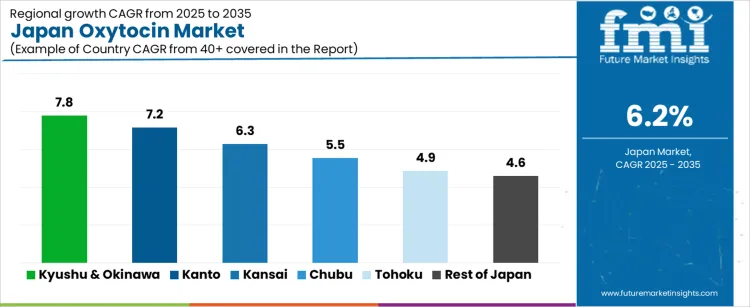
| Region | CAGR (2025-2035) |
|---|---|
| Kyushu & Okinawa | 7.8% |
| Kanto | 7.2% |
| Kansai | 6.3% |
| Chubu | 5.5% |
| Tohoku | 4.9% |
| Rest of Japan | 4.6% |
What is Driving the Growth of Oxytocin in Kyushu & Okinawa?
Kyushu & Okinawa is projected to experience the highest growth in the Oxytocin market, with a projected CAGR of 7.8%. The region’s increasing focus on maternal healthcare and the rising number of childbirths are key factors contributing to this growth. Oxytocin is widely used to induce labor and manage postpartum bleeding, making it essential in obstetrics and gynecology. With an aging population and rising awareness of the importance of maternal health, healthcare providers in Kyushu & Okinawa are increasingly adopting oxytocin to improve childbirth outcomes and address complications during labor. The region’s growing healthcare infrastructure, coupled with advancements in reproductive health technologies, is helping to boost the demand for oxytocin in both urban and rural areas.
Why is the Oxytocin Market Expanding in Kanto?
In Kanto, the demand for oxytocin is projected to grow at a CAGR of 7.2%. As Japan’s most populous and urbanized region, Kanto has a well-developed healthcare system that supports the growing need for maternal care. The high population density in cities like Tokyo and Yokohama, along with a growing focus on improving maternal health and reducing childbirth-related complications, is driving the demand for oxytocin. The region’s advanced medical facilities and obstetric care units are increasingly adopting oxytocin as part of their treatment protocols to manage labor and delivery effectively. Kanto’s healthcare providers are also focused on improving the quality of care for expectant mothers, which is contributing to the steady growth of the oxytocin market.
How is the Oxytocin Market Growing in Kansai?
In Kansai, the Oxytocin market is projected to grow at a CAGR of 6.3%. The region, which includes major cities like Osaka, Kyoto, and Kobe, has a robust healthcare infrastructure with an increasing focus on maternal and reproductive health. As more women in Kansai choose to give birth in healthcare facilities with access to modern obstetric care, the demand for oxytocin is rising. The region's healthcare providers are adopting oxytocin to manage labor more effectively and ensure better outcomes for both mothers and babies. Kansai’s growing population of women of childbearing age and its large number of childbirths are driving the demand for oxytocin. As healthcare in Kansai continues to evolve, the market for oxytocin is expected to expand steadily.
What is Contributing to the Growth of Oxytocin in Chubu?
In Chubu, the Oxytocin market is expected to grow at a CAGR of 5.5%. The region, with cities like Nagoya, is experiencing a steady increase in the adoption of modern maternal healthcare practices, including the use of oxytocin to assist with labor and childbirth. Chubu’s focus on improving healthcare delivery and providing better services to expectant mothers is driving the demand for oxytocin. As the region’s healthcare providers increasingly recognize the benefits of oxytocin for managing labor and preventing postpartum complications, the market for this essential hormone is expected to continue to rise. The growing number of childbirths in Chubu and the adoption of advanced medical technologies are contributing to the market’s expansion.
What is Influencing the Growth of Oxytocin in Tohoku?
In Tohoku, the Oxytocin market is projected to grow at a CAGR of 4.9%. While the growth rate in Tohoku is more moderate compared to other regions, the increasing prevalence of maternal health concerns and the adoption of advanced medical practices are driving the demand for oxytocin. Tohoku’s healthcare systems are focusing on improving care for expectant mothers, and oxytocin is an essential tool in managing labor, preventing complications, and ensuring safe childbirth. The region’s aging population, which often faces higher risks during childbirth, is contributing to the rising demand for medical interventions like oxytocin. As healthcare providers continue to adopt modern technologies and increase access to quality care, the market for oxytocin in Tohoku is expected to grow steadily.
What is Contributing to the Growth of Oxytocin in Rest of Japan?
In Rest of Japan, the Oxytocin market is expected to grow at a more moderate rate of 4.6%. Although the demand in this region is smaller compared to major metropolitan areas, the increasing awareness of maternal health and the growing number of childbirths are driving the adoption of oxytocin. Healthcare providers in Rest of Japan are focusing on improving access to essential medical treatments, including oxytocin, to manage labor and ensure safe delivery outcomes. As healthcare services continue to expand and become more accessible in rural areas, the demand for oxytocin is expected to grow at a steady pace. The region’s growing commitment to maternal healthcare and improving patient outcomes is contributing to the rise in oxytocin USAge.
What is the Competitive Landscape for Demand for Oxytocin in Japan?
Demand for oxytocin in Japan remains robust driven by its central role in obstetric care. Oxytocin is widely used to induce or augment labor and to manage postpartum hemorrhage, both common practices in Japanese maternity care. Aging maternal demographics and continued emphasis on safe delivery and postpartum care uphold consistent demand. Moreover, medical guidelines and standard obstetric protocols that prioritize uterine contraction agents for labor and placenta delivery help sustain stable usage across hospitals and clinics.
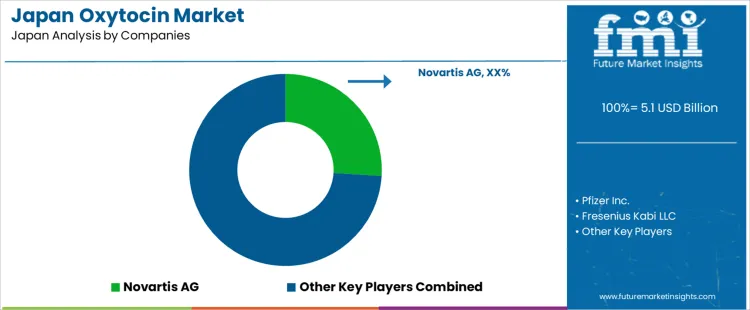
A set of global pharmaceutical companies competes to meet this demand. Novartis AG appears as a leading supplier with a share of around 26 %. Other significant players include Pfizer Inc., Fresenius Kabi LLC, Ferring B.V., and Hikma Pharmaceuticals PLC. These companies supply injectable oxytocin formulations used in hospitals and birth centers across Japan. Competition among them centers on product reliability (purity and stability), supply availability (especially critical in labor wards), compliance with regulatory and quality control standards, and distribution reach to both large and small healthcare institutions.
Key Players of the Oxytocin Industry in Japan
- Novartis AG
- Pfizer Inc.
- Fresenius Kabi LLC
- Ferring B.V.
- Hikma Pharmaceuticals PLC
Scope of the Report
| Items | Details |
|---|---|
| Quantitative Units | USD Million |
| Regions Covered | Japan |
| Indication | Antepartum, Postpartum |
| Distribution Channel | Hospital Pharmacies, Retail Pharmacies, Drug Stores, Online Pharmacies |
| Key Companies Profiled | Novartis AG; Pfizer Inc.; Fresenius Kabi LLC; Ferring B.V.; Hikma Pharmaceuticals PLC |
| Additional Attributes | Dollar sales by indication and channel reflect steady demand driven by childbirth care, obstetric protocols (labor induction, management of postpartum hemorrhage), and cesarean deliveries; hospital pharmacies dominate, but retail and outpatient channels remain relevant for complementary maternal care products. |
Key Segments in the Demand for Oxytocin in Japan
Indication
- Antepartum
- Postpartum
Distribution Channel
- Hospital Pharmacies
- Retail Pharmacies
- Drug Stores
- Online Pharmacies
Region
- Kyushu & Okinawa
- Kanto
- Kansai
- Chubu
- Tohoku
- Rest of Japan
Frequently Asked Questions
How big is the demand for oxytocin in Japan in 2025?
The demand for oxytocin in Japan is estimated to be valued at USD 5.1 billion in 2025.
What will be the size of oxytocin in Japan in 2035?
The market size for the oxytocin in Japan is projected to reach USD 9.3 billion by 2035.
How much will be the demand for oxytocin in Japan growth between 2025 and 2035?
The demand for oxytocin in Japan is expected to grow at a 6.2% CAGR between 2025 and 2035.
What are the key product types in the oxytocin in Japan?
The key product types in oxytocin in Japan are postpartum and antepartum.
Which distribution channel segment is expected to contribute significant share in the oxytocin in Japan in 2025?
In terms of distribution channel, hospital pharmacies segment is expected to command 64.5% share in the oxytocin in Japan in 2025.
Preview the report firsthand - request a free sample
Get SampleGet the brochure for pricing and purchase details.
Get PDFTable of Content
- Executive Summary
- Japan Market Outlook
- Demand-side Trends
- Supply-side Trends
- Technology Roadmap Analysis
- Analysis and Recommendations
- Market Overview
- Market Coverage / Taxonomy
- Market Definition / Scope / Limitations
- Market Background
- Market Dynamics
- Drivers
- Restraints
- Opportunity
- Trends
- Scenario Forecast
- Demand in Optimistic Scenario
- Demand in Likely Scenario
- Demand in Conservative Scenario
- Opportunity Map Analysis
- Product Life Cycle Analysis
- Supply Chain Analysis
- Investment Feasibility Matrix
- Value Chain Analysis
- PESTLE and Porter’s Analysis
- Regulatory Landscape
- Regional Parent Market Outlook
- Production and Consumption Statistics
- Import and Export Statistics
- Market Dynamics
- Japan Market Analysis 2020 to 2024 and Forecast, 2025 to 2035
- Historical Market Size Value (USD Million) Analysis, 2020 to 2024
- Current and Future Market Size Value (USD Million) Projections, 2025 to 2035
- Y-o-Y Growth Trend Analysis
- Absolute $ Opportunity Analysis
- Japan Market Pricing Analysis 2020 to 2024 and Forecast 2025 to 2035
- Japan Market Analysis 2020 to 2024 and Forecast 2025 to 2035, By Indication
- Introduction / Key Findings
- Historical Market Size Value (USD Million) Analysis By Indication , 2020 to 2024
- Current and Future Market Size Value (USD Million) Analysis and Forecast By Indication , 2025 to 2035
- Postpartum
- Antepartum
- Y-o-Y Growth Trend Analysis By Indication , 2020 to 2024
- Absolute $ Opportunity Analysis By Indication , 2025 to 2035
- Japan Market Analysis 2020 to 2024 and Forecast 2025 to 2035, By Distribution Channel
- Introduction / Key Findings
- Historical Market Size Value (USD Million) Analysis By Distribution Channel, 2020 to 2024
- Current and Future Market Size Value (USD Million) Analysis and Forecast By Distribution Channel, 2025 to 2035
- Hospital Pharmacies
- Retail Pharmacies
- Drug Stores
- Online Pharmacies
- Y-o-Y Growth Trend Analysis By Distribution Channel, 2020 to 2024
- Absolute $ Opportunity Analysis By Distribution Channel, 2025 to 2035
- Market Structure Analysis
- Competition Dashboard
- Competition Benchmarking
- Market Share Analysis of Top Players
- By Regional
- By Indication
- By Distribution Channel
- Competition Analysis
- Competition Deep Dive
- Novartis AG
- Overview
- Product Portfolio
- Profitability by Market Segments (Product/Age /Sales Channel/Region)
- Sales Footprint
- Strategy Overview
- Marketing Strategy
- Product Strategy
- Channel Strategy
- Pfizer Inc.
- Fresenius Kabi LLC
- Ferring B.V.
- Hikma Pharmaceuticals PLC
- Novartis AG
- Competition Deep Dive
- Assumptions & Acronyms Used
- Research Methodology


