

- Industry Size (2025)
- USD 2.9 Bn
- Forecast (2035)
- USD 4.4 Bn
- CAGR (2025 to 2035)
- 4.1%
Demand for Vitamin and Mineral Supplements in Japan Forecast and Outlook 2025 to 2035
The demand for vitamin and mineral supplements in Japan is expected to grow from USD 2.9 billion in 2025 to USD 4.4 billion by 2035, driven by a CAGR of 4.1%. With a growing focus on health and wellness, consumers are increasingly turning to these supplements to support immunity, energy levels, and overall well-being. As Japan’s population ages and the awareness of the importance of proper nutrition rises, demand for vitamin and mineral supplements is set to increase steadily. These supplements are especially popular among individuals looking to fill nutritional gaps, support heart health, and improve skin, hair, and bone health.
The demand for these supplements is being fueled by an increasing shift toward preventive health measures and personalized nutrition. Many consumers are opting for multivitamins and targeted mineral supplements to address specific health needs, such as maintaining cognitive function or supporting bone density. The rise in the popularity of lifestyle-related diets, such as vegetarianism and veganism, is also contributing to the growth, as these diets often require supplementation for essential nutrients. With an increasing variety of options available, ranging from single vitamins to combined multivitamin and mineral products, more consumers are incorporating supplements into their daily routines.
Quick Stats of the Demand for Vitamin and Mineral Supplement in Japan
- Demand for Vitamin and Mineral Supplement in Japan Value (2025): USD 2.9 billion
- Demand for Vitamin and Mineral Supplement in Japan Forecast Value (2035): USD 4.4 billion
- Demand for Vitamin and Mineral Supplement in Japan Forecast CAGR (2025 to 2035): 4.1%
- Demand for Vitamin and Mineral Supplement in Japan Key Segments: Vitamins, Minerals
- Demand for Vitamin and Mineral Supplement in Japan Key Growth Regions: Kyushu & Okinawa, Kanto, Kansai, Chubu, Tohoku, Rest of Japan
- Demand for Vitamin and Mineral Supplement in Japan Top Players: Amway Corporation, Herbalife Nutrition Ltd., Bayer AG, Pfizer Inc., Other Companies (combined)
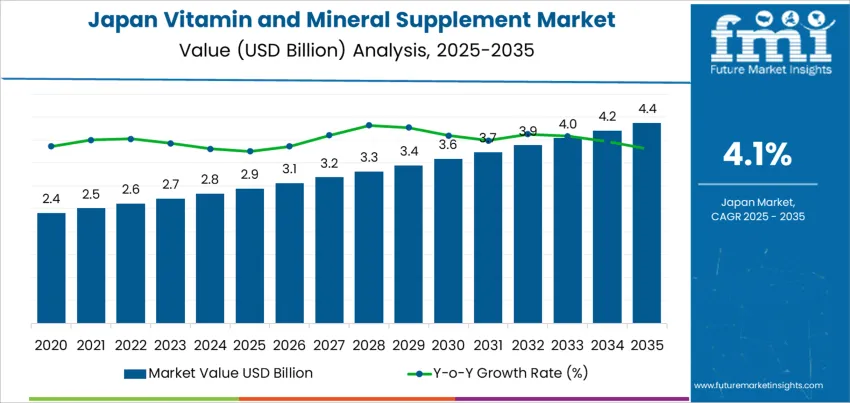
What is the Growth Forecast for the Demand for Vitamin and Mineral Supplement in Japan through 2035?
From 2025 to 2030, demand for vitamin and mineral supplements in Japan is expected to grow from USD 2.9 billion to USD 3.7 billion, adding USD 800 million in value. This growth will be driven by an increased focus on balanced diets and health maintenance, particularly among the aging population. Supplements that support immunity, energy, and bone health will see rising demand. The growing popularity of plant-based diets, which often require additional supplementation, will further boost the industry. As more consumers seek to fill nutritional gaps, these products are becoming an integral part of daily routines, particularly for those looking to address specific health concerns.
From 2030 to 2035, demand will continue to rise from USD 3.7 billion to USD 4.4 billion, contributing USD 700 million in value. While the growth rate may slow as the industry matures, the focus on personalized and preventive health will keep driving demand. Ongoing consumer interest in overall wellness, along with advancements in supplement formulations and more convenient delivery methods, will support the continued expansion of the industry. As consumers become more aware of the importance of long-term health and wellness, the demand for high-quality, targeted vitamin and mineral supplements will remain strong throughout the forecast period, ensuring steady growth in the sector.
Demand for Vitamin and Mineral Supplement in Japan Key Takeaways
| Metric | Value |
|---|---|
| Demand for Vitamin and Mineral Supplement in Japan Value (2025) | USD 2.9 billion |
| Demand for Vitamin and Mineral Supplement in Japan Forecast Value (2035) | USD 4.4 billion |
| Demand for Vitamin and Mineral Supplement in Japan Forecast CAGR (2025-2035) | 4.1% |
Why is the Demand for Vitamin and Mineral Supplement in Japan Growing?
The demand for vitamin and mineral supplements in Japan is growing due to increasing awareness of the importance of maintaining optimal nutritional levels for overall health and wellness. With a growing focus on preventive healthcare and better dietary habits, many individuals are turning to supplements to fill gaps in their daily nutrition. Vitamin and mineral supplements are particularly popular in Japan as they help address common nutrient deficiencies, particularly for older adults and busy professionals.
A key driver of this growth is Japan’s aging population, which has led to a higher demand for supplements that support bone health, immune function, and general vitality. As people age, they become more prone to nutritional deficiencies, particularly in vitamins like D and B12, and minerals like calcium and magnesium. This has driven the demand for supplements that help support heart health, cognitive function, and bone density.
There is an increasing focus on healthy living and preventive measures, with consumers seeking supplements that can enhance energy, skin health, and overall well-being. The rise in consumer interest for natural and plant-based ingredients is also boosting demand, as people become more selective about the supplements they choose. With an increasing preference for high-quality, easily accessible, and effective nutritional support, the demand for vitamin and mineral supplements in Japan is expected to grow steadily through 2035.
What is the Segment-Wise Analysis of Demand for Vitamin and Mineral Supplements in Japan?
Demand for vitamin and mineral supplements in Japan is segmented by product type, distribution channel, form, and region. By product type, demand is divided into vitamins and minerals, with vitamins leading at 58%. The demand is also segmented by distribution channel, including pharmacies & drug stores, hypermarkets and supermarkets, and others, with pharmacies & drug stores accounting for 47%. In terms of form, demand is split between tablets, capsules, powders, and other forms. Regionally, demand is spread across Kyushu & Okinawa, Kanto, Kansai, Chubu, Tohoku, and the Rest of Japan.
Why Do Vitamins Lead the Demand for Vitamin and Mineral Supplements in Japan?
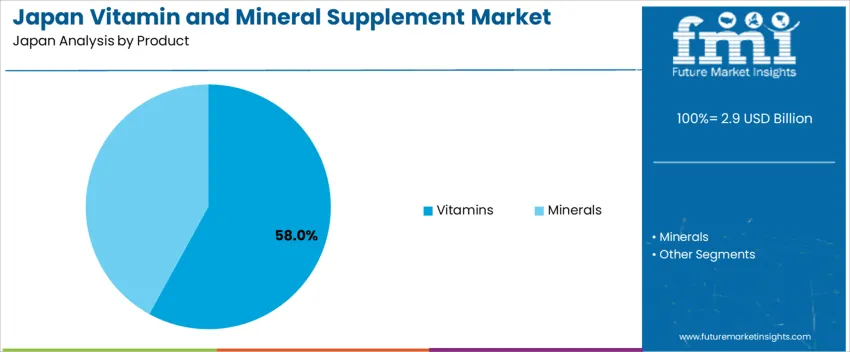
Vitamins account for 58% of the demand for vitamin and mineral supplements in Japan, primarily due to their essential role in supporting overall health, immunity, and wellness. Vitamins are widely used to address common deficiencies, particularly vitamin D, vitamin C, and B-vitamins, which are important for energy, immune function, and overall vitality. With a focus on preventive healthcare, Japanese consumers use vitamin supplements to enhance their daily well-being, prevent chronic diseases, and manage specific health concerns like fatigue or bone health. The aging population in Japan is also driving demand for vitamins to support bone health and cognitive function. The growing awareness of the benefits of vitamins in boosting immunity and maintaining skin health has contributed to the high demand. As consumers continue to prioritize holistic health management, vitamins will remain a dominant product type in Japan's supplement industry.
Why Do Pharmacies & Drug Stores Lead the Distribution of Vitamin and Mineral Supplements in Japan?
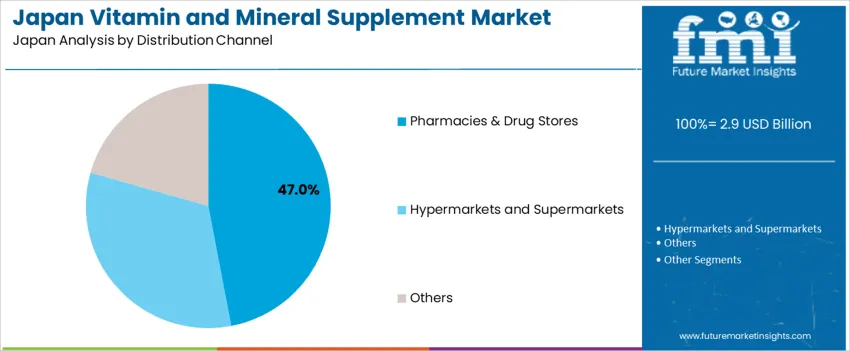
Pharmacies & drug stores account for 47% of the demand for vitamin and mineral supplements in Japan, driven by their accessibility, convenience, and trustworthiness as reliable sources of health products. These stores are the go-to locations for consumers seeking immediate access to supplements and health-related products. Pharmacies and drug stores in Japan often provide a wide range of vitamins and minerals, allowing consumers to easily find the specific supplements they need. Many pharmacies offer consultations with pharmacists, adding a layer of expertise that helps customers choose the right products for their health needs. With an emphasis on health and wellness, especially in urban areas, these stores remain the primary channel for consumers looking for trusted, quality health supplements. As the demand for preventive healthcare rises, pharmacies and drug stores will continue to be key players in the distribution of vitamin and mineral supplements in Japan.
What are the Key Trends, Drivers, and Restraints in Demand for Vitamin & Mineral Supplements in Japan?
Demand for vitamin and mineral supplements in Japan is rising steadily as more people adopt supplements to address nutritional gaps, support general wellness, and respond to health and aging concerns. The overall dietary supplements industry in Japan is growing, boosted by increasing health consciousness among consumers, especially older adults and those interested in preventive health. Supplements help support nutrient intake adequacy for vitamins like B, C, and essential minerals which can be harder to maintain through diet alone. Risks such as overuse, excessive intake, inconsistent supplement use habits, and occasional safety concerns may restrain growth or lead to cautious use among consumers.
Why is Demand for Vitamin & Mineral Supplements Growing in Japan?
Demand for vitamin and mineral supplements in Japan is growing as many consumers see them as a practical solution to fill nutritional gaps, particularly in light of busy lifestyles, limited diet variety, and evolving dietary habits. With increasingly hectic work and life schedules, it’s challenging for people to rely solely on meals to meet their vitamin and mineral needs. Supplements offer the convenience of easy dosage and serve as a perceived safety net for maintaining health, energy, immunity, and overall well-being. Japan’s aging population has heightened interest in supplements that support bone health, immunity, and vitality, making them a valuable tool for older adults aiming to sustain health and quality of life in later years. These factors drive the growing demand for supplements as part of a modern health regimen.
How are Technological & Industry Innovations Driving Vitamin & Mineral Supplement Demand in Japan?
Technological advancements in the formulation, packaging, and distribution of vitamin and mineral supplements are enhancing their appeal in Japan. Improved manufacturing techniques ensure higher purity, standardized dosages, and better safety, which increase consumer confidence. Many products now combine multiple vitamins and minerals, offering convenience and efficiency in daily use. The growth of e-commerce, along with easy access to supplements via pharmacies and health-food stores, has made it simpler for consumers to explore and purchase supplements tailored to their specific needs, like vitamin C, B vitamins, calcium, or zinc. Increased awareness through better nutrition labeling and education further builds trust, motivating more consumers to integrate these supplements into their health and wellness routines.
What are the Key Challenges and Risks That Could Limit Vitamin & Mineral Supplement Demand in Japan?
Despite the growing demand, several factors could limit the growth of vitamin and mineral supplement consumption in Japan. One challenge is the irregular or occasional use of supplements, which reduces their overall efficacy and the perceived long-term benefits. There’s also the risk of excessive intake, as some consumers may combine multiple supplements or exceed recommended dosages, leading to adverse health effects and safety concerns. Japan’s population traditionally consumes nutrient-rich foods, which may decrease the perceived need for supplements. Finally, growing interest in obtaining nutrients from whole foods, rather than supplements, along with skepticism about their effectiveness, may slow long-term demand growth, especially among more health-conscious consumers.
What is the Regional Demand Outlook for Vitamin and Mineral Supplement in Japan?
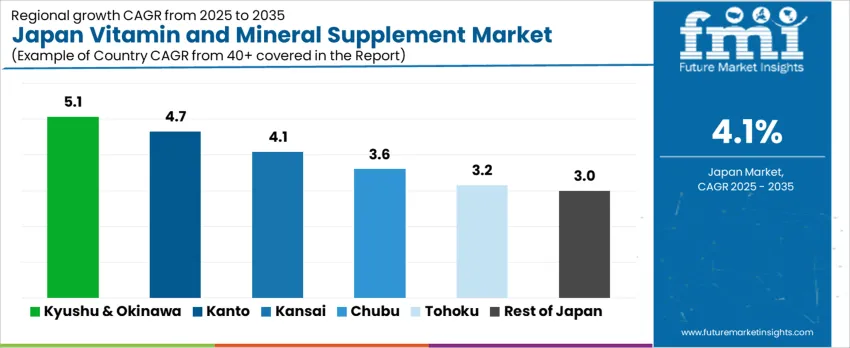
| Region | CAGR (%) |
|---|---|
| Kyushu & Okinawa | 5.1% |
| Kanto | 4.7% |
| Kansai | 4.1% |
| Chubu | 3.6% |
| Tohoku | 3.2% |
| Rest of Japan | 3.0% |
Demand for vitamin and mineral supplements in Japan is steadily increasing, with Kyushu & Okinawa leading at a 5.1% CAGR, driven by health-conscious consumers and a growing focus on wellness. Kanto follows with a 4.7% CAGR, fueled by a large urban population and rising awareness of preventive health. Kansai shows a 4.1% CAGR, supported by the region’s aging population and growing interest in holistic health. Chubu experiences a 3.6% CAGR, with rising demand driven by health trends and self-care. Tohoku and the Rest of Japan see moderate growth at 3.2% and 3.0%, respectively, as consumers in rural and suburban areas embrace healthier lifestyles. As awareness of health issues continues to rise, the demand for vitamin and mineral supplements will continue to grow steadily across Japan.
How is Demand for Vitamin and Mineral Supplements Growing in Kyushu & Okinawa?
Kyushu & Okinawa shows the strongest demand for vitamin and mineral supplements, growing at a 5.1% CAGR. The region’s health-conscious population, combined with a growing focus on wellness, is driving the adoption of dietary supplements, particularly for immune support, bone health, and skin care. Okinawa, known for its long life expectancy and healthy lifestyle, plays a significant role in the increasing interest in supplements that support longevity and overall health. The region’s growing tourism sector, especially in Okinawa, encourages the demand for health supplements in hotels, resorts, and wellness centers. As consumers increasingly seek preventive health solutions, and as awareness of vitamin and mineral deficiencies grows, the demand for these supplements is expected to continue to rise. The focus on sustainable, natural products and organic supplements further supports this trend in Kyushu & Okinawa.
Why is Demand for Vitamin and Mineral Supplements Rising in Kanto?
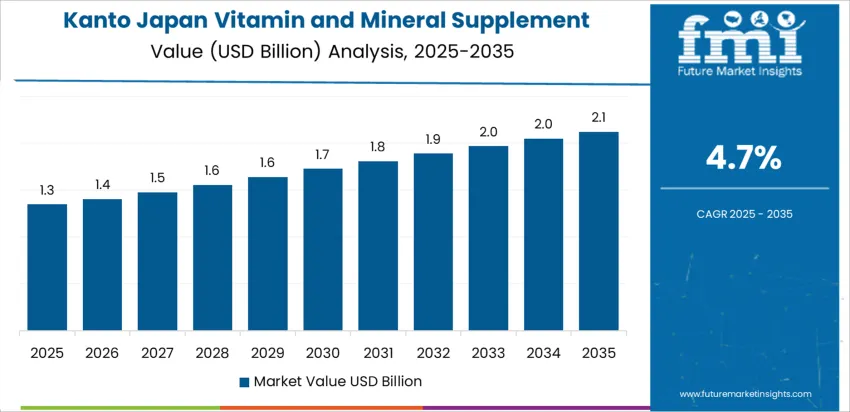
Kanto is experiencing steady demand for vitamin and mineral supplements, with a 4.7% CAGR. The region’s large urban population, particularly in Tokyo, drives high demand for supplements that support health and wellness, including immune system support, energy, and skin health. As consumer awareness of the importance of vitamins and minerals increases, particularly among busy professionals and aging populations, demand for these supplements has grown. The rise in lifestyle diseases, such as fatigue and stress, further contributes to the increasing need for supplementation. Kanto’s preference for convenience, coupled with growing interest in preventive healthcare, means more consumers are turning to vitamin and mineral supplements as part of their daily routines. The growing trend toward organic and natural products is fueling the demand for eco-friendly, sustainable supplements. As the wellness trend continues, Kanto’s demand for these supplements is expected to grow steadily.
How is Demand for Vitamin and Mineral Supplements Expanding in Kansai?
Kansai is seeing steady demand for vitamin and mineral supplements, with a 4.1% CAGR. The region’s aging population, particularly in cities like Osaka and Kyoto, is a key driver for this growth, as older adults seek supplements to support their bone health, cognitive function, and energy levels. Kansai’s growing awareness of nutrition and wellness, combined with an increasing focus on preventive healthcare, has led more people to turn to dietary supplements as part of a healthy lifestyle. The region’s emphasis on traditional medicine, along with modern wellness trends, encourages the use of vitamins and minerals for holistic health. Kansai’s robust retail network, including health food stores and pharmacies, ensures easy access to supplements, further boosting demand. As the region continues to focus on aging health and wellness, demand for vitamin and mineral supplements will continue to rise, driven by both young adults and older populations seeking to maintain their health.
Why is Demand for Vitamin and Mineral Supplements Growing in Chubu?
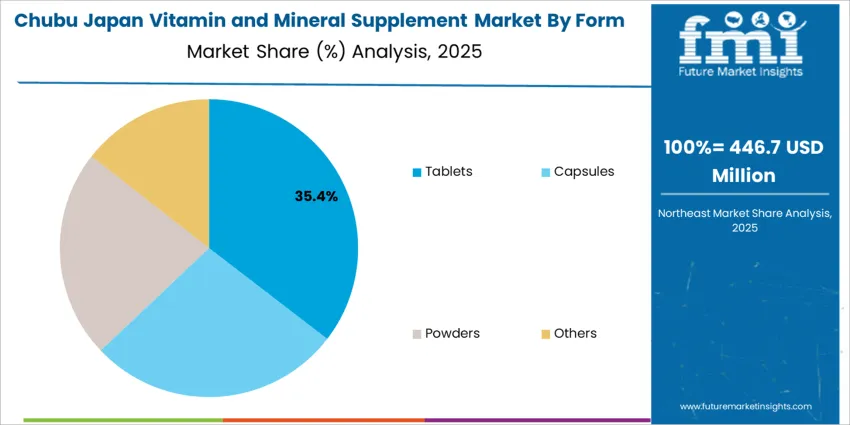
Chubu is experiencing steady demand for vitamin and mineral supplements, growing at a 3.6% CAGR. The region’s increasing health-conscious population, particularly in cities like Nagoya, is driving the demand for supplements targeting general health, energy, and immunity. As lifestyle-related health issues such as stress and fatigue become more common, people are increasingly turning to vitamin and mineral supplements for relief and wellness. The region’s growing focus on preventive healthcare, along with rising interest in fitness and self-care, supports the demand for supplements that enhance energy and overall health. Chubu’s emphasis on organic and sustainable products is pushing the demand for natural vitamin and mineral supplements. With growing access to supplements through local pharmacies, health stores, and online retail, Chubu’s vitamin and mineral supplement industry is expected to expand steadily, fueled by a shift toward healthier living and self-care.
How is Demand for Vitamin and Mineral Supplements Expanding in Tohoku?
Tohoku is seeing moderate demand for vitamin and mineral supplements, with a 3.2% CAGR. While the region’s industry for supplements is smaller compared to more urbanized areas, the demand is steadily increasing as awareness of health and wellness grows. Tohoku’s aging population is particularly driving the adoption of supplements to support bone health, immunity, and vitality. The growing focus on wellness and preventive healthcare in the region means more consumers are turning to vitamin and mineral supplements as part of their daily routines. The rise in disposable income and access to online retail has made these products more accessible to rural and suburban areas. As the region embraces healthier lifestyles and preventive care, the demand for vitamin and mineral supplements will continue to grow, although at a more gradual pace compared to urban regions.
Why is Demand for Vitamin and Mineral Supplements Steady in the Rest of Japan?
The Rest of Japan is experiencing steady demand for vitamin and mineral supplements, growing at a 3.0% CAGR. While demand is slower compared to more urbanized regions, there is a gradual increase as rural populations become more health-conscious. With a growing interest in wellness, self-care, and preventive healthcare, more individuals in suburban and rural areas are turning to supplements to improve their general health and support specific needs, such as energy, immunity, and bone health. The availability of supplements through e-commerce and local pharmacies has made these products more accessible in the Rest of Japan, further driving adoption. The increasing focus on sustainability and natural health solutions supports the demand for eco-friendly vitamin and mineral supplements. As the region continues to modernize and adopt healthier lifestyles, demand for these supplements is expected to grow slowly but steadily.
What is the Competitive Landscape of Vitamin and Mineral Supplement Demand in Japan?
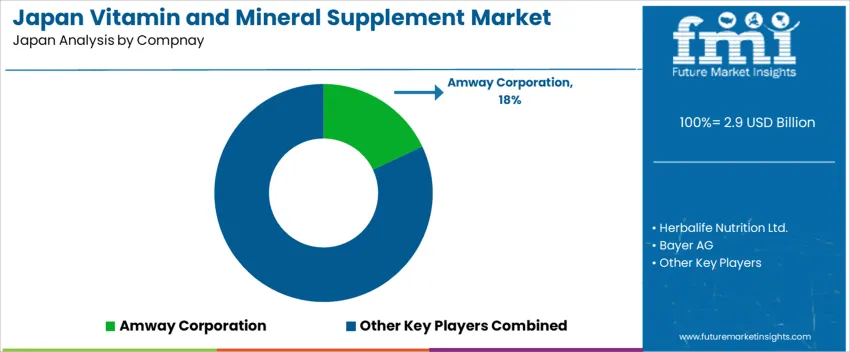
The demand for vitamin and mineral supplements in Japan is experiencing robust growth as consumers increasingly prioritize health maintenance, aging-related care, and preventive wellness. The broader dietary supplements industry in Japan is substantial, with more people relying on vitamins and minerals to fill dietary gaps, support immune function, bone health, and supplement nutritional intake. As health awareness rises among all age groups, and with a growing elderly population, vitamin and mineral supplements are becoming essential for many Japanese consumers seeking to maintain their well-being.
Leading companies in the vitamin and mineral supplement segment in Japan include Amway Corporation, Herbalife Nutrition Ltd., Bayer AG, Pfizer Inc., and other companies that collectively hold a significant share of the industry. Amway Corporation leads with a share of 18.0%, offering a wide range of multivitamins, minerals, and wellness-focused supplements. Other competitors such as Herbalife, Bayer, and Pfizer leverage their global brand recognition, diverse product portfolios, and well-established distribution networks to capture industry share. These companies offer various supplements targeting different health needs, including energy, immunity, bone health, and overall vitality.
Growth in the vitamin and mineral supplement industry is driven by Japan’s aging demographics, increasing life expectancy, and rising health awareness. As consumers seek to improve quality of life and prevent age-related health issues, demand for supplements targeting bone health, immune support, and energy is rising. Competition is shaped by product quality, ingredient transparency, and innovative formulations. Companies are also focusing on expanding their distribution reach, particularly through e-commerce channels, to meet the demands of health-conscious consumers, especially among younger and urban demographics.
Key Players in Japan Vitamin and Mineral Supplement Demand
- Amway Corporation
- Herbalife Nutrition Ltd.
- Bayer AG
- Pfizer Inc.
- Other Companies (combined)
Scope of Report
| Items | Values |
|---|---|
| Quantitative Units (2025) | USD billion |
| Product | Vitamins, Minerals |
| Form | Tablets, Capsules, Powders, Others |
| Distribution Channel | Pharmacies & Drug Stores, Hypermarkets and Supermarkets, Others |
| Region | Kyushu & Okinawa, Kanto, Kansai, Chubu, Tohoku, Rest of Japan |
| Countries Covered | Japan |
| Key Companies Profiled | Amway Corporation, Herbalife Nutrition Ltd., Bayer AG, Pfizer Inc., Other Companies (combined) |
| Additional Attributes | Dollar sales by product and form; regional CAGR and adoption trends; demand for vitamin and mineral supplements in various distribution channels; growth in consumer preference for supplements; vendor offerings in vitamins and minerals; regulatory influences on supplement manufacturing and sales |
Japan Vitamin and Mineral Supplement Demand by Key Segments
Product:
- Vitamins
- Minerals
Form:
- Tablets
- Capsules
- Powders
- Others
Distribution Channel:
- Pharmacies & Drug Stores
- Hypermarkets and Supermarkets
- Others
Region:
- Kyushu & Okinawa
- Kanto
- Kansai
- Chubu
- Tohoku
- Rest of Japan
Frequently Asked Questions
How big is the demand for vitamin and mineral supplement in Japan in 2025?
The demand for vitamin and mineral supplement in Japan is estimated to be valued at USD 2.9 billion in 2025.
What will be the size of vitamin and mineral supplement in Japan in 2035?
The market size for the vitamin and mineral supplement in Japan is projected to reach USD 4.4 billion by 2035.
How much will be the demand for vitamin and mineral supplement in Japan growth between 2025 and 2035?
The demand for vitamin and mineral supplement in Japan is expected to grow at a 4.1% CAGR between 2025 and 2035.
What are the key product types in the vitamin and mineral supplement in Japan?
The key product types in vitamin and mineral supplement in Japan are vitamins and minerals.
Which form segment is expected to contribute significant share in the vitamin and mineral supplement in Japan in 2025?
In terms of form, tablets segment is expected to command 35.0% share in the vitamin and mineral supplement in Japan in 2025.
Preview the report firsthand - request a free sample
Get SampleGet the brochure for pricing and purchase details.
Get PDFTable of Content
- Executive Summary
- Japan Market Outlook
- Demand-side Trends
- Supply-side Trends
- Technology Roadmap Analysis
- Analysis and Recommendations
- Market Overview
- Market Coverage / Taxonomy
- Market Definition / Scope / Limitations
- Market Background
- Market Dynamics
- Drivers
- Restraints
- Opportunity
- Trends
- Scenario Forecast
- Demand in Optimistic Scenario
- Demand in Likely Scenario
- Demand in Conservative Scenario
- Opportunity Map Analysis
- Product Life Cycle Analysis
- Supply Chain Analysis
- Investment Feasibility Matrix
- Value Chain Analysis
- PESTLE and Porter’s Analysis
- Regulatory Landscape
- Regional Parent Market Outlook
- Production and Consumption Statistics
- Import and Export Statistics
- Market Dynamics
- Japan Market Analysis 2020 to 2024 and Forecast, 2025 to 2035
- Historical Market Size Value (USD Million) Analysis, 2020 to 2024
- Current and Future Market Size Value (USD Million) Projections, 2025 to 2035
- Y-o-Y Growth Trend Analysis
- Absolute $ Opportunity Analysis
- Japan Market Pricing Analysis 2020 to 2024 and Forecast 2025 to 2035
- Japan Market Analysis 2020 to 2024 and Forecast 2025 to 2035, By Product
- Introduction / Key Findings
- Historical Market Size Value (USD Million) Analysis By Product , 2020 to 2024
- Current and Future Market Size Value (USD Million) Analysis and Forecast By Product , 2025 to 2035
- Vitamins
- Minerals
- Y-o-Y Growth Trend Analysis By Product , 2020 to 2024
- Absolute $ Opportunity Analysis By Product , 2025 to 2035
- Japan Market Analysis 2020 to 2024 and Forecast 2025 to 2035, By Form
- Introduction / Key Findings
- Historical Market Size Value (USD Million) Analysis By Form, 2020 to 2024
- Current and Future Market Size Value (USD Million) Analysis and Forecast By Form, 2025 to 2035
- Tablets
- Capsules
- Powders
- Others
- Y-o-Y Growth Trend Analysis By Form, 2020 to 2024
- Absolute $ Opportunity Analysis By Form, 2025 to 2035
- Japan Market Analysis 2020 to 2024 and Forecast 2025 to 2035, By Distribution Channel
- Introduction / Key Findings
- Historical Market Size Value (USD Million) Analysis By Distribution Channel, 2020 to 2024
- Current and Future Market Size Value (USD Million) Analysis and Forecast By Distribution Channel, 2025 to 2035
- Pharmacies & Drug Stores
- Hypermarkets and Supermarkets
- Others
- Y-o-Y Growth Trend Analysis By Distribution Channel, 2020 to 2024
- Absolute $ Opportunity Analysis By Distribution Channel, 2025 to 2035
- Market Structure Analysis
- Competition Dashboard
- Competition Benchmarking
- Market Share Analysis of Top Players
- By Regional
- By Product
- By Form
- By Distribution Channel
- Competition Analysis
- Competition Deep Dive
- Amway Corporation
- Overview
- Product Portfolio
- Profitability by Market Segments (Product/Age /Sales Channel/Region)
- Sales Footprint
- Strategy Overview
- Marketing Strategy
- Product Strategy
- Channel Strategy
- Herbalife Nutrition Ltd.
- Bayer AG
- Pfizer Inc.
- Other Companies (combined)
- Amway Corporation
- Competition Deep Dive
- Assumptions & Acronyms Used
- Research Methodology


