

- Industry Size (2026)
- USD 7.1 Bn
- Forecast (2036)
- USD 12.1 Bn
- CAGR (2026 to 2036)
- 5.5%
Multi-Surface Disinfectant Cleaners Market Forecast and Outlook 2026 to 2036
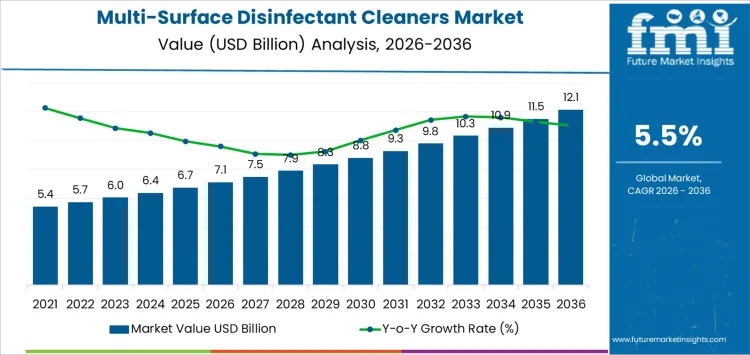
The multi-surface disinfectant cleaners market, valued at USD 7.1 billion in 2026, is projected to reach USD 12.1 billion by 2036, growing at a 5.5% CAGR. Quaternary ammonium compounds lead the market with a 34% share, favored for their broad-spectrum antimicrobial properties. Hydrogen peroxide/peracetic systems, alcohol blends, and chlorine-based oxidizers also contribute to the market, each catering to specific disinfecting needs. In terms of end-use settings, commercial buildings dominate, accounting for 30% of the market, driven by the high demand for disinfectant solutions in public and office spaces. The format segment includes RTU sprays, concentrates, and wipes, with concentrates being the most widely used due to their cost-effectiveness and efficiency.
Quick Stats for Multi-Surface Disinfectant Cleaners Market
- Multi-Surface Disinfectant Cleaners Market Value (2026): USD 7.1 billion
- Multi-Surface Disinfectant Cleaners Market Forecast Value (2036): USD 12.1 billion
- Multi-Surface Disinfectant Cleaners Market Forecast CAGR: 5.5%
- Leading Active Chemistry in Multi-Surface Disinfectant Cleaners Market: Quaternary Ammonium
- Key Growth Regions in Multi-Surface Disinfectant Cleaners Market: Asia Pacific, Europe, and North America
- Top Players in Multi-Surface Disinfectant Cleaners Market: Clorox, Reckitt, Procter & Gamble, SC Johnson Professional, Ecolab, Diversey, Unilever, 3M, Zep, Betco
China shows the highest growth at a 6.5% CAGR, driven by urbanization, increased industrialization, and rising demand for disinfecting products in both residential and commercial spaces. Brazil follows closely with a 6.3% CAGR, fueled by the expansion of the hospitality and commercial sectors. The USA and Germany show moderate growth at 5.2% and 5.1%, respectively, reflecting consistent demand in healthcare, food service, and industrial sectors. South Korea’s market grows at 4.7%, supported by regulatory standards and increasing consumer interest in eco-friendly products. The ongoing focus on hygiene and sanitation, particularly post-pandemic, continues to drive the global market expansion for multi-surface disinfectant cleaners.
Multi-Surface Disinfectant Cleaners Market Key Takeaways
| Metric | Value |
|---|---|
| Industry Value (2026) | USD 7.1 billion |
| Forecast Value (2036) | USD 12.1 billion |
| Forecast CAGR (2026–2036) | 5.5% |
How is the Global Multi-Surface Disinfectant Cleaners Sector Taking Shape Across Cleaning and Hygiene Solutions?
The global multi-surface disinfectant cleaners market is expanding rapidly due to the increasing demand for effective and versatile cleaning solutions that can sanitize various surfaces across residential, commercial, and industrial settings. These cleaners are essential for maintaining high hygiene standards in spaces such as offices, schools, healthcare facilities, and households. The COVID-19 pandemic significantly accelerated the need for disinfecting solutions, with a growing awareness of the importance of cleaning not only for aesthetic purposes but also for health and safety. Initially, disinfectant cleaners were designed for specific surfaces, but the evolution toward multi-surface formulations have met the demand for products that offer convenience and efficiency.
Market for multi-surface disinfectant cleaners is poised for continued growth, driven by advancements in formulation technology and the increasing focus on hygiene across all sectors. The demand for products that are both highly effective and environmentally friendly is expected to rise, with consumers increasingly prioritizing disinfectants that are biodegradable, non-toxic, and free from harsh chemicals. As sustainability and green cleaning trends become more prominent, manufacturers will continue to innovate by developing more eco-conscious and cost-effective disinfectant solutions. Challenges such as regulatory compliance, competition, and the need for continuous product innovation to meet diverse consumer needs will shape the market's future growth.
What is the Segment-Wise Analysis for the Global Multi-Surface Disinfectant Cleaners Market?
The global multi-surface disinfectant cleaners market is driven by active chemistries and end-use settings. Quaternary ammonium compounds lead the market with a 34% share, as they are highly effective against a wide range of pathogens. Other active chemistries include hydrogen peroxide/peracetic systems, alcohol blends, and chlorine/hypochlorite & other oxidizers, each catering to specific disinfecting needs. In terms of end-use settings, commercial buildings account for 30% of the market, driven by the need for high-performance disinfectants in public and office spaces.
Why Do Quaternary Ammonium Compounds Lead the Global Multi-Surface Disinfectant Cleaners Market?
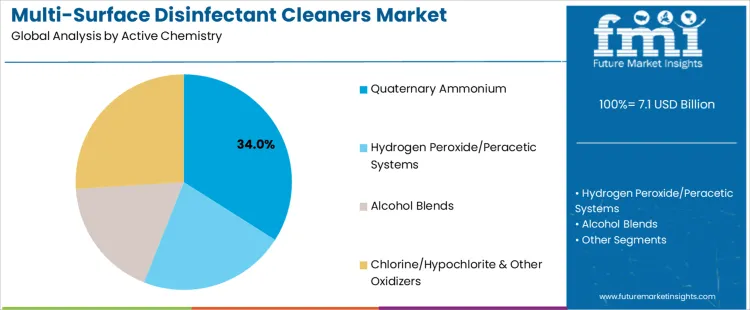
Quaternary ammonium compounds (quats) hold a 34% share of the global multi-surface disinfectant cleaners market due to their broad-spectrum antimicrobial properties. These compounds are highly effective against a wide range of pathogens, including bacteria, viruses, and fungi, making them a popular choice for cleaning and disinfection. Quats are commonly used in commercial settings, such as healthcare facilities, offices, and public spaces, due to their ease of use and long-lasting protection. Their versatility, fast-acting nature, and residual effects, which continue to disinfect surfaces after application, ensure their dominance in the market. Quaternary ammonium-based cleaners are also low in toxicity, which makes them safe for use in high-traffic areas, further reinforcing their market-leading position.
Why Do Commercial Buildings Hold the Largest Share in the Global Multi-Surface Disinfectant Cleaners Market?
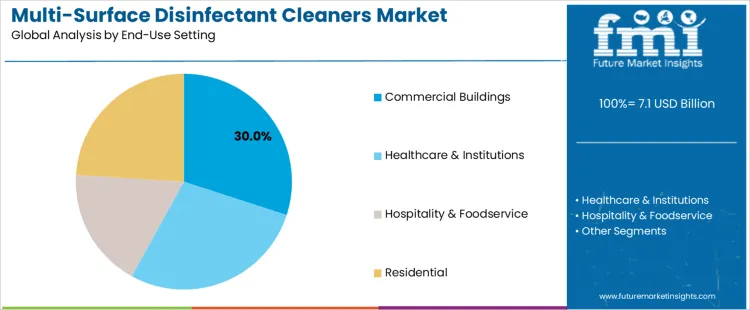
Commercial buildings account for 30% of the global multi-surface disinfectant cleaners market, driven by the high demand for frequent cleaning and sanitization in spaces like offices, retail stores, and public facilities. These environments experience high foot traffic, requiring disinfectants that are effective, fast-acting, and leave minimal residue. The focus on hygiene, health, and safety in commercial buildings is amplified by public health concerns and regulatory requirements. As businesses strive to maintain clean and safe environments for employees, customers, and visitors, the demand for multi-surface disinfectant cleaners continues to grow. The large-scale use of disinfectants in these facilities ensures commercial buildings remain a dominant segment in the market, particularly in maintaining public confidence and regulatory compliance.
What is Shaping the Multi-Surface Disinfectant Cleaners Market?
Increased awareness of hygiene and cleanliness, especially post-pandemic, has fueled the need for products that ensure safe and healthy environments in residential, commercial, and public spaces. Innovations in formulations that combine disinfecting, deodorizing, and stain-removal properties are further boosting the market. The rising preference for eco-friendly, non-toxic, and biodegradable cleaners is also influencing the market, as consumers and businesses prioritize sustainability and safety in their cleaning practices.
What Are the Constraints Limiting the Adoption of Multi-Surface Disinfectant Cleaners?
Adoption of multi-surface disinfectant cleaners is constrained by the potential health risks associated with some harsh chemical ingredients. Some products may contain toxic compounds that can cause skin irritation or respiratory issues, which has led to a growing demand for gentler, non-toxic alternatives. The higher cost of eco-friendly or non-toxic products can limit adoption, particularly in price-sensitive markets. There is also competition from DIY cleaning solutions and natural alternatives, which may offer consumers safer and more affordable options, limiting the growth of conventional disinfectant cleaner products.
What Are the Key Trends Shaping the Multi-Surface Disinfectant Cleaners Market?
The multi-surface disinfectant cleaners market is experiencing key trends such as the rising preference for eco-friendly, non-toxic, and biodegradable cleaning products. Consumers are increasingly seeking cleaning solutions that are not only effective but also safe for both their health and the environment. Innovations in all-in-one cleaner products that combine disinfecting, deodorizing, and stain removal are also gaining popularity, providing greater convenience. Advancements in packaging, such as refillable and recyclable options, are driving demand for more sustainable products. The increased adoption of automated cleaning devices, such as robotic vacuums, is influencing product development in this market.
What is the Growth Outlook for the Multi-Surface Disinfectant Cleaners Market by Country?
| Country | CAGR (%) |
|---|---|
| USA | 5.20% |
| Germany | 5.1% |
| China | 6.5% |
| South Korea | 4.7% |
| Brazil | 6.3% |
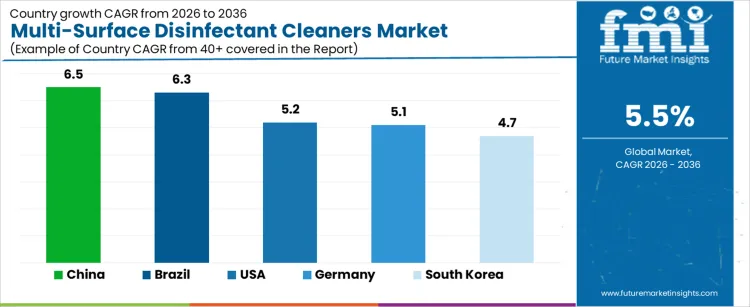
The multi-surface disinfectant cleaners market is witnessing strong growth, with China leading at a 6.5% CAGR, driven by increasing demand for hygiene and cleaning products in both residential and commercial sectors. Brazil follows closely with a 6.3% growth rate, supported by the expanding need for disinfectant solutions in various industries. The USA and Germany show moderate growth at 5.20% and 5.1%, respectively, reflecting consistent demand for disinfectant cleaners, particularly in healthcare, food service, and industrial sectors. South Korea’s market grows at a 4.7% CAGR, with demand driven by commercial cleaning services and growing consumer interest in eco-friendly cleaning solutions.
Why is the Multi-Surface Disinfectant Cleaners Market Growing in China?
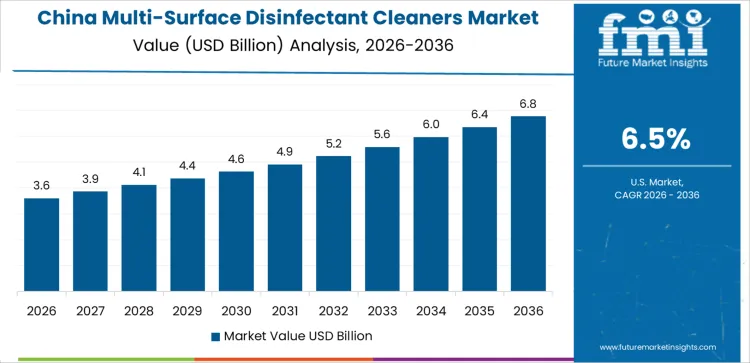
China’s multi-surface disinfectant cleaners market is growing at a 6.5% CAGR, driven by rapid urbanization, increased industrialization, and rising demand for cleaning products in both residential and commercial sectors. As the country’s middle class grows, so does the demand for effective cleaning and disinfectant solutions. Expanding healthcare and food service industries are major contributors to the demand for disinfectant cleaners. China’s growing focus on hygiene and public health standards, especially in response to global health concerns, is also boosting the market. Furthermore, government regulations promoting sanitation in public spaces and businesses are driving the adoption of multi-surface disinfectant cleaners. As consumer awareness of hygiene and sanitation continues to increase, China’s market for disinfectant cleaners is expected to keep growing at a strong rate.
What is Contributing to the Growth of the Multi-Surface Disinfectant Cleaners Market in Brazil?
Brazil’s multi-surface disinfectant cleaners market is growing at a 6.3% CAGR, fueled by the expansion of the construction and commercial cleaning industries. As Brazil continues to develop its urban infrastructure, the demand for cleaning and disinfecting solutions is increasing. The growing hospitality industry, which requires high standards of cleanliness in public spaces, is also contributing to the market’s growth. As Brazilian consumers become more aware of the importance of sanitation, the demand for disinfectant cleaners is rising in residential areas as well. The increasing focus on health and hygiene, coupled with the rise in commercial cleaning services, particularly in urban centers, is further driving the demand for multi-surface disinfectants. As sustainability becomes a key consumer preference, there is also growing interest in eco-friendly disinfectant solutions, contributing to the market’s continued expansion.
How is the Multi-Surface Disinfectant Cleaners Market Expanding in the USA?
The USA’s multi-surface disinfectant cleaners market is growing at a 5.20% CAGR, supported by increasing demand across various sectors, including healthcare, food services, and industrial cleaning. The heightened focus on hygiene and sanitation in response to global health concerns has led to an increased adoption of disinfectant cleaners. The demand is particularly high in hospitals, schools, offices, and public spaces, where maintaining cleanliness and reducing the spread of germs are crucial. The growing preference for eco-friendly and non-toxic cleaning products is also contributing to market growth as more consumers and businesses opt for sustainable cleaning solutions. With ongoing regulatory requirements for cleanliness in commercial settings and the increasing availability of multi-surface disinfectants through retail and online platforms, the market for these products is expected to continue expanding steadily in the USA.
Why is the Multi-Surface Disinfectant Cleaners Market Growing in South Korea?
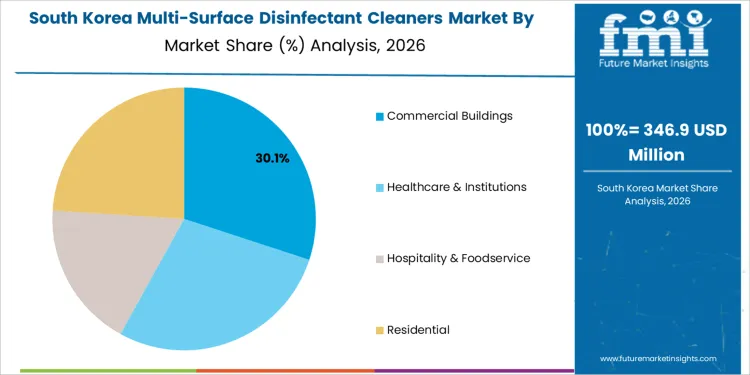
South Korea’s multi-surface disinfectant cleaners market is growing at a 4.7% CAGR, driven by the country’s commitment to maintaining high hygiene standards in public and commercial spaces. South Korea’s strong regulatory framework on sanitation and cleanliness in public areas, such as transportation hubs, restaurants, and retail outlets, is fueling the demand for disinfectant cleaners. Growing popularity of eco-friendly cleaning products in South Korea is contributing to the rise of sustainable disinfectant solutions. The increasing awareness of personal and public hygiene, particularly in high-traffic areas, is further supporting market growth. As South Korea continues to expand its commercial cleaning services and places greater emphasis on cleanliness, the demand for multi-surface disinfectants will likely continue to grow at a steady pace, supported by both consumer and business adoption of hygiene solutions.
What is Supporting the Multi-Surface Disinfectant Cleaners Market Growth in Germany?
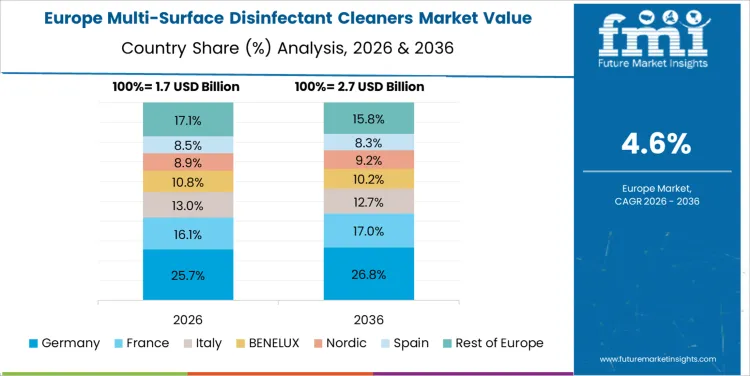
Germany’s multi-surface disinfectant cleaners market is growing at a 5.1% CAGR, driven by the country’s commitment to maintaining high hygiene standards in commercial, industrial, and residential settings. The healthcare and foodservice industries in Germany are major drivers of disinfectant cleaner demand, as these sectors require rigorous cleaning and sanitation protocols. Increasing consumer awareness about health and hygiene, particularly in the wake of global health concerns, is contributing to market growth. As businesses and consumers become more focused on cleanliness and disinfection, the demand for effective multi-surface cleaners continues to rise. Germany’s strong preference for eco-friendly and sustainable products is also influencing the market, with growing demand for green disinfectants that align with consumer preferences for environmentally responsible products. With regulatory frameworks supporting cleanliness and sanitation, the market in Germany is expected to grow steadily.
How Do Major Players Compete in the Multi-Surface Disinfectant Cleaners Market?
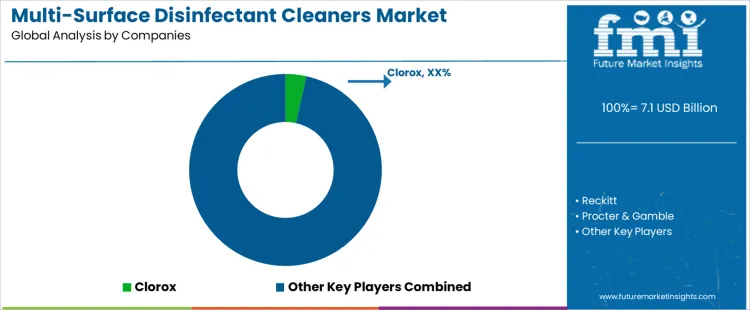
The multi-surface disinfectant cleaners market is driven by competition from key players like Clorox, Reckitt, and Procter & Gamble, who leverage strong brand reputations and innovative cleaning technologies. Clorox leads with its trusted disinfectant solutions, emphasizing powerful germ-killing capabilities and fast-acting formulas suitable for various surfaces, from kitchens to bathrooms. Reckitt, with brands like Lysol, follows by offering highly effective cleaners that not only disinfect but also leave behind a fresh, clean scent, meeting both hygiene and aesthetic needs. Procter & Gamble competes with its consumer-friendly brands, such as Mr. Clean, combining deep cleaning power with ease of use and effective surface protection.
SC Johnson Professional, Ecolab, and Diversey focus on the commercial and industrial sectors, offering highly efficient solutions for large-scale cleaning. SC Johnson Professional tailors its products for high-traffic environments, ensuring cleanliness and safety with minimal effort. Ecolab combines advanced chemical formulations with sustainability, providing multi-surface disinfectants that meet the rigorous needs of industries like healthcare, foodservice, and hospitality. Diversey emphasizes eco-friendly solutions, offering disinfectants that meet performance standards while supporting sustainability goals across various commercial applications.
Unilever, 3M, Zep, and Betco also contribute to the competitive landscape with innovative and effective solutions. Unilever’s brands, like Seventh Generation, focus on natural ingredients, appealing to consumers seeking eco-conscious cleaning products. 3M offers technologically advanced multi-surface disinfectants that ensure optimal cleaning while reducing environmental impact. Zep and Betco cater to professional cleaning services, offering high-performance disinfectants designed for tough commercial cleaning needs.
Key Players in Multi-Surface Disinfectant Cleaners Market
- Clorox
- Reckitt
- Procter & Gamble
- SC Johnson Professional
- Ecolab
- Diversey
- Unilever
- 3M
- Zep
- Betco
Scope of Report
| Items | Values |
|---|---|
| Quantitative Units (2025) | USD billion |
| End Use Application | Commercial Buildings, Healthcare & Institutions, Hospitality & Foodservice, Residential |
| Active Chemistry | Quaternary Ammonium, Hydrogen Peroxide/Peracetic Systems, Alcohol Blends, Chlorine/Hypochlorite & Other Oxidizers |
| Product Form | RTU Sprays, Concentrates, Wipes, Other Formats |
| Contact Time Positioning | Fast Contact Time (≤1 min), Standard Contact Time (2–5 min), Extended Contact Time (>5 min) |
| End-Use Sector | Commercial Buildings, Healthcare & Institutions, Hospitality & Foodservice, Residential |
| Regions Covered | Asia Pacific, Europe, North America, Latin America, Middle East & Africa |
| Countries Covered | USA, China, Japan, South Korea, India, Australia & New Zealand, ASEAN, Germany, UK, France, Italy, Spain, Nordic, BENELUX, Brazil, Chile, Mexico, Saudi Arabia, Other GCC Countries, Turkey, South Africa, Other African Union, Rest of Regions |
| Key Companies Profiled | Clorox, Reckitt, Procter & Gamble, SC Johnson Professional, Ecolab, Diversey, Unilever, 3M, Zep, Betco |
| Additional Attributes | Dollar sales by active chemistry, product form, and contact time; regional CAGR and growth outlook; distribution channels including retail, DTC, e-commerce, and institutional buyers; innovation trends in fast contact time products; competitive positioning of global vs regional suppliers. |
Multi-Surface Disinfectant Cleaners Market by Segments
Active Chemistry
- Quaternary Ammonium
- Hydrogen Peroxide/Peracetic Systems
- Alcohol Blends
- Chlorine/Hypochlorite & Other Oxidizers
End-Use Setting
- Commercial Buildings
- Healthcare & Institutions
- Hospitality & Foodservice
- Residential
Format
- RTU Sprays
- Concentrates
- Wipes
- Other Formats
Contact Time Positioning
- Fast Contact Time (≤1 min)
- Standard Contact Time (2–5 min)
- Extended Contact Time (>5 min)
Region:
- Asia Pacific
- China
- Japan
- South Korea
- India
- Australia & New Zealand
- ASEAN
- Rest of Asia Pacific
- Europe
- Germany
- United Kingdom
- France
- Italy
- Spain
- Nordic
- BENELUX
- Rest of Europe
- North America
- United States
- Canada
- Mexico
- Latin America
- Brazil
- Chile
- Rest of Latin America
- Middle East & Africa
- Kingdom of Saudi Arabia
- Other GCC Countries
- Turkey
- South Africa
- Other African Union
- Rest of Middle East & Africa
Frequently Asked Questions
How big is the multi-surface disinfectant cleaners market in 2026?
The global multi-surface disinfectant cleaners market is estimated to be valued at USD 7.1 billion in 2026.
What will be the size of multi-surface disinfectant cleaners market in 2036?
The market size for the multi-surface disinfectant cleaners market is projected to reach USD 12.1 billion by 2036.
How much will be the multi-surface disinfectant cleaners market growth between 2026 and 2036?
The multi-surface disinfectant cleaners market is expected to grow at a 5.5% CAGR between 2026 and 2036.
What are the key product types in the multi-surface disinfectant cleaners market?
The key product types in multi-surface disinfectant cleaners market are quaternary ammonium, hydrogen peroxide/peracetic systems, alcohol blends and chlorine/hypochlorite & other oxidizers.
Which end-use setting segment to contribute significant share in the multi-surface disinfectant cleaners market in 2026?
In terms of end-use setting, commercial buildings segment to command 30.0% share in the multi-surface disinfectant cleaners market in 2026.
Preview the report firsthand - request a free sample
Get SampleGet the brochure for pricing and purchase details.
Get PDFTable of Content
- Executive Summary
- Global Market Outlook
- Demand-side Trends
- Supply-side Trends
- Technology Roadmap Analysis
- Analysis and Recommendations
- Market Overview
- Market Coverage / Taxonomy
- Market Definition / Scope / Limitations
- Market Background
- Market Dynamics
- Drivers
- Restraints
- Opportunity
- Trends
- Scenario Forecast
- Demand in Optimistic Scenario
- Demand in Likely Scenario
- Demand in Conservative Scenario
- Opportunity Map Analysis
- Product Life Cycle Analysis
- Supply Chain Analysis
- Investment Feasibility Matrix
- Value Chain Analysis
- PESTLE and Porter’s Analysis
- Regulatory Landscape
- Regional Parent Market Outlook
- Production and Consumption Statistics
- Import and Export Statistics
- Market Dynamics
- Global Market Analysis 2021 to 2025 and Forecast, 2026 to 2036
- Historical Market Size Value (USD Million) Analysis, 2021 to 2025
- Current and Future Market Size Value (USD Million) Projections, 2026 to 2036
- Y-o-Y Growth Trend Analysis
- Absolute $ Opportunity Analysis
- Global Market Pricing Analysis 2021 to 2025 and Forecast 2026 to 2036
- Global Market Analysis 2021 to 2025 and Forecast 2026 to 2036, By Active Chemistry
- Introduction / Key Findings
- Historical Market Size Value (USD Million) Analysis By Active Chemistry , 2021 to 2025
- Current and Future Market Size Value (USD Million) Analysis and Forecast By Active Chemistry , 2026 to 2036
- Quaternary Ammonium
- Hydrogen Peroxide/Peracetic Systems
- Alcohol Blends
- Chlorine/Hypochlorite & Other Oxidizers
- Y-o-Y Growth Trend Analysis By Active Chemistry , 2021 to 2025
- Absolute $ Opportunity Analysis By Active Chemistry , 2026 to 2036
- Global Market Analysis 2021 to 2025 and Forecast 2026 to 2036, By End-Use Setting
- Introduction / Key Findings
- Historical Market Size Value (USD Million) Analysis By End-Use Setting, 2021 to 2025
- Current and Future Market Size Value (USD Million) Analysis and Forecast By End-Use Setting, 2026 to 2036
- Commercial Buildings
- Healthcare & Institutions
- Hospitality & Foodservice
- Residential
- Y-o-Y Growth Trend Analysis By End-Use Setting, 2021 to 2025
- Absolute $ Opportunity Analysis By End-Use Setting, 2026 to 2036
- Global Market Analysis 2021 to 2025 and Forecast 2026 to 2036, By By Format
- Introduction / Key Findings
- Historical Market Size Value (USD Million) Analysis By By Format, 2021 to 2025
- Current and Future Market Size Value (USD Million) Analysis and Forecast By By Format, 2026 to 2036
- RTU Sprays
- Concentrates
- Wipes
- Other Formats
- Y-o-Y Growth Trend Analysis By By Format, 2021 to 2025
- Absolute $ Opportunity Analysis By By Format, 2026 to 2036
- Global Market Analysis 2021 to 2025 and Forecast 2026 to 2036, By By Contact Time Positioning
- Introduction / Key Findings
- Historical Market Size Value (USD Million) Analysis By By Contact Time Positioning, 2021 to 2025
- Current and Future Market Size Value (USD Million) Analysis and Forecast By By Contact Time Positioning, 2026 to 2036
- Fast Contact Time (≤1 min)
- Standard Contact Time (2–5 min)
- Extended Contact Time (>5 min)
- Y-o-Y Growth Trend Analysis By By Contact Time Positioning, 2021 to 2025
- Absolute $ Opportunity Analysis By By Contact Time Positioning, 2026 to 2036
- Global Market Analysis 2021 to 2025 and Forecast 2026 to 2036, By Region
- Introduction
- Historical Market Size Value (USD Million) Analysis By Region, 2021 to 2025
- Current Market Size Value (USD Million) Analysis and Forecast By Region, 2026 to 2036
- North America
- Latin America
- Western Europe
- Eastern Europe
- East Asia
- South Asia and Pacific
- Middle East & Africa
- Market Attractiveness Analysis By Region
- North America Market Analysis 2021 to 2025 and Forecast 2026 to 2036, By Country
- Historical Market Size Value (USD Million) Trend Analysis By Market Taxonomy, 2021 to 2025
- Market Size Value (USD Million) Forecast By Market Taxonomy, 2026 to 2036
- By Country
- USA
- Canada
- Mexico
- By Active Chemistry
- By End-Use Setting
- By By Format
- By By Contact Time Positioning
- By Country
- Market Attractiveness Analysis
- By Country
- By Active Chemistry
- By End-Use Setting
- By By Format
- By By Contact Time Positioning
- Key Takeaways
- Latin America Market Analysis 2021 to 2025 and Forecast 2026 to 2036, By Country
- Historical Market Size Value (USD Million) Trend Analysis By Market Taxonomy, 2021 to 2025
- Market Size Value (USD Million) Forecast By Market Taxonomy, 2026 to 2036
- By Country
- Brazil
- Chile
- Rest of Latin America
- By Active Chemistry
- By End-Use Setting
- By By Format
- By By Contact Time Positioning
- By Country
- Market Attractiveness Analysis
- By Country
- By Active Chemistry
- By End-Use Setting
- By By Format
- By By Contact Time Positioning
- Key Takeaways
- Western Europe Market Analysis 2021 to 2025 and Forecast 2026 to 2036, By Country
- Historical Market Size Value (USD Million) Trend Analysis By Market Taxonomy, 2021 to 2025
- Market Size Value (USD Million) Forecast By Market Taxonomy, 2026 to 2036
- By Country
- Germany
- UK
- Italy
- Spain
- France
- Nordic
- BENELUX
- Rest of Western Europe
- By Active Chemistry
- By End-Use Setting
- By By Format
- By By Contact Time Positioning
- By Country
- Market Attractiveness Analysis
- By Country
- By Active Chemistry
- By End-Use Setting
- By By Format
- By By Contact Time Positioning
- Key Takeaways
- Eastern Europe Market Analysis 2021 to 2025 and Forecast 2026 to 2036, By Country
- Historical Market Size Value (USD Million) Trend Analysis By Market Taxonomy, 2021 to 2025
- Market Size Value (USD Million) Forecast By Market Taxonomy, 2026 to 2036
- By Country
- Russia
- Poland
- Hungary
- Balkan & Baltic
- Rest of Eastern Europe
- By Active Chemistry
- By End-Use Setting
- By By Format
- By By Contact Time Positioning
- By Country
- Market Attractiveness Analysis
- By Country
- By Active Chemistry
- By End-Use Setting
- By By Format
- By By Contact Time Positioning
- Key Takeaways
- East Asia Market Analysis 2021 to 2025 and Forecast 2026 to 2036, By Country
- Historical Market Size Value (USD Million) Trend Analysis By Market Taxonomy, 2021 to 2025
- Market Size Value (USD Million) Forecast By Market Taxonomy, 2026 to 2036
- By Country
- China
- Japan
- South Korea
- By Active Chemistry
- By End-Use Setting
- By By Format
- By By Contact Time Positioning
- By Country
- Market Attractiveness Analysis
- By Country
- By Active Chemistry
- By End-Use Setting
- By By Format
- By By Contact Time Positioning
- Key Takeaways
- South Asia and Pacific Market Analysis 2021 to 2025 and Forecast 2026 to 2036, By Country
- Historical Market Size Value (USD Million) Trend Analysis By Market Taxonomy, 2021 to 2025
- Market Size Value (USD Million) Forecast By Market Taxonomy, 2026 to 2036
- By Country
- India
- ASEAN
- Australia & New Zealand
- Rest of South Asia and Pacific
- By Active Chemistry
- By End-Use Setting
- By By Format
- By By Contact Time Positioning
- By Country
- Market Attractiveness Analysis
- By Country
- By Active Chemistry
- By End-Use Setting
- By By Format
- By By Contact Time Positioning
- Key Takeaways
- Middle East & Africa Market Analysis 2021 to 2025 and Forecast 2026 to 2036, By Country
- Historical Market Size Value (USD Million) Trend Analysis By Market Taxonomy, 2021 to 2025
- Market Size Value (USD Million) Forecast By Market Taxonomy, 2026 to 2036
- By Country
- Kingdom of Saudi Arabia
- Other GCC Countries
- Turkiye
- South Africa
- Other African Union
- Rest of Middle East & Africa
- By Active Chemistry
- By End-Use Setting
- By By Format
- By By Contact Time Positioning
- By Country
- Market Attractiveness Analysis
- By Country
- By Active Chemistry
- By End-Use Setting
- By By Format
- By By Contact Time Positioning
- Key Takeaways
- Key Countries Market Analysis
- USA
- Pricing Analysis
- Market Share Analysis, 2025
- By Active Chemistry
- By End-Use Setting
- By By Format
- By By Contact Time Positioning
- Canada
- Pricing Analysis
- Market Share Analysis, 2025
- By Active Chemistry
- By End-Use Setting
- By By Format
- By By Contact Time Positioning
- Mexico
- Pricing Analysis
- Market Share Analysis, 2025
- By Active Chemistry
- By End-Use Setting
- By By Format
- By By Contact Time Positioning
- Brazil
- Pricing Analysis
- Market Share Analysis, 2025
- By Active Chemistry
- By End-Use Setting
- By By Format
- By By Contact Time Positioning
- Chile
- Pricing Analysis
- Market Share Analysis, 2025
- By Active Chemistry
- By End-Use Setting
- By By Format
- By By Contact Time Positioning
- Germany
- Pricing Analysis
- Market Share Analysis, 2025
- By Active Chemistry
- By End-Use Setting
- By By Format
- By By Contact Time Positioning
- UK
- Pricing Analysis
- Market Share Analysis, 2025
- By Active Chemistry
- By End-Use Setting
- By By Format
- By By Contact Time Positioning
- Italy
- Pricing Analysis
- Market Share Analysis, 2025
- By Active Chemistry
- By End-Use Setting
- By By Format
- By By Contact Time Positioning
- Spain
- Pricing Analysis
- Market Share Analysis, 2025
- By Active Chemistry
- By End-Use Setting
- By By Format
- By By Contact Time Positioning
- France
- Pricing Analysis
- Market Share Analysis, 2025
- By Active Chemistry
- By End-Use Setting
- By By Format
- By By Contact Time Positioning
- India
- Pricing Analysis
- Market Share Analysis, 2025
- By Active Chemistry
- By End-Use Setting
- By By Format
- By By Contact Time Positioning
- ASEAN
- Pricing Analysis
- Market Share Analysis, 2025
- By Active Chemistry
- By End-Use Setting
- By By Format
- By By Contact Time Positioning
- Australia & New Zealand
- Pricing Analysis
- Market Share Analysis, 2025
- By Active Chemistry
- By End-Use Setting
- By By Format
- By By Contact Time Positioning
- China
- Pricing Analysis
- Market Share Analysis, 2025
- By Active Chemistry
- By End-Use Setting
- By By Format
- By By Contact Time Positioning
- Japan
- Pricing Analysis
- Market Share Analysis, 2025
- By Active Chemistry
- By End-Use Setting
- By By Format
- By By Contact Time Positioning
- South Korea
- Pricing Analysis
- Market Share Analysis, 2025
- By Active Chemistry
- By End-Use Setting
- By By Format
- By By Contact Time Positioning
- Russia
- Pricing Analysis
- Market Share Analysis, 2025
- By Active Chemistry
- By End-Use Setting
- By By Format
- By By Contact Time Positioning
- Poland
- Pricing Analysis
- Market Share Analysis, 2025
- By Active Chemistry
- By End-Use Setting
- By By Format
- By By Contact Time Positioning
- Hungary
- Pricing Analysis
- Market Share Analysis, 2025
- By Active Chemistry
- By End-Use Setting
- By By Format
- By By Contact Time Positioning
- Kingdom of Saudi Arabia
- Pricing Analysis
- Market Share Analysis, 2025
- By Active Chemistry
- By End-Use Setting
- By By Format
- By By Contact Time Positioning
- Turkiye
- Pricing Analysis
- Market Share Analysis, 2025
- By Active Chemistry
- By End-Use Setting
- By By Format
- By By Contact Time Positioning
- South Africa
- Pricing Analysis
- Market Share Analysis, 2025
- By Active Chemistry
- By End-Use Setting
- By By Format
- By By Contact Time Positioning
- USA
- Market Structure Analysis
- Competition Dashboard
- Competition Benchmarking
- Market Share Analysis of Top Players
- By Regional
- By Active Chemistry
- By End-Use Setting
- By By Format
- By By Contact Time Positioning
- Competition Analysis
- Competition Deep Dive
- Clorox
- Overview
- Product Portfolio
- Profitability by Market Segments (Product/Age /Sales Channel/Region)
- Sales Footprint
- Strategy Overview
- Marketing Strategy
- Product Strategy
- Channel Strategy
- Reckitt
- Procter & Gamble
- SC Johnson Professional
- Ecolab
- Diversey
- Unilever
- 3M
- Zep
- Betco
- Clorox
- Competition Deep Dive
- Assumptions & Acronyms Used
- Research Methodology


