

- Industry Size (2026)
- USD 95.0 Mn
- Forecast (2036)
- USD 261.0 Mn
- CAGR (2026 to 2036)
- 10.6%
NFC-Interactive Sachets Market Forecast and Outlook 2026 to 2036
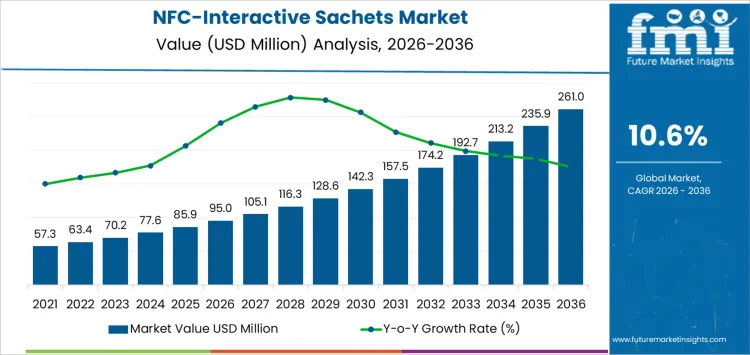
The NFC-interactive sachets market starts at USD 95 million in 2026 and is expected to reach USD 261 million by 2036, reflecting a CAGR of 10.6%. Between 2026 and 2031, the market experiences clear acceleration, with annual absolute additions rising from roughly USD 10 million to USD 25 million. This growth is driven by uptake in personal care, nutraceuticals, and premium FMCG products, where NFC-enabled sachets enhance consumer engagement and provide access to digital content. Early adoption is supported by pilot programs, marketing campaigns, and initial deployment across selective product lines.
From 2031 to 2036, the market continues to expand strongly, increasing from about USD 160 million to USD 261 million. Annual absolute gains remain substantial and consistent as adoption spreads to mainstream categories and repeat purchases reinforce volume growth. Expansion is supported by standardized NFC sachet production, wider integration into brand digital ecosystems, and operational scaling. Relative acceleration moderates as the market matures, reflecting a shift from adoption-driven growth to stable, high-volume expansion anchored in established end-use applications.
Quick Stats of the NFC-Interactive Sachets Market:
- NFC-Interactive Sachets Market Value (2026): USD 95.0 million
- NFC-Interactive Sachets Market Forecast Value (2036): USD 261.0 million
- NFC-Interactive Sachets Market Forecast CAGR (2026–2036): 10.6%
- Leading Packaging Format: Single-serve NFC Sachets (60%)
- Key Growth Regions: China, India, USA, Brazil, Germany, Japan
- Top Players: Avery Dennison, Smartrac, Schreiner, UFlex, Klabin, Toppan
What is the Growth Forecast for the NFC-Interactive Sachets Market through 2036?
From 2026 to 2031, the NFC-interactive sachets market rises from USD 95 million to about USD 145 million, reflecting early-stage adoption driven by limited deployments in functional foods, nutraceuticals, and promotional consumer goods. Growth during this period is shaped by brand experimentation with interactive packaging, QR-linked experiences, and authentication features. Uptake is concentrated among early adopters who value consumer engagement and data capture, while annual value additions expand steadily as NFC integration, chip durability, and print compatibility improve, allowing broader qualification across select product lines.
Between 2031 and 2036, the market grows from approximately USD 145 million to USD 261 million, indicating a sharper acceleration in absolute value. This phase reflects wider commercialization across mass-market nutrition, beverage, and personal care sachets, with NFC becoming a standard feature for traceability, consumer engagement, and loyalty programs. Growth is reinforced by higher unit adoption per SKU, multi-region rollout, and repeat procurement. Earlier expansion relied on niche adoption, whereas later growth is driven by standardized implementation, portfolio-wide deployment, and deeper integration of NFC-enabled interactivity into global sachet packaging strategies.
NFC Interactive Sachets Market Key Takeaways
| Metric | Value |
|---|---|
| Market Value (2026) | USD 95.0 million |
| Forecast Value (2036) | USD 261.0 million |
| Forecast CAGR (2026–2036) | 10.6% |
How Are Consumer Engagement and Smart Packaging Trends Driving the NFC-Interactive Sachets Market from 2026 to 2036?
NFC-interactive sachets gained adoption as brands integrated neAR-field communication technology into single-serve packaging for personalized engagement. Food, beverage, personal care, and nutritional products used sachets with embedded NFC chips to provide consumers with digital content, authentication, or loyalty rewards. Historical demand reflected early pilot programs in premium segments and promotional campaigns. Buyers prioritized chip integration that did not affect sachet sealing or product stability. Adoption aligned with brands seeking traceability, interactive marketing, and enhanced user experience through mobile connectivity.
From 2026 to 2036 demand is expected to expand with broader acceptance of connected packaging and consumer interest in product interactivity. Growth aligns with subscription-based models, brand authentication needs, and digital marketing campaigns that link physical products to apps or websites. Manufacturers refine NFC tag placement, signal reliability, and print integration without compromising sachet integrity. Buyers assess tag durability, compatibility with filling lines, and digital platform support. Demand reflects adoption of mobile engagement strategies, increasing value of product-to-consumer connectivity, and integration of smart packaging across high-volume FMCG and personal care lines.
What Is the Demand for the NFC-Interactive Sachets Market by End Use and Packaging Format from 2026 to 2036?
From 2026 to 2036, the NFC-interactive sachets market expands as brands integrate digital engagement into primary packaging. Premium FMCG and sampling account for 35% of end-use demand because single-use products benefit from interactive features that enhance consumer experience. NFC-enabled sachets support traceability, personalized promotions, and digital content access while maintaining hygiene and convenience. Adoption is gradual, with brands focusing on high-value products where technology enhances brand differentiation, data collection, and engagement metrics. Market growth reflects alignment between interactive functionality, packaging performance, and end-user appeal in competitive retail and sampling environments.
Why do premium FMCG and sampling account for 35% of demand in the NFC-interactive sachets market from 2026 to 2036?
Premium FMCG and sampling account for 35% of demand because single-use sachets allow consumers to access digital content linked to product use, recipe ideas, or brand experiences. Consumption intensity remains high in limited-edition items, trial packs, and premium segments where packaging serves both functional and marketing roles. Procurement decisions emphasize NFC chip integration, print compatibility, and tamper-proof sealing. Buyers favor sachets that maintain product integrity while enabling interactive engagement. Price sensitivity remains moderate as NFC functionality adds perceived value and supports targeted marketing. Demand remains stable through 2036 as brands increasingly combine product trial with digital interaction.
Sachet usage continues due to repeat sampling campaigns and promotional rotations. Specification control focuses on NFC readability, material compatibility, and adhesive reliability. Demand persists as FMCG and cosmetics brands standardize interactive sachets for trial and engagement programs.
Why do single-serve NFC sachets represent 60% of demand in the NFC-interactive sachets market by packaging format from 2026 to 2036?
Single-serve NFC sachets represent 60% of demand because they integrate compact NFC chips while preserving portion control and product protection. Consumption is strong across FMCG, cosmetics, and pharma sampling where single-use formats align with consumer convenience and trial engagement. Usage remains steady as sachets ensure consistent product dosing and protect sensitive formulations. Procurement favors designs that maintain chip functionality after printing, sealing, and transport. Buyers prioritize mechanical integrity, NFC readability, and tactile quality. Price sensitivity stays moderate since single-serve formats support marketing objectives without compromising product performance. Demand persists through 2036 as single-serve interactive sachets become standard for digital-enabled trial and sampling initiatives.
Sachets also enable efficient inventory and display management. Specification control centers on chip placement, adhesion, and durability under handling. Demand remains resilient as single-serve NFC sachets anchor interactive packaging adoption across multiple high-value product categories.
What are the Key Dynamics of the NFC-Interactive Sachets Market?
How Are NFC Interactive Sachets Being Applied in Packaging and Consumer Engagement?
Use appears in product formats where digital interactivity enhances user experience and brand connection. Beverage and nutritional supplement brands apply NFC enabled sachets to provide consumers with access to recipe content, usage guidance, or loyalty programs. Personal care and cosmetic companies use them for trial samples that link to instructional videos or product registration. Retailers include interactive sachets in promotional campaigns to track engagement and participation. These applications reflect functional and marketing integration where traceability, digital interaction, and consumer education are embedded within single serve packaging rather than traditional print communication.
What Consumer and Operational Conditions Support Adoption of NFC Interactive Sachets?
Selection aligns with environments that benefit from digital engagement at the point of use. Brands rely on NFC tags that are compatible with small format sachets without affecting packaging integrity. Marketing teams leverage tags to collect opt-in data and deliver personalized content. Retail programs incorporate interactive sachets to drive in store activation and post purchase follow up. Packaging operations select tags and adhesives that withstand automated filling and sealing processes. These conditions emerge from a combination of product marketing objectives, digital integration needs, and practical packaging considerations.
Which Practical Considerations Shape Limits on Wider Use of NFC Interactive Sachets?
Cost per unit remains higher than standard sachets, influencing use in high volume low margin products. Tag placement and adhesion must not interfere with product release or sealing. Consumer adoption depends on smartphone NFC compatibility and user awareness. Data privacy and regulatory compliance require careful management of collected information. Integration into automated packaging lines requires process calibration. These factors lead to selective deployment where engagement value, technological readiness, and packaging feasibility outweigh additional complexity and cost.
What is the Demand for NFC Interactive Sachets by Country?
| Country | CAGR (%) |
|---|---|
| USA | 10.0% |
| China | 12.2% |
| Germany | 7.0% |
| India | 12.0% |
| Brazil | 8.0% |
| Japan | 5.0% |
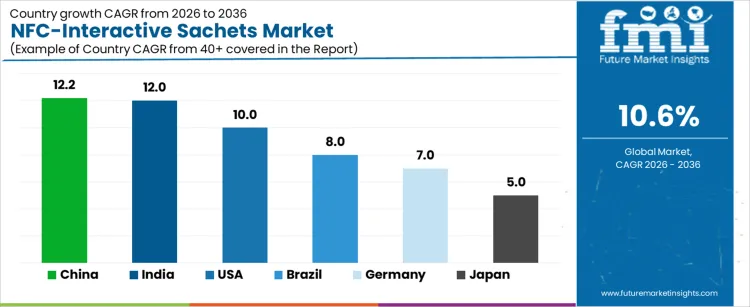
The demand for NFC interactive sachets varies across countries, driven by smart packaging adoption, consumer engagement strategies, and digital integration in retail products. China leads with a 12.2% CAGR, supported by large scale FMCG production and increasing use of NFC technology for marketing and traceability. India follows at 12.0%, driven by rising packaged food and personal care consumption and growing interest in interactive packaging formats. The USA grows at 10.0%, reflecting adoption in promotional campaigns, premium food, and cosmetic products. Brazil records 8.0%, shaped by organized retail expansion. Germany posts 7.0%, supported by regulated packaging standards, while Japan grows at 5.0%, reflecting mature markets and steady NFC adoption.
How Is Smart Packaging Adoption Driving Growth in the United States?
In the United States, revenue from the NFC-Interactive Sachets Market is expanding at a CAGR of 10.00% through 2035, driven by adoption of NFC-enabled packaging for consumer engagement, product authentication, and traceability in food, beverage, and personal care products. Brands are using NFC-interactive sachets to provide consumers with product information, promotions, and digital experiences. Demand is concentrated in dietary supplements, functional beverages, and single serve food packets distributed through retail and online channels. Domestic manufacturers are integrating NFC chips into sachets while maintaining compatibility with existing filling and sealing equipment. High consumer interaction and recurring sachet usage are sustaining consistent procurement across packaging users nationwide.
- Dietary supplement and beverage brands are adopting NFC-interactive sachets to enhance consumer engagement and traceability
- Integration of NFC chips allows product authentication and interactive digital content
- Domestic manufacturers ensure compatibility with existing sachet filling and sealing lines
- Recurring sachet usage sustains predictable procurement volumes
How Do Consumer Protection Standards Shape Demand in Germany?
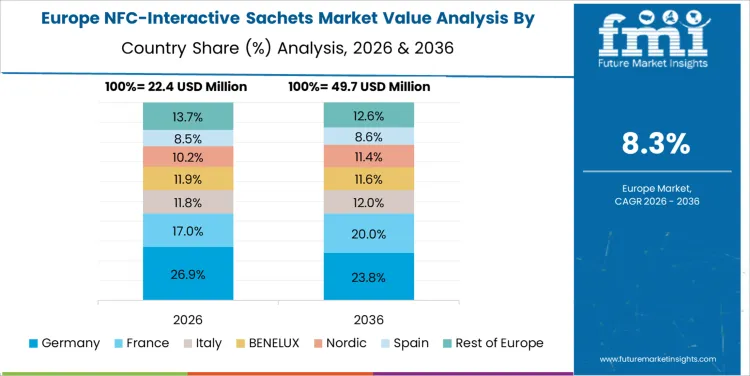
Germany continues to record steady growth in the NFC-Interactive Sachets Market at a CAGR of 7.00% through 2035, supported by strong consumer protection standards and regulated packaging practices. Manufacturers are integrating NFC-enabled sachets for traceability, product information disclosure, and promotional campaigns. Demand is concentrated in functional foods, nutraceuticals, and single serve packaging. Technical expertise in embedding NFC chips ensures reliable performance and readability. Stable retail distribution and compliance-driven procurement practices are sustaining measured adoption across domestic packaging operations nationwide.
- Consumer protection and labeling standards encourage NFC sachet adoption for traceability
- Functional foods and nutraceuticals anchor core demand
- Technical expertise ensures reliable NFC chip integration and performance
- Compliance-driven procurement sustains steady adoption levels
How Is E-Commerce Expansion Accelerating Adoption in China?
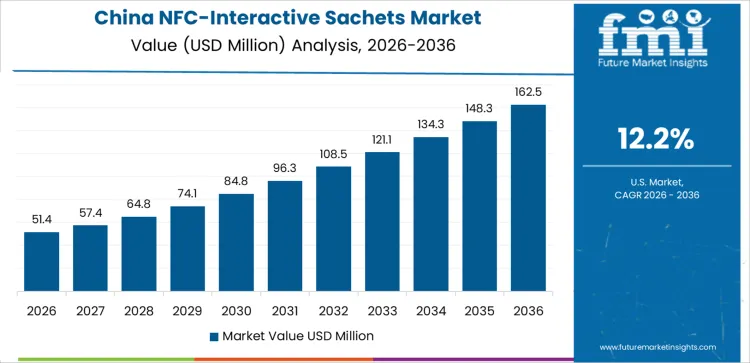
In China, revenue from the NFC-Interactive Sachets Market is growing at a CAGR of 12.20% through 2035, driven by rapid e-commerce expansion and rising digital consumer engagement. Brands are adopting NFC-interactive sachets to deliver promotions, authentication, and personalized content in functional foods and dietary supplements. Demand is strong across online retail channels and modern trade networks. Domestic manufacturers are scaling NFC chip integration and sachet production capacity. High online sales volume and structured procurement practices are sustaining rapid adoption across major packaging hubs nationwide.
- E-commerce growth supports adoption of NFC-interactive sachets for consumer engagement
- Dietary supplements and functional foods drive high volume usage
- Domestic manufacturers are scaling NFC chip integration capacity
- Digital marketing initiatives sustain consistent sachet procurement
How Is Organized Food and Beverage Manufacturing Supporting Growth in India?
India is witnessing strong expansion in the NFC-Interactive Sachets Market at a CAGR of 12.00% through 2035, supported by growth in organized manufacturing and increasing demand for smart packaging. Manufacturers are adopting NFC-interactive sachets for functional beverages, nutritional supplements, and single serve food packs. Demand is rising across urban retail, e-commerce, and subscription channels. Domestic packaging suppliers are offering cost-aligned NFC-enabled sachets suitable for high volume production. Expanding retail presence and digital engagement programs are sustaining robust procurement across product manufacturers nationwide.
- Organized manufacturing increases demand for NFC-enabled sachets
- Functional beverages and nutritional supplements drive high volume adoption
- Domestic suppliers provide cost-aligned NFC integration solutions
- Retail expansion and digital campaigns sustain procurement growth
How Are Consumer Packaged Goods Supporting Adoption in Brazil?
Brazil is seeing steady growth in the NFC-Interactive Sachets Market at a CAGR of 8.00% through 2035, supported by rising use of smart packaging in functional food, beverage, and personal care products. Brands are using NFC-interactive sachets to provide product information, promotional offers, and traceability. Demand is concentrated in retail and distribution networks for health-focused products. Imports supply some specialized NFC components, while domestic converters expand integration capacity. Growth in product availability and retail penetration is sustaining recurring procurement across packaging operations nationwide.
- Functional food and beverage shipments support NFC-interactive sachet usage
- Traceability and digital content features improve consumer engagement
- Domestic converters expand integration capacity for NFC components
- Retail expansion sustains recurring procurement activity
How Does Mature Retail Packaging Demand Influence Stability in Japan?
Japan is maintaining measured growth in the NFC-Interactive Sachets Market at a CAGR of 5.00% through 2035, supported by mature consumer packaged goods markets and selective adoption of smart packaging formats. Brands apply NFC-interactive sachets for dietary supplements, functional foods, and single serve beverages. Demand remains focused on accuracy of digital content delivery, readability, and quality reliability. Domestic suppliers emphasize precise NFC chip embedding and consistent sachet quality. Stable consumption patterns and replacement-driven purchasing are sustaining predictable procurement across established packaging operations nationwide.
- Mature retail markets favor selective adoption of NFC-interactive sachets
- Dietary supplements and functional foods anchor baseline demand
- Domestic suppliers ensure precise NFC chip embedding and sachet quality
- Replacement-driven purchasing sustains procurement continuity
How Is Demand for NFC Interactive Sachets Evolving and Which Companies Are Driving Adoption?
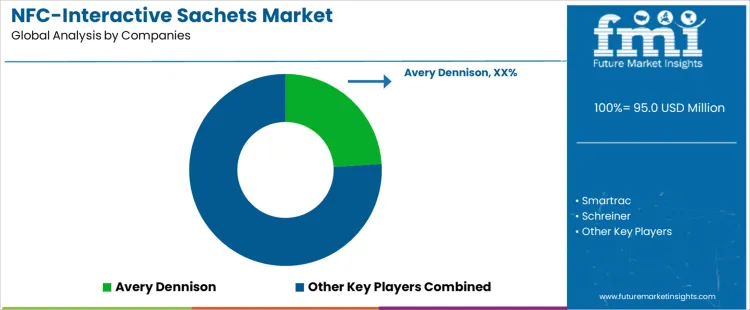
NFC interactive sachets are gaining attention as brands look to combine single serve packaging with digital engagement tools for consumer goods, supplements, and personal care products. These sachets allow consumers to access product information, verify authenticity, participate in loyalty programs, or receive personalized content via NFC enabled interactions. Avery Dennison supports the trend through inlays and labels that integrate into flexible sachets without affecting handling. Smartrac provides advanced NFC chips optimized for high read reliability on paper and film substrates. Schreiner delivers printed interactive and security labels for premium and limited edition products. UFlex and Klabin offer flexible and fiber based sachet formats compatible with embedded NFC components, while Toppan enhances branding and printed cues that guide the consumer interaction.
Adoption decisions are guided by chip positioning, read stability, material compatibility, and durability during storage and transit. Brands focus on seamless user experience, regulatory alignment for electronic components, and integration into existing filling lines. Retailers and manufacturers prioritize NFC sachets that preserve package integrity while delivering interactive functionality. Applications include powdered supplements, beverages, trial packs, and promotional items. Demand visibility tracks growth in smart packaging initiatives, increased focus on consumer engagement, and adoption of traceable, interactive formats to strengthen loyalty and enhance the perceived value of products.
Key Players in the NFC Interactive Sachets Market
- Avery Dennison
- Smartrac
- Schreiner
- UFlex
- Klabin
- Toppan
Scope of the Report
| Items | Values |
|---|---|
| Quantitative Units (2026) | USD million |
| End-use / Application | Premium FMCG & Sampling; Pharma adherence / education; Cosmetics sampling; Retail promotions; Sampling / Events; Others |
| Packaging Format / Type | Single-serve NFC Sachets; Smart Sachet Sleeves; Peelable Sachets; Promotional Sachets; Others |
| Material | PET/Alu Laminate; Synthetic Paper Laminate; Barrier Laminates; Recyclable Mono-PE; Others |
| Technology | Embedded NFC Chips; NFC + QR Hybrid; Secure NFC Tagging; NFC-enabled Coupons; Others |
| Regions Covered | Asia Pacific; Europe; North America; Latin America; Middle East & Africa |
| Countries Covered | China; Japan; South Korea; India; Australia & New Zealand; ASEAN; Germany; United Kingdom; France; Italy; Spain; Nordic; BENELUX; United States; Canada; Mexico; Brazil; Chile; Kingdom of Saudi Arabia; Other GCC Countries; Turkey; South Africa; Other African Union; plus remaining countries across each region |
| Key Companies Profiled | Avery Dennison; Smartrac; Schreiner; UFlex; Klabin; Toppan |
| Additional Attributes | Dollar by sales across end-use applications and packaging formats; adoption of NFC-enabled sachets in premium FMCG, personal care, and nutraceutical segments; integration of embedded NFC chips and hybrid QR functionality; use of PET, synthetic paper, barrier laminates, and recyclable films; alignment with interactive marketing, product traceability, and consumer engagement campaigns; specification control on NFC chip positioning, adhesion, and durability; integration with automated filling and sealing lines; deployment across subscription, retail, and promotional programs; adoption tracking across multiple regions and product categories; branding and printed cue integration to enhance digital interaction and loyalty programs |
NFC Interactive Sachets Market Segmentation
End-use / Application
- Premium FMCG & Sampling
- Pharma adherence / education
- Cosmetics sampling
- Retail promotions
- Sampling / Events
- Others
Packaging Format / Type
- Single-serve NFC Sachets
- Smart Sachet Sleeves
- Peelable Sachets
- Promotional Sachets
- Others
Material
- PET/Alu Laminate
- Synthetic Paper Laminate
- Barrier Laminates
- Recyclable Mono-PE
- Others
Technology
- Embedded NFC Chips
- NFC + QR Hybrid
- Secure NFC Tagging
- NFC-enabled Coupons
- Others
Device Type
- Microprocessor KAFO (e.g., C Brace)
- Microprocessor AFO
- Upper Extremity Powered Orthosis
- Medical Exosuit/Exoskeleton (Orthosis use)
Control / Actuation
- Sensor Based Stance/Swing Control (MP joints)
- Powered Actuators (knee/hip/ankle)
- FES Assisted Orthoses (MP controlled)
- Passive Assist with MP Monitoring/Locking
Application
- Neurologic Gait Impairment (SCI, Stroke)
- Musculoskeletal/Trauma & Post op
- Neurodegenerative (MS, ALS, PD)
- Pediatric (CP, other)
End User
- Rehab Hospitals & Neurorehab Centers
- Prosthetics & Orthotics (P&O) Clinics
- Acute Hospitals & Trauma Centers
- Homecare / Outpatient Programs
Region
- Asia Pacific
- China
- Japan
- South Korea
- India
- Australia & New Zealand
- ASEAN
- Rest of Asia Pacific
- Europe
- Germany
- United Kingdom
- France
- Italy
- Spain
- Nordic
- BENELUX
- Rest of Europe
- North America
- United States
- Canada
- Mexico
- Latin America
- Brazil
- Chile
- Rest of Latin America
- Middle East & Africa
- Kingdom of Saudi Arabia
- Other GCC Countries
- Turkey
- South Africa
- Other African Union
- Rest of Middle East & Africa
Frequently Asked Questions
How big is the NFC-interactive sachets market in 2026?
The global NFC-interactive sachets market is estimated to be valued at USD 95.0 million in 2026.
What will be the size of NFC-interactive sachets market in 2036?
The market size for the NFC-interactive sachets market is projected to reach USD 261.0 million by 2036.
How much will be the NFC-interactive sachets market growth between 2026 and 2036?
The NFC-interactive sachets market is expected to grow at a 10.6% CAGR between 2026 and 2036.
What are the key product types in the NFC-interactive sachets market?
The key product types in NFC-interactive sachets market are premium fmcg & sampling, pharma adherence / education, cosmetics sampling, retail promotions, sampling / events and others.
Which packaging format / type segment to contribute significant share in the NFC-interactive sachets market in 2026?
In terms of packaging format / type, single-serve nfc sachets segment to command 60.0% share in the NFC-interactive sachets market in 2026.
Preview the report firsthand - request a free sample
Get SampleGet the brochure for pricing and purchase details.
Get PDFTable of Content
- Executive Summary
- Global Market Outlook
- Demand-side Trends
- Supply-side Trends
- Technology Roadmap Analysis
- Analysis and Recommendations
- Market Overview
- Market Coverage / Taxonomy
- Market Definition / Scope / Limitations
- Market Background
- Market Dynamics
- Drivers
- Restraints
- Opportunity
- Trends
- Scenario Forecast
- Demand in Optimistic Scenario
- Demand in Likely Scenario
- Demand in Conservative Scenario
- Opportunity Map Analysis
- Product Life Cycle Analysis
- Supply Chain Analysis
- Investment Feasibility Matrix
- Value Chain Analysis
- PESTLE and Porter’s Analysis
- Regulatory Landscape
- Regional Parent Market Outlook
- Production and Consumption Statistics
- Import and Export Statistics
- Market Dynamics
- Global Market Analysis 2021 to 2025 and Forecast, 2026 to 2036
- Historical Market Size Value (USD Million) Analysis, 2021 to 2025
- Current and Future Market Size Value (USD Million) Projections, 2026 to 2036
- Y-o-Y Growth Trend Analysis
- Absolute $ Opportunity Analysis
- Global Market Pricing Analysis 2021 to 2025 and Forecast 2026 to 2036
- Global Market Analysis 2021 to 2025 and Forecast 2026 to 2036, By End-use / Application
- Introduction / Key Findings
- Historical Market Size Value (USD Million) Analysis By End-use / Application , 2021 to 2025
- Current and Future Market Size Value (USD Million) Analysis and Forecast By End-use / Application , 2026 to 2036
- Premium FMCG & Sampling
- Pharma adherence / education
- Cosmetics sampling
- Retail promotions
- Sampling / Events
- Others
- Y-o-Y Growth Trend Analysis By End-use / Application , 2021 to 2025
- Absolute $ Opportunity Analysis By End-use / Application , 2026 to 2036
- Global Market Analysis 2021 to 2025 and Forecast 2026 to 2036, By Packaging Format / Type
- Introduction / Key Findings
- Historical Market Size Value (USD Million) Analysis By Packaging Format / Type, 2021 to 2025
- Current and Future Market Size Value (USD Million) Analysis and Forecast By Packaging Format / Type, 2026 to 2036
- Single-serve NFC Sachets
- Smart Sachet Sleeves
- Peelable Sachets
- Promotional Sachets
- Others
- Y-o-Y Growth Trend Analysis By Packaging Format / Type, 2021 to 2025
- Absolute $ Opportunity Analysis By Packaging Format / Type, 2026 to 2036
- Global Market Analysis 2021 to 2025 and Forecast 2026 to 2036, By Material
- Introduction / Key Findings
- Historical Market Size Value (USD Million) Analysis By Material, 2021 to 2025
- Current and Future Market Size Value (USD Million) Analysis and Forecast By Material, 2026 to 2036
- PET/Alu Laminate
- Synthetic Paper Laminate
- Barrier Laminates
- Recyclable Mono-PE
- Others
- Y-o-Y Growth Trend Analysis By Material, 2021 to 2025
- Absolute $ Opportunity Analysis By Material, 2026 to 2036
- Global Market Analysis 2021 to 2025 and Forecast 2026 to 2036, By Technology
- Introduction / Key Findings
- Historical Market Size Value (USD Million) Analysis By Technology, 2021 to 2025
- Current and Future Market Size Value (USD Million) Analysis and Forecast By Technology, 2026 to 2036
- Embedded NFC Chips
- NFC + QR Hybrid
- Secure NFC Tagging
- NFC-enabled Coupons
- Others
- Y-o-Y Growth Trend Analysis By Technology, 2021 to 2025
- Absolute $ Opportunity Analysis By Technology, 2026 to 2036
- Global Market Analysis 2021 to 2025 and Forecast 2026 to 2036, By Region
- Introduction
- Historical Market Size Value (USD Million) Analysis By Region, 2021 to 2025
- Current Market Size Value (USD Million) Analysis and Forecast By Region, 2026 to 2036
- North America
- Latin America
- Western Europe
- Eastern Europe
- East Asia
- South Asia and Pacific
- Middle East & Africa
- Market Attractiveness Analysis By Region
- North America Market Analysis 2021 to 2025 and Forecast 2026 to 2036, By Country
- Historical Market Size Value (USD Million) Trend Analysis By Market Taxonomy, 2021 to 2025
- Market Size Value (USD Million) Forecast By Market Taxonomy, 2026 to 2036
- By Country
- USA
- Canada
- Mexico
- By End-use / Application
- By Packaging Format / Type
- By Material
- By Technology
- By Country
- Market Attractiveness Analysis
- By Country
- By End-use / Application
- By Packaging Format / Type
- By Material
- By Technology
- Key Takeaways
- Latin America Market Analysis 2021 to 2025 and Forecast 2026 to 2036, By Country
- Historical Market Size Value (USD Million) Trend Analysis By Market Taxonomy, 2021 to 2025
- Market Size Value (USD Million) Forecast By Market Taxonomy, 2026 to 2036
- By Country
- Brazil
- Chile
- Rest of Latin America
- By End-use / Application
- By Packaging Format / Type
- By Material
- By Technology
- By Country
- Market Attractiveness Analysis
- By Country
- By End-use / Application
- By Packaging Format / Type
- By Material
- By Technology
- Key Takeaways
- Western Europe Market Analysis 2021 to 2025 and Forecast 2026 to 2036, By Country
- Historical Market Size Value (USD Million) Trend Analysis By Market Taxonomy, 2021 to 2025
- Market Size Value (USD Million) Forecast By Market Taxonomy, 2026 to 2036
- By Country
- Germany
- UK
- Italy
- Spain
- France
- Nordic
- BENELUX
- Rest of Western Europe
- By End-use / Application
- By Packaging Format / Type
- By Material
- By Technology
- By Country
- Market Attractiveness Analysis
- By Country
- By End-use / Application
- By Packaging Format / Type
- By Material
- By Technology
- Key Takeaways
- Eastern Europe Market Analysis 2021 to 2025 and Forecast 2026 to 2036, By Country
- Historical Market Size Value (USD Million) Trend Analysis By Market Taxonomy, 2021 to 2025
- Market Size Value (USD Million) Forecast By Market Taxonomy, 2026 to 2036
- By Country
- Russia
- Poland
- Hungary
- Balkan & Baltic
- Rest of Eastern Europe
- By End-use / Application
- By Packaging Format / Type
- By Material
- By Technology
- By Country
- Market Attractiveness Analysis
- By Country
- By End-use / Application
- By Packaging Format / Type
- By Material
- By Technology
- Key Takeaways
- East Asia Market Analysis 2021 to 2025 and Forecast 2026 to 2036, By Country
- Historical Market Size Value (USD Million) Trend Analysis By Market Taxonomy, 2021 to 2025
- Market Size Value (USD Million) Forecast By Market Taxonomy, 2026 to 2036
- By Country
- China
- Japan
- South Korea
- By End-use / Application
- By Packaging Format / Type
- By Material
- By Technology
- By Country
- Market Attractiveness Analysis
- By Country
- By End-use / Application
- By Packaging Format / Type
- By Material
- By Technology
- Key Takeaways
- South Asia and Pacific Market Analysis 2021 to 2025 and Forecast 2026 to 2036, By Country
- Historical Market Size Value (USD Million) Trend Analysis By Market Taxonomy, 2021 to 2025
- Market Size Value (USD Million) Forecast By Market Taxonomy, 2026 to 2036
- By Country
- India
- ASEAN
- Australia & New Zealand
- Rest of South Asia and Pacific
- By End-use / Application
- By Packaging Format / Type
- By Material
- By Technology
- By Country
- Market Attractiveness Analysis
- By Country
- By End-use / Application
- By Packaging Format / Type
- By Material
- By Technology
- Key Takeaways
- Middle East & Africa Market Analysis 2021 to 2025 and Forecast 2026 to 2036, By Country
- Historical Market Size Value (USD Million) Trend Analysis By Market Taxonomy, 2021 to 2025
- Market Size Value (USD Million) Forecast By Market Taxonomy, 2026 to 2036
- By Country
- Kingdom of Saudi Arabia
- Other GCC Countries
- Turkiye
- South Africa
- Other African Union
- Rest of Middle East & Africa
- By End-use / Application
- By Packaging Format / Type
- By Material
- By Technology
- By Country
- Market Attractiveness Analysis
- By Country
- By End-use / Application
- By Packaging Format / Type
- By Material
- By Technology
- Key Takeaways
- Key Countries Market Analysis
- USA
- Pricing Analysis
- Market Share Analysis, 2025
- By End-use / Application
- By Packaging Format / Type
- By Material
- By Technology
- Canada
- Pricing Analysis
- Market Share Analysis, 2025
- By End-use / Application
- By Packaging Format / Type
- By Material
- By Technology
- Mexico
- Pricing Analysis
- Market Share Analysis, 2025
- By End-use / Application
- By Packaging Format / Type
- By Material
- By Technology
- Brazil
- Pricing Analysis
- Market Share Analysis, 2025
- By End-use / Application
- By Packaging Format / Type
- By Material
- By Technology
- Chile
- Pricing Analysis
- Market Share Analysis, 2025
- By End-use / Application
- By Packaging Format / Type
- By Material
- By Technology
- Germany
- Pricing Analysis
- Market Share Analysis, 2025
- By End-use / Application
- By Packaging Format / Type
- By Material
- By Technology
- UK
- Pricing Analysis
- Market Share Analysis, 2025
- By End-use / Application
- By Packaging Format / Type
- By Material
- By Technology
- Italy
- Pricing Analysis
- Market Share Analysis, 2025
- By End-use / Application
- By Packaging Format / Type
- By Material
- By Technology
- Spain
- Pricing Analysis
- Market Share Analysis, 2025
- By End-use / Application
- By Packaging Format / Type
- By Material
- By Technology
- France
- Pricing Analysis
- Market Share Analysis, 2025
- By End-use / Application
- By Packaging Format / Type
- By Material
- By Technology
- India
- Pricing Analysis
- Market Share Analysis, 2025
- By End-use / Application
- By Packaging Format / Type
- By Material
- By Technology
- ASEAN
- Pricing Analysis
- Market Share Analysis, 2025
- By End-use / Application
- By Packaging Format / Type
- By Material
- By Technology
- Australia & New Zealand
- Pricing Analysis
- Market Share Analysis, 2025
- By End-use / Application
- By Packaging Format / Type
- By Material
- By Technology
- China
- Pricing Analysis
- Market Share Analysis, 2025
- By End-use / Application
- By Packaging Format / Type
- By Material
- By Technology
- Japan
- Pricing Analysis
- Market Share Analysis, 2025
- By End-use / Application
- By Packaging Format / Type
- By Material
- By Technology
- South Korea
- Pricing Analysis
- Market Share Analysis, 2025
- By End-use / Application
- By Packaging Format / Type
- By Material
- By Technology
- Russia
- Pricing Analysis
- Market Share Analysis, 2025
- By End-use / Application
- By Packaging Format / Type
- By Material
- By Technology
- Poland
- Pricing Analysis
- Market Share Analysis, 2025
- By End-use / Application
- By Packaging Format / Type
- By Material
- By Technology
- Hungary
- Pricing Analysis
- Market Share Analysis, 2025
- By End-use / Application
- By Packaging Format / Type
- By Material
- By Technology
- Kingdom of Saudi Arabia
- Pricing Analysis
- Market Share Analysis, 2025
- By End-use / Application
- By Packaging Format / Type
- By Material
- By Technology
- Turkiye
- Pricing Analysis
- Market Share Analysis, 2025
- By End-use / Application
- By Packaging Format / Type
- By Material
- By Technology
- South Africa
- Pricing Analysis
- Market Share Analysis, 2025
- By End-use / Application
- By Packaging Format / Type
- By Material
- By Technology
- USA
- Market Structure Analysis
- Competition Dashboard
- Competition Benchmarking
- Market Share Analysis of Top Players
- By Regional
- By End-use / Application
- By Packaging Format / Type
- By Material
- By Technology
- Competition Analysis
- Competition Deep Dive
- Avery Dennison
- Overview
- Product Portfolio
- Profitability by Market Segments (Product/Age /Sales Channel/Region)
- Sales Footprint
- Strategy Overview
- Marketing Strategy
- Product Strategy
- Channel Strategy
- Smartrac
- Schreiner
- UFlex
- Klabin
- Toppan
- Avery Dennison
- Competition Deep Dive
- Assumptions & Acronyms Used
- Research Methodology


