

- Industry Size (2026)
- USD 2100.0 Mn
- Forecast (2036)
- USD 4328.2 Mn
- CAGR (2026 to 2036)
- 7.5%
Soil-Health Climate-Resilient Fertility Programs Market Forecast and Outlook 2026 to 2036
The soil-health climate-resilient fertility programs market is positioned to advance from USD 2,100.0 million in 2026 to USD 4,328.2 million by 2036, demonstrating a 7.5% CAGR throughout the forecast period. Growth reflects how agricultural producers are demanding comprehensive soil management systems that address climate variability challenges while optimizing long-term productivity and environmentalstwardship through integrated fertility strategies. Soil-health climate-resilient programs are engineered for ecosystem service delivery, adaptive management protocols, and measurable outcome verification that transforms conventional fertilizer application into holistic soil ecosystem management where biological activity, carbon sequestration, and nutrient cycling efficiency influence farm resilience, regulatory compliance, and economic sustainability.
Large-scale agricultural operations are implementing precision monitoring technologies, soil biological assessment protocols, and climate-adaptive management systems that enable data-driven fertility decisions while building soil resilience to weather extremes and environmental stress. Programs that can demonstrate measurable soil health improvements, climate adaptation benefits, and economic returns through verified outcome tracking are being integrated earlier in farm planning and investment decisions. As carbon markets mature and climate adaptation funding expands, farm operators evaluate fertility programs not only on yield performance but also on soil carbon accumulation, biodiversity enhancement, and contribution to farm-level climate resilience that supports risk management, market access, and participation in environmental service programs.
Nutrient management programs lead where precision fertility optimization and input efficiency are critical for economic viability and environmental compliance in intensive production systems. Soil-health and organic matter initiatives dominate applications requiring long-term productivity enhancement and biological soil function restoration that support sustainable intensification objectives. Carbon and climate resilience programs serve operations demanding climate adaptation strategies and participation in carbon credit markets that provide additional revenue streams. Input-linked program structures are gaining market share because they integrate product supply with technical services and outcome verification while reducing complexity and risk for participating farmers. Medium-scale farms remain the largest market segment, followed by large corporate operations, while smallholder programs provide expanding opportunities for development and sustainability initiatives.
Quick Stats for Soil-Health Climate-Resilient Fertility Programs Market
- Soil-Health Climate-Resilient Fertility Programs Market Value (2026): USD 2,100.0 million
- Soil-Health Climate-Resilient Fertility Programs Market Forecast Value (2036): USD 4,328.2 million
- Soil-Health Climate-Resilient Fertility Programs Market Forecast CAGR: 7.5%
- Leading Program Type in Soil-Health Climate-Resilient Fertility Programs Market: Input-linked programs (38%)
- Key Growth Countries in Soil-Health Climate-Resilient Fertility Programs Market: China, Germany, USA, UK, South Korea, Japan
- Key Players in Soil-Health Climate-Resilient Fertility Programs Market:Yara International, Nutrien, CortevaAgriscience, Bayer Crop Science, Syngenta Group
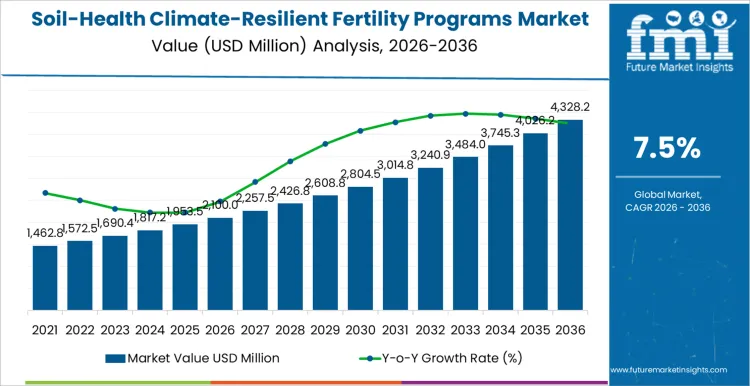
Soil-Health Climate-Resilient Fertility Programs Market Key Takeaways
| Metric | Value |
|---|---|
| Market Value (2026) | USD 2,100.0 million |
| Market Forecast Value (2036) | USD 4,328.2 million |
| Forecast CAGR 2026 to 2036 | 7.5% |
How Are Carbon Credit Markets Transforming Agricultural Fertility Strategies?
Carbon credit market development is driving fundamental changes in agricultural fertility management as soil carbon sequestration becomes economically valuable and measurable through verified protocols that reward farmers for adopting practices that build organic matter and enhance soil biological activity. Modern carbon programs require comprehensive soil monitoring, practice verification, and outcome measurement that integrates fertility management with carbon accounting systems while providing additional revenue streams for participating farmers. This market evolution pushes program developers toward fertility strategies that can demonstrate measurable carbon accumulation while maintaining agricultural productivity and economic viability.
The integration of carbon credit protocols with fertility programs creates opportunities for comprehensive soil management systems that address multiple objectives including productivity optimization, environmental stewardship, and climate mitigation through verified practice adoption and outcome measurement. Carbon market participation requires sophisticated monitoring and verification systems that benefit from integrated fertility programs designed to support both agricultural and environmental objectives while providing transparent reporting and third-party validation. These market mechanisms create premium opportunities for fertility programs that can deliver verified environmental outcomes while supporting farm economic sustainability and operational efficiency.
How Is the Market Structured Across Program Delivery Models?
The soil-health climate-resilient fertility programs market demonstrates distinct segmentation patterns based on service integration levels and outcome accountability mechanisms that directly influence farmer participation and program effectiveness. Nutrient management programs capture 32.0% market share through their fundamental role in optimizing fertilizer efficiency and environmental compliance while providing measurable productivity benefits that justify program participation costs. These programs incorporate soil testing, precision application guidance, and outcome monitoring that support evidence-based fertility decisions while reducing input costs and environmental impact.
Soil-health and organic matter programs achieve 30.0% market adoption through their comprehensive approach to biological soil function enhancement and long-term productivity improvement that addresses farmer concerns about soil degradation and climate resilience. These programs integrate cover cropping guidance, biological enhancement strategies, and soil health monitoring that support ecosystem service delivery while providing measurable improvements in soil structure, water infiltration, and nutrient cycling efficiency. The biological complexity of soil health improvement requires specialized expertise and long-term commitment that creates barriers to entry while supporting premium pricing for successful program providers.
Which Service Offering Configuration Generates the Highest Market Integration?
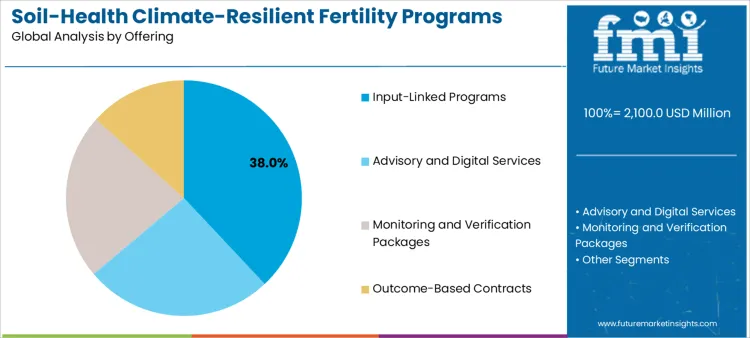
Input-linked programs maintain 38.0% market preference, establishing integrated product and service delivery as the preferred approach for farmer participation and program implementation. These configurations combine fertilizer supply with technical expertise, monitoring services, and outcome verification while simplifying procurement and reducing transaction costs for participating farmers. Input-linked programs enable economies of scale in service delivery while providing supply chain integration that supports cost optimization and quality assurance throughout program implementation.
Which Farm Scale Segment Drives Program Adoption?
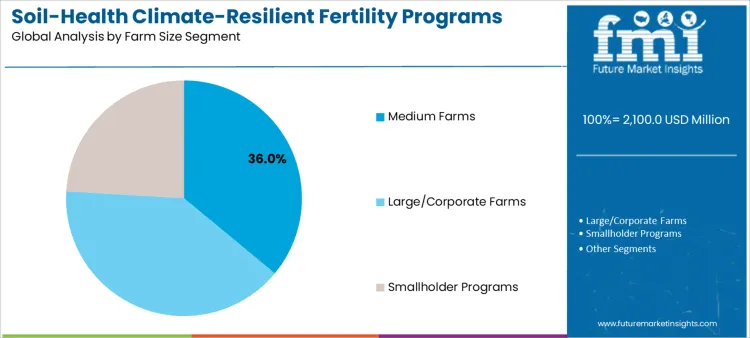
Medium-scale farms represent 36.0% of program participation, reflecting their optimal position for adopting comprehensive fertility programs that provide economic benefits while maintaining manageable complexity and risk exposure. These operations typically have sufficient scale to justify program participation costs while maintaining decision-making flexibility and technical capability required for successful program implementation. Medium farms often serve as demonstration sites and early adopters that validate program effectiveness while providing testimonials and case studies supporting broader market adoption.
Which Distribution Channel Leads Market Access?
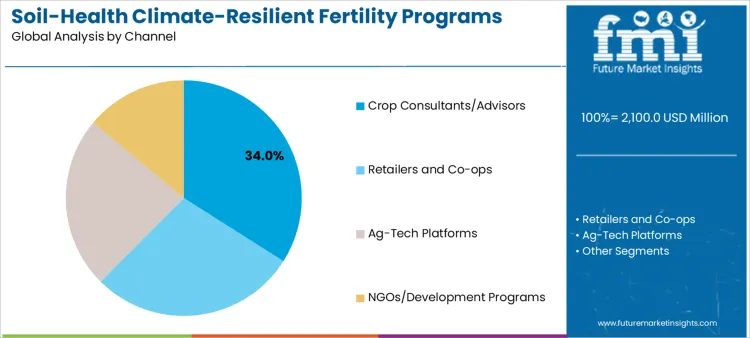
Crop consultants and agricultural advisors command 34.0% of program delivery channels, establishing trusted agronomic relationships as the primary pathway for program marketing and implementation support. These professionals provide local expertise, customized recommendations, and ongoing technical support that support successful program adoption while maintaining farmer confidence and satisfaction. Consultant-delivered programs benefit from established relationships and technical credibility while providing personalized service that addresses specific farm conditions and management objectives.
How Is Climate Change Adaptation Driving Program Innovation?
Increasing frequency and intensity of weather extremes are creating unprecedented demands for fertility programs that can enhance farm resilience and maintain productivity under challenging environmental conditions. Climate adaptation requirements drive innovation in soil management strategies that improve water holding capacity, enhance drought tolerance, and optimize nutrient availability during stress periods while maintaining economic viability under variable weather conditions. This climate reality pushes program developers toward comprehensive approaches that integrate fertility management with climate risk management while providing measurable adaptation benefits that support farm sustainability and insurance requirements.
The development of climate-smart agriculture initiatives creates additional opportunities for fertility programs that can demonstrate measurable contributions to climate adaptation and mitigation objectives while providing economic benefits to participating farmers. Agricultural climate adaptation increasingly emphasizes soil-based solutions including enhanced organic matter, improved biological activity, and optimized nutrient cycling that support both productivity and environmental objectives. These requirements benefit fertility programs that can provide comprehensive soil ecosystem management while delivering verified climate benefits that support farmer participation in climate programs and funding opportunities.
What Technical Challenges Constrain Program Scalability?
The primary technical barrier affecting soil-health fertility program expansion centers on the complexity of measuring and verifying soil health outcomes while maintaining cost structures that support widespread farmer adoption across diverse agricultural systems. Soil biological monitoring, carbon measurement, and ecosystem service quantification require sophisticated analytical capabilities and standardized protocols that increase program costs while creating potential barriers for smaller operations or developing agricultural regions. Technical complexity in outcome verification can limit program accessibility while creating opportunities for specialized service providers with advanced monitoring capabilities.
Data integration challenges also constrain program scalability as comprehensive fertility programs require coordination between soil monitoring, weather data, management records, and outcome tracking systems that may not be readily available or compatible across different agricultural operations and geographic regions. Program effectiveness depends on consistent data collection and analysis capabilities that can overwhelm farmers with limited technical expertise while requiring significant investment in monitoring infrastructure and analytical support. These challenges drive program development toward simplified monitoring approaches and integrated technology platforms that reduce complexity while maintaining program effectiveness and verification capabilities.
How Do Environmental Regulations Create Market Opportunities?
Agricultural environmental regulations are creating substantial opportunities for fertility programs that can demonstrate compliance with water quality standards, greenhouse gas reduction targets, and biodiversity conservation requirements while maintaining agricultural productivity and economic viability. Regulatory compliance increasingly requires documented soil management practices and outcome verification that benefit comprehensive fertility programs designed to support environmental stewardship while optimizing agricultural performance. These regulatory trends create market demand for program services while establishing clear performance criteria and verification requirements that support program development and farmer adoption.
Payment programs for environmental services create additional market drivers through direct compensation for verified environmental outcomes including soil carbon sequestration, water quality improvement, and biodiversity enhancement that complement traditional agricultural revenues. Government and private sector environmental programs increasingly emphasize soil-based solutions that benefit fertility programs capable of delivering verified environmental outcomes while supporting agricultural productivity and economic sustainability. These payment mechanisms create premium opportunities for fertility programs while establishing market-based incentives for widespread adoption of sustainable soil management practices.
How Is the Soil-Health Climate-Resilient Fertility Programs Market Expected to Evolve Across Major Nations?
The global soil-health climate-resilient fertility programs market reflects regional variations in agricultural practices, regulatory frameworks, and climate adaptation requirements that influence market development opportunities across different geographic zones. Leading agricultural regions drive innovation in soil management technologies while emerging markets focus on establishing basic soil health monitoring and improvement capabilities that support agricultural modernization and climate adaptation objectives.
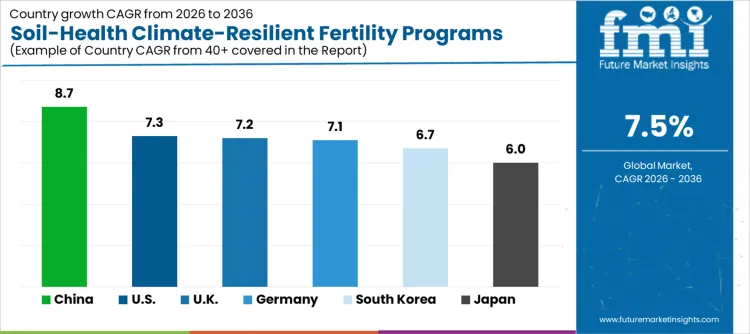
| Country | CAGR (%) |
|---|---|
| China | 8.7% |
| Germany | 7.1% |
| USA | 7.3% |
| Japan | 6.0% |
| South Korea | 6.7% |
| UK | 7.2% |
What Drives China's Market Leadership?
China's soil-health climate-resilient fertility programs market is projected to achieve the highest growth rate at 8.7% CAGR, driven primarily by massive agricultural production requirements and comprehensive government policies promoting sustainable farming practices and food security enhancement through improved soil management. The country's position as the world's largest agricultural producer creates enormous opportunities for soil health program implementation while fostering domestic innovation in soil monitoring technologies and management practices. Chinese agricultural policies increasingly emphasize soil health improvement and climate resilience that benefit comprehensive fertility programs while supporting domestic technology development and agricultural modernization initiatives.
Government initiatives promoting ecological agriculture and carbon sequestration accelerate soil health program adoption while creating favorable policy conditions for program development and implementation. The integration of traditional soil management wisdom with modern monitoring technologies creates unique opportunities for culturally appropriate soil health programs that address local farming practices and environmental conditions while supporting national food security and climate objectives. China's agricultural modernization efforts enable rapid adoption of soil health technologies while supporting domestic program development capabilities and international technology transfer opportunities.
How Is Germany Advancing Sustainable Soil Management Excellence?
Demand for soil-health climate-resilient fertility programs in Germany is poised to garner a CAGR of 7.1% reflects the country's leadership in sustainable agriculture policy implementation and advanced soil research capabilities that support sophisticated fertility program development and adoption. German regulatory frameworks establish comprehensive requirements for soil protection and climate action that drive demand for evidence-based fertility programs while providing clear guidelines for program development and outcome verification. The emphasis on scientific rigor in soil management creates opportunities for premium fertility programs that demonstrate superior environmental performance and agricultural benefits compared to conventional management approaches.
The country's strong sustainable soil management sector combined with advanced research institutions drives adoption of innovative fertility programs that optimize agricultural efficiency while supporting environmental protection objectives. German farmers typically implement comprehensive sustainability management systems that benefit from fertility programs designed to improve soil health and climate resilience while maintaining productivity and economic viability. European Union agricultural policies support fertility program adoption through environmental payment programs and climate action requirements that create economic incentives for farmer participation.
Why Is the USA Market Emphasizing Innovation and Scale?
The United States market experiences 7.3% CAGR growth supported by large-scale agricultural production systems and increasing farmer awareness of soil health importance that drives adoption of comprehensive fertility management programs. Corporate agriculture operations increasingly implement precision agriculture systems that benefit from fertility programs designed to optimize input efficiency and environmental performance while maintaining the productivity required for competitive global markets. The emphasis on sustainable intensification creates opportunities for fertility programs that can increase productivity while reducing environmental impact and building climate resilience.
Federal and state-level initiatives promoting soil health and carbon sequestration create favorable policy conditions for fertility program adoption while supporting research and development funding that accelerates program innovation and commercialization. The development of climate-smart agriculture technologies in the USA creates opportunities for integrated fertility programs that combine soil management with digital monitoring and carbon accounting while providing comprehensive agronomic and environmental management solutions that optimize both economic and environmental performance.
How Is Japanese Quality Focus Driving Premium Program Development?
Sales of soil-health climate-resilient fertility programs in Japan are set to achieve a CAGR of 6.0% is supported by the country's emphasis on agricultural quality and environmental stewardship that creates demand for the highest-grade fertility programs available in global markets. Japanese farmers maintain strict quality standards that require fertility programs to demonstrate consistent performance and environmental benefits while supporting premium crop production for domestic and export markets. This quality focus drives innovation in soil monitoring and management technologies that enable superior agricultural performance while maintaining environmental stewardship and food safety standards.
The country's leadership in precision agriculture and agricultural biotechnology creates opportunities for sophisticated fertility programs that incorporate advanced soil monitoring and biological enhancement technologies. Japanese agricultural development emphasizes technological sophistication and environmental harmony that influences fertility program standards throughout the region while fostering innovation in soil health research and program development that benefits global agricultural sustainability objectives.
What Opportunities Exist in South Korea's Technology Ecosystem?
The industry for soil-health climate-resilient fertility programs in South Korea is likely to rise at a CAGR of 6.7% growth is driven by the country's advanced agricultural technology sector and comprehensive sustainability policies that create favorable conditions for fertility program market development. Korean farmers require fertility programs that support high-quality crop production while meeting stringent environmental compliance requirements and climate adaptation objectives. The integration of digital agriculture and biotechnology creates demand for fertility programs with exceptional consistency and performance reliability that enable optimized agricultural management and environmental monitoring systems.
The country's leadership in agricultural automation and smart farming technologies creates opportunities for integrated fertility programs that combine soil management with digital monitoring and precision application technologies. Korean agricultural technology development emphasizes sustainability and efficiency that drives demand for fertility programs designed to optimize resource utilization while maintaining the quality standards required for domestic consumption and export market competitiveness.
What Strategies Help Program Providers Maintain Competitive Position in Soil-Health Climate-Resilient Fertility Programs?
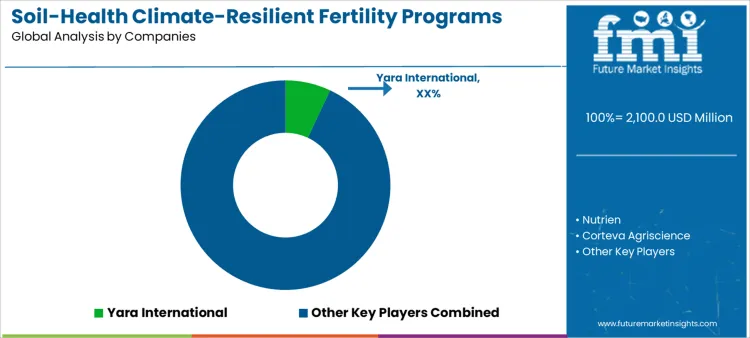
Program providers maintain market leadership in soil-health climate-resilient fertility through comprehensive service integration that encompasses soil monitoring, agronomic guidance, input optimization, and outcome verification while providing measurable benefits that justify farmer investment and long-term program participation. Market leaders establish competitive advantages through research and development capabilities that can demonstrate consistent soil health improvement and climate resilience benefits while maintaining cost structures that support competitive pricing and widespread farmer accessibility across diverse agricultural operations.
Successful program providers invest in comprehensive monitoring and verification technologies that demonstrate program effectiveness while providing farmers with transparent performance data and outcome tracking that supports program value justification and continuous improvement. Investment in digital platform capabilities and data analytics allows program providers to optimize service delivery while providing personalized recommendations and outcome tracking that support farmer success and program effectiveness. These technological capabilities create differentiation opportunities while enabling premium service positioning that supports long-term customer relationships and market expansion.
Innovation in partnership development and service integration enables program providers to offer comprehensive solutions that address multiple farmer objectives while leveraging complementary expertise and capabilities from technology providers, research institutions, and agricultural service companies. Collaboration with agricultural retailers, crop consultants, and technology platforms during program development and delivery phases allows optimization of service models and farmer engagement strategies while ensuring successful program implementation and outcome achievement that supports farmer satisfaction and program growth.
Key Players in the Soil-Health Climate-Resilient Fertility Programs Market
- Yara International
- Nutrien
- Corteva Agriscience
- Bayer Crop Science
- Syngenta Group
- Indigo Ag
- Granular (Corteva)
- Trimble Agriculture
- Raven Industries (CNH Industrial)
- Farmers Edge
Scope of Report
| Items | Values |
|---|---|
| Quantitative Units | USD Million |
| Program Type Segments | Nutrient Management Programs; Soil-Health and Organic Matter Programs; Carbon/Climate Resilience Programs; Other Advisory and Service Bundles |
| Offering Categories | Input-Linked Programs; Advisory and Digital Services; Monitoring and Verification Packages; Outcome-Based Contracts |
| Farm Size Segments | Large/Corporate Farms; Medium Farms; Smallholder Programs |
| Channel Categories | Crop Consultants/Advisors; Retailers and Co-ops; Ag-Tech Platforms; NGOs/Development Programs |
| Regions Covered | North America, Europe, Asia Pacific, Latin America, Middle East & Africa |
| Key Countries | USA, Germany, China, Japan, South Korea, UK |
| Key Companies Profiled | Yara International, Nutrien , Corteva Agriscience , Bayer Crop Science, Syngenta Group, and others |
| Additional Attributes | Dollar sales measured for soil-health climate-resilient fertility programs including advisory services, monitoring systems, input optimization, and outcome verification, specified by soil health improvement, climate resilience enhancement, and environmental outcome achievement |
Soil-Health Climate-Resilient Fertility Programs Market by Segment
By Program Type:
- Nutrient Management Programs
- Soil-Health and Organic Matter Programs
- Carbon/Climate Resilience Programs
- Other Advisory and Service Bundles
By Offering:
- Input-Linked Programs
- Advisory and Digital Services
- Monitoring and Verification Packages
- Outcome-Based Contracts
By Farm Size Segment:
- Large/Corporate Farms
- Medium Farms
- Smallholder Programs
By Channel:
- Crop Consultants/Advisors
- Retailers and Co-ops
- Ag-Tech Platforms
- NGOs/Development Programs
Bibliography
- Food and Agriculture Organization of the United Nations. (2023).Soil health and climateresilient agriculture: Integrated fertility management approaches. FAO.
- Intergovernmental Panel on Climate Change. (2023).Climate change and land: Soil carbon, nutrient management, and agricultural resilience. IPCC.
- United Nations Environment Programme. (2024).Soilbased climate solutions: Carbon sequestration, nutrient efficiency, and ecosystem services. United Nations.
- Organisation for Economic Co-operation and Development. (2023).Carbon markets, soil health, and climatesmart agricultural practices. OECD Publishing.
Frequently Asked Questions
How big is the soil-health climate-resilient fertility programs market in 2026?
The global soil-health climate-resilient fertility programs market is estimated to be valued at USD 2,100.0 million in 2026.
What will be the size of soil-health climate-resilient fertility programs market in 2036?
The market size for the soil-health climate-resilient fertility programs market is projected to reach USD 4,328.2 million by 2036.
How much will be the soil-health climate-resilient fertility programs market growth between 2026 and 2036?
The soil-health climate-resilient fertility programs market is expected to grow at a 7.5% CAGR between 2026 and 2036.
What are the key product types in the soil-health climate-resilient fertility programs market?
The key product types in soil-health climate-resilient fertility programs market are nutrient management programs, soil-health and organic matter programs, carbon/climate resilience programs and other advisory and service bundles.
Which offering segment to contribute significant share in the soil-health climate-resilient fertility programs market in 2026?
In terms of offering, input-linked programs segment to command 38.0% share in the soil-health climate-resilient fertility programs market in 2026.
Preview the report firsthand - request a free sample
Get SampleGet the brochure for pricing and purchase details.
Get PDFTable of Content
- Executive Summary
- Global Market Outlook
- Demand-side Trends
- Supply-side Trends
- Technology Roadmap Analysis
- Analysis and Recommendations
- Market Overview
- Market Coverage / Taxonomy
- Market Definition / Scope / Limitations
- Market Background
- Market Dynamics
- Drivers
- Restraints
- Opportunity
- Trends
- Scenario Forecast
- Demand in Optimistic Scenario
- Demand in Likely Scenario
- Demand in Conservative Scenario
- Opportunity Map Analysis
- Product Life Cycle Analysis
- Supply Chain Analysis
- Investment Feasibility Matrix
- Value Chain Analysis
- PESTLE and Porter’s Analysis
- Regulatory Landscape
- Regional Parent Market Outlook
- Production and Consumption Statistics
- Import and Export Statistics
- Market Dynamics
- Global Market Analysis 2021 to 2025 and Forecast, 2026 to 2036
- Historical Market Size Value (USD Million) Analysis, 2021 to 2025
- Current and Future Market Size Value (USD Million) Projections, 2026 to 2036
- Y-o-Y Growth Trend Analysis
- Absolute $ Opportunity Analysis
- Global Market Pricing Analysis 2021 to 2025 and Forecast 2026 to 2036
- Global Market Analysis 2021 to 2025 and Forecast 2026 to 2036, By Program Type
- Introduction / Key Findings
- Historical Market Size Value (USD Million) Analysis By Program Type , 2021 to 2025
- Current and Future Market Size Value (USD Million) Analysis and Forecast By Program Type , 2026 to 2036
- Nutrient Management Programs
- Soil-Health and Organic Matter Programs
- Carbon/Climate Resilience Programs
- Other Advisory and Service Bundles
- Nutrient Management Programs
- Y-o-Y Growth Trend Analysis By Program Type , 2021 to 2025
- Absolute $ Opportunity Analysis By Program Type , 2026 to 2036
- Global Market Analysis 2021 to 2025 and Forecast 2026 to 2036, By Offering
- Introduction / Key Findings
- Historical Market Size Value (USD Million) Analysis By Offering, 2021 to 2025
- Current and Future Market Size Value (USD Million) Analysis and Forecast By Offering, 2026 to 2036
- Input-Linked Programs
- Advisory and Digital Services
- Monitoring and Verification Packages
- Outcome-Based Contracts
- Input-Linked Programs
- Y-o-Y Growth Trend Analysis By Offering, 2021 to 2025
- Absolute $ Opportunity Analysis By Offering, 2026 to 2036
- Global Market Analysis 2021 to 2025 and Forecast 2026 to 2036, By Farm Size Segment
- Introduction / Key Findings
- Historical Market Size Value (USD Million) Analysis By Farm Size Segment, 2021 to 2025
- Current and Future Market Size Value (USD Million) Analysis and Forecast By Farm Size Segment, 2026 to 2036
- Medium Farms
- Large/Corporate Farms
- Smallholder Programs
- Medium Farms
- Y-o-Y Growth Trend Analysis By Farm Size Segment, 2021 to 2025
- Absolute $ Opportunity Analysis By Farm Size Segment, 2026 to 2036
- Global Market Analysis 2021 to 2025 and Forecast 2026 to 2036, By Channel
- Introduction / Key Findings
- Historical Market Size Value (USD Million) Analysis By Channel, 2021 to 2025
- Current and Future Market Size Value (USD Million) Analysis and Forecast By Channel, 2026 to 2036
- Crop Consultants/Advisors
- Retailers and Co-ops
- Ag-Tech Platforms
- NGOs/Development Programs
- Crop Consultants/Advisors
- Y-o-Y Growth Trend Analysis By Channel, 2021 to 2025
- Absolute $ Opportunity Analysis By Channel, 2026 to 2036
- Global Market Analysis 2021 to 2025 and Forecast 2026 to 2036, By Region
- Introduction
- Historical Market Size Value (USD Million) Analysis By Region, 2021 to 2025
- Current Market Size Value (USD Million) Analysis and Forecast By Region, 2026 to 2036
- North America
- Latin America
- Western Europe
- Eastern Europe
- East Asia
- South Asia and Pacific
- Middle East & Africa
- Market Attractiveness Analysis By Region
- North America Market Analysis 2021 to 2025 and Forecast 2026 to 2036, By Country
- Historical Market Size Value (USD Million) Trend Analysis By Market Taxonomy, 2021 to 2025
- Market Size Value (USD Million) Forecast By Market Taxonomy, 2026 to 2036
- By Country
- USA
- Canada
- Mexico
- By Program Type
- By Offering
- By Farm Size Segment
- By Channel
- By Country
- Market Attractiveness Analysis
- By Country
- By Program Type
- By Offering
- By Farm Size Segment
- By Channel
- Key Takeaways
- Latin America Market Analysis 2021 to 2025 and Forecast 2026 to 2036, By Country
- Historical Market Size Value (USD Million) Trend Analysis By Market Taxonomy, 2021 to 2025
- Market Size Value (USD Million) Forecast By Market Taxonomy, 2026 to 2036
- By Country
- Brazil
- Chile
- Rest of Latin America
- By Program Type
- By Offering
- By Farm Size Segment
- By Channel
- By Country
- Market Attractiveness Analysis
- By Country
- By Program Type
- By Offering
- By Farm Size Segment
- By Channel
- Key Takeaways
- Western Europe Market Analysis 2021 to 2025 and Forecast 2026 to 2036, By Country
- Historical Market Size Value (USD Million) Trend Analysis By Market Taxonomy, 2021 to 2025
- Market Size Value (USD Million) Forecast By Market Taxonomy, 2026 to 2036
- By Country
- Germany
- UK
- Italy
- Spain
- France
- Nordic
- BENELUX
- Rest of Western Europe
- By Program Type
- By Offering
- By Farm Size Segment
- By Channel
- By Country
- Market Attractiveness Analysis
- By Country
- By Program Type
- By Offering
- By Farm Size Segment
- By Channel
- Key Takeaways
- Eastern Europe Market Analysis 2021 to 2025 and Forecast 2026 to 2036, By Country
- Historical Market Size Value (USD Million) Trend Analysis By Market Taxonomy, 2021 to 2025
- Market Size Value (USD Million) Forecast By Market Taxonomy, 2026 to 2036
- By Country
- Russia
- Poland
- Hungary
- Balkan & Baltic
- Rest of Eastern Europe
- By Program Type
- By Offering
- By Farm Size Segment
- By Channel
- By Country
- Market Attractiveness Analysis
- By Country
- By Program Type
- By Offering
- By Farm Size Segment
- By Channel
- Key Takeaways
- East Asia Market Analysis 2021 to 2025 and Forecast 2026 to 2036, By Country
- Historical Market Size Value (USD Million) Trend Analysis By Market Taxonomy, 2021 to 2025
- Market Size Value (USD Million) Forecast By Market Taxonomy, 2026 to 2036
- By Country
- China
- Japan
- South Korea
- By Program Type
- By Offering
- By Farm Size Segment
- By Channel
- By Country
- Market Attractiveness Analysis
- By Country
- By Program Type
- By Offering
- By Farm Size Segment
- By Channel
- Key Takeaways
- South Asia and Pacific Market Analysis 2021 to 2025 and Forecast 2026 to 2036, By Country
- Historical Market Size Value (USD Million) Trend Analysis By Market Taxonomy, 2021 to 2025
- Market Size Value (USD Million) Forecast By Market Taxonomy, 2026 to 2036
- By Country
- India
- ASEAN
- Australia & New Zealand
- Rest of South Asia and Pacific
- By Program Type
- By Offering
- By Farm Size Segment
- By Channel
- By Country
- Market Attractiveness Analysis
- By Country
- By Program Type
- By Offering
- By Farm Size Segment
- By Channel
- Key Takeaways
- Middle East & Africa Market Analysis 2021 to 2025 and Forecast 2026 to 2036, By Country
- Historical Market Size Value (USD Million) Trend Analysis By Market Taxonomy, 2021 to 2025
- Market Size Value (USD Million) Forecast By Market Taxonomy, 2026 to 2036
- By Country
- Kingdom of Saudi Arabia
- Other GCC Countries
- Turkiye
- South Africa
- Other African Union
- Rest of Middle East & Africa
- By Program Type
- By Offering
- By Farm Size Segment
- By Channel
- By Country
- Market Attractiveness Analysis
- By Country
- By Program Type
- By Offering
- By Farm Size Segment
- By Channel
- Key Takeaways
- Key Countries Market Analysis
- USA
- Pricing Analysis
- Market Share Analysis, 2025
- By Program Type
- By Offering
- By Farm Size Segment
- By Channel
- Canada
- Pricing Analysis
- Market Share Analysis, 2025
- By Program Type
- By Offering
- By Farm Size Segment
- By Channel
- Mexico
- Pricing Analysis
- Market Share Analysis, 2025
- By Program Type
- By Offering
- By Farm Size Segment
- By Channel
- Brazil
- Pricing Analysis
- Market Share Analysis, 2025
- By Program Type
- By Offering
- By Farm Size Segment
- By Channel
- Chile
- Pricing Analysis
- Market Share Analysis, 2025
- By Program Type
- By Offering
- By Farm Size Segment
- By Channel
- Germany
- Pricing Analysis
- Market Share Analysis, 2025
- By Program Type
- By Offering
- By Farm Size Segment
- By Channel
- UK
- Pricing Analysis
- Market Share Analysis, 2025
- By Program Type
- By Offering
- By Farm Size Segment
- By Channel
- Italy
- Pricing Analysis
- Market Share Analysis, 2025
- By Program Type
- By Offering
- By Farm Size Segment
- By Channel
- Spain
- Pricing Analysis
- Market Share Analysis, 2025
- By Program Type
- By Offering
- By Farm Size Segment
- By Channel
- France
- Pricing Analysis
- Market Share Analysis, 2025
- By Program Type
- By Offering
- By Farm Size Segment
- By Channel
- India
- Pricing Analysis
- Market Share Analysis, 2025
- By Program Type
- By Offering
- By Farm Size Segment
- By Channel
- ASEAN
- Pricing Analysis
- Market Share Analysis, 2025
- By Program Type
- By Offering
- By Farm Size Segment
- By Channel
- Australia & New Zealand
- Pricing Analysis
- Market Share Analysis, 2025
- By Program Type
- By Offering
- By Farm Size Segment
- By Channel
- China
- Pricing Analysis
- Market Share Analysis, 2025
- By Program Type
- By Offering
- By Farm Size Segment
- By Channel
- Japan
- Pricing Analysis
- Market Share Analysis, 2025
- By Program Type
- By Offering
- By Farm Size Segment
- By Channel
- South Korea
- Pricing Analysis
- Market Share Analysis, 2025
- By Program Type
- By Offering
- By Farm Size Segment
- By Channel
- Russia
- Pricing Analysis
- Market Share Analysis, 2025
- By Program Type
- By Offering
- By Farm Size Segment
- By Channel
- Poland
- Pricing Analysis
- Market Share Analysis, 2025
- By Program Type
- By Offering
- By Farm Size Segment
- By Channel
- Hungary
- Pricing Analysis
- Market Share Analysis, 2025
- By Program Type
- By Offering
- By Farm Size Segment
- By Channel
- Kingdom of Saudi Arabia
- Pricing Analysis
- Market Share Analysis, 2025
- By Program Type
- By Offering
- By Farm Size Segment
- By Channel
- Turkiye
- Pricing Analysis
- Market Share Analysis, 2025
- By Program Type
- By Offering
- By Farm Size Segment
- By Channel
- South Africa
- Pricing Analysis
- Market Share Analysis, 2025
- By Program Type
- By Offering
- By Farm Size Segment
- By Channel
- USA
- Market Structure Analysis
- Competition Dashboard
- Competition Benchmarking
- Market Share Analysis of Top Players
- By Regional
- By Program Type
- By Offering
- By Farm Size Segment
- By Channel
- Competition Analysis
- Competition Deep Dive
- Yara International
- Overview
- Product Portfolio
- Profitability by Market Segments (Product/Age /Sales Channel/Region)
- Sales Footprint
- Strategy Overview
- Marketing Strategy
- Product Strategy
- Channel Strategy
- Nutrien
- Corteva Agriscience
- Bayer Crop Science
- Syngenta Group
- Indigo Ag
- Granular (Corteva)
- Trimble Agriculture
- Raven Industries (CNH Industrial)
- Farmers Edge
- Yara International
- Competition Deep Dive
- Assumptions & Acronyms Used
- Research Methodology


