

- Industry Size (2026)
- USD 3.1 Bn
- Forecast (2036)
- USD 4.4 Bn
- CAGR (2026 to 2036)
- 3.6%
Transmission Filter Market Forecast and Outlook 2026 to 2036
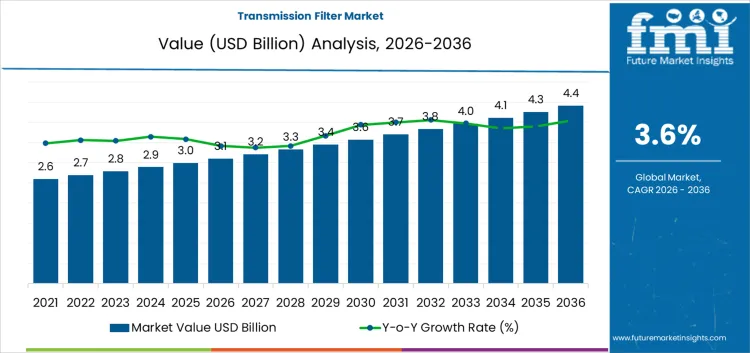
The transmission filter market is set to reach USD 3.1 billion in 2026 and is projected to reach USD 4.4 billion by 2036, reflecting a CAGR of 3.6%. Early period demand is shaped by transmission design choices rather than by vehicle volumes alone. Automatic and dual clutch systems rely on controlled fluid cleanliness to protect valve bodies and clutch packs. Filter placement and serviceability vary by gearbox family, which fixes replacement behavior for the life of each platform. In many models, filters are bundled with pan or gasket service kits, tying sales to scheduled maintenance procedures instead of simple mileage intervals.
As the period advances, demand patterns reflect the aging profile of the global automatic transmission fleet. Longer service intervals slow unit turnover in newer vehicles, while older vehicles continue to follow shorter maintenance cycles. Procurement in the aftermarket becomes more service kit oriented than part specific. Manufacturers focus on cost control, sealing consistency, and fit accuracy across gearbox variants. Capacity additions remain selective and aligned with regional transmission mix. The market shows stable, moderate growth, supported by predictable service work rather than by rapid changes in drivetrain architecture or short term shifts in vehicle production.
Quick Stats of the Transmission Filter Market
- Transmission Filter Market Value (2026): USD 3.1 billion
- Transmission Filter Forecast Value (2036): USD 4.4 billion
- Transmission Filter Forecast CAGR 2026 to 2036: 3.6%
- Leading Transmission Type in Transmission Filter Market: Automatic Transmission (46 % share)
- Leading Filter Type in Transmission Filter Market: Sump/Screen Filters (40 % share)
- Key Growth Regions in Transmission Filter Market: India, China, Mexico, Thailand, USA
- Top Players in Transmission Filter Market: MANN+HUMMEL, MAHLE, Hengst, UFI Filters, Sogefi, Bosch, Denso, Donaldson, Parker Hannifin, Aisin
What is the Growth Forecast for Transmission Filter Market through 2036?
Between 2026 and 2031, the transmission filter market is expected to grow from USD 3.1 billion along a moderate trajectory consistent with a 3.6% CAGR, reflecting the way transmission durability and service discipline shape this category more than headline vehicle sales. Automatic, DCT, and CVT systems rely on stable hydraulic control, which makes contamination management a reliability issue rather than a performance feature. Demand is therefore tied to fluid change practices and gearbox longevity expectations. Sump screens and in-line pressure filters continue to coexist because they serve different protection roles inside the same system. The aftermarket carries substantial weight, which keeps competition focused on coverage breadth, service compatibility, and dependable availability rather than on rapid product cycles.
From 2031 to 2036, the market is projected to reach USD 4.4 billion, with growth sustained by the rising share of complex transmissions rather than by a simple increase in vehicle parc. Hybrid drivetrains and multi-speed automatic gearboxes place higher stress on fluid cleanliness due to tighter tolerances and more frequent shifting events. This gradually lifts filter value per unit even where replacement intervals lengthen. OEM fitment remains important for specification control, though service channels continue to dominate volumes. Competitive positioning depends on long-term quality consistency, transmission program participation, and global manufacturing scale, favoring suppliers such as MANN+HUMMEL, MAHLE, Hengst, UFI Filters, Sogefi, Bosch, Denso, Donaldson, Parker Hannifin, and Aisin.
Transmission Filter Market Key Takeaways
| Metric | Value |
|---|---|
| Market Value (2026) | USD 3.1 billion |
| Forecast Value (2036) | USD 4.4 billion |
| Forecast CAGR 2026 to 2036 | 3.6% |
How Are Transmission Filters Enhancing Vehicle Drivetrain Reliability?
Transmission filters are increasingly adopted to maintain fluid cleanliness, protect transmission components, and ensure smooth drivetrain operation across passenger, commercial, and industrial vehicles. Historically, transmission systems relied on basic filtration or periodic fluid replacement, which allowed metal particles, debris, and contaminants to circulate, leading to wear, overheating, and reduced efficiency. Modern transmission filters integrate high-efficiency media, robust housings, and bypass valves to remove fine particulates while maintaining optimal fluid flow and pressure.
Automotive OEMs, transmission manufacturers, and aftermarket suppliers prioritize filtration efficiency, pressure drop, and compatibility with automatic and CVT systems. Early adoption focused on high-performance and luxury vehicles, while current demand spans passenger cars, trucks, and commercial vehicles, driven by stricter service intervals, transmission complexity, and reliability requirements. Filter media, housing durability, and flow capacity influence supplier selection.
Increasing transmission sophistication, extended service intervals, and regulatory requirements are shaping market growth. Compared with conventional filters, modern transmission filters emphasize high contaminant capture, thermal stability, and durability under dynamic operating conditions.
Cost structures depend on media quality, housing design, and manufacturing precision, concentrating margins among suppliers capable of delivering certified, reliable components. OEMs and fleet operators adopt these filters to protect transmission components, ensure smooth operation, and reduce maintenance costs. By 2036, high-performance transmission filters are expected to become standard across passenger, commercial, and industrial vehicles, supporting drivetrain reliability, efficiency, and component longevity.
What Factors Are Shaping the Demand for Transmission Filters by Transmission Architecture and Filter Design in 2026?
The transmission filter market in 2026 is segmented by transmission type and by filter design. By transmission type, demand is divided into automatic, dual clutch, continuously variable, and hybrid systems, each with different fluid circulation patterns, contamination sources, and service philosophies. By filter type, demand is organized around sump or screen filters, in line pressure filters, cartridge filters, and other formats that vary in accessibility, protection scope, and replacement practice. These segments reflect how gearbox reliability targets, warranty exposure, and maintenance concepts influence component selection, and how manufacturers balance internal protection with packaging limits, production cost, and long term service strategies across global vehicle fleets.
Why Do Automatic Transmissions Anchor the Largest Share of Filter Demand?
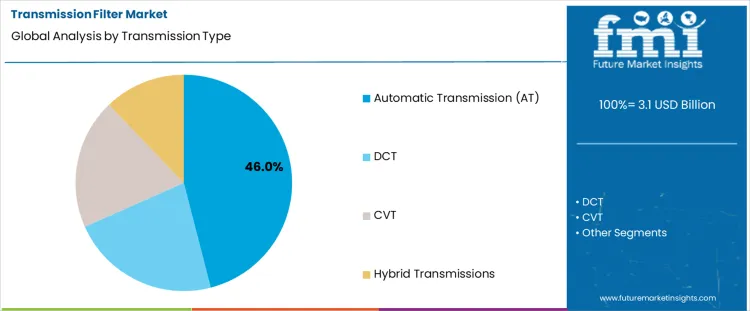
Automatic transmissions account for about 46% of demand in 2026, reflecting their large installed base and fluid intensive operating design. These systems rely on continuous hydraulic control, where fluid cleanliness affects shift quality, valve body wear, and clutch life. Manufacturers therefore treat filtration as a core reliability measure rather than a secondary accessory. Automatic units also generate more wear particles over time because of torque converter operation and multi clutch packs, which increases the need for consistent debris capture. Service schedules in many regions still include periodic fluid changes, which reinforces replacement demand. This combination of fleet size, contamination generation, and maintenance practice keeps automatic transmissions as the primary volume driver for transmission filters.
DCT, CVT, and hybrid transmissions follow different technical and commercial paths. Dual clutch systems face sensitivity to fine particles in control circuits, yet their market share remains smaller and more model specific. CVTs require careful fluid management, though many designs emphasize sealed for life concepts that reduce service driven filter demand. Hybrid transmissions often integrate multiple operating modes and may share components with conventional automatics, which complicates direct volume attribution. Their adoption grows with electrified platforms, yet each architecture tends to use tailored filtration solutions rather than standardized parts. This fragmentation limits aggregate volumes compared with conventional automatics, where designs and service patterns remain more uniform across a wide vehicle population.
Why Do Sump and Screen Filters Remain the Most Common Filter Architecture?
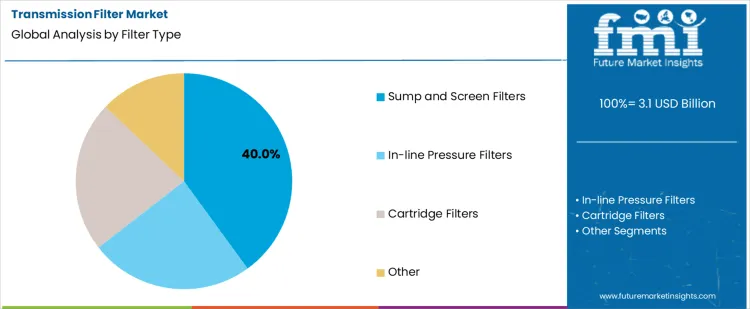
Sump and screen filters represent about 40% of demand in 2026 because they provide broad, low resistance protection at the point where fluid is drawn into the pump. Their primary role is to prevent large debris from entering critical hydraulic circuits, which suits transmissions designed around internal cleanliness and controlled wear rates. These filters are simple, robust, and easy to integrate into transmission housings without adding external lines or fittings. From a manufacturing perspective, they support stable assembly processes and low part count strategies. In service terms, they are often replaced together with fluid during major maintenance events, which fits established workshop practices and keeps their usage widespread across many transmission families.
In line pressure filters and cartridge designs address different protection philosophies. In line filters target specific circuits that require finer control, which adds hoses, seals, and potential leak points to the system. Cartridge filters improve serviceability and filtration precision, yet they require dedicated housings and access paths that increase packaging and validation work. These designs appear where transmission architecture or warranty strategy justifies the added complexity. Their volumes remain lower because many manufacturers prefer to manage contamination risk through internal screens and controlled wear materials rather than through multiple external filtration stages. As a result, sump based solutions continue to define the baseline approach in most high volume transmissions.
Why Are Transmission Durability Targets and Fluid Control Strategies Sustaining the Transmission Filter Market through 2036?
Demand is governed by how long transmissions are expected to last, not by how often new vehicles are sold. Modern gearboxes operate with tighter tolerances, higher operating temperatures, and more complex valve bodies, all of which increase sensitivity to debris and clutch material. OEMs extend service intervals and, in some cases, market transmissions as lifetime filled units, which raises the importance of internal cleanliness from the start. Filters become a risk control element built into the durability target rather than a routine service item. Even as powertrain mixes shift, the installed base of automatic and dual clutch units keeps baseline volume stable.
What Packaging, Cost, and Serviceability Tradeoffs Are Limiting Filter Replacement and Design Freedom?
Restraints come from transmission architecture, not from filtration performance. Many modern units place the filter inside the case or integrate it with the sump, making replacement labor intensive and discouraging routine service. OEMs also balance filter surface area against oil pan depth, weight, and ground clearance limits. Cost pressure pushes designs toward combined plastic modules rather than discrete, easily changed parts. Because failures carry high warranty risk, any design change requires long validation cycles. These constraints reduce aftermarket turnover and slow the introduction of alternative designs, even when higher efficiency media or different layouts could offer technical benefits.
How Are Gearbox Integration and Powertrain Strategy Shifts Reshaping This Category?
The structure of the category follows transmission design choices. Hybrid systems often reuse modified automatic gearboxes, keeping filtration demand in place but changing duty cycles and contamination profiles. Some manufacturers move toward sealed assemblies with internal lifetime filters, which shifts value from service parts to original equipment integration. Others standardize gearbox families across regions, reducing part variation but increasing volumes per design. At the same time, centralized powertrain module sourcing encourages fewer suppliers with deeper system responsibility. Over time, the category becomes less visible to end users and more tied to transmission platform decisions than to service market dynamics.
What is the Demand for Transmission Filters by Country?
| Country | CAGR (%) |
|---|---|
| China | 4.3% |
| India | 4.9% |
| Mexico | 4.0% |
| Thailand | 3.8% |
| USA | 2.4% |
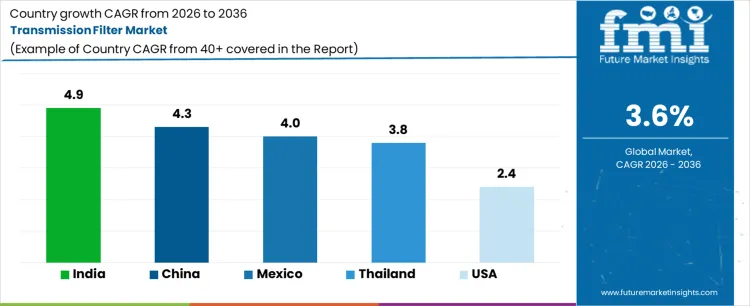
Demand for transmission filters is rising as automotive manufacturers focus on improving drivetrain efficiency, reducing wear, and ensuring long-term performance of manual and automatic transmissions. India leads with a 4.9% CAGR, driven by growing vehicle production, increasing adoption of automatic transmissions, and rising aftermarket replacement demand. China follows at 4.3%, supported by expanding automotive manufacturing and maintenance services. Mexico records 4.0% growth, shaped by commercial vehicle production and fleet servicing. Thailand grows at 3.8%, reflecting steady adoption in passenger and light commercial vehicles. The USA shows 2.4% CAGR, influenced by a mature automotive market with stable replacement cycles and high penetration of transmission filters.
How is China experiencing growth in the transmission filter market?
China is experiencing growth at a CAGR of 4.3%, supported by adoption of transmission filter market solutions to improve vehicle drivetrain performance, transmission reliability, and component longevity. Manufacturers and suppliers are producing filters optimized for high filtration efficiency, durability, and compatibility with automatic and manual transmission systems. Demand is concentrated in automotive production hubs, assembly plants, and service centers. Investments focus on material quality, filtration performance, and compliance with automotive standards rather than large-scale deployment. Growth reflects rising vehicle production, industrial adoption of high-quality transmission components, and increasing focus on drivetrain reliability and efficiency.
- Drivetrain performance drives adoption.
- Filters optimize filtration efficiency and durability.
- Automotive hubs and service centers concentrate demand.
- Material quality and standards compliance guide investment.
How is India witnessing growth in the transmission filter market?
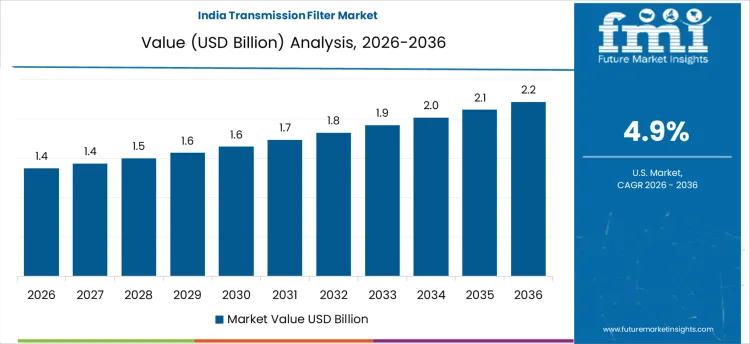
India is witnessing growth at a CAGR of 4.9%, fueled by adoption of transmission filter market solutions to enhance transmission performance, system reliability, and component lifespan in vehicles. Manufacturers and suppliers are deploying filters optimized for filtration efficiency, material durability, and compatibility with transmission assemblies. Demand is concentrated in automotive manufacturing hubs, assembly facilities, and service centers. Investments prioritize material quality, system reliability, and adherence to automotive standards rather than fleet-scale deployment. Growth reflects increasing vehicle production, industrial adoption of high-performance transmission components, and focus on drivetrain efficiency.
- Transmission reliability drives adoption.
- Filters enhance filtration efficiency and material durability.
- Manufacturing hubs and service centers concentrate demand.
- Material quality and standards compliance guide investment.
How is Mexico experiencing growth in the transmission filter market?
Mexico is experiencing growth at a CAGR of 4%, supported by adoption of transmission filter market solutions to improve drivetrain performance, transmission durability, and operational efficiency. Manufacturers and suppliers are producing filters optimized for high filtration efficiency, corrosion resistance, and compatibility with automotive transmissions. Demand is concentrated in automotive production hubs, assembly plants, and service facilities. Investments focus on material quality, system reliability, and compliance with automotive standards rather than large-scale deployment. Growth reflects moderate vehicle production, industrial adoption of high-quality transmission components, and increasing focus on drivetrain performance.
- Drivetrain efficiency drives adoption.
- Filters optimize filtration performance and durability.
- Automotive hubs and service facilities concentrate demand.
- Material quality and standards compliance guide investment.
How is Thailand witnessing growth in the transmission filter market?
Thailand is witnessing growth at a CAGR of 3.8%, fueled by adoption of transmission filter market solutions to enhance transmission reliability, drivetrain performance, and operational durability. Manufacturers and suppliers are deploying filters optimized for filtration efficiency, material strength, and compatibility with transmission systems. Demand is concentrated in automotive manufacturing hubs, assembly plants, and service centers. Investments prioritize material performance, system reliability, and adherence to automotive standards rather than large-scale deployment. Growth reflects industrial adoption of high-quality transmission components, moderate vehicle production, and focus on drivetrain efficiency.
- Transmission performance drives adoption.
- Filters enhance filtration efficiency and material strength.
- Automotive hubs and assembly plants concentrate demand.
- Material performance and standards compliance guide investment.
How is the United States experiencing growth in the transmission filter market?
United States is experiencing growth at a CAGR of 2.4%, supported by adoption of transmission filter market solutions to improve vehicle drivetrain reliability, transmission durability, and operational efficiency. Manufacturers and suppliers are producing filters optimized for high filtration performance, material durability, and compatibility with automatic and manual transmissions. Demand is concentrated in automotive assembly plants, service hubs, and production centers. Investments focus on material quality, system reliability, and compliance with automotive standards rather than large-scale deployment. Growth reflects moderate vehicle production, industrial adoption of high-quality transmission components, and focus on drivetrain performance.
- Drivetrain reliability drives adoption.
- Filters optimize filtration performance and durability.
- Assembly plants and service hubs concentrate demand.
- Material quality and compliance guide investment.
Who Competes in the Transmission Filter Market and What Defines Their Capabilities?
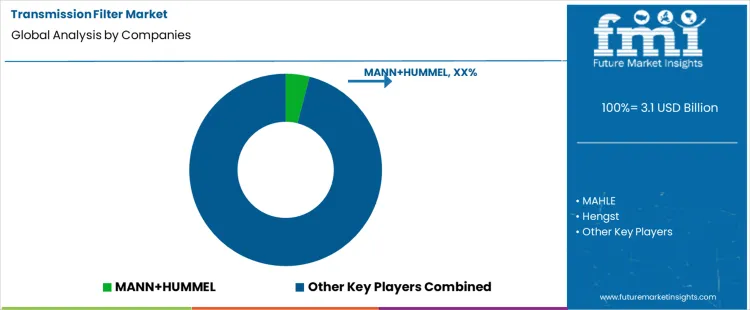
Competition in the transmission filter market is defined by filtration efficiency, pressure tolerance, and compatibility with automatic and manual transmissions. MANN+HUMMEL supplies filters engineered for high contaminant retention, stable fluid flow, and durability under varying transmission temperatures. MAHLE develops transmission filters optimized for thermal stability, low pressure drop, and integration with complex transmission systems. Hengst provides filters designed for long service life and consistent filtration under high torque conditions. UFI Filters delivers compact filters suitable for modern automatic transmissions with precise fluid control. Sogefi supplies transmission filters optimized for high-speed and high-load operating environments.
Bosch provides high-efficiency transmission filters compatible with diverse vehicle architectures. Denso develops filters for thermal stability and consistent fluid cleanliness in automatic transmissions. Donaldson delivers filters suitable for commercial and passenger vehicles, emphasizing particle retention. Parker Hannifin supplies high-performance filters designed for durability and reliability. Aisin develops transmission filters integrated with OEM systems for consistent flow and contamination control. Other regional and specialty suppliers focus on lightweight designs, thermal performance, and compatibility with advanced transmission fluids. Competitive differentiation arises from filtration efficiency, pressure and thermal tolerance, fluid flow stability, and integration with modern transmission architectures.
Key Players in the Transmission Filter Market
- MANN+HUMMEL
- MAHLE
- Hengst
- UFI Filters
- Sogefi
- Bosch
- Denso
- Donaldson
- Parker Hannifin
- Aisin
Scope of the Report
| Items | Values |
|---|---|
| Quantitative Units (2026) | USD billion |
| Transmission Type | Automatic Transmission (AT), DCT, CVT, Hybrid Transmissions |
| Filter Type | Sump/Screen Filters, In-line Pressure Filters, Cartridge Filters, Other |
| Media | Cellulose Media, Synthetic Media, Blended Media, Other |
| Sales Channel | Aftermarket, OEM Fitment, Fleet Service, Other |
| Regions Covered | Asia Pacific, Europe, North America, Latin America, Middle East & Africa |
| Countries Covered | China, Japan, South Korea, India, Australia & New Zealand, ASEAN, Germany, United Kingdom, France, Italy, Spain, Nordic, BENELUX, United States, Canada, Mexico, Brazil, Chile, Saudi Arabia, Turkey, South Africa, and other regional markets |
| Key Companies Profiled | MANN+HUMMEL, MAHLE, Hengst, UFI Filters, Sogefi, Bosch, Denso, Donaldson, Parker Hannifin, Aisin |
| Additional Attributes | Dollar sales by transmission type, filter type, media, and sales channel, demand patterns tied to gearbox service concepts and fluid change practices, dominance of automatic transmissions in the installed base, bundling of filters with pan and gasket service kits in aftermarket channels, platform-level specification of filter placement and serviceability, and regional demand shaped by the age profile of automatic and dual clutch transmission fleets. |
Transmission Filter Market Segmentation
By Transmission Type:
- Automatic Transmission (AT)
- DCT
- CVT
- Hybrid Transmissions
By Filter Type:
- Sump/Screen Filters
- In-line Pressure Filters
- Cartridge Filters
- Other
By Media:
- Cellulose Media
- Synthetic Media
- Blended Media
- Other
By Sales Channel:
- Aftermarket
- OEM Fitment
- Fleet Service
- Other
By Region
- Asia Pacific
- China
- Japan
- South Korea
- India
- Australia & New Zealand
- ASEAN
- Rest of Asia Pacific
- Europe
- Germany
- United Kingdom
- France
- Italy
- Spain
- Nordic
- BENELUX
- Rest of Europe
- North America
- United States
- Canada
- Mexico
- Latin America
- Brazil
- Chile
- Rest of Latin America
- Middle East & Africa
- Kingdom of Saudi Arabia
- Other GCC Countries
- Turkey
- South Africa
- Other African Union
- Rest of Middle East & Africa
Bibliography
- United States Environmental Protection Agency. (2024). Vehicle emissions standards and certification durability requirements. USA Environmental Protection Agency.
- National Highway Traffic Safety Administration. (2023). Federal Motor Vehicle Safety Standards (FMVSS) overview. USA Department of Transportation.
- United Nations Economic Commission for Europe. (2024). UN Regulation No. 83 and related vehicle emissions and durability provisions. UNECE.
- European Commission. (2024). Regulation (EU) 2019/631 and type approval durability requirements for motor vehicles. European Union.
- Ministry of Road Transport and Highways, Government of India. (2024). Bharat Stage VI emission standards and vehicle durability requirements. Government of India.
Frequently Asked Questions
How big is the transmission filter market in 2026?
The global transmission filter market is estimated to be valued at USD 3.1 billion in 2026.
What will be the size of transmission filter market in 2036?
The market size for the transmission filter market is projected to reach USD 4.4 billion by 2036.
How much will be the transmission filter market growth between 2026 and 2036?
The transmission filter market is expected to grow at a 3.6% CAGR between 2026 and 2036.
What are the key product types in the transmission filter market?
The key product types in transmission filter market are automatic transmission (at), dct, cvt and hybrid transmissions.
Which filter type segment to contribute significant share in the transmission filter market in 2026?
In terms of filter type, sump and screen filters segment to command 40.0% share in the transmission filter market in 2026.
Preview the report firsthand - request a free sample
Get SampleGet the brochure for pricing and purchase details.
Get PDFTable of Content
- Executive Summary
- Global Market Outlook
- Demand-side Trends
- Supply-side Trends
- Technology Roadmap Analysis
- Analysis and Recommendations
- Market Overview
- Market Coverage / Taxonomy
- Market Definition / Scope / Limitations
- Market Background
- Market Dynamics
- Drivers
- Restraints
- Opportunity
- Trends
- Scenario Forecast
- Demand in Optimistic Scenario
- Demand in Likely Scenario
- Demand in Conservative Scenario
- Opportunity Map Analysis
- Product Life Cycle Analysis
- Supply Chain Analysis
- Investment Feasibility Matrix
- Value Chain Analysis
- PESTLE and Porter’s Analysis
- Regulatory Landscape
- Regional Parent Market Outlook
- Production and Consumption Statistics
- Import and Export Statistics
- Market Dynamics
- Global Market Analysis 2021 to 2025 and Forecast, 2026 to 2036
- Historical Market Size Value (USD Million) Analysis, 2021 to 2025
- Current and Future Market Size Value (USD Million) Projections, 2026 to 2036
- Y-o-Y Growth Trend Analysis
- Absolute $ Opportunity Analysis
- Global Market Pricing Analysis 2021 to 2025 and Forecast 2026 to 2036
- Global Market Analysis 2021 to 2025 and Forecast 2026 to 2036, By Transmission Type
- Introduction / Key Findings
- Historical Market Size Value (USD Million) Analysis By Transmission Type , 2021 to 2025
- Current and Future Market Size Value (USD Million) Analysis and Forecast By Transmission Type , 2026 to 2036
- Automatic Transmission (AT)
- DCT
- CVT
- Hybrid Transmissions
- Automatic Transmission (AT)
- Y-o-Y Growth Trend Analysis By Transmission Type , 2021 to 2025
- Absolute $ Opportunity Analysis By Transmission Type , 2026 to 2036
- Global Market Analysis 2021 to 2025 and Forecast 2026 to 2036, By Filter Type
- Introduction / Key Findings
- Historical Market Size Value (USD Million) Analysis By Filter Type, 2021 to 2025
- Current and Future Market Size Value (USD Million) Analysis and Forecast By Filter Type, 2026 to 2036
- Sump and Screen Filters
- In-line Pressure Filters
- Cartridge Filters
- Other
- Sump and Screen Filters
- Y-o-Y Growth Trend Analysis By Filter Type, 2021 to 2025
- Absolute $ Opportunity Analysis By Filter Type, 2026 to 2036
- Global Market Analysis 2021 to 2025 and Forecast 2026 to 2036, By Media
- Introduction / Key Findings
- Historical Market Size Value (USD Million) Analysis By Media, 2021 to 2025
- Current and Future Market Size Value (USD Million) Analysis and Forecast By Media, 2026 to 2036
- Cellulose Media
- Synthetic Media
- Blended Media
- Other
- Cellulose Media
- Y-o-Y Growth Trend Analysis By Media, 2021 to 2025
- Absolute $ Opportunity Analysis By Media, 2026 to 2036
- Global Market Analysis 2021 to 2025 and Forecast 2026 to 2036, By Sales Channel
- Introduction / Key Findings
- Historical Market Size Value (USD Million) Analysis By Sales Channel, 2021 to 2025
- Current and Future Market Size Value (USD Million) Analysis and Forecast By Sales Channel, 2026 to 2036
- Aftermarket
- OEM Fitment
- Fleet Service
- Other
- Aftermarket
- Y-o-Y Growth Trend Analysis By Sales Channel, 2021 to 2025
- Absolute $ Opportunity Analysis By Sales Channel, 2026 to 2036
- Global Market Analysis 2021 to 2025 and Forecast 2026 to 2036, By Region
- Introduction
- Historical Market Size Value (USD Million) Analysis By Region, 2021 to 2025
- Current Market Size Value (USD Million) Analysis and Forecast By Region, 2026 to 2036
- North America
- Latin America
- Western Europe
- Eastern Europe
- East Asia
- South Asia and Pacific
- Middle East & Africa
- Market Attractiveness Analysis By Region
- North America Market Analysis 2021 to 2025 and Forecast 2026 to 2036, By Country
- Historical Market Size Value (USD Million) Trend Analysis By Market Taxonomy, 2021 to 2025
- Market Size Value (USD Million) Forecast By Market Taxonomy, 2026 to 2036
- By Country
- USA
- Canada
- Mexico
- By Transmission Type
- By Filter Type
- By Media
- By Sales Channel
- By Country
- Market Attractiveness Analysis
- By Country
- By Transmission Type
- By Filter Type
- By Media
- By Sales Channel
- Key Takeaways
- Latin America Market Analysis 2021 to 2025 and Forecast 2026 to 2036, By Country
- Historical Market Size Value (USD Million) Trend Analysis By Market Taxonomy, 2021 to 2025
- Market Size Value (USD Million) Forecast By Market Taxonomy, 2026 to 2036
- By Country
- Brazil
- Chile
- Rest of Latin America
- By Transmission Type
- By Filter Type
- By Media
- By Sales Channel
- By Country
- Market Attractiveness Analysis
- By Country
- By Transmission Type
- By Filter Type
- By Media
- By Sales Channel
- Key Takeaways
- Western Europe Market Analysis 2021 to 2025 and Forecast 2026 to 2036, By Country
- Historical Market Size Value (USD Million) Trend Analysis By Market Taxonomy, 2021 to 2025
- Market Size Value (USD Million) Forecast By Market Taxonomy, 2026 to 2036
- By Country
- Germany
- UK
- Italy
- Spain
- France
- Nordic
- BENELUX
- Rest of Western Europe
- By Transmission Type
- By Filter Type
- By Media
- By Sales Channel
- By Country
- Market Attractiveness Analysis
- By Country
- By Transmission Type
- By Filter Type
- By Media
- By Sales Channel
- Key Takeaways
- Eastern Europe Market Analysis 2021 to 2025 and Forecast 2026 to 2036, By Country
- Historical Market Size Value (USD Million) Trend Analysis By Market Taxonomy, 2021 to 2025
- Market Size Value (USD Million) Forecast By Market Taxonomy, 2026 to 2036
- By Country
- Russia
- Poland
- Hungary
- Balkan & Baltic
- Rest of Eastern Europe
- By Transmission Type
- By Filter Type
- By Media
- By Sales Channel
- By Country
- Market Attractiveness Analysis
- By Country
- By Transmission Type
- By Filter Type
- By Media
- By Sales Channel
- Key Takeaways
- East Asia Market Analysis 2021 to 2025 and Forecast 2026 to 2036, By Country
- Historical Market Size Value (USD Million) Trend Analysis By Market Taxonomy, 2021 to 2025
- Market Size Value (USD Million) Forecast By Market Taxonomy, 2026 to 2036
- By Country
- China
- Japan
- South Korea
- By Transmission Type
- By Filter Type
- By Media
- By Sales Channel
- By Country
- Market Attractiveness Analysis
- By Country
- By Transmission Type
- By Filter Type
- By Media
- By Sales Channel
- Key Takeaways
- South Asia and Pacific Market Analysis 2021 to 2025 and Forecast 2026 to 2036, By Country
- Historical Market Size Value (USD Million) Trend Analysis By Market Taxonomy, 2021 to 2025
- Market Size Value (USD Million) Forecast By Market Taxonomy, 2026 to 2036
- By Country
- India
- ASEAN
- Australia & New Zealand
- Rest of South Asia and Pacific
- By Transmission Type
- By Filter Type
- By Media
- By Sales Channel
- By Country
- Market Attractiveness Analysis
- By Country
- By Transmission Type
- By Filter Type
- By Media
- By Sales Channel
- Key Takeaways
- Middle East & Africa Market Analysis 2021 to 2025 and Forecast 2026 to 2036, By Country
- Historical Market Size Value (USD Million) Trend Analysis By Market Taxonomy, 2021 to 2025
- Market Size Value (USD Million) Forecast By Market Taxonomy, 2026 to 2036
- By Country
- Kingdom of Saudi Arabia
- Other GCC Countries
- Turkiye
- South Africa
- Other African Union
- Rest of Middle East & Africa
- By Transmission Type
- By Filter Type
- By Media
- By Sales Channel
- By Country
- Market Attractiveness Analysis
- By Country
- By Transmission Type
- By Filter Type
- By Media
- By Sales Channel
- Key Takeaways
- Key Countries Market Analysis
- USA
- Pricing Analysis
- Market Share Analysis, 2025
- By Transmission Type
- By Filter Type
- By Media
- By Sales Channel
- Canada
- Pricing Analysis
- Market Share Analysis, 2025
- By Transmission Type
- By Filter Type
- By Media
- By Sales Channel
- Mexico
- Pricing Analysis
- Market Share Analysis, 2025
- By Transmission Type
- By Filter Type
- By Media
- By Sales Channel
- Brazil
- Pricing Analysis
- Market Share Analysis, 2025
- By Transmission Type
- By Filter Type
- By Media
- By Sales Channel
- Chile
- Pricing Analysis
- Market Share Analysis, 2025
- By Transmission Type
- By Filter Type
- By Media
- By Sales Channel
- Germany
- Pricing Analysis
- Market Share Analysis, 2025
- By Transmission Type
- By Filter Type
- By Media
- By Sales Channel
- UK
- Pricing Analysis
- Market Share Analysis, 2025
- By Transmission Type
- By Filter Type
- By Media
- By Sales Channel
- Italy
- Pricing Analysis
- Market Share Analysis, 2025
- By Transmission Type
- By Filter Type
- By Media
- By Sales Channel
- Spain
- Pricing Analysis
- Market Share Analysis, 2025
- By Transmission Type
- By Filter Type
- By Media
- By Sales Channel
- France
- Pricing Analysis
- Market Share Analysis, 2025
- By Transmission Type
- By Filter Type
- By Media
- By Sales Channel
- India
- Pricing Analysis
- Market Share Analysis, 2025
- By Transmission Type
- By Filter Type
- By Media
- By Sales Channel
- ASEAN
- Pricing Analysis
- Market Share Analysis, 2025
- By Transmission Type
- By Filter Type
- By Media
- By Sales Channel
- Australia & New Zealand
- Pricing Analysis
- Market Share Analysis, 2025
- By Transmission Type
- By Filter Type
- By Media
- By Sales Channel
- China
- Pricing Analysis
- Market Share Analysis, 2025
- By Transmission Type
- By Filter Type
- By Media
- By Sales Channel
- Japan
- Pricing Analysis
- Market Share Analysis, 2025
- By Transmission Type
- By Filter Type
- By Media
- By Sales Channel
- South Korea
- Pricing Analysis
- Market Share Analysis, 2025
- By Transmission Type
- By Filter Type
- By Media
- By Sales Channel
- Russia
- Pricing Analysis
- Market Share Analysis, 2025
- By Transmission Type
- By Filter Type
- By Media
- By Sales Channel
- Poland
- Pricing Analysis
- Market Share Analysis, 2025
- By Transmission Type
- By Filter Type
- By Media
- By Sales Channel
- Hungary
- Pricing Analysis
- Market Share Analysis, 2025
- By Transmission Type
- By Filter Type
- By Media
- By Sales Channel
- Kingdom of Saudi Arabia
- Pricing Analysis
- Market Share Analysis, 2025
- By Transmission Type
- By Filter Type
- By Media
- By Sales Channel
- Turkiye
- Pricing Analysis
- Market Share Analysis, 2025
- By Transmission Type
- By Filter Type
- By Media
- By Sales Channel
- South Africa
- Pricing Analysis
- Market Share Analysis, 2025
- By Transmission Type
- By Filter Type
- By Media
- By Sales Channel
- USA
- Market Structure Analysis
- Competition Dashboard
- Competition Benchmarking
- Market Share Analysis of Top Players
- By Regional
- By Transmission Type
- By Filter Type
- By Media
- By Sales Channel
- Competition Analysis
- Competition Deep Dive
- MANN+HUMMEL
- Overview
- Product Portfolio
- Profitability by Market Segments (Product/Age /Sales Channel/Region)
- Sales Footprint
- Strategy Overview
- Marketing Strategy
- Product Strategy
- Channel Strategy
- MAHLE
- Hengst
- UFI Filters
- Sogefi
- Bosch
- Denso
- Donaldson
- Parker Hannifin
- Aisin
- MANN+HUMMEL
- Competition Deep Dive
- Assumptions & Acronyms Used
- Research Methodology


