

- Industry Size (2026)
- USD 67.7 Mn
- Forecast (2036)
- USD 98.2 Mn
- CAGR (2026 to 2036)
- 3.8%
Scrambled Egg Mix Industry Forecast and Outlook in the UK 2026 to 2036
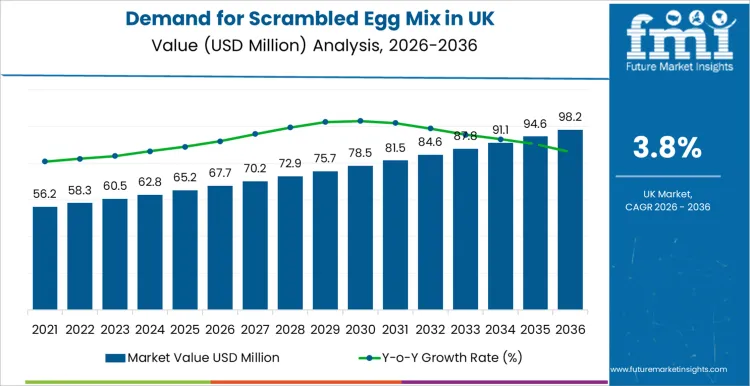
Demand for scrambled egg mix in the UK is projected to reach a valuation of USD 67.7 million in 2026. Consumption is anticipated to achieve a size of USD 98.2 million by 2036, expanding at a CAGR of 3.8%.This sustained growth trajectory is fueled by a fundamental evolution in domestic culinary and shopping habits, where convenience, pantry stability, and consistent results are increasingly prized over traditional preparation methods. The persistent time pressures of modern lifestyles, the expansion of single-person and smaller households, and a growing cultural emphasis on minimizing food waste converge to bolster the appeal of shelf-stable, easy-to-prepare solutions. This trend is further amplified by continuous product innovation improving taste and texture, alongside the powerful growth of digital grocery platforms that make discovery and repeat purchasing effortless for time-starved consumers.
Quick Stats for Scrambled Egg Mix Demand in the UK
- Scrambled Egg Mix Sales Valuation in the UK (2026):USD 67.7 million
- Scrambled Egg Mix Sales Forecast Valuation in the UK (2036):USD 98.2 million
- Scrambled Egg Mix Industry in the UK Forecast CAGR (2026-2036):3.8%
- Leading Regional Growth:England (CAGR 4.17%)
- Leading Product Form:Powder Mix (55.0%)
- Leading Sales Channel:Online Retail (40.0%)
- Key Companies Profiled:Augason Farms, Sonstegard Foods Company, National Food Group, GCF Corporation, Nutriom OvaEasy
Why is Scrambled Egg Mix Gaining a Foothold in UK Households?
The rising demand for scrambled egg mix signifies a pragmatic shift in how UK consumers approach everyday meal preparation. Moving beyond a perception as merely an emergency or camping supply, it is increasingly integrated into the weekly routine as a reliable, no-fuss breakfast or meal component. This is heavily driven by the over arching convenience food trends shaping the grocery sector, where products that save active minutes in the morning or simplify cooking for one are highly valued.
Heightened awareness of food waste, coupled with the product's exceptionally long shelf life, appeals to the economically and environmentally conscious shopper. Furthermore, its consistent performance-eliminating the variability of fresh eggs-makes it a trusted ingredient for home cooks seeking guaranteed results, from fluffy scrambles to dependable baking applications. Its role is being cemented not as a replacement, but as a strategic pantry staple that complements fresh ingredients.
How is the Scrambled Egg Mix Landscape Segmented by Form and Route to Market?
The physical form of the product and the retail channel through which it is purchased categorize the scrambled egg mix arena. This segmentation reveals a clear consumer preference driven by practicality and aligns with the broader transformation of grocery shopping behavior in the digital age.The distinction between powder and liquid forms speaks to priorities around storage and usage, while the channel split highlights the battle for the consumer's basket between the growing digital realm and the enduring physical store.
Which Product Form is Synonymous with Shelf Stability and Versatility?

The powdered form of scrambled egg mix commands the sector with a 55.0% share. This dominance is rooted in its superior logistical and practical advantages: lightweight packaging, resistance to spoilage without refrigeration, and efficient, space-saving storage.Consumers and bulk purchasers, such as food service operators and preparedness-minded households, value the ability to portion exactly what is needed, minimizing waste. Its ease of transport and lower shipping costs also make it the dominant format in theonline retail and bulk purchasingchannel, reinforcing its market leadership through supply chain efficiency.
Which Sales Channel is Reshaping Consumer Access and Purchasing Habits?
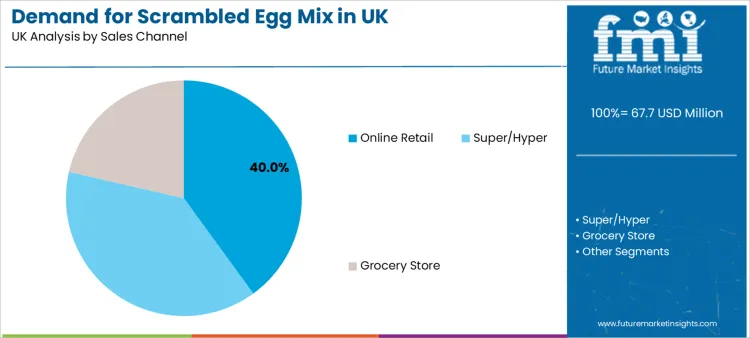
Online retail has emerged as the leading sales channel, capturing a 40.0% share. This growth is propelled by the deep and sustained penetration of e-commerce grocery delivery and subscription services across the UK. The subscription model for pantry staples is particularly effective for this product, ensuring regular, automated replenishment.The digital shelf also allows for detailed product information, reviews, and direct comparisons, aiding consumer education and choice. This channel’s rise is a direct component of the widere-commerce grocery growthphenomenon, fundamentally changing how routine food items are discovered and acquired.
What is the Enduring Role of Traditional Grocery Outlets?
While online growth is significant, traditional supermarkets, hypermarkets, and local grocery stores collectively remain a vital and steady sales avenue. These physical channels cater to immediate needs, offer tactile product inspection, and serve consumers who prefer a consolidated weekly shop.They are crucial for reaching demographic segments less engaged with digital grocery shopping and for capturing impulse purchases. The in-store experience, including placement in the breakfast aisle or alongside baking supplies, continues to drive discovery and trial, maintaining the channel's essential role in the overall retail ecosystem for food staples.
What are the Dynamics, Restraints, Opportunities, and Threats Shaping this Sector?
How are Demographic Shifts and Digital Convenience Driving Consistent Growth?
The primary engine of growth is the ongoing expansion of single-person households and busy dual-income families, for whom quick, simple meal solutions are a daily necessity. The cultural normalization of online grocery shopping has made accessing niche pantry items like scrambled egg mix effortless, removing previous barriers of limited physical shelf space.A sustained focus on household food waste reduction enhances the value proposition of a long-shelf-life product that can be used incrementally, contrasting with the perishable nature of fresh eggs.
Do Perceptions of Quality and Strong Fresh Competition Restrain Broader Acceptance?
A significant restraint is the lingering consumer perception that processed mixes are inferior in taste, texture, or nutritional value compared to fresh, free-range eggs. This can be a barrier to trial and regular use among discerning cooks.The sector also faces intense, everyday competition from the fresh egg industry, which is a low-cost, deeply established staple. Price sensitivity during periods of economic pressure can see consumers reverting to basic fresh eggs as a cost-saving measure, potentially stalling mix adoption.
How are Health-Conscious Formulations and Foodservice Expansion Creating New Potential?
Substantial opportunities exist in innovating health-oriented product lines, such as mixes fortified with protein, vitamins, or omega-3s, or made from egg whites only. Developing clean-label options with minimal additives can attract a more health-conscious demographic.There is also significant latent potential in the foodservice and institutional catering sector, where consistency, portion control, speed of preparation, and cost predictability are paramount advantages for cafes, hotel buffet lines, and care homes.
What External Factors Could Challenge the Steady Growth Trajectory?
The sector faces threats from volatile input costs, where surges in the price of eggs or packaging materials can squeeze manufacturer margins and force retail price increases that deter consumers.
A prolonged economic downturn could see households cutting back on perceived premium convenience foods. Negative media coverage regarding the processing of egg products or the broader health implications of processed foods could also impact brand trust and consumer sentiment across the category.
How is Scrambled Egg Mix Consumption Evolving Across Key Regions in the UK?
Growth exhibits regional variation, influenced by population density, average household size, urbanisation levels, and the penetration of modern retail and e-commerce logistics. The projected compound annual growth rates from 2026 to 2036 illustrate these geographic distinctions.
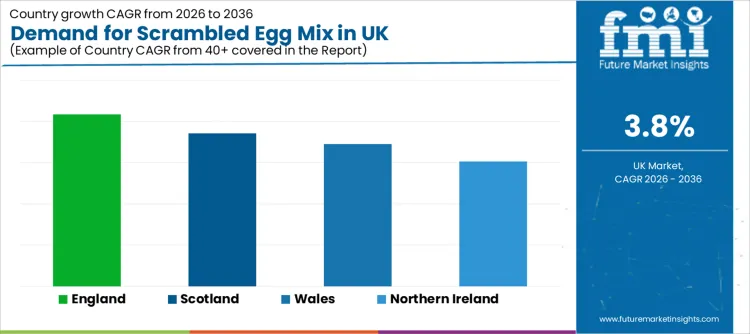
| Region | CAGR (2026-2036) |
|---|---|
| England | 4.2% |
| Scotland | 3.7% |
| Wales | 3.4% |
| Northern Ireland | 3.0% |
What is Fueling Above-Average Growth in England?
England leads with a projected CAGR of 4.17%. This is directly tied to its high population density, particularly in major metropolitan areas like London, Birmingham, and Manchester, where fast-paced urban lifestyles are most pronounced.The highest penetration of rapid grocery delivery services and the strongest culture of convenience dining are found here. Furthermore, the greater diversity of household types and the prevalence of smaller living spaces without large kitchens support demand for simple, space-efficient pantry solutions as part of the broader urban lifestyle and consumption pattern.
Why Does Scotland Exhibit Robust Growth?
Scotland exhibits a strong CAGR of 3.71%. This is powered by a combination of significant urban centers like Glasgow and Edinburgh with similar convenience-driven demand, and a traditionally strong outdoor and preparedness culture that values long-life food products.The product's utility for camping, hiking, and as a household emergency staple resonates in this market. Retail innovation and the growing reach of major online grocery platforms into Scottish cities are effectively meeting this demand.
What Factors Underpin Steady Demand in Wales and Northern Ireland?
Wales and Northern Ireland show steady, reliable growth. Wales, with a , benefits from a mix of coastal and rural communities where pantry-stable goods are practical, alongside growing urban hubs like Cardiff adopting modern shopping habits.Northern Ireland, with a projected CAGR of 3.03%, reflects a stable demand trajectory driven by steady household consumption and the gradual expansion of product availability through both national supermarket chains and local independent retailers, aligning with consistent regional grocery retail trends.
What Defines the Competitive Landscape of the Scrambled Egg Mix Industry?
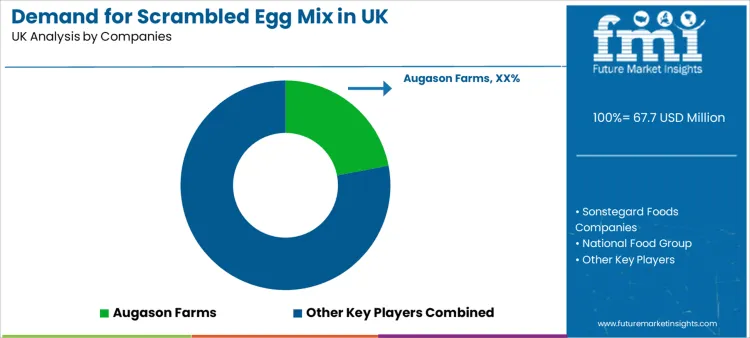
The competitive environment is characterized by a focus on brand trust, supply chain reliability, and effective channel management. Key participants range from large-scale, diversified food groups to specialized companies focused solely on egg and dairy products. Competition hinges on securing favorable shelf space in both physical and digital stores, maintaining competitive pricing against fresh eggs, and building a reputation for consistent quality and taste.
Success depends on strong relationships with national grocery retailers and distributors, as well as the ability to serve the growing B2B foodservice segment. Marketing strategies often emphasize versatility, ease of use, and the product's role in reducing waste. Innovation in packaging for single-serve portions or recipes that incorporate the mix into broader meal solutions are key tactics to drive engagement and usage frequency.
Key Industry Participants
- Augason Farms
- Sonstegard Foods Company
- National Food Group
- GCF Corporation
- Nutriom OvaEasy
Scope of Report
| Items | Values |
|---|---|
| Quantitative Units | USD Million |
| Product Form | Powder, Liquid |
| Sales Channel | Online Retail, Supermarkets/Hypermarkets, Grocery Stores, Others |
| Regions Covered | England, Scotland, Wales, Northern Ireland |
| Key Companies Profiled | Augason Farms, Sonstegard Foods Company, National Food Group, GCF Corporation, Nutriom OvaEasy |
Scrambled Egg Mix in the UK by Segment
By Product Form
- Powder
- Liquid
By Sales Channel
- Online Retail
- Supermarkets/Hypermarkets
- Grocery Stores
- Others
By Region
- England
- Scotland
- Wales
- Northern Ireland
Bibliography
- Institute of Grocery Distribution (IGD). (2023). UK ShopperVista Report: Changing Habits in Breakfast and Meal Consumption.
- Department for Environment, Food & Rural Affairs (DEFRA). (2024). Family Food Survey: Detailed Analysis of Household Food & Drink Purchases.
- Food Standards Agency (FSA), UK. (2023). Guidance and Consumer Research on Egg Products and Processing.
Frequently Asked Questions
How big is the demand for scrambled egg mix in uk in 2026?
The demand for scrambled egg mix in uk is estimated to be valued at USD 67.7 million in 2026.
What will be the size of scrambled egg mix in uk in 2036?
The market size for the scrambled egg mix in uk is projected to reach USD 98.2 million by 2036.
How much will be the demand for scrambled egg mix in uk growth between 2026 and 2036?
The demand for scrambled egg mix in uk is expected to grow at a 3.8% CAGR between 2026 and 2036.
What are the key product types in the scrambled egg mix in uk ?
The key product types in scrambled egg mix in uk are powder and liquid.
Which sales channel segment is expected to contribute significant share in the scrambled egg mix in uk in 2026?
In terms of sales channel, online retail segment is expected to command 40.0% share in the scrambled egg mix in uk in 2026.
Preview the report firsthand - request a free sample
Get SampleGet the brochure for pricing and purchase details.
Get PDFTable of Content
- Executive Summary
- UK Market Outlook
- Demand-side Trends
- Supply-side Trends
- Technology Roadmap Analysis
- Analysis and Recommendations
- Market Overview
- Market Coverage / Taxonomy
- Market Definition / Scope / Limitations
- Market Background
- Market Dynamics
- Drivers
- Restraints
- Opportunity
- Trends
- Scenario Forecast
- Demand in Optimistic Scenario
- Demand in Likely Scenario
- Demand in Conservative Scenario
- Opportunity Map Analysis
- Product Life Cycle Analysis
- Supply Chain Analysis
- Investment Feasibility Matrix
- Value Chain Analysis
- PESTLE and Porter’s Analysis
- Regulatory Landscape
- Regional Parent Market Outlook
- Production and Consumption Statistics
- Import and Export Statistics
- Market Dynamics
- UK Market Analysis 2021 to 2025 and Forecast, 2026 to 2036
- Historical Market Size Value (USD Million) Analysis, 2021 to 2025
- Current and Future Market Size Value (USD Million) Projections, 2026 to 2036
- Y-o-Y Growth Trend Analysis
- Absolute $ Opportunity Analysis
- UK Market Pricing Analysis 2021 to 2025 and Forecast 2026 to 2036
- UK Market Analysis 2021 to 2025 and Forecast 2026 to 2036, By Form
- Introduction / Key Findings
- Historical Market Size Value (USD Million) Analysis By Form , 2021 to 2025
- Current and Future Market Size Value (USD Million) Analysis and Forecast By Form , 2026 to 2036
- Powder
- Liquid
- Powder
- Y-o-Y Growth Trend Analysis By Form , 2021 to 2025
- Absolute $ Opportunity Analysis By Form , 2026 to 2036
- UK Market Analysis 2021 to 2025 and Forecast 2026 to 2036, By Sales Channel
- Introduction / Key Findings
- Historical Market Size Value (USD Million) Analysis By Sales Channel, 2021 to 2025
- Current and Future Market Size Value (USD Million) Analysis and Forecast By Sales Channel, 2026 to 2036
- Online Retail
- Super/Hyper
- Grocery Store
- Online Retail
- Y-o-Y Growth Trend Analysis By Sales Channel, 2021 to 2025
- Absolute $ Opportunity Analysis By Sales Channel, 2026 to 2036
- Market Structure Analysis
- Competition Dashboard
- Competition Benchmarking
- Market Share Analysis of Top Players
- By Regional
- By Form
- By Sales Channel
- Competition Analysis
- Competition Deep Dive
- Augason Farms
- Overview
- Product Portfolio
- Profitability by Market Segments (Product/Age /Sales Channel/Region)
- Sales Footprint
- Strategy Overview
- Marketing Strategy
- Product Strategy
- Channel Strategy
- Sonstegard Foods Companies
- National Food Group
- GCF Corporation
- Nutriom OvaEasy
- Augason Farms
- Competition Deep Dive
- Assumptions & Acronyms Used
- Research Methodology


