

- Industry Size (2025)
- USD 592.5 Mn
- Forecast (2035)
- USD 994.9 Mn
- CAGR (2025 to 2035)
- 5.3%
Demand for Electric Clothes Drying Hanger in USA Forecast and Outlook 2025 to 2035
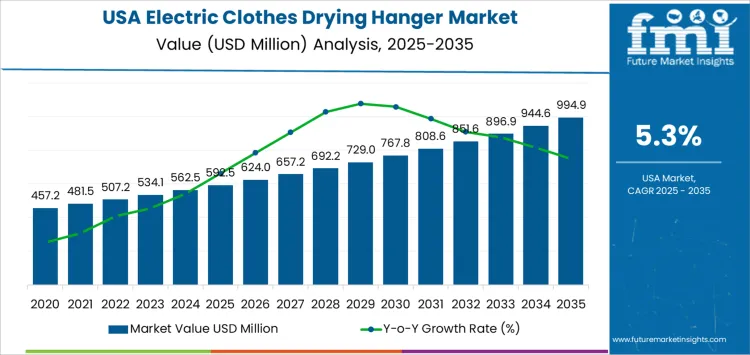
The demand for electric clothes drying hangers in the USA is projected to grow from USD 592.5 million in 2025 to USD 994.9 million by 2035, with a forecasted CAGR of 5.3%. This growth is primarily driven by consumers' increasing preference for energy-efficient, space-saving, and convenient home appliances. Electric clothes drying hangers offer a sustainable alternative to traditional dryers by reducing energy consumption, making them particularly appealing in an era of rising energy costs and heightened environmental concerns. They are also highly favored in urban areas with limited space, where wall or ceiling-mounted models can save precious floor area. As more consumers seek ways to minimize their carbon footprint and embrace smart home appliances, the demand for these hangers is expected to rise steadily, driven by factors such as technological advancements, eco-friendly living, and greater adoption in the residential sector.
Quick Stats of the Demand for Electric Clothes Drying Hanger in USA
- Demand for Electric Clothes Drying Hanger in USA Value (2025): USD 592.5 million
- Demand for Electric Clothes Drying Hanger in USA Forecast Value (2035): USD 994.9 million
- Demand for Electric Clothes Drying Hanger in USA Forecast CAGR (2025-2035): 5.3%
- Demand for Electric Clothes Drying Hanger in USA Leading Product: Freestanding
- Demand for Electric Clothes Drying Hanger in USA Key Growth Regions: West USA, South USA, Northeast USA, Midwest USA
- Demand for Electric Clothes Drying Hanger in USA Top Players: purStream, Jiffy Steamer, Mixen, Jukkre
West USA leads the demand for electric clothes drying hangers, growing at a 6.1% CAGR, fueled by a strong focus on innovation, sustainability, and space-efficient living. South USA follows with a 5.5% CAGR, supported by the region’s need for energy-efficient solutions, particularly in homes and apartments with large populations. Northeast USA shows a 4.9% CAGR, driven by colder climates and a growing interest in eco-friendly, space-saving appliances. Midwest USA experiences a 4.3% CAGR, with demand boosted by harsh winters and the increasing need for energy-efficient indoor drying solutions. The residential end-use segment leads with 40% of the demand, followed by commercial and hospital uses. Leading players like purStream, Jiffy Steamer, Mixen, and Jukkre are focusing on product innovation, affordability, and energy efficiency, which are key to meeting the growing demand in this expanding market.
Demand for Electric Clothes Drying Hanger in USA Key Takeaways
| Metric | Value |
|---|---|
| Demand for Electric Clothes Drying Hanger in USA Value (2025) | USD 592.5 million |
| Demand for Electric Clothes Drying Hanger in USA Forecast Value (2035) | USD 994.9 million |
| Demand for Electric Clothes Drying Hanger in USA Forecast CAGR (2025-2035) | 5.3% |
Why is the Demand for Electric Clothes Drying Hanger in USA Growing?
The demand for electric clothes drying hangers in the USA is growing due to the increasing preference for energy-efficient, space-saving, and convenient home appliances. These electric drying systems are designed to reduce the reliance on traditional clothes dryers, which consume significant amounts of energy. As energy costs rise and environmental concerns increase, more consumers are seeking alternative methods to dry clothes that are more sustainable and cost-effective. Electric clothes drying hangers offer an ideal solution, particularly for urban dwellers with limited space, as they can be mounted on walls or ceilings, saving floor space while offering a gentle drying process.
Key drivers for this growth include the increasing demand for smart home appliances that integrate with modern lifestyles. The convenience of drying clothes quickly and efficiently indoors, regardless of the weather, appeals to consumers who seek more control over their household chores. Technological advancements in electric drying systems have improved the efficiency and speed of drying, making them more attractive to time-conscious consumers. The growing trend toward eco-friendly living and the desire to reduce household carbon footprints are pushing consumers to adopt energy-efficient products like electric clothes drying hangers.
Further growth is being driven by the expansion of the middle class, particularly in urban areas, where space constraints and the need for energy-saving appliances are more pronounced. Despite the increasing popularity, challenges such as the initial cost of installation and the need for specialized electrical setup may limit adoption. Nevertheless, as demand for energy-efficient home solutions continues to rise, the electric clothes drying hanger segment is expected to see steady growth in the USA through 2035.
What is the Segment-Wise Analysis of Demand for Electric Clothes Drying Hanger in USA?
Demand for electric clothes drying hangers in the USA is segmented by product type, end-use, material, price range, and distribution channel. By product type, freestanding electric clothes drying hangers lead with 30% of the demand, followed by hanging, ceiling mounted, foldable, and other types. In terms of end-use, residential applications account for 40% of the demand, with commercial and hospital uses making up the rest. Regarding material, plastic, stainless steel, steel, aluminum, and ABS flame retardant are the primary materials used. The price range for electric clothes drying hangers is divided into USD 15.0 - USD 30.0, USD 30.0 - USD 45.0, under USD 5.0 - USD 15.0, and USD 45.0 and above. Distribution channels include supermarkets/hypermarkets, online retailers, specialty stores, multi-brand stores, and gift stores. Regionally, demand is divided into West USA, South USA, Northeast USA, and Midwest USA.
How Does Freestanding Product Lead the Demand for Electric Clothes Drying Hanger in USA?
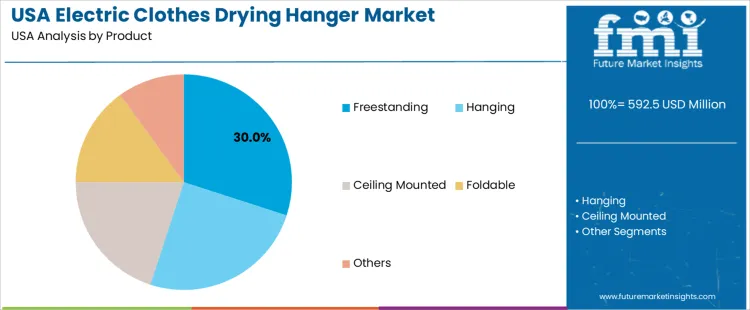
Freestanding electric clothes drying hangers account for 30% of the demand in the USA, driven by their portability, ease of use, and suitability for a wide range of living spaces. These products are especially popular in homes, apartments, and smaller spaces where wall-mounted or ceiling-mounted drying solutions may not be feasible. Freestanding models offer the convenience of being moved around, enabling users to dry clothes in different areas based on their needs. They are also favored by those who do not want to make permanent installations or live in rental spaces. The versatility of freestanding electric clothes drying hangers allows them to be used in various environments, from laundry rooms to living areas. As consumers increasingly prioritize convenience, energy efficiency, and flexibility in home appliances, freestanding models are expected to continue leading the market, especially as the demand for portable and smart home solutions rises.
How Does Residential End-Use Lead the Demand for Electric Clothes Drying Hanger in USA?
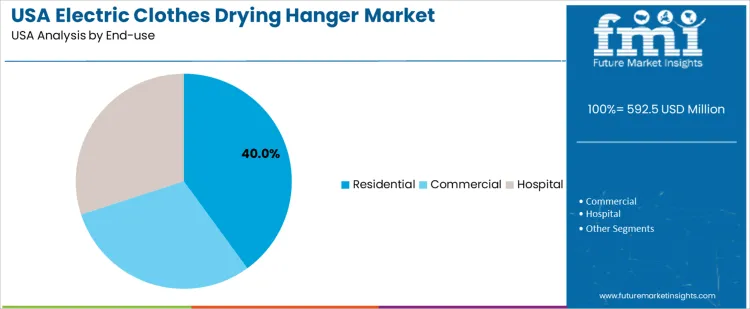
Residential applications account for 40% of the demand for electric clothes drying hangers in the USA, driven by the growing preference for convenient, energy-efficient laundry solutions in home settings. With a rising awareness of energy-saving technologies and the need for space-saving appliances, electric clothes drying hangers are gaining popularity as an alternative to traditional clothes dryers. These products are more energy-efficient and cost-effective, making them an attractive option for households seeking to reduce energy consumption. The variety of product types, including freestanding, foldable, and ceiling-mounted models, allows consumers to choose based on their specific living space and drying needs. The growing trend of apartment living and smaller homes, where traditional dryers may not fit, further boosts the demand for electric clothes drying hangers. As demand for eco-friendly and functional home appliances continues to rise, the residential industry for electric clothes drying hangers is expected to grow steadily.
What are the Key Trends, Drivers and Restraints in Demand for Electric Clothes Drying Hangers in USA?
Electric drying hangers provide indoor drying capacity without requiring a full-size dryer or outdoor line. Growing environmental and energy‑efficiency awareness also support adoption because compared with conventional tumble dryers, electric drying hangers can offer lower energy use, gentler treatment for fabrics, and less wear on clothes. However, restraint comes from the availability of alternative drying methods air drying on simple racks, traditional dryers, or laundromats which may be preferred by cost-conscious consumers. Upfront cost of electric drying hangers, energy costs, and the perception that they may be less effective than conventional dryers may slow adoption among some segments.
Why is Demand for Electric Clothes Drying Hangers Growing in USA?
Demand is growing because electric clothes drying hangers meet the needs of consumers seeking convenience, flexibility and practicality. Many Americans live in urban apartments that lack outdoor drying space or adequate ventilation. For them, being able to dry clothes indoors even in limited space without bulky equipment or dedicated laundry rooms is a key advantage. Electric hangers are also easier on delicate fabrics compared with high‑heat tumble dryers. The rise in remote working and people spending more time at home emphasizes convenience in daily chores, including laundry. As awareness of energy consumption and environmental impact increases, consumers are drawn to energy‑efficient drying alternatives. For households looking for lower‑cost, space‑efficient, and gentle drying solutions, electric drying hangers represent a compelling option.
How are Technological and Industry Innovations Driving Electric Clothes Drying Hanger Demand in USA?
Technological advances have enhanced the appeal of electric clothes drying hangers in the USA. Modern designs integrate energy‑efficient heating elements, adjustable temperature settings, and smart controls sometimes even sensors that switch off when clothes are dry improving safety and convenience. Many models are foldable or wall‑mounted, optimizing space use for apartments and small homes. Innovations in materials and mechanical design have made these hangers lighter, more durable, and aesthetically compatible with modern interiors, encouraging adoption in urban households. Growing e‑commerce and home goods retail also make these products more accessible; consumers can easily compare models, read reviews, and access affordable options online. As manufacturers refine designs for ease of installation, energy efficiency, and user convenience, electric drying hangers become increasingly attractive for a wide segment of US households.
What are the Key Challenges and Risks That Could Limit Electric Clothes Drying Hanger Demand in USA?
First, their drying performance may not match that of full-size dryers for heavy or bulky laundry loads, which may disappoint users with high laundry volume. Energy costs may also be a concern: while more efficient than some dryers, electric hangers still consume electricity, and frequent use may increase utility bills. Initial cost remains another barrier for budget‑sensitive buyers who may prefer cheaper drying racks or conventional air drying. For households in warmer or humid climates, indoor drying may pose issues with humidity or inadequate ventilation, potentially leading to mold or dampness. Consumer habits and perception many Americans are accustomed to tumble dryers may slow adoption, especially if ease, speed, or total drying capacity are considered more important than compactness or energy savings.
What is the Regional Demand Outlook for Single Serve Wine in USA?
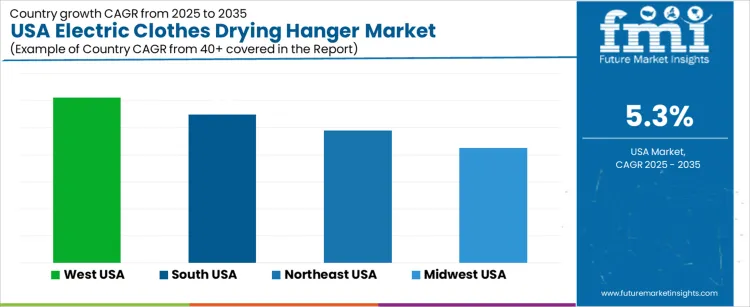
| Region | CAGR (%) |
|---|---|
| West USA | 6.1% |
| South USA | 5.5% |
| Northeast USA | 4.9% |
| Midwest USA | 4.3% |
Demand for electric clothes drying hangers in the USA is steadily growing, with West USA leading at a 6.1% CAGR, driven by innovation and eco-conscious living. South USA follows with a 5.5% CAGR, supported by a need for space-saving and energy-efficient solutions in warmer climates. Northeast USA shows a 4.9% CAGR, fueled by cold weather and the region’s focus on sustainability. Midwest USA experiences a 4.3% CAGR, driven by cold winters and the demand for energy-efficient indoor drying solutions. As the need for sustainable, space-saving, and energy-efficient appliances rises, demand for electric clothes drying hangers will continue to increase across the USA.
How is Demand for Electric Clothes Drying Hanger Growing in West USA?
West USA leads the demand for electric clothes drying hangers, growing at a 6.1% CAGR. The region's strong focus on innovation and sustainability is contributing to this increase in demand. States like California, known for their eco-conscious consumers, are increasingly adopting energy-efficient appliances, such as electric clothes drying hangers, to reduce their carbon footprint. The region’s growing urban population and smaller living spaces, where space efficiency is important, are driving the need for compact, energy-saving solutions for drying clothes. Electric clothes drying hangers are particularly popular in apartment complexes, hotels, and dormitories, where air drying may not be practical. With the growing trend of environmentally friendly living and the focus on reducing energy consumption, demand for electric clothes drying hangers is expected to remain strong in West USA. As more consumers seek alternative solutions for traditional clothes dryers, this industry is poised for continued growth, particularly in environmentally aware and densely populated areas.
Why is Demand for Electric Clothes Drying Hanger Rising in South USA?
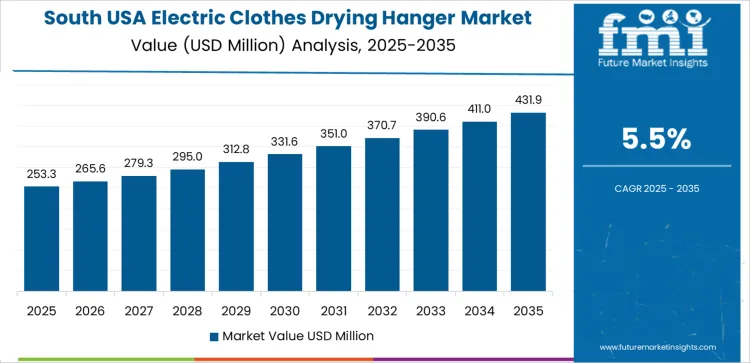
South USA is experiencing steady demand for electric clothes drying hangers, with a 5.5% CAGR. The region’s increasing awareness of energy efficiency and the need for space-saving solutions is driving the growth of this industry. States like Texas, Florida, and Georgia, where large homes and apartments are common, are adopting electric clothes drying hangers to reduce energy consumption compared to traditional clothes dryers. The South’s hot and humid climate makes outdoor drying less effective, increasing demand for indoor, energy-efficient drying solutions. The growing focus on reducing household energy bills and maintaining environmentally friendly lifestyles is further boosting the use of electric clothes drying hangers. As the South continues to grow both in population and in the adoption of eco-conscious products, demand for these innovative drying solutions is expected to rise steadily, particularly in residential and hospitality sectors where energy-saving appliances are a growing priority.
How is Demand for Electric Clothes Drying Hanger Expanding in Northeast USA?
Northeast USA is seeing steady demand for electric clothes drying hangers, with a 4.9% CAGR. The region’s colder climate and smaller living spaces make electric clothes drying hangers an attractive option for consumers seeking energy-efficient solutions for drying clothes indoors. In cities like New York, Boston, and Philadelphia, where apartments and limited space are common, consumers are increasingly turning to compact, efficient drying solutions. Electric clothes drying hangers offer an ideal solution for drying clothes during the winter months when outdoor drying is not feasible. The growing awareness of sustainable living and energy conservation is also driving the adoption of these products in the Northeast. The region’s focus on environmentally friendly appliances is contributing to the rise in demand for electric clothes drying hangers, as more households seek to reduce energy consumption and their environmental impact. As the demand for space-saving and energy-efficient solutions grows, the Northeast industry for electric clothes drying hangers will continue to expand.
Why is Demand for Electric Clothes Drying Hanger Growing in Midwest USA?
Midwest USA is experiencing moderate demand for electric clothes drying hangers, with a 4.3% CAGR. The region’s relatively cold winters and varying climates make electric clothes drying hangers a practical solution for drying clothes indoors. States like Illinois, Michigan, and Ohio, where temperatures often drop below freezing, drive the need for efficient indoor drying solutions. Electric clothes drying hangers offer a compact and energy-efficient alternative to traditional dryers, particularly in regions where outdoor drying is not feasible for much of the year. With growing consumer interest in energy-saving appliances and environmentally friendly products, the demand for electric clothes drying hangers is expected to rise. As the Midwest embraces the trend of smaller living spaces and the need for efficient home appliances, electric clothes drying hangers are becoming a preferred solution for many households. As awareness of energy efficiency increases, demand for these products will continue to grow, supporting steady expansion across the region.
What is the Competitive Landscape of Electric Clothes Drying Hanger Demand in USA?
Demand for electric clothes drying hangers in the USA is increasing, driven by the growing need for energy-efficient, convenient home appliances. These innovative hangers provide a space-saving alternative to traditional dryers by utilizing heated air to dry clothes more gently and with less energy consumption. With a rising interest in sustainable living, energy-efficient products, and smarter home solutions, electric clothes drying hangers are becoming an attractive choice, especially for those with limited space or in areas with high humidity or less access to outdoor drying options.
Other major players in the industry include Jiffy Steamer, Mixen, and Jukkre. Jiffy Steamer, widely recognized for its garment care solutions, extends its expertise into electric clothes drying hangers, providing models that offer both drying and fabric care features. Mixen and Jukkre are emerging players that focus on affordability and compact designs, with an emphasis on portability and easy storage. These companies are striving to meet the growing demand for electric drying hangers by innovating in terms of drying speed, durability, and energy efficiency. As competition intensifies, the key to success will be delivering products that not only meet consumers' needs for energy savings and convenience but also offer long-lasting value and improved performance in the rapidly expanding industry for electric clothes drying hangers in the USA.
Key Players in USA Nutritive Sweeteners Demand
- purStream
- Jiffy Steamer
- Mixen
- Jukkre
Scope of Report
| Items | Values |
|---|---|
| Quantitative Units (2025) | USD million |
| Key Segments | Freestanding, Hanging, Ceiling Mounted, Foldable, Others |
| Material | Plastic, Stainless steel, Steel, Aluminum, ABS flame retardant |
| End-Use | Residential, Commercial, Hospital |
| Price Range | USD 15.0 - USD 30.0, USD 30.0 - USD 45.0, Under USD 5.0 - USD 15.0, USD 45.0 and Above |
| Distribution Channels | Supermarkets/hypermarkets, Online Retailers, Specialty Stores, Multi-brand Stores, Gifts Stores |
| Regions Covered | West USA, South USA, Northeast USA, Midwest USA |
| Key Companies Profiled | purStream, Jiffy Steamer, Mixen, Jukkre |
| Additional Attributes | Dollar sales by product type and price range; regional CAGR and growth trends; increasing demand for electric clothes drying hangers in residential and commercial sectors. |
USA Nutritive Sweeteners Demand by Key Segments
Product
- Freestanding
- Hanging
- Ceiling Mounted
- Foldable
- Others
Material
- Plastic
- Stainless steel
- Steel
- Aluminum
- ABS flame retardant
End-use
- Residential
- Commercial
- Hospital
Price Range
- USD 15.0 - USD 30.0
- USD 30.0 - USD 45.0
- Under USD 5.0 - USD 15.0
- USD 45.0 and Above
Distribution Channel
- Supermarkets/hypermarkets
- Online Retailers
- Specialty Stores
- Multi-brand Stores
- Gifts Stores
Region
- West USA
- South USA
- Northeast USA
- Midwest USA
Frequently Asked Questions
How big is the demand for electric clothes drying hanger in USA in 2025?
The demand for electric clothes drying hanger in USA is estimated to be valued at USD 592.5 million in 2025.
What will be the size of electric clothes drying hanger in USA in 2035?
The market size for the electric clothes drying hanger in USA is projected to reach USD 994.9 million by 2035.
How much will be the demand for electric clothes drying hanger in USA growth between 2025 and 2035?
The demand for electric clothes drying hanger in USA is expected to grow at a 5.3% CAGR between 2025 and 2035.
What are the key product types in the electric clothes drying hanger in USA?
The key product types in electric clothes drying hanger in USA are freestanding, hanging, ceiling mounted, foldable and others.
Which material segment is expected to contribute significant share in the electric clothes drying hanger in USA in 2025?
In terms of material, plastic segment is expected to command 28.0% share in the electric clothes drying hanger in USA in 2025.
Preview the report firsthand - request a free sample
Get SampleGet the brochure for pricing and purchase details.
Get PDFTable of Content
- Executive Summary
- USA Market Outlook
- Demand-side Trends
- Supply-side Trends
- Technology Roadmap Analysis
- Analysis and Recommendations
- Market Overview
- Market Coverage / Taxonomy
- Market Definition / Scope / Limitations
- Market Background
- Market Dynamics
- Drivers
- Restraints
- Opportunity
- Trends
- Scenario Forecast
- Demand in Optimistic Scenario
- Demand in Likely Scenario
- Demand in Conservative Scenario
- Opportunity Map Analysis
- Product Life Cycle Analysis
- Supply Chain Analysis
- Investment Feasibility Matrix
- Value Chain Analysis
- PESTLE and Porter’s Analysis
- Regulatory Landscape
- Regional Parent Market Outlook
- Production and Consumption Statistics
- Import and Export Statistics
- Market Dynamics
- USA Market Analysis 2020 to 2024 and Forecast, 2025 to 2035
- Historical Market Size Value (USD Million) Analysis, 2020 to 2024
- Current and Future Market Size Value (USD Million) Projections, 2025 to 2035
- Y-o-Y Growth Trend Analysis
- Absolute $ Opportunity Analysis
- USA Market Pricing Analysis 2020 to 2024 and Forecast 2025 to 2035
- USA Market Analysis 2020 to 2024 and Forecast 2025 to 2035, By Product
- Introduction / Key Findings
- Historical Market Size Value (USD Million) Analysis By Product , 2020 to 2024
- Current and Future Market Size Value (USD Million) Analysis and Forecast By Product , 2025 to 2035
- Freestanding
- Hanging
- Ceiling Mounted
- Foldable
- Others
- Y-o-Y Growth Trend Analysis By Product , 2020 to 2024
- Absolute $ Opportunity Analysis By Product , 2025 to 2035
- USA Market Analysis 2020 to 2024 and Forecast 2025 to 2035, By Material
- Introduction / Key Findings
- Historical Market Size Value (USD Million) Analysis By Material, 2020 to 2024
- Current and Future Market Size Value (USD Million) Analysis and Forecast By Material, 2025 to 2035
- Plastic
- Stainless steel
- Steel
- Aluminum
- ABS flame retardant
- Y-o-Y Growth Trend Analysis By Material, 2020 to 2024
- Absolute $ Opportunity Analysis By Material, 2025 to 2035
- USA Market Analysis 2020 to 2024 and Forecast 2025 to 2035, By End-use
- Introduction / Key Findings
- Historical Market Size Value (USD Million) Analysis By End-use, 2020 to 2024
- Current and Future Market Size Value (USD Million) Analysis and Forecast By End-use, 2025 to 2035
- Residential
- Commercial
- Hospital
- Y-o-Y Growth Trend Analysis By End-use, 2020 to 2024
- Absolute $ Opportunity Analysis By End-use, 2025 to 2035
- USA Market Analysis 2020 to 2024 and Forecast 2025 to 2035, By Price Range
- Introduction / Key Findings
- Historical Market Size Value (USD Million) Analysis By Price Range, 2020 to 2024
- Current and Future Market Size Value (USD Million) Analysis and Forecast By Price Range, 2025 to 2035
- USD 15.0 - USD 30.0
- USD 30.0 - USD 45.0
- Under USD 5.0 - USD 15.0
- USD 45.0 and Above
- Y-o-Y Growth Trend Analysis By Price Range, 2020 to 2024
- Absolute $ Opportunity Analysis By Price Range, 2025 to 2035
- USA Market Analysis 2020 to 2024 and Forecast 2025 to 2035, By Distribution Channel
- Introduction / Key Findings
- Historical Market Size Value (USD Million) Analysis By Distribution Channel, 2020 to 2024
- Current and Future Market Size Value (USD Million) Analysis and Forecast By Distribution Channel, 2025 to 2035
- Supermarkets/hypermarkets
- Online Retailers
- Specialty Stores
- Multi-brand Stores
- Gifts Stores
- Y-o-Y Growth Trend Analysis By Distribution Channel, 2020 to 2024
- Absolute $ Opportunity Analysis By Distribution Channel, 2025 to 2035
- Market Structure Analysis
- Competition Dashboard
- Competition Benchmarking
- Market Share Analysis of Top Players
- By Regional
- By Product
- By Material
- By End-use
- By Price Range
- By Distribution Channel
- Competition Analysis
- Competition Deep Dive
- purStream
- Overview
- Product Portfolio
- Profitability by Market Segments (Product/Age /Sales Channel/Region)
- Sales Footprint
- Strategy Overview
- Marketing Strategy
- Product Strategy
- Channel Strategy
- Jiffy Steamer
- Mixen
- Jukkre
- purStream
- Competition Deep Dive
- Assumptions & Acronyms Used
- Research Methodology


