


Key Takeaways
- Direct thermal and thermal transfer printers follow distinct pricing and margin structures driven by component complexity, consumables requirements and application durability needs
- Printhead availability and semiconductor content influence hardware price stability as supply chain constraints and component redesigns trigger cost adjustments
- Consumables such as thermal paper and ribbons anchor long term pricing economics, providing recurring revenue that subsidises competitive hardware pricing
- Logistics, retail and healthcare volumes drive scale based pricing corridors through seasonal peaks, ecommerce growth and labeling automation adoption
- Vendor pricing power depends on installed base size and consumables lock in as razor and blade economics create switching barriers and margin resilience
How do direct thermal and thermal transfer technologies differ in pricing structure?
Direct thermal printers generate images by applying heat directly to chemically treated paper that darkens when heated. This architecture eliminates ribbon mechanisms, reducing mechanical complexity and component count. Bill of materials for direct thermal units includes the thermal printhead, platen roller, control electronics and paper feed mechanism. The simpler mechanical design enables lower upfront hardware pricing compared to thermal transfer alternatives. Entry level direct thermal label printers targeting retail and healthcare applications can be priced aggressively to capture volume.
Thermal transfer printers require ribbon supply mechanisms adding mechanical complexity and component cost. These systems apply heat to transfer ink from ribbon onto standard paper or synthetic media. The architecture includes ribbon supply and take up spools, tension control mechanisms, ribbon detection sensors and more sophisticated feed paths. Additional components elevate bill of materials cost by 20 to 40 percent compared to equivalent direct thermal units. Hardware pricing reflects this complexity premium, with thermal transfer printers commanding higher upfront prices even at comparable print speeds and resolutions.
Printhead wear rates differ substantially between technologies, affecting lifetime cost calculations. Direct thermal printheads contact chemically treated paper that creates more abrasive wear than the ribbon contact in thermal transfer printing. Direct thermal printheads typically require replacement after 25 to 50 kilometers of printing depending on paper quality and print intensity. Thermal transfer printheads demonstrate longer service life, often exceeding 100 kilometers before replacement. Printhead replacement costs range from 15 to 40 percent of original printer price, making wear rates significant lifecycle cost factors.
Ribbon dependency creates ongoing consumables requirements that offset lower thermal transfer hardware margins. Thermal transfer printing consumes ribbons alongside paper, whereas direct thermal uses only treated paper. Wax ribbons for standard applications cost substantially less per label than premium resin ribbons required for durable outdoor or chemical resistant labeling. Ribbon consumption ties customers to vendor consumables ecosystems, enabling vendors to subsidise hardware pricing while capturing margin through consumables. This razor and blade model influences competitive pricing strategy across the thermal printing industry.
Application durability requirements determine technology selection and associated pricing tolerance. Direct thermal labels fade when exposed to heat, light or moisture, limiting use to short term applications such as shipping labels and receipts. Thermal transfer labels using resin ribbons withstand harsh environments including outdoor exposure and chemical contact. Industrial users requiring durable labels accept thermal transfer price premiums because direct thermal alternatives fail performance requirements. Application specific pricing power varies accordingly.
Why do printheads and semiconductor components act as pricing bottlenecks in thermal printing?
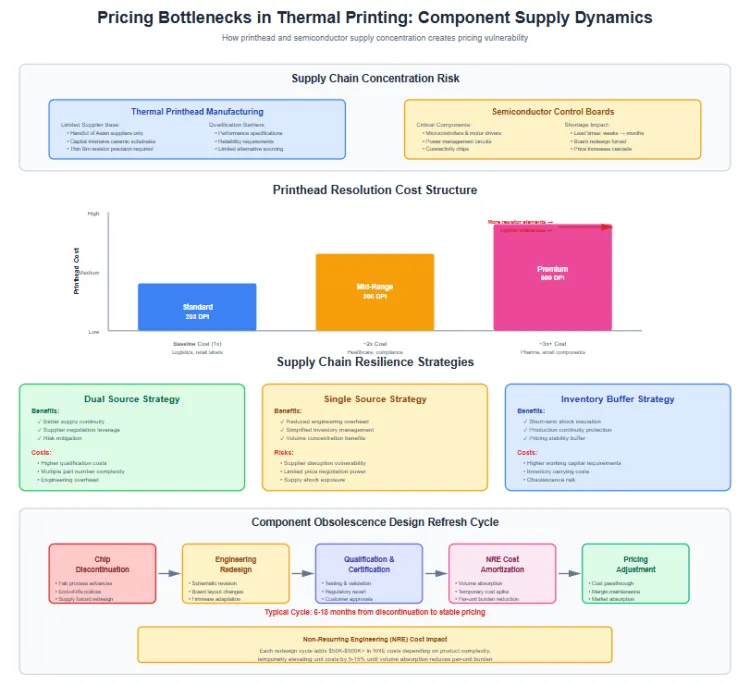
Thermal printhead manufacturing concentrates among a limited number of specialised suppliers, creating supply chain vulnerability. Printheads require precision ceramic substrates, thin film resistor arrays and protective coatings manufactured through capital intensive processes. Only a handful of Asian suppliers possess the technical capability and production scale to serve global thermal printer demand. This concentration gives printhead suppliers pricing power during capacity constraints or raw material cost increases. Printer manufacturers cannot easily qualify alternative suppliers due to performance specifications and reliability requirements.
Semiconductor control boards provide print data processing, motor control and communication interfaces essential to printer operation. These boards incorporate microcontrollers, motor drivers, power management circuits and connectivity chips. Recent semiconductor shortages demonstrated how component availability disruptions cascade through thermal printer production. Lead times extending from weeks to months forced manufacturers to redesign boards using available chip alternatives, incurring engineering cost and qualification delays. Component shortages trigger price increases as manufacturers pass through higher input costs and prioritise supply allocation to premium product lines.
Printhead resolution requirements drive cost escalation as dot density increases. Standard 203 dots per inch printheads serve most logistics and retail applications at moderate cost. Premium 600 dpi printheads demanded by pharmaceutical labeling and small component marking applications require substantially more resistor elements and tighter manufacturing tolerances. High resolution printhead pricing can exceed three times standard resolution equivalents. This cost structure creates natural pricing segmentation between basic and premium thermal printing applications.
Supply chain resilience strategies influence component sourcing and pricing stability. Manufacturers maintaining dual source arrangements for critical components achieve better supply continuity but incur qualification costs and complexity managing multiple part numbers. Single source strategies reduce engineering overhead but create vulnerability to supplier disruptions. Component inventory policies balance working capital cost against supply security. Manufacturers holding larger component buffer stocks insulate pricing from short term supply shocks but face higher carrying costs and obsolescence risk.
Design refreshes triggered by component obsolescence require engineering investment that flows through to pricing adjustments. Semiconductor suppliers discontinue older chips as fabrication processes advance, forcing thermal printer manufacturers to redesign control boards around available components. Each redesign cycle involves schematic revision, board layout, firmware adaptation and regulatory recertification. These non recurring engineering costs must be amortised across product volumes, temporarily elevating unit costs until volume absorption reduces per unit burden.
How do consumables economics shape total cost and long term pricing trends?
Thermal paper pricing depends on base paper cost, chemical coating inputs and converting processes. The heat sensitive coating contains dye precursors, developers and sensitisers applied through precision coating operations. Coating chemistry influences print quality, image stability and fade resistance. Premium thermal papers using advanced chemistry command significant price premiums over commodity grades. Base paper pulp costs fluctuate with timber pricing and capacity utilisation in paper mills. Energy intensive coating and slitting operations pass through electricity and labour cost changes. These variable input costs create thermal paper price volatility ranging 10 to 25 percent annually.
Ribbon pricing structure differs between wax, wax resin blend and pure resin formulations. Wax ribbons serve standard indoor labeling at lowest cost but offer limited durability. Resin ribbons provide chemical resistance, temperature tolerance and outdoor durability at two to three times wax ribbon pricing. Wax resin blends occupy middle pricing tiers balancing performance and cost. Ribbon substrate films, release coatings and ink layer thickness affect pricing alongside resin content. Petroleum derived resin inputs introduce commodity price exposure that flows through to ribbon pricing with quarterly lag.
Consumables represent 60 to 80 percent of five year total cost of ownership for typical thermal printing deployments. This cost structure explains why printer hardware often sells at modest margins while consumables generate sustainable profitability. Vendors willingly discount hardware to establish installed base, knowing consumables attachment creates recurring revenue streams. Large retail and logistics customers leverage volume commitments to negotiate consumables pricing while accepting hardware at list price, understanding that lifetime economics concentrate in paper and ribbon costs.
Vendor consumables lock in depends on technical specifications and customer switching costs. Printers engineered for specific paper dimensions, ribbon widths and core sizes create practical barriers to third party consumables substitution. Warranty terms often specify genuine consumables to maintain coverage, deterring customers from aftermarket alternatives. Print quality sensitivity reinforces OEM consumables preference as users avoid risking output quality issues from unqualified papers or ribbons. These factors protect vendor consumables pricing power despite hardware commoditisation pressures.
Consumables pricing trends reflect raw material cost cycles, manufacturing scale economies and competitive intensity. Thermal paper coating technology maturation and capacity expansion drove gradual price erosion over the past decade before recent cost inflation reversed trends. Ribbon pricing demonstrated more stability due to concentrated production and technical differentiation protecting premium tiers. Future consumables pricing will track pulp, energy and petrochemical input costs alongside volume scale effects from expanding ecommerce and logistics automation driving label consumption growth.
How do end use demand cycles in retail, logistics and healthcare influence pricing behaviour?
Retail seasonal peaks surrounding holiday shopping periods drive thermal printer and receipt paper demand concentration. November and December volumes can exceed average monthly run rates by 40 to 60 percent as transaction counts surge. Point of sale terminal manufacturers and retailers build inventory ahead of peak season, creating concentrated procurement windows. Vendors offer volume discounts and bundled pricing during these buying cycles to secure share, compressing realised pricing despite strong demand. Seasonal predictability enables production planning but introduces quarterly revenue volatility.
Ecommerce growth transformed logistics labeling demand from steady state to rapid expansion. Package shipping volumes grew substantially over the past decade, driving corresponding increases in shipping label printing. This secular growth trend supported thermal printer unit volume expansion and consumables growth outpacing GDP. Logistics operations standardised on thermal transfer printing for durable shipping labels, creating concentrated demand in specific product categories. Sustained volume growth enabled manufacturers to amortise fixed costs across larger bases, moderating unit price increases despite input cost inflation.
Healthcare labeling automation expanded thermal printing into specimen labeling, patient identification and pharmaceutical tracking applications. Regulatory requirements for positive patient identification and medication administration verification drove barcode labeling adoption throughout healthcare facilities. Healthcare applications demand higher print quality and durability than retail receipts, supporting premium product pricing. Large hospital networks negotiate enterprise agreements covering printer deployment and consumables supply, leveraging volume for pricing concessions while ensuring standardisation across facilities.
Volume commitment structures influence pricing negotiations between large buyers and vendors. Major retailers and logistics operators purchase thousands of printers annually plus millions of labels and consumables. Multi year agreements with volume commitments unlock preferential pricing tiers typically 15 to 30 percent below list pricing. Vendors accept these discounts to secure predictable revenue and expand installed base. Smaller buyers lacking volume leverage pay higher effective prices, creating pricing segmentation by customer size and negotiating power.
Demand cyclicality affects inventory management and pricing stability throughout the supply chain. Distributors and resellers must forecast seasonal patterns and build inventory ahead of peaks, tying up working capital and assuming demand risk. Excess inventory during slow periods pressures pricing as channel partners discount to clear stock. Manufacturers manage production scheduling and component procurement to smooth utilisation while meeting peak demand, balancing efficiency against service level requirements. These supply chain dynamics introduce pricing variation around hardware list prices depending on demand timing and inventory positions.
How do regional manufacturing bases and logistics costs affect global thermal printing price realisation?
Thermal printer manufacturing concentrates in East Asian countries, particularly China, Taiwan and Japan, where electronics manufacturing ecosystems provide component proximity and skilled labour availability. This geographic concentration creates cost advantages through supplier clustering, logistics efficiency and manufacturing expertise accumulation. Chinese production particularly benefits from scale economies as domestic consumption growth supports large volume manufacturing investments. Regional cost positions influence baseline pricing before logistics and regional market factors introduce geographic variation.
Freight sensitivity depends on product weight, volume and value density. Thermal printers represent moderately bulky, low to medium value products where shipping costs constitute meaningful portions of landed cost. Air freight premiums reach 5 to 15 percent of hardware value for expedited delivery. Ocean freight economises on per unit logistics but extends lead times. Recent freight cost volatility ranging 100 to 300 percent peak to trough demonstrated pricing exposure to transportation availability and rates. These logistics costs pass through to regional pricing either directly or through inventory carrying cost differences.
Regional assembly strategies enable customisation and logistics optimisation for major consumption regions. Some manufacturers operate regional assembly facilities in Europe and North America where they import major subassemblies from Asian suppliers and complete final assembly, packaging and configuration locally. This approach reduces freight cost for bulky finished goods, enables last minute customisation for regional requirements and improves supply chain responsiveness. Regional assembly cost premiums of 10 to 20 percent are offset by freight savings and service advantages supporting premium pricing in developed economies.
Currency fluctuation creates pricing variation across regions independent of underlying cost changes. Thermal printer manufacturers typically price products in US dollars for international transactions but invoice in local currencies for regional sales. Exchange rate movements between manufacturing countries and consumption regions introduce pricing margin variability. Vendors may adjust regional pricing periodically to maintain margin targets in home currency, creating temporary pricing opportunities or pressures depending on exchange rate direction.
Tariff structures and trade policy affect cross border pricing and sourcing decisions. Import duties on thermal printers and consumables vary across countries, adding 5 to 15 percent to landed costs in many jurisdictions. Tariff uncertainty during trade disputes introduces pricing risk and may trigger sourcing diversification investments. Free trade agreements create preferential pricing opportunities for qualifying products. These trade policy factors overlay manufacturing cost advantages with regulatory cost considerations affecting optimal pricing by destination region.
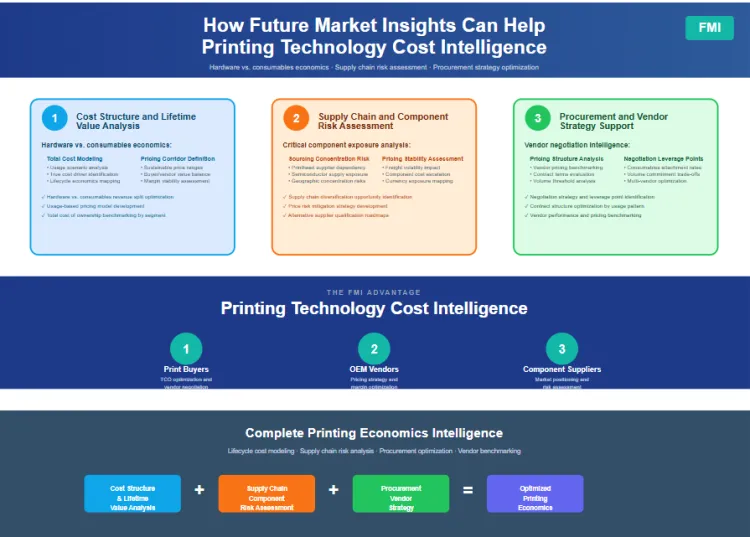
How Future Market Insights Can Help
Sources
- Thermal printer manufacturer technical and financial disclosures
- Used to assess hardware architecture details, bill of materials composition, pricing strategy approaches and installed base economics across direct thermal and thermal transfer product lines.
- Printhead and semiconductor supplier documentation
- Used to understand manufacturing concentration, component lead times, capacity constraints and cost structure sensitivity for critical thermal printing components.
- Paper and ribbon producer publications
- Used for thermal paper coating chemistry inputs, base paper pricing dynamics, resin formulation costs and factors driving consumables pricing volatility.
- Logistics, retail and healthcare industry reports
- Used to correlate end use volume demand patterns with thermal printer deployment rates and consumable usage intensity across major application segments.
- Reputable industrial electronics and printing trade media
- Used for reporting on supply chain disruptions, vendor pricing adjustments, technology transition trends and competitive dynamics shaping thermal printing equipment and consumables pricing.

