


Key Takeaways
- Online classifieds in the Middle East are now mobile first and chat driven, with users hopping between listings and WhatsApp rather than staying inside closed platform flows.
- Trust is anchored less in platform branding and more in visible social proof, verification badges, word of mouth and the ability to inspect items in person before handing over cash.
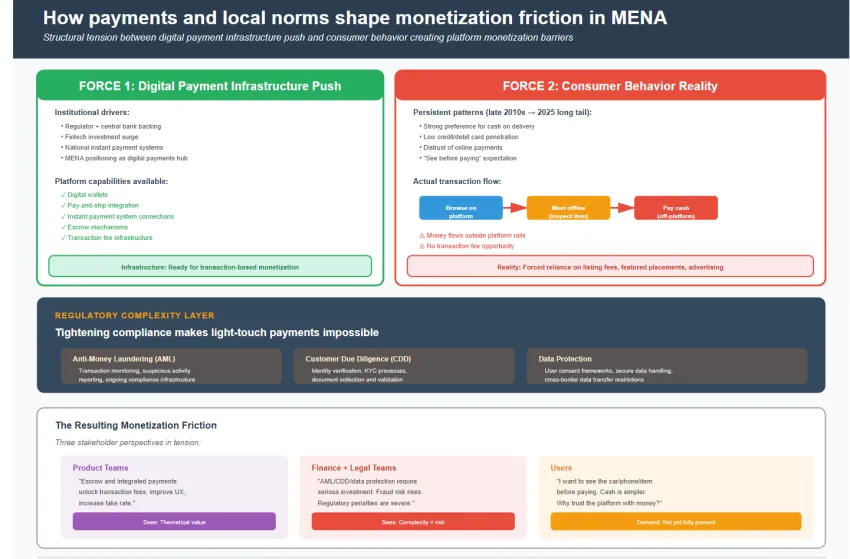
- Cash on delivery and in person cash handoffs still dominate informal trades, even as governments and banks push rapid digital payment adoption across the region.
- Monetisation friction arises when platforms try to behave like full e commerce marketplaces with fees, shipping and escrow, while users still think in terms of free listings, bargaining and direct contact.
- The red pill is that classifieds monetisation in the Middle East is constrained not by technology but by local trust norms, regulatory constraints on payments and a persistent preference for human negotiation over automated checkout.
How are Middle East consumers actually using online classifieds in 2025?
High internet and smartphone penetration across the Arab States and wider Middle East has made online classifieds a default part of everyday commerce, especially in GCC cities where mobile usage is close to universal. Consumers do not treat classifieds as a formal retail channel. They use them to test prices, scan options and start conversations that often move quickly into messaging apps and offline meetings.
Behaviour clusters around a few high value verticals. Property searchers use real estate classifieds to shortlist apartments and villas, then rely on brokers and in person visits to make final decisions. Car buyers browse used and nearly new vehicles, compare prices against dealer offers and often negotiate extras such as servicing or accessories in chat before meeting. Job seekers use classifieds to discover roles in smaller firms that may not appear on global job boards. Everyday trade in furniture, electronics and baby items fills the long tail, with domestic workers and students particularly active.
Consumers frequently multi home across platforms and social networks. A seller might list a used car on a big regional portal, boost it in a local Facebook group and circulate it on WhatsApp simultaneously. For them, classifieds are attention generators rather than full funnel shops. That mindset shapes expectations about price transparency, response times and what the platform is actually responsible for if something goes wrong.
How do social platforms and verticalisation challenge traditional classifieds?
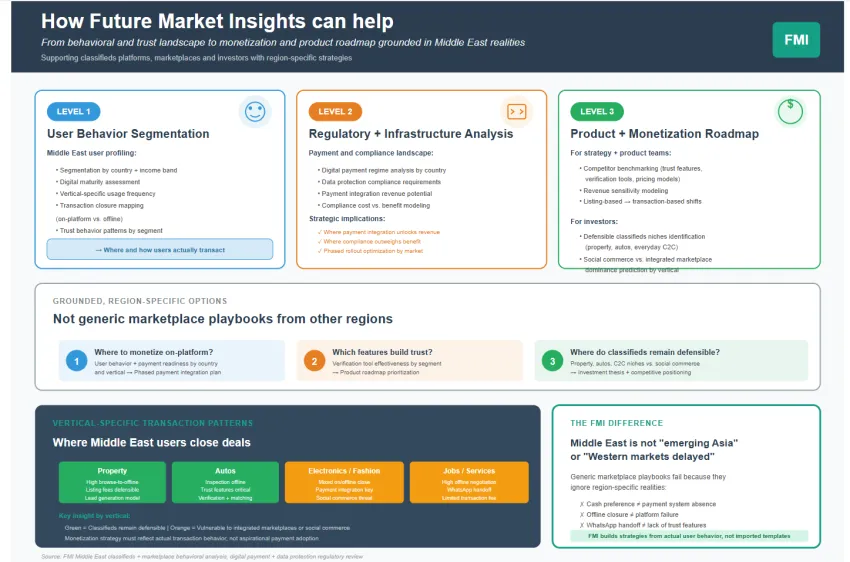
Another source of friction comes from the blurring lines between classifieds, social commerce and vertical marketplaces. Users increasingly use messaging apps and social networks to trade directly, sending photos and voice notes instead of filling structured listing forms. That provides speed and informality, but it also fragments supply and makes search and discovery harder.
Vertical platforms in property, autos and jobs are capturing parts of the value chain that were once the domain of horizontal classifieds. In real estate, specialised portals now bundle listings with market data, broker ratings and mortgage tools. In autos, inspection services, financing and guaranteed buyback schemes move the model closer to organised retail. Classifieds platforms still provide raw lead volume, but value extraction is shifting to players who can wrap trust and services around those leads. For consumers, this means a mixed environment. High stakes decisions such as buying a home in Dubai or a new family car in Riyadh gravitate toward more structured platforms. Everyday low ticket items and short term rentals stay in the informal classifieds and social layer. For platform owners and investors, the uncomfortable conclusion is that the most monetisable segments are precisely those where pure classifieds are under the most competitive pressure.
Sources
- International Telecommunication Union. (2023). Measuring digital development: Facts and figures 2023.
- International Telecommunication Union. (2023). Facts and figures: Internet use and mobile phone ownership.
- World Bank. (2020). Developing digital payment services in the Middle East and North Africa.
- World Bank. (2025). Digital financial inclusion: Policy and practice notes.
- World Economic Forum. (2025). What is behind the Middle East’s boom in digital payments.
- Google / Think with Google. (2018). E commerce in MENA: Opportunity beyond the hype.
- Jadil, Y., et al. (2022). Understanding the drivers of online trust and intention to purchase in Morocco. Journal of Innovation and Digital Commerce.

