

- Industry Size (2025)
- USD 4.2 Bn
- Forecast (2035)
- USD 12.9 Bn
- CAGR (2025 to 2035)
- 11.8%
Demand for Classified Platform in USA 2025 to 2035
The demand for classified platform in the USA is valued at USD 4.2 billion in 2025 and is forecasted to reach USD 12.9 billion by 2035, recording a CAGR of 11.8%. Growth is supported by the transition from print listings to digital-first channels for buying and selling, stronger mobile engagement, and broader participation in local peer-to-peer commerce. Increased adoption among small businesses and independent sellers, combined with category expansion into jobs, rentals, autos, and refurbished goods, continues to elevate platform USAge and monetization. Enhanced listing security, identity verification, and integrated payment processing further strengthen user trust and repeat activity.
B2C classified platforms lead demand due to their broader product coverage and established capabilities in identity validation, structured pricing, and delivery coordination. These platforms support high-volume listings with improved search, visualization, and real-time communication features. Investments in AI-driven item ranking, fraud detection, and automated content moderation are also improving conversion rates and enabling scalable operations.
The West, South, and Northeast show the strongest adoption, reflecting higher population density, robust digital infrastructure, and active local resale ecosystems. Key suppliers include Craigslist Inc., Meta Marketplace, OfferUp, eBay, and Cars.com. Their focus includes stronger seller authentication, omnichannel integration, and value-added services such as logistics partnerships and premium listing visibility.
Quick Stats for USA Classified Platform Demand
- USA Classified Platform Sales Value (2025): USD 4.2 billion
- USA Classified Platform Forecast Value (2035): USD 12.9 billion
- USA Classified Platform Forecast CAGR (2025–2035): 11.8%
- Leading Category in USA Classified Platform Demand: B2C Classified Platforms
- Key Growth Regions in USA Classified Platform Demand: West USA, South USA, Northeast USA
- Top Players in USA Classified Platform Demand: Craigslist Inc., Meta Marketplace, OfferUp, eBay, Cars.com
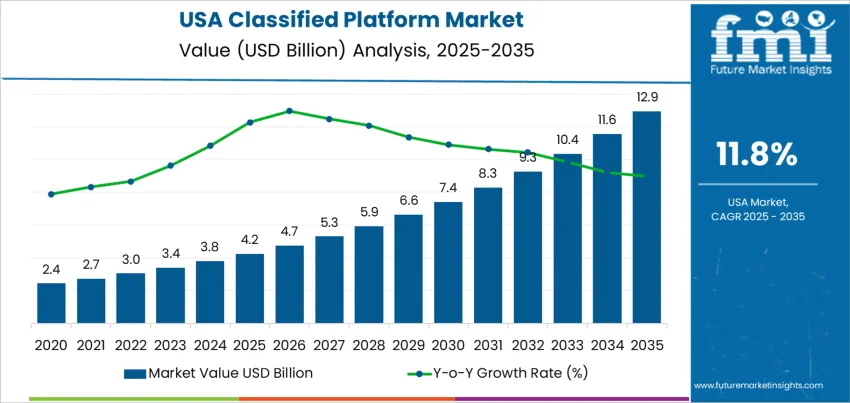
What is the Growth Forecast for Classified Platform Industry in USA through 2035?
Saturation in demand for classified platforms in the United States reflects a mature digital ecosystem where established players already dominate user activity. High penetration of online listing services for jobs, vehicles, and real estate limits rapid volume growth during later forecast years. Many consumers and businesses operate through well-known platforms, which constrains expansion by emerging providers and reduces opportunities for high acceleration.
However, the industry does not fully plateau. New monetization models, improved fraud prevention, and enhanced location-based targeting sustain interest in service upgrades. Professional sellers such as dealerships and staffing firms create repeated demand for premium placement and advertising packages. Specialized niches including collectibles or community-specific listings provide incremental contributions and reduce the risk of stagnation. Growth potential remains higher in mobile-first usage and integrated payment features that simplify transaction closure within the platform environment. The saturation profile indicates that while user acquisition reaches higher levels early, revenue remains supported by service enhancement and commercial adoption. Stability rather than steep decline characterizes the long-term trajectory.
USA Classified Platform Key Takeaways
| Metric | Value |
|---|---|
| USA Classified Platform Sales Value (2025) | USD 4.2 billion |
| USA Classified Platform Forecast Value (2035) | USD 12.9 billion |
| USA Classified Platform Forecast CAGR (2025-2035) | 11.8% |
Why is the Demand for Classified Platforms in the USA Growing?
Demand for classified platforms in the USA is growing because buyers and sellers rely on online listings to conduct local transactions quickly without traditional advertising costs. Widespread smartphone usage and strong internet access allow users to post goods, housing and job opportunities with minimal effort. Second hand product exchanges remain popular among price conscious consumers and sustainability minded households, which supports ongoing activity on classified platforms. Small businesses and independent service providers use classifieds to gain visibility in targeted communities, especially when marketing budgets are limited. Rental property managers and private landlords adopt online listings to reach potential tenants efficiently and streamline inquiries. The growth of gig work and freelance services encourages more individuals to promote skills and part time opportunities through classified sections.
Most platforms continue adding features that support trust, such as secure messaging and identity controls, which encourages regular use. The simplicity of direct communication appeals to users who prefer local pickup and cash-based transactions. Constraints include competition from specialized marketplaces and concerns about fraudulent listings. Some users are cautious with personal information, which can affect participation. Local regulations and moderation practices influence how platforms manage safety and user experience.
Which Types and Applications Lead Demand for Classified Platforms in the USA?
Demand for classified platforms in the United States is driven by consumer reliance on digital listings for rapid buying, selling, hiring, and service discovery. Growth is influenced by smartphone penetration, social commerce integration, and low-cost customer acquisition for sellers. Monetization relies on listing fees, promoted posts, ad placements, and secure transaction facilitation. USA platforms continue enhancing fraud detection, identity verification, and localized search intelligence to improve trust and engagement.
By Type, B2C Classified Platforms Hold the Largest Share
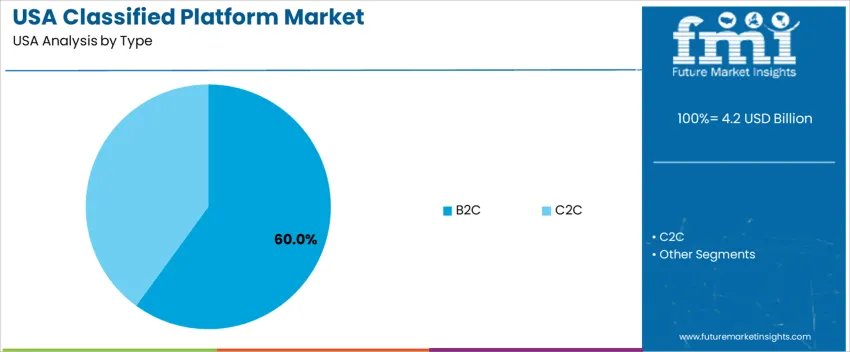
B2C classified platforms represent 60.0%, led by businesses frequently using nationwide classified portals to promote goods, employment listings, rentals, and subscription-based offerings. These platforms benefit from structured listing templates, premium advert slots, and audience targeting that improves conversion visibility for sellers. C2C platforms maintain wide participation from individual users selling pre-owned products, automobiles, or real estate assets through low-fee or freemium listing models. USA adoption trends reflect consolidation of digital storefronts where businesses maintain omnichannel sales presence, physical outlets, marketplaces, and classified networks simultaneously. Platform providers focus on integration with payment gateways, delivery partners, and reputation scoring features to support safe buyer-seller interactions. Data analytics personalization and in-app chat continue improving user retention across both B2C and C2C ecosystems.
Key Points:
- B2C dominance driven by large-scale commercial advertising and employment listings
- C2C remains essential for second-hand and local-area transactions
- Trust features and monetization tools drive platform competitiveness
By Application, Commercial Listings Hold the Largest Share
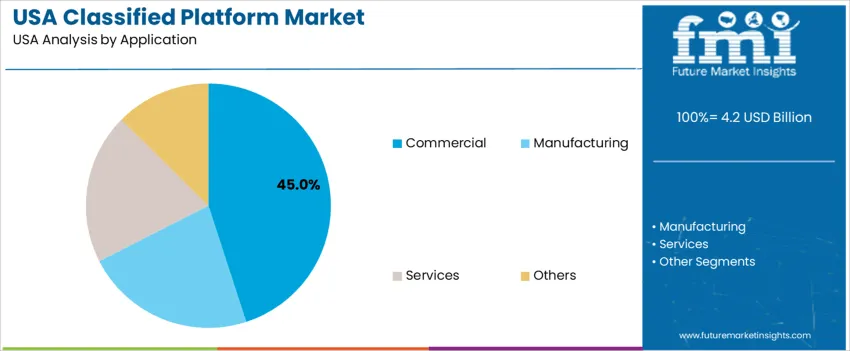
Commercial usage accounts for 45.0%, including listings for professional services, vehicle fleets, industrial goods, and commercial property acquisition. Small and mid-sized enterprises rely on classified networks for budget-efficient outreach compared with conventional advertising. Manufacturing sector participation reflects procurement listings, equipment liquidation, and auction-style sales for used machinery and components. The services segment spans home repair, logistics, financial assistance, healthcare support, and personal caregiving, an area expanding through mobile-based discovery. Other application groups include community events, recruitment postings, and short-term rentals. Demand patterns in the United States align with dynamic business cycles and regional employment needs. Platforms prioritize verified identity, categorization accuracy, and secure lead-generation tools to maintain reliability in commercial-centric transactions.
Key Points:
- Commercial listings dominate due to strong business advertising utility
- Manufacturing and service providers use classifieds for low-cost lead generation
- Broad category coverage attracts diverse professional and local-service users
What are the Drivers, Restraints, and Key Trends of the Demand for Classified Platforms in the USA?
Growth of local resale culture, expansion of gig and micro-commerce activity and increased preference for low-cost buying options are driving demand.
In the United States, classified platforms support strong peer-to-peer resale of furniture, electronics and vehicles as consumers seek budget-friendly alternatives during periods of economic pressure. Urban residents frequently use digital classifieds to buy and sell household goods during relocations and rental turnover. Small service providers including handymen, tutors and cleaners rely on classifieds to reach nearby customers without paying for branded marketing. Community focus appeals to users who value local pickup and fast transactions instead of shipping or fulfillment services. Automotive dealers and rental property managers continue to list inventory on classified networks to capture high-intent shoppers in regional industries. These diverse commercial and personal use-cases help maintain recurring platform activity.
Trust and safety concerns, regulatory scrutiny of certain listings and competition from specialized platforms restrain demand.
Fraud risks and inconsistent identity verification can discourage buyers and sellers from completing high-value transactions. State rules governing firearms, pets and rental advertising require monitoring and compliance, which increases administrative workload for operators. Dedicated marketplaces for luxury apparel, used cars or home rentals compete for listings that once relied heavily on generic classified sites. Some users prefer integrated payment and delivery protections offered by broader e-commerce platforms. These safety and competitive pressures limit uniform adoption across all transaction categories.
Shift toward verified user profiles, increased integration of location-based recommendations and rising demand from mobile-first audiences define key trends.
Classified platforms incorporate identity verification, fraud reporting and chat monitoring to strengthen marketplace trust. Location-based discovery prioritizes neighborhood listings to simplify pickup and reduce shipping cost concerns. Mobile apps support quick photo uploads, instant messaging and push alerts that drive repeat engagement. Sellers adopt promotional tools such as paid boosts designed to increase local visibility for vehicles, rental rooms and large furniture. These developments indicate sustained, convenience-driven demand for classified platforms across the United States consumer-to-consumer and local-commerce environment.
Analysis of the Demand for Classified Platforms in the USA by Region
Demand for classified platforms in the United States is driven by increasing digital participation in local commerce, used-goods exchange, gig hiring, and community listings. Mobile-first users seek frictionless posting, secure payment channels, and location-based search tailored to neighborhood interactions. Retail cost sensitivity encourages resale activity that supports household savings and sustainability preferences. Platform expansion relies on user-verification tools, moderation systems, and logistics partnerships that improve transaction confidence. West USA leads with 13.5% CAGR, followed by South USA at 12.1%, Northeast USA at 10.8%, and Midwest USA at 9.4%, reflecting regional e-commerce maturity and digital-payment adoption.
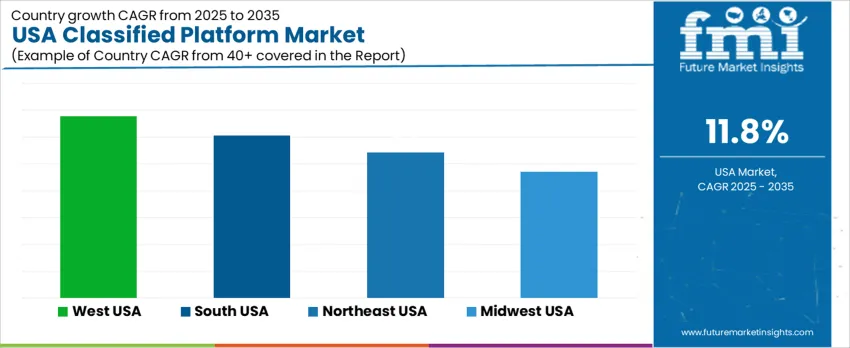
| Region | CAGR (2025-2035) |
|---|---|
| West USA | 13.5% |
| South USA | 12.1% |
| Northeast USA | 10.8% |
| Midwest USA | 9.4% |
How is the West USA driving demand for classified platforms?
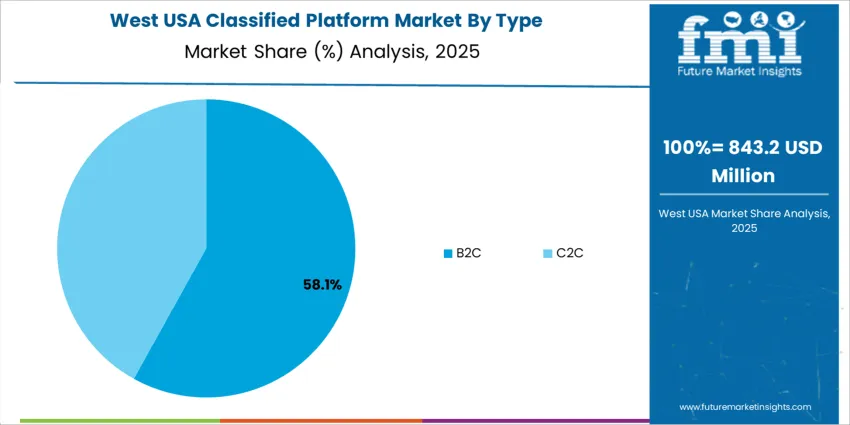
West USA achieves 13.5% CAGR, supported by strong participation from digitally active consumers in California and Washington. Marketplace listings expand across used electronics, personal vehicles, home décor, and rental inventory, with users preferring quick posting workflows and instant messaging for negotiation. Tech-driven cities adopt identity-verification features and secure digital-wallet links that reduce fraud concerns in high-value transactions. Integration with delivery-service providers improves item pickup options, supporting larger-item categories such as furniture and appliances. Local small businesses list clearance goods and short-term service offers, using classified platforms as cost-efficient channels to access neighborhood buyers. Procurement teams for service-based sellers review analytics dashboards that track conversion and response timing to adjust listing presentation.
- Mobile-first behavior driving frequent user engagement
- Strong demand for secure in-platform payment options
- Logistics partnerships expanding supported product categories
- Small-business listings increasing local sales visibility
How is the South USA shaping adoption dynamics?
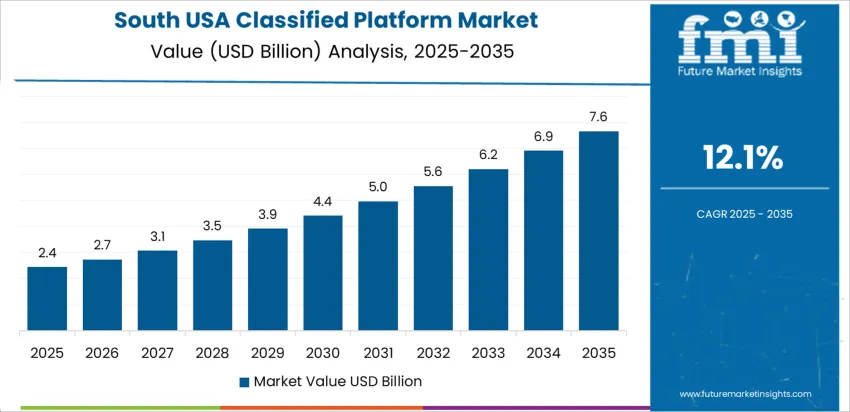
South USA records 12.1% CAGR, enabled by rising suburban populations and strong reliance on second-hand goods for cost efficiency. States such as Texas and Florida experience high inflows of new residents who require quick access to affordably priced household items and vehicles. Classified platforms support residential relocation needs including moving services, temporary rentals, and used-furniture procurement. Sellers focus on convenience, accepting digital payments when buyer trust is established. Regional marketing highlights community safety features such as verified meet-up points near commercial hubs. Service-provider listings, including home repair and outdoor maintenance, gain traction in warm-climate suburbs. Procurement teams from small service companies adopt subscription listings to expand demand visibility.
- Relocation-driven purchases increasing high-turnover listings
- Home-service providers expanding presence through digital classifieds
- Safety-verified meet-up zones improving transaction confidence
- Suburban demand sustaining recurring household-item postings
How is the Northeast USA influencing platform requirements?
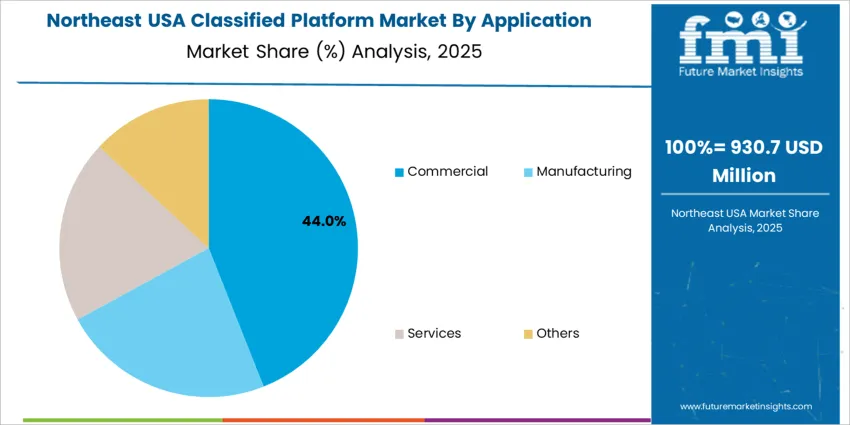
Northeast USA registers 10.8% CAGR, with high adoption in densely populated cities such as New York and Boston where housing turnover and urban lifestyles create steady listing activity. Compact living encourages frequent resale of goods with limited long-term storage value. Rental-focused categories grow, including short-term home rentals and seasonal items. Verification and privacy features impact user participation due to closer-proximity transactions in high-density areas. Classified platforms integrate public-transport mapping for meeting arrangements in car-limited populations. Sellers emphasize listing quality with better product detail and image clarity to differentiate in competitive digital marketplaces. Buyers value fraud-prevention tools and real-time availability indicators that reduce negotiation delays.
- Dense metros supporting rapid inventory turnover
- Rental listings expanding due to city-living preferences
- User-safety features critical for adoption and retention
- Professionalized listings improving conversion performance
How is the Midwest USA contributing to classified-platform expansion?
Midwest USA posts 9.4% CAGR, influenced by steady digital transformation in local communities across Illinois, Ohio, and Michigan. Classified listings often involve practical categories including vehicles, tools, and farm-equipment, reflecting regional occupational needs. Hybrid meet-up locations in retail parking lots support safe trading environments. Smaller-city users adopt in-platform messaging for schedule coordination, strengthening trust among repeat local buyers and sellers. Economic-value orientation drives preference for durable used goods, supporting high-relist potential. Local service providers apply classified platforms as supplemental advertising channels that align with budget-controlled spending. Procurement focuses on simplified account management and ability to cross-post listings into multiple product categories.
- Durable-goods focus driving utility-based purchasing behavior
- Safe meet-up conventions supporting user confidence
- Cost-efficient marketing engaging small-service providers
- Repeat-transaction patterns reinforcing platform stickiness
What does the competitive landscape for classified-platform demand in the United States look like?
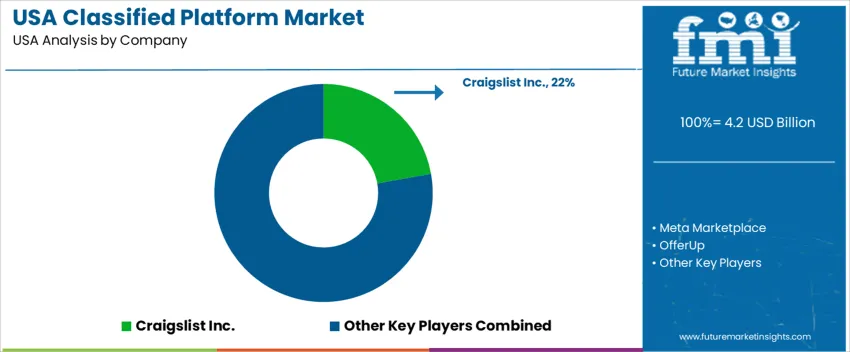
Classified platforms in the United States support local listings for housing, vehicles, general merchandise, and service postings. Users prioritize wide audience reach, straightforward listing tools, and trust features that limit fraudulent interactions. Growth is influenced by household relocation, used-vehicle turnover, and second-hand commerce that reduces ownership costs. Monetization in the United States depends on premium upgrades, promoted placement, and category-specific fees such as auto listings or rental advertising. Craigslist Inc. holds an estimated 22.2% share. Its nationwide footprint and category breadth continue to generate heavy listing volume, especially in rentals, local services, and resale goods. Low-cost posting sustains participation from casual sellers.
Meta Marketplace participates through integrated buying and selling within Facebook’s social network, supporting fast listing visibility and local pickup arrangements. OfferUp strengthens demand for mobile-first interactions, secure messaging, and optional identity verification to reduce risk in face-to-face exchanges. eBay enables transaction-supported listings that pair shipping services with seller ratings, addressing collectors and technology resale. Cars.com supports automotive postings for dealers and private owners seeking broad USA shopper engagement, reinforced by structured vehicle-search tools that influence lead quality. Competitive positioning depends on audience scale, fraud-prevention tools, app usability, and the ability to support both casual sellers and professional listers. Classified activity remains resilient as second-hand commerce continues to expand across USA cities and suburban regions.
Key Players in USA Classified Platform Demand
- Craigslist Inc.
- Meta Marketplace
- OfferUp
- eBay
- Cars.com
Scope of the Report
| Items | Values |
|---|---|
| Quantitative Units | USD billion |
| Type | B2C, C2C |
| Application | Commercial, Manufacturing, Services, Others |
| Regions Covered | West USA, South USA, Northeast USA, Midwest USA |
| Key Companies Profiled | Craigslist Inc., Meta Marketplace, OfferUp, eBay, Cars.com |
| Additional Attributes | Dollar sales by platform type and application; regional listings volume distribution across West, South, Northeast, and Midwest; demand growth tied to mobile commerce, resale trends, and cost-saving buying behavior; competition from specialized vertical platforms (real estate, automotive, jobs); monetization through listing fees, premium visibility, and advertising services; integration of trust features including identity verification, ratings, and secure payments to increase adoption in the United States. |
USA Classified Platform Demand by Segments
Type:
- B2C
- C2C
Application:
- Commercial
- Manufacturing
- Services
- Others
Region:
- West USA
- South USA
- Northeast USA
- Midwest USA
Frequently Asked Questions
How big is the demand for classified platform in USA in 2025?
The demand for classified platform in USA is estimated to be valued at USD 4.2 billion in 2025.
What will be the size of classified platform in USA in 2035?
The market size for the classified platform in USA is projected to reach USD 12.9 billion by 2035.
How much will be the demand for classified platform in USA growth between 2025 and 2035?
The demand for classified platform in USA is expected to grow at a 11.8% CAGR between 2025 and 2035.
What are the key product types in the classified platform in USA?
The key product types in classified platform in USA are b2c and c2c.
Which application segment is expected to contribute significant share in the classified platform in USA in 2025?
In terms of application, commercial segment is expected to command 45.0% share in the classified platform in USA in 2025.
Preview the report firsthand - request a free sample
Get SampleGet the brochure for pricing and purchase details.
Get PDFTable of Content
- Executive Summary
- USA Market Outlook
- Demand-side Trends
- Supply-side Trends
- Technology Roadmap Analysis
- Analysis and Recommendations
- Market Overview
- Market Coverage / Taxonomy
- Market Definition / Scope / Limitations
- Market Background
- Market Dynamics
- Drivers
- Restraints
- Opportunity
- Trends
- Scenario Forecast
- Demand in Optimistic Scenario
- Demand in Likely Scenario
- Demand in Conservative Scenario
- Opportunity Map Analysis
- Product Life Cycle Analysis
- Supply Chain Analysis
- Investment Feasibility Matrix
- Value Chain Analysis
- PESTLE and Porter’s Analysis
- Regulatory Landscape
- Regional Parent Market Outlook
- Production and Consumption Statistics
- Import and Export Statistics
- Market Dynamics
- USA Market Analysis 2020 to 2024 and Forecast, 2025 to 2035
- Historical Market Size Value (USD Million) Analysis, 2020 to 2024
- Current and Future Market Size Value (USD Million) Projections, 2025 to 2035
- Y-o-Y Growth Trend Analysis
- Absolute $ Opportunity Analysis
- USA Market Pricing Analysis 2020 to 2024 and Forecast 2025 to 2035
- USA Market Analysis 2020 to 2024 and Forecast 2025 to 2035, By Type
- Introduction / Key Findings
- Historical Market Size Value (USD Million) Analysis By Type , 2020 to 2024
- Current and Future Market Size Value (USD Million) Analysis and Forecast By Type , 2025 to 2035
- B2C
- C2C
- Y-o-Y Growth Trend Analysis By Type , 2020 to 2024
- Absolute $ Opportunity Analysis By Type , 2025 to 2035
- USA Market Analysis 2020 to 2024 and Forecast 2025 to 2035, By Application
- Introduction / Key Findings
- Historical Market Size Value (USD Million) Analysis By Application, 2020 to 2024
- Current and Future Market Size Value (USD Million) Analysis and Forecast By Application, 2025 to 2035
- Commercial
- Manufacturing
- Services
- Others
- Y-o-Y Growth Trend Analysis By Application, 2020 to 2024
- Absolute $ Opportunity Analysis By Application, 2025 to 2035
- Market Structure Analysis
- Competition Dashboard
- Competition Benchmarking
- Market Share Analysis of Top Players
- By Regional
- By Type
- By Application
- Competition Analysis
- Competition Deep Dive
- Craigslist Inc.
- Overview
- Product Portfolio
- Profitability by Market Segments (Product/Age /Sales Channel/Region)
- Sales Footprint
- Strategy Overview
- Marketing Strategy
- Product Strategy
- Channel Strategy
- Meta Marketplace
- OfferUp
- eBay
- Cars.com
- Craigslist Inc.
- Competition Deep Dive
- Assumptions & Acronyms Used
- Research Methodology


