


Key Takeaways
- Air suspension systems combine rubber bellows, pneumatic hardware, structural parts and ECUs, so they are exposed to several upstream markets at the same time.
- Natural rubber supply is tightening over the medium term, which matters less for price per kilogram and more for consistent quality in technical compounds used in bellows.
- The shift to electronically controlled air suspension links this category to mature node automotive semiconductors, which remain vulnerable to periodic shortages and geopolitical shocks. Tier one suppliers that integrate rubber, metal, pneumatics and electronics into validated modules hold bargaining power, because switching them involves new testing, diagnostics and tuning.
Where are the main choke points in the air suspension supply chain?
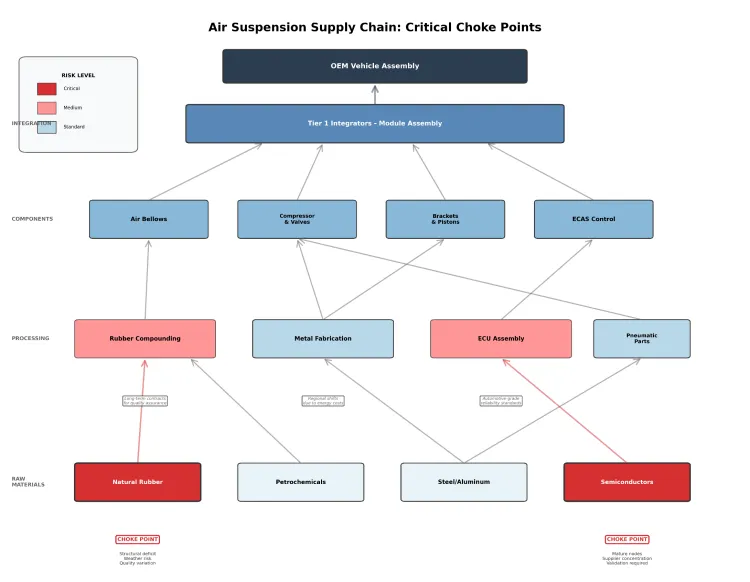
A typical air suspension system for trucks, buses or premium cars includes textile reinforced rubber bellows, brackets and pistons in steel or aluminium, an air compressor, reservoir, valve block, height and pressure sensors and an electronic control unit. This bill of materials ties the supply chain to plantations and petrochemical plants for rubber, to metal fabrication and machining capacity for hard parts and to specialist factories for compressors and valves. The bellows are sensitive to rubber supply, but not in the same way as tyres. The absolute tonnage is smaller, yet the demands on fatigue life and resistance to flexing, ozone and road contaminants are high. Natural rubber markets are forecast to remain in structural deficit, with production growing more slowly than demand and prices supported by tight supply, weather and competition from other plantation crops.
For air spring manufacturers this creates pressure to secure long term relationships with compounders who can guarantee consistent quality, rather than relying on spot cargoes that might vary in performance. Metal parts and pneumatic hardware are less globally concentrated but depend on regional energy costs, labour conditions and environmental rules. In regions where input costs are high, suppliers have an incentive to relocate some fabrication to lower cost locations while keeping final module assembly near vehicle plants to control logistics and lead times.
Over time this encourages a structure in which a few large integrators coordinate a web of upstream metal and rubber suppliers. How do electronics and controls change the risk profile for air suspension? As more vehicles adopt electronically controlled air suspension, the system depends on sensors and ECUs that must meet automotive safety and reliability standards. Technical manuals for ECAS show how height sensors, valve blocks and control units are tied into vehicle networks and diagnostic tools, which makes the system part of the wider electronics architecture rather than a standalone mechanical option.
The automotive industry has already seen how semiconductor shortages can remove millions of units from production, or force OEMs to delete features. Analyses from S&P Global, McKinsey and others indicate that although the acute phase of the shortage has eased, mature node chips used in control units remain at risk of disruption, especially when a small set of suppliers is affected. Air suspension ECUs typically use such mature node components. When events constrain output at one chip manufacturer, the knock on effect reaches tier one suspension suppliers and then OEM build schedules.
Because ECU hardware and software must be validated as part of the vehicle system, substituting equivalent chips is not always straightforward. This leads to tighter multi-year contracts between module makers and semiconductor suppliers, and in some cases redesigns of electronics to allow more flexibility in sourcing compatible parts. The category moves from a purely mechanical supply question to one where electronics, firmware support and long term availability of specific chip families all matter.
How are OEMs and fleets managing cost and continuity in this category?
For OEMs, the economic logic of air suspension is about avoiding downtime and warranty risk rather than chasing the lowest unit price. Tier one integrators that can deliver validated modules with predictable performance become hard to replace. The cost of switching includes new durability testing, ride and handling work, diagnostic updates and sometimes changes in service procedures for fleets. That gives established suppliers room to negotiate when input costs for rubber, metal or chips move, especially in heavy commercial vehicle segments.
Recent disruptions have pushed OEMs to hold more inventory of complete air suspension modules and their ECUs, even if that ties up working capital. Some manufacturers also encourage regional assembly, where bellows and components may be imported, but final module build and testing happen closer to the vehicle plant. For large fleets, the priority is access to genuine or approved modules that protect uptime and maintain compliance, which limits the scope for low cost substitutes and keeps a floor under pricing in the aftermarket. Over time, procurement strategy in this space tends to move toward portfolio thinking rather than isolated part management. Buyers look at exposure to rubber, electronics and logistics risk at the module level, rank suppliers by integration capability and regional footprint, and then decide where to accept higher nominal prices in exchange for lower operational risk.
How FMI Can Help
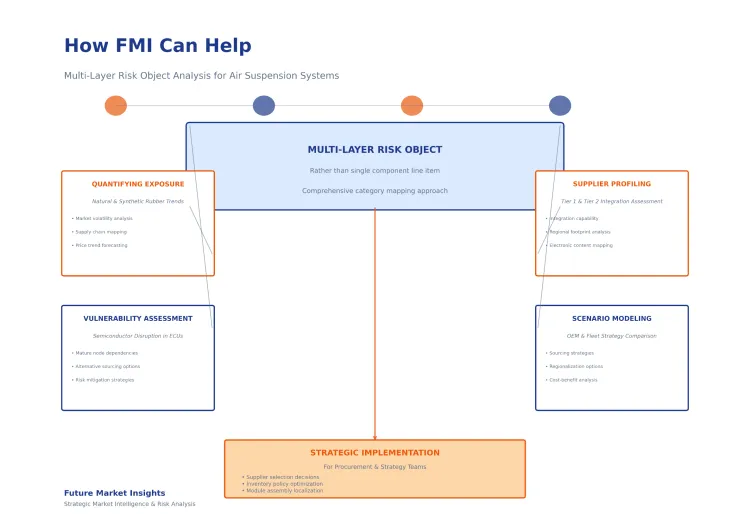
Future Market Insights can map this category as a multi layer risk object rather than a single component line item. That includes: quantifying exposure to natural and synthetic rubber trends; profiling tier one and tier two suppliers by integration capability, regional footprint and electronic content; assessing vulnerability to mature node semiconductor disruptions in ECUs; and modelling scenarios for OEMs and fleets that compare different sourcing and regionalisation strategies. For procurement and strategy teams, FMI can link market forecasts for air suspension systems to concrete decisions on supplier selection, inventory policy and localisation of module assembly.
Sources
- Technical documentation on air suspension system architecture and ECAS for commercial vehicles from WABCO and Arnott Europe.
- Overview of air suspension components and working principles from Testbook and other technical explainers.
- Analysis of the automotive semiconductor shortage and its impact on vehicle production and mature node chip supply.
- Air suspension systems market studies and competitive landscape for tier one suppliers serving trucks, buses and passenger vehicles

