

- Industry Size (2025)
- USD 2.2 Bn
- Forecast (2035)
- USD 5.2 Bn
- CAGR (2025 to 2035)
- 9.10%
Demand for Air Suspension Systems in USA Forecast and Outlook 2025 to 2035
Demand for air suspension systems in the USA is expected to grow from USD 2.2 billion in 2025 to USD 5.2 billion by 2035, with a CAGR of 9.1%. In the early years, from 2025 to 2027, growth is gradual, with demand increasing from USD 0.5 billion to USD 1.4 billion, as air suspension systems see wider adoption in commercial vehicles. Demand is fueled by the growing need for enhanced ride comfort, stability, and improved load-carrying capacity in trucks and buses. Shift is supported by rise of advanced suspension systems that provide more durable, efficient, and comfortable rides, and increasing use of electric trucks and buses.
Quick Stats of the Demand for Air Suspension Systems in USA
- Demand for Air Suspension Systems in USA Value (2025): USD 2.2 billion
- Demand for Air Suspension Systems in USA Forecast Value (2035): USD 5.2 billion
- Demand for Air Suspension Systems in USA Forecast CAGR (2025-2035): 9.10%
- Demand for Air Suspension Systems in USA Leading Vehicle Type: Heavy Trucks
- Demand for Air Suspension Systems in USA Key Growth Regions: West USA, South USA, Northeast USA, Midwest USA
- Demand for Air Suspension Systems in USA Top Players: Continental AG, ThyssenKrupp AG, WABCO, Hendrickson USA, L.L.C., Dunlop Systems and Components
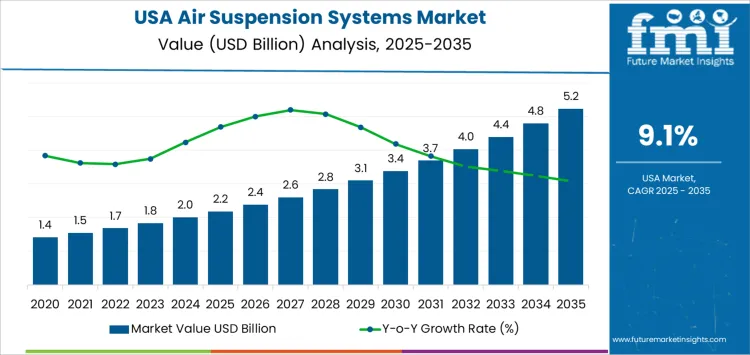
Between 2027 and 2030, the demand accelerates from USD 2.0 billion to USD 2.8 billion. This period marks a significant increase in the adoption of air suspension systems in passenger vehicles, particularly in luxury and high-performance models. The growing consumer demand for better comfort, safety, and fuel efficiency drives automakers to integrate these systems into their vehicles. By the final phase, from 2030 to 2035, the demand reaches USD 5.2 billion, with the expansion of air suspension systems driven by technological advancements that improve durability and performance. The increasing prevalence of electric vehicles (EVs) and autonomous vehicles, both of which require advanced suspension technologies, further drives growth. With a continued focus on vehicle safety and environmental sustainability, the demand for air suspension systems is set to rise steadily across both commercial and passenger vehicles
Demand for Air Suspension Systems in USA Key Takeaways
| Metric | Value |
|---|---|
| Demand for Air Suspension Systems in USA Value (2025) | USD 2.2 billion |
| Demand for Air Suspension Systems in USA Forecast Value (2035) | USD 5.2 billion |
| Demand for Air Suspension Systems in USA Forecast CAGR (2025-2035) | 9.10% |
Why is the Demand for Air Suspension Systems in USA Growing?
Demand for air suspension systems in the USA is growing due to the increasing need for enhanced vehicle comfort, performance, and safety, particularly in the automotive and commercial vehicle sectors. Air suspension systems offer several advantages over traditional steel suspension systems, such as improved ride quality, better handling, and the ability to adjust vehicle height for various driving conditions. These systems are especially sought after in luxury vehicles, heavy-duty trucks, and buses, where comfort and stability are essential for both passengers and cargo.
Technological advancements in air suspension systems are also driving their adoption. Modern air suspension systems are more efficient, lightweight, and cost-effective compared to earlier models, making them increasingly popular in a variety of vehicles. The growing trend toward electric vehicles (EVs) and autonomous driving technology is further boosting demand for air suspension systems, as these vehicles require advanced suspension solutions to accommodate their unique design and performance needs. Air suspension systems also contribute to better fuel efficiency and lower vehicle maintenance costs, making them an attractive option for fleet operators and vehicle manufacturers.
Despite these growth drivers, challenges such as the high initial cost of air suspension systems and the complexity of installation and maintenance may limit their widespread adoption in certain segments of the industry. As technology continues to evolve and air suspension systems become more affordable and accessible, their demand is expected to rise steadily, particularly in the growing luxury vehicle and commercial transport sectors in the USA.
What is the Segment-Wise Analysis of Demand for Air Suspension Systems in USA?
Demand for air suspension systems in the USA is segmented by vehicle type, sales channel, and region. By vehicle type, buses and coaches lead at 46%, followed by trailers and heavy trucks. In terms of sales channel, OEM (original equipment manufacturer) dominates with 68%, while aftermarkets contribute to the remainder of the demand. Regionally, demand spans across West USA, South USA, Northeast USA, and Midwest USA, with varying levels of adoption based on local transportation needs and vehicle types.
How Do Buses & Coaches Lead the Demand for Air Suspension Systems in USA?
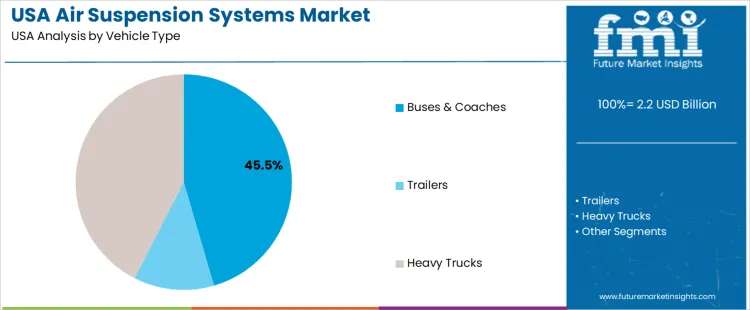
Buses and coaches account for 46% of the demand for air suspension systems in the USA, driven by the need for smoother rides, enhanced safety, and passenger comfort. Air suspension systems offer improved stability, cushioning, and shock absorption, which is critical for long-distance travel, city buses, and coaches carrying large numbers of passengers. The demand is particularly strong in urban areas and regions with expansive public transportation networks, such as the West and Northeast USA. As cities continue to invest in improving public transportation and reducing maintenance costs, air suspension systems have become the preferred choice for buses and coaches, enhancing ride quality and operational efficiency. Air suspension systems help extend the lifespan of the vehicles and reduce wear and tear, further contributing to their growing adoption. The increasing focus on providing high-quality transportation solutions for passengers ensures air suspension systems remain a dominant choice in the bus and coach segments.
Why Does OEM Lead the Demand for Air Suspension Systems in USA?
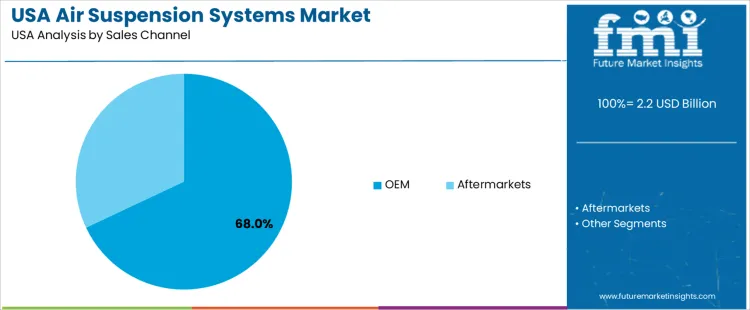
OEM accounts for 68% of the demand for air suspension systems in the USA, reflecting its critical role in equipping new vehicles, including buses, coaches, and heavy trucks, with high-performance suspension systems. During the manufacturing process, OEMs integrate air suspension systems to optimize vehicle comfort, safety, and ride quality. This demand is particularly prominent in regions like the South and Midwest USA, where large vehicle production hubs and strong transportation infrastructure drive the need for such systems. With vehicle manufacturers placing greater emphasis on quality, safety, and regulatory compliance, air suspension systems have become a standard component in modern vehicle designs. As consumers and businesses seek more durable, comfortable, and eco-friendly transportation solutions, the demand for air suspension systems through OEM channels continues to rise. These systems play a crucial role in improving the overall performance of commercial and public transport vehicles, ensuring their dominance in the industry.
What are the Key Trends, Drivers, and Restraints in Demand for Air Suspension Systems in USA?
Demand for ethnic food in the USA is rising due to increasing cultural diversity and growing consumer interest in global cuisines. Immigrant populations and multicultural communities are exposing Americans to foods from Latin America, Asia, the Middle East, and more. The desire for bold flavors, health-conscious meals, and unique dining experiences further drives this trend. Convenience, through ready-to-eat meals, meal kits, and online shopping, also supports adoption. Challenges like unfamiliar flavors, higher costs, and the difficulty in sourcing authentic ingredients may limit broader acceptance. Despite these challenges, ethnic foods continue to gain popularity across the country.
What is Driving Demand for Air Suspension Systems in USA?
Demand for air suspension systems in the USA is rising due to the increasing desire for improved ride comfort, stability, and handling, especially in luxury vehicles, SUVs, and commercial vehicles. These systems provide a smoother ride by absorbing road irregularities and reducing vehicle vibrations. The ability to adjust ride height and load distribution further boosts stability and performance, making air suspension systems highly sought after. The growing popularity of electric vehicles (EVs) and premium vehicles is also supporting this demand, as air suspension helps manage the uneven weight distribution typical of these vehicles. Air suspension systems are becoming more common in commercial vehicles like trucks and buses, where they enhance load leveling and safety. Technological innovations like electronically controlled air suspension (ECAS), which adjusts settings based on load and road conditions, have made these systems more efficient and reliable, driving their adoption across multiple vehicle segments.
How Are Trends in Lifestyle, Convenience, and Retail Channels Influencing Air Suspension Systems Demand in USA?
Rising consumer demand for comfort, stability, and superior handling in vehicles is influencing the growth of air suspension systems in the USA. As more drivers opt for luxury and electric vehicles, air suspension systems are increasingly being seen as a premium feature that enhances driving experience and vehicle performance. The demand for commercial vehicles, such as trucks and buses, which require enhanced load leveling and better ride quality, is further fueling adoption. Manufacturers are offering air suspension systems as both factory-installed options and aftermarket products, allowing greater accessibility. Advancements in electronically controlled suspension systems that automatically adjust to varying conditions make air suspension systems even more appealing to consumers seeking a customizable driving experience.
What Are the Key Challenges and Restraints Limiting Air Suspension Systems Demand in USA?
One of the main challenges is the high cost of air suspension systems, which are typically more expensive than traditional suspension systems, especially for budget-conscious consumers. The complexity of air suspension systems, which requires more maintenance, repair, and specialized parts, can deter some buyers from choosing them. The adoption of air suspension systems is often limited to luxury, premium, and commercial vehicles, leaving the mass industry largely untapped. Concerns over long-term reliability, maintenance costs, and potential system failures may also contribute to consumer reluctance. Alternative suspension systems, such as adaptive dampers and multi-link suspension systems, offer simpler, more affordable solutions for many consumers. Despite technological advancements, the adoption of air suspension systems remains limited, primarily due to cost and complexity factors.
What is the Demand Outlook for Air Suspension Systems in the USA?
Demand for air suspension systems in the USA is growing across all regions, with West USA leading at a 10.5% CAGR, driven by high automotive sales and demand for advanced suspension solutions in luxury vehicles and commercial transport. South USA follows closely with a 9.4% CAGR, supported by the region’s expanding automotive and transportation industries. Northeast USA shows an 8.4% CAGR, driven by the adoption of air suspension systems in both consumer vehicles and commercial fleets. Midwest USA experiences a 7.3% CAGR, with steady demand driven by the region’s strong manufacturing base, automotive sector, and transportation needs.
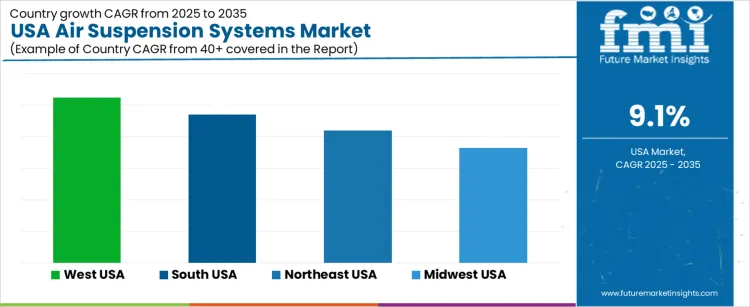
| Region | CAGR (%) |
|---|---|
| West USA | 10.5% |
| South USA | 9.4% |
| Northeast USA | 8.4% |
| Midwest USA | 7.3% |
How is Demand for Air Suspension Systems Growing in West USA?
West USA leads the demand for air suspension systems, growing at a 10.5% CAGR. The region’s high automotive sales, particularly luxury vehicles, are key drivers, as air suspension systems enhance ride quality, comfort, and vehicle performance. The demand for these systems is also fueled by the region's thriving commercial transport sector, where companies in freight and logistics rely on air suspension systems to maintain vehicle stability, load-bearing capacity, and durability. Silicon Valley, contribute to the adoption of innovative suspension technologies in both consumer and commercial vehicles. As consumers increasingly prioritize comfort, efficiency, and advanced performance in their vehicles, air suspension systems are becoming a preferred choice for both personal and commercial transportation. With an emphasis on high-performance vehicles, the automotive industry in West USA continues to drive the adoption of air suspension systems, supporting continued growth in this sector.
Why is Demand for Air Suspension Systems Rising in South USA?
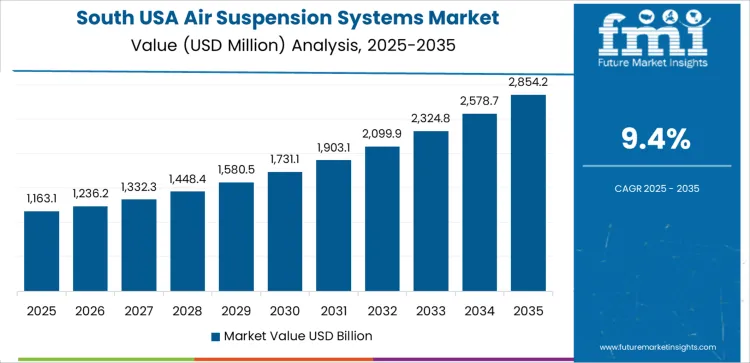
In South USA, demand for air suspension systems is rising at a 9.4% CAGR. The region’s growing automotive and transportation sectors, particularly in states like Texas and Florida, are major contributors. The increasing number of commercial vehicle fleets, including freight and logistics companies, drives demand for air suspension systems, which are crucial for improving load distribution, vehicle stability, and comfort. South USA’s rising interest in luxury vehicles and high-performance cars, where air suspension systems are often standard or optional, supports the growing need for these technologies. As consumers continue to seek better ride comfort and superior vehicle performance, automakers are integrating air suspension systems into more models. The region’s robust transportation infrastructure and focus on operational efficiency make air suspension systems an ideal choice for commercial fleets.
How is Demand for Air Suspension Systems Expanding in Northeast USA?
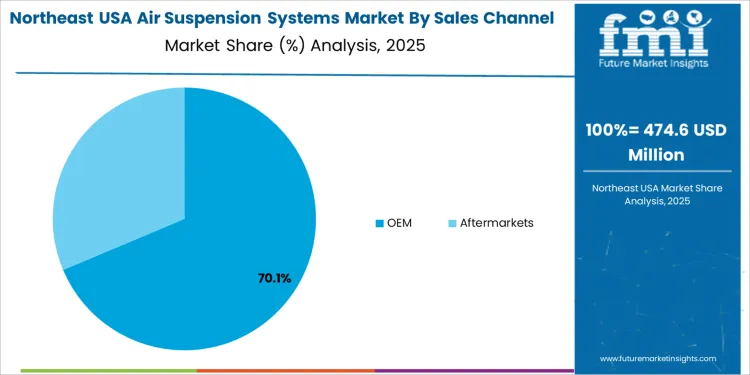
Northeast USA shows steady demand for air suspension systems, growing at an 8.4% CAGR. The region’s strong automotive and commercial transportation sectors contribute significantly to this growth. Large commercial vehicle fleets in cities like New York and Boston, including trucks, buses, and delivery vehicles, rely on air suspension systems to improve ride quality, stability, and load-bearing capacity. With increasing consumer interest in high-performance and luxury vehicles, more personal vehicles in Northeast USA are incorporating air suspension systems. The region’s emphasis on environmental sustainability and fuel efficiency in commercial transport also supports air suspension adoption, as these systems help reduce wear on vehicles and improve overall efficiency. As Northeast USA continues to prioritize superior vehicle performance and ride comfort, air suspension systems will play an increasingly important role in both personal and commercial transportation.
Why is Demand for Air Suspension Systems Growing in Midwest USA?
Midwest USA is experiencing steady demand for air suspension systems, growing at a 7.3% CAGR. The region’s robust manufacturing base, especially in the automotive sector, plays a crucial role in driving this demand. Midwest USA is home to major automakers and commercial vehicle manufacturers, where air suspension systems are used to improve vehicle handling, load distribution, and overall stability, particularly in commercial trucks and buses. The region’s expansive transportation and logistics networks, along with the growing demand for high-performance vehicles, further contribute to the adoption of air suspension systems. As consumers in the Midwest prioritize comfort and superior vehicle performance, particularly in luxury vehicles, air suspension systems are increasingly incorporated into new models. The demand for air suspension systems in commercial vehicles is rising due to the region’s growing freight and distribution industries.
What is the Competitive Landscape of USA Air Suspension Systems Demand?
Demand for air suspension systems in the USA is growing due to their ability to improve vehicle performance, comfort, and safety. These systems are increasingly being used in commercial vehicles, trucks, and high-end passenger cars to enhance ride quality, provide better load management, and reduce wear on the vehicle. The rising adoption of air suspension systems can be attributed to their superior ability to adapt to varying loads and road conditions, ensuring smoother rides and improved handling. With the growing focus on vehicle performance and comfort, particularly in commercial transport and luxury segments, the demand for air suspension systems continues to rise.
Continental AG leads the segment with a 26.0% industry share, driven by its innovative air suspension technologies and strong presence in the automotive sector. Other key players such as ThyssenKrupp AG, WABCO, Hendrickson USA, L.L.C., and Dunlop Systems and Components also play vital roles in the industry by offering air suspension solutions designed for various vehicle types, from heavy-duty trucks to passenger cars. These companies provide products that enhance driving comfort, stability, and overall vehicle performance.
Advancements in air suspension technologies are further fueling the demand for these systems. Improvements in sensor technology, control systems, and integration with vehicle dynamics are enabling air suspension systems to offer even greater precision and efficiency. As consumers and fleet operators continue to prioritize performance, comfort, and safety, the demand for air suspension systems in the USA is expected to grow, supported by ongoing technological advancements and increasing awareness of their benefits in enhancing vehicle functionality.
Key Players in USA Air Suspension Systems Demand
- Continental AG
- ThyssenKrupp AG
- WABCO
- Hendrickson USA, L.L.C.
- Dunlop Systems and components
Scope of Report
| Items | Values |
|---|---|
| Quantitative Units (2025) | USD billion |
| Vehicle Type | Buses & Coaches, Trailers, Heavy Trucks |
| Sales Channel | OEM, Aftermarkets |
| Regions Covered | West USA, South USA, Northeast USA, Midwest USA |
| Countries Covered | USA |
| Key Companies Profiled | Continental AG, ThyssenKrupp AG, WABCO, Hendrickson USA L.L.C., Dunlop Systems and components |
| Additional Attributes | Dollar sales by vehicle type and sales channel; regional CAGR and growth trends; increasing demand for air suspension in heavy trucks and buses; technological advancements in air suspension systems; preference for OEM and aftermarket sales channels across regions. |
USA Air Suspension Systems Demand by Key Segments
Vehicle Type
- Buses & Coaches
- Trailers
- Heavy Trucks
Sales Channel
- OEM
- Aftermarkets
Region
- West USA
- South USA
- Northeast USA
- Midwest USA
Frequently Asked Questions
How big is the demand for air suspension systems in USA in 2025?
The demand for air suspension systems in USA is estimated to be valued at USD 2.2 billion in 2025.
What will be the size of air suspension systems in USA in 2035?
The market size for the air suspension systems in USA is projected to reach USD 5.2 billion by 2035.
How much will be the demand for air suspension systems in USA growth between 2025 and 2035?
The demand for air suspension systems in USA is expected to grow at a 9.1% CAGR between 2025 and 2035.
What are the key product types in the air suspension systems in USA?
The key product types in air suspension systems in USA are buses & coaches, trailers and heavy trucks.
Which sales channel segment is expected to contribute significant share in the air suspension systems in USA in 2025?
In terms of sales channel, oem segment is expected to command 68.0% share in the air suspension systems in USA in 2025.
Preview the report firsthand - request a free sample
Get SampleGet the brochure for pricing and purchase details.
Get PDFTable of Content
- Executive Summary
- USA Market Outlook
- Demand-side Trends
- Supply-side Trends
- Technology Roadmap Analysis
- Analysis and Recommendations
- Market Overview
- Market Coverage / Taxonomy
- Market Definition / Scope / Limitations
- Market Background
- Market Dynamics
- Drivers
- Restraints
- Opportunity
- Trends
- Scenario Forecast
- Demand in Optimistic Scenario
- Demand in Likely Scenario
- Demand in Conservative Scenario
- Opportunity Map Analysis
- Product Life Cycle Analysis
- Supply Chain Analysis
- Investment Feasibility Matrix
- Value Chain Analysis
- PESTLE and Porter’s Analysis
- Regulatory Landscape
- Regional Parent Market Outlook
- Production and Consumption Statistics
- Import and Export Statistics
- Market Dynamics
- USA Market Analysis 2020 to 2024 and Forecast, 2025 to 2035
- Historical Market Size Value (USD Million) Analysis, 2020 to 2024
- Current and Future Market Size Value (USD Million) Projections, 2025 to 2035
- Y-o-Y Growth Trend Analysis
- Absolute $ Opportunity Analysis
- USA Market Pricing Analysis 2020 to 2024 and Forecast 2025 to 2035
- USA Market Analysis 2020 to 2024 and Forecast 2025 to 2035, By Vehicle Type
- Introduction / Key Findings
- Historical Market Size Value (USD Million) Analysis By Vehicle Type , 2020 to 2024
- Current and Future Market Size Value (USD Million) Analysis and Forecast By Vehicle Type , 2025 to 2035
- Buses & Coaches
- Trailers
- Heavy Trucks
- Y-o-Y Growth Trend Analysis By Vehicle Type , 2020 to 2024
- Absolute $ Opportunity Analysis By Vehicle Type , 2025 to 2035
- USA Market Analysis 2020 to 2024 and Forecast 2025 to 2035, By Sales Channel
- Introduction / Key Findings
- Historical Market Size Value (USD Million) Analysis By Sales Channel, 2020 to 2024
- Current and Future Market Size Value (USD Million) Analysis and Forecast By Sales Channel, 2025 to 2035
- OEM
- Aftermarkets
- Y-o-Y Growth Trend Analysis By Sales Channel, 2020 to 2024
- Absolute $ Opportunity Analysis By Sales Channel, 2025 to 2035
- Market Structure Analysis
- Competition Dashboard
- Competition Benchmarking
- Market Share Analysis of Top Players
- By Regional
- By Vehicle Type
- By Sales Channel
- Competition Analysis
- Competition Deep Dive
- ThyssenKrupp AG
- Overview
- Product Portfolio
- Profitability by Market Segments (Product/Age /Sales Channel/Region)
- Sales Footprint
- Strategy Overview
- Marketing Strategy
- Product Strategy
- Channel Strategy
- WABCO
- Hendrickson USA, L.L.C.
- Dunlop Systems and components
- ThyssenKrupp AG
- Competition Deep Dive
- Assumptions & Acronyms Used
- Research Methodology


