

- Industry Size (2025)
- USD 307.4 Mn
- Forecast (2035)
- USD 616.1 Mn
- CAGR (2025 to 2035)
- 7.2%
Demand for Air Suspension Systems in Japan Forecast and Outlook 2025-2035
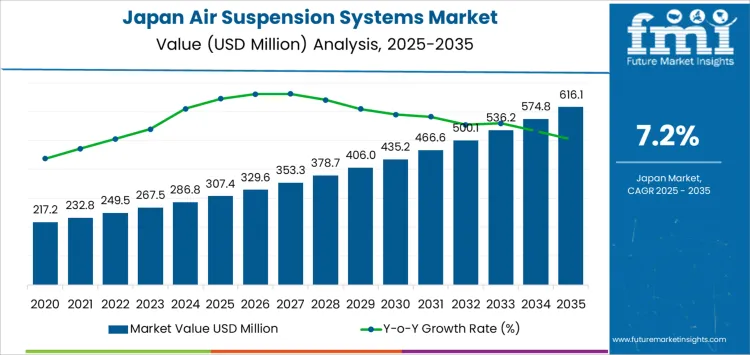
Air suspension demand in Japan stands at USD 307.4 million in 2025 and is projected to reach USD 616.1 million by 2035, reflecting a CAGR of 7.2%. Ride comfort regulation, load leveling accuracy, and vibration control requirements across commercial mobility platforms shape steady system adoption. Buses, coaches, heavy trucks, and trailers form the core installation base due to strict comfort standards in passenger transport and axle load management in freight operations. OEM-led procurement dominates new vehicle integration, while structured replacement cycles support a consistent aftermarket flow. Kanto, Chubu, and Kinki account for the highest installation density due to fleet concentration and logistics activity. Key suppliers such as Continental AG, ThyssenKrupp AG, WABCO, Hendrickson, and Dunlop align product portfolios with durability, sensor integration, and lifecycle cost targets demanded by Japanese fleet operators.
Vehicle electrification, automated driving assistance packages, and long-haul logistics optimization drive higher system specification across future platforms. Suspension control software integration supports adaptive ride height and dynamic load redistribution in dense urban traffic conditions. Fleet operators prioritize reduced chassis wear, fuel efficiency gains from aerodynamic ride-height control, and passenger comfort differentiation across premium transit routes. Domestic assembly localization strengthens supply reliability and just-in-time delivery for tier-one automotive programs. Trailer and bus segment demand benefits from tourism recovery, regional transit investment, and cross-border freight volume growth. Engineering standards emphasize corrosion resistance, sealing integrity, and high-cycle endurance to match climatic exposure and extended duty cycles. Through 2035, demand momentum remains tied to fleet modernization rates, regulatory safety upgrades, and the shift toward electronically controlled suspension architectures across Japanese commercial vehicle platforms.
Quick Stats of the Air Suspension Systems Industry in Japan:
- Air Suspension Systems Industry in Japan Value (2025): USD 307.4 million
- Air Suspension Systems Industry in Japan Forecast Value (2035): USD 616.1 million
- Air Suspension Systems Industry in Japan Forecast CAGR (2025-2035): 7.2%
- Leading Vehicle Type in Air Suspension Systems Industry in Japan: Buses & Coaches (46%)
- Key Growth Regions in Air Suspension Systems Industry in Japan: Kyushu & Okinawa, Kanto, Kansai
- Top Players in Air Suspension Systems Industry in Japan: Continental AG, ThyssenKrupp AG, WABCO, Hendrickson USA, Dunlop Systems and Components
What is the Demand Forecast for Air Suspension Systems in Japan through 2035?
Air suspension system demand in Japan reaches USD 307.4 million in 2025 and climbs to USD 406.0 million by 2030, creating a USD 98.6 million value expansion within five years. The rise from USD 217.2 million in 2020 reflects growing installation across premium passenger vehicles, luxury SUVs, and commercial vans that require ride height control and load-leveling stability. Demand concentration remains strongest among domestic premium OEM platforms and imported luxury brands assembled for the Japanese market. Fleet operators in logistics and passenger transport also contribute rising volumes as ride comfort and axle load optimization gain importance for long-distance urban operations. Growth during this phase is driven by platform-level integration rather than retrofit-driven aftermarket sales.
From 2030 to 2035, demand increases from USD 406.0 million to USD 616.1 million, adding a larger USD 210.1 million during the later phase. Annual value gains accelerate as air suspension becomes standard fitment across a broader range of upper-mid segment vehicles rather than remaining limited to flagship models. Electrification of vehicle platforms supports higher adoption due to battery weight management and chassis height optimization requirements. Commercial vehicle demand strengthens through long-haul trucks, airport shuttle fleets, and specialty mobility platforms that prioritize vibration control. By 2035, air suspension demand in Japan reflects a structural shift in vehicle architecture and comfort engineering rather than a narrow luxury feature cycle.
Air Suspension Systems Industry in Japan Key Takeaways
| Metric | Value |
|---|---|
| Industry Value (2025) | USD 307.4 million |
| Forecast Value (2035) | USD 616.1 million |
| Forecast CAGR (2025-2035) | 7.2% |
What Is Driving the Demand for Air Suspension Systems in Japan?
The demand for air suspension systems in Japan is shaped by vehicle comfort expectations, road condition variability between urban and rural regions, and the long tradition of engineering refinement in domestic automakers. Historically, air suspension was limited to premium sedans, luxury imports, and high end buses where ride smoothness and height control were priority features. Over time, adoption expanded into large SUVs, executive MPVs, and specialist commercial vehicles as consumers placed greater value on vibration reduction, cabin silence, and automatic level control under variable passenger and cargo loads. Japans dense urban traffic, frequent stop start driving, and uneven local road surfaces increased the functional relevance of adjustable suspension for daily drivability rather than only for prestige positioning.
Future demand for air suspension systems in Japan will be shaped by electrification, autonomous driving development, and growth of high comfort mobility services. Electric vehicles benefit from air suspension due to battery weight distribution and the need for consistent ride height to protect underfloor components. Demand will also rise in premium taxis, airport transport fleets, and luxury tour vehicles where ride quality influences service value. Barriers include higher system cost compared with coil suspensions, maintenance sensitivity in long term ownership, and limited penetration in compact vehicle segments where price discipline remains strict. Long term demand will depend on how effectively air suspension technology aligns with electric mobility platforms, urban comfort expectations, and durability requirements under Japans mixed driving conditions.
What Is the Demand for Air Suspension Systems in Japan by Vehicle Type and Sales Channel?
The demand for air suspension systems in Japan is shaped by public transport modernization, logistics efficiency targets, and passenger comfort standards. Buses and coaches lead by vehicle type due to fleet upgrades across urban and intercity transport networks. OEM leads by sales channel because new vehicle integration remains the primary installation route for suspension systems. Procurement is driven by domestic vehicle manufacturers, fleet operators, and municipal transport authorities. Import reliance remains present for select valves, sensors, and control modules. Substitution pressure exists from conventional steel suspension in cost sensitive fleets. Demand stability is supported by steady bus replacement cycles and freight transport modernization.
Why do buses and coaches dominate the demand for air suspension systems in Japan by vehicle type?
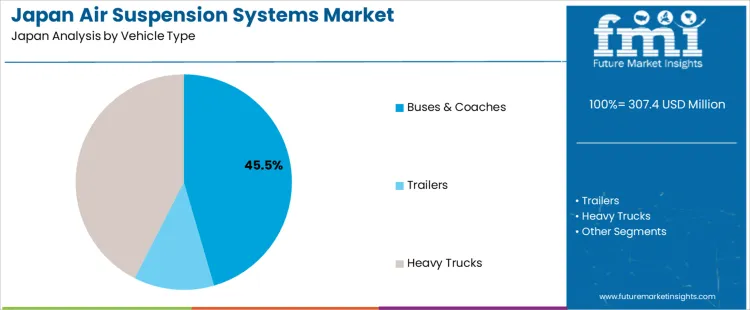
Buses and coaches account for 46% of the demand for air suspension systems in Japan by vehicle type, reflecting priority placed on ride comfort, accessibility, and load leveling. Consumption intensity is driven by city transit fleets, airport shuttle services, and long distance coach operators that require consistent vehicle height and smooth ride quality. Usage remains stable because low floor boarding and vibration reduction remain core service requirements. Procurement is led by fleet operators working closely with vehicle manufacturers on standardized configurations. Price sensitivity remains moderate because passenger comfort influences ridership and service quality ratings. Specification control emphasizes pressure regulation accuracy, durability under continuous duty, and response consistency during braking and cornering.
Buses and coaches also generate steady repeat demand through scheduled fleet replacement programs and refurbishment of mid-life vehicles. Repeat utilization remains predictable as operators follow fixed asset renewal cycles. Buyers favor air suspension platforms that integrate with electronic stability and braking systems. Margin structure remains controlled under volume based supply agreements with OEM partners. Regulatory exposure centers on public transport safety inspections and ride height compliance. Import reliance persists for electronic control units and solenoid valves. Substitution pressure from mechanical suspension remains limited in premium and urban transit fleets.
What drives OEM to lead the demand for air suspension systems in Japan by sales channel?
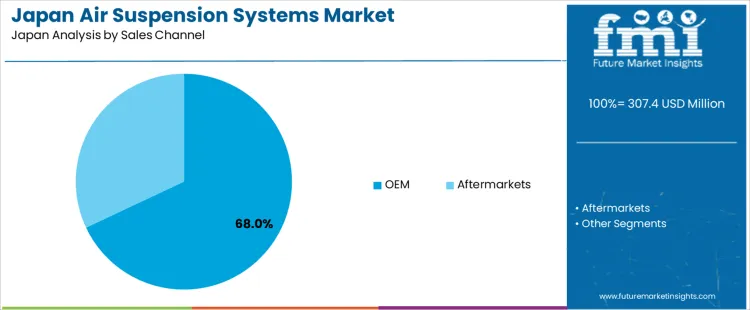
OEM represents 68.0% of the demand for air suspension systems in Japan by sales channel, reflecting the dominance of factory installed suspension integration. Consumption intensity is driven by new bus, truck, and trailer production aligned with national emission, safety, and comfort standards. Usage remains stable because fleet operators prefer systems installed and calibrated during vehicle assembly. Procurement is dominated by direct supply agreements between suspension manufacturers and vehicle OEMs. Price sensitivity remains moderate because system cost is embedded within overall vehicle pricing. Specification control emphasizes compatibility with chassis architecture, electronic control integration, and warranty aligned durability standards.
OEM driven installations also generate consistent repeat demand through steady vehicle production volumes and platform refresh cycles. Repeat utilization remains predictable as manufacturers roll out updated models across commercial vehicle segments. Buyers favor long term supplier relationships to maintain platform consistency and simplify validation testing. Margin structure remains controlled under annual volume contracts. Regulatory exposure remains elevated due to vehicle homologation and road safety compliance. Import reliance persists for advanced sensors and control electronics. Substitution pressure from aftermarket installations remains limited to truck and trailer retrofits rather than primary fleet procurement.
What Is Driving the Demand for Air Suspension Systems in Japan Across Vehicle Segments?
Demand for air suspension systems in Japan is shaped by premium ride expectations, logistics reliability, and strict vehicle engineering culture. Drivers and passengers seek quiet cabins, low vibration, and stable cornering on narrow, uneven city streets. Express coaches and airport buses need smooth travel on long highway runs that connect major hubs. Distribution fleets serving electronics, food, and pharmaceuticals want better load protection and adjustable height at docks and warehouses. Municipal focus on barrier free access raises interest in kneeling buses and welfare vehicles. These local requirements convert suspension performance into a core purchasing criterion across many vehicle classes today.
How Is Japan Aging Population Changing Performance Requirements for Air Suspension Systems?
Japan aging driver and passenger base gives air suspension systems a comfort and health dimension. Older riders experience joint pain and balance issues when climbing into high floor vehicles or standing on crowded buses. Height adjustment at stops reduces step gaps for canes and walkers. Reduced vibration helps protect patients during medical transport and municipal welfare services. Rural commuter routes with patchy road surfaces benefit from smoother ride control that keeps fatigue lower on long journeys. Taxi and hire car operators use comfort oriented suspension messaging to differentiate airport transfer and executive services in major metropolitan corridors for older clients.
How Are Logistics, Ports, and Construction Fleets Influencing Adoption of Air Suspension in Japan?
Japan freight corridors link container ports, manufacturing clusters, and urban logistics hubs through dense expressway networks. Fleet managers moving precision machinery, glass, and packaged electronics rely on air suspension to reduce shock loads that cause hidden damage claims. Adjustable ride height improves compatibility with mixed loading docks, roll box pallets, and coastal ferry ramps. Construction fleets transporting precast components, cranes, and asphalt equipment benefit from level control on uneven job sites. These operational factors align air suspension with cargo protection, driver comfort, and infrastructure interaction needs during operations for medium and heavy commercial vehicles nationwide across seasons and traffic patterns.
How Do Cost Sensitivity, Maintenance Capability, and Vehicle Mix Limit Wider Use of Air Suspension in Japan?
Adoption of air suspension systems in Japan faces restraint from acquisition cost, maintenance needs, and model availability. Smaller transport companies focus on vehicle price, fuel economy, and simple service routines when renewing fleets. Some workshops lack diagnostic equipment and training for electronic control valves, sensors, and compressors, which raises perceived risk. Compact passenger cars and many light commercial vehicles still ship with steel springs only, limiting choice for entry segments. These economic and technical conditions slow transition, even as expectations for comfort, accessibility, and load protection intensify within logistics, passenger transport, and municipal service fleets nationwide over coming planning cycles.
What is the Demand for Air Suspension Systems in Japan by Region?
| Region | CAGR (%) |
|---|---|
| Kyushu & Okinawa | 9.0% |
| Kanto | 8.3% |
| Kansai | 7.3% |
| Chubu | 6.4% |
| Tohoku | 5.6% |
| Rest of Japan | 5.3% |
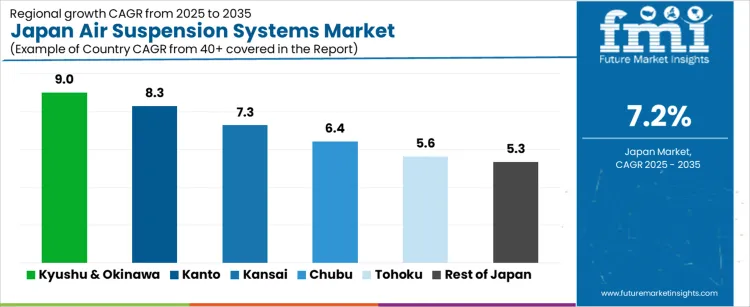
The demand for air suspension systems in Japan is expanding steadily across automotive production and aftermarket regions, led by Kyushu and Okinawa at a 9.0% CAGR. Growth in this region is supported by commercial vehicle assembly, fleet upgrade programs, and rising demand for ride comfort in logistics operations. Kanto follows at 8.3%, driven by luxury vehicle penetration, urban passenger vehicle demand, and strong aftermarket customization activity. Kansai records 7.3% growth, reflecting stable uptake in premium sedans, buses, and specialty transport vehicles. Chubu at 6.4% shows moderate expansion linked to OEM production hubs and component integration. Tohoku and the Rest of Japan, at 5.6% and 5.3%, reflect slower growth shaped by lower vehicle density, limited premium model penetration, and longer replacement cycles in regional transport fleets.
How Is Premium Vehicle Uptake Elevating Air Suspension Demand in Kyushu and Okinawa?
Demand for air suspension systems in Kyushu and Okinawa is advancing at a CAGR of 9.0% through 2035, supported by rising premium vehicle registrations, luxury SUV adoption, and strong aftermarket customization activity. Coastal cities show increasing preference for ride stability and comfort focused upgrades. This region reflects growing replacement demand linked to aging premium vehicle fleets. Growth remains connected to tourism driven luxury mobility use, commercial fleet upgrades for hospitality transport, and steady inflow of imported high end vehicles into regional ports.
- Luxury SUV sales sustain steady system installations
- Aftermarket upgrades support recurring component demand
- Hospitality transport fleets drive premium suspension use
- Imported vehicle inflow expands upgrade opportunities
Why Is Urban Luxury Mobility Driving Air Suspension Growth in Kanto?
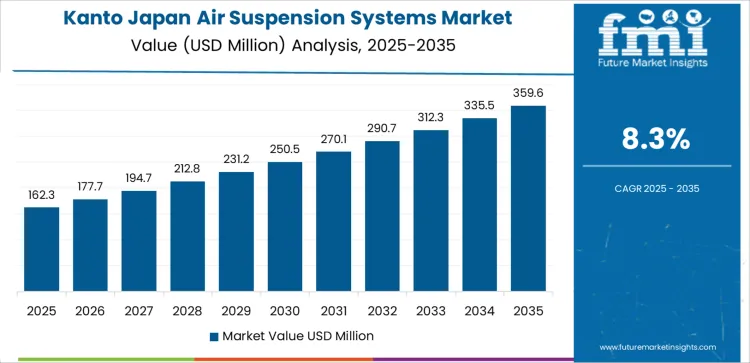
Demand for air suspension systems in Kanto is rising at a CAGR of 8.3% through 2035, driven by high luxury car density, strong new vehicle sales, and steady demand for enhanced ride comfort in metropolitan traffic conditions. Kanto leads installation volumes across executive sedans, electric luxury vehicles, and premium commercial vans. This region shows strong original equipment integration aligned with advanced chassis control systems. Growth reflects urban congestion management needs, rising electric vehicle adoption, and continuous model refresh cycles across automotive manufacturers.
- High luxury car density supports sustained OEM demand
- Electric luxury vehicles anchor advanced suspension integration
- Urban traffic conditions raise comfort focused upgrade demand
- Continuous model launches sustain system replacement cycles
What Is Supporting Balanced Air Suspension Adoption Across Kansai?
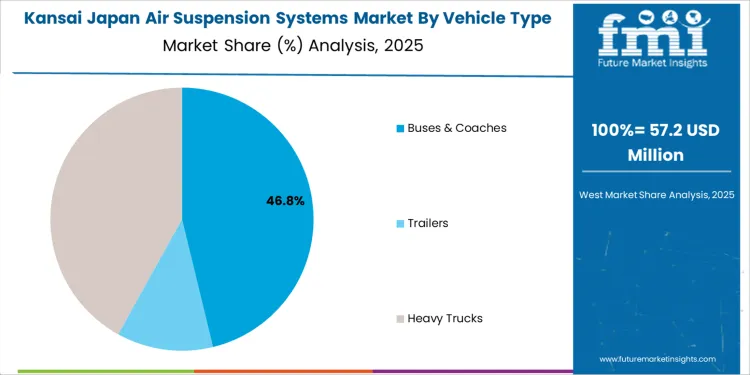
Demand for air suspension systems in Kansai is progressing at a CAGR of 7.3% through 2035, supported by steady premium vehicle sales, fleet upgrades in shared mobility, and balanced aftermarket demand across Osaka and Kyoto. Kansai records consistent use across executive sedans and mid range luxury SUVs. This region reflects controlled market expansion without sharp year to year volume swings. Growth remains linked to used luxury car circulation, taxi fleet upgrades, and stable service network availability for air suspension maintenance.
- Executive sedan fleet supports OEM installation volume
- Mobility fleets drive steady component replacement demand
- Used luxury vehicle circulation expands retrofit opportunities
- Service network availability sustains maintenance driven sales
How Is Manufacturing Linked Fleet Upgrade Activity Shaping Demand in Chubu?
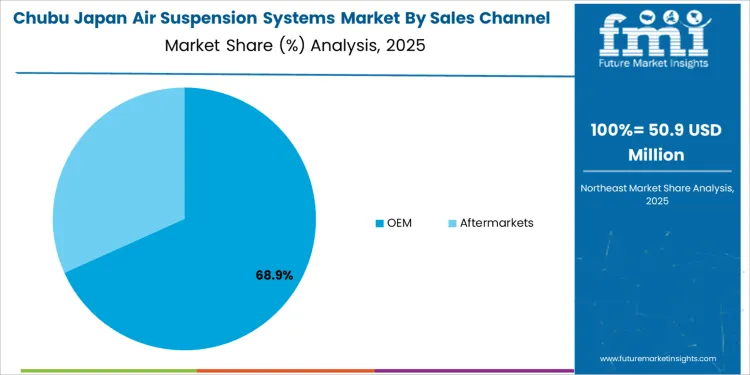
Demand for air suspension systems in Chubu is advancing at a CAGR of 6.4% through 2035, supported by corporate fleet modernization, high employee transport standards, and steady premium vehicle ownership in Aichi. Chubu shows increasing demand from logistics managers adopting comfort enhanced transport for long distance executives. System demand remains concentrated on rear axle air suspension for ride stability. Growth reflects steady industrial income, corporate vehicle replacement cycles, and regional interest in performance oriented engineering upgrades.
- Corporate fleet renewal drives repeat system procurement
- Rear axle systems support ride stability in long travel routes
- Executive transport standards shape premium component demand
- Industrial income stability supports controlled growth
Why Is Vehicle Ownership Pattern Moderating Air Suspension Growth in Tohoku?
Demand for air suspension systems in Tohoku is advancing at a CAGR of 5.6% through 2035, supported by steady replacement demand, gradual premium vehicle penetration, and consistent use in commercial transport upgrades. Tohoku shows lower density of new luxury vehicle sales. Demand remains focused on repair driven replacement for aging imported vehicles and selective commercial fleet upgrades. Growth remains tied to regional income levels, service network expansion, and controlled inflow of used premium vehicles.
- Repair driven replacements sustain baseline system demand
- Commercial transport upgrades support selective installations
- Lower new luxury sales moderate rapid growth
- Service network expansion supports stable aftermarket demand
How Is Small City Vehicle Ownership Influencing Air Suspension Demand in Rest of Japan?
Demand for air suspension systems in Rest of Japan is advancing at a CAGR of 5.3% through 2035, supported by limited premium vehicle concentration, steady maintenance driven replacement cycles, and controlled aftermarket activity in small cities. These areas show stronger focus on standard suspension systems for daily transport. Air suspension demand remains linked to used luxury vehicles and special commercial applications. Growth remains steady and guided by household vehicle budgets, availability of service technicians, and gradual premium vehicle circulation into secondary regional markets.
- Used luxury vehicles support aftermarket retrofit demand
- Standard suspension dominance limits rapid premium adoption
- Technician availability shapes regional installation activity
- Household vehicle budgets guide controlled spending
What Is Driving the Demand for Air Suspension Systems in Japan and Which Companies Shape OEM Integration
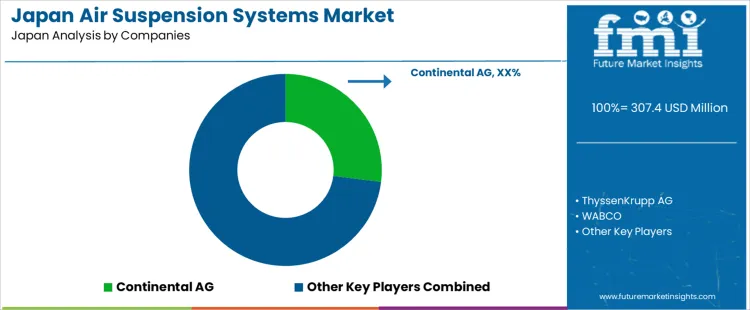
The demand for air suspension systems in Japan is shaped by premium passenger vehicle production, growth in luxury minivans and SUVs, and steady output of commercial trucks and buses. Hitachi Astemo holds a central domestic position through electronically controlled suspension systems integrated with Japanese OEM platforms in passenger and commercial vehicles. KYB supports demand through damper and air spring related systems used in buses, heavy trucks, and specialty vehicles. Toyota Industries contributes through chassis and suspension modules supplied within the Toyota group supply structure. Dunlop Systems and Components supports both automotive and rail related air suspension through long established rubber and pneumatic engineering capability within Japan.
Continental AG participates through electronically controlled air suspension modules used in imported premium vehicles assembled or sold in Japan. ThyssenKrupp AG supports selected OEM programs through chassis and suspension components tied to European vehicle platforms. WABCO supports demand through air management systems used in commercial vehicle braking and suspension integration. Hendrickson USA supplies suspension systems for imported heavy duty trucks and trailers operating in logistics and construction fleets. Procurement in Japan is governed by ride quality under urban conditions, durability on narrow road infrastructure, integration with electronic stability systems, and long cycle reliability. Buyer preference favors suppliers with domestic testing facilities, close OEM development ties, and stable long term production programs aligned with vehicle model life cycles.
Key Players in the Air Suspension Systems Industry in Japan
- Continental AG
- ThyssenKrupp AG
- WABCO
- Hendrickson USA, L.L.C.
- Dunlop Systems and Components
Scope of the Report
| Items | Values |
|---|---|
| Quantitative Units (2025) | USD million |
| Vehicle Type | Buses & Coaches, Trailers, Heavy Trucks |
| Sales Channel | OEM, Aftermarkets |
| End User | Fleet Operators, Commercial Vehicle OEMs, Municipal Transport Authorities |
| Region | Kyushu & Okinawa, Kanto, Kansai, Chubu, Tohoku, Rest of Japan |
| Countries Covered | Japan |
| Key Companies Profiled | Continental AG, ThyssenKrupp AG, WABCO, Hendrickson USA, L.L.C., Dunlop Systems and Components, Hitachi Astemo, KYB, Toyota Industries |
| Additional Attributes | Dollar by sales by vehicle type and sales channel; Regional CAGR and growth patterns; New vehicle integration vs aftermarket retrofit adoption; Fleet modernization and replacement cycles; Electrification and battery weight considerations; Ride comfort, load leveling, and vibration control specification; Corrosion resistance and high-cycle endurance requirements; OEM integration standards and platform-specific suspension calibration; Regulatory compliance including public transport safety, braking, and ride height; Import reliance for valves, sensors, and control modules; Repeat procurement across commercial fleet cycles; Urban vs regional installation density; Aftermarket service network influence |
Air Suspension Systems Industry in Japan Segmentation
Vehicle Type:
- Buses & Coaches
- Trailers
- Heavy Trucks
Sales Channel:
- OEM
- Aftermarkets
Region
- Kyushu & Okinawa
- Kanto
- Kansai
- Chubu
- Tohoku
- Rest of Japan
Frequently Asked Questions
How big is the demand for air suspension systems in Japan in 2025?
The demand for air suspension systems in Japan is estimated to be valued at USD 307.4 million in 2025.
What will be the size of air suspension systems in Japan in 2035?
The market size for the air suspension systems in Japan is projected to reach USD 616.1 million by 2035.
How much will be the demand for air suspension systems in Japan growth between 2025 and 2035?
The demand for air suspension systems in Japan is expected to grow at a 7.2% CAGR between 2025 and 2035.
What are the key product types in the air suspension systems in Japan?
The key product types in air suspension systems in Japan are buses & coaches, trailers and heavy trucks.
Which sales channel segment is expected to contribute significant share in the air suspension systems in Japan in 2025?
In terms of sales channel, oem segment is expected to command 68.0% share in the air suspension systems in Japan in 2025.
Preview the report firsthand - request a free sample
Get SampleGet the brochure for pricing and purchase details.
Get PDFTable of Content
- Executive Summary
- Japan Market Outlook
- Demand-side Trends
- Supply-side Trends
- Technology Roadmap Analysis
- Analysis and Recommendations
- Market Overview
- Market Coverage / Taxonomy
- Market Definition / Scope / Limitations
- Market Background
- Market Dynamics
- Drivers
- Restraints
- Opportunity
- Trends
- Scenario Forecast
- Demand in Optimistic Scenario
- Demand in Likely Scenario
- Demand in Conservative Scenario
- Opportunity Map Analysis
- Product Life Cycle Analysis
- Supply Chain Analysis
- Investment Feasibility Matrix
- Value Chain Analysis
- PESTLE and Porter’s Analysis
- Regulatory Landscape
- Regional Parent Market Outlook
- Production and Consumption Statistics
- Import and Export Statistics
- Market Dynamics
- Japan Market Analysis 2020 to 2024 and Forecast, 2025 to 2035
- Historical Market Size Value (USD Million) Analysis, 2020 to 2024
- Current and Future Market Size Value (USD Million) Projections, 2025 to 2035
- Y-o-Y Growth Trend Analysis
- Absolute $ Opportunity Analysis
- Japan Market Pricing Analysis 2020 to 2024 and Forecast 2025 to 2035
- Japan Market Analysis 2020 to 2024 and Forecast 2025 to 2035, By Vehicle Type
- Introduction / Key Findings
- Historical Market Size Value (USD Million) Analysis By Vehicle Type , 2020 to 2024
- Current and Future Market Size Value (USD Million) Analysis and Forecast By Vehicle Type , 2025 to 2035
- Buses & Coaches
- Trailers
- Heavy Trucks
- Y-o-Y Growth Trend Analysis By Vehicle Type , 2020 to 2024
- Absolute $ Opportunity Analysis By Vehicle Type , 2025 to 2035
- Japan Market Analysis 2020 to 2024 and Forecast 2025 to 2035, By Sales Channel
- Introduction / Key Findings
- Historical Market Size Value (USD Million) Analysis By Sales Channel, 2020 to 2024
- Current and Future Market Size Value (USD Million) Analysis and Forecast By Sales Channel, 2025 to 2035
- OEM
- Aftermarkets
- Y-o-Y Growth Trend Analysis By Sales Channel, 2020 to 2024
- Absolute $ Opportunity Analysis By Sales Channel, 2025 to 2035
- Market Structure Analysis
- Competition Dashboard
- Competition Benchmarking
- Market Share Analysis of Top Players
- By Regional
- By Vehicle Type
- By Sales Channel
- Competition Analysis
- Competition Deep Dive
- Continental AG
- Overview
- Product Portfolio
- Profitability by Market Segments (Product/Age /Sales Channel/Region)
- Sales Footprint
- Strategy Overview
- Marketing Strategy
- Product Strategy
- Channel Strategy
- ThyssenKrupp AG
- WABCO
- Hendrickson USA, L.L.C.
- Dunlop Systems and components
- Continental AG
- Competition Deep Dive
- Assumptions & Acronyms Used
- Research Methodology


