

- Industry Size (2026)
- USD 688.2 Mn
- Forecast (2036)
- USD 1.2 Bn
- CAGR (2026 to 2036)
- 5.72%
Aircraft Branding Decal Systems Market Size, Market Forecast and Outlook By FMI
The aircraft branding decal systems market was valued at USD 654.8 million in 2025. The industry is poised to reach USD 688.2 million in 2026 at a CAGR of 5.72% during the forecast period. Sustained investment propels the valuation to USD 1.2 billion through 2036 as the compression of aircraft lease durations necessitates frequent asset neutralization and rapid re-branding cycles that traditional paint systems cannot accommodate.
Fleet managers are moving beyond aesthetic considerations toward a rigorous asset lifecycle management framework where downtime is the primary metric of failure. A traditional paint-based livery update requires significant hangar time and specialized ventilation, whereas high-performance decal systems allow for "on-gate" or overnight branding applications. The shift is particularly acute in the narrow-body segment where high aircraft utilization rates penalize any day spent out of service. FMI analysts observe that the financial penalty of missing a single flight cycle often exceeds the unit cost of a premium decal kit, forcing a transition from wet-paint finishes to film-based systems for mid-life fleet refreshes.
Summary of Aircraft Branding Decal Systems Market
- Aircraft Branding Decal Systems Market Definition:
- The market represents a specialized segment of the aerospace materials industry focused on high-durability, adhesive-backed film systems for asset identification and corporate branding. These systems provide a weight-optimized and time-efficient alternative to traditional painting processes.
- Demand Drivers in the Market:
- Shortened aircraft leasing cycles force lessors to require rapid "neutralization" of liveries during asset transitions between global operators.
- Low-cost carriers compel maintenance teams to minimize hangar downtime by replacing complex paint schemes with modular decal applications during scheduled checks.
- Stringent international safety regulations obligate airlines to maintain high-visibility emergency and instructional markings that must resist severe erosion.
- Key Segments Analyzed in the FMI Report:
- External Decals: External Decals is expected to account for 62.4% share in 2026, driven by the structural requirement for mandatory registration and tail branding.
- Pressure Sensitive Adhesives: Pressure Sensitive Adhesives is expected to grab 54.8% share in 2026, as buyers prioritize adhesive systems that allow for residue-free removal during maintenance.
- Commercial Aviation: Commercial Aviation is expected to hold the majority share through 2036, supported by the high volume of narrow-body aircraft utilization.
- India: 8.2% compound growth, sustained by the rapid expansion of regional low-cost carrier fleets and aggressive aircraft acquisition strategies.
- Analyst Opinion at FMI:
- Nikhil Kaitwade, Principal Analyst, Automotive, at FMI, opines, "The industry often treats decals as simple aesthetic additions, but the structural reality is that they are high-performance aerodynamic components. We are seeing a significant shift where decal systems are being integrated into the initial airframe design phase rather than being treated as an aftermarket afterthought. This is because the weight savings of a full-film livery compared to traditional multilayer paint can translate into hundreds of gallons of fuel savings over the life of a single narrow-body airframe. The paradox is that as airlines chase sustainability, they are moving away from paint and toward advanced polymers that offer better durability and lower environmental impact during the removal process."
- Strategic Implications / Executive Takeaways:
- Fleet managers must integrate decal qualification into their standard MRO schedules to avoid the high cost of emergency paint-shop booking.
- Adhesive manufacturers should focus on "clean-strip" chemistries that eliminate the need for harsh solvents, which are increasingly restricted under regional environmental mandates.
- Aircraft lessors face an opportunity to standardize "white-tail" configurations that allow for rapid, localized branding application, increasing asset liquidity.
- Methodology:
- FMI’s methodology utilizes a fleet-utilization model that tracks livery fatigue and lease turnover rates. This reveals a market driven by operational necessity rather than purely aesthetic trends, providing a more accurate forecast for specialized aerospace consumables.
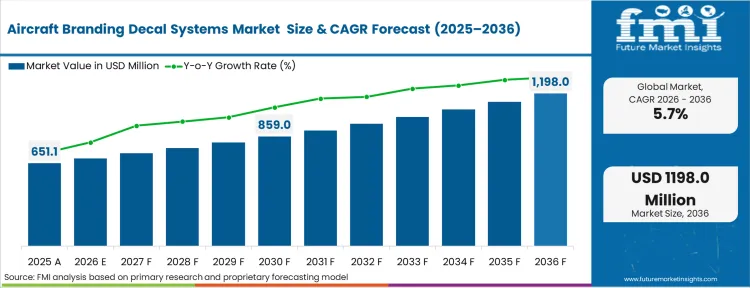
The structural gate for accelerated adoption remains the widespread certification of digital print-to-film workflows for critical aerodynamic surfaces. Once MRO providers can reliably produce registered tail numbers and structural markings via digital output that meets EASA and FAA flame-retardancy standards, the reliance on pre-printed silk-screen stocks will vanish. This transition, triggered by large-format printing hardware manufacturers, converts branding from a supply-chain bottleneck into a just-in-time service.
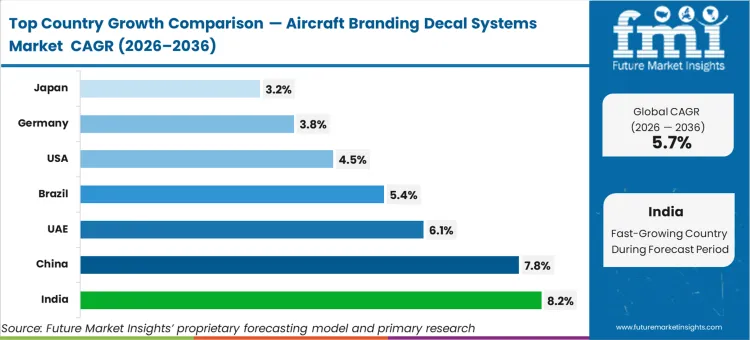
Demand for aircraft branding decal systems in India is set to grow at 8.2% as massive order backlogs from low-cost carriers require rapid deployment solutions. China tracks closely with a CAGR of 7.8%, driven by the expansion of regional domestic routes and local fleet modernization. The UAE industry is poised for a CAGR of 6.1% over the forecast period, while Brazil registers an expansion rate of 5.4%. In the United States, the sector is projected to rise at 4.5% compound annual growth. Germany follows with a predicted CAGR of 3.8%, and Japan is likely to post a CAGR of 3.2%. The structural divergence across these regions reflects the variance between maturing replacement cycles in Western hubs and aggressive fleet additions in emerging aviation corridors.
Aircraft Branding Decal Systems Market Key Takeaways
| Metric | Details |
|---|---|
| Industry Size (2026) | USD 688.2 million |
| Industry Value (2036) | USD 1.2 billion |
| CAGR (2026-2036) | 5.72% |
Source: Future Market Insights (FMI) analysis, based on proprietary forecasting model and primary research
Aircraft Branding Decal Systems Market Definition
The aircraft branding decal systems market comprises the specialized thin-film polymers, adhesive chemistries, and protective topcoats used for exterior livery and interior cabin markings. These systems must maintain structural integrity and colorfastness under extreme atmospheric conditions, including rapid thermal cycling from -50°C to 50°C and high UV exposure at altitude. Analytically, this market is distinct from general signage due to the mandatory AS9100 and Part 21 certification requirements for every material layer.
Aircraft Branding Decal Systems Market Inclusions
The scope includes exterior fuselage wraps, tail graphics, registration markings, and emergency exit indicators. It further covers cabin interior placards, floor markings, and safety instructional decals. Service-based components such as installation kits and removal chemistry specifically formulated for aircraft topcoats are also included within the system valuation.
Aircraft Branding Decal Systems Market Exclusions
This market excludes traditional decorative paint and spray-applied coatings used for full fuselage finishes. It does not include structural adhesives used in aircraft assembly or temporary protective films used during manufacturing and transport. Generic vinyl films that lack aviation-specific flame, smoke, and toxicity (FST) certifications are strictly excluded as they are not flight-qualified for commercial or military airframes.
Aircraft Branding Decal Systems Market Research Methodology
- Primary Research: FMI conducted interviews with MRO Procurement Directors, Fleet Livery Managers at tier-1 airlines, and Aerospace Material Engineers at leading adhesive film manufacturers.
- Desk Research: Data was aggregated from EASA Part 21 certification registries, FAA registry databases for registration marking updates, and annual aircraft delivery reports from major airframe manufacturers.
- Market-Sizing and Forecasting: The baseline anchors to the active global commercial and business jet fleet count, cross-referenced with average livery refresh cycles and lease transition data.
- Data Validation and Update Cycle: Forecasts were triangulated using independent data streams from global aircraft leasing associations and specialized aviation maintenance analytics platforms.
Segmental Analysis
Aircraft Branding Decal Systems Market Analysis by Decal Type
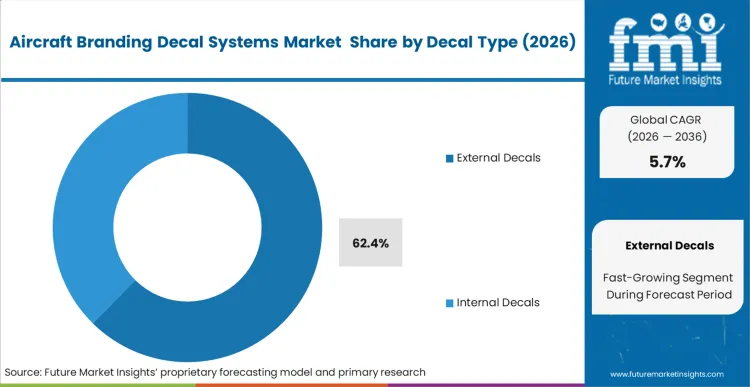
The structural reason external decals hold 62.4% of this market comes down to a single operational reality: aircraft cannot fly without them. Regulatory bodies mandate precise registration numbers, flag carriers require massive tail-fin branding for global visibility, and safety protocols require high-contrast markings on every service panel. This segment is not driven by elective aesthetic choices but by the legal qualification of the airframe for commercial service. Fleet managers prioritize exterior graphics that can survive Mach 0.8 speeds and constant UV bombardment without peeling or fading. According to FMI's assessment, the external segment will remain dominant as airlines consolidate brand identities across merged fleets. Operators who delay exterior marking refreshes face significant brand dilution and potential regulatory scrutiny during ramp inspections.
- Atmospheric resistance: High-performance cast vinyl films maintain pigment density and adhesive bond strength despite rapid pressurized expansion and contraction cycles. This prevents the edge-lift failures that characterize lower-grade films in high-altitude environments.
- Surface energy: Low-surface-energy coatings on modern composites require specialized adhesive formulations to ensure a permanent bond that remains removable during scheduled maintenance. Procurement heads must specify films that match the specific topcoat chemistry of their fleet.
- UV stability: Advanced protective laminates block high-altitude ultraviolet radiation that would otherwise embrittle the film and cause premature cracking. Engineering teams rely on these barriers to extend the livery lifecycle to match heavy maintenance checks.
Aircraft Branding Decal Systems Market Analysis by Material
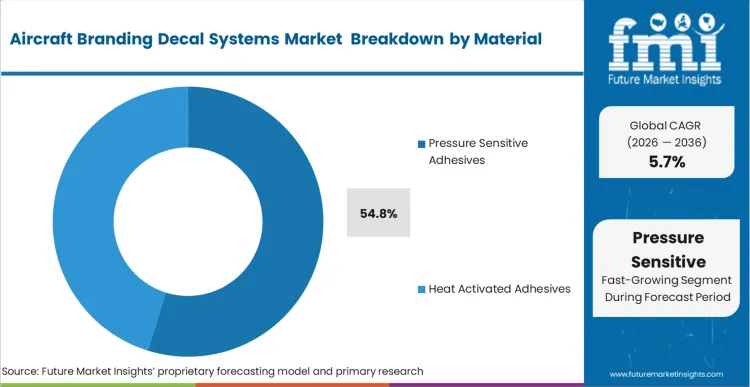
The market for pressure-sensitive adhesives is displacing heat-activated systems due to the operational complexity of large-scale heating equipment in active hangars. Applying heat to a carbon-fiber fuselage introduces thermal management risks that most MRO providers prefer to avoid. Pressure-sensitive systems allow for localized application by small teams without the need for specialized industrial heaters. Based on FMI's projection, the shift toward "tack-ready" materials is accelerating as adhesive chemistries improve their initial repositionability. This allows installers to align massive graphics precisely before the final bond is set. Buyers who cling to older heat-activated stocks find themselves facing longer installation windows and higher labor costs per airframe.
- Initial repositionability: Micro-comply adhesive structures allow installers to slide large film sections into place without immediate locking, reducing material waste on complex fuselage curves. This capability reduces the required headcount for a full livery refresh by roughly 30%.
- Edge sealing: Integrated resin-edge sealers prevent moisture and hydraulic fluid ingress from undermining the adhesive bond at high-speed leading edges. Maintenance crews prioritize these features to avoid unscheduled "sticker" repairs between major checks.
- Residue-free removal: Advanced polymer chains are designed to break cleanly from the topcoat during removal, eliminating the need for abrasive sanding or aggressive chemical strippers. This protects the aerospace coatings underneath and preserves the asset's residual value.
Aircraft Branding Decal Systems Market Analysis by End User
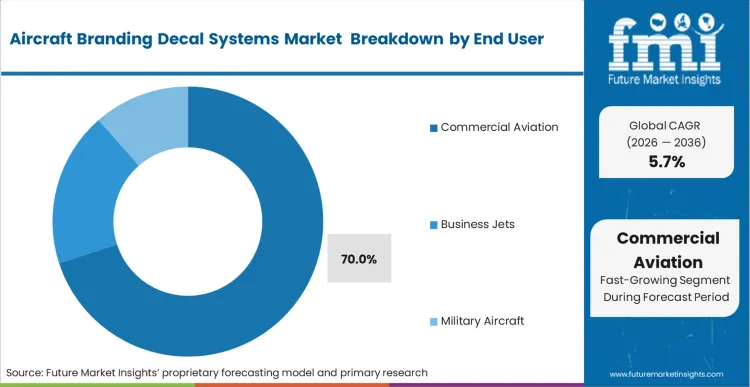
Commercial aviation buyers are facing a decision between long-term durability and short-term agility as their business models evolve toward more frequent route testing. The rise of low-cost carriers (LCCs) has created a buyer class that views the aircraft as a moving billboard that must be updated as quickly as their digital marketing campaigns. This shift is forcing procurement teams to evaluate commercial aircraft decal systems based on their "time-to-market" rather than just their five-year durability. In FMI's view, the dominance of this segment reflects the sheer volume of narrow-body deliveries and the standardized nature of airline branding. Operators who wait for traditional paint slots often find themselves flying unbranded "white-tail" aircraft, losing significant marketing impressions in competitive hubs.
- Livery standardization: Corporate brand managers utilize decal kits to ensure color consistency across a global fleet maintained by multiple different MRO vendors. This eliminates the "color-drift" common with localized paint mixing at different hangars.
- Modular replacement: Individual damaged sections of a fuselage graphic can be replaced with die-cut patches during an overnight stop, avoiding a full airframe grounding. This modularity is essential for carriers operating in high-debris environments or harsh climates.
- Lease transition: Lessors utilize neutral decal packages to bridge the gap between operators, allowing for 48-hour rebranding during "power-by-the-hour" contract swaps. The speed of this transition directly impacts the lessor's annual revenue per asset.
Aircraft Branding Decal Systems Market Analysis by Sales Channel
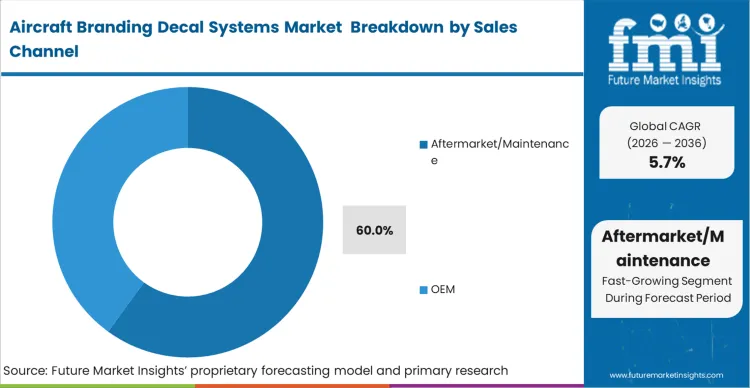
The structural tension between OEM and aftermarket channels defines the competitive landscape for decal suppliers. While OEMs provide the initial branding, the aftermarket represents a recurring revenue stream that tracks the 4-to-6 year refresh cycle of the global fleet. Aftermarket refurbishing demand is less sensitive to new aircraft delivery delays and more focused on the aging of the existing installed base. FMI analysts opine that the aftermarket will continue to capture the majority share as airlines extend the service life of existing airframes. Buyers in this channel are more price-sensitive but require higher logistical support for distributed hangar locations. Manufacturers who focus exclusively on OEM contracts miss the high-margin, high-frequency replacement volume of the global MRO network.
- Inventory management: MRO providers maintain stocks of standardized safety placards and registration letters to meet immediate A-check requirements. This creates a steady pull for standard decal kits through regional distribution networks.
- Lifecycle cost: Procurement directors compare the total cost of ownership of decals versus paint over a ten-year period, including the cost of fuel for the additional weight of paint. Decals consistently show a superior ROI in high-cycle narrow-body operations.
- Warranty support: Aftermarket providers offer field-replacement warranties that protect airlines against premature film failure due to environmental factors. This risk mitigation is a primary factor in vendor selection for tier-1 global carriers.
Aircraft Branding Decal Systems Market Drivers, Restraints, and Opportunities
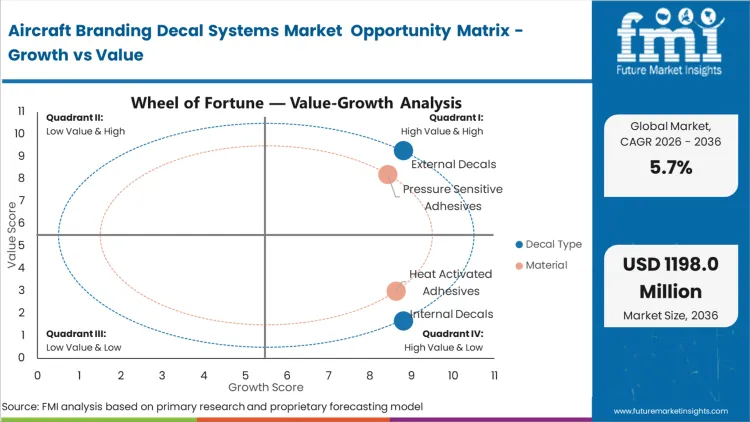
The primary driver for this market is the structural shift toward aircraft leasing, which currently accounts for nearly half of the global fleet. As assets move between different operators across different jurisdictions, the need for rapid livery neutralization and re-branding becomes a mandatory operational gate. This forces procurement directors to move away from permanent paint and toward aerospace adhesives that allow for rapid asset turnover. The commercial stakes are clear: a leased aircraft sitting in a paint shop is a non-performing asset.
The single biggest restraint is the structural "ghosting" and adhesive residue issue that complicates removal on older topcoats. When a decal is removed after five years of UV exposure, the surrounding paint has often faded at a different rate, leaving a permanent silhouette of the old branding. This requires a full fuselage polish or repainting, which partially negates the time-saving advantage of decals. This friction is structural because it relates to the chemical interaction between the film’s adhesive and the aircraft’s specialized polyurethane coatings, requiring a secondary operational step that many buyers fail to budget for initially.
Opportunities in the Aircraft Branding Decal Systems Market
- Digital-to-decal workflows: The certification of aviation analytics integrated with large-format digital printing allows for hyper-localized, short-run branding for special events or sports sponsorships. Fleet managers can capture high-value partnership revenue by offering seasonal livery updates that were previously cost-prohibitive.
- Smart sensing films: Integrating thin-film sensors into structural decals to monitor lightning strikes or skin temperature represents a major high-value opportunity. Engineering roles at major airlines can transition branding from a cost center to a data-generation tool.
- Sustainability-led replacement: The emergence of repulpable or solvent-free decal systems allows carriers to meet increasingly strict sustainable aviation goals by eliminating the toxic runoff associated with traditional chemical paint stripping.
Regional Analysis
Based on the regional analysis, the Aircraft Branding Decal Systems market is segmented into North America, Latin America, Europe, East Asia, South Asia & Pacific, and Middle East & Africa across 40 plus countries.
.webp "Top Country Growth Comparison Aircraft Branding Decal Systems Market Cagr (2026 2036)")
| Country | CAGR (2026 to 2036) |
|---|---|
| India | 8.2% |
| China | 7.8% |
| UAE | 6.1% |
| Brazil | 5.4% |
| USA | 4.5% |
| Germany | 3.8% |
| Japan | 3.2% |
Source: Future Market Insights (FMI) analysis, based on proprietary forecasting model and primary research
Asia Pacific Aircraft Branding Decal Systems Market Analysis
The Asia Pacific region’s adoption pattern is fundamentally infrastructure-led, as the rapid construction of regional airports in second-tier cities necessitates a surge in low-cost carrier operations. These carriers operate on razor-thin margins and high aircraft utilization, making the time-saving benefits of decal systems a structural necessity rather than an elective upgrade. FMI's report includes significant analysis of how the regional supply chain for aerospace-grade films is shifting closer to these high-growth hubs to reduce lead times.
- China: China’s specific structural condition is the massive state-led expansion of domestic air routes, which requires a standardized and rapidly deployable branding solution for new regional fleets. The market for maintenance chemicals and branding in China is forecast to register a CAGR of 7.8% as local MROs modernize their livery capabilities. Practitioners in this market note that the CAGR figure fails to capture the intense pressure on MRO turnaround times as domestic air traffic hits record highs.
- India: India's aggressive aircraft order backlogs force a transition to "ready-to-fly" branding solutions that can be applied at the point of delivery or during initial regional staging. Demand for branding in India is estimated to expand at a CAGR of 8.2%, reflecting the emergence of a highly competitive LCC landscape. Buyers who act now capture preferred status with the growing number of specialized aerospace film applicators entering the Indian market.
North America Aircraft Branding Decal Systems Market Analysis
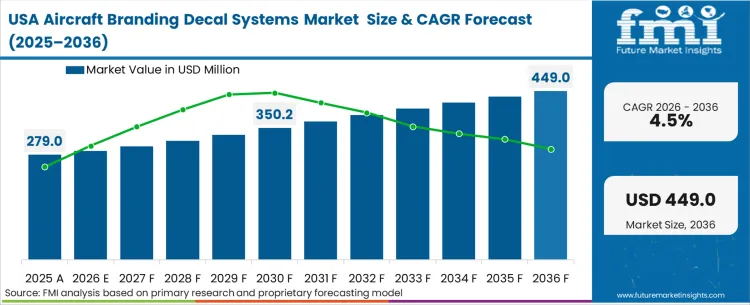
North America is characterized by a buyer behavior-led dynamic, where the high concentration of mature business jet fleets and legacy commercial carriers creates a massive aftermarket for refurbishing and rebranding. Procurement practices here are heavily influenced by the strict FAA Part 45 marking requirements, which mandate high-durability registration decals.
- USA: The United States business jets sector is poised to expand at a CAGR of 4.5% as corporate operators utilize custom decal wraps to personalize assets without devaluing the airframe with permanent paint. This trajectory creates a competitive advantage for US-based MROs who can offer high-end, bespoke branding services to private fleet owners.
- Japan: Japan's structural trajectory in the helicopter MRO and commercial sector is defined by a focus on high-precision, long-life decals that can survive the harsh maritime environments of coastal operations. FMI estimates the market in Japan to expand at an annual growth rate of 3.2%. Successful adoption here leads to a cleared bottleneck in the scheduled maintenance of government and emergency service fleets.
Latin America Aircraft Branding Decal Systems Market Analysis
The Latin American market is primarily economics-led, where the high concentration of regional jets and the aggressive expansion of low-cost carriers (LCCs) in secondary hubs drive a demand for cost-effective, rapid-turnover branding. Maintenance organizations in this region prioritize decal systems that can be applied in non-specialized hangars, allowing airlines to maintain fleet availability without the capital expense of dedicated paint facilities. According to FMI's estimates, the regional market is transitioning toward high-tack, cold-weather resistant films to support routes traversing diverse climatic zones from the Andes to the Amazon.
- Brazil: Brazil's specific structural condition is the dominance of regional jet operations and the presence of major domestic manufacturing ecosystems which necessitate a high volume of "ready-to-fly" marking kits. The procurement of branding systems in Brazil is projected to witness growth at a CAGR of 5.4% as major carriers like Azul and Gol optimize their narrow-body fleets for higher utilization. Operators in this market prioritize residue-free adhesive chemistries to protect the residual value of leased assets during frequent mid-life transitions. A competitive positioning advantage is created for Brazilian MROs who can offer standardized, EASA-compliant decal installations for international lessors.
FMI's report includes the scope of additional countries in the region, such as Mexico and Chile. The structural trajectory for these additional markets is heading toward the adoption of digital-twin livery management, ensuring that every marking on a fuselage is digitally archived for rapid, on-demand replacement during scheduled A-checks.
Europe Aircraft Branding Decal Systems Market Analysis
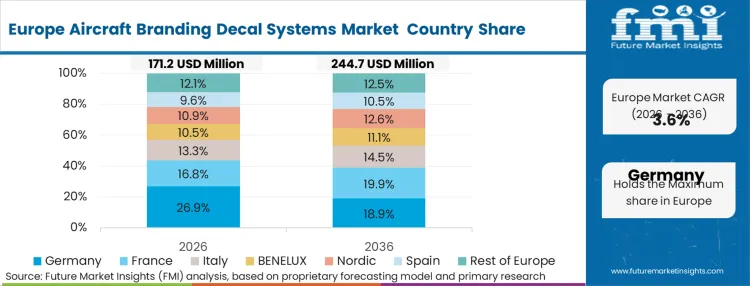
The European market is heavily policy-led, driven by EASA standards and regional sustainability mandates that penalize chemical stripping processes.
- Germany: The German aircraft branding industry is expected to demonstrate a CAGR of 3.8% as carriers align with green procurement standards. Practitioners observe that the rate is constrained by the aging hangar infrastructure in regional hubs which necessitates off-site decal application. Successful adoption leads to a cleared bottleneck in the scheduled maintenance of government and emergency service fleets.
Middle East Aircraft Branding Decal Systems Market Analysis
The Middle East dynamic is economics-led, driven by the massive capital expenditure of "super-connector" airlines that utilize their liveries as global diplomatic and corporate statements. The extreme heat and UV conditions of the region act as a structural test-bed for the world’s most durable aerospace composites and decal chemistries.
- UAE: The UAE's aviation industry is projected to witness growth at a CAGR of 6.1%, as major hubs in Dubai and Abu Dhabi become the primary centers for global fleet wide-body rebranding. This structural trajectory heading toward 2036 is defined by the integration of decals into the "premium" wide-body passenger experience.
FMI's report includes the scope of additional countries not in bullets, such as France and Singapore. The common structural pattern across these additional markets is the move toward digital qualification of all on-airframe markings to eliminate the high inventory costs of physical placard stocks.
Competitive Aligners for Market Players
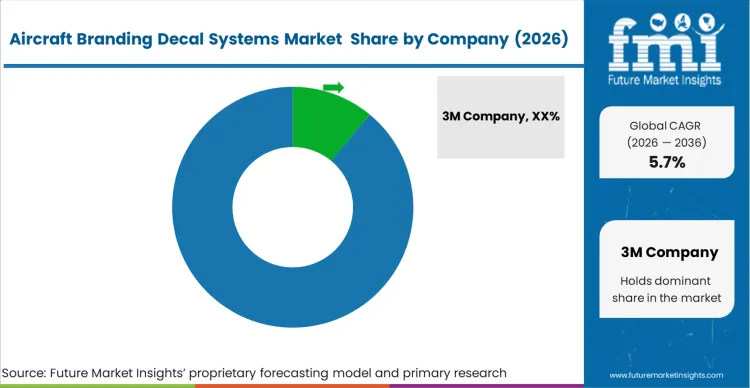
The Aircraft Branding Decal Systems market is concentrated among a few tier-1 material science companies who hold the necessary AS9100 certifications and global aerospace distribution rights. Buyers actually select vendors based on the "removal-window", the guaranteed ease with which a film can be stripped after five years of service without requiring a topcoat respray. Companies like 3M Company and Avery Dennison Corporation dominate because they provide the chemical assurance that the adhesive will not cross-link permanently with the aircraft’s polyurethane paint. This structural barrier prevents smaller, general-purpose film manufacturers from entering the high-value commercial aviation space despite having similar-looking products.
Incumbents like Akzo Nobel N.V. and PPG Industries hold a structural advantage by bundling decal systems with their existing aerospace coating contracts. This creates a "single-source" liability for the airline, where the paint manufacturer guarantees that the decal adhesive is chemically compatible with the underlying topcoat. A challenger must build a verifiable database of compatibility testing across dozens of different aircraft paint systems to replicate this trust. AkzoNobel, for example, has invested in digital print-to-film technologies that align perfectly with their primary coating colors, making it difficult for independent decal shops to achieve the same level of aesthetic integration.
The structural tension in this market toward 2036 is between large buyers wanting to avoid vendor lock-in and the technical reality that mixing different adhesive and paint brands increases the risk of "ghosting" or failure. As airlines move toward more sustainable water-based coatings, the adhesive chemistry must evolve to match these new, more sensitive surfaces. The market is becoming more concentrated as the cost of certifying these new chemical pairings increases. Competitive strategy for the next decade will focus on "universal" adhesives that can safely bond to both legacy solvent-based and modern water-borne aerospace finishes.
Key Players in Aircraft Branding Decal Systems Market
- 3M Company
- Avery Dennison Corporation
- Akzo Nobel N.V.
- PPG Industries
- Avery Dennison Corporation
- Henkel AG & Co. KGaA
- ORAFOL Europe GmbH
- Mankiewicz Gebr. & Co.
- United Arab Decal
- Decal Aero
- Aerospace Graphics
- Signature Plaque
Scope of the Report
| Metric | Value |
|---|---|
| Quantitative Units | USD 688.2 million in 2026 to USD 1.2 billion in 2036, at a CAGR of 5.72% |
| Market Definition | The industry covers specialized adhesive-backed films and marking systems certified for aerospace use on external fuselage and internal cabin surfaces. It includes the materials, protective laminates, and removal chemistries used for fleet branding. |
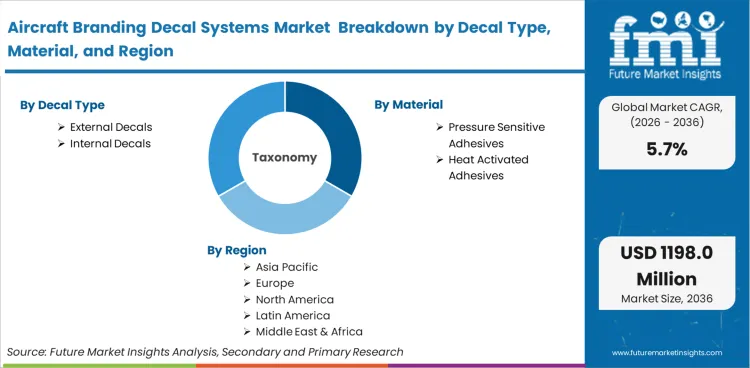
| Decal Type Segmentation | External Decals, Internal Decals |
| Material Segmentation | Pressure Sensitive Adhesives, Heat Activated Adhesives |
| End User Segmentation | Commercial Aviation, Business Jets, Military Aircraft, Helicopters |
| Sales Channel Segmentation | Aftermarket/Maintenance, OEM |
| Regions Covered | North America, Latin America, Europe, East Asia, South Asia & Pacific, Middle East & Africa |
| Countries Covered | China, India, USA, UAE, Germany, Brazil, Japan, and 40 plus countries |
| Key Companies Profiled | 3M Company, Avery Dennison Corporation, Akzo Nobel N.V., PPG Industries, Henkel AG & Co. KGaA, ORAFOL Europe GmbH, Mankiewicz Gebr. & Co., United Arab Decal |
| Forecast Period | 2026 to 2036 |
| Approach | FMI’s approach anchors on fleet-refresh cycle data and aircraft lease transition volumes. It incorporates primary interviews with MRO procurement directors and validates forecasts against global aircraft delivery backlogs. |
Source: Future Market Insights (FMI) analysis, based on proprietary forecasting model and primary research
Aircraft Branding Decal Systems Market Analysis by Segments
Decal Type:
- External Decals
- Internal Decals
Material:
- Pressure Sensitive Adhesives
- Heat Activated Adhesives
End User:
- Commercial Aviation
- Business Jets
- Military Aircraft
- Helicopters
Sales Channel:
- Aftermarket/Maintenance
- OEM
Region:
- North America
- USA
- Canada
- Latin America
- Brazil
- Mexico
- Europe
- Germany
- UK
- France
- East Asia
- China
- Japan
- South Korea
- South Asia & Pacific
- India
- Australia
- Middle East & Africa
- UAE
- Saudi Arabia
Bibliography
- Federal Aviation Administration. (2025). 14 CFR Part 45, Identification and registration marking. eCFR.
- Federal Aviation Administration. (2025, January 17). Aircraft registration and recordation procedural updates; original documents and stamping. Federal Register.
- UK Civil Aviation Authority. (2024, October 10). SN-2024/008: Aircraft registration markings.
- UK Civil Aviation Authority. (2024, October). CAP 523: The display of nationality and registration marks on aircraft.
- Transport Canada. (2025, October 6). Advisory Circular (AC) No. 201-002: Aircraft identification and marking.
- European Union Aviation Safety Agency. (2025, July 21). Airworthiness Directive 2025-0156: Placards and markings, Modification / aircraft flight manual, Amendment.
- International Air Transport Association. (2024). Annual review 2024.
This bibliography is provided for reader reference. The full FMI report contains the complete reference list with primary source documentation.
This Report Addresses
- Market intelligence to support strategic decision making across exterior fuselage wraps and internal cabin placards.
- Market size estimation and 10-year revenue forecasts from 2026 to 2036, supported by a fleet-utilization and lease-transition model.
- Growth opportunity mapping across external and internal decal segments with emphasis on the certification of digital print-to-film workflows.
- Segment and regional revenue forecasts covering India and China across the rapidly expanding low-cost carrier procurement context.
- Competition strategy assessment including compatibility testing, AS9100 certification barriers, and "clean-strip" adhesive chemistry.
- Product development tracking including UV-stable laminates, micro-comply adhesives, and flame-retardant interior films discussed in this article.
- Market access analysis covering FAA Part 45 markings and EASA Part 21 qualification standards.
- Market report delivery in PDF, Excel, PPT, and interactive dashboard formats for executive strategy, MRO capacity planning, and operational benchmarking use.
Frequently Asked Questions
How large is the Aircraft Branding Decal Systems Market in 2026?
The market is projected to reach USD 688.2 million in 2026. This figure signals a stabilizing supply chain following several years of aircraft delivery backlogs, as airlines shift their focus to maintaining the brand identity of an aging narrow-body fleet.
What will it be valued at by 2036?
The industry value is forecast to reach USD 1.2 billion by the end of 2036. This growth is anchored by the structural shift toward aircraft leasing, which necessitates more frequent livery refreshes than traditional long-term ownership models allowed.
What CAGR is projected for the market?
A CAGR of 5.72% is projected through 2036. This rate reflects the pace of scheduled heavy maintenance checks (C and D checks), where branding is typically refreshed, rather than the faster cycle of general marketing trends.
Which Decal Type segment leads the market?
External Decals lead with over 60% share because they are a regulatory requirement for airworthiness. Beyond corporate logos, every aircraft must carry precise registration numbers and safety markings that can only be reliably maintained through specialized decal systems.
Which Material segment is the most dominant?
Pressure Sensitive Adhesives dominate because they eliminate the need for thermal management equipment in the hangar. This mechanism allows MRO teams to perform "on-gate" repairs or overnight livery updates, which is essential for maintaining high aircraft utilization rates.
Which End User leads adoption?
Commercial Aviation leads due to the high volume of narrow-body airframes and the intense competition among low-cost carriers. These buyers use decals to achieve "livery agility," allowing them to update branding across a global fleet in a fraction of the time required for painting.
What is the primary driver for rapid growth?
The primary driver is the compression of lease durations, which forces a structural "neutralization" of liveries every few years. This condition makes permanent paint economically unfeasible compared to the rapid application and removal cycles of advanced polymer films.
What is the primary restraint in this market?
The primary restraint is the "ghosting" effect where adhesive residue and uneven paint fading complicate the removal process. This creates a structural friction because it requires secondary polishing steps that can extend maintenance windows beyond what fleet managers initially plan.
Which country is growing the fastest?
India is the fastest-growing market at 8.2% CAGR, outpacing China’s 7.8%. The structural difference is India's massive backlog of new low-cost carrier orders, which requires a rapid scaling of localized branding and marking infrastructure.
How do FAA and EASA regulations affect the market?
These regulations act as a structural barrier to entry because every decal layer must have a verifiable "burn-cert" and flame-retardant rating. This ensures that only a few certified manufacturers can supply the commercial aviation sector, keeping the market highly concentrated.
What role does digital printing play in this market?
Digital printing is the key technological shift, moving branding from a pre-printed inventory model to a just-in-time service. Once digital inks are fully certified for high-altitude UV resistance, the need for large stocks of silk-screened decals will be eliminated.
How does the market handle extreme temperature changes?
Aerospace decals are engineered with specialized polymer chains that allow the film to expand and contract at the same rate as the aluminum or composite fuselage. This preventing the adhesive bond from fracturing during the rapid descent from -50°C to ground-level temperatures.
Why are decals preferred over paint for lease transitions?
Decals allow for a "neutral" livery transition in under 48 hours, whereas a full paint job can take 7 to 10 days. For a lessor, those 8 saved days represent significant additional rental income, making decal-friendly livery a structural requirement in modern leasing contracts.
What is the impact of sustainable aviation goals on decals?
Decals are increasingly seen as the sustainable choice because they eliminate the toxic VOCs and solvent-heavy runoff associated with chemical paint stripping. This structural shift allows airlines to report lower environmental impact during their maintenance and refurbishing cycles.
How do manufacturers prevent decals from peeling at high speeds?
Manufacturers use "edge-sealing" resin pens and high-tack adhesive margins on leading edges to prevent air ingress at Mach 0.8. This mechanical barrier is essential for maintaining aerodynamic integrity and preventing unscheduled maintenance stops.
What is the difference between OEM and Aftermarket decal sales?
OEM sales are driven by new aircraft deliveries, while the aftermarket follows the 5-year refresh cycle of the existing fleet. The aftermarket is structurally larger because it captures multiple rebranding events over the 20-year lifespan of a typical airframe.
How are decals used in aircraft cabin interiors?
Interior decals are primarily safety-driven, covering emergency exits, floor lighting, and instructional placards. These must meet much stricter smoke and toxicity standards than exterior decals, as they are located within the pressurized passenger environment.
What determines the lifespan of an aircraft decal?
Lifespan is determined by UV exposure and the frequency of pressure-washing with harsh cleaning chemicals. While most films are rated for 5 to 7 years, many airlines choose to refresh them at 4 years to coincide with scheduled C-checks.
Can decals be used on carbon-fiber composite aircraft?
Yes, but they require specific low-energy adhesives that can bond to the resin-rich surface of composites without causing structural damage during removal. This is a critical area of R&D for manufacturers as more fleets move toward carbon-fiber airframes like the 787 and A350.
What is the "analyst paradox" in this industry?
The paradox is that while decals are seen as temporary, they must perform with the same durability as permanent structural components. A failure in a "temporary" registration decal can ground an entire aircraft, making the quality of the adhesive as critical as a mechanical part.
How does FMI validate its market forecasts for this sector?
FMI validates forecasts by cross-referencing aircraft delivery backlogs with historical lease-turnover data. This ensures that growth projections are based on the physical movement of assets rather than just corporate marketing spend.
What is the commercial consequence of using uncertified decals?
Using uncertified films can lead to immediate airworthiness disqualification and the loss of insurance coverage. For a commercial carrier, this represents a catastrophic financial risk, which is why the market remains loyal to a few certified tier-1 suppliers.
Preview the report firsthand - request a free sample
Get SampleGet the brochure for pricing and purchase details.
Get PDFTable of Content
- Executive Summary
- Global Market Outlook
- Demand-side Trends
- Supply-side Trends
- Technology Roadmap Analysis
- Analysis and Recommendations
- Market Overview
- Market Coverage / Taxonomy
- Market Definition / Scope / Limitations
- Research Methodology
- Chapter Orientation
- Analytical Lens and Working Hypotheses
- Market Structure, Signals, and Trend Drivers
- Benchmarking and Cross-market Comparability
- Market Sizing, Forecasting, and Opportunity Mapping
- Research Design and Evidence Framework
- Desk Research Programme (Secondary Evidence)
- Company Annual and Sustainability Reports
- Peer-reviewed Journals and Academic Literature
- Corporate Websites, Product Literature, and Technical Notes
- Earnings Decks and Investor Briefings
- Statutory Filings and Regulatory Disclosures
- Technical White Papers and Standards Notes
- Trade Journals, Industry Magazines, and Analyst Briefs
- Conference Proceedings, Webinars, and Seminar Materials
- Government Statistics Portals and Public Data Releases
- Press Releases and Reputable Media Coverage
- Specialist Newsletters and Curated Briefings
- Sector Databases and Reference Repositories
- FMI Internal Proprietary Databases and Historical Market Datasets
- Subscription Datasets and Paid Sources
- Social Channels, Communities, and Digital Listening Inputs
- Additional Desk Sources
- Expert Input and Fieldwork (Primary Evidence)
- Primary Modes
- Qualitative Interviews and Expert Elicitation
- Quantitative Surveys and Structured Data Capture
- Blended Approach
- Why Primary Evidence is Used
- Field Techniques
- Interviews
- Surveys
- Focus Groups
- Observational and In-context Research
- Social and Community Interactions
- Stakeholder Universe Engaged
- C-suite Leaders
- Board Members
- Presidents and Vice Presidents
- R&D and Innovation Heads
- Technical Specialists
- Domain Subject-matter Experts
- Scientists
- Physicians and Other Healthcare Professionals
- Governance, Ethics, and Data Stewardship
- Research Ethics
- Data Integrity and Handling
- Primary Modes
- Tooling, Models, and Reference Databases
- Desk Research Programme (Secondary Evidence)
- Data Engineering and Model Build
- Data Acquisition and Ingestion
- Cleaning, Normalisation, and Verification
- Synthesis, Triangulation, and Analysis
- Quality Assurance and Audit Trail
- Market Background
- Market Dynamics
- Drivers
- Restraints
- Opportunity
- Trends
- Scenario Forecast
- Demand in Optimistic Scenario
- Demand in Likely Scenario
- Demand in Conservative Scenario
- Opportunity Map Analysis
- Product Life Cycle Analysis
- Supply Chain Analysis
- Investment Feasibility Matrix
- Value Chain Analysis
- PESTLE and Porter’s Analysis
- Regulatory Landscape
- Regional Parent Market Outlook
- Production and Consumption Statistics
- Import and Export Statistics
- Market Dynamics
- Global Market Analysis 2021 to 2025 and Forecast, 2026 to 2036
- Historical Market Size Value (USD Million) Analysis, 2021 to 2025
- Current and Future Market Size Value (USD Million) Projections, 2026 to 2036
- Y-o-Y Growth Trend Analysis
- Absolute $ Opportunity Analysis
- Global Market Pricing Analysis 2021 to 2025 and Forecast 2026 to 2036
- Global Market Analysis 2021 to 2025 and Forecast 2026 to 2036, By Decal Type
- Introduction / Key Findings
- Historical Market Size Value (USD Million) Analysis By Decal Type , 2021 to 2025
- Current and Future Market Size Value (USD Million) Analysis and Forecast By Decal Type , 2026 to 2036
- External Decals
- Internal Decals
- External Decals
- Y-o-Y Growth Trend Analysis By Decal Type , 2021 to 2025
- Absolute $ Opportunity Analysis By Decal Type , 2026 to 2036
- Global Market Analysis 2021 to 2025 and Forecast 2026 to 2036, By Material
- Introduction / Key Findings
- Historical Market Size Value (USD Million) Analysis By Material, 2021 to 2025
- Current and Future Market Size Value (USD Million) Analysis and Forecast By Material, 2026 to 2036
- Pressure Sensitive Adhesives
- Heat Activated Adhesives
- Pressure Sensitive Adhesives
- Y-o-Y Growth Trend Analysis By Material, 2021 to 2025
- Absolute $ Opportunity Analysis By Material, 2026 to 2036
- Global Market Analysis 2021 to 2025 and Forecast 2026 to 2036, By End User
- Introduction / Key Findings
- Historical Market Size Value (USD Million) Analysis By End User, 2021 to 2025
- Current and Future Market Size Value (USD Million) Analysis and Forecast By End User, 2026 to 2036
- Commercial Aviation
- Business Jets
- Military Aircraft
- Commercial Aviation
- Y-o-Y Growth Trend Analysis By End User, 2021 to 2025
- Absolute $ Opportunity Analysis By End User, 2026 to 2036
- Global Market Analysis 2021 to 2025 and Forecast 2026 to 2036, By Sales Channel
- Introduction / Key Findings
- Historical Market Size Value (USD Million) Analysis By Sales Channel, 2021 to 2025
- Current and Future Market Size Value (USD Million) Analysis and Forecast By Sales Channel, 2026 to 2036
- Aftermarket/Maintenance
- OEM
- Aftermarket/Maintenance
- Y-o-Y Growth Trend Analysis By Sales Channel, 2021 to 2025
- Absolute $ Opportunity Analysis By Sales Channel, 2026 to 2036
- Global Market Analysis 2021 to 2025 and Forecast 2026 to 2036, By Region
- Introduction
- Historical Market Size Value (USD Million) Analysis By Region, 2021 to 2025
- Current Market Size Value (USD Million) Analysis and Forecast By Region, 2026 to 2036
- North America
- Latin America
- Western Europe
- Eastern Europe
- East Asia
- South Asia and Pacific
- Middle East & Africa
- Market Attractiveness Analysis By Region
- North America Market Analysis 2021 to 2025 and Forecast 2026 to 2036, By Country
- Historical Market Size Value (USD Million) Trend Analysis By Market Taxonomy, 2021 to 2025
- Market Size Value (USD Million) Forecast By Market Taxonomy, 2026 to 2036
- By Country
- USA
- Canada
- Mexico
- By Decal Type
- By Material
- By End User
- By Sales Channel
- By Country
- Market Attractiveness Analysis
- By Country
- By Decal Type
- By Material
- By End User
- By Sales Channel
- Key Takeaways
- Latin America Market Analysis 2021 to 2025 and Forecast 2026 to 2036, By Country
- Historical Market Size Value (USD Million) Trend Analysis By Market Taxonomy, 2021 to 2025
- Market Size Value (USD Million) Forecast By Market Taxonomy, 2026 to 2036
- By Country
- Brazil
- Chile
- Rest of Latin America
- By Decal Type
- By Material
- By End User
- By Sales Channel
- By Country
- Market Attractiveness Analysis
- By Country
- By Decal Type
- By Material
- By End User
- By Sales Channel
- Key Takeaways
- Western Europe Market Analysis 2021 to 2025 and Forecast 2026 to 2036, By Country
- Historical Market Size Value (USD Million) Trend Analysis By Market Taxonomy, 2021 to 2025
- Market Size Value (USD Million) Forecast By Market Taxonomy, 2026 to 2036
- By Country
- Germany
- UK
- Italy
- Spain
- France
- Nordic
- BENELUX
- Rest of Western Europe
- By Decal Type
- By Material
- By End User
- By Sales Channel
- By Country
- Market Attractiveness Analysis
- By Country
- By Decal Type
- By Material
- By End User
- By Sales Channel
- Key Takeaways
- Eastern Europe Market Analysis 2021 to 2025 and Forecast 2026 to 2036, By Country
- Historical Market Size Value (USD Million) Trend Analysis By Market Taxonomy, 2021 to 2025
- Market Size Value (USD Million) Forecast By Market Taxonomy, 2026 to 2036
- By Country
- Russia
- Poland
- Hungary
- Balkan & Baltic
- Rest of Eastern Europe
- By Decal Type
- By Material
- By End User
- By Sales Channel
- By Country
- Market Attractiveness Analysis
- By Country
- By Decal Type
- By Material
- By End User
- By Sales Channel
- Key Takeaways
- East Asia Market Analysis 2021 to 2025 and Forecast 2026 to 2036, By Country
- Historical Market Size Value (USD Million) Trend Analysis By Market Taxonomy, 2021 to 2025
- Market Size Value (USD Million) Forecast By Market Taxonomy, 2026 to 2036
- By Country
- China
- Japan
- South Korea
- By Decal Type
- By Material
- By End User
- By Sales Channel
- By Country
- Market Attractiveness Analysis
- By Country
- By Decal Type
- By Material
- By End User
- By Sales Channel
- Key Takeaways
- South Asia and Pacific Market Analysis 2021 to 2025 and Forecast 2026 to 2036, By Country
- Historical Market Size Value (USD Million) Trend Analysis By Market Taxonomy, 2021 to 2025
- Market Size Value (USD Million) Forecast By Market Taxonomy, 2026 to 2036
- By Country
- India
- ASEAN
- Australia & New Zealand
- Rest of South Asia and Pacific
- By Decal Type
- By Material
- By End User
- By Sales Channel
- By Country
- Market Attractiveness Analysis
- By Country
- By Decal Type
- By Material
- By End User
- By Sales Channel
- Key Takeaways
- Middle East & Africa Market Analysis 2021 to 2025 and Forecast 2026 to 2036, By Country
- Historical Market Size Value (USD Million) Trend Analysis By Market Taxonomy, 2021 to 2025
- Market Size Value (USD Million) Forecast By Market Taxonomy, 2026 to 2036
- By Country
- Kingdom of Saudi Arabia
- Other GCC Countries
- Turkiye
- South Africa
- Other African Union
- Rest of Middle East & Africa
- By Decal Type
- By Material
- By End User
- By Sales Channel
- By Country
- Market Attractiveness Analysis
- By Country
- By Decal Type
- By Material
- By End User
- By Sales Channel
- Key Takeaways
- Key Countries Market Analysis
- USA
- Pricing Analysis
- Market Share Analysis, 2025
- By Decal Type
- By Material
- By End User
- By Sales Channel
- Canada
- Pricing Analysis
- Market Share Analysis, 2025
- By Decal Type
- By Material
- By End User
- By Sales Channel
- Mexico
- Pricing Analysis
- Market Share Analysis, 2025
- By Decal Type
- By Material
- By End User
- By Sales Channel
- Brazil
- Pricing Analysis
- Market Share Analysis, 2025
- By Decal Type
- By Material
- By End User
- By Sales Channel
- Chile
- Pricing Analysis
- Market Share Analysis, 2025
- By Decal Type
- By Material
- By End User
- By Sales Channel
- Germany
- Pricing Analysis
- Market Share Analysis, 2025
- By Decal Type
- By Material
- By End User
- By Sales Channel
- UK
- Pricing Analysis
- Market Share Analysis, 2025
- By Decal Type
- By Material
- By End User
- By Sales Channel
- Italy
- Pricing Analysis
- Market Share Analysis, 2025
- By Decal Type
- By Material
- By End User
- By Sales Channel
- Spain
- Pricing Analysis
- Market Share Analysis, 2025
- By Decal Type
- By Material
- By End User
- By Sales Channel
- France
- Pricing Analysis
- Market Share Analysis, 2025
- By Decal Type
- By Material
- By End User
- By Sales Channel
- India
- Pricing Analysis
- Market Share Analysis, 2025
- By Decal Type
- By Material
- By End User
- By Sales Channel
- ASEAN
- Pricing Analysis
- Market Share Analysis, 2025
- By Decal Type
- By Material
- By End User
- By Sales Channel
- Australia & New Zealand
- Pricing Analysis
- Market Share Analysis, 2025
- By Decal Type
- By Material
- By End User
- By Sales Channel
- China
- Pricing Analysis
- Market Share Analysis, 2025
- By Decal Type
- By Material
- By End User
- By Sales Channel
- Japan
- Pricing Analysis
- Market Share Analysis, 2025
- By Decal Type
- By Material
- By End User
- By Sales Channel
- South Korea
- Pricing Analysis
- Market Share Analysis, 2025
- By Decal Type
- By Material
- By End User
- By Sales Channel
- Russia
- Pricing Analysis
- Market Share Analysis, 2025
- By Decal Type
- By Material
- By End User
- By Sales Channel
- Poland
- Pricing Analysis
- Market Share Analysis, 2025
- By Decal Type
- By Material
- By End User
- By Sales Channel
- Hungary
- Pricing Analysis
- Market Share Analysis, 2025
- By Decal Type
- By Material
- By End User
- By Sales Channel
- Kingdom of Saudi Arabia
- Pricing Analysis
- Market Share Analysis, 2025
- By Decal Type
- By Material
- By End User
- By Sales Channel
- Turkiye
- Pricing Analysis
- Market Share Analysis, 2025
- By Decal Type
- By Material
- By End User
- By Sales Channel
- South Africa
- Pricing Analysis
- Market Share Analysis, 2025
- By Decal Type
- By Material
- By End User
- By Sales Channel
- USA
- Market Structure Analysis
- Competition Dashboard
- Competition Benchmarking
- Market Share Analysis of Top Players
- By Regional
- By Decal Type
- By Material
- By End User
- By Sales Channel
- Competition Analysis
- Competition Deep Dive
- 3M Company
- Overview
- Product Portfolio
- Profitability by Market Segments (Product/Age /Sales Channel/Region)
- Sales Footprint
- Strategy Overview
- Marketing Strategy
- Product Strategy
- Channel Strategy
- Avery Dennison Corporation
- Akzo Nobel N.V.
- PPG Industries
- Avery Dennison Corporation
- Henkel AG & Co. KGaA
- ORAFOL Europe GmbH
- 3M Company
- Competition Deep Dive
- Assumptions & Acronyms Used


