

- Industry Size (2026)
- USD 347.2 Mn
- Forecast (2036)
- USD 784.7 Mn
- CAGR (2026 to 2036)
- 8.50%
Aircraft Livery Change Film Systems Market Size, Market Forecast and Outlook By FMI
The aircraft livery change film systems market was valued at USD 320.0 million in 2025. The industry is expected to reach USD 347.2 million in 2026 at a CAGR of 8.50% during the forecast period. Demand outlook takes the valuation to USD 784.7 million through 2036 as airlines pivot from traditional repainting cycles to rapid-application film overlays that minimize grounded asset time.
Airlines are moving away from permanent chemical finishes toward high-performance film systems as the baseline for fleet branding. This shift is centered on the operational requirement to reduce hangar downtime, which often exceeds two weeks for full livery paint systems but can be compressed into a 72-hour window using dry-film application. Fleet managers are now deciding whether to prioritize the long-term chemical bonding of paint or the asset flexibility provided by removable livery films that protect the underlying skin for lessors. Delaying this transition exposes carriers to significant revenue loss, as every day an aircraft spends in a paint booth is a day it is not generating ticket sales in high-utilization environments.
Summary of Aircraft Livery Change Film Systems Market
- Aircraft Livery Change Film Systems Market Definition:
- Aircraft livery change film systems represent the technological transition from static chemical coatings to dynamic, removable film layers for exterior branding and surface preservation.
- Demand Drivers in the Market:
- The requirement to maximize aircraft utilization hours forces maintenance directors to adopt films that cut livery application time by over 60%.
- Asset-preservation mandates from aircraft lessors compel operators to use films as a "protection layer" for the original OEM finish.
- Global sustainability targets drive the adoption of films that eliminate the volatile organic compound (VOC) emissions associated with traditional large-scale repainting.
- Key Segments Analyzed in the FMI Report:
- Cast Vinyl: This segment is expected to garner 42.0% share in 2026, as its superior conformability is essential for rivets and complex aerospace curvatures.
- Narrow-body: Narrow-body aircraft are set to lead the market through 2036, driven by the high-frequency branding needs of low-cost carriers.
- Aftermarket/MRO: The aftermarket segment is anticipated to account for 65.0% of sales in 2026, reflecting the high volume of branding refreshes during scheduled maintenance.
- India: India demonstrates an 11.2% compound growth rate, anchored by the rapid expansion of domestic air travel infrastructure.
- Analyst Opinion at FMI:
- Nikhil Kaitwade, Principal Analyst, Automotive, at FMI, opines, "Practitioners often view livery films as a temporary aesthetic fix, but the actual structural clock is running on asset preservation. We are observing a significant timing disconnect where airlines wait for a traditional 7-year repainting interval, while lessors are already moving to mandate film-based livery for 3-year short-term leases. The real value shift will occur as functional polyurethane topcoats films are integrated with drag-reduction technology, turning the livery from a marketing cost into a measurable fuel-efficiency gain."
- Strategic Implications / Executive Takeaways:
- Fleet managers must prioritize the qualification of film systems now to capitalize on the 70% reduction in grounded maintenance time.
- Sourcing managers should evaluate vendors based on their compliance with subsonic edge-sealant standards rather than price to prevent catastrophic delamination.
- Operations heads face a narrowing window to align their branding infrastructure with zero-VOC targets, as traditional chemical stripping faces increasing regulatory friction.
- Methodology:
- Primary Research: Focuses on the decision patterns of system integrators specifying branding protocols for new production lines.
- Desk Research: Aggregates technical certification data and global fleet renewal schedules.
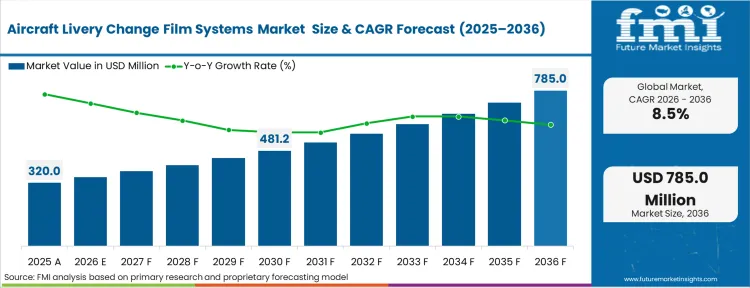
Growth in the sector remains gated by the stabilization of edge-sealant performance under transonic speeds and extreme thermal cycling. While decals have long served as minor identifiers, the move toward full-fuselage branding requires a fundamental shift in how maintenance teams perceive exterior protection. Once the commercial ROI of drag-reduction "sharkskin" films is successfully bundled with aesthetic branding, the market will cross an inflection point where paint is no longer the default choice for narrow-body short-haul operators. This transition will be accelerated by the increasing number of aircraft under lease, where the preservation of the original OEM finish is a contractual priority.
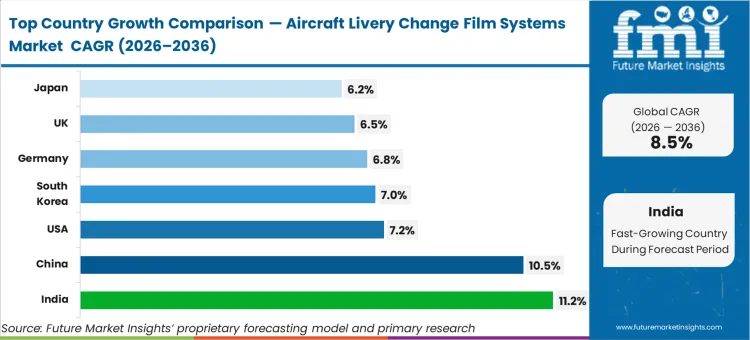
India records the fastest expansion at 11.2%, followed by China at 10.5% and the USA at 7.2%. South Korea's industrial sector tracks a 7.0% compound growth rate, while Germany is expected to garner 6.8% and the UK records 6.5%. Japan is likely to post a 6.2% CAGR as manufacturing hubs modernize their surface protection infrastructure to remain competitive. This geographic spread highlights a structural divergence between greenfield smart factory hubs in Asia and the longer-cycle brownfield retrofit demands characterizing Western economies.
Aircraft Livery Change Film Systems Market Key Takeaways
| Metric | Details |
|---|---|
| Industry Size (2026) | USD 347.2 million |
| Industry Value (2036) | USD 784.7 million |
| CAGR (2026-2036) | 8.50% |
Source: Future Market Insights (FMI) analysis
Aircraft Livery Change Film Systems Market Definition
Aircraft livery change film systems refer to specialized, high-performance adhesive films used to replace or overlay traditional liquid paint for aircraft branding. These systems utilize multi-layer polymer structures designed to withstand extreme UV radiation, subsonic friction, and rapid thermal fluctuations while maintaining aerodynamic integrity and allowing for rapid removal without substrate damage.
Aircraft Livery Change Film Systems Market Inclusions
The market includes all certified aircraft coatings films such as cast vinyl, fluoro-polymers, and polyurethane wraps. It covers the supply of specialty adhesives, edge-sealants, and digital printing services specifically for aviation exteriors. Professional services related to the application, testing, and removal of these films within MRO facilities are also included.
Aircraft Livery Change Film Systems Market Exclusions
Excluded are standard automotive-grade vinyl wraps that do not meet aerospace burn-rate or durability standards. The market excludes general marking tapes, cabin interior decals, and permanent chemical stripping agents. Standard liquid paint supplies and non-adhesive aerodynamic structures like winglets are also outside the scope.
Aircraft Livery Change Film Systems Market Research Methodology
- Primary Research: FMI conducted interviews with MRO facility directors, airline procurement leads, and material scientists at major aerospace film manufacturers to determine real-world adoption rates.
- Desk Research: Analysis involved examining FAA/EASA certification databases, IATA fleet modernization whitepapers, and the chemical resistance profiles of advanced adhesive systems.
- Market-Sizing and Forecasting: The baseline anchors to the global narrow-body and wide-body aircraft delivery schedules and the average repainting frequency of leased commercial assets.
- Data Validation and Update Cycle: Forecasts were triangulated using airline financial reports on maintenance expenditure and cross-referenced with sales data from tier-1 aerospace suppliers.
Segment Analysis
Aircraft Livery Change Film Systems Market Analysis by Film Material
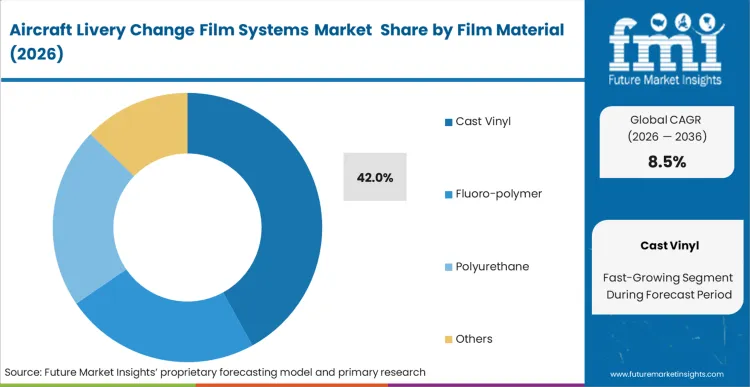
The reason cast vinyl holds 42.0% of this market comes down to a single operational reality: the aerospace skin is a landscape of rivets and varying curvatures that calendered films cannot navigate. This material is not chosen for its base cost. It is chosen because it is the only option that does not require maintenance teams to renegotiate their application timelines around complex geometry. FMI analysts observe that cast vinyl effectively manages the surface tension required to maintain a hermetic seal against moisture ingress, which is the primary cause of skin corrosion under traditional decals.
- Fastener Conformability: Cast vinyl flows into the complex recesses of aircraft rivets and nacelle seams during the application process, preventing the "tenting" effect.
- UV Stability Gradient: High-grade pigments embedded in the vinyl structure maintain color fidelity despite prolonged exposure to high-altitude solar radiation.
- Controlled Adhesion Profile: Specialized aerospace adhesives provide a controlled initial tack that allows for repositioning before reaching permanent bond strength.
Aircraft Livery Change Film Systems Market Analysis by Aircraft Type
The shift toward narrow-body dominance in the film sector is a direct consequence of the low-cost carrier (LCC) model, where aircraft utilization is the primary driver of profitability. These operators cannot absorb the revenue loss of a 14-day paint job, preferring the modularity of an integrated sequencing system for branding and maintenance. As LCCs expand in emerging markets, the requirement for standardized, rapid-apply livery systems becomes a structural necessity rather than an aesthetic choice.
- Early Adopters: Short-haul LCCs adopt first to minimize downtime between brand refreshes and seasonal special liveries.
- Secondary Tier: Flag carriers follow for their regional feeder fleets where asset flexibility is more valuable than flagship aesthetics.
- Laggard Conversion: Military and wide-body operators arrive last, converting only as functional films prove their durability in combat or long-haul thermal cycling.
Aircraft Livery Change Film Systems Market Analysis by Sales Channel
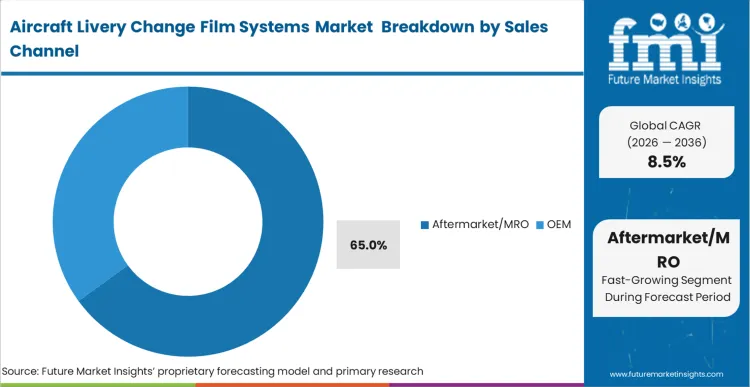
The aftermarket and MRO channel is where the true commercial stakes of the livery film market are realized, accounting for 65.0% of the total opportunity. When an aircraft is grounded for its 6-year heavy maintenance check, every hour of unscheduled delay costs the carrier tens of thousands of dollars, making the speed of an exterior coating film the deciding factor. Sourcing managers at MROs are moving away from inventory-heavy paint supplies toward on-demand digital film production that matches the specific tail number's branding requirements.
- Inventory Reduction: MRO facilities eliminate the need for temperature-controlled storage of hundreds of liquid paint variants.
- Labor Arbitrage: Film application requires fewer specialized technicians than a multi-stage robotic or manual painting process.
- Lifecycle Comparison: While film material has a higher unit cost, the total lifecycle comparison shows a 25% saving when accounting for reduced grounding time.
Regional Analysis
.webp "Top Country Growth Comparison Aircraft Livery Change Film Systems Market Cagr (2026 2036)")
| Country | CAGR (2026 to 2036) |
|---|---|
| India | 11.2% |
| China | 10.5% |
| USA | 7.2% |
| South Korea | 7.0% |
| Germany | 6.8% |
| UK | 6.5% |
| Japan | 6.2% |
Asia Pacific Aircraft Livery Change Film Systems Market Analysis
The structural growth in the Asia Pacific region is anchored by the massive expansion of low-cost carrier (LCC) fleets in India and China, where high utilization and rapid brand refreshes are the norm. This region is witnessing a fundamental shift in its MRO infrastructure, as new facilities are being designed from the ground up to support dry-film application rather than traditional wet-paint booths.
- India: India's rapid deregulation and the subsequent surge in narrow-body orders are forcing domestic MROs to adopt film systems to meet volume demand. The market is advancing at 11.2% compound between 2026 and 2036. Companies that move first capture preferred supplier status in procurement frameworks for the thousands of new aircraft entering the domestic corridor.
- China: China's state-led initiatives to localize its aerospace supply chain are driving the development of indigenous fluoro-polymer film technologies. The market Advances at 10.5% compound between 2026 and 2036, reflecting a rate of compliance-led capital refresh that tracks the national fleet modernization calendar.
- South Korea: South Korea's highly concentrated aviation market is leveraging films to maintain a premium brand image while reducing the labor intensity of its MRO operations. The market advances at 7.0% compound between 2026 and 2036, reflecting the integration of advanced pretreatment coatings within a unified film delivery strategy.
- Japan: Japan's focus on material perfection and asset longevity makes livery films the ideal solution for protecting expensive wide-body assets from abrasive regional routes. The market advances at 6.2% compound between 2026 and 2036, resulting in a fleet that maintains higher residual value during the lease-return phase.
North America Aircraft Livery Change Film Systems Market Analysis
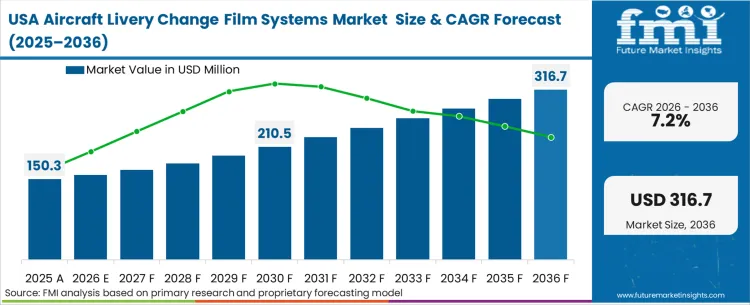
The North American market is shaped by a policy-led structural transition toward sustainability and a robust secondary market for aircraft leasing. Stringent VOC emission standards are making large-scale chemical painting operations increasingly expensive, pushing airlines toward dry-film alternatives.
- USA: The United States' vast MRO network is under pressure to reduce environmental impact while maintaining the branding needs of major legacy carriers. The market advances at 7.2% compound between 2026 and 2036. US carriers that integrate film-based branding gain a competitive edge in managing the stealth coatings and aesthetic requirements of their diverse fleet profiles.
Europe Aircraft Livery Change Film Systems Market Analysis
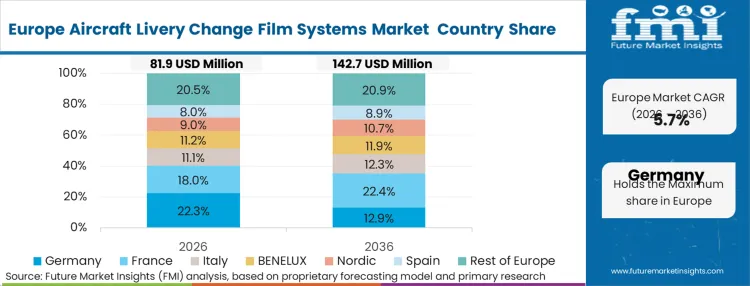
Economics-led drivers dominate the European market, where the high cost of fuel and the maturation of carbon trading schemes are forcing airlines to find every possible aerodynamic advantage.
- Germany: Germany's aerospace sector is defined by a rigorous focus on the practitioner reality of film application, where the gap between lab-tested adhesion and real-world MRO conditions is carefully managed. The market is advancing at 6.8% compound between 2026 and 2036. Local practitioners emphasize that the CAGR figure misses the structural shift toward high-margin functional films.
- UK: The United Kingdom's aviation market is leveraging livery films to manage the branding of its highly fragmented regional and charter airlines. The market is advancing at 6.5% compound between 2026 and 2036. UK operators who adopt films capture the commercial opportunity of rapid rebranding for seasonal charter contracts that would be economically impossible using paint.
Competitive Aligners for Market Players
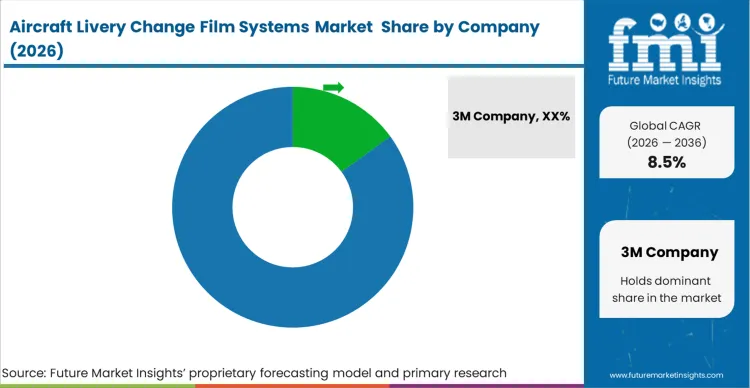
The structural concentration of the aircraft livery film market is driven by the extreme material science requirements of aviation, which creates high barriers for generalist film manufacturers. Leading companies like 3M and Avery Dennison dominate because they have secured the necessary FAA/EASA technical standard orders that smaller competitors cannot easily replicate. This structural advantage is protected by the high cost of the certification process itself.
Buyer power in the market is increasingly concentrated among large aircraft lessors, who are the ultimate arbiters of exterior protection standards. These institutional buyers are moving toward specialized fire-resistant paints and film combinations to ensure safety compliance while maintaining branding modularity. As the market matures, we expect to see more consolidation among installers as the complexity of functional-aesthetic film systems requires a level of global integration that only the largest players can sustain.
Key Players in Aircraft Livery Change Film Systems Market
- 3M Company
- Avery Dennison Corporation
- AkzoNobel N.V.
- PPG Industries, Inc.
- Mankiewicz Gebr. & Co.
- Lufthansa Technik AG (AeroShark)
- ADHETEC
- Eirtech Aviation Services
- Larchfield Aerospace & Graphics
- Aviation Graphix
- ABC International
- Kontraproduções
- Logo Sky
- J&C Aero
- Lantal Textiles AG
Scope of the Report
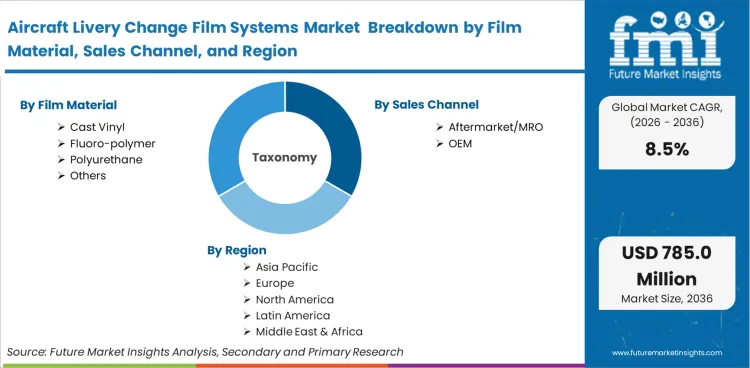
| Metric | Value |
|---|---|
| Quantitative Units | USD 347.2 million in 2026 to USD 784.7 million by 2036, at a CAGR of 8.50% |
| Market Definition | Functional boundary covering specialized high-performance adhesive films for aircraft exterior branding and protection, excluding traditional liquid paints. |
| Film Material Segmentation | Cast Vinyl, Fluoro-polymer, Polyurethane, Others |
| Aircraft Type Segmentation | Narrow-body, Wide-body, Regional & General, Military |
| Sales Channel Segmentation | OEM, Aftermarket/MRO |
| Regions Covered | North America, Europe, Asia Pacific, Middle East & Africa, Latin America |
| Countries Covered | India, China, USA, South Korea, Germany, UK, Japan, and 40 plus countries |
| Key Companies Profiled | 3M Company, Avery Dennison Corporation, AkzoNobel, PPG Industries, Mankiewicz, Lufthansa Technik, ADHETEC |
| Forecast Period | 2026 to 2036 |
| Approach | Primary interviews with airline MRO directors, baseline anchoring to global fleet renewal cycles, and validation through tier-1 aerospace film shipment data. |
Source: Future Market Insights (FMI) analysis, based on proprietary forecasting model and primary research
Aircraft Livery Change Film Systems Market Analysis by Segments
Film Material:
- Cast Vinyl
- Fluoro-polymer
- Polyurethane
- Others
Aircraft Type:
- Narrow-body
- Wide-body
- Regional & General
- Military
Sales Channel:
- OEM
- Aftermarket/MRO
Region:
- North America
- USA
- Canada
- Europe
- Germany
- UK
- France
- Italy
- Spain
- Asia Pacific
- India
- China
- Japan
- South Korea
- Australia
- Middle East & Africa
- Saudi Arabia
- UAE
- South Africa
- Latin America
- Brazil
- Mexico
Bibliography
- ADHETEC. (2024, November). High-speed exterior decals: Certification and durability standards for commercial aviation.
- Aerospace Manufacturing Magazine. (2024, September 12). The shift to dry-film: Optimizing aircraft exterior maintenance cycles.
- AkzoNobel Aerospace Coatings. (2024, May). Sustainability report 2024: Reducing VOC emissions in aircraft branding through film-based systems.
- Aviation Week Network. (2024, July 18). MRO trends: Why narrow-body operators are abandoning traditional paint for film overlays.
- European Union Aviation Safety Agency. (2024, March 15). CS-25 Amendment 27: Certification specifications for large aeroplanes – Exterior markings and decals.
- International Air Transport Association. (2024, June). MRO smart guide: Best practices for aircraft asset preservation and branding flexibility.
- Lufthansa Technik. (2024, August). Operational data release: Fuel efficiency gains through AeroShark riblet film technology.
- PPG Aerospace. (2024, December). Advancements in fluoro-polymer film technology for wide-body aircraft thermal cycling resistance.
This bibliography is provided for reader reference. The full FMI report contains the complete reference list with primary source documentation.
This Report Addresses
- Market intelligence to support strategic decision making across cast vinyl, polyurethane, and fluoro-polymer film categories
- Market size estimation and 10-year revenue forecasts from 2026 to 2036, supported by aircraft fleet renewal and MRO cycle baseline analysis
- Growth opportunity mapping across narrow-body and wide-body dimensions with emphasis on the AeroShark-driven functional film adoption gate
- Segment and regional revenue forecasts covering India, China, and the USA across the high-velocity branding environment of low-cost carriers
- Competition strategy assessment including the certification moats of 3M, Avery Dennison, and the specialized installer network of ADHETEC
- Capability development tracking including high-conformability resin structures, edge-sealant durability, and zero-VOC compliance frameworks
- Market access analysis covering FAA/EASA burn-test certifications, lessor asset-preservation mandates, and IATA sustainability standards
- Market report delivery in PDF, Excel, PPT, and interactive dashboard formats for executive strategy, MRO capacity planning, and operational benchmarking use
Frequently Asked Questions
How large is the Aircraft Livery Change Film Systems Market in 2026?
The market is estimated to be valued at USD 347.2 million in 2026. This figure reflects the initial surge in narrow-body fleet refreshes as carriers pivot from pandemic-era maintenance delays toward rapid-apply film solutions for brand modernization.
What will it be valued at by 2036?
The market is projected to reach USD 784.7 million by 2036. This valuation signals a structural transformation where film systems become the industry standard for leased assets, moving away from being a boutique branding option toward a core component of MRO asset management.
What CAGR is projected for the Aircraft Livery Change Film Systems Market?
A CAGR of 8.50% is expected during the forecast period from 2026 to 2036. This growth rate is sustained by the disruption of traditional repainting cycles and the increasing qualification of functional films that offer measurable fuel savings alongside aesthetic branding.
Which Film Material segment leads the market?
Cast Vinyl leads the market with a 42.0% share in 2026. Its dominance is driven by the structural requirement for films to conform around thousands of aircraft rivets and complex curvatures without "tenting" or edge lifting, a mechanism that standard calendered films cannot replicate at subsonic speeds.
Which Aircraft Type segment leads the market?
Narrow-body aircraft lead the market with a 48.0% share. This leadership is explained by the operational reality of low-cost carriers, who prioritize the 72-hour turnaround time of film livery to maintain high aircraft utilization rates, unlike legacy wide-body fleets that follow longer maintenance cycles.
Which Sales Channel segment leads the market?
The Aftermarket/MRO channel leads with a 65.0% share. This is because most aircraft undergo multiple livery refreshes throughout their lifecycle to meet lessor requirements or brand updates, whereas the OEM livery is a single-event installation during the initial manufacturing process.
What drives rapid growth in the Aircraft Livery Change Film Systems Market?
The primary driver is the operational pressure to reduce aircraft grounding time from 14 days (for paint) to under 3 days (for film). This non-obvious mechanism is triggered by the high cost of hangar space and the revenue loss associated with out-of-service narrow-body aircraft in competitive markets like India and China.
What is the primary restraint in the market?
The primary restraint is the "adhesion skepticism" of aerospace maintenance directors regarding film integrity at transonic speeds. This structural hurdle persists because the safety culture of aviation requires decades of flight-hour data to validate that edge-sealant performance can match the chemical bonding of traditional polyurethane paint.
Which country grows the fastest in this market?
India is the fastest-growing market with an 11.2% CAGR, significantly outpacing the USA's 7.2% growth. This comparative difference is driven by India's massive greenfield narrow-body fleet orders and the rapid localization of dry-film MRO capabilities that do not have the legacy "paint-first" infrastructure found in Western economies.
How do aircraft lessors influence the adoption of livery films?
Lessors act as the structural gatekeepers by mandating films to protect the aircraft's original white base coating. By using films, operators can apply and remove brand liveries without the damaging sanding and stripping processes required for paint, effectively preserving the asset's residual value for the next lessee.
What is the significance of "Sharkskin" technology in the livery film market?
Riblet or sharkskin technology represents the functional evolution of livery films, where the film surface is engineered with microscopic grooves that reduce parasitic drag. Once this technology is bundled with branding, the film pays for itself through a 1-2% reduction in fuel burn, making the livery update a profit-center rather than a cost-center.
How does the market address the sustainability goals of modern airlines?
Livery films address sustainability by eliminating the thousands of gallons of chemical strippers and volatile organic compounds (VOCs) emitted during traditional repainting. This structural shift allows MRO facilities to operate in closer proximity to urban centers where environmental discharge regulations are most stringent.
Will livery films completely replace paint by 2036?
While films will dominate the narrow-body and regional sectors, paint will likely remain a boutique choice for long-haul wide-body flagships where the aesthetic depth of high-gloss liquid finishes is a brand requirement. The market is heading toward a hybrid model where paint provides the base and film provides the dynamic branding.
What is the typical lifespan of an aerospace livery film compared to paint?
Current aerospace films are certified for a 5-to-7-year service life, which perfectly aligns with the standard heavy-maintenance cycles of narrow-body aircraft. While paint can last longer, the modularity of film allows for a mid-cycle brand refresh that would be economically impossible with liquid coatings.
How does the weight of a film system compare to a full paint job?
A full film livery system can be up to 30% lighter than a multi-layer high-gloss paint system, particularly on wide-body aircraft. This mass reduction translates directly into fuel savings and carbon emission credits, providing a secondary ROI that simplifies the procurement decision for long-haul carriers.
What are the primary technical challenges for film application in cold climates?
In regions like North America and Northern Europe, films must withstand extreme thermal shocks, from -50°C at altitude to rapid heating during de-icing on the ground. This requires specialized adhesive chemistries that remain flexible at sub-zero temperatures to prevent brittle-cracking and delamination.
How does FMI validate its data for this specialized aviation niche?
FMI anchors its data to verified aircraft delivery backlogs from Boeing and Airbus and cross-references this with the announced capacity expansions of global MRO leaders. This is then triangulated with material shipment data from specialized aerospace chemical and film providers like 3M and PPG.
What is the role of digital printing in the livery film market?
Digital printing eliminates the need for complex masking and multi-color paint layers, allowing for photographic-quality graphics to be applied in a single pass. This capability is what enables "special event" liveries for sports partnerships to be deployed and removed within the duration of a single tournament.
Are there specialized films for military aircraft liveries?
Yes, the military segment utilizes specialized matte and radar-absorbent films that provide low-observable characteristics while allowing for rapid tactical numbering changes. These films must meet even higher abrasion-resistance standards than commercial variants to survive low-altitude, high-speed maneuvers.
How does the "edge-sealant" technology prevent film delamination?
Edge-sealants are specialized liquid resins applied to the perimeter of every film panel to "lock" the adhesive layer against high-pressure airflow. The failure of this single component is what practitioners fear most, making edge-sealant qualification a critical part of any certified livery film system.
What impact does the "narrow-body boom" have on the UK livery market?
The UK market is benefiting from a structural shift toward long-range narrow-body aircraft like the A321XLR, which require rapid-change livery systems to service a rotating mix of secondary European city routes. This drives a 6.5% CAGR as maintenance hubs in the UK adapt to these high-velocity branding demands.
How does the US regulatory environment differ from the APAC region for film usage?
In the USA, adoption is driven by strict environmental policy and a mature lessor market, whereas in APAC, growth is driven by infrastructure necessity and the lack of legacy painting facilities. This structural difference means that US carriers use films to avoid penalties, while APAC carriers use them to enable rapid growth.
Preview the report firsthand - request a free sample
Get SampleGet the brochure for pricing and purchase details.
Get PDFTable of Content
- Executive Summary
- Global Market Outlook
- Demand-side Trends
- Supply-side Trends
- Analysis and Recommendations
- Market Overview
- Market Coverage / Taxonomy
- Market Definition / Scope / Limitations
- Research Methodology
- Chapter Orientation
- Analytical Lens and Working Hypotheses
- Market Structure, Signals, and Trend Drivers
- Research Design and Evidence Framework
- Desk Research Programme (Secondary Evidence)
- Company Annual and Sustainability Reports
- Peer-reviewed Journals and Academic Literature
- Corporate Websites, Product Literature, and Technical Notes
- Earnings Decks and Investor Briefings
- Statutory Filings and Regulatory Disclosures
- Technical White Papers and Standards Notes
- Trade Journals, Industry Magazines, and Analyst Briefs
- Conference Proceedings, Webinars, and Seminar Materials
- Government Statistics Portals and Public Data Releases
- Press Releases and Reputable Media Coverage
- Specialist Newsletters and Curated Briefings
- Sector Databases and Reference Repositories
- FMI Internal Proprietary Databases and Historical Market Datasets
- Subscription Datasets and Paid Sources
- Social Channels, Communities, and Digital Listening Inputs
- Additional Desk Sources
- Expert Input and Fieldwork (Primary Evidence)
- Primary Modes
- Qualitative Interviews and Expert Elicitation
- Quantitative Surveys and Structured Data Capture
- Blended Approach
- Why Primary Evidence is Used
- Field Techniques
- Interviews
- Surveys
- Focus Groups
- Observational and In-context Research
- Social and Community Interactions
- Stakeholder Universe Engaged
- C-suite Leaders
- Board Members
- Presidents and Vice Presidents
- R&D and Innovation Heads
- Technical Specialists
- Domain Subject-matter Experts
- Scientists
- Physicians and Other Healthcare Professionals
- Governance, Ethics, and Data Stewardship
- Research Ethics
- Data Integrity and Handling
- Primary Modes
- Tooling, Models, and Reference Databases
- Desk Research Programme (Secondary Evidence)
- Data Engineering and Model Build
- Data Acquisition and Ingestion
- Cleaning, Normalisation, and Verification
- Synthesis, Triangulation, and Analysis
- Quality Assurance and Audit Trail
- Market Background
- Market Dynamics
- Drivers
- Restraints
- Opportunity
- Trends
- Scenario Forecast
- Demand in Optimistic Scenario
- Demand in Likely Scenario
- Demand in Conservative Scenario
- Opportunity Map Analysis
- Product Life Cycle Analysis
- Supply Chain Analysis
- Investment Feasibility Matrix
- Value Chain Analysis
- PESTLE and Porter’s Analysis
- Regulatory Landscape
- Regional Parent Market Outlook
- Production and Consumption Statistics
- Import and Export Statistics
- Market Dynamics
- Global Market Analysis 2021 to 2025 and Forecast, 2026 to 2036
- Historical Market Size Value (USD Million) Analysis, 2021 to 2025
- Current and Future Market Size Value (USD Million) Projections, 2026 to 2036
- Y-o-Y Growth Trend Analysis
- Absolute $ Opportunity Analysis
- Global Market Pricing Analysis 2021 to 2025 and Forecast 2026 to 2036
- Global Market Analysis 2021 to 2025 and Forecast 2026 to 2036, By Film Material
- Introduction / Key Findings
- Historical Market Size Value (USD Million) Analysis By Film Material , 2021 to 2025
- Current and Future Market Size Value (USD Million) Analysis and Forecast By Film Material , 2026 to 2036
- Cast Vinyl
- Fluoro-polymer
- Polyurethane
- Others
- Cast Vinyl
- Y-o-Y Growth Trend Analysis By Film Material , 2021 to 2025
- Absolute $ Opportunity Analysis By Film Material , 2026 to 2036
- Global Market Analysis 2021 to 2025 and Forecast 2026 to 2036, By Sales Channel
- Introduction / Key Findings
- Historical Market Size Value (USD Million) Analysis By Sales Channel, 2021 to 2025
- Current and Future Market Size Value (USD Million) Analysis and Forecast By Sales Channel, 2026 to 2036
- Aftermarket/MRO
- OEM
- Aftermarket/MRO
- Y-o-Y Growth Trend Analysis By Sales Channel, 2021 to 2025
- Absolute $ Opportunity Analysis By Sales Channel, 2026 to 2036
- Global Market Analysis 2021 to 2025 and Forecast 2026 to 2036, By Region
- Introduction
- Historical Market Size Value (USD Million) Analysis By Region, 2021 to 2025
- Current Market Size Value (USD Million) Analysis and Forecast By Region, 2026 to 2036
- North America
- Latin America
- Western Europe
- Eastern Europe
- East Asia
- South Asia and Pacific
- Middle East & Africa
- Market Attractiveness Analysis By Region
- North America Market Analysis 2021 to 2025 and Forecast 2026 to 2036, By Country
- Historical Market Size Value (USD Million) Trend Analysis By Market Taxonomy, 2021 to 2025
- Market Size Value (USD Million) Forecast By Market Taxonomy, 2026 to 2036
- By Country
- USA
- Canada
- Mexico
- By Film Material
- By Sales Channel
- By Country
- Market Attractiveness Analysis
- By Country
- By Film Material
- By Sales Channel
- Key Takeaways
- Latin America Market Analysis 2021 to 2025 and Forecast 2026 to 2036, By Country
- Historical Market Size Value (USD Million) Trend Analysis By Market Taxonomy, 2021 to 2025
- Market Size Value (USD Million) Forecast By Market Taxonomy, 2026 to 2036
- By Country
- Brazil
- Chile
- Rest of Latin America
- By Film Material
- By Sales Channel
- By Country
- Market Attractiveness Analysis
- By Country
- By Film Material
- By Sales Channel
- Key Takeaways
- Western Europe Market Analysis 2021 to 2025 and Forecast 2026 to 2036, By Country
- Historical Market Size Value (USD Million) Trend Analysis By Market Taxonomy, 2021 to 2025
- Market Size Value (USD Million) Forecast By Market Taxonomy, 2026 to 2036
- By Country
- Germany
- UK
- Italy
- Spain
- France
- Nordic
- BENELUX
- Rest of Western Europe
- By Film Material
- By Sales Channel
- By Country
- Market Attractiveness Analysis
- By Country
- By Film Material
- By Sales Channel
- Key Takeaways
- Eastern Europe Market Analysis 2021 to 2025 and Forecast 2026 to 2036, By Country
- Historical Market Size Value (USD Million) Trend Analysis By Market Taxonomy, 2021 to 2025
- Market Size Value (USD Million) Forecast By Market Taxonomy, 2026 to 2036
- By Country
- Russia
- Poland
- Hungary
- Balkan & Baltic
- Rest of Eastern Europe
- By Film Material
- By Sales Channel
- By Country
- Market Attractiveness Analysis
- By Country
- By Film Material
- By Sales Channel
- Key Takeaways
- East Asia Market Analysis 2021 to 2025 and Forecast 2026 to 2036, By Country
- Historical Market Size Value (USD Million) Trend Analysis By Market Taxonomy, 2021 to 2025
- Market Size Value (USD Million) Forecast By Market Taxonomy, 2026 to 2036
- By Country
- China
- Japan
- South Korea
- By Film Material
- By Sales Channel
- By Country
- Market Attractiveness Analysis
- By Country
- By Film Material
- By Sales Channel
- Key Takeaways
- South Asia and Pacific Market Analysis 2021 to 2025 and Forecast 2026 to 2036, By Country
- Historical Market Size Value (USD Million) Trend Analysis By Market Taxonomy, 2021 to 2025
- Market Size Value (USD Million) Forecast By Market Taxonomy, 2026 to 2036
- By Country
- India
- ASEAN
- Australia & New Zealand
- Rest of South Asia and Pacific
- By Film Material
- By Sales Channel
- By Country
- Market Attractiveness Analysis
- By Country
- By Film Material
- By Sales Channel
- Key Takeaways
- Middle East & Africa Market Analysis 2021 to 2025 and Forecast 2026 to 2036, By Country
- Historical Market Size Value (USD Million) Trend Analysis By Market Taxonomy, 2021 to 2025
- Market Size Value (USD Million) Forecast By Market Taxonomy, 2026 to 2036
- By Country
- Kingdom of Saudi Arabia
- Other GCC Countries
- Turkiye
- South Africa
- Other African Union
- Rest of Middle East & Africa
- By Film Material
- By Sales Channel
- By Country
- Market Attractiveness Analysis
- By Country
- By Film Material
- By Sales Channel
- Key Takeaways
- Key Countries Market Analysis
- USA
- Pricing Analysis
- Market Share Analysis, 2025
- By Film Material
- By Sales Channel
- Canada
- Pricing Analysis
- Market Share Analysis, 2025
- By Film Material
- By Sales Channel
- Mexico
- Pricing Analysis
- Market Share Analysis, 2025
- By Film Material
- By Sales Channel
- Brazil
- Pricing Analysis
- Market Share Analysis, 2025
- By Film Material
- By Sales Channel
- Chile
- Pricing Analysis
- Market Share Analysis, 2025
- By Film Material
- By Sales Channel
- Germany
- Pricing Analysis
- Market Share Analysis, 2025
- By Film Material
- By Sales Channel
- UK
- Pricing Analysis
- Market Share Analysis, 2025
- By Film Material
- By Sales Channel
- Italy
- Pricing Analysis
- Market Share Analysis, 2025
- By Film Material
- By Sales Channel
- Spain
- Pricing Analysis
- Market Share Analysis, 2025
- By Film Material
- By Sales Channel
- France
- Pricing Analysis
- Market Share Analysis, 2025
- By Film Material
- By Sales Channel
- India
- Pricing Analysis
- Market Share Analysis, 2025
- By Film Material
- By Sales Channel
- ASEAN
- Pricing Analysis
- Market Share Analysis, 2025
- By Film Material
- By Sales Channel
- Australia & New Zealand
- Pricing Analysis
- Market Share Analysis, 2025
- By Film Material
- By Sales Channel
- China
- Pricing Analysis
- Market Share Analysis, 2025
- By Film Material
- By Sales Channel
- Japan
- Pricing Analysis
- Market Share Analysis, 2025
- By Film Material
- By Sales Channel
- South Korea
- Pricing Analysis
- Market Share Analysis, 2025
- By Film Material
- By Sales Channel
- Russia
- Pricing Analysis
- Market Share Analysis, 2025
- By Film Material
- By Sales Channel
- Poland
- Pricing Analysis
- Market Share Analysis, 2025
- By Film Material
- By Sales Channel
- Hungary
- Pricing Analysis
- Market Share Analysis, 2025
- By Film Material
- By Sales Channel
- Kingdom of Saudi Arabia
- Pricing Analysis
- Market Share Analysis, 2025
- By Film Material
- By Sales Channel
- Turkiye
- Pricing Analysis
- Market Share Analysis, 2025
- By Film Material
- By Sales Channel
- South Africa
- Pricing Analysis
- Market Share Analysis, 2025
- By Film Material
- By Sales Channel
- USA
- Market Structure Analysis
- Competition Dashboard
- Competition Benchmarking
- Market Share Analysis of Top Players
- By Regional
- By Film Material
- By Sales Channel
- Competition Analysis
- Competition Deep Dive
- 3M Company
- Overview
- Product Portfolio
- Profitability by Market Segments (Product/Age /Sales Channel/Region)
- Sales Footprint
- Strategy Overview
- Marketing Strategy
- Product Strategy
- Channel Strategy
- Avery Dennison Corporation
- AkzoNobel N.V.
- PPG Industries, Inc.
- Mankiewicz Gebr. & Co.
- Lufthansa Technik AG (AeroShark)
- ADHETEC
- Eirtech Aviation Services
- Larchfield Aerospace & Graphics
- Aviation Graphix
- ABC International
- Kontraproduções
- Logo Sky
- J&C Aero
- Lantal Textiles AG
- 3M Company
- Competition Deep Dive
- Assumptions & Acronyms Used


