

- Industry Size (2026)
- USD 390 Mn
- Forecast (2036)
- USD 1230 Mn
- CAGR (2026 to 2036)
- 11.8%
Self-Healing Polyurethane Topcoats for Aircraft Exteriors Market Forecast and Outlook 2026 to 2036
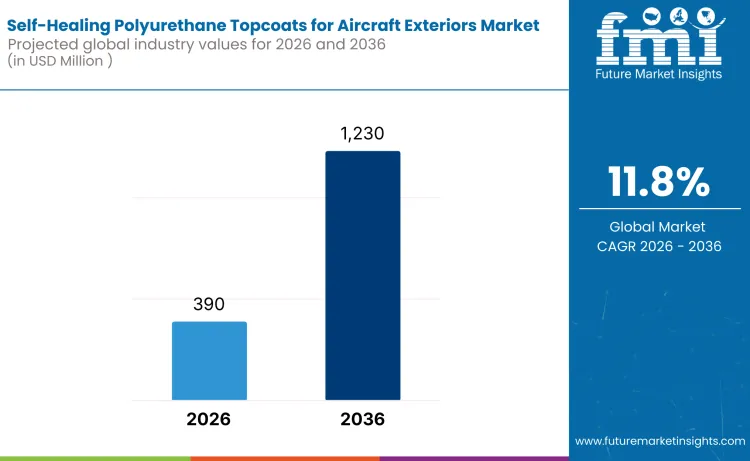
The global self-healing polyurethane topcoats for aircraft exteriors market, valued at USD 390 million in 2026, is projected to grow to USD 1,230 million by 2036, with a CAGR of 11.8%. This market expansion is driven by the increasing demand for advanced coatings that enhance durability and reduce maintenance needs in the aerospace industry.
Microcapsule-enabled self-healing polyurethane coatings, which account for 37% of the coating type market share, are widely adopted for their ability to automatically repair surface damage, extending the life of aircraft exteriors and improving cost efficiency. Commercial aircraft, which represent 48% of the application segment, are the largest consumers of these coatings due to the need for coatings that protect against wear, corrosion, and environmental damage. The market’s growth is further supported by the aviation industry's focus on reducing downtime and maintenance costs while improving aircraft performance and longevity.
Quick Stats for Self-Healing Polyurethane Topcoats for Aircraft Exteriors Market
- Self-Healing Polyurethane Topcoats for Aircraft Exteriors Market Value (2026): USD 390 million
- Self-Healing Polyurethane Topcoats for Aircraft Exteriors Market Forecast Value (2036): USD 1,230 million
- Self-Healing Polyurethane Topcoats for Aircraft Exteriors Market Global Forecast CAGR (2026 to 2036): 11.8%
- Top Application by Share in Self-Healing Polyurethane Topcoats for Aircraft Exteriors Market: Commercial Aircraft (48%)
- Key Growth Regions in Self-Healing Polyurethane Topcoats for Aircraft Exteriors Market: China, India, USA, UK, Japan
- Top Players in Self-Healing Polyurethane Topcoats for Aircraft Exteriors Market: PPG Aerospace, AkzoNobel Aerospace Coatings, Hentzen Coatings, Sherwin-Williams Aerospace, Boeing
Self-Healing Polyurethane Topcoats for Aircraft Exteriors Market Key Takeaways
| Metric | Value |
|---|---|
| Industry Sales Value (2025) | USD 390 million |
| Industry Forecast Value (2035) | USD 1,230 million |
| Industry Forecast CAGR (2025 to 2035) | 11.8% |
What Are the Key Segments in Self-Healing Polyurethane Topcoats for Aircraft Exteriors Market?
The self-healing polyurethane topcoats for aircraft exteriors market is segmented by coating type and application. Microcapsule-enabled self-healing polyurethane leads the coating type segment with 37% of the market share, offering an effective solution for damage repair. Commercial aircraft represent 48% of the application segment, driven by the need for enhanced durability and reduced maintenance. The market is growing as the demand for advanced coatings that extend the lifespan of aircraft and reduce operational costs increases.
Which Coating Type Drives Self-Healing Polyurethane Topcoats for Aircraft Exteriors Market Demand Globally?
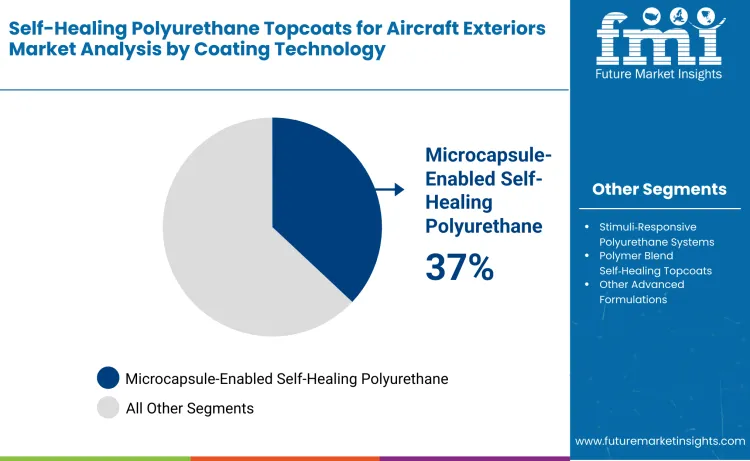
Microcapsule-enabled self-healing polyurethane accounts for 37% of the market share. This coating type uses microcapsules that contain healing agents, which are released upon the occurrence of damage (such as scratches or chips), allowing the coating to repair itself. This technology is particularly valuable for aircraft exteriors, where exposure to harsh environmental conditions, abrasions, and minor impacts can lead to damage. The self-healing properties help maintain the integrity of the coating, reducing the need for frequent touch-ups and repairs, which can be time-consuming and costly.
The growing focus on reducing maintenance costs, enhancing aircraft longevity, and improving operational efficiency in the commercial aviation sector is driving the demand for microcapsule-enabled self-healing polyurethane topcoats. Additionally, the ability of these coatings to preserve the aesthetic and functional properties of aircraft exteriors makes them an attractive solution for the aviation industry, further contributing to their widespread adoption
Which Application Drives Self-Healing Polyurethane Topcoats for Aircraft Exteriors Market Demand Globally?
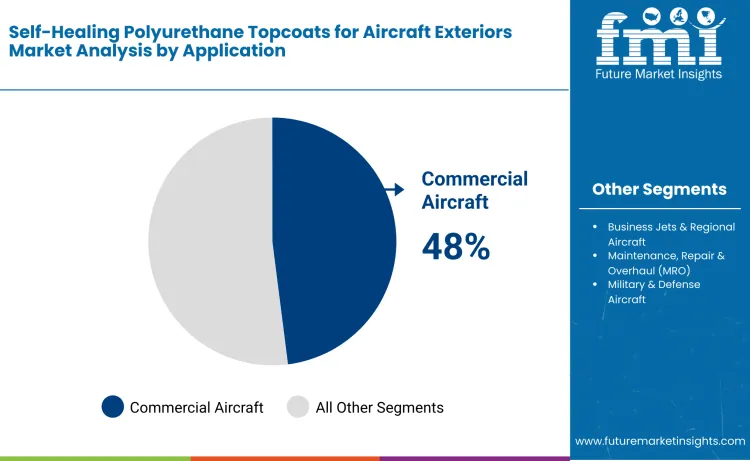
Commercial aircraft lead the application segment with 48% of the market share. The demand for self-healing polyurethane topcoats in commercial aviation is driven by the need to reduce maintenance costs and improve the durability of aircraft exteriors. Commercial aircraft are frequently exposed to environmental factors, such as UV radiation, rain, and hail, which can cause wear and tear over time. Self-healing coatings offer an effective way to maintain the appearance and functionality of the aircraft while extending the lifespan of the exterior coatings. As airlines look for ways to reduce downtime and maintenance costs, the adoption of self-healing polyurethane topcoats continues to grow.
The ability to minimize surface damage and reduce the frequency of repainting and repairs is particularly valuable for commercial airlines operating large fleets. Although other applications, such as business jets & regional aircraft, MRO, and military & defense aircraft, are also growing, commercial aircraft remain the dominant application due to the scale of the global airline industry and the increasing need for efficient, cost-effective maintenance solutions.
What is the Key Trends of the Global Self Healing Polyurethane Topcoats for Aircraft Exteriors Market?
The global self‑healing polyurethane topcoats for aircraft exteriors market is expanding as aerospace operators and manufacturers seek coatings that extend surface life and reduce maintenance cycles. Self‑healing technology allows micro‑damage on aircraft skins to recover over time, improving durability under abrasion, weathering and routine operations. Adoption is supported by rising air travel demand, fleet expansions, and emphasis on operational efficiency. These coatings are used to protect fuselage, wings and high‑stress areas where environmental exposure can lead to surface degradation. The market reflects a focus on performance and lifecycle cost reduction.
What are the Key Drivers for the Global Self‑Healing Polyurethane Topcoats for Aircraft Exteriors Market?
One driver is the need to improve aircraft exterior resilience and reduce downtime for maintenance and repair. Frequent exposure to debris, weather, cleaning processes and ground handling accelerates surface wear, encouraging adoption of advanced coatings that autonomously repair minor damage. Airlines and maintenance providers value technologies that support longer service intervals and lower repair costs. Regulatory expectations for aircraft exterior reliability and safety also support use of high‑performance surface systems. Advances in polymer science that enhance self‑healing properties and compatibility with aerospace substrates further motivate integration by original equipment manufacturers and retrofit programs.
What are the Restraints for the Global Self‑Healing Polyurethane Topcoats for Aircraft Exteriors Market?
One restraint is the complexity and cost of developing and qualifying self‑healing polyurethane chemistries that meet stringent aviation standards. Certification processes for new materials require extensive testing to demonstrate performance under varied flight conditions, environmental stressors and long‑term exposure. Higher initial cost of advanced coatings compared with conventional topcoats may cause hesitation among operators focused on short‑term expenditure. Integration of new surface systems into existing maintenance regimes requires planning and training of maintenance personnel. Supply chain readiness and availability of specialized application equipment also influence adoption speed in different regions.
What is the Country-Wise Outlook for Self-Healing Polyurethane Topcoats for Aircraft Exteriors?
The self-healing polyurethane topcoats for aircraft exteriors market is experiencing strong growth across key countries, driven by increasing demand for durable, high-performance coatings in the aerospace industry. Countries like China, India, and the USA are leading this growth due to their expanding aviation sectors and the rising focus on enhancing the longevity and performance of aircraft exteriors. Self-healing coatings offer significant advantages by improving aircraft durability and reducing maintenance costs. As airlines and manufacturers continue to invest in innovative technologies to enhance aircraft performance, the market for self-healing polyurethane topcoats is expected to expand across these regions.
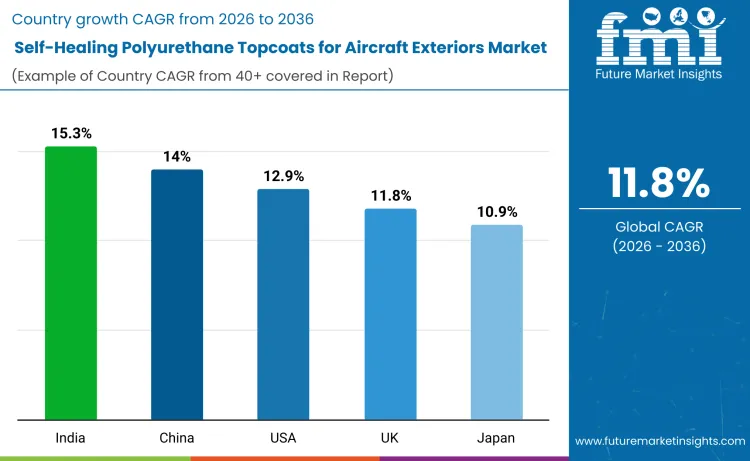
| Country | CAGR (2026 to 2036) |
|---|---|
| China | 14% |
| India | 15.3% |
| USA | 12.9% |
| UK | 11.8% |
| Japan | 10.9% |
What is Driving the Growth of Self-Healing Polyurethane Topcoats for Aircraft Exteriors in China?
China’s Self-Healing Polyurethane Topcoats for Aircraft Exteriors market is projected to grow at a CAGR of 14%. The rapid expansion of China’s aviation industry and the increasing need for high-performance, long-lasting coatings are driving the demand for self-healing topcoats. These coatings offer significant benefits in reducing maintenance costs and extending the lifespan of aircraft exteriors. As China continues to modernize its fleet and prioritize aircraft durability and fuel efficiency, the adoption of advanced coatings like self-healing polyurethane topcoats is expected to increase. This, combined with China’s investment in aerospace innovation, supports the growth of the market.
What is Contributing to the Growth of Self-Healing Polyurethane Topcoats for Aircraft Exteriors in India?
India’s Self-Healing Polyurethane Topcoats for Aircraft Exteriors market is expected to grow at an impressive CAGR of 15.3%. India’s rapidly growing aviation sector, coupled with increasing investments in fleet modernization and aircraft maintenance, is driving the demand for advanced coatings. Self-healing polyurethane topcoats offer a practical solution for reducing maintenance needs and enhancing aircraft durability, which is crucial as India continues to expand its commercial fleet. As airlines and aircraft manufacturers in India prioritize cost-effective and sustainable solutions to improve aircraft performance, the market for self-healing coatings is expected to experience robust growth.
What is Driving the Self-Healing Polyurethane Topcoats for Aircraft Exteriors Market Growth in the USA?
The USA’s Self-Healing Polyurethane Topcoats for Aircraft Exteriors market is projected to grow at a CAGR of 12.9%. The USA has a well-established aerospace industry, and the growing emphasis on reducing operational costs and improving aircraft performance is fueling the demand for self-healing coatings. These coatings help to protect aircraft exteriors from damage and wear, reducing the need for frequent repairs and extending the lifespan of aircraft. With the increasing focus on improving aircraft durability and minimizing maintenance downtime, the demand for self-healing polyurethane topcoats is expected to grow, especially as manufacturers continue to invest in more advanced technologies.
What is Influencing the Growth of Self-Healing Polyurethane Topcoats for Aircraft Exteriors in the UK?
The UK’s Self-Healing Polyurethane Topcoats for Aircraft Exteriors market is expected to grow at a CAGR of 11.8%. As the UK’s aerospace sector continues to focus on improving aircraft performance, fuel efficiency, and reducing maintenance costs, the demand for self-healing coatings is on the rise. These coatings provide significant advantages by reducing damage from environmental factors and minimizing the need for frequent repairs. The UK’s focus on sustainability and innovation in aerospace technologies, along with the increasing use of advanced coatings to improve aircraft longevity, is expected to drive the growth of the self-healing polyurethane topcoats market.
What is Contributing to the Growth of Self-Healing Polyurethane Topcoats for Aircraft Exteriors in Japan?
Japan’s Self-Healing Polyurethane Topcoats for Aircraft Exteriors market is projected to grow at a CAGR of 10.9%. Japan’s aerospace industry is focused on increasing aircraft efficiency and reducing operating costs, and self-healing coatings provide a solution to enhance the durability of aircraft exteriors. As Japan continues to modernize its commercial fleet and invests in cutting-edge technologies, the demand for self-healing coatings is growing. The benefits of reduced maintenance and increased longevity are particularly attractive in Japan’s competitive aviation market, which drives the adoption of self-healing polyurethane topcoats for aircraft exteriors.
What is the Competitive Landscape for the Self Healing Polyurethane Topcoats for Aircraft Exteriors Market?
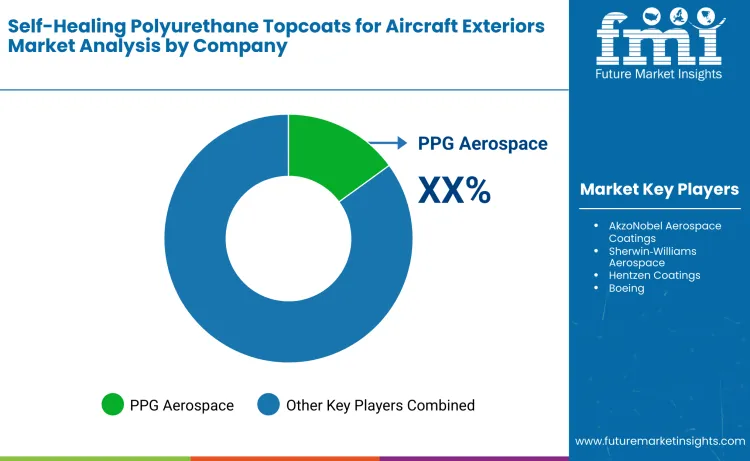
Global demand for self‑healing polyurethane topcoats for aircraft exteriors is growing as airlines and aircraft manufacturers prioritise durability, reduced maintenance costs and extended service life of airframes. Self‑healing topcoats incorporate advanced polymers that can autonomously repair minor surface damage such as micro‑scratches and abrasion from debris or environmental exposure. This technology helps maintain aerodynamic smoothness, appearance and corrosion protection over long flight cycles, reducing the frequency of manual touchups and repainting. Growth in commercial aviation, increasing utilisation rates of aircraft, and rising expectations for lower life‑cycle costs drive interest in coatings that enhance reliability and reduce downtime. The trend toward sustainable maintenance practices and longer‑term asset value further supports uptake of self‑healing exterior coatings across major airline fleets and military aircraft programmes worldwide.
On the supply side, a focused group of aerospace coatings and materials companies competes to serve this specialised segment. PPG Aerospace is recognised as a leading player with strong technical expertise and established solutions in advanced aircraft exterior coatings. Other important competitors include AkzoNobel Aerospace Coatings, Hentzen Coatings, Sherwin‑Williams Aerospace and Boeing, each bringing capabilities in high‑performance polyurethane systems and aerospace‑grade formulation technology. Competition among these suppliers centres on coating performance under extreme temperature cycles, UV and moisture exposure, adhesion to composite and metal substrates, ease of application or repair, and compliance with rigorous aerospace specifications and certification standards. Firms that combine innovative self‑healing chemistries, robust quality control, global service support and strong partnerships with aircraft manufacturers are best positioned to capture growth as the aerospace industry continues to adopt advanced surface technologies that improve durability, reduce maintenance and enhance aircraft longevity.
Key Players
- PPG Aerospace
- AkzoNobel Aerospace Coatings
- Hentzen Coatings
- Sherwin‑Williams Aerospace
- Boeing
Scope of the Report
| Items | Values |
|---|---|
| Quantitative Units (2025) | USD Million |
| Coating Type | Microcapsule-Enabled Self-Healing Polyurethane, Stimuli-Responsive Polyurethane Systems, Polymer Blend Self-Healing Topcoats, Other Advanced Formulations |
| Application | Commercial Aircraft, Business Jets & Regional Aircraft, Maintenance, Repair & Overhaul (MRO), Military & Defense Aircraft |
| Companies | PPG Aerospace, AkzoNobel Aerospace Coatings, Hentzen Coatings, Sherwin-Williams Aerospace, Boeing |
| Regions Covered | North America, Latin America, Western Europe, Eastern Europe, South Asia and Pacific, East Asia, Middle East & Africa |
| Countries Covered | United States, Canada, Mexico, Brazil, Argentina, Germany, France, United Kingdom, Italy, Spain, Netherlands, China, India, Japan, South Korea, ANZ, GCC Countries, South Africa |
| Additional Attributes | Dollar by sales by coating type, application, and region. Includes market trends in self-healing polyurethane coatings for aircraft exteriors, performance in commercial, military, and MRO applications, cost-effectiveness, sustainability practices, regulatory compliance, market share and competitive positioning of key companies, and the role of self-healing topcoats in improving aircraft durability, maintenance efficiency, and lifespan in harsh environmental conditions. |
Key Segments in the Self-Healing Polyurethane Topcoats for Aircraft Exteriors Market
By Coating Type:
- Microcapsule‑Enabled Self‑Healing Polyurethane
- Stimuli‑Responsive Polyurethane Systems
- Polymer Blend Self‑Healing Topcoats
- Other Advanced Formulations
By Application:
- Commercial Aircraft
- Business Jets & Regional Aircraft
- Maintenance, Repair & Overhaul (MRO)
- Military & Defense Aircraft
By Region:
- Asia Pacific
- China
- India
- Japan
- South Korea
- ASEAN
- Rest of Asia Pacific
- Europe
- Germany
- United Kingdom
- France
- Italy
- Spain
- Nordic
- BENELUX
- Rest of Europe
- North America
- United States
- Canada
- Mexico
- Latin America
- Brazil
- Chile
- Rest of Latin America
- Middle East & Africa
- Kingdom of Saudi Arabia
- Other GCC Countries
- Turkey
- South Africa
- Other African Union
- Rest of Middle East & Africa
Frequently Asked Questions
How big is the Self-Healing Polyurethane Topcoats for Aircraft Exteriors market?
The market is valued at USD 390 million in 2026 and is expected to grow at a CAGR of 11.8%, reaching USD 1.23 billion by 2036.
What is the growth outlook for the Self-Healing Polyurethane Topcoats for Aircraft Exteriors market?
The market is projected to grow at a CAGR of 11.8% from 2026 to 2036.
Which region is expected to experience the fastest growth in the Self-Healing Polyurethane Topcoats for Aircraft Exteriors market?
India is expected to lead with a growth rate of 15.3%, driven by increasing demand for durable and low-maintenance coatings in commercial aviation.
What are the key applications of Self-Healing Polyurethane Topcoats for Aircraft Exteriors?
These topcoats are primarily used in commercial aircraft applications, which account for approximately 48% of the market share, to enhance the durability and appearance of aircraft exteriors.
Who are the major players in the Self-Healing Polyurethane Topcoats for Aircraft Exteriors market?
Key players include PPG Aerospace, AkzoNobel Aerospace Coatings, Hentzen Coatings, Sherwin-Williams Aerospace, and Boeing.
Preview the report firsthand - request a free sample
Get SampleGet the brochure for pricing and purchase details.
Get PDFTable of Content
- Executive Summary
- Self-Healing Polyurethane Topcoats for Aircraft Exteriors Market Overview
- Global Market Size and Value Analysis, 2020 to 2026
- Global Market Forecast and Growth Outlook, 2026 to 2036
- Aerospace Coatings Value Chain Analysis
- Role of Self-Healing Polymers in Aircraft Exterior Protection
- Market Dynamics and Industry Fundamentals
- Key Market Drivers
- Technology and Certification Constraints
- Opportunities in Reduced Maintenance and Lifecycle Cost Optimization
- Regulatory and Aerospace Qualification Considerations
- Market Segmentation Analysis by Coating Type
- Microcapsule-Enabled Self-Healing Polyurethane
- Stimuli-Responsive Polyurethane Systems
- Polymer Blend Self-Healing Topcoats
- Other Advanced Self-Healing Formulations
- Market Segmentation Analysis by Application
- Commercial Aircraft
- Business Jets and Regional Aircraft
- Maintenance, Repair and Overhaul Operations
- Military and Defense Aircraft
- Regional Market Analysis
- North America Market Analysis
- Latin America Market Analysis
- Western Europe Market Analysis
- Eastern Europe Market Analysis
- South Asia and Pacific Market Analysis
- East Asia Market Analysis
- Middle East and Africa Market Analysis
- Country-Level Market Analysis
- United States
- Canada
- Mexico
- Brazil
- Argentina
- Germany
- France
- United Kingdom
- Italy
- Spain
- Netherlands
- China
- India
- Japan
- South Korea
- ANZ
- GCC Countries
- South Africa
- Competitive Landscape Analysis
- Global Competitive Structure
- Market Share Analysis of Aerospace Coating Suppliers
- Technology Differentiation in Self-Healing Chemistries
- OEM and MRO Integration Strategies
- Company Profiles
- Scope of the Report
- Research Methodology
- Assumptions and Acronyms


