

- Industry Size (2026)
- USD 220.0 Mn
- Forecast (2036)
- USD 845.0 Mn
- CAGR (2026 to 2036)
- 14.0%
Aircraft Radome Impact Detection Systems Market Size, Market Forecast and Outlook By FMI
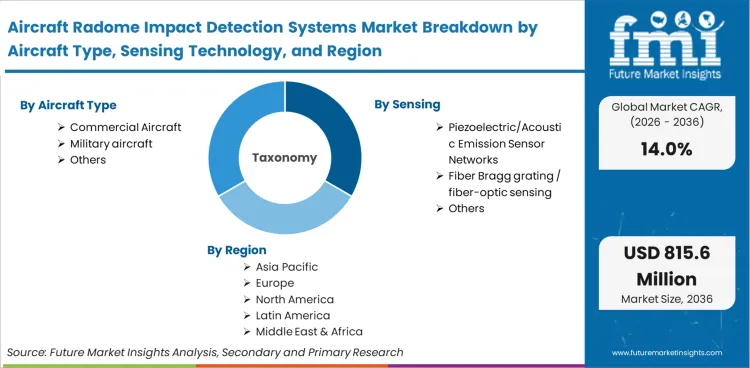
The aircraft radome impact detection systems market recorded industry spending value to be at USD 105.0 million during 2025 with annual receipts being expected to reach USD 220.0 million in 2026, maintaining a 14.0% CAGR across the next decade. Total market growth rises to USD 845.0 million by 2036 because fleet operators now prioritize proactive diagnostics over traditional scheduled intervals to avoid expensive aircraft-on-ground delays.
Maintenance directors at major airlines implementing condition-based maintenance for aircraft radomes face a stark operational choice today. Grounding a composite aircraft for multi-hour ultrasonic tap tests after an unverified collision burns thousands of dollars in route delays. Deploying an active composite radome impact sensor network allows these decision-makers to instantly confirm structural integrity right on the tarmac. Integrating aerospace radome sensing requires upfront capital layout, but the cost of inaction manifests quickly in degraded fleet availability metrics. Airlines relying on manual diagnostics watch competitors optimize turnaround times while their own assets sit idle in hangar queues awaiting technician clearance.
Summary of Aircraft Radome Impact Detection Systems Market
- Aircraft Radome Impact Detection Systems Market Definition:
- Automated aircraft radome monitoring systems market architectures comprise specialized sensor networks installed on aircraft nose structures. These platforms continuously monitor and quantify anomalies from environmental impacts, converting unverified collisions into precise structural health data to accelerate maintenance decisions.
- Demand Drivers in the Market:
- Unplanned maintenance delays force airline operations directors to seek automated diagnostic solutions that clear aircraft instantly.
- Strict composite damage tolerance regulations compel airframe manufacturers to integrate continuous monitoring to satisfy safety margin requirements.
- High insurance premiums push business aviation fleet managers to adopt verifiable impact logging to negotiate rate reductions.
- Key Segments Analyzed in the FMI Report:
- Commercial Aircraft: 56.0% share in 2026, driven by route utilization pressures demanding rapid turnaround times.
- Piezoelectric/Acoustic Emission Sensor Networks: is anticipated to lead by Sensing technology through 2036, owing to low power draw and high sensitivity to delamination events.
- Retrofit External/Bonded Sensor Kits: 61.0% in 2026, as legacy fleet upgrades outpace new airframe deliveries.
- Hardware Systems: 47.0% in 2026, reflecting the capital-intensive nature of initial network installation.
- Airline And MRO Operators: 49.0% in 2026, driven by direct operational exposure to aircraft grounding costs.
- India: 16.2% CAGR, reflecting rapid fleet expansion in high-wildlife-strike geographic zones lacking extensive legacy MRO bases.
- Analyst Opinion at FMI:
- Nikhil Kaitwade, Principal Analyst at FMI, Process Automation, notes that, "Standard reliability metrics capture the raw frequency of bird strikes accurately. What those fleet-level statistics miss entirely is the disproportionate logistical friction caused by unconfirmed strikes that turn out to be harmless but still mandate a four-hour manual inspection. Procurement directors often evaluate detection systems based on hardware sensitivity, but the true commercial value lies in negative reporting. Giving a maintenance chief the certified cryptographic proof that hidden delamination in aircraft radomes did not occur is what actually keeps the schedule intact."
- Strategic Implications / Executive Takeaways:
- Airline procurement directors must evaluate sensor systems based on software integration with existing digital twin platforms rather than pure hardware specs.
- OEM engineering teams face pressure to design composite layups specifically optimized for acoustic wave propagation to support line-fit sensors.
- Maintenance service providers risk losing tier-one airline contracts if they fail to qualify their technicians on automated data interpretation.
- Methodology:
- Primary Research: Direct consultations with airline maintenance directors, composite repair engineering heads, and structural health monitoring specialists.
- Desk Research: Analysis of EASA certification memorandums, composite materials patent filings, and documented wildlife strike databases.
- Market-Sizing and Forecasting: Baseline anchored against annual deliveries of advanced composite airframes and scheduled heavy maintenance retrofit cycles.
- Data Validation and Update Cycle: Forecasts cross-referenced against commercial MRO software adoption rates and structural sensor component shipment volumes.
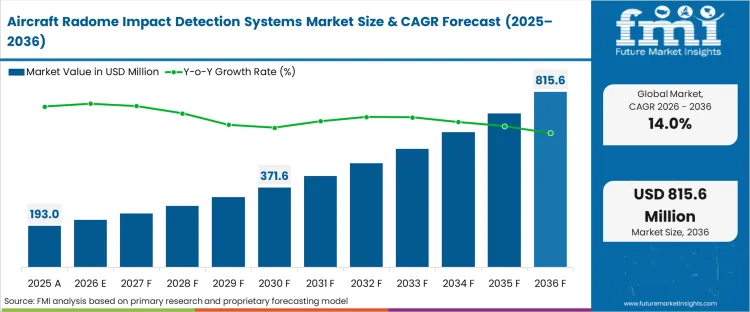
Once aviation authorities fully certify automated telemetry as a primary substitute for physical non-destructive testing, the adoption curve steepens dramatically. Airframe manufacturers will transition these arrays from optional aftermarket upgrades to standard structural health components. Approving radome data for direct flight-release protocols fundamentally shifts the burden of proof from human inspectors to software, removing the largest friction point in incident recovery.
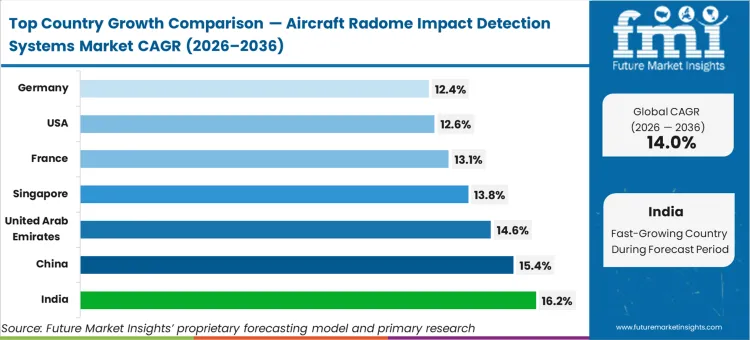
India leads at 16.2%, leveraging a rapidly expanding commercial fleet operating within challenging environmental corridors lacking legacy maintenance infrastructure. China follows at 15.4%, driven by domestic carriers prioritizing automated diagnostics to scale operations. The United Arab Emirates expands at 14.6% as high-volume transit hubs demand rapid turnaround capabilities. Singapore tracks at 13.8%, while France and the United States advance at 13.1% and 12.6% respectively, reflecting mature operators retrofitting established fleets. Germany grows at 12.4%. Structural divergence separates emerging aviation hubs bypassing manual diagnostic eras entirely from established regions navigating complex retrofit qualification cycles.
Aircraft Radome Impact Detection Systems Market Definition
Advanced aircraft radome damage detection systems market comprise specialized sensor networks and diagnostic algorithms installed on or inside aircraft nose structures. These continuous monitoring architectures localize and quantify structural anomalies caused by hail or debris collisions in real time. Their core function involves converting unverified environmental impacts into exact structural health data. This capability allows ground personnel to bypass manual ultrasonic testing protocols and immediately release airframes for flight or target highly specific repair zones.
Aircraft Radome Impact Detection Systems Market Inclusions
Scope covers permanently bonded piezoelectric arrays, embedded fiber-optic nodes, and temporary guided-wave ultrasonic diagnostic patches applied directly to composite nose components. Hardware systems, localized wiring harnesses, signal processing units, and proprietary damage evaluation algorithms fall inside this analytical boundary. Calibration services and integration software necessary for translating raw acoustic signatures into actionable antenna transducer and radome health reports are thoroughly quantified.
Aircraft Radome Impact Detection Systems Market Exclusions
General fuselage structural health monitoring arrays fall outside this boundary because nose composites require uniquely tuned acoustic baseline signatures. Standard weather radar units housed within the nose cone are omitted, as they evaluate external atmospheric conditions rather than internal composite integrity. Standalone non-destructive testing equipment operated manually by hangar technicians is excluded since it lacks the continuous monitoring architecture defining this specific automated category.
Aircraft Radome Impact Detection Systems Market Research Methodology
- Primary Research: Direct consultations with airline maintenance directors, composite repair engineering heads, and structural health monitoring integration specialists.
- Desk Research: Analysis of EASA certification memorandums, composite materials patent filings, and documented wildlife strike databases from aviation authorities.
- Market-Sizing and Forecasting: Baseline anchored against annual deliveries of advanced composite airframes and scheduled heavy maintenance retrofit cycles for active fleets.
- Data Validation and Update Cycle: Forecasts cross-referenced against commercial MRO software adoption rates and structural sensor component shipment volumes.
Segmental Analysis
Aircraft Radome Impact Detection Systems Market Analysis by Aircraft Type
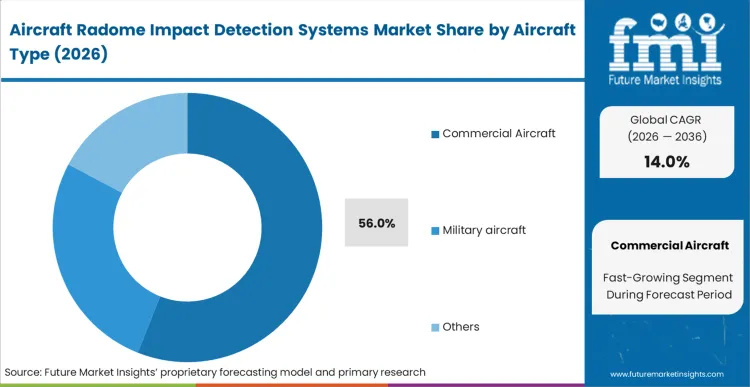
Route utilization pressures mandate rapid turnaround capabilities, driving the 56.0% position commercial aircraft holds in this dimension. FMI's assessment indicates that major airline operations directors cannot tolerate the cascading scheduling failures triggered by manual radome inspections. When a narrow-body jet experiences a suspected strike on approach, dispatchers utilizing commercial aircraft radome monitoring need immediate structural clearance to maintain the daily flight roster. Installing automated aircraft sensors eliminates the requirement to summon specialized composite technicians to the gate. The factor that basic fleet-size correlations fail to highlight is that narrow-body regional jets actually drive faster adoption than wide-body international craft, simply because their higher daily cycle counts multiply the statistical probability of low-altitude bird strikes. Carriers resisting this transition absorb hidden costs in passenger compensation and auxiliary aircraft positioning.
- Turnaround Protection: Automated impact localization immediately clears suspected but harmless strikes. Line maintenance directors avoid pulling aircraft out of active rotation for precautionary physical evaluations.
- Unscheduled Maintenance Mitigation: Real-time damage sizing dictates whether temporary operational limits suffice or immediate repair is mandatory. Fleet planners prevent catastrophic schedule disruptions during peak travel seasons.
- Lifecycle Tracking: Continuous stress recording builds a permanent structural history for the specific airframe. Asset managers capture higher resale values when transferring aircraft to secondary operators.
Aircraft Radome Impact Detection Systems Market Analysis by Sensing Technology
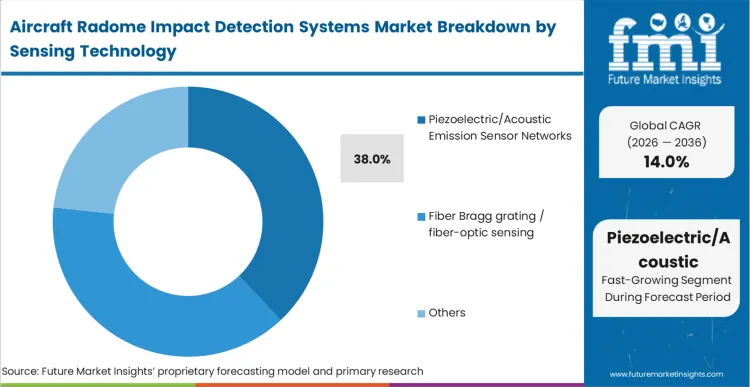
Piezoelectric node architecture wins engineering evaluations because it passively listens for acoustic emissions without requiring active energy pulsing. This specific mechanism explains why piezoelectric / acoustic emission sensor networks command 38.0% share in this category. Avionics integration managers at major OEMs evaluating piezoelectric vs fiber optic radome monitoring prefer these passive arrays due to their negligible drain on the aircraft's primary electrical bus. Upon impact, the composite material's own stress waves trigger the sensor, generating a precise electrical signature corresponding to the damage type. According to FMI's estimates, the standard assumption that sensitivity alone dictates selection ignores the deeper certification reality. Fiber-optic alternatives provide superior strain mapping, but piezoelectric arrays possess a longer history of FAA fatigue-life validation, making them significantly easier to push through bureaucratic approval gates. Suppliers backing novel sensing physics struggle against this established regulatory precedent.
- Acoustic Signature Capture: Passive nodes record the exact high-frequency emissions of composite delamination. Materials engineers differentiate instantly between a harmless hail bounce and internal honeycomb core crushing.
- Parasitic Weight Reduction: Thin-film piezoelectric patches add minimal mass to the forward structure. Weight engineering directors maintain the aircraft's critical center of gravity calculations without heavy compensation measures.
- Baseline Drift Compensation: Advanced algorithms filter out ambient aerodynamic noise and engine vibration. Signal processing specialists guarantee false-alarm rates remain below acceptable commercial thresholds.
Aircraft Radome Impact Detection Systems Market Analysis by Installation Mode
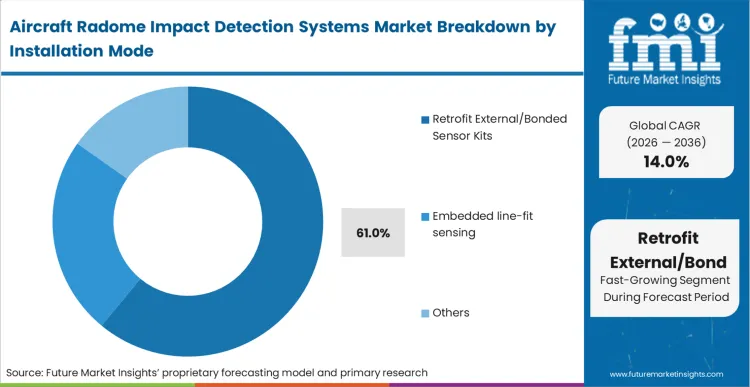
Fleet modernization directors evaluating an aircraft nose radome sensor retrofit operate on staggered delivery schedules spanning decades. Waiting for embedded line-fit solutions means operating a mixed fleet where only the newest airframes benefit from automated clearance, creating a logistical nightmare for dispatchers trying to standardize incident response. FMI observes that retrofit kits bypass this timeline entirely. Technicians bond these aircraft structural health monitoring coatings and sensor webs to the interior radome surface during routine heavy maintenance checks. Airlines seeking immediate fleet-wide diagnostic parity cannot wait for new aircraft deliveries, cementing the 61.0% share retrofit external/bonded sensor kits capture today. The irony missed by equipment manufacturers is that airlines actively dislike the added weight of retrofit bonding adhesives, yet they accept this penalty willingly to standardize their maintenance software interfaces across aging and modern aircraft simultaneously. Operators insisting on line-fit perfection leave their current assets exposed.
- Heavy Maintenance Insertion: Installation aligns perfectly with standard C-check intervals. Maintenance scheduling managers deploy the technology without triggering dedicated out-of-service periods.
- Fleet Standardization: Universal bonding protocols allow identical sensor hardware on diverse aircraft models. Procurement directors negotiate massive bulk hardware contracts rather than managing fragmented, airframe-specific supply chains.
- Adhesive Degradation Monitoring: Retrofit systems must continuously verify their own bond integrity alongside the radome structure. Quality assurance heads rely on built-in diagnostic routines to prevent detached sensors from causing false readings.
Aircraft Radome Impact Detection Systems Market Analysis by Offering
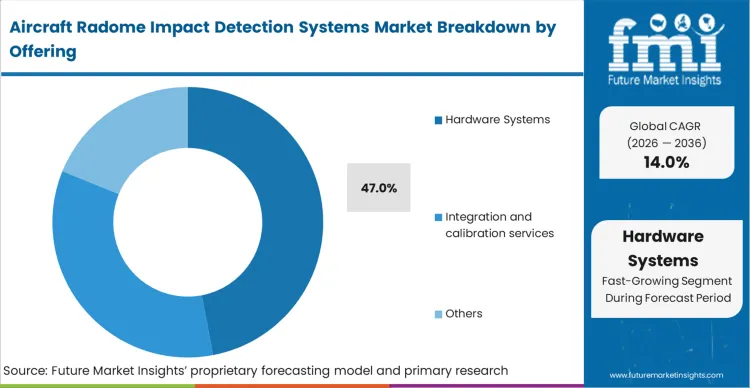
The physical reality of aircraft environments dictates expensive, aerospace-grade materials capable of surviving extreme thermal cycling and intense vibration. In FMI's view, analyzing only the initial procurement invoice conceals the actual margin pool. While hardware generates the upfront revenue spike, the analytics and monitoring software segment controls the recurring profit stream through annual licensing and database updates. Integrated sensor ready coatings for aircraft structural health monitoring are physically useless without the proprietary algorithms translating micro-voltages into visual damage maps. Vendors failing to transition from hardware vendors to software-as-a-service providers face severe commoditization risks as sensor manufacturing scales. Capital expenditure requirements initially concentrate value in physical arrays, resulting in hardware systems securing a 47.0% share. Procurement directors at MRO facilities sign the largest purchase orders for the raw sensor nodes, specialized wiring harnesses, and ruggedized data acquisition units.
- Environmental Hardening Validation: Hardware nodes endure rigorous testing against extreme altitude cold and tarmac heat. Component sourcing directors reject any node lacking documented thermal survival certifications.
- Algorithm Licensing Models: Software platforms require constant updates to recognize new composite aging patterns. IT procurement heads transition budgets from one-time capital expenditures to continuous operational subscriptions.
- Legacy Data Integration: Analytics suites must push damage reports directly into the airline's existing maintenance planning software. Digital transformation officers refuse standalone applications that create isolated data silos.
Aircraft Radome Impact Detection Systems Market Analysis by End User
Direct financial exposure to flight cancellations places airline and MRO operators squarely at the forefront of adoption, holding 49.0% share. Airline technical directors implementing airline MRO radome inspection technology bear the immediate wrath of network operations when an aircraft is grounded for inspection. Unlike OEMs who sell the airframe and move on, the operator pays the daily penalty for diagnostic inefficiencies. Equipping fleets with aircraft fuselage corrosion monitoring sensors and radome impact arrays provides airlines with independent verification capabilities. FMI analysts note that a subtle power shift occurs when airlines mandate these systems. The operator begins accumulating a proprietary database of composite behavior that the original manufacturer does not possess. This data asymmetry allows major carriers to challenge OEM maintenance interval recommendations, pushing back against overly conservative, expensive teardown schedules dictated by the factory.
- Initial Deployment Trigger: MRO facilities install evaluation kits on small sub-fleets to validate promised turnaround time reductions. Technical operations directors measure actual gate delays before authorizing fleet-wide deployment.
- Qualification Standard Setting: Airlines demand sensor data perfectly match legacy ultrasonic tap-test results during dual-run validation periods. Quality assurance managers refuse full adoption until the algorithm proves zero false negatives.
- Ecosystem Expansion: Proven radome success prompts operators to request similar monitoring for tail surfaces and wing edges. Fleet technology directors consolidate structural health contracts under single proven vendors.
Aircraft Radome Impact Detection Systems Market Drivers, Restraints, and Opportunities
Thousands of dollars evaporate every minute a commercial jet waits at the gate for a specialized composite technician to visually and ultrasonically inspect a suspected strike. This brutal commercial consequence forces airline maintenance directors weighing SHM vs manual radome inspection to adopt active impact detection systems immediately. Grounding an aircraft disrupts the entire daily route network, creating cascading crew timeouts and passenger compensation claims. Automated aircraft radome impact localization sensors instantly pinpoint the impact and quantify the structural integrity, providing certified data that allows dispatchers to clear the aircraft for its next leg without manual intervention. The urgency is dictated by flight schedules, not abstract safety theories.
Data integration protocols present a severe operational friction that slows adoption even when airline executives approve the budget. Airlines operate massive, archaic maintenance planning software suites containing decades of legacy processes. Feeding proprietary sensor data from a new radome array into these rigid digital ecosystems requires extensive custom programming and multi-department sign-off. The structural barrier is not the sensor's accuracy, but the IT department's inability to ingest and parse the raw diagnostic files automatically. While middleware translation platforms are emerging to bridge this gap, their current limitations force maintenance technicians to manually enter sensor readings into the official flight log, negating half the system's intended efficiency.
Opportunities in the Aircraft Radome Impact Detection Systems Market
- Algorithmic Weather Differentiation: Software engineers who develop algorithms capable of isolating hail impact signatures from high-speed rain erosion unlock new procurement channels among carriers operating in volatile equatorial zones.
- Ice Accretion Integration: Combining structural impact detection with aircraft ice accretion detection sensors provides fleet planners with a unified forward-facing diagnostic suite, reducing overall component count.
- Predictive Delamination Modeling: Data scientists utilizing historical impact data to build predictive maintenance radome systems enable MRO directors to schedule radome replacements months before critical failure limits are reached.
Regional Analysis
Based on regional analysis, Aircraft Radome Impact Detection Systems is segmented into North America, Europe, Asia-Pacific, and the Middle East and Africa across 40 plus countries. The geographical trajectory of this sector reveals a sharp structural divergence, separating emerging aviation hubs that are bypassing manual diagnostic eras entirely from established regions navigating complex retrofit qualification cycles.
.webp "Top Country Growth Comparison Aircraft Radome Impact Detection Systems Market Cagr (2026 2036)")
| Country | CAGR (2026 to 2036) |
|---|---|
| India | 16.2% |
| China | 15.4% |
| United Arab Emirates | 14.6% |
| Singapore | 13.8% |
| France | 13.1% |
| United States | 12.6% |
| Germany | 12.4% |
Source: Future Market Insights (FMI) analysis, based on proprietary forecasting model and primary research
Asia-Pacific Aircraft Radome Impact Detection Systems Market Analysis
Massive domestic transit volumes and relentless cycle counts define the operational reality across this geography, where a single grounded aircraft rapidly cascades into thousands of delayed passengers. Aviation infrastructure here cannot scale quickly enough to support the massive influx of new commercial deliveries using legacy manual inspection techniques. Regulatory bodies and state-backed aviation initiatives are actively drafting new compliance frameworks that heavily favor continuous electronic monitoring. The airline technical directors as a result recognize that aligning with these emerging digital standards guarantees smoother operational audits while leapfrogging traditional maintenance protocols entirely.
- India: Burgeoning at a 16.2% CAGR, India’s market carriers use this technological leap to maintain aggressive domestic scheduling. Rampant commercial fleet expansion currently collides with severe technician shortages at regional airports across the country. Line maintenance directors mandate automated systems to ensure rapid turnarounds at secondary hubs where specialist composite repair crews remain unavailable.
- China: Procurement heads bulk-order bonded retrofit kits to bring legacy fleets up to the digital diagnostic standards required by new centralized maintenance hubs. Recording a 15.4% CAGR, operators secure a distinct operational advantage by drastically shrinking their unverified aircraft-on-ground metrics. Massive domestic transit demands force carriers here to eliminate all non-essential ground time immediately.
- Singapore: Hub operators focus on maximizing international transit efficiency for long-haul wide-body jets. The market growth propelling at a 13.8% of CAGR, fleet managers deploy sensor arrays to guarantee aircraft arriving with suspected weather damage can be cleared during the standard refueling window.
FMI's report includes extensive data covering Japan, South Korea, and Australia. Heavy monsoonal weather patterns across the broader Pacific corridor constantly test radome integrity, driving regional MRO facilities to standardize on unified digital diagnostic platforms.
Europe Aircraft Radome Impact Detection Systems Market Analysis
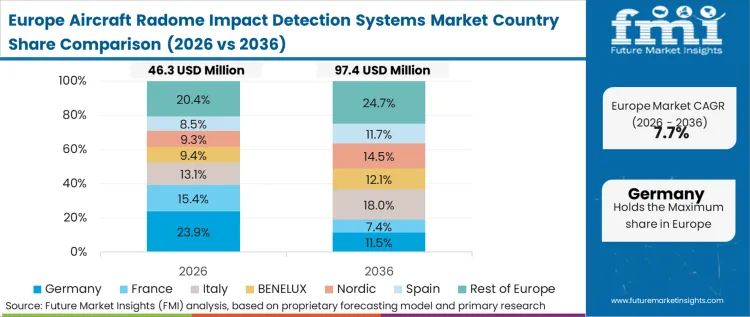
Deeply entrenched regulatory frameworks and mature MRO ecosystems dictate a highly cautious, validation-heavy adoption process across the continent. Quality assurance directors demand exhaustive parallel-testing phases, running new acoustic arrays alongside traditional manual inspections for months before trusting the algorithm. FMI's analysis indicates that the tipping point arrives not from raw efficiency gains, but from stringent safety compliance mandates. Risk management officers utilize verified, continuous structural data to prove airframe integrity, leveraging the localized telemetry to satisfy strict European safety audits.
- France: Advancing at a 13.1% CAGR, French aviation hubs act as primary testing grounds for acoustic sensor integration on commercial airframes. Operations directors rely heavily on localized diagnostic data to maintain seamless scheduling across intense short-haul European networks. Domestic MRO facilities leverage close proximity to major aerospace manufacturing centers to accelerate the certification of bonded retrofit applications.
- Germany: Strict engineering tolerances and established maintenance protocols define the adoption curve for leading cargo and passenger carriers. With demand at 12.4% CAGR, German fleet managers prioritize systems that offer flawless integration with existing digital twin platforms over raw hardware capabilities. The transition relies heavily on proving that new automated arrays match the historical reliability of entrenched manual procedures.
FMI's report includes detailed assessments for the United Kingdom and Italy. Aviation authorities across the continent continuously refine composite damage tolerance regulations, compelling operators to transition toward automated telemetry to maintain their operating certificates.
Middle East Aircraft Radome Impact Detection Systems Market Analysis
High-volume transit hubs dominating this region demand absolute perfection in rapid turnaround capabilities. The operational reality involves massive wide-body fleets operating in punishing environmental conditions where sand erosion and high-altitude ice impacts routinely test forward composite structures. Relying on physical tap tests for every suspected incident would paralyze the intricate connecting route networks that define local carrier economics. Airline technical directors view these sensor arrays as essential operational requirements to maintain flawless international schedules.
- United Arab Emirates: Dispatchers require immediate structural clearance to maintain the daily flight roster when super-jumbo jets experience suspected strikes on approach. Maintenance service providers deploy continuous monitoring architectures to bypass lengthy manual inspections during tight international transfer windows. Expanding at a 14.6% of CAGR, operators establish global benchmarks for automated incident recovery.
FMI's report includes analysis for Saudi Arabia and Qatar. Carriers operating dense intercontinental networks from these desert geographies face relentless utilization cycles that make automated structural verification a strict commercial necessity rather than a premium analytical upgrade.
North America Aircraft Radome Impact Detection Systems Market Analysis

Massive pools of experienced composite technicians reduce the immediate desperation for automation seen in emerging markets, as this geography relies on deeply entrenched MRO ecosystems. Aging composite fleets combine with these legacy maintenance networks to force a highly methodical deployment strategy. Engineering vice presidents authorize retrofit deployments specifically to unify the digital reporting interfaces across different aircraft families. The adoption pace depends heavily on risk management officers leveraging verified telemetry to demand lower premium structures from aviation underwriters.
- United States: Legacy carriers prioritize standardizing diagnostic protocols across highly diverse, multi-generational fleets. Tracking at a 12.6% CAGR, operators rely on these systems to bridge the gap between archaic maintenance planning software and modern digital ecosystems. The transition focuses heavily on proving that automated systems perfectly match the reliability of legacy manual ultrasonic procedures.
FMI's report includes analysis for Canada. Extensive operations in extreme winter environments make robust, thermally resilient sensor nodes critical for operators managing frequent ice impacts during descent profiles.
Competitive Aligners for Market Players
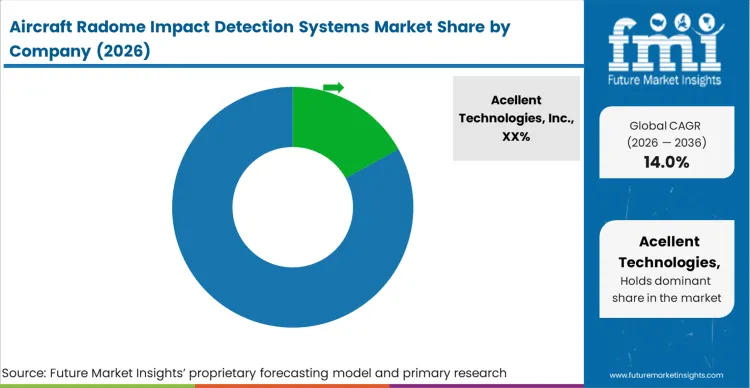
Translating raw acoustic wave data into flight-cleared damage metrics forms the true competitive moat in this sector, rendering raw hardware manufacturing almost secondary to algorithm ownership. Procurement directors at major airlines evaluate aircraft radome impact detection systems based on regulatory paperwork; an advanced sensor suite without FAA validation rarely secures a meeting. In this environment, specialized algorithmic firms like Acellent Technologies, Inc. and Structural Monitoring Systems plc dictate the pace of adoption because they control the proprietary mathematical models that filter out ambient flight noise. Even innovators such as Luna Innovations Incorporated must anchor their advanced fiber-optic architectures to these established certification pathways to gain traction among risk-averse tier-one carriers.
Deep libraries of real-world composite failure signatures grant established incumbents a capability that challengers cannot simply reverse-engineer in a laboratory. Every verified aircraft radome bird strike detection event recorded by active fleets trains these proprietary databases. This process steadily drives false-alarm rates toward zero, providing the high-fidelity onboard radome damage detection that operators require. Aerospace composite specialists like NORDAM and Saint-Gobain Advanced Ceramic Composites integrate these validated signatures by pre-qualifying sensor nodes directly into their material layups. Similarly, structural testing authorities like Testia embed their validation protocols directly into the manufacturing of composite aircraft structures, effectively locking out aftermarket sensor vendors before the fuselage even leaves the assembly floor. New entrants can easily source piezoelectric nodes, but they cannot artificially simulate the millions of flight hours required to match this baseline reliability.
Large fleet operators actively resist this attempted hardware lock-in by weaponizing their procurement scale to demand open-architecture data integration. Airline IT directors refuse to deploy isolated software silos for different aircraft models, forcing radome impact detection system suppliers to ensure their telemetry feeds directly into universal airline maintenance dashboards. Major independent service providers like HEICO Repair Group amplify this buyer power by offering carrier-agnostic repair protocols that interpret data from multiple different sensor brands. The structural pressure ultimately forces aircraft radome monitoring system manufacturers to transition away from selling physical arrays and toward licensing predictive maintenance radome systems, where the supplier assumes shared financial risk if their algorithm fails to identify a critical delamination event before it compromises the flight schedule.
Key Players in Aircraft Radome Impact Detection Systems Market
- Acellent Technologies, Inc.
- Structural Monitoring Systems plc
- Luna Innovations Incorporated
- NORDAM
- HEICO Repair Group
- Saint-Gobain Advanced Ceramic Composites
- Testia
Scope of the Report
| Metric | Value |
|---|---|
| Quantitative Units | USD 220.0 million to USD 845.0 million, at a CAGR of 14.0% |
| Market Definition | Advanced aircraft radome damage detection systems comprise specialized sensor networks and diagnostic algorithms installed on aircraft nose structures to continuously monitor and quantify anomalies from environmental impacts, accelerating maintenance decisions. |
| Segmentation | Aircraft type, Sensing technology, Installation mode, Offering, End user, and Region |
| Regions Covered | North America, Latin America, Western Europe, Eastern Europe, East Asia, South Asia and Pacific, Middle East and Africa |
| Countries Covered | United States, China, India, France, Germany, United Arab Emirates, Singapore |
| Key Companies Profiled | Acellent Technologies, Inc., Structural Monitoring Systems plc, Luna Innovations Incorporated, NORDAM, HEICO Repair Group, Saint-Gobain Advanced Ceramic Composites, Testia |
| Forecast Period | 2026 to 2036 |
| Approach | Baseline anchored against annual deliveries of advanced composite airframes and scheduled heavy maintenance retrofit cycles. |
Source: Future Market Insights (FMI) analysis, based on proprietary forecasting model and primary research
Segments
Aircraft Type:
- Commercial aircraft
- Military aircraft
- Business jets
- Rotorcraft
- UAV and special mission aircraft
Sensing Technology:
- Piezoelectric / acoustic emission sensor networks
- Fiber Bragg grating / fiber-optic sensing
- Guided-wave ultrasonic sensing
- Hybrid multi-sensor systems
- Strain and vibration monitoring nodes
Installation Mode:
- Retrofit external / bonded sensor kits
- Embedded line-fit sensing
- Portable temporary inspection packs
Offering:
- Hardware systems
- Integration and calibration services
- Analytics and monitoring software
- Certification / engineering support
End User:
- Airline and MRO operators
- OEMs / tier suppliers
- Defense operators
- Business aviation service providers
Regions:
- North America
- United States
- Canada
- Mexico
- Latin America
- Brazil
- Argentina
- Chile
- Europe
- Germany
- United Kingdom
- France
- Italy
- Spain
- Asia-Pacific
- China
- Japan
- South Korea
- India
- ASEAN
- ANZ
- Middle East & Africa
- UAE
- Saudi Arabia
- South Africa
Bibliography
- Federal Aviation Administration. (2024, July 31). Reporting wildlife aircraft strikes (AC 150/5200-32C). USA Department of Transportation.
- European Union Aviation Safety Agency. (2025, April 7). Certification memorandum: Installation of antennas on large aeroplanes.
- International Air Transport Association. (2025). Reviving the commercial aircraft supply chain.
- Wang, J., Liu, Y., Zhang, Z., & coauthors. (2024). Advanced sensors and sensing systems for structural health monitoring of aerospace structures: A review. Advanced Engineering Materials
- Scarselli, G., et al. (2025). Machine learning for structural health monitoring of aerospace composite structures: A review. Sensors, 25(19), 6136.
- Han, S., et al. (2024). Non-destructive testing and structural health monitoring for advanced composite structures: A review. Journal of Adhesion Science and Technology.
- AIP Conference Proceedings. (2025). Structural health monitoring using advanced SHM techniques. American Institute of Physics.
This bibliography is provided for reader reference. The full FMI report contains the complete reference list with primary source documentation.
This Report Addresses
- Route utilization pressures forcing maintenance directors to demand rapid turnaround capabilities.
- Airline integration hurdles involving legacy MRO software interfaces and raw sensor telemetry.
- Insurance premium negotiations driven by verifiable structural health histories for aging composite fleets.
- Algorithmic differentiation allowing sensor nodes to distinguish between benign aerodynamic noise and critical delamination.
- Certification libraries dictating procurement viability over raw hardware sensitivity metrics.
- Fleet modernization strategies demanding universal bonding protocols for massive retrofit hardware deployments.
- Unplanned maintenance cost reduction achieved through localized aircraft radome bird strike detection algorithms.
- Supplier pivot challenges moving from physical node manufacturing to continuous software-as-a-service licensing models.
Frequently Asked Questions
What is the valuation of the radome impact detection market in 2026?What operational friction slows full adoption?
The sector is projected to reach USD 220.0 million in 2026. This baseline reflects the initial wave of major commercial operators adopting retrofit acoustic arrays to mitigate rising flight cancellation costs linked to unverified environmental strikes.
What is the projected size of the industry by 2036?
Revenue accelerates to USD 845.0 million by 2036. This expansion signals a structural transition where automated structural health monitoring becomes a regulatory baseline rather than a premium operational upgrade for commercial fleets.
What is the expected CAGR?
The industry tracks at a 14.0% CAGR through 2036. This growth pace relies entirely on regulatory bodies explicitly certifying sensor telemetry as a legal replacement for manual ultrasonic testing protocols.
What drives demand for aircraft radome damage monitoring?
Commercial carriers operate on extremely tight route utilization margins. A single grounded narrow-body jet cascades scheduling failures across the entire network, making the upfront cost of an automated detection system negligible compared to the operational penalty of delay.
Compare radome impact detection technologies for aircraft?
Piezoelectric nodes passively listen for acoustic emissions, requiring minimal electrical draw and possessing a deep FAA certification history. Fiber-optic alternatives provide superior strain mapping but lack the extensive regulatory fatigue-life validation required by risk-averse engineering directors.
What drives the dominance of retrofit external kits?
Airlines managing aircraft radome sensor retrofit cost must standardize their maintenance protocols across diverse fleets. Waiting for embedded line-fit solutions limits the diagnostic capability to only brand-new deliveries, leaving the majority of active operational assets completely unprotected.
Why do hardware systems lead the offering segment initially?
Aerospace-grade sensor nodes and ruggedized wiring harnesses require massive upfront capital outlays to withstand extreme thermal cycling. The physical deployment phase naturally concentrates initial procurement budgets entirely on securing durable equipment.
What operational friction slows full adoption?
Legacy airline IT systems struggle to ingest and interpret raw proprietary sensor data. This integration gap forces maintenance technicians to manually enter diagnostic readings into official flight logs, severely limiting the intended efficiency gains of the hardware.
How does India compare to established aviation markets?
Expanding at 16.2%, Indian operators integrate these systems rapidly because they lack the massive legacy networks of certified composite repair technicians found in older markets. Automation serves as an essential enabler for rapid fleet scaling.
Why do Chinese carriers adopt these systems so aggressively?
Tracking at 15.4%, domestic operators manage massive transit volumes where a single delayed aircraft disrupts highly centralized scheduling. Sensor integration allows these logistical chains to absorb routine bird strikes without completely halting operations.
What structural condition defines the United States adoption curve?
Advancing at 12.6%, US carriers prioritize standardizing digital reporting interfaces across aging fleets. The adoption pace depends on proving that new automated arrays match the historical reliability of entrenched manual ultrasonic procedures.
How do large airlines resist vendor lock-in?
Airline IT directors demand open-architecture data integration. Operators refuse to deploy proprietary software silos for different aircraft types, forcing sensor manufacturers to ensure their telemetry feeds seamlessly into universal maintenance dashboards.
Who are the key players in radome impact detection systems?
Specialized firms like Acellent Technologies, Inc. and Structural Monitoring Systems plc control the critical mathematical models translating acoustic waves into damage metrics, maintaining dominance through proprietary databases of real-world composite failure signatures.
Why is algorithm training critical for established players?
Proprietary databases of real-world composite failure signatures allow incumbent algorithms to reliably filter out engine noise and aerodynamic vibration. New entrants cannot artificially simulate the millions of flight hours required to minimize false-alarm rates.
What triggers initial purchase decisions at MRO facilities?
Technical operations directors demand small-scale evaluation kits to validate promised turnaround time reductions. They explicitly measure gate delay decreases on a specific sub-fleet before authorizing massive capital expenditure for fleet-wide implementation.
Are radome impact detection systems worth the cost?
Risk management officers leverage the continuous structural histories generated by sensor nodes to prove airframe integrity. This verified data stream provides critical leverage when negotiating lower insurance premiums with aviation underwriters, offsetting the initial capital expenditure.
Why do OEMs partner closely with specific sensor firms?
Airframe manufacturers require acoustic algorithms perfectly tuned to their proprietary composite layups. Deep partnerships ensure the sensor suite correctly interprets the specific stress-wave behavior of the OEM's unique carbon fiber matrix.
What limits the adoption of fiber-optic sensing nodes?
While providing excellent strain mapping, fiber-optic arrays lack the extensive regulatory fatigue-life history of piezoelectric systems. Engineering directors hesitate to sponsor the costly, multi-year certification programs required to qualify novel physics.
How does predictive modeling change maintenance schedules?
Data scientists analyzing historical impact telemetry predict composite delamination progression over time. This capability allows MRO directors to schedule component replacements during routine heavy checks rather than reacting to critical failures mid-season.
What role do digital transformation officers play in procurement?
These executives actively block standalone diagnostic applications. They mandate that any new radome impact array must push its structural health reports directly into the airline's central enterprise resource planning ecosystem.
Why do temporary inspection packs capture a specific niche?
Smaller regional operators lacking the capital for permanent bonded arrays utilize portable kits. These temporary systems still accelerate the manual inspection process without requiring extensive aircraft modification or complex wiring integration.
How does military aircraft radome impact detection differ from commercial uses?
Military operators push composite structures into extreme tactical environments where undetected delamination compromises radar transparency and stealth profiles, making real-time damage sizing a critical mission-readiness metric rather than just a commercial cost-saving measure.
Preview the report firsthand - request a free sample
Get SampleGet the brochure for pricing and purchase details.
Get PDFTable of Content
- Executive Summary
- Global Market Outlook
- Demand-side Trends
- Supply-side Trends
- Technology Roadmap Analysis
- Analysis and Recommendations
- Market Overview
- Market Coverage / Taxonomy
- Market Definition / Scope / Limitations
- Research Methodology
- Chapter Orientation
- Analytical Lens and Working Hypotheses
- Market Structure, Signals, and Trend Drivers
- Benchmarking and Cross-market Comparability
- Market Sizing, Forecasting, and Opportunity Mapping
- Research Design and Evidence Framework
- Desk Research Programme (Secondary Evidence)
- Company Annual and Sustainability Reports
- Peer-reviewed Journals and Academic Literature
- Corporate Websites, Product Literature, and Technical Notes
- Earnings Decks and Investor Briefings
- Statutory Filings and Regulatory Disclosures
- Technical White Papers and Standards Notes
- Trade Journals, Industry Magazines, and Analyst Briefs
- Conference Proceedings, Webinars, and Seminar Materials
- Government Statistics Portals and Public Data Releases
- Press Releases and Reputable Media Coverage
- Specialist Newsletters and Curated Briefings
- Sector Databases and Reference Repositories
- FMI Internal Proprietary Databases and Historical Market Datasets
- Subscription Datasets and Paid Sources
- Social Channels, Communities, and Digital Listening Inputs
- Additional Desk Sources
- Expert Input and Fieldwork (Primary Evidence)
- Primary Modes
- Qualitative Interviews and Expert Elicitation
- Quantitative Surveys and Structured Data Capture
- Blended Approach
- Why Primary Evidence is Used
- Field Techniques
- Interviews
- Surveys
- Focus Groups
- Observational and In-context Research
- Social and Community Interactions
- Stakeholder Universe Engaged
- C-suite Leaders
- Board Members
- Presidents and Vice Presidents
- R&D and Innovation Heads
- Technical Specialists
- Domain Subject-matter Experts
- Scientists
- Physicians and Other Healthcare Professionals
- Governance, Ethics, and Data Stewardship
- Research Ethics
- Data Integrity and Handling
- Primary Modes
- Tooling, Models, and Reference Databases
- Desk Research Programme (Secondary Evidence)
- Data Engineering and Model Build
- Data Acquisition and Ingestion
- Cleaning, Normalisation, and Verification
- Synthesis, Triangulation, and Analysis
- Quality Assurance and Audit Trail
- Market Background
- Market Dynamics
- Drivers
- Restraints
- Opportunity
- Trends
- Scenario Forecast
- Demand in Optimistic Scenario
- Demand in Likely Scenario
- Demand in Conservative Scenario
- Opportunity Map Analysis
- Product Life Cycle Analysis
- Supply Chain Analysis
- Investment Feasibility Matrix
- Value Chain Analysis
- PESTLE and Porter’s Analysis
- Regulatory Landscape
- Regional Parent Market Outlook
- Production and Consumption Statistics
- Import and Export Statistics
- Market Dynamics
- Global Market Analysis 2021 to 2025 and Forecast, 2026 to 2036
- Historical Market Size Value (USD Million) Analysis, 2021 to 2025
- Current and Future Market Size Value (USD Million) Projections, 2026 to 2036
- Y-o-Y Growth Trend Analysis
- Absolute $ Opportunity Analysis
- Global Market Pricing Analysis 2021 to 2025 and Forecast 2026 to 2036
- Global Market Analysis 2021 to 2025 and Forecast 2026 to 2036, By Aircraft Type
- Introduction / Key Findings
- Historical Market Size Value (USD Million) Analysis By Aircraft Type , 2021 to 2025
- Current and Future Market Size Value (USD Million) Analysis and Forecast By Aircraft Type , 2026 to 2036
- Commercial Aircraft
- Military aircraft
- Others
- Commercial Aircraft
- Y-o-Y Growth Trend Analysis By Aircraft Type , 2021 to 2025
- Absolute $ Opportunity Analysis By Aircraft Type , 2026 to 2036
- Global Market Analysis 2021 to 2025 and Forecast 2026 to 2036, By Sensing Technology
- Introduction / Key Findings
- Historical Market Size Value (USD Million) Analysis By Sensing Technology, 2021 to 2025
- Current and Future Market Size Value (USD Million) Analysis and Forecast By Sensing Technology, 2026 to 2036
- Piezoelectric/Acoustic Emission Sensor Networks
- Fiber Bragg grating / fiber-optic sensing
- Others
- Piezoelectric/Acoustic Emission Sensor Networks
- Y-o-Y Growth Trend Analysis By Sensing Technology, 2021 to 2025
- Absolute $ Opportunity Analysis By Sensing Technology, 2026 to 2036
- Global Market Analysis 2021 to 2025 and Forecast 2026 to 2036, By Installation Mode
- Introduction / Key Findings
- Historical Market Size Value (USD Million) Analysis By Installation Mode, 2021 to 2025
- Current and Future Market Size Value (USD Million) Analysis and Forecast By Installation Mode, 2026 to 2036
- Retrofit External/Bonded Sensor Kits
- Embedded line-fit sensing
- Others
- Retrofit External/Bonded Sensor Kits
- Y-o-Y Growth Trend Analysis By Installation Mode, 2021 to 2025
- Absolute $ Opportunity Analysis By Installation Mode, 2026 to 2036
- Global Market Analysis 2021 to 2025 and Forecast 2026 to 2036, By Offering
- Introduction / Key Findings
- Historical Market Size Value (USD Million) Analysis By Offering, 2021 to 2025
- Current and Future Market Size Value (USD Million) Analysis and Forecast By Offering, 2026 to 2036
- Hardware Systems
- Integration and calibration services
- Others
- Hardware Systems
- Y-o-Y Growth Trend Analysis By Offering, 2021 to 2025
- Absolute $ Opportunity Analysis By Offering, 2026 to 2036
- Global Market Analysis 2021 to 2025 and Forecast 2026 to 2036, By End User
- Introduction / Key Findings
- Historical Market Size Value (USD Million) Analysis By End User, 2021 to 2025
- Current and Future Market Size Value (USD Million) Analysis and Forecast By End User, 2026 to 2036
- Airline And MRO Operators
- OEMs / tier suppliers
- Others
- Airline And MRO Operators
- Y-o-Y Growth Trend Analysis By End User, 2021 to 2025
- Absolute $ Opportunity Analysis By End User, 2026 to 2036
- Global Market Analysis 2021 to 2025 and Forecast 2026 to 2036, By Region
- Introduction
- Historical Market Size Value (USD Million) Analysis By Region, 2021 to 2025
- Current Market Size Value (USD Million) Analysis and Forecast By Region, 2026 to 2036
- North America
- Latin America
- Western Europe
- Eastern Europe
- East Asia
- South Asia and Pacific
- Middle East & Africa
- Market Attractiveness Analysis By Region
- North America Market Analysis 2021 to 2025 and Forecast 2026 to 2036, By Country
- Historical Market Size Value (USD Million) Trend Analysis By Market Taxonomy, 2021 to 2025
- Market Size Value (USD Million) Forecast By Market Taxonomy, 2026 to 2036
- By Country
- USA
- Canada
- Mexico
- By Aircraft Type
- By Sensing Technology
- By Installation Mode
- By Offering
- By End User
- By Country
- Market Attractiveness Analysis
- By Country
- By Aircraft Type
- By Sensing Technology
- By Installation Mode
- By Offering
- By End User
- Key Takeaways
- Latin America Market Analysis 2021 to 2025 and Forecast 2026 to 2036, By Country
- Historical Market Size Value (USD Million) Trend Analysis By Market Taxonomy, 2021 to 2025
- Market Size Value (USD Million) Forecast By Market Taxonomy, 2026 to 2036
- By Country
- Brazil
- Chile
- Rest of Latin America
- By Aircraft Type
- By Sensing Technology
- By Installation Mode
- By Offering
- By End User
- By Country
- Market Attractiveness Analysis
- By Country
- By Aircraft Type
- By Sensing Technology
- By Installation Mode
- By Offering
- By End User
- Key Takeaways
- Western Europe Market Analysis 2021 to 2025 and Forecast 2026 to 2036, By Country
- Historical Market Size Value (USD Million) Trend Analysis By Market Taxonomy, 2021 to 2025
- Market Size Value (USD Million) Forecast By Market Taxonomy, 2026 to 2036
- By Country
- Germany
- UK
- Italy
- Spain
- France
- Nordic
- BENELUX
- Rest of Western Europe
- By Aircraft Type
- By Sensing Technology
- By Installation Mode
- By Offering
- By End User
- By Country
- Market Attractiveness Analysis
- By Country
- By Aircraft Type
- By Sensing Technology
- By Installation Mode
- By Offering
- By End User
- Key Takeaways
- Eastern Europe Market Analysis 2021 to 2025 and Forecast 2026 to 2036, By Country
- Historical Market Size Value (USD Million) Trend Analysis By Market Taxonomy, 2021 to 2025
- Market Size Value (USD Million) Forecast By Market Taxonomy, 2026 to 2036
- By Country
- Russia
- Poland
- Hungary
- Balkan & Baltic
- Rest of Eastern Europe
- By Aircraft Type
- By Sensing Technology
- By Installation Mode
- By Offering
- By End User
- By Country
- Market Attractiveness Analysis
- By Country
- By Aircraft Type
- By Sensing Technology
- By Installation Mode
- By Offering
- By End User
- Key Takeaways
- East Asia Market Analysis 2021 to 2025 and Forecast 2026 to 2036, By Country
- Historical Market Size Value (USD Million) Trend Analysis By Market Taxonomy, 2021 to 2025
- Market Size Value (USD Million) Forecast By Market Taxonomy, 2026 to 2036
- By Country
- China
- Japan
- South Korea
- By Aircraft Type
- By Sensing Technology
- By Installation Mode
- By Offering
- By End User
- By Country
- Market Attractiveness Analysis
- By Country
- By Aircraft Type
- By Sensing Technology
- By Installation Mode
- By Offering
- By End User
- Key Takeaways
- South Asia and Pacific Market Analysis 2021 to 2025 and Forecast 2026 to 2036, By Country
- Historical Market Size Value (USD Million) Trend Analysis By Market Taxonomy, 2021 to 2025
- Market Size Value (USD Million) Forecast By Market Taxonomy, 2026 to 2036
- By Country
- India
- ASEAN
- Australia & New Zealand
- Rest of South Asia and Pacific
- By Aircraft Type
- By Sensing Technology
- By Installation Mode
- By Offering
- By End User
- By Country
- Market Attractiveness Analysis
- By Country
- By Aircraft Type
- By Sensing Technology
- By Installation Mode
- By Offering
- By End User
- Key Takeaways
- Middle East & Africa Market Analysis 2021 to 2025 and Forecast 2026 to 2036, By Country
- Historical Market Size Value (USD Million) Trend Analysis By Market Taxonomy, 2021 to 2025
- Market Size Value (USD Million) Forecast By Market Taxonomy, 2026 to 2036
- By Country
- Kingdom of Saudi Arabia
- Other GCC Countries
- Turkiye
- South Africa
- Other African Union
- Rest of Middle East & Africa
- By Aircraft Type
- By Sensing Technology
- By Installation Mode
- By Offering
- By End User
- By Country
- Market Attractiveness Analysis
- By Country
- By Aircraft Type
- By Sensing Technology
- By Installation Mode
- By Offering
- By End User
- Key Takeaways
- Key Countries Market Analysis
- USA
- Pricing Analysis
- Market Share Analysis, 2025
- By Aircraft Type
- By Sensing Technology
- By Installation Mode
- By Offering
- By End User
- Canada
- Pricing Analysis
- Market Share Analysis, 2025
- By Aircraft Type
- By Sensing Technology
- By Installation Mode
- By Offering
- By End User
- Mexico
- Pricing Analysis
- Market Share Analysis, 2025
- By Aircraft Type
- By Sensing Technology
- By Installation Mode
- By Offering
- By End User
- Brazil
- Pricing Analysis
- Market Share Analysis, 2025
- By Aircraft Type
- By Sensing Technology
- By Installation Mode
- By Offering
- By End User
- Chile
- Pricing Analysis
- Market Share Analysis, 2025
- By Aircraft Type
- By Sensing Technology
- By Installation Mode
- By Offering
- By End User
- Germany
- Pricing Analysis
- Market Share Analysis, 2025
- By Aircraft Type
- By Sensing Technology
- By Installation Mode
- By Offering
- By End User
- UK
- Pricing Analysis
- Market Share Analysis, 2025
- By Aircraft Type
- By Sensing Technology
- By Installation Mode
- By Offering
- By End User
- Italy
- Pricing Analysis
- Market Share Analysis, 2025
- By Aircraft Type
- By Sensing Technology
- By Installation Mode
- By Offering
- By End User
- Spain
- Pricing Analysis
- Market Share Analysis, 2025
- By Aircraft Type
- By Sensing Technology
- By Installation Mode
- By Offering
- By End User
- France
- Pricing Analysis
- Market Share Analysis, 2025
- By Aircraft Type
- By Sensing Technology
- By Installation Mode
- By Offering
- By End User
- India
- Pricing Analysis
- Market Share Analysis, 2025
- By Aircraft Type
- By Sensing Technology
- By Installation Mode
- By Offering
- By End User
- ASEAN
- Pricing Analysis
- Market Share Analysis, 2025
- By Aircraft Type
- By Sensing Technology
- By Installation Mode
- By Offering
- By End User
- Australia & New Zealand
- Pricing Analysis
- Market Share Analysis, 2025
- By Aircraft Type
- By Sensing Technology
- By Installation Mode
- By Offering
- By End User
- China
- Pricing Analysis
- Market Share Analysis, 2025
- By Aircraft Type
- By Sensing Technology
- By Installation Mode
- By Offering
- By End User
- Japan
- Pricing Analysis
- Market Share Analysis, 2025
- By Aircraft Type
- By Sensing Technology
- By Installation Mode
- By Offering
- By End User
- South Korea
- Pricing Analysis
- Market Share Analysis, 2025
- By Aircraft Type
- By Sensing Technology
- By Installation Mode
- By Offering
- By End User
- Russia
- Pricing Analysis
- Market Share Analysis, 2025
- By Aircraft Type
- By Sensing Technology
- By Installation Mode
- By Offering
- By End User
- Poland
- Pricing Analysis
- Market Share Analysis, 2025
- By Aircraft Type
- By Sensing Technology
- By Installation Mode
- By Offering
- By End User
- Hungary
- Pricing Analysis
- Market Share Analysis, 2025
- By Aircraft Type
- By Sensing Technology
- By Installation Mode
- By Offering
- By End User
- Kingdom of Saudi Arabia
- Pricing Analysis
- Market Share Analysis, 2025
- By Aircraft Type
- By Sensing Technology
- By Installation Mode
- By Offering
- By End User
- Turkiye
- Pricing Analysis
- Market Share Analysis, 2025
- By Aircraft Type
- By Sensing Technology
- By Installation Mode
- By Offering
- By End User
- South Africa
- Pricing Analysis
- Market Share Analysis, 2025
- By Aircraft Type
- By Sensing Technology
- By Installation Mode
- By Offering
- By End User
- USA
- Market Structure Analysis
- Competition Dashboard
- Competition Benchmarking
- Market Share Analysis of Top Players
- By Regional
- By Aircraft Type
- By Sensing Technology
- By Installation Mode
- By Offering
- By End User
- Competition Analysis
- Competition Deep Dive
- Acellent Technologies, Inc.
- Overview
- Product Portfolio
- Profitability by Market Segments (Product/Age /Sales Channel/Region)
- Sales Footprint
- Strategy Overview
- Marketing Strategy
- Product Strategy
- Channel Strategy
- Structural Monitoring Systems plc
- Luna Innovations Incorporated
- NORDAM
- HEICO Repair Group
- Saint-Gobain Advanced Ceramic Composites
- Acellent Technologies, Inc.
- Competition Deep Dive
- Assumptions & Acronyms Used


