

- Industry Size (2026)
- USD 87.6 Mn
- Forecast (2036)
- USD 146.8 Mn
- CAGR (2026 to 2036)
- 5.3%
Aircraft Reflective Marking and Decal Systems Market Size, Market Forecast and Outlook By FMI
The aircraft reflective marking and decal system market size stood at USD 83.2 million in 2025 and is expected to reach USD 87.6 million in 2026 at a CAGR of 5.3% during the forecast period. The cumulative buildup in aftermarket demand carries the industry growth to USD 146.8 million through 2036 as mandatory maintenance and overhaul recertification cycles force the replacement of exterior placards degraded by atmospheric stress.
Airline procurement directors are shifting toward micro-perforated film architectures, prioritizing immediate aircraft return-to-service over the generational durability of legacy paint systems. This operational pivot allows carriers to bypass the drying times that historically extended aircraft-on-ground intervals during heavy maintenance checks. Operators delay replacement until scheduled downtime, trading aesthetic perfection for maximized utilization, while integrating branding decal systems to align leased assets with carrier identities. The commercial penalty for illegible safety stencils remains grounded equipment during ramp inspections.
Summary of Aircraft Reflective Marking and Decal Systems Market
- Aircraft Reflective Marking and Decal Systems Market Definition:
- The aircraft reflective markings market provides engineered graphic films and structural placards designed to survive extreme aerospace environments, ensuring mandatory regulatory identification and passenger safety guidance without compromising aerodynamic profiles.
- Demand Drivers in the Market:
- High fleet utilization rates accelerate the aviation placards replacement cycle, forcing maintenance directors to replace atmospherically degraded exterior graphics during every scheduled heavy check to maintain airworthiness.
- Leasing transitions boost aircraft marking systems demand by compelling asset owners to utilize removable identification films rather than permanent paint to accelerate handover timelines.
- Weight reduction pressures push original equipment manufacturers to substitute engraved metal data plates with high-durability polycarbonate constructions across interior cabin zones.
- Key Segments Analyzed in the FMI Report:
- External Reflective Markings And Registration Decals: 58% in 2026, driven by the intense UV radiation and chemical exposure that degrades exterior films faster than interior counterparts.
- Pressure-Sensitive Acrylic Systems: 62% in 2026, selected for their immediate adhesion profiles that minimize aircraft-on-ground turnaround times.
- Safety And Regulatory Markings: 41% in 2026, mandated by international aviation bodies requiring legible identification prior to every dispatch.
- Commercial Aviation: 46% in 2026, as commercial aviation decals and placards sustain the massive scale of the global passenger fleet requiring continuous compliance upkeep.
- Aftermarket / MRO: 64% share in 2026, reflecting the continuous replacement cycle of graphics over a thirty-year airframe lifespan compared to a single factory installation.
- India: 6.8% compound growth, propelled by massive narrow-body delivery backlogs entering high-frequency domestic service networks.
- Analyst Opinion at FMI:
- Nikhil Kaitwade, Principal Analyst, Automotive / Aerospace, at FMI, opines, "Standard procurement metrics accurately capture the massive spend on sweeping exterior livery overhauls, but they entirely miss the hidden operational burden of technical servicing stencils. An airline might rebrand a fuselage once a decade, but the hundreds of micro-decals indicating hoist points, static ports, and fluid limits peel away continuously during routine high-pressure chemical washes. Maintenance bases replace these technical kits constantly just to clear gate inspections, making these invisible compliance graphics the actual volume baseline of this sector."
- Strategic Implications / Executive Takeaways:
- Material formulators must achieve faster cure times for pressure-sensitive adhesives to win contracts with maintenance facilities desperate to reduce turnaround hours.
- MRO procurement teams should consolidate graphic kit sourcing to single-vendor traceability, avoiding the administrative friction of auditing multiple burn-certification documents during regulatory reviews.
- Airframe manufacturers face immediate pressure to integrate digital identification into structural decals, streamlining the pre-flight visual inspection workflow for line mechanics.
- Methodology:
- Primary Research: Interviews with fleet operators and MRO facility managers.
- Desk Research: Aggregation of aviation authority airworthiness directives and material safety data sheets.
- Market-Sizing and Forecasting: Driven by active fleet sizes multiplied by replacement frequency rates derived from scheduled maintenance blocks.
- Data Validation and Update Cycle: Cross-referenced against major airframe manufacturer delivery guidance and global flight-hour recovery metrics.
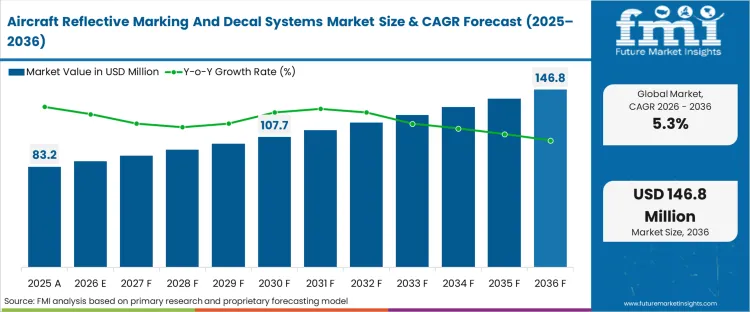
When evaluating aircraft decals vs painted liveries, the transition to fleet-wide leasing models acts as the structural gate for accelerated consumption. Lessors now mandate specific durability standards for exterior graphics, ensuring asset value transfers smoothly between lessees without requiring operators to strip and reapply baseline instructional data during handover. Once leasing portfolios standardized these material requirements, secondary market compliance became automatic.
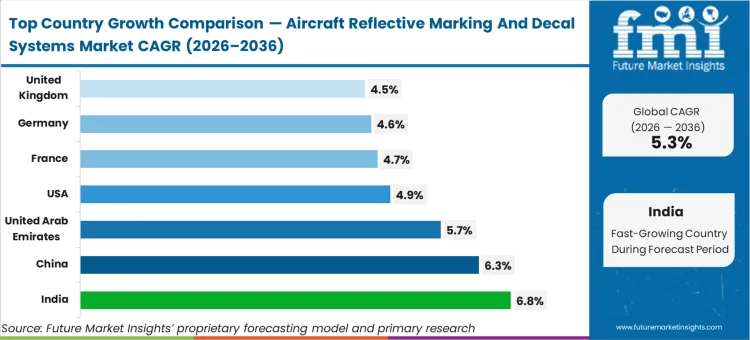
India expands at 6.8%, followed by China at 6.3% and the United Arab Emirates at 5.7%. The United States tracks at 4.9%, ahead of France at 4.7%, Germany at 4.6%, and the United Kingdom at 4.5%. This geographic divergence maps directly to fleet utilization rates, where carriers in rapidly modernizing aviation corridors cycle through exterior identification films faster due to high-frequency domestic routing and heightened exposure to abrasive environmental particulate.
Aircraft Reflective Marking and Decal Systems Market Definition
The aircraft decal systems market encompasses engineered graphic films and structural placards applied to aerospace assets for regulatory compliance, maintenance identification, and emergency guidance. This category is distinct from standard industrial labeling, requiring strict adherence to aviation burn-certifications, extreme temperature tolerance, and resistance to aviation hydraulic fluids and de-icing chemicals.
Aircraft Reflective Marking and Decal Systems Market Inclusions
This sector includes exterior registration alphanumerics, high-visibility emergency egress path strips, interior technical data plates, polycarbonate passenger instruction cards, and livery change film engineered specifically for pressurized fuselage application. It covers both the raw materials and the finished certified aircraft decals supplied to original equipment manufacturers and maintenance organizations.
Aircraft Reflective Marking and Decal Systems Market Exclusions
The scope explicitly excludes liquid aerospace coatings, bulk paint supplies, and electronic digital signage used in cabin interiors. It also omits standard passenger service unit reading lights and illuminated exit signs, as these represent electrical hardware integration rather than pressure-sensitive graphic applications. Unregulated commercial vinyls used for temporary airport ground equipment are excluded due to their lack of flight-grade material traceability.
Aircraft Reflective Marking and Decal Systems Market Research Methodology
- Primary Research: Fleet maintenance directors, MRO procurement leads, and aviation safety compliance officers.
- Desk Research: European Union Aviation Safety Agency airworthiness directives, Federal Aviation Administration certification databases, and global fleet registry archives.
- Market-Sizing and Forecasting: Baseline anchored to global commercial aircraft delivery schedules and scheduled D-check maintenance intervals.
- Data Validation and Update Cycle: Forecasts triangulated against tier-one aerospace material supplier quarterly material output and active global fleet utilization rates.
Segmental Analysis
Aircraft Reflective Marking and Decal Systems Market Analysis by Decal / Marking Type
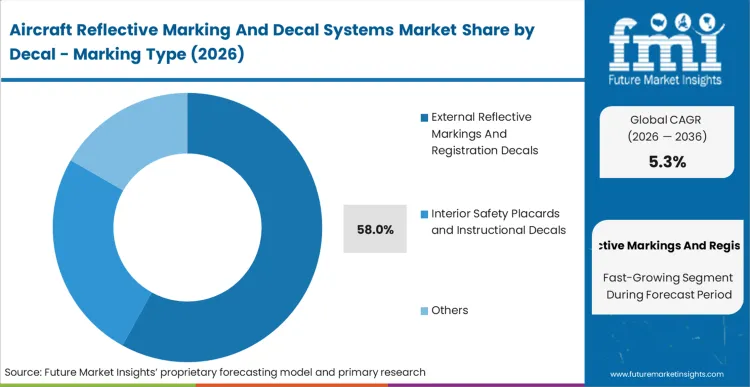
Engraved metal identification plates historically dominated airframe instructional data, but their weight penalties forced the transition toward engineered aircraft reflective film systems. External reflective markings and registration decals capture a 58% share in 2026 because the exterior fuselage represents the harshest operational environment, subjecting graphics to stratospheric UV bombardment and continuous exposure to Skydrol hydraulic fluids. Evaluating the aircraft registration decal market, FMI analysts opine that this environmental brutality guarantees a reliable replacement cycle, as exterior markings degrade and fail compliance audits rapidly. Procurement teams that opt for lower-grade exterior films face compounding labor costs, as early delamination forces unscheduled spot-replacements outside of standard maintenance windows. Advancements in bio based aircraft coatings are additionally forcing decal adhesives to evolve to remain compatible with modern fuselage treatments.
- Compliance Trigger: Regulatory inspectors flag faded or peeling aircraft emergency exit decals during routine ramp checks, halting dispatch until exterior visibility is restored.
- Validation Metric: Maintenance facilities verify the specific fluid-resistance and UV-stability ratings of the replacement film against the airframe manufacturer's structural repair manual.
- Expansion Driver: Operators standardize exterior graphic kits across mixed fleets, ensuring line maintenance crews have immediate access to compliant, pre-approved registration letters regardless of the aircraft variant.
Aircraft Reflective Marking and Decal Systems Market Analysis by Material
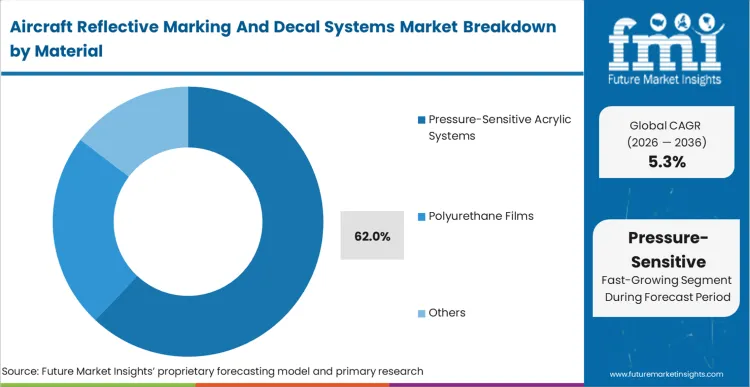
Maintenance directors who attempt to substitute standard industrial adhesives quickly discover that temperature cycling at altitude causes catastrophic edge-lifting. When weighing pressure sensitive vs heat activated aircraft decals, the reason pressure-sensitive acrylic systems hold 62% of this sector comes down to a single operational reality: maintenance facilities cannot afford to keep an airframe out of revenue service waiting for complex chemical adhesives to cure. This formulation is chosen because it achieves immediate tack upon application, allowing technicians to apply a stencil and instantly return the aircraft to the active flight line. In FMI's view, the cost logic of these aerospace adhesive films lies entirely in labor efficiency; the slight premium paid for high-tack acrylics is instantly recovered by eliminating hours of aircraft-on-ground time. While health monitoring coatings require intensive surface preparation, modern acrylic decals utilize micro-channeled liners that allow trapped air to escape during dry application.
- Initial Cost Realization: The true savings emerge during the application process, where dry-apply acrylics allow single-technician installation without specialized squeegee training or wet-application fluids.
- Hidden Operational Burden: Improper surface degreasing prior to acrylic application leaves microscopic chemical residues that silently compromise the bond line over months of thermal expansion.
- Lifecycle Comparison: When measured across a five-year C-check interval, premium acrylic films demonstrate zero edge-curl, entirely eliminating the interim spot-replacements required by inferior adhesive chemistries.
Aircraft Reflective Marking and Decal Systems Market Analysis by Application
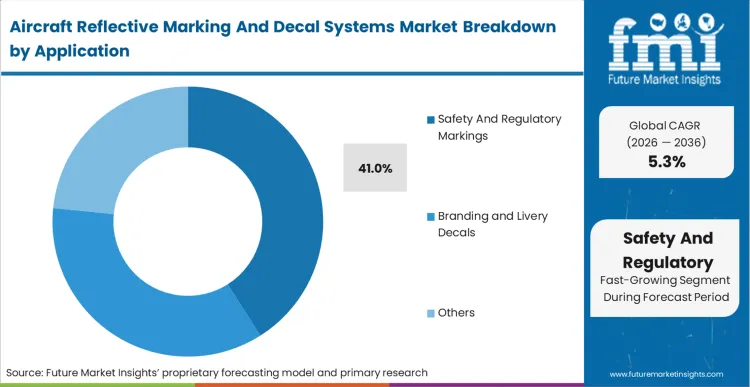
Airlines adopting highly slick contaminant resistant coatings must ensure their regulatory decals bond securely to these hydrophobic surfaces to avoid inflight separation. Failing to maintain these instructional graphics forces operators into emergency procurement scenarios. An aircraft with a flawless engine but an unreadable passenger door operation placard is legally unairworthy, which dictates why safety and regulatory markings claim 41% of the sector in 2026. These dynamics drives the aircraft safety markings market; airlines do not upgrade these placards for aesthetic reasons, they replace them solely because they have faded beyond the specific contrast ratios mandated by aviation authorities. According to FMI's estimates, the decision to replace within the aircraft cabin safety decal market is entirely reactive, driven by the findings of quality assurance audits during heavy maintenance block checks.
- Failure Prevention: High-contrast exit identifiers prevent passenger disorientation during smoke-filled cabin evacuations, fulfilling the core mandate of interior safety specifications.
- Residual Risk: Even highly durable placards can be rendered illegible by aggressive cabin cleaning crews using abrasive solvents not approved for polycarbonate surfaces.
- Operational Requirement: Fleet managers must maintain comprehensive, digitized inventories of every safety placard required for each airframe configuration, including guidance for ground support equipment connection points, to prevent missing items from delaying post-maintenance release.
Aircraft Reflective Marking and Decal Systems Market Analysis by End User
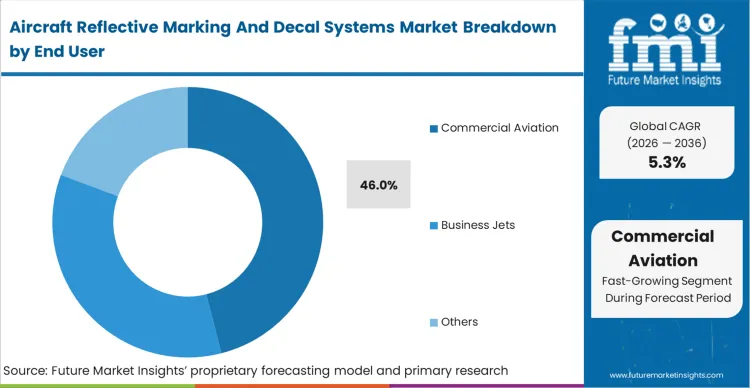
Commercial aviation procurement directors are currently evaluating how to strip weight from every inch of the fuselage, cementing the commercial aviation decals and placards dominance with a 46% share in 2026. The sheer scale of the global passenger fleet creates an inescapable volume of scheduled maintenance interventions that smaller aviation segments cannot match. Based on FMI's assessment, narrow-body operators integrate these graphics first, utilizing frequent overnight turns to apply localized replacements over narrow-body exterior coatings without interrupting daytime schedules. The business jet decal systems segment follows, typically replacing faded placards only during comprehensive interior refurbishments to maintain ultra-premium aesthetic standards. Legacy freight operators often arrive at this transition last, replacing painted exterior stencils with pressure-sensitive decals only when explicitly cited by authorities.
- Initial Adopters: Low-cost carriers flying high-cycle, uniform fleets mandate standardized decal kits directly from the factory to streamline downstream maintenance profiling.
- Secondary Adopters: Major legacy carriers operating mixed fleets transition to standardized film systems during cabin retrofits, integrating modern aircraft sensors data plates alongside updated interior instructional languages.
- Late Converts: Aging cargo fleets finally replace legacy painted warnings with compliant decals when the underlying fuselage paint begins to crack, necessitating a complete surface strip.
Aircraft Reflective Marking and Decal Systems Market Analysis by Sales Channel
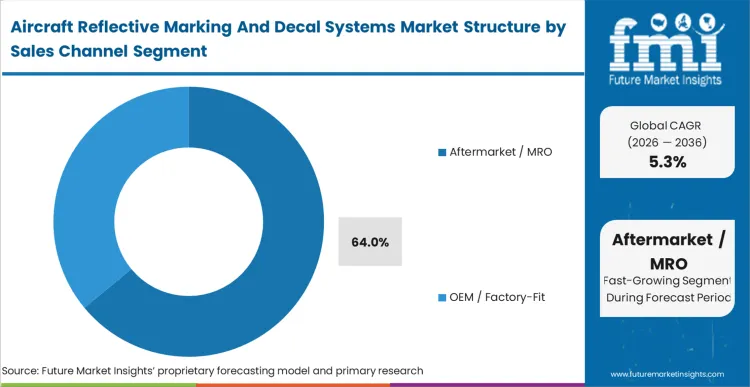
The structural tension between original equipment factory fitment and ongoing operational maintenance guarantees that the aftermarket / MRO segment dominates with a 64% share in 2026. A factory installs a decal kit once, but an aircraft flying a twenty-year service life will undergo multiple liveries, cabin reconfigurations, and thousands of hours of abrasive cleaning that strip away technical markings. As per FMI's projection, an effective MRO aircraft decal kits supplier must act as a specialized converter, rapidly producing approved graphic packages for aircraft sitting in hangars awaiting compliance sign-off. While the broader aircraft cabin interior aesthetic requires precise color matching, technical MRO decals prioritize immediate availability and unquestionable material traceability. Maintenance facilities must plan their procurement around the lead times of specific burn-certified materials.
- Production Capability: Specialized aviation converters maintain deep inventories of certified raw films, allowing them to custom-cut and ship emergency AOG decal kits within hours.
- Supply Constraint: The requirement for exhaustive material burn-test documentation creates a bottleneck, preventing standard commercial print shops from legally supplying the MRO channel.
- Future Landscape: By 2036, the MRO supply chain will rely on localized, approved printing hubs situated directly adjacent to major maintenance bases, eliminating cross-border shipping delays for critical regulatory placards.
Aircraft Reflective Marking and Decal Systems Market Drivers, Restraints, and Opportunities
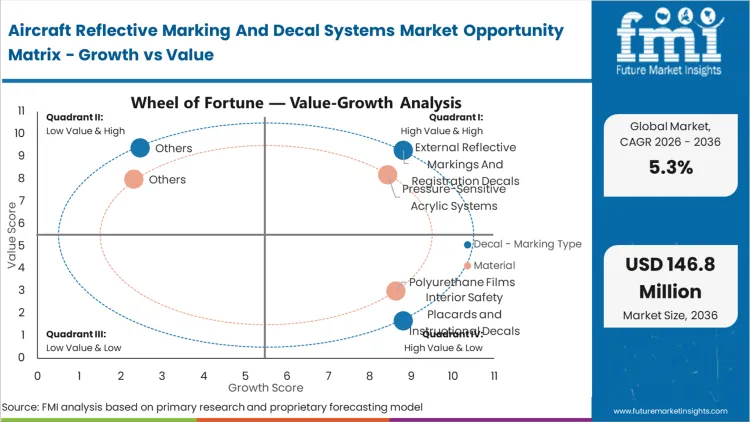
The aircraft placards and markings market is propelled by the relentless push for weight reduction across commercial aviation operations, forcing airframe manufacturers to abandon traditional heavy metallic data plates in favor of micro-thin decal architectures. Every ounce eliminated from the fuselage translates directly to fuel savings over thousands of flight cycles, compelling engineering teams to specify pressure-sensitive films. Positive aircraft placard market forecast trajectories indicate this structural imperative pushes operators toward comprehensive graphic kits that provide essential regulatory data without the weight penalty of legacy identification methods.
The single biggest operational friction slowing the adoption of advanced, long-life graphic systems is the rigid protocol surrounding aircraft marking compliance labels and the extended aircraft-on-ground (AOG) time required during application. Applying a complex, full-fuselage graphic or replacing hundreds of localized technical stencils requires a controlled hangar environment, specialized surface degreasing, and specific temperature windows for adhesive curing. Operations directors aggressively resist pulling an aircraft from revenue service solely for graphic updates, instead forcing maintenance teams to squeeze decal replacements into already congested scheduled service intervals.
Opportunities in the Aircraft Reflective Marking and Decal Systems Market
- Airline Lease Transition Decal Kits: The rapid expansion of operating leases requires frequent rebranding between carriers. Lessors standardizing on easily removable, non-damaging adhesive films allow MROs to execute asset handovers without the downtime of full paint stripping.
- Micro-Perforated Film Integration: The development of breathable exterior graphics enables technicians to apply large-format markings completely dry. Component shops utilize these to rapidly brand engine cowlings while avoiding complex aero engine coatings baking procedures.
- Certified Aircraft Decal Vendors Supplying RFID Labels: The integration of passive RFID tags into the layers of mandatory safety placards allows maintenance mechanics to electronically verify the presence and status of every required graphic in seconds, accelerating pre-flight audit workflows.
Regional Analysis
The global trajectory of the aircraft reflective marking and decal systems market reveals stark geographic contrasts, driven by varying fleet utilization rates, regional regulatory environments, and localized climate extremes. While emerging Asian corridors absorb massive factory-fit volumes, mature Western hubs sustain the sector through rigorous aftermarket compliance cycles with the market being segmented into Asia Pacific, Europe, North America, and the Middle East across 40 plus countries.
.webp "Top Country Growth Comparison Aircraft Reflective Marking And Decal Systems Market Cagr (2026 2036)")
| Country | CAGR (2026 to 2036) |
|---|---|
| India | 6.8% |
| China | 6.3% |
| United Arab Emirates | 5.7% |
| United States | 4.9% |
| France | 4.7% |
| Germany | 4.6% |
| United Kingdom | 4.5% |
Source: Future Market Insights (FMI) analysis, based on proprietary forecasting model and primary research
Asia Pacific Aircraft Reflective Marking and Decal Systems Market Analysis
The installed base requiring aftermarket replacement within five years is expanding immediately in this geography, as it absorbs entirely new OEM graphic suites daily. This dynamic fundamentally dictates the Asia Pacific aircraft reflective markings market, which, unlike mature regions focused on legacy maintenance, is driven by a massive influx of new-generation narrow-body aircraft into domestic low-cost networks. FMI estimates that the standard lifecycle of compliance materials is severely compressed here, because the high cycle-rate of short-haul flights accelerates physical wear on exterior landing gear stencils, exit paths, and door mechanisms.
- India: Growing at an impressive CAGR of 6.8%, the market for reflective decals in India is experiencing continuous, immediate demand for localized dual-language interior safety placards and factory-fit technical markings due to unprecedented airline order books. Unprecedented India aviation marking systems demand is being driven by domestic carriers absorbing these massive fleet injections. The MRO supply chains as a result are being forced to handle an inevitable surge in compliance spot-replacements caused by extreme tarmac temperatures. Airlines are desperate to avoid international shipping delays, meaning procurement heads who secure reliable, domestic conversion hubs can immediately capture long-term contracts.
- China: Domestic carriers can now execute comprehensive heavy maintenance checks without routing aircraft overseas, thanks to the rapid expansion of localized MRO infrastructure across the country. Accelerating China aircraft decal systems growth, operators utilizing these expanding hangar networks are systematically replacing entire exterior decal suites during scheduled downtime. FMI estimates the marking sector in China to expand at a CAGR of 6.3%, reflecting this internalized replacement cycle. As domestic certification standards increasingly align with global requirements, this specific trajectory positions Chinese aviation graphic suppliers to aggressively challenge legacy Western converters.
FMI's report includes secondary aviation markets across Southeast Asia and Oceania. These territories consistently demonstrate a structural preference for highly durable, UV-resistant exterior film architectures, as operators combat the aggressive degradation caused by continuous high-humidity, equatorial flight operations.
Europe Aircraft Reflective Marking and Decal Systems Market Analysis
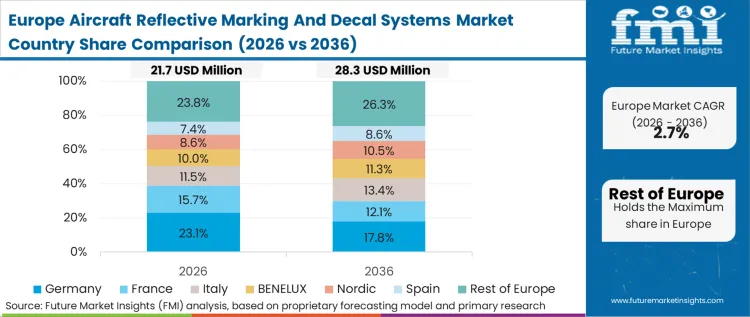
Unverified industrial material suppliers are effectively locked out of the aviation supply chain in this region, as regulatory rigidness heavily favors entrenched, certified converters according to FMI's projections. Every polycarbonate placard and acrylic adhesive must possess exhaustive, auditable documentation verifying its toxicity profile and flammability resistance, meaning operators cannot simply source graphic films based on cost. The Europe aircraft decal systems market is entirely governed by this strict adherence to rapidly evolving European Aviation Safety Agency (EASA) material traceability mandates. The airlines, when further replace expansive advanced aerospace coatings, they must simultaneously ensure all corresponding technical decals meet these same exacting material tracking standards.
- Germany: Local graphic converters are forced to maintain extraordinarily broad inventories of certified films to service a highly diverse, international inbound fleet due to Germany's high concentration of premier third-party MRO facilities. To maintain the rigorous turnaround schedules that define German maintenance efficiency, technicians working in these hangars demand immediate, dry-apply adhesive technologies. Highly skilled airframe mechanics are freed up to focus on critical structural repairs rather than tedious exterior detailing when facilities optimize these graphic installation workflows. Germany is set to register a CAGR of 4.6% over the forecast period, driven by this continuous technical throughput in the sector for technical markings.
- France: Expected to see its aviation decal sector grow at a CAGR of 4.7%, France relies heavily on the presence of primary airframe manufacturing operations. This concentration necessitates a deeply integrated, just-in-time supply chain for both exterior and interior factory-fit graphic systems. Aligning seamlessly with composite fairings installation, procurement teams at these final assembly lines mandate that decal suppliers deliver kitted, variant-specific graphic packages directly to the bay. Because airframe manufacturers rarely switch certified material vendors once a specific film architecture is written into the blueprint, suppliers operating within this tight factory ecosystem create an unassailable competitive moat.
- United Kingdom: Aircraft transitioning between European operators can be rebranded rapidly without damaging the underlying fuselage paint structure because British lessors mandate micro-perforated, clean-removal acrylics. The specific durability and removability requirements for exterior identification films applied to vast global asset portfolios are dictated directly by these major leasing syndicates. The UK market for aerospace markings is likely to post a CAGR of 4.5%, reflecting a steady stream of asset handovers. As their stringent leasing requirements cascade down to operators worldwide, these unique dynamic shifts the UK from a mere consumer of graphics to a structural architect of global material standards.
FMI's report includes the Nordic regions and Southern European aviation hubs. Operators across these adjacent zones are increasingly standardizing their interior safety placards on bilingual, high-contrast polycarbonate substrates to satisfy unified European operational mandates while accommodating diverse passenger demographics.
North America Aircraft Reflective Marking and Decal Systems Market Analysis
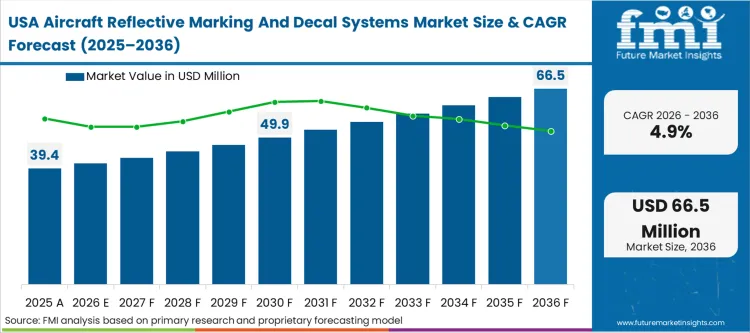
Based on FMI's assessment, operators treat exterior markings as a necessary operational friction, constantly seeking materials that minimize labor hours during application and resist edge-peeling when exposed to harsh chemical de-icing routines. The North America aircraft marking systems market is driven intensely by the underlying economics of asset utilization, where carriers prioritize immediate application speeds to support some of the highest flight-hour volumes globally. Instead of aesthetics, airlines operating across this continent evaluate graphic systems strictly on their ability to survive aggressive turnaround cleaning protocols without requiring unscheduled, mid-cycle replacement.
- United States: Anchoring the United States aircraft placards market, a massive, predictable baseline of aftermarket decal consumption is ensured by the sheer volume of the legacy American domestic fleet undergoing continuous D-check recertifications. Seeking suppliers who can provide everything from cabin interiors passenger placards to exterior fasteners warning markers in one auditable, FAA-compliant package, USA maintenance directors heavily prioritize single-vendor sourcing. Converters based in the country maintain secure revenue streams independent of new aircraft delivery cycles due to this massive replacement rhythm. The United States is estimated to expand at a CAGR of 4.9%, with demand for aerospace graphics propelled purely by this intense operational throughput.
FMI's report includes the broader North American cargo networks, which heavily influence the market by prioritizing maximum-durability, highly reflective exterior marking systems over complex aesthetic branding. Freight operators throughout this zone focus entirely on functional ground-crew visibility during night operations, stripping away unnecessary graphic weight to maximize payload efficiency.
Middle East Aircraft Reflective Marking and Decal Systems Market Analysis
Fleet managers operating in this geography face unique environmental extremes that destroy standard compliance materials within months. The Middle East aviation markings sector evaluates graphic systems strictly on their ability to survive extreme thermal cycling and abrasive airborne sand without requiring emergency mid-season replacement. Resulting in the carriers prioritize ultra-premium film architectures that guarantee immediate application and unquestionable durability to support their high-utilization, long-haul connecting models.
- United Arab Emirates: Fleet managers in the country cannot rely on standard lifespan projections, as constant exposure to abrasive airborne silica and extreme ramp temperatures force Gulf carriers to cycle through exterior technical markings faster than any other global operator. The UAE landscape is set to achieve a steady CAGR of 5.7%, fueled by this hyper-accelerated replacement rate. To prevent emergency exit indicators from delaminating mid-season, procurement teams must specify specialized, high-temperature fluoro-polymer films. Ramp inspectors will quickly ground aircraft for illegible safety stencils, meaning carriers that fail to mandate these premium, climate-specific film architectures face continuous dispatch delays.
FMI's report encompasses the broader regional Middle Eastern connecting hubs, where massive sovereign investments in new aviation infrastructure run parallel to growing fleet sizes. Operators across these territories continuously shape the supply chain by demanding localized conversion hubs that can bypass global shipping delays, ensuring that critical regulatory placards are available on-demand for out-of-cycle repairs.
Competitive Aligners for Market Players
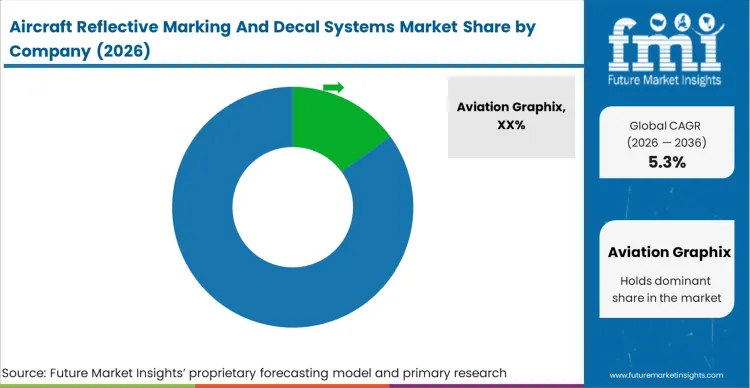
The strict necessity for aviation authorities to verify the burn-characteristics and toxicity of every material placed inside a pressurized cabin creates a highly concentrated supplier landscape. For buyers asking who are the top suppliers of aircraft decals and placards, Aviation Graphix holds a 9% share, alongside specialized certified aircraft decal vendors like Aero Decals, Inc., ADHETEC, and Avery Dennison Corporation, because they have successfully navigated the multi-year process of qualifying their base films against complex aerospace engineering specifications. MRO procurement directors use this documented certification as an absolute filter; a vendor lacking immediate, auditable traceability for their polycarbonate substrates is instantly disqualified. When airlines repair fluid systems involving valves, they rely entirely on the surrounding technical decals to guide ground crews, demanding graphics that resist highly corrosive hydraulic leaks.
Incumbents maintain their position by offering comprehensive, variant-specific graphic kits rather than just raw rolls of certified film. A specialized aircraft decal suppliers like NFI Corp or Brady Corporation provides value by managing the exact inventory of all 400+ mandatory technical stencils required for a specific narrow-body variant, ensuring an airline receives a complete, compliance-ready package. To challenge these leaders, a new entrant must build an exhaustive, digitized library of airframe manufacturer blueprints and regulatory mandates to accurately replicate these highly specific marking kits. FMI analysts opine that challengers must also demonstrate flawless global distribution logistics, as a missing exit placard holding an aircraft on the ground costs operators vastly more than the price of the graphic itself or the structural adhesives used in adjacent repairs.
As major airlines streamline their supply chains through 2036, they are actively resisting the administrative burden of sourcing individual interior placards and exterior branding from separate regional print shops. Large carriers are forcing a consolidation in the vendor base, demanding global aircraft placard manufacturers who can deliver unified compliance kits to any heavy maintenance facility worldwide. This structural tension between the airlines' desire for centralized, bulk-priced procurement and the highly localized, emergency-response nature of MRO decal replacement dictates that successful vendors must build localized conversion hubs directly adjacent to major global flight lines.
Key Players in Aircraft Reflective Marking and Decal Systems Market
- Aviation Graphix
- Aero Decals, Inc.
- ADHETEC
- Enflight Aviation
- NFI Corp
- Brady Corporation
- Avery Dennison Corporation
Scope of the Report
| Metric | Value |
|---|---|
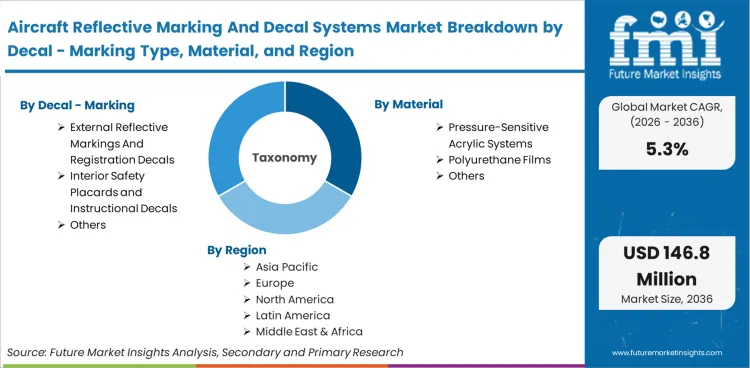
| Quantitative Units | USD 87.6 million to USD 146.8 million, at a CAGR of 5.3% |
| Market Definition | Engineered graphic films and structural placards applied to aerospace assets for regulatory compliance, maintenance identification, and emergency guidance. This excludes standard commercial vinyls and focuses strictly on the aircraft reflective marking and decal systems market. |
| Decal / Marking Type Segmentation | External reflective markings and registration decals, Interior safety placards and instructional decals, Emergency exit / escape path markers, Technical stencil and servicing markings |
| Material Segmentation | Pressure-sensitive acrylic systems, Polyurethane films, Fluoro-polymer films, Polyester / polycarbonate placard constructions |
| Application Segmentation | Safety and regulatory markings, Branding and livery decals, Maintenance / servicing identification, Cabin wayfinding and information graphics |
| End User Segmentation | Commercial aviation, Business jets, Military aircraft, Helicopters, Special mission / utility aircraft |
| Regions Covered | Asia Pacific, Europe, North America & Middle East |
| Countries Covered | India, China, United Arab Emirates, United States, France, Germany, United Kingdom, and 40 plus countries |
| Key Companies Profiled | Aviation Graphix, Aero Decals, Inc., ADHETEC, Enflight Aviation, NFI Corp, Brady Corporation, Avery Dennison Corporation |
| Forecast Period | 2026 to 2036 |
| Approach | Primary interviews conducted with MRO facility managers and airline fleet compliance directors. Baseline data anchored to active global commercial fleet volumes and scheduled heavy maintenance cycles. Forecasts validated against major airframe manufacturer delivery schedules and material supplier output. |
Source: Future Market Insights (FMI) analysis, based on proprietary forecasting model and primary research
Segments
Decal / Marking Type:
- External reflective markings and registration decals
- Interior safety placards and instructional decals
- Emergency exit / escape path markers
- Technical stencil and servicing markings
Material:
- Pressure-sensitive acrylic systems
- Polyurethane films
- Fluoro-polymer films
- Polyester / polycarbonate placard constructions
Application:
- Safety and regulatory markings
- Branding and livery decals
- Maintenance / servicing identification
- Cabin wayfinding and information graphics
End User:
- Commercial aviation
- Business jets
- Military aircraft
- Helicopters
- Special mission / utility aircraft
Sales Channel:
- Aftermarket / MRO
- OEM / factory-fit
Regions:
- North America
- United States
- Asia Pacific
- China
- India
- Singapore
- Europe
- Germany
- United Kingdom
- France
- Middle-East
- United Arab Emirates (UAE)
Bibliography
- Airbus. (2025, January). Airbus reports 766 commercial aircraft deliveries in 2024. Airbus.
- Airbus. (2025, February). Airbus reports Full-Year (FY) 2024 results. Airbus.
- Boeing. (2025, January). Boeing Reports Fourth Quarter Results.
- European Union Aviation Safety Agency. (2024, May). 2024-0088 : [Correction] Placards and Markings - Rear Facing Seat(s) - Placard Installation. EASA.
- European Union Aviation Safety Agency. (2025, March). 2025-0056 : Flight Manual - Supplements - Amendment; Placards and Markings - Cockpit Data Placard and Airspeed Correction Placard - Replacement; Indicating / Recording System - Airspeed Indicator - Modification. EASA.
- Federal Aviation Administration. (2025, March). Remote Identification of Drones.
- Federal Aviation Administration. (2026, February).
- General Aviation Manufacturers Association. (2025, February). GAMA Releases 2024 Aircraft Shipment and Billing Report.
- International Air Transport Association. (2025, August). The global commercial aircraft fleet. IATA.
This bibliography is provided for reader reference. The full FMI report contains the complete reference list with primary source documentation.
This Report Addresses
- Market intelligence to support strategic decision making across engineered graphic films and structural placards from this market
- Market size estimation and aircraft placard market forecast trajectories from 2026 to 2036, supported by scheduled D-check maintenance intervals
- Growth opportunity mapping across Pressure-sensitive acrylic systems with emphasis on the transition to fleet-wide leasing models
- Segment and regional revenue forecasts covering External reflective markings and registration decals across strict European Aviation Safety Agency (EASA) material traceability
- Competition strategy assessment including single-vendor traceability, localized conversion hubs, and burn-certification qualification
- Material development tracking including micro-perforated film technologies and passive RFID tags discussed in this article
- Market access analysis covering FAA certification databases, EASA burn-certification, and aircraft structural repair manual pathways from this article
- Market report delivery in PDF, Excel, PPT, and interactive dashboard formats for executive strategy, MRO procurement, and operational benchmarking use
Frequently Asked Questions
Explain the aircraft reflective marking and decal systems market?
The sector provides engineered graphic films and structural placards designed to survive extreme aerospace environments, ensuring mandatory regulatory identification, technical maintenance guidance, and passenger safety direction without compromising the aircraft's aerodynamic profile or burn-certification standards.
How big is the aircraft reflective marking and decal systems market in 2026?
Valued at USD 87.6 million in 2026, this sector establishes the baseline consumption of compliance and branding materials required to sustain the active global fleet through its immediate regulatory audit cycles.
What will it be valued at by 2036?
Projected to reach USD 146.8 million by 2036, this valuation reflects the compounding effect of larger narrow-body fleets entering their initial heavy maintenance blocks and requiring complete technical stencil replacements.
What drives demand for aircraft marking systems?
Demand is driven by lessors transitioning from painted technical stencils to micro-perforated film architectures, allowing them to rapidly rebrand and transfer assets between operators without the severe downtime of full paint stripping.
Compare aircraft placards, decals, and livery films?
Placards are rigid polycarbonate constructions for interior safety instructions, decals are flexible pressure-sensitive labels for exterior technical stencils, and livery films are large-format aesthetic wraps for temporary airline branding over the fuselage base paint.
Which regions will grow fastest for aircraft decal systems?
India expands fastest at 6.8% due to massive narrow-body deliveries entering domestic networks, outpacing China's 6.3% growth driven by localized heavy MRO infrastructure internalizing the replacement cycles of its maturing fleet.
Are aircraft decals FAA regulated?
Yes, strict EASA and FAA mandates compel procurement directors to secure graphics from specialized converters who maintain impeccable burn-test and toxicity documentation for every square inch of applied protective film.
How often are aircraft placards replaced?
Airlines are forced to replace these placards during scheduled heavy maintenance checks when quality assurance audits reveal they have faded beyond the specific contrast ratios mandated by aviation authorities.
What are aircraft reflective marking systems used for primarily?
They are primarily used to ensure critical exterior visibility during night operations and poor weather, as regulatory inspectors will halt dispatch during routine ramp checks if emergency cut-in zones are faded or peeling.
How do reflective aircraft markings vs photoluminescent markings compare?
Reflective markings require an external light source to bounce visibility back for exterior fuselage points, whereas photoluminescent markings absorb ambient light and glow independently for interior emergency floor-path guidance.
What is ATA 11 placards and markings in aviation?
ATA Chapter 11 is the standardized maintenance manual section governing all required ATA 11 placards and markings, providing the exact specification framework fleet managers use to maintain comprehensive inventories of every safety placard required for each airframe configuration.
How do OEM graphic vendors defend their market position?
Incumbents defend their market position by supplying airlines with complete, variant-specific compliance kits containing all 400+ required technical stencils in a single, auditable package, thereby creating severe administrative friction for operators attempting to switch to piecemeal suppliers.
What causes exterior registration decals to fail early?
Exposure to Skydrol hydraulic fluids and continuous alkaline de-icing chemical baths rapidly degrades the protective top-coats of uncertified graphics, causing edge-curling that instantly fails ramp inspections.
How do cargo operators approach decal replacement differently?
Legacy freight operators maintain absolute minimum compliance by replacing exterior markers only when explicitly cited, prioritizing functional, highly reflective visibility for night ground operations rather than the aesthetic cohesion demanded by passenger airlines.
Why are pressure-sensitive acrylics preferred over polyurethane?
While polyimide film and tape offers extreme heat resistance, acrylic adhesives are preferred for general airframe application because they allow for immediate, single-technician dry installation without specialized squeegee training or extended curing times.
What role do leasing companies play in graphic standards?
Major leasing syndicates dictate specific clean-removal standards for identification films on their assets to protect the underlying fuselage paint and guarantee rapid rebranding during lessee transitions.
How does the UAE climate dictate material specifications?
Extreme ramp heat and airborne silica abrasion in the Gulf force operators to specify specialized fluoro-polymer constructions to prevent standard films from delaminating within months and causing unacceptable dispatch delays.
What is the operational consequence of a missing interior safety placard?
A missing exit marker or damaged life-vest instruction card renders an aircraft legally unairworthy, forcing airlines to pay massive expediting fees for simple polycarbonate cards to avoid canceling scheduled revenue flights.
How are RFID tags altering the compliance workflow?
Manufacturers are integrating passive RFID into structural decals, allowing line mechanics to sweep a cabin with a scanner and instantly verify the presence and legibility of every mandatory placard to eliminate hours of manual visual auditing.
Why is the aftermarket MRO channel larger than OEM factory fitment?
While an aircraft receives only one factory graphic installation, it requires constant, rolling replacements of faded exterior stencils and damaged cabin instructions across its thirty-year service life, exponentially compounding the aftermarket volume.
What limits generic print shops from entering this sector?
The absolute requirement for flammability resistance acts as an impenetrable barrier, as commercial printers lacking the capability to navigate and document these rigorous aerospace material burn-certification tests cannot legally supply the aviation supply chain.
How do narrow-body operations differ from wide-body applications?
Low-cost narrow-body operators execute localized graphic replacements using self adhesive films during short overnight turns to maintain high fleet utilization, whereas wide-body operators group comprehensive decal renewals into their extended, multi-week D-check overhauls.
Preview the report firsthand - request a free sample
Get SampleGet the brochure for pricing and purchase details.
Get PDFTable of Content
- Executive Summary
- Global Market Outlook
- Demand-side Trends
- Supply-side Trends
- Technology Roadmap Analysis
- Analysis and Recommendations
- Market Overview
- Market Coverage / Taxonomy
- Market Definition / Scope / Limitations
- Research Methodology
- Chapter Orientation
- Analytical Lens and Working Hypotheses
- Market Structure, Signals, and Trend Drivers
- Benchmarking and Cross-market Comparability
- Market Sizing, Forecasting, and Opportunity Mapping
- Research Design and Evidence Framework
- Desk Research Programme (Secondary Evidence)
- Company Annual and Sustainability Reports
- Peer-reviewed Journals and Academic Literature
- Corporate Websites, Product Literature, and Technical Notes
- Earnings Decks and Investor Briefings
- Statutory Filings and Regulatory Disclosures
- Technical White Papers and Standards Notes
- Trade Journals, Industry Magazines, and Analyst Briefs
- Conference Proceedings, Webinars, and Seminar Materials
- Government Statistics Portals and Public Data Releases
- Press Releases and Reputable Media Coverage
- Specialist Newsletters and Curated Briefings
- Sector Databases and Reference Repositories
- FMI Internal Proprietary Databases and Historical Market Datasets
- Subscription Datasets and Paid Sources
- Social Channels, Communities, and Digital Listening Inputs
- Additional Desk Sources
- Expert Input and Fieldwork (Primary Evidence)
- Primary Modes
- Qualitative Interviews and Expert Elicitation
- Quantitative Surveys and Structured Data Capture
- Blended Approach
- Why Primary Evidence is Used
- Field Techniques
- Interviews
- Surveys
- Focus Groups
- Observational and In-context Research
- Social and Community Interactions
- Stakeholder Universe Engaged
- C-suite Leaders
- Board Members
- Presidents and Vice Presidents
- R&D and Innovation Heads
- Technical Specialists
- Domain Subject-matter Experts
- Scientists
- Physicians and Other Healthcare Professionals
- Governance, Ethics, and Data Stewardship
- Research Ethics
- Data Integrity and Handling
- Primary Modes
- Tooling, Models, and Reference Databases
- Desk Research Programme (Secondary Evidence)
- Data Engineering and Model Build
- Data Acquisition and Ingestion
- Cleaning, Normalisation, and Verification
- Synthesis, Triangulation, and Analysis
- Quality Assurance and Audit Trail
- Market Background
- Market Dynamics
- Drivers
- Restraints
- Opportunity
- Trends
- Scenario Forecast
- Demand in Optimistic Scenario
- Demand in Likely Scenario
- Demand in Conservative Scenario
- Opportunity Map Analysis
- Product Life Cycle Analysis
- Supply Chain Analysis
- Investment Feasibility Matrix
- Value Chain Analysis
- PESTLE and Porter’s Analysis
- Regulatory Landscape
- Regional Parent Market Outlook
- Production and Consumption Statistics
- Import and Export Statistics
- Market Dynamics
- Global Market Analysis 2021 to 2025 and Forecast, 2026 to 2036
- Historical Market Size Value (USD Million) Analysis, 2021 to 2025
- Current and Future Market Size Value (USD Million) Projections, 2026 to 2036
- Y-o-Y Growth Trend Analysis
- Absolute $ Opportunity Analysis
- Global Market Pricing Analysis 2021 to 2025 and Forecast 2026 to 2036
- Global Market Analysis 2021 to 2025 and Forecast 2026 to 2036, By Decal - Marking Type
- Introduction / Key Findings
- Historical Market Size Value (USD Million) Analysis By Decal - Marking Type , 2021 to 2025
- Current and Future Market Size Value (USD Million) Analysis and Forecast By Decal - Marking Type , 2026 to 2036
- External Reflective Markings And Registration Decals
- Interior Safety Placards and Instructional Decals
- Others
- External Reflective Markings And Registration Decals
- Y-o-Y Growth Trend Analysis By Decal - Marking Type , 2021 to 2025
- Absolute $ Opportunity Analysis By Decal - Marking Type , 2026 to 2036
- Global Market Analysis 2021 to 2025 and Forecast 2026 to 2036, By Material
- Introduction / Key Findings
- Historical Market Size Value (USD Million) Analysis By Material, 2021 to 2025
- Current and Future Market Size Value (USD Million) Analysis and Forecast By Material, 2026 to 2036
- Pressure-Sensitive Acrylic Systems
- Polyurethane Films
- Others
- Pressure-Sensitive Acrylic Systems
- Y-o-Y Growth Trend Analysis By Material, 2021 to 2025
- Absolute $ Opportunity Analysis By Material, 2026 to 2036
- Global Market Analysis 2021 to 2025 and Forecast 2026 to 2036, By Application
- Introduction / Key Findings
- Historical Market Size Value (USD Million) Analysis By Application, 2021 to 2025
- Current and Future Market Size Value (USD Million) Analysis and Forecast By Application, 2026 to 2036
- Safety And Regulatory Markings
- Branding and Livery Decals
- Others
- Safety And Regulatory Markings
- Y-o-Y Growth Trend Analysis By Application, 2021 to 2025
- Absolute $ Opportunity Analysis By Application, 2026 to 2036
- Global Market Analysis 2021 to 2025 and Forecast 2026 to 2036, By End User
- Introduction / Key Findings
- Historical Market Size Value (USD Million) Analysis By End User, 2021 to 2025
- Current and Future Market Size Value (USD Million) Analysis and Forecast By End User, 2026 to 2036
- Commercial Aviation
- Business Jets
- Others
- Commercial Aviation
- Y-o-Y Growth Trend Analysis By End User, 2021 to 2025
- Absolute $ Opportunity Analysis By End User, 2026 to 2036
- Global Market Analysis 2021 to 2025 and Forecast 2026 to 2036, By Sales Channel
- Introduction / Key Findings
- Historical Market Size Value (USD Million) Analysis By Sales Channel, 2021 to 2025
- Current and Future Market Size Value (USD Million) Analysis and Forecast By Sales Channel, 2026 to 2036
- Aftermarket / MRO
- OEM / Factory-Fit
- Aftermarket / MRO
- Y-o-Y Growth Trend Analysis By Sales Channel, 2021 to 2025
- Absolute $ Opportunity Analysis By Sales Channel, 2026 to 2036
- Global Market Analysis 2021 to 2025 and Forecast 2026 to 2036, By Region
- Introduction
- Historical Market Size Value (USD Million) Analysis By Region, 2021 to 2025
- Current Market Size Value (USD Million) Analysis and Forecast By Region, 2026 to 2036
- North America
- Latin America
- Western Europe
- Eastern Europe
- East Asia
- South Asia and Pacific
- Middle East & Africa
- Market Attractiveness Analysis By Region
- North America Market Analysis 2021 to 2025 and Forecast 2026 to 2036, By Country
- Historical Market Size Value (USD Million) Trend Analysis By Market Taxonomy, 2021 to 2025
- Market Size Value (USD Million) Forecast By Market Taxonomy, 2026 to 2036
- By Country
- USA
- Canada
- Mexico
- By Decal - Marking Type
- By Material
- By Application
- By End User
- By Sales Channel
- By Country
- Market Attractiveness Analysis
- By Country
- By Decal - Marking Type
- By Material
- By Application
- By End User
- By Sales Channel
- Key Takeaways
- Latin America Market Analysis 2021 to 2025 and Forecast 2026 to 2036, By Country
- Historical Market Size Value (USD Million) Trend Analysis By Market Taxonomy, 2021 to 2025
- Market Size Value (USD Million) Forecast By Market Taxonomy, 2026 to 2036
- By Country
- Brazil
- Chile
- Rest of Latin America
- By Decal - Marking Type
- By Material
- By Application
- By End User
- By Sales Channel
- By Country
- Market Attractiveness Analysis
- By Country
- By Decal - Marking Type
- By Material
- By Application
- By End User
- By Sales Channel
- Key Takeaways
- Western Europe Market Analysis 2021 to 2025 and Forecast 2026 to 2036, By Country
- Historical Market Size Value (USD Million) Trend Analysis By Market Taxonomy, 2021 to 2025
- Market Size Value (USD Million) Forecast By Market Taxonomy, 2026 to 2036
- By Country
- Germany
- UK
- Italy
- Spain
- France
- Nordic
- BENELUX
- Rest of Western Europe
- By Decal - Marking Type
- By Material
- By Application
- By End User
- By Sales Channel
- By Country
- Market Attractiveness Analysis
- By Country
- By Decal - Marking Type
- By Material
- By Application
- By End User
- By Sales Channel
- Key Takeaways
- Eastern Europe Market Analysis 2021 to 2025 and Forecast 2026 to 2036, By Country
- Historical Market Size Value (USD Million) Trend Analysis By Market Taxonomy, 2021 to 2025
- Market Size Value (USD Million) Forecast By Market Taxonomy, 2026 to 2036
- By Country
- Russia
- Poland
- Hungary
- Balkan & Baltic
- Rest of Eastern Europe
- By Decal - Marking Type
- By Material
- By Application
- By End User
- By Sales Channel
- By Country
- Market Attractiveness Analysis
- By Country
- By Decal - Marking Type
- By Material
- By Application
- By End User
- By Sales Channel
- Key Takeaways
- East Asia Market Analysis 2021 to 2025 and Forecast 2026 to 2036, By Country
- Historical Market Size Value (USD Million) Trend Analysis By Market Taxonomy, 2021 to 2025
- Market Size Value (USD Million) Forecast By Market Taxonomy, 2026 to 2036
- By Country
- China
- Japan
- South Korea
- By Decal - Marking Type
- By Material
- By Application
- By End User
- By Sales Channel
- By Country
- Market Attractiveness Analysis
- By Country
- By Decal - Marking Type
- By Material
- By Application
- By End User
- By Sales Channel
- Key Takeaways
- South Asia and Pacific Market Analysis 2021 to 2025 and Forecast 2026 to 2036, By Country
- Historical Market Size Value (USD Million) Trend Analysis By Market Taxonomy, 2021 to 2025
- Market Size Value (USD Million) Forecast By Market Taxonomy, 2026 to 2036
- By Country
- India
- ASEAN
- Australia & New Zealand
- Rest of South Asia and Pacific
- By Decal - Marking Type
- By Material
- By Application
- By End User
- By Sales Channel
- By Country
- Market Attractiveness Analysis
- By Country
- By Decal - Marking Type
- By Material
- By Application
- By End User
- By Sales Channel
- Key Takeaways
- Middle East & Africa Market Analysis 2021 to 2025 and Forecast 2026 to 2036, By Country
- Historical Market Size Value (USD Million) Trend Analysis By Market Taxonomy, 2021 to 2025
- Market Size Value (USD Million) Forecast By Market Taxonomy, 2026 to 2036
- By Country
- Kingdom of Saudi Arabia
- Other GCC Countries
- Turkiye
- South Africa
- Other African Union
- Rest of Middle East & Africa
- By Decal - Marking Type
- By Material
- By Application
- By End User
- By Sales Channel
- By Country
- Market Attractiveness Analysis
- By Country
- By Decal - Marking Type
- By Material
- By Application
- By End User
- By Sales Channel
- Key Takeaways
- Key Countries Market Analysis
- USA
- Pricing Analysis
- Market Share Analysis, 2025
- By Decal - Marking Type
- By Material
- By Application
- By End User
- By Sales Channel
- Canada
- Pricing Analysis
- Market Share Analysis, 2025
- By Decal - Marking Type
- By Material
- By Application
- By End User
- By Sales Channel
- Mexico
- Pricing Analysis
- Market Share Analysis, 2025
- By Decal - Marking Type
- By Material
- By Application
- By End User
- By Sales Channel
- Brazil
- Pricing Analysis
- Market Share Analysis, 2025
- By Decal - Marking Type
- By Material
- By Application
- By End User
- By Sales Channel
- Chile
- Pricing Analysis
- Market Share Analysis, 2025
- By Decal - Marking Type
- By Material
- By Application
- By End User
- By Sales Channel
- Germany
- Pricing Analysis
- Market Share Analysis, 2025
- By Decal - Marking Type
- By Material
- By Application
- By End User
- By Sales Channel
- UK
- Pricing Analysis
- Market Share Analysis, 2025
- By Decal - Marking Type
- By Material
- By Application
- By End User
- By Sales Channel
- Italy
- Pricing Analysis
- Market Share Analysis, 2025
- By Decal - Marking Type
- By Material
- By Application
- By End User
- By Sales Channel
- Spain
- Pricing Analysis
- Market Share Analysis, 2025
- By Decal - Marking Type
- By Material
- By Application
- By End User
- By Sales Channel
- France
- Pricing Analysis
- Market Share Analysis, 2025
- By Decal - Marking Type
- By Material
- By Application
- By End User
- By Sales Channel
- India
- Pricing Analysis
- Market Share Analysis, 2025
- By Decal - Marking Type
- By Material
- By Application
- By End User
- By Sales Channel
- ASEAN
- Pricing Analysis
- Market Share Analysis, 2025
- By Decal - Marking Type
- By Material
- By Application
- By End User
- By Sales Channel
- Australia & New Zealand
- Pricing Analysis
- Market Share Analysis, 2025
- By Decal - Marking Type
- By Material
- By Application
- By End User
- By Sales Channel
- China
- Pricing Analysis
- Market Share Analysis, 2025
- By Decal - Marking Type
- By Material
- By Application
- By End User
- By Sales Channel
- Japan
- Pricing Analysis
- Market Share Analysis, 2025
- By Decal - Marking Type
- By Material
- By Application
- By End User
- By Sales Channel
- South Korea
- Pricing Analysis
- Market Share Analysis, 2025
- By Decal - Marking Type
- By Material
- By Application
- By End User
- By Sales Channel
- Russia
- Pricing Analysis
- Market Share Analysis, 2025
- By Decal - Marking Type
- By Material
- By Application
- By End User
- By Sales Channel
- Poland
- Pricing Analysis
- Market Share Analysis, 2025
- By Decal - Marking Type
- By Material
- By Application
- By End User
- By Sales Channel
- Hungary
- Pricing Analysis
- Market Share Analysis, 2025
- By Decal - Marking Type
- By Material
- By Application
- By End User
- By Sales Channel
- Kingdom of Saudi Arabia
- Pricing Analysis
- Market Share Analysis, 2025
- By Decal - Marking Type
- By Material
- By Application
- By End User
- By Sales Channel
- Turkiye
- Pricing Analysis
- Market Share Analysis, 2025
- By Decal - Marking Type
- By Material
- By Application
- By End User
- By Sales Channel
- South Africa
- Pricing Analysis
- Market Share Analysis, 2025
- By Decal - Marking Type
- By Material
- By Application
- By End User
- By Sales Channel
- USA
- Market Structure Analysis
- Competition Dashboard
- Competition Benchmarking
- Market Share Analysis of Top Players
- By Regional
- By Decal - Marking Type
- By Material
- By Application
- By End User
- By Sales Channel
- Competition Analysis
- Competition Deep Dive
- Aviation Graphix
- Overview
- Product Portfolio
- Profitability by Market Segments (Product/Age /Sales Channel/Region)
- Sales Footprint
- Strategy Overview
- Marketing Strategy
- Product Strategy
- Channel Strategy
- Aero Decals, Inc.
- ADHETEC
- Enflight Aviation
- NFI Corp
- Brady Corporation
- Aviation Graphix
- Competition Deep Dive
- Assumptions & Acronyms Used


