

- Industry Size (2026)
- USD 375 Mn
- Forecast (2036)
- USD 1210 Mn
- CAGR (2026 to 2036)
- 11.9%
Anti-Soiling and Easy-Clean Exterior Coatings for Narrow-Body Aircraft Market Forecast and Outlook 2026 to 2036
The market for anti-soiling and easy-clean exterior coatings for narrow-body aircraft is projected to grow from USD 375 million in 2026 to USD 1,210 million by 2036, reflecting a CAGR of 11.9%. This growth is largely driven by the demand for coatings that reduce maintenance time, improve aircraft aesthetics, and enhance overall operational efficiency.
Nano-structured hydrophobic coatings, which represent 40% of the coating technology segment, are gaining traction for their ability to repel dirt, water, and contaminants, ensuring a cleaner surface and reducing the frequency of cleaning. Narrow-body commercial aircraft OEM, accounting for 50% of the application market share, are the dominant consumers of these coatings, as they are essential for improving the durability and appearance of aircraft exteriors while lowering maintenance costs. The industry expansion is further supported by increasing efforts to enhance the long-term performance and sustainability of aircraft.
Quick Stats for Anti-Soiling and Easy-Clean Exterior Coatings for Narrow-Body Aircraft Market
- Anti-Soiling and Easy-Clean Exterior Coatings for Narrow-Body Aircraft Market Value (2026): USD 375 million
- Anti-Soiling and Easy-Clean Exterior Coatings for Narrow-Body Aircraft Market Forecast Value (2036): USD 1,210 million
- Anti-Soiling and Easy-Clean Exterior Coatings for Narrow-Body Aircraft Market Global Forecast CAGR (2026 to 2036): 11.9%
- Top Application by Share in Anti-Soiling and Easy-Clean Exterior Coatings for Narrow-Body Aircraft Market: Narrow-Body Commercial Aircraft OEM (50%)
- Key Growth Regions in Anti-Soiling and Easy-Clean Exterior Coatings for Narrow-Body Aircraft Market: China, India, USA, UK, Japan
- Top Players in Anti-Soiling and Easy-Clean Exterior Coatings for Narrow-Body Aircraft Market: PPG Aerospace, AkzoNobel Aerospace Coatings, Sherwin-Williams Aerospace, 3M Company, Hexcel Corporation
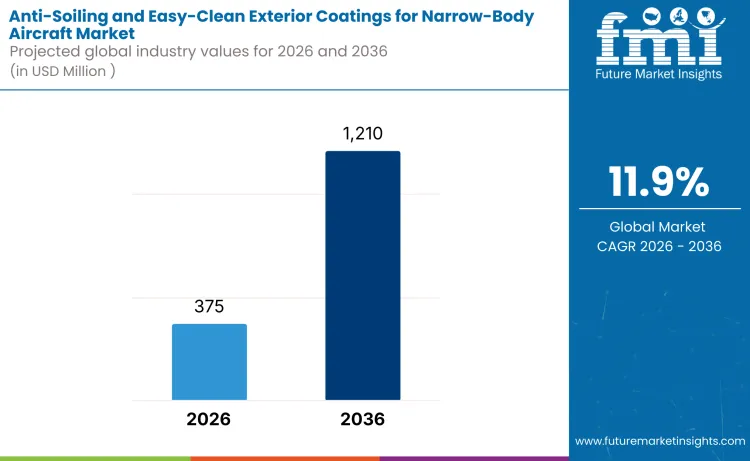
Anti-Soiling and Easy-Clean Exterior Coatings for Narrow-Body Aircraft Market Key Takeaways
| Metric | Value |
|---|---|
| Industry Sales Value (2025) | USD 375 million |
| Industry Forecast Value (2035) | USD 1,210 million |
| Industry Forecast CAGR (2025 to 2035) | 11.9% |
What Are the Key Segments in Anti-Soiling and Easy-Clean Exterior Coatings for Narrow-Body Aircraft Market?
The anti-soiling and easy-clean exterior coatings for narrow-body aircraft market is segmented by coating technology and application. Nano-structured hydrophobic coatings lead the coating technology segment with 40% of the market share, providing effective protection against contaminants. Narrow-body commercial aircraft OEM is the dominant application, representing 50%, driven by the need for efficient, durable exterior coatings for new aircraft. The market is expanding as airlines and aircraft manufacturers seek solutions to enhance aircraft appearance, reduce cleaning costs, and improve maintenance efficiency.
Which Coating Technology Drives Anti-Soiling and Easy-Clean Exterior Coatings for Narrow-Body Aircraft Market Demand Globally?
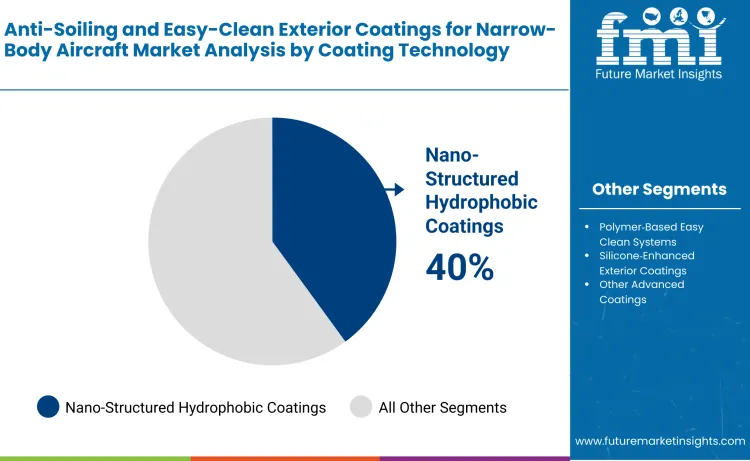
Nano-structured hydrophobic coatings account for 40% of the market share. These coatings are designed to prevent contaminants such as dirt, water, and oil from adhering to aircraft exteriors, ensuring a clean, smooth surface. By using advanced nano-texturing techniques, these coatings create a surface that repels water and other substances, reducing the frequency and intensity of cleaning required.
Nano-structured hydrophobic coatings are particularly effective in improving the aerodynamics of the aircraft, maintaining its visual appeal, and reducing the need for frequent manual cleaning. As airlines focus on reducing maintenance costs and enhancing the efficiency of their fleets, the demand for nano-structured hydrophobic coatings is increasing. These coatings provide long-lasting protection against environmental factors, helping to maintain the aircraft’s appearance and performance. The growing demand for environmentally friendly and cost-effective solutions in commercial aviation is driving the adoption of this coating technology.
Which Application Drives Anti-Soiling and Easy-Clean Exterior Coatings for Narrow-Body Aircraft Market Demand Globally?
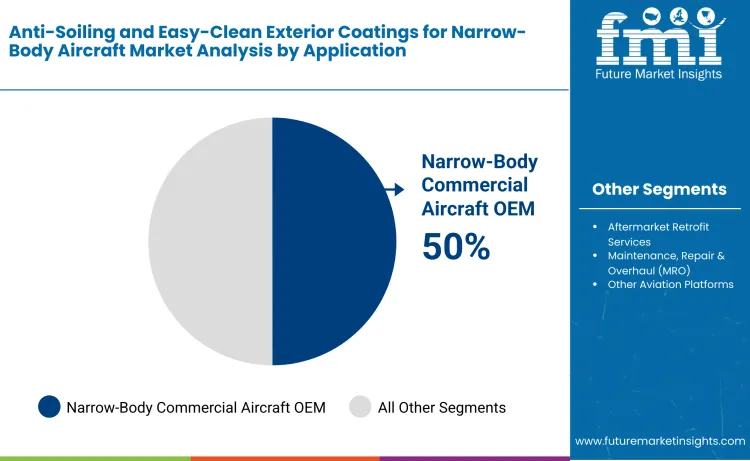
Narrow-body commercial aircraft OEM leads the application segment with 50% of the market share. Narrow-body aircraft, commonly used for short to medium-haul flights, are particularly susceptible to soiling from dirt, dust, and water. The demand for anti-soiling and easy-clean coatings in this segment is driven by the need to maintain the exterior of these aircraft, which are used frequently and exposed to various weather conditions. Applying these coatings during the original equipment manufacturing (OEM) process ensures that new aircraft have a durable, easy-to-clean surface, reducing maintenance costs and enhancing the aircraft's operational efficiency.
Airlines benefit from reduced cleaning time and costs, while the coatings also help maintain the aesthetic and aerodynamic qualities of the aircraft. While aftermarket retrofit services, MRO, and other aviation platforms also contribute to the market, the OEM segment for narrow-body commercial aircraft remains the dominant application due to the scale of fleet production and the growing focus on cost-effective, low-maintenance solutions in the aviation industry.
What is the Key Trends of the Global Anti Soiling and Easy Clean Exterior Coatings for Narrow Body Aircraft Market?
The global anti‑soiling and easy‑clean exterior coatings for narrow‑body aircraft market is growing as airlines and maintenance organisations seek surface systems that reduce buildup of dirt, oil, exhaust residues and environmental contaminants. These coatings are designed to maintain aerodynamic smoothness and reduce frequency of manual cleaning. Demand is supported by growth in narrow‑body fleets, operational efficiency goals, and pressure to control turnaround times. Aviation operators value coatings that help preserve exterior condition, cut cleaning labour and support greater availability of aircraft on route networks.
What are the Key Drivers for the Global Anti‑Soiling and Easy‑Clean Exterior Coatings for Narrow‑Body Aircraft Market?
A major driver is airline focus on reducing maintenance costs and turnaround delays. Frequent exposure to contaminants on runways and in flight paths makes exterior surfaces dirty, which can degrade appearance and slightly affect drag. Operators seek coating technologies that shed deposits and require less frequent wash cycles. Increasing narrow‑body aircraft deliveries for short‑haul and medium‑haul routes boosts total surface area requiring protection. Regulatory emphasis on aircraft cleaning chemicals that meet environmental guidelines encourages adoption of systems that simplify removal of residues and meet safety requirements.
What are the Restraints for the Global Anti‑Soiling and Easy‑Clean Exterior Coatings for Narrow‑Body Aircraft Market?
One restraint is the challenge of engineering coatings that balance ease of cleaning with robust adhesion, durability and resistance to harsh environmental conditions. Exterior surface systems must endure UV exposure, temperature changes, particulate impact and frequent high‑pressure washing without losing performance. Development and certification of innovative coatings involve extensive validation to meet stringent aerospace quality standards. The cost of advanced materials and integration into existing maintenance schedules may deter some operators focused on near‑term budgets. Variation in service environments and operator cleaning practices may influence perceived value and slow uniform uptake.
What is the Country-Wise Outlook for Anti-Soiling and Easy-Clean Exterior Coatings for Narrow-Body Aircraft?
The Anti-Soiling and Easy-Clean Exterior Coatings for Narrow-Body Aircraft market is witnessing steady growth, driven by the increasing demand for cost-effective, low-maintenance solutions in the aviation industry. Countries like China, India, and the USA are leading this growth, with a growing focus on enhancing aircraft durability, improving operational efficiency, and reducing maintenance costs.
These coatings help prevent dirt, dust, and contaminants from adhering to aircraft exteriors, reducing cleaning time and costs. As airlines continue to modernize their fleets and seek ways to improve operational efficiency, the demand for anti-soiling and easy-clean coatings is expected to grow steadily across these regions.
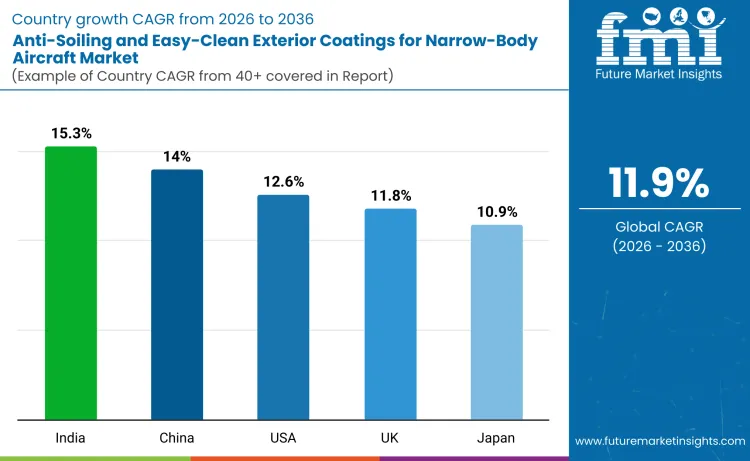
| Country | CAGR (2026 to 2036) |
|---|---|
| China | 14% |
| India | 15.3% |
| USA | 12.6% |
| UK | 11.8% |
| Japan | 10.9% |
What is Driving the Growth of Anti-Soiling and Easy-Clean Exterior Coatings for Narrow-Body Aircraft in China?
China’s anti-soiling and easy-clean exterior coatings for narrow-body aircraft market is projected to grow at a CAGR of 14%. The rapid expansion of China’s aviation sector and the increasing demand for fleet modernization are driving the adoption of advanced exterior coatings. These coatings, which help reduce maintenance time and costs by preventing dirt and contaminants from adhering to aircraft exteriors, are gaining popularity. As China focuses on improving its aircraft’s operational efficiency and safety, the demand for cost-effective and low-maintenance solutions like anti-soiling and easy-clean coatings is expected to rise, contributing to steady market growth.
What is Contributing to the Growth of Anti-Soiling and Easy-Clean Exterior Coatings for Narrow-Body Aircraft in India?
India’s anti-soiling and easy-clean exterior coatings for narrow-body aircraft market is expected to grow at an impressive CAGR of 15.3%. The expansion of India’s aviation sector and the increasing need for aircraft maintenance efficiency are key drivers of this market. Anti-soiling and easy-clean coatings offer significant advantages in reducing the frequency and cost of cleaning, as well as extending the life of aircraft exteriors. As Indian airlines modernize their fleets and focus on cost-saving solutions, the demand for these coatings is expected to continue growing, especially in narrow-body aircraft, which are a crucial segment of India’s commercial fleet.
What is Driving the Anti-Soiling and Easy-Clean Exterior Coatings Market Growth in the USA?
The USA’s anti-soiling and easy-clean exterior coatings for narrow-body aircraft market is projected to grow at a CAGR of 12.6%. The increasing focus on reducing maintenance costs and improving aircraft performance is driving the demand for coatings that prevent dirt and contaminants from adhering to aircraft exteriors. As the USA continues to lead the aerospace industry, airlines and manufacturers are adopting anti-soiling and easy-clean coatings to enhance fleet efficiency and reduce operational downtime. These coatings help improve aircraft longevity and reduce the environmental impact of frequent cleaning, driving the continued growth of the market in the USA.
What is Influencing the Growth of Anti-Soiling and Easy-Clean Exterior Coatings for Narrow-Body Aircraft in the UK?
The UK’s anti-soiling and easy-clean exterior coatings for narrow-body aircraft market is expected to grow at a CAGR of 11.8%. The UK’s emphasis on improving operational efficiency and reducing maintenance costs in its aerospace sector is driving the demand for advanced coatings that prevent contaminants from adhering to aircraft exteriors. These coatings help airlines reduce cleaning time and maintenance costs while extending the lifespan of aircraft. As the UK continues to modernize its fleet and prioritize sustainability and cost-effectiveness, the adoption of anti-soiling and easy-clean coatings is expected to increase, contributing to steady market growth.
What is Contributing to the Growth of Anti-Soiling and Easy-Clean Exterior Coatings for Narrow-Body Aircraft in Japan?
Japan’s anti-soiling and easy-clean exterior coatings for narrow-body aircraft market is projected to grow at a CAGR of 10.9%. Japan’s focus on maintaining high operational efficiency and safety in its aviation sector is driving the adoption of coatings that reduce the need for frequent cleaning. These coatings, which prevent dirt and contaminants from sticking to aircraft surfaces, offer airlines a cost-effective solution to improve fleet management. As Japan’s aviation industry modernizes and seeks ways to reduce operational costs, the demand for anti-soiling and easy-clean coatings in narrow-body aircraft is expected to rise, contributing to the market’s steady growth.
What is the Competitive Landscape for the Anti Soiling and Easy Clean Exterior Coatings for Narrow Body Aircraft Market?
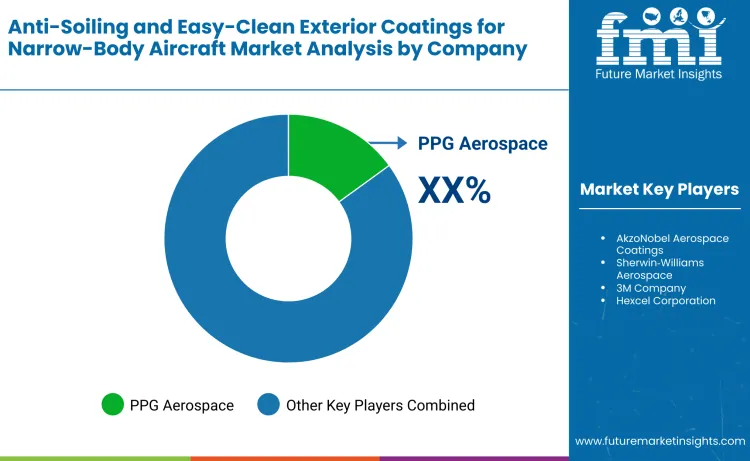
Global demand for anti‑soiling and easy‑clean exterior coatings for narrow‑body aircraft is rising as airlines and aircraft manufacturers prioritise reduced maintenance, improved aesthetics and lower operational costs. Exterior surfaces of aircraft accumulate dirt, exhaust residue, carbon deposits and environmental particulates during routine service. Traditional coatings require frequent wash cycles that consume water, labour and downtime. Anti‑soiling and easy‑clean coatings are engineered to minimise adherence of contaminants and allow faster washing, helping maintain aerodynamic performance and fuel efficiency. As narrow‑body aircraft dominate commercial fleets worldwide in both domestic and short‑haul international routes, the impact of advanced exterior coatings is significant. Adoption is especially strong in regions with high aircraft utilisation and strict cost controls, including North America, Europe and Asia Pacific. Airlines focused on sustainability are also attracted to coatings that reduce the environmental footprint of cleaning operations.
On the supply side, a focused group of aerospace and advanced materials companies competes to lead this specialised segment. PPG Aerospace is widely recognised as a leading key player with established product lines and strong global support for aircraft exterior coatings. Other major competitors include AkzoNobel Aerospace Coatings, Sherwin‑Williams Aerospace, 3M Company and Hexcel Corporation, each bringing technical expertise in polymer science and aerospace‑grade formulations. Competition among these suppliers centres on coating performance in resisting soiling, durability under thermal cycling and UV exposure, ease of application during line maintenance, and compatibility with composite and metal aircraft structures. Firms that combine innovative formulations, rigorous quality assurance, responsiveness to airline maintenance needs and strong technical support are best positioned to capture growth as demand continues to rise for coatings that improve aircraft appearance, reduce downtime and enhance lifecycle value for narrow‑body operators worldwide.
Key Players
- PPG Aerospace
- AkzoNobel Aerospace Coatings
- Sherwin‑Williams Aerospace
- 3M Company
- Hexcel Corporation
Scope of the Report
| Items | Values |
|---|---|
| Quantitative Units (2025) | USD Million |
| Coating Technology | Nano-Structured Hydrophobic Coatings, Polymer-Based Easy Clean Systems, Silicone-Enhanced Exterior Coatings, Other Advanced Coatings |
| Application | Narrow-Body Commercial Aircraft OEM, Aftermarket Retrofit Services, Maintenance, Repair & Overhaul (MRO), Other Aviation Platforms |
| Companies | PPG Aerospace, AkzoNobel Aerospace Coatings, Sherwin-Williams Aerospace, 3M Company, Hexcel Corporation |
| Regions Covered | North America, Latin America, Western Europe, Eastern Europe, South Asia and Pacific, East Asia, Middle East & Africa |
| Countries Covered | United States, Canada, Mexico, Brazil, Argentina, Germany, France, United Kingdom, Italy, Spain, Netherlands, China, India, Japan, South Korea, ANZ, GCC Countries, South Africa |
| Additional Attributes | Dollar by sales by coating technology, application, and region. Includes market trends in anti-soiling and easy-clean exterior coatings, performance in narrow-body commercial aircraft, aftermarket retrofit services, and MRO, cost-effectiveness, sustainability practices, regulatory compliance, market share and competitive positioning of key companies, and the role of these coatings in enhancing aircraft cleanliness, reducing maintenance costs, and improving overall efficiency and longevity in the aviation sector. |
Key Segments in the Anti-Soiling and Easy-Clean Exterior Coatings for Narrow-Body Aircraft Market
By Coating Technology:
- Nano‑Structured Hydrophobic Coatings
- Polymer‑Based Easy Clean Systems
- Silicone‑Enhanced Exterior Coatings
- Other Advanced Coatings
By Application:
- Narrow‑Body Commercial Aircraft OEM
- Aftermarket Retrofit Services
- Maintenance, Repair & Overhaul (MRO)
- Other Aviation Platforms
By Region:
- Asia Pacific
- China
- India
- Japan
- South Korea
- ASEAN
- Rest of Asia Pacific
- Europe
- Germany
- United Kingdom
- France
- Italy
- Spain
- Nordic
- BENELUX
- Rest of Europe
- North America
- United States
- Canada
- Mexico
- Latin America
- Brazil
- Chile
- Rest of Latin America
- Middle East & Africa
- Kingdom of Saudi Arabia
- Other GCC Countries
- Turkey
- South Africa
- Other African Union
- Rest of Middle East & Africa
Frequently Asked Questions
How big is the Anti-Soiling and Easy-Clean Exterior Coatings for Narrow-Body Aircraft market?
The market is valued at USD 375 million in 2026 and is expected to grow at a CAGR of 11.9%, reaching USD 1.21 billion by 2036.
What is the growth outlook for the Anti-Soiling and Easy-Clean Exterior Coatings for Narrow-Body Aircraft market?
The market is projected to grow at a CAGR of 11.9% from 2026 to 2036.
Which region is expected to experience the fastest growth in the Anti-Soiling and Easy-Clean Exterior Coatings for Narrow-Body Aircraft market?
India is expected to lead with a growth rate of 15.3%, driven by increased demand for narrow-body aircraft and advancements in exterior coatings technology.
What are the key applications of Anti-Soiling and Easy-Clean Exterior Coatings for Narrow-Body Aircraft?
These coatings are primarily used in narrow-body commercial aircraft OEM applications, which account for approximately 50% of the market share, to reduce maintenance needs and improve cleanliness.
Who are the major players in the Anti-Soiling and Easy-Clean Exterior Coatings for Narrow-Body Aircraft market?
Key players include PPG Aerospace, AkzoNobel Aerospace Coatings, Sherwin-Williams Aerospace, 3M Company, and Hexcel Corporation.
Preview the report firsthand - request a free sample
Get SampleGet the brochure for pricing and purchase details.
Get PDFTable of Content
- Executive Summary
- Market Overview
- Global Market Value, 2020 to 2026
- Global Market Forecast, 2026 to 2036
- Market Dynamics
- Drivers
- Restraints
- Opportunities
- Regulatory & Standards Landscape
- Technology & Material Innovation Outlook
- Market Segmentation Analysis
- By Coating Technology
- Nano‑Structured Hydrophobic Coatings
- Polymer‑Based Easy Clean Systems
- Silicone‑Enhanced Exterior Coatings
- Other Advanced Coatings
- By Application
- Narrow‑Body Commercial Aircraft OEM
- Aftermarket Retrofit Services
- Maintenance, Repair & Overhaul (MRO)
- Other Aviation Platforms
- By End Use
- Commercial Airlines
- Leasing Companies
- MRO Service Providers
- By Sales Channel
- Direct OEM Supply
- Distributor Channels
- Aftermarket Supply
- By Coating Technology
- Regional Outlook
- North America
- Latin America
- Western Europe
- Eastern Europe
- South Asia & Pacific
- East Asia
- Middle East & Africa
- Country‑Level Outlook
- United States
- Canada
- Mexico
- Brazil
- Argentina
- Germany
- France
- United Kingdom
- Italy
- Spain
- Netherlands
- China
- India
- Japan
- South Korea
- ANZ
- GCC Countries
- South Africa
- Competitive Landscape
- Market Structure Overview
- Company Positioning
- Strategic Initiatives
- Key Player Profiles
- Scope of the Report
- Research Methodology
- Assumptions & Acronyms


