

- Industry Size (2026)
- USD 410 Mn
- Forecast (2036)
- USD 1340 Mn
- CAGR (2026 to 2036)
- 12%
Icephobic Nano-Structured Coatings for Aircraft Leading Edges Market Forecast and Outlook 2026 to 2036
The global icephobic nano-structured coatings for aircraft leading edges market, valued at USD 410 million in 2026, is projected to reach USD 1,340 million by 2036, with a CAGR of 12%. The market is driven by the increasing demand for advanced coatings that enhance safety and performance in extreme weather conditions, particularly in regions with harsh winter climates.
Nano-ceramic icephobic coatings, which account for 38% of the coating technology market share, are preferred for their superior resistance to ice buildup, improving aircraft safety and reducing maintenance costs. Commercial aircraft, representing 50% of the application segment, are the leading consumers of these coatings due to their critical need to prevent ice formation on aircraft leading edges, which can impact flight performance. The market is further supported by the aviation industry's continued focus on enhancing operational safety and reducing delays caused by inclement weather.
Quick Stats for Icephobic Nano-Structured Coatings for Aircraft Leading Edges Market
- Icephobic Nano-Structured Coatings for Aircraft Leading Edges Market Value (2026): USD 410 million
- Icephobic Nano-Structured Coatings for Aircraft Leading Edges Market Forecast Value (2036): USD 1,340 million
- Icephobic Nano-Structured Coatings for Aircraft Leading Edges Market Global Forecast CAGR (2026-2036): 12%
- Top Application by Share in Icephobic Nano-Structured Coatings for Aircraft Leading Edges Market: Commercial Aircraft (50%)
- Key Growth Regions in Icephobic Nano-Structured Coatings for Aircraft Leading Edges Market: China, India, USA, UK, Japan
- Top Players in Icephobic Nano-Structured Coatings for Aircraft Leading Edges Market: Hexcel Corporation, 3M Company, PPG Aerospace, AkzoNobel Aerospace Coatings, Honeywell Aerospace
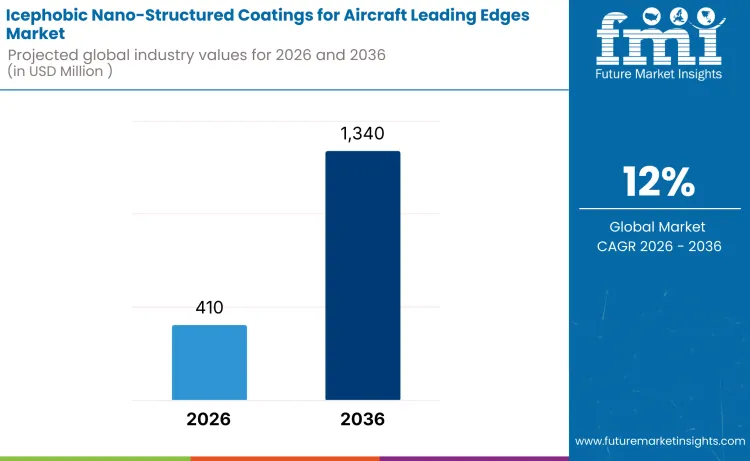
Icephobic Nano-Structured Coatings for Aircraft Leading Edges Market Key Takeaways
| Metric | Value |
|---|---|
| Industry Sales Value (2026) | USD 410 million |
| Industry Forecast Value (2036) | USD 1,340 million |
| Industry Forecast CAGR (2026-2036) | 12% |
What Are the Key Segments in Icephobic Nano-Structured Coatings for Aircraft Leading Edges Market?
The icephobic nano-structured coatings for aircraft leading edges market is segmented by coating technology and application. Nano-ceramic icephobic coatings lead the coating technology segment with 38% of the market share, offering durable and effective ice-repellent properties. Commercial aircraft dominate the application segment, representing 50%, driven by the need for enhanced performance and safety in challenging weather conditions. The market is expanding as airlines and manufacturers focus on improving aircraft safety, performance, and fuel efficiency through advanced coatings.
Which Coating Technology Drives Icephobic Nano-Structured Coatings for Aircraft Leading Edges Market Demand Globally?
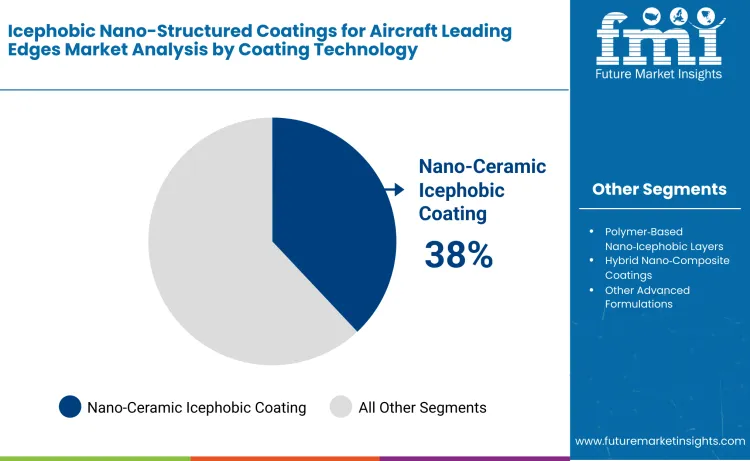
Nano-ceramic icephobic coatings represent 38% of the market share. These coatings are designed to prevent ice accumulation on aircraft surfaces, particularly on the leading edges of wings, where ice can negatively impact aerodynamics and safety. Nano-ceramic coatings provide a durable, long-lasting solution due to their superior hardness and resistance to harsh environmental conditions. Their ice-repellent properties are critical in preventing ice buildup during flight, which can cause drag, reduce fuel efficiency, and pose significant safety risks.
The application of these coatings is increasing as airlines and aircraft manufacturers seek to enhance aircraft performance, especially in regions with frequent cold-weather conditions. Nano-ceramic coatings also offer advantages in terms of reduced maintenance costs and improved operational safety, making them an attractive option for commercial aviation. As the demand for more efficient and safer aircraft grows, the adoption of nano-ceramic icephobic coatings is expected to increase.
Which Application Drives Icephobic Nano-Structured Coatings for Aircraft Leading Edges Market Demand Globally?
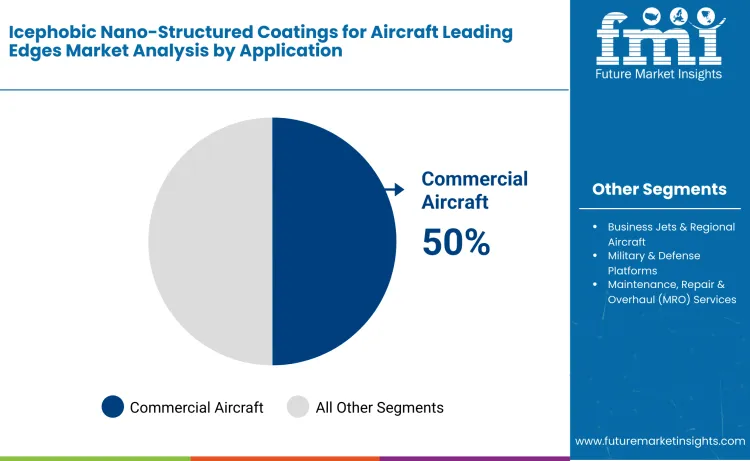
Commercial aircraft lead the application segment with 50% of the market share. Commercial aviation is the largest market for icephobic nano-structured coatings due to the critical need for enhanced safety, fuel efficiency, and performance during flights in cold weather conditions. Ice accumulation on the leading edges of aircraft wings can disrupt airflow, increase drag, and significantly reduce fuel efficiency. Icephobic coatings provide a cost-effective solution to these issues by preventing ice buildup, improving fuel savings, and ensuring operational safety.
The widespread adoption of these coatings is driven by the growing focus on improving aircraft reliability and performance in varying weather conditions. The commercial aircraft sector also benefits from the growing regulatory requirements for safety and sustainability, making icephobic coatings a key technology in modernizing fleet designs. Other applications, including business jets & regional aircraft, military & defense platforms, and MRO services, are also seeing increased use of icephobic coatings, but commercial aircraft remain the dominant application segment due to the scale of the global airline industry.
What are the Key Trends of the Global Icephobic Nano Structured Coatings for Aircraft Leading Edges Market?
The global icephobic nano‑structured coatings for aircraft leading edges market is expanding as aviation operators seek solutions that reduce ice buildup and maintain aerodynamic performance in cold weather conditions. Ice formation on leading edges can degrade lift, increase drag, and require frequent de‑icing procedures. Nano‑structured icephobic coatings improve water repellence and delay ice adhesion, helping aircraft maintain safety and efficiency. Growth is supported by rising air travel, stringent safety requirements, and demand for technologies that enhance operational reliability across diverse flight conditions worldwide.
What are the Key Drivers for the Global Icephobic Nano‑Structured Coatings for Aircraft Leading Edges Market?
A key driver is the need to improve aircraft performance and reduce operational disruptions caused by ice accumulation on leading edges. Extreme weather events and flights through cold climates increase the frequency of icing conditions, creating demand for protective surface treatments that improve safety and decrease dependency on manual de‑icing. Regulatory safety standards push aircraft manufacturers and operators to adopt engineered surface coatings that enhance resistance to ice buildup. Advances in nano‑structured coating technologies that balance water repellence with durability under high speeds and environmental stress are encouraging uptake. Rising focus on reducing maintenance costs and improving operational uptime supports adoption.
What are the Restraints for the Global Icephobic Nano‑Structured Coatings for Aircraft Leading Edges Market?
A restraint is the technical complexity of formulating coatings that deliver reliable icephobic performance while withstanding mechanical wear, erosion, and exposure to environmental conditions such as ultraviolet light and temperature cycling. Development and certification of new materials require extensive laboratory and field testing to meet aviation quality and safety standards. Costs associated with research, validation, and application of advanced coatings increase barriers for widespread adoption, particularly among operators with budget constraints. Application logistics and integration into existing maintenance schedules can also add complexity, slowing uptake by some airlines and maintenance providers.
What is the Country-Wise Outlook for Icephobic Nano-Structured Coatings for Aircraft Leading Edges?
The Icephobic Nano-Structured Coatings for Aircraft Leading Edges market is poised for significant growth, driven by advancements in aerospace technology and the increasing need for enhanced performance in extreme weather conditions. Countries such as China, India, and the USA are at the forefront of adopting these coatings, which help reduce ice buildup on aircraft leading edges, improving flight safety and efficiency. With the growing demand for safer, more efficient, and environmentally friendly solutions in aviation, the market for icephobic nano-structured coatings is expected to expand steadily across these regions.
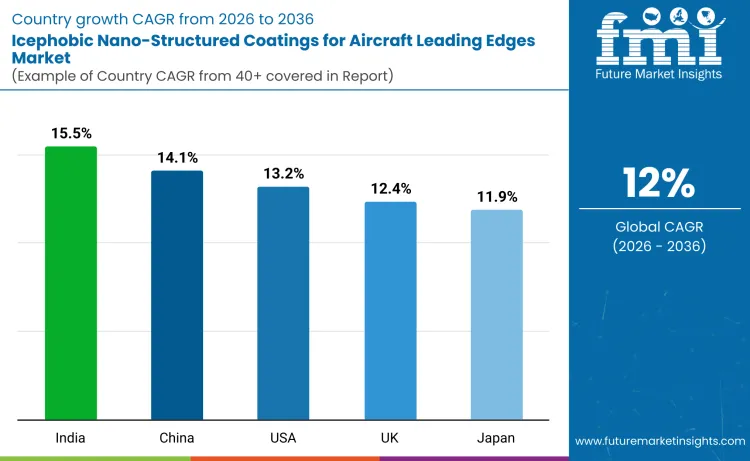
| Country | CAGR (2026-2036) |
|---|---|
| China | 14.1% |
| India | 15.5% |
| USA | 13.2% |
| UK | 12.4% |
| Japan | 11.9% |
What is Driving the Growth of Icephobic Nano-Structured Coatings for Aircraft Leading Edges in China?
China’s Icephobic Nano-Structured Coatings for Aircraft Leading Edges market is projected to grow at a CAGR of 14.1%. The country’s expanding aerospace industry, coupled with its commitment to enhancing aviation safety and efficiency, is driving the demand for advanced solutions like icephobic coatings. These coatings are critical in preventing ice accumulation on aircraft, which can impact flight performance and safety, particularly in cold weather conditions. China’s growing fleet of commercial aircraft and its increasing investments in aerospace technology support the adoption of icephobic nano-structured coatings, driving the market’s growth.
What is Contributing to the Growth of Icephobic Nano-Structured Coatings for Aircraft Leading Edges in India?
India’s Icephobic Nano-Structured Coatings for Aircraft Leading Edges market is expected to grow at an impressive CAGR of 15.5%. The country’s rapidly expanding aviation sector, along with the rising need for advanced safety features and fuel efficiency, is contributing to the adoption of icephobic coatings. As Indian airlines continue to modernize their fleets and focus on minimizing operational risks, these coatings offer a practical solution for improving aircraft performance in icy conditions. The demand for more reliable, high-performance aircraft is also driving interest in icephobic coatings as part of a broader effort to enhance aviation safety and efficiency in India.
What is Driving the Growth of Icephobic Nano-Structured Coatings for Aircraft Leading Edges in the USA?
The USA’s Icephobic Nano-Structured Coatings for Aircraft Leading Edges market is projected to grow at a CAGR of 13.2%. With a well-established aerospace industry and a focus on improving aircraft safety, particularly in cold weather conditions, the demand for icephobic coatings is increasing. These coatings are essential for preventing ice formation on aircraft, which can reduce drag, enhance fuel efficiency, and improve overall safety during flight. As the USA continues to lead in aerospace innovation and sustainability, the adoption of icephobic nano-structured coatings is expected to grow, driven by the increasing emphasis on aircraft performance and safety.
What is Influencing the Growth of Icephobic Nano-Structured Coatings for Aircraft Leading Edges in the UK?
The UK’s Icephobic Nano-Structured Coatings for Aircraft Leading Edges market is expected to grow at a CAGR of 12.4%. The UK’s aerospace sector, with its strong emphasis on innovation and safety, is driving the adoption of icephobic coatings. These coatings offer crucial benefits in preventing ice buildup on aircraft during cold-weather operations, enhancing safety and fuel efficiency. The UK’s commitment to reducing the environmental impact of aviation further supports the market for advanced technologies such as icephobic nano-structured coatings, which contribute to overall aircraft efficiency and sustainability.
What is Contributing to the Growth of Icephobic Nano-Structured Coatings for Aircraft Leading Edges in Japan?
Japan’s Icephobic Nano-Structured Coatings for Aircraft Leading Edges market is projected to grow at a CAGR of 11.9%. Japan’s aerospace industry, known for its focus on safety, performance, and technological innovation, is driving the adoption of icephobic coatings. These coatings help to improve aircraft performance by preventing ice formation, which can affect aircraft handling and efficiency. As Japan continues to modernize its fleet and emphasize environmentally friendly and efficient technologies, the demand for icephobic nano-structured coatings is expected to grow, contributing to the market's expansion over the forecast period.
What is the Competitive Landscape for the Icephobic Nano Structured Coatings for Aircraft Leading Edges Market?
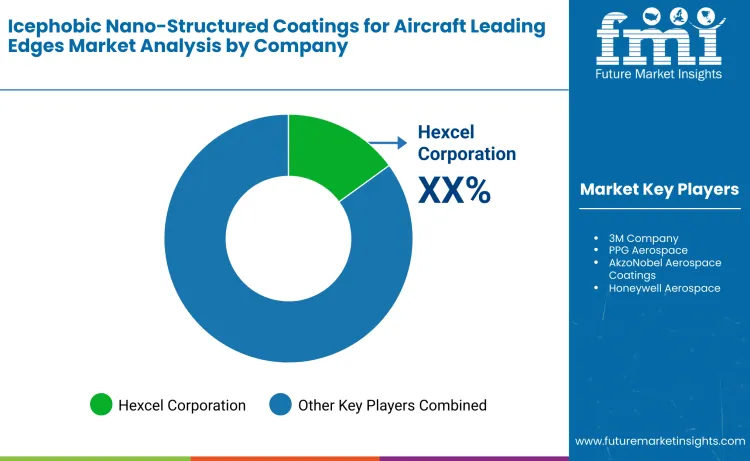
Global demand for icephobic nano‑structured coatings for aircraft leading edges is growing as airlines, aircraft manufacturers and defence operators prioritize flight safety, performance and operational reliability in cold weather environments. Ice accretion on wings, engine inlets and sensor surfaces can degrade aerodynamic performance, increase drag, disrupt lift and compromise system functionality. Icephobic coatings that resist ice build‑up through engineered nano‑textured surfaces help aircraft operate safely in icing conditions and reduce reliance on traditional de‑icing fluids or heating systems.
Growth in commercial air travel, expansion into polar and high‑latitude flight routes, and increasing regulatory focus on safety and fuel efficiency support adoption of advanced surface technologies. Operators benefit from reduced maintenance, fewer flight delays and improved energy performance when icephobic materials are integrated into aircraft leading edges and critical aerodynamic surfaces.
On the supply side, a select group of aerospace and advanced materials companies competes to lead this specialised market. PPG Aerospace is widely recognised as a leading player with strong expertise in aerospace coatings and certified solutions tailored for aircraft environmental challenges. Other key competitors include Hexcel Corporation, 3M Company, AkzoNobel Aerospace Coatings and Honeywell Aerospace, each contributing technologies that combine nano‑scale structuring, durability under harsh flight conditions and compatibility with composite and metal substrates.
Competition among these suppliers centers on coating performance in real operational environments, longevity under thermal cycling, adhesion and wear resistance, ease of application and support for aerospace certification processes. Firms that integrate strong research and development, robust quality control and proven field performance are best positioned to capture growth as aircraft manufacturers and operators increasingly adopt icephobic coatings to enhance safety, reduce operational disruption and improve aerodynamic efficiency worldwide.
Key Players
- Hexcel Corporation
- 3M Company
- PPG Aerospace
- AkzoNobel Aerospace Coatings
- Honeywell Aerospace
Scope of the Report
| Items | Values |
|---|---|
| Quantitative Units (2026) | USD Million |
| Coating Technology | Nano-Ceramic Icephobic Coatings, Polymer-Based Nano-Icephobic Layers, Hybrid Nano-Composite Coatings, Other Advanced Formulations |
| Application | Commercial Aircraft, Business Jets & Regional Aircraft, Military & Defense Platforms, Maintenance, Repair & Overhaul (MRO) Services |
| Companies | Hexcel Corporation, 3M Company, PPG Aerospace, AkzoNobel Aerospace Coatings, Honeywell Aerospace |
| Regions Covered | North America, Latin America, Western Europe, Eastern Europe, South Asia and Pacific, East Asia, Middle East & Africa |
| Countries Covered | United States, Canada, Mexico, Brazil, Argentina, Germany, France, United Kingdom, Italy, Spain, Netherlands, China, India, Japan, South Korea, ANZ, GCC Countries, South Africa |
| Additional Attributes | Dollar sales by coating technology, application, and region. Includes market trends in icephobic nano-structured coatings for aircraft, performance in commercial and military platforms, maintenance, repair, and overhaul (MRO) services, cost-effectiveness, sustainability practices, regulatory compliance, market share and competitive positioning of key companies, and the role of icephobic coatings in improving safety, fuel efficiency, and aerodynamic performance of aircraft in cold weather environments. |
Key Segments in the Icephobic Nano-Structured Coatings for Aircraft Leading Edges Market
Coating Technology:
- Nano‑Ceramic Icephobic Coatings
- Polymer‑Based Nano‑Icephobic Layers
- Hybrid Nano‑Composite Coatings
- Other Advanced Formulations
Application:
- Commercial Aircraft
- Business Jets & Regional Aircraft
- Military & Defense Platforms
- Maintenance, Repair & Overhaul (MRO) Services
Region:
- Asia Pacific
- China
- India
- Japan
- South Korea
- ASEAN
- Rest of Asia Pacific
- Europe
- Germany
- United Kingdom
- France
- Italy
- Spain
- Nordic
- BENELUX
- Rest of Europe
- North America
- United States
- Canada
- Mexico
- Latin America
- Brazil
- Chile
- Rest of Latin America
- Middle East & Africa
- Kingdom of Saudi Arabia
- Other GCC Countries
- Turkey
- South Africa
- Other African Union
- Rest of Middle East & Africa
Frequently Asked Questions
How big is the Icephobic Nano-Structured Coatings for Aircraft Leading Edges market?
The market is valued at USD 410 million in 2026 and is expected to grow at a CAGR of 12%, reaching USD 1.34 billion by 2036.
What is the growth outlook for the Icephobic Nano-Structured Coatings for Aircraft Leading Edges market?
The market is projected to grow at a CAGR of 12% from 2026 to 2036.
Which region is expected to experience the fastest growth in the Icephobic Nano-Structured Coatings for Aircraft Leading Edges market?
India is expected to lead with a growth rate of 15.5%, driven by increasing demand for ice protection solutions in commercial aviation.
What are the key applications of Icephobic Nano-Structured Coatings for Aircraft Leading Edges?
These coatings are primarily used in commercial aircraft applications, which account for approximately 50% of the market share, to enhance ice protection on aircraft leading edges.
Who are the major players in the Icephobic Nano-Structured Coatings for Aircraft Leading Edges market?
Key players include Hexcel Corporation, 3M Company, PPG Aerospace, AkzoNobel Aerospace Coatings, and Honeywell Aerospace.
Preview the report firsthand - request a free sample
Get SampleGet the brochure for pricing and purchase details.
Get PDFTable of Content
- Executive Summary
- Market Overview
- Global Market Value, 2020-2026
- Global Market Forecast, 2026-2036
- Market Dynamics
- Drivers
- Restraints
- Opportunities
- Regulatory & Standards Landscape
- Coating Technology & Surface Engineering Outlook
- Market Segmentation Analysis
- By Coating Technology
- Nano-Ceramic Icephobic Coatings
- Polymer-Based Nano-Icephobic Layers
- Hybrid Nano-Composite Coatings
- Other Advanced Formulations
- By Application
- Commercial Aircraft
- Business Jets & Regional Aircraft
- Military & Defense Platforms
- Maintenance, Repair & Overhaul (MRO) Services
- By Sales Channel
- Direct OEM Supply
- MRO & Repaint Facilities
- Aftermarket & Distributor Channels
- By Coating Technology
- Regional Outlook
- North America
- Latin America
- Western Europe
- Eastern Europe
- South Asia & Pacific
- East Asia
- Middle East & Africa
- Country-Level Outlook
- United States
- Canada
- Mexico
- Brazil
- Argentina
- Germany
- France
- United Kingdom
- Italy
- Spain
- Netherlands
- China
- India
- Japan
- South Korea
- ANZ
- GCC Countries
- South Africa
- Competitive Landscape
- Market Structure Overview
- Company Positioning
- Strategic Initiatives
- Key Player Profiles
- Scope of the Report
- Research Methodology
- Assumptions & Acronyms


