

- Industry Size (2026)
- USD 360 Mn
- Forecast (2036)
- USD 1150 Mn
- CAGR (2026 to 2036)
- 11.5%
Ultra-Low-Drag Riblet Surface Coatings for Commercial Aircraft Market Forecast and Outlook 2026 to 2036
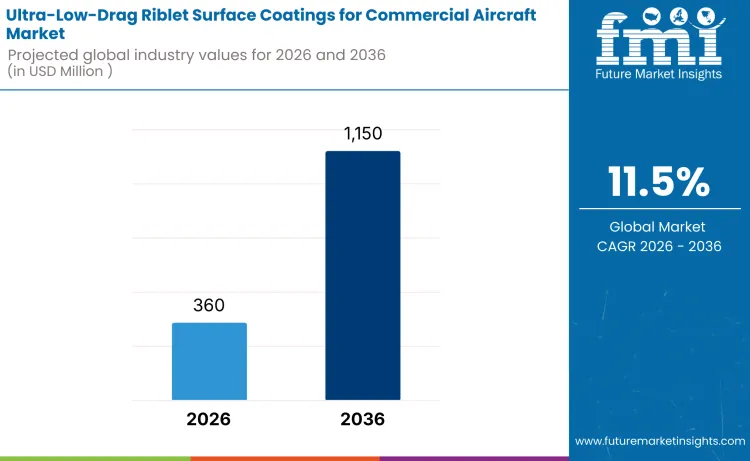
The global market for ultra-low-drag riblet surface coatings for commercial aircraft, valued at USD 360 million in 2026, is set to expand to USD 1,150 million by 2036, with a CAGR of 11.5%. The increasing focus on fuel efficiency and environmental sustainability in the aviation sector is driving demand for these advanced coatings, which reduce aerodynamic drag and enhance the overall performance of aircraft.
Micro-riblet polymer coatings, which make up 39% of the market share for coating technologies, are widely adopted due to their ability to improve fuel efficiency by minimizing air resistance. New aircraft OEM surface treatments, accounting for 46% of the application segment, dominate the market as manufacturers incorporate these coatings into new aircraft designs to enhance fuel savings and performance. The market’s growth is supported by rising pressures for airlines and manufacturers to adopt more sustainable technologies that improve energy efficiency and reduce operational costs.
Quick Stats for Ultra-Low-Drag Riblet Surface Coatings for Commercial Aircraft Market
- Ultra-Low-Drag Riblet Surface Coatings for Commercial Aircraft Market Value (2026): USD 360 million
- Ultra-Low-Drag Riblet Surface Coatings for Commercial Aircraft Market Forecast Value (2036): USD 1,150 million
- Ultra-Low-Drag Riblet Surface Coatings for Commercial Aircraft Market Global Forecast CAGR (2026 to 2036): 11.5%
- Top Application by Share in Ultra-Low-Drag Riblet Surface Coatings for Commercial Aircraft Market: New Aircraft OEM Surface Treatments (46%)
- Key Growth Regions in Ultra-Low-Drag Riblet Surface Coatings for Commercial Aircraft Market: China, India, USA, UK, Japan
- Top Players in Ultra-Low-Drag Riblet Surface Coatings for Commercial Aircraft Market: Boeing, Airbus, Lockheed Martin, Hexcel Corporation, 3M Company
Ultra-Low-Drag Riblet Surface Coatings for Commercial Aircraft Market Key Takeaways
| Metric | Value |
|---|---|
| Industry Sales Value (2025) | USD 360 million |
| Industry Forecast Value (2035) | USD 1,150 million |
| Industry Forecast CAGR (2025 to 2035) | 11.5% |
What Are the Key Segments in Ultra-Low-Drag Riblet Surface Coatings for Commercial Aircraft Market?
The ultra-low-drag riblet surface coatings for commercial aircraft market is segmented by coating technology and application. Micro-riblet polymer coatings lead the coating technology segment with 39% of the market share, offering effective drag reduction. New aircraft OEM surface treatments dominate the application segment, representing 46%, driven by the demand for enhanced fuel efficiency and aerodynamics in new aircraft designs. The market is expanding as airlines and aircraft manufacturers seek innovative ways to improve fuel efficiency and reduce operational costs.
Which Coating Technology Drives Ultra-Low-Drag Riblet Surface Coatings for Commercial Aircraft Market Demand Globally?
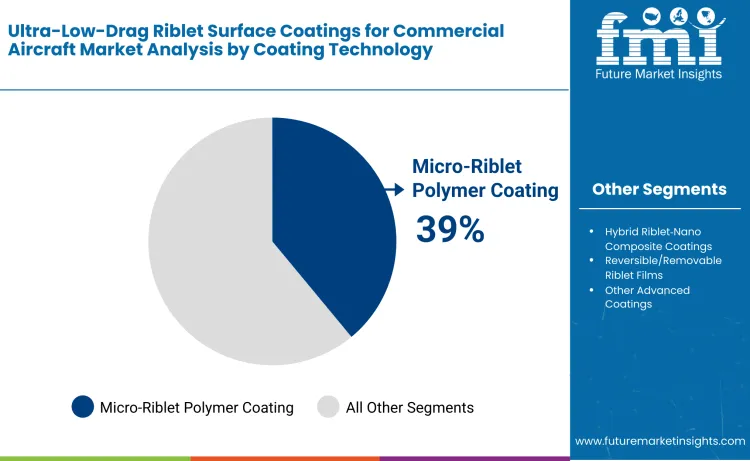
Micro-riblet polymer coatings account for 39% of the market share. These coatings create a series of small, parallel ridges or "riblets" on the aircraft's surface that reduce drag by manipulating airflow and reducing friction. The application of these micro-riblet coatings is designed to optimize the aerodynamic performance of aircraft, leading to fuel savings and improved efficiency. As airlines face increasing pressure to reduce fuel consumption and operating costs, the demand for micro-riblet polymer coatings has grown. The ease of application and effectiveness in improving fuel efficiency in both commercial and military aircraft makes these coatings a preferred solution. The development of advanced polymer-based coatings ensures that they are durable and able to withstand harsh environmental conditions, further driving their adoption in the commercial aviation industry. Micro-riblet polymer coatings provide a cost-effective way for aircraft manufacturers to meet fuel efficiency and sustainability targets, supporting the growth of this segment.
Which Application Drives Ultra-Low-Drag Riblet Surface Coatings for Commercial Aircraft Market Demand Globally?
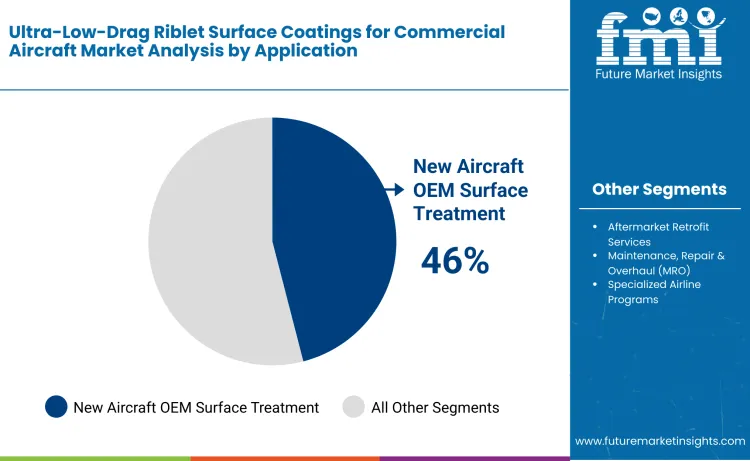
New aircraft OEM surface treatments lead the application segment with 46% of the market share. Aircraft manufacturers increasingly incorporate riblet surface coatings into the design of new commercial aircraft to improve fuel efficiency and reduce environmental impact. These treatments are applied during the manufacturing phase and are integrated into the aircraft’s design to enhance aerodynamics from the outset. The adoption of ultra-low-drag riblet surface coatings in new aircraft is driven by the aerospace industry's ongoing focus on reducing fuel consumption and carbon emissions. As airlines and manufacturers seek to meet stricter environmental regulations and improve operational efficiency, riblet coatings have become a key component in achieving these objectives. The demand for such coatings is expected to increase as the commercial aviation industry continues to invest in technologies that improve sustainability and reduce costs. Other applications, including aftermarket retrofit services and MRO, are also growing, but new aircraft OEM surface treatments remain the primary driver due to their role in initial aircraft design and fuel optimization.
What is the Key Trends of the Global Ultra Low Drag Riblet Surface Coatings for Commercial Aircraft Market?
The global ultra‑low‑drag riblet surface coatings market is expanding as commercial aircraft operators and manufacturers seek methods to improve aerodynamic performance and reduce fuel consumption. Riblet coatings are textured surface treatments inspired by natural drag‑reducing structures that can lower friction between airflow and aircraft skin. Adoption of these coatings supports efforts to enhance aircraft efficiency, cut operational costs, and lower environmental impact. Growth is supported by rising air travel demand, increasing focus on airline fuel economy, and integration of advanced materials that help aircraft meet stringent performance and emissions standards.
What are the Key Drivers for the Global Ultra‑Low‑Drag Riblet Surface Coatings for Commercial Aircraft Market?
A primary driver is the aviation industry’s ongoing effort to enhance fuel efficiency and reduce operating expenses, with surface drag reduction playing a key role. Rising fuel prices and pressure on airline margins motivate use of technologies that lower aerodynamic resistance. Regulatory and industry targets for carbon reduction push operators to adopt advanced surface treatments. Advances in materials science allow development of riblet coatings that maintain performance under operational stresses. Demand for greener air travel, airline commitments to reduce carbon output, and competitive pressure to optimize fleet performance support broader adoption of drag‑reducing coating technologies.
What are the Restraints for the Global Ultra‑Low‑Drag Riblet Surface Coatings for Commercial Aircraft Market?
One restraint is the technical challenge of applying and maintaining riblet surface textures under harsh operational conditions, including abrasion, weathering and cleaning processes. Ensuring long‑term adhesion and resistance to environmental exposure requires precise engineering and quality control, which can raise production and application costs. Certification and validation by aviation authorities necessitate extensive testing, slowing integration into mainstream aircraft maintenance schedules. Airlines and MRO providers may hesitate to adopt newer surface treatments if value propositions are not clearly demonstrated in service environments. Costs associated with retrofitting existing fleets may limit adoption in some regions.
What is the Country-Wise Outlook for Ultra-Low-Drag Riblet Surface Coatings for Commercial Aircraft?
The Ultra-Low-Drag Riblet Surface Coatings for Commercial Aircraft market is witnessing strong growth, particularly in countries with a well-established aerospace sector. Key markets such as China, India, and the USA are leading the way due to their investments in the aerospace industry and the growing emphasis on fuel efficiency and reduced operating costs. These coatings, known for their ability to reduce drag and enhance fuel efficiency, are gaining popularity as airlines and aircraft manufacturers look for ways to improve performance and reduce emissions. As demand for fuel-efficient aircraft rises, the market for ultra-low-drag riblet surface coatings is expected to grow across these regions.
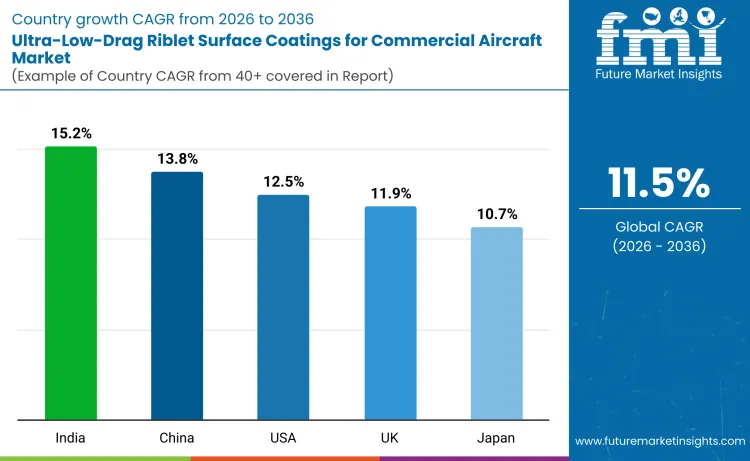
| Country | CAGR (2026 to 2036) |
|---|---|
| China | 13.8% |
| India | 15.2% |
| USA | 12.5% |
| UK | 11.9% |
| Japan | 10.7% |
What is Driving the Growth of Ultra-Low-Drag Riblet Surface Coatings for Commercial Aircraft in China?
China’s Ultra-Low-Drag Riblet Surface Coatings for Commercial Aircraft market is projected to grow at a CAGR of 13.8%. This growth is driven by the country’s expanding aviation industry and the increasing focus on reducing operating costs for airlines. China is investing heavily in modernizing its fleet and adopting advanced technologies to improve fuel efficiency. Ultra-low-drag riblet surface coatings, which reduce drag and fuel consumption, are gaining traction as a cost-effective solution for enhancing aircraft performance. As China continues to focus on improving the environmental footprint of its aviation sector, the demand for these coatings is expected to rise.
What is Contributing to the Growth of Ultra-Low-Drag Riblet Surface Coatings for Commercial Aircraft in India?
India’s Ultra-Low-Drag Riblet Surface Coatings for Commercial Aircraft market is expected to grow at an impressive CAGR of 15.2%. India’s rapidly expanding aviation sector, coupled with the rising demand for fuel-efficient aircraft, is driving the adoption of ultra-low-drag riblet surface coatings. As the country’s airlines and aircraft manufacturers seek to reduce operational costs and improve fuel efficiency, these coatings are becoming increasingly popular. India’s focus on modernizing its fleet and enhancing environmental sustainability in aviation further supports the growth of the market. The adoption of innovative technologies such as riblet coatings is expected to play a key role in India's aviation industry development.
What is Driving the Ultra-Low-Drag Riblet Surface Coatings Market Growth in the USA?
The USA’s Ultra-Low-Drag Riblet Surface Coatings for Commercial Aircraft market is projected to grow at a CAGR of 12.5%. The growth is primarily driven by the increasing focus on fuel efficiency in the aerospace industry. Airlines and manufacturers are adopting innovative solutions like riblet surface coatings to reduce drag, lower fuel consumption, and enhance aircraft performance. The USA, with its advanced aerospace technology and commitment to sustainability, is leading the charge in incorporating these advanced coatings into commercial aircraft. With rising fuel costs and growing environmental concerns, the demand for ultra-low-drag riblet coatings in the US market is expected to continue increasing.
What is Influencing the Growth of Ultra-Low-Drag Riblet Surface Coatings for Commercial Aircraft in the UK?
The UK’s Ultra-Low-Drag Riblet Surface Coatings for Commercial Aircraft market is expected to grow at a CAGR of 11.9%. The UK aerospace industry’s focus on reducing fuel consumption and improving aircraft performance is driving the adoption of ultra-low-drag riblet surface coatings. As airlines and manufacturers look for ways to reduce emissions and operating costs, these coatings offer an effective solution for enhancing fuel efficiency. The UK’s commitment to sustainability in aviation and its role as a hub for cutting-edge aerospace technologies further supports the market’s growth. The demand for energy-efficient and eco-friendly solutions is expected to continue driving the adoption of these advanced coatings.
What is Contributing to the Growth of Ultra-Low-Drag Riblet Surface Coatings for Commercial Aircraft in Japan?
Japan’s Ultra-Low-Drag Riblet Surface Coatings for Commercial Aircraft market is projected to grow at a CAGR of 10.7%. The market is driven by Japan’s strong aviation sector and its focus on enhancing aircraft performance while reducing environmental impact. Airlines and manufacturers in Japan are increasingly adopting fuel-efficient technologies, including ultra-low-drag riblet surface coatings, to improve fuel economy and reduce operational costs. Japan’s commitment to sustainability and innovation in aerospace technology is fueling the growth of these coatings. As global demand for environmentally-friendly aviation solutions increases, Japan’s aviation industry is expected to continue benefiting from the adoption of advanced coating technologies.
What is the Competitive Landscape for the Ultra Low Drag Riblet Surface Coatings for Commercial Aircraft Market?
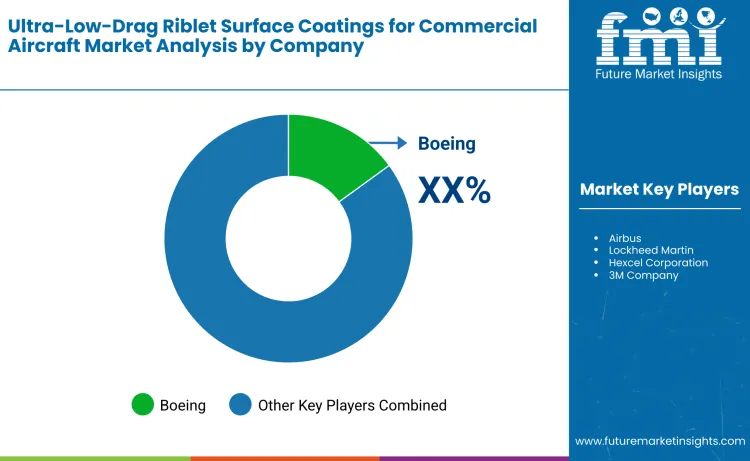
Global demand for ultra‑low‑drag riblet surface coatings for commercial aircraft is rising as the aerospace industry seeks ways to improve fuel efficiency, reduce carbon emissions and lower operating costs. Riblet coatings mimic microscopic surface textures that reduce aerodynamic drag on wings and fuselage surfaces, helping airlines achieve measurable fuel savings over long flight cycles. As environmental regulations tighten and airline operators prioritise sustainability commitments, interest in technologies that improve aircraft performance without major airframe redesigns grows. Growth in global air travel, fleet renewals, and retrofit programmes further supports uptake of riblet surface coatings across wide‑body and narrow‑body fleets. Adoption is particularly strong in regions with ambitious emissions reduction targets and active retrofit markets, including North America, Europe and parts of Asia Pacific.
Airbus is recognised as a leading player with deep involvement in aircraft design and efficiency technologies. Other key competitors include Boeing, Lockheed Martin, Hexcel Corporation and 3M Company. These companies bring diverse strengths - from airframe integration experience and advanced composites to functional surface materials and industrial coating technologies. Competition among suppliers centers on coating performance in real operational environments, durability under harsh flight conditions, ease of application or maintenance, compatibility with existing aircraft materials and certification support. Firms that combine proven aerodynamic benefit, strong research and development, reliable global support and collaboration with airlines or OEMs are best positioned to capture growth as the airline industry continues to pursue fuel savings and sustainability improvement through advanced surface technologies.
Key Players
- Boeing
- Airbus
- Lockheed Martin
- Hexcel Corporation
- 3M Company
Scope of the Report
| Items | Values |
|---|---|
| Quantitative Units (2025) | USD Million |
| Coating Technology | Micro-riblet Polymer Coatings, Hybrid Riblet-Nano Composite Coatings, Reversible/Removable Riblet Films, Other Advanced Coatings |
| Application | New Aircraft OEM Surface Treatments, Aftermarket Retrofit Services, Maintenance, Repair & Overhaul (MRO), Specialized Airline Programs |
| Companies | Boeing, Airbus, Lockheed Martin, Hexcel Corporation, 3M Company |
| Regions Covered | North America, Latin America, Western Europe, Eastern Europe, South Asia and Pacific, East Asia, Middle East & Africa |
| Countries Covered | United States, Canada, Mexico, Brazil, Argentina, Germany, France, United Kingdom, Italy, Spain, Netherlands, China, India, Japan, South Korea, ANZ, GCC Countries, South Africa |
| Additional Attributes | Dollar by sales by coating technology, application, and region. Includes market trends in ultra-low-drag riblet surface coatings, performance in aircraft surface treatments, aftermarket retrofit services, and MRO, cost-effectiveness, sustainability practices, regulatory compliance, market share and competitive positioning of key companies, and the role of riblet coatings in improving fuel efficiency, drag reduction, and aircraft performance in the aviation industry. |
Key Segments in the Ultra-Low-Drag Riblet Surface Coatings for Commercial Aircraft Market
By Coating Technology:
- Micro‑riblet Polymer Coatings
- Hybrid Riblet‑Nano Composite Coatings
- Reversible/Removable Riblet Films
- Other Advanced Coatings
By Application:
- New Aircraft OEM Surface Treatments
- Aftermarket Retrofit Services
- Maintenance, Repair & Overhaul (MRO)
- Specialized Airline Programs
By Region:
- Asia Pacific
- China
- India
- Japan
- South Korea
- ASEAN
- Rest of Asia Pacific
- Europe
- Germany
- United Kingdom
- France
- Italy
- Spain
- Nordic
- BENELUX
- Rest of Europe
- North America
- United States
- Canada
- Mexico
- Latin America
- Brazil
- Chile
- Rest of Latin America
- Middle East & Africa
- Kingdom of Saudi Arabia
- Other GCC Countries
- Turkey
- South Africa
- Other African Union
- Rest of Middle East & Africa
Frequently Asked Questions
How big is the Ultra-Low-Drag Riblet Surface Coatings for Commercial Aircraft market?
The market is valued at USD 360 million in 2026 and is expected to grow at a CAGR of 11.5%, reaching USD 1.15 billion by 2036.
What is the growth outlook for the Ultra-Low-Drag Riblet Surface Coatings for Commercial Aircraft market?
The market is projected to grow at a CAGR of 11.5% from 2026 to 2036.
Which region is expected to experience the fastest growth in the Ultra-Low-Drag Riblet Surface Coatings for Commercial Aircraft market?
India is expected to lead with a growth rate of 15.2%, driven by increasing demand for fuel-efficient aircraft and the adoption of advanced surface coatings.
What are the key applications of Ultra-Low-Drag Riblet Surface Coatings for Commercial Aircraft?
These coatings are primarily used in new aircraft OEM (Original Equipment Manufacturer) surface treatments, which account for approximately 46% of the market share, to reduce drag and improve fuel efficiency.
Who are the major players in the Ultra-Low-Drag Riblet Surface Coatings for Commercial Aircraft market?
Key players include Boeing, Airbus, Lockheed Martin, Hexcel Corporation, and 3M Company.
Preview the report firsthand - request a free sample
Get SampleGet the brochure for pricing and purchase details.
Get PDFTable of Content
- Executive Summary
- Ultra-Low-Drag Riblet Surface Coatings for Commercial Aircraft Market Overview
- Global Market Size and Value Analysis, 2020 to 2026
- Global Market Forecast and Growth Outlook, 2026 to 2036
- Role of Riblet Surface Textures in Aerodynamic Drag Reduction
- Fuel Efficiency and Emissions Reduction Impact in Commercial Aviation
- Market Dynamics and Industry Fundamentals
- Key Market Drivers
- Technical, Certification, and Durability Constraints
- Opportunities in OEM Integration and Fleet Retrofit Programs
- Regulatory, Environmental, and Airline Efficiency Targets
- Market Segmentation Analysis by Coating Technology
- Micro-Riblet Polymer Coatings
- Hybrid Riblet–Nano Composite Coatings
- Reversible and Removable Riblet Films
- Other Advanced Riblet Surface Technologies
- Market Segmentation Analysis by Application
- New Aircraft OEM Surface Treatments
- Aftermarket Retrofit Services
- Maintenance, Repair and Overhaul Operations
- Specialized Airline Efficiency Programs
- Regional Market Analysis
- North America Market Analysis
- Latin America Market Analysis
- Western Europe Market Analysis
- Eastern Europe Market Analysis
- South Asia and Pacific Market Analysis
- East Asia Market Analysis
- Middle East and Africa Market Analysis
- Country-Level Market Analysis
- United States
- Canada
- Mexico
- Brazil
- Argentina
- Germany
- France
- United Kingdom
- Italy
- Spain
- Netherlands
- China
- India
- Japan
- South Korea
- ANZ
- GCC Countries
- South Africa
- Competitive Landscape Analysis
- Global Competitive Structure
- OEM and Materials Supplier Positioning
- Riblet Technology Performance Differentiation
- Certification, Retrofit, and Fleet Integration Strategies
- Company Profiles
- Scope of the Report
- Research Methodology
- Assumptions and Acronyms


