

- Industry Size (2026)
- USD 0.5 Bn
- Forecast (2036)
- USD 1.0 Bn
- CAGR (2026 to 2036)
- 7.9%
Aircraft Panel Fatigue Monitoring Sensor Systems Market Size, Market Forecast and Outlook By FMI
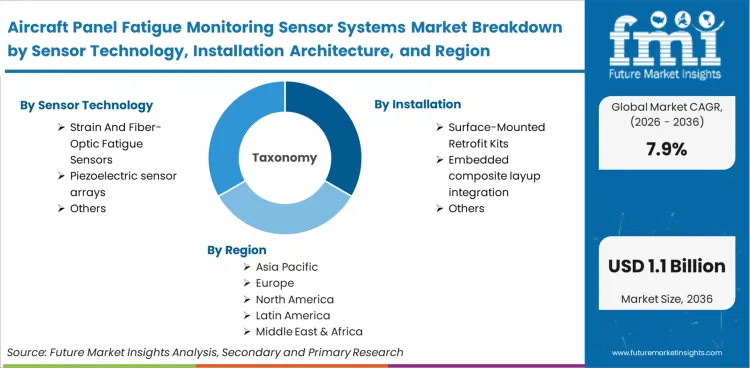
The aircraft panel fatigue monitoring sensor systems market achieved an initial growth of USD 0.4 billion during 2025, with further projections indicating market value turnover to climb upto USD 0.5 billion by 2026, advancing at a 7.9% CAGR throughout the assessment timeframe. Industry expansion propels the valuation to USD 1.0 billion by 2036, triggered by fleet managers migrating from rigid maintenance intervals toward modern onboard fatigue monitoring for aircraft structures.
Maintenance directors at commercial airlines face acute pressure to extend legacy airframes, forcing rapid evaluation of aircraft panel fatigue monitoring sensor systems. Structural inspection regimens traditionally demand extensive teardowns, causing severe commercial disruptions. Adopting aircraft predictive maintenance sensors shifts this dynamic entirely. Delaying integration leaves carriers highly exposed to unexpected structural events, forcing grounded flights and lost revenue. These aircraft structural health monitoring sensors require extensive initial qualification, creating high switching costs. Procurement executives often underestimate integration complexity when specifying aircraft structural health monitoring coatings for composite wing roots.
Summary of Aircraft Panel Fatigue Monitoring Sensor Systems Market
- Aircraft Panel Fatigue Monitoring Sensor Systems Market Definition:
- Diagnostic hardware arrays permanently affixed to airframe structures to quantify cumulative strain, detect micro-fractures, and continuously track material degradation across operational lifecycles.
- Demand Drivers in the Market:
- Rising scheduled maintenance costs force MRO facility directors to transition toward condition-based structural inspection models.
- Aging commercial narrow-body aircraft compel fleet managers to implement continuous surveillance on critical wing-root attachment joints.
- Composite airframe proliferation pushes aerospace design engineers to embed continuous defect-tracking hardware directly into laminate layups.
- Key Segments Analyzed in the FMI Report:
- Strain And Fiber-Optic Fatigue Sensors: 34.0% in 2026, benefiting from low weight penalties and extreme electromagnetic interference immunity.
- Surface-Mounted Retrofit Kits: 46.0% in 2026, as carriers upgrade existing legacy fleets.
- Fixed-Wing Commercial Transport: 41.0% in 2026, driven by immense global passenger fleet sizes.
- Scheduled Onboard Fatigue Tracking: 52.0% in 2026, aligning with current regulatory maintenance credit structures.
- Composite Panel Structures: 38.0% in 2026, due to complex delamination failure modes requiring continuous tracking.
- India: 9.4% CAGR, reflecting massive outstanding narrow-body order books and high-frequency domestic flight cycling.
- Analyst Opinion at FMI:
- Nikhil Kaitwade, Principal Analyst at FMI, Automotive, notes that, "MRO facility directors consistently view sensor installation as a hardware procurement exercise. True structural friction emerges during data integration and regulatory credit negotiations. Placing a strain gauge on a titanium bulkhead is trivial. Convincing an aviation authority to extend an inspection interval based on that sensor's output requires years of parallel validation data. Airlines often procure advanced integrated sensor ready coatings for aircraft structural health monitoring assuming immediate maintenance cost reductions, only to discover they must maintain legacy physical inspection schedules simultaneously until sufficient algorithmic confidence satisfies regulators. This dual-cost phase represents the primary barrier delaying widespread continuous real-time monitoring adoption."
- Strategic Implications / Executive Takeaways:
- Component suppliers must secure supplemental type certificates prior to commercializing hardware to ensure airline procurement feasibility.
- Software integrators must develop algorithms capable of translating raw acoustic emission data into actionable remaining-useful-life metrics for fleet dispatchers.
- Airline technical directors should prioritize open-architecture sensor networks to prevent vendor lock-in during multi-decade airframe operational lifespans.
- Methodology:
- Primary Research: Technical directors at major airline MRO facilities and lead structural engineers at Tier-1 aerostructures manufacturers.
- Desk Research: European Union Aviation Safety Agency airworthiness directives, Federal Aviation Administration supplemental type certificates, and OEM service bulletins.
- Market-Sizing and Forecasting: Annual commercial aircraft delivery schedules crossed with MRO heavy-check volume forecasts.
- Data Validation and Update Cycle: Global fleet retirement curves and composite material adoption rates in next-generation narrow-body programs.
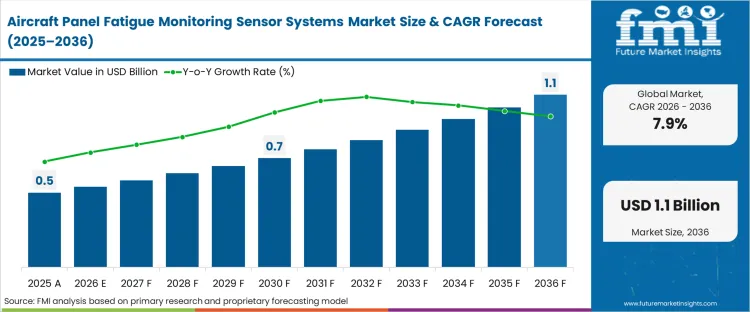
Once aviation regulatory bodies finalize certification frameworks for condition-based maintenance credits, large-scale fleet retrofits will accelerate immediately. Regulatory approval transforms aircraft crack and fatigue monitoring systems from a supplemental safety measure into a direct operational cost-reduction tool. Airlines operating aging narrow-body fleets serve as primary early adopters. Component suppliers who fail to secure airworthiness directives for their specific architectures face permanent lockout from Tier-1 carrier contracts.
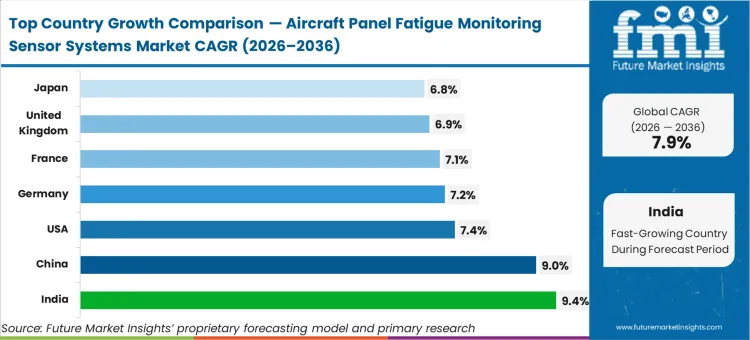
India leads at 9.4% as domestic carriers rapidly expand low-cost narrow-body fleets under high-cycle usage profiles. China tracks at 9.0% on back of aggressive state-backed aerospace manufacturing programs prioritizing domestic technology integration. United States expands at 7.4% driven by massive legacy commercial fleet modernization requirements. Germany grows at 7.2% while France advances at 7.1%, reflecting concentrated Airbus supply chain activities. United Kingdom registers 6.9% and Japan records 6.8%. Structural divergence emerges between markets retrofitting legacy aluminum airframes versus those assembling new composite-heavy platforms.
Aircraft Panel Fatigue Monitoring Sensor Systems Market Definition
The aircraft panel fatigue monitoring sensor systems market comprise specialized diagnostic hardware arrays attached to or embedded within aircraft structural components to detect micro-cracks, strain anomalies, and material degradation. This infrastructure captures localized stress data across critical airframe zones, translating physical deformation into quantifiable digital signals. Functionality strictly centers on measuring cumulative structural fatigue accumulation over operational lifecycles rather than generic flight parameters, positioning aircraft damage detection systems as essential predictive maintenance tools.
Aircraft Panel Fatigue Monitoring Sensor Systems Market Inclusions
Scope covers strain gauges, optical fiber networks, acoustic emission nodes, and comparative vacuum monitoring hardware designed specifically for aerospace structural analysis. Systems encompass associated edge-computing data loggers, wireless transmission nodes mounted directly to airframe panels, and proprietary algorithms converting raw sensor inputs into fatigue metrics. Integration components evaluating aircraft automated inspection and monitoring pathways fall squarely within boundary lines. Retrofit kits utilizing specialized bonding agents for aircraft panel health monitoring systems are comprehensively included.
Aircraft Panel Fatigue Monitoring Sensor Systems Market Exclusions
Avionics systems governing flight control surfaces sit outside scope due to their operational rather than diagnostic nature. General-purpose accelerometers lacking specific structural health software certification are excluded. Ground-based non-destructive testing equipment, including handheld ultrasound or x-ray devices, falls outside boundaries because scope strictly isolates onboard, permanently affixed monitoring hardware. Engine condition monitoring sensors remain excluded as they track thermodynamic and rotational metrics rather than airframe panel fatigue.
Aircraft Panel Fatigue Monitoring Sensor Systems Market Research Methodology
- Primary Research: Technical directors at major airline MRO facilities and lead structural engineers at Tier-1 aerostructures manufacturers.
- Desk Research: European Union Aviation Safety Agency airworthiness directives, Federal Aviation Administration supplemental type certificates, and OEM service bulletins.
- Market-Sizing and Forecasting: Annual commercial aircraft delivery schedules crossed with MRO heavy-check volume forecasts.
- Data Validation and Update Cycle: Global fleet retirement curves and composite material adoption rates in next-generation narrow-body programs.
Segmental Analysis
Aircraft Panel Fatigue Monitoring Sensor Systems Market Analysis by Sensor Technology
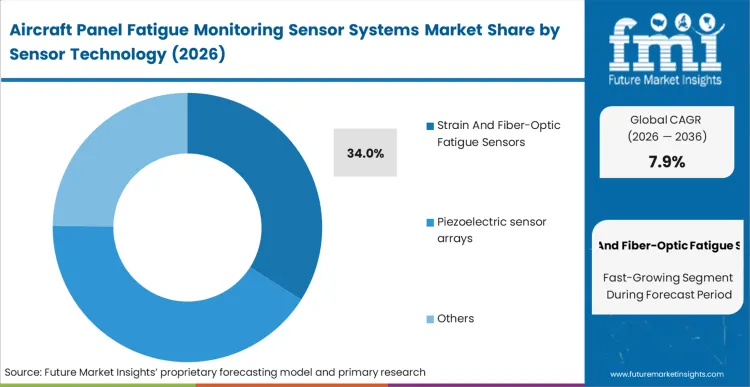
Immunity to electromagnetic interference and extreme weight reduction requirements dictate optical architecture dominance across modern airframes. Strain and fiber-optic fatigue sensors command 34.0% share, and FMI's analysis indicates this position stems from their ability to multiplex dozens of measurement points along a single glass strand. Aerospace design engineers specify fiber optic fatigue sensors for aircraft panels to monitor composite wing flexure during turbulence events. Replacing traditional copper wiring with optical fibers removes heavy shielding requirements while eliminating lightning strike conduction risks. What procurement directors frequently miss when they compare fiber optic and piezoelectric sensors for aircraft fatigue monitoring is how deeply optical systems lock carriers into proprietary ground-interrogation hardware, quietly neutralizing competitive bidding for subsequent maintenance tooling contracts. Fleet managers delaying optical sensor qualification face mounting weight penalties on next-generation composite aircraft designs.
- Weight-Penalty Avoidance: Multiplexing multiple strain measurement points along single optical fibers dramatically reduces onboard cable mass. Aerospace design engineers achieve strict platform weight targets while expanding structural surveillance coverage.
- Electromagnetic Strike Survival: Glass optical fibers carry zero electrical current, rendering measurement networks completely immune to lightning strikes. Avionics integration managers eliminate heavy metallic shielding requirements from critical wing-box monitoring zones.
- Interrogation Hardware Lock-In: Reading complex Bragg grating wavelength shifts requires highly specialized ground equipment. MRO facility directors discover original equipment manufacturers retain total control over long-term data extraction pricing.
Aircraft Panel Fatigue Monitoring Sensor Systems Market Analysis by Installation Architecture
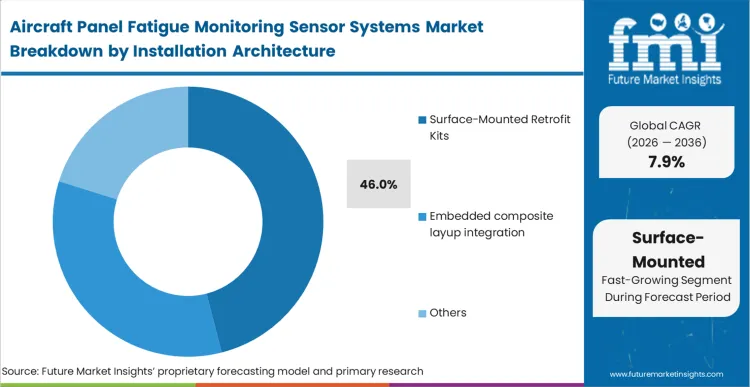
Airlines extract maximum commercial value by keeping legacy airframes flying longer, prioritizing solutions applicable to existing assets. FMI analysts note that while embedded sensors in composite aircraft panels offer superior delamination detection, surface-mounted architectures remain the only financially viable option for narrow-body aircraft possessing fewer than fifteen years of remaining service life. Operators evaluating retrofit vs embedded aircraft fatigue sensors who wait for fully embedded factory solutions forfeit immediate condition-based maintenance credits available today via retrofit applications. Surface-mounted retrofit kits capture 46.0% share in 2026 as they bypass complex manufacturing integration requirements. Fleet technical directors deploy surface-mounted aircraft fuselage corrosion monitoring sensors during scheduled heavy maintenance checks without altering original structural certification basis. Adding bonded sensor networks for aircraft panel fatigue allows carriers to monitor known fatigue hot-spots identified through fleet-wide service bulletins.
- Service Bulletin Response: Direct surface bonding allows rapid deployment over specific structural zones flagged by regulatory authorities. Fleet technical directors satisfy sudden airworthiness directive inspection requirements without tearing down panel assemblies.
- Certification Baseline Preservation: Attaching sensors externally avoids altering original composite layup material properties. Certification managers secure supplemental type certificates faster by proving monitoring hardware introduces zero new structural failure modes.
- Adhesive Degradation Risk: Harsh environmental cycling slowly degrades bonding agents securing retrofitted nodes. Maintenance planners must implement secondary inspection routines simply to verify sensor attachment integrity over ten-year operational spans.
Aircraft Panel Fatigue Monitoring Sensor Systems Market Analysis by Aircraft Platform
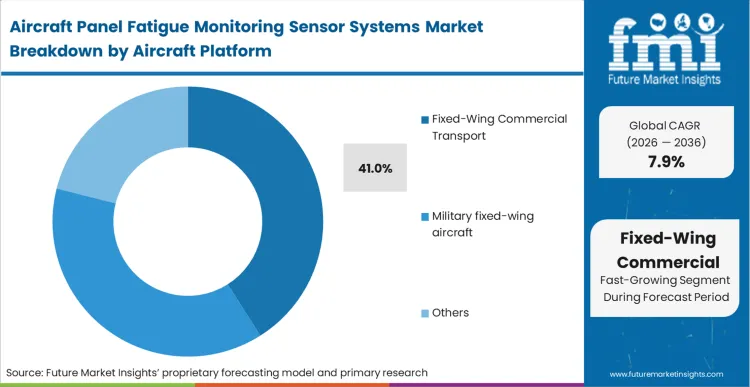
Massive operational scale and intense daily utilization rates place extreme fatigue cycles on passenger fleets. Fixed-wing commercial transport accounts for 41.0% share, reflecting pure volume dynamics within global aviation. Airline maintenance directors deploy sensor networks to safely extend narrow-body airframe lifespans beyond original design limits. Tracking micro-strain accumulation across critical pressurized fuselage sections prevents catastrophic decompression events. According to FMI's estimates, wide-body commercial fleets adopt advanced structural health monitoring primarily to justify reduced physical inspection frequencies, whereas regional narrow-body operators use identical systems specifically to combat high-cycle fatigue damage. Failing to instrument aging commercial fleets forces operators into highly disruptive, labor-intensive teardown schedules that decimate dispatch reliability.
- High-Cycle Monitoring: Short-haul domestic flights subject airframes to frequent pressurization cycles, accelerating joint fatigue. Airline maintenance directors utilize continuous strain data to predict exact crack propagation timelines before failure occurs.
- Dispatch Reliability Preservation: Unscheduled structural repairs cause severe network disruptions and revenue loss. Fleet dispatchers leverage predictive structural health insights to route degrading airframes toward appropriate MRO facilities during planned downtime.
- Inspection Labor Reduction: Automated data downloads replace thousands of manual ultrasound hours during heavy checks. MRO operations managers reallocate specialized non-destructive testing technicians toward actual repair execution rather than defect hunting.
Aircraft Panel Fatigue Monitoring Sensor Systems Market Analysis by Monitoring Mode
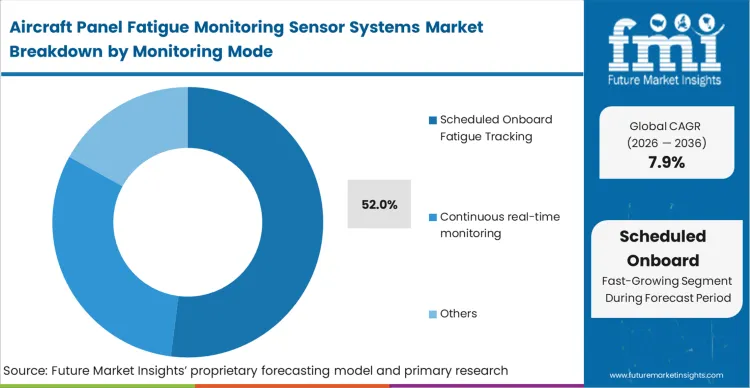
Fleet managers attempting to jump straight to continuous real-time telemetry face massive aircraft surface temperature monitoring systems certification hurdles and exorbitant satellite communication transmission costs encouraging regulatory frameworks heavily favor predictable, verifiable data extraction protocols over continuous streaming architectures. Scheduled onboard fatigue tracking holds 52.0% share in 2026. Airline technical directors prefer batch-downloading structural data during routine overnight line maintenance rather than managing complex in-flight telemetry. This approach to onboard fatigue monitoring for aircraft structures requires significantly less onboard computing power and zero satellite bandwidth. FMI observes that aviation authorities remain deeply skeptical of real-time structural alerts appearing in cockpits, preferring post-flight engineering analysis to determine airworthiness
- Bandwidth Cost Elimination: Storing strain data locally for physical retrieval removes requirements for expensive satellite uplinks. Airline technical directors minimize recurring operational data costs while maintaining comprehensive structural history records.
- Cockpit Workload Protection: Delaying analysis until post-flight prevents overwhelming flight crews with non-critical structural alerts. Avionics integration managers ensure pilot focus remains strictly on immediate flight safety parameters rather than long-term fatigue trends.
- Engineering Review Buffering: Batch processing allows dedicated structural engineering teams to analyze complex acoustic emission data in controlled environments. Fleet dispatchers make grounding decisions based on verified analysis rather than raw, potentially erroneous sensor spikes.
Aircraft Panel Fatigue Monitoring Sensor Systems Market Analysis by Material Focus
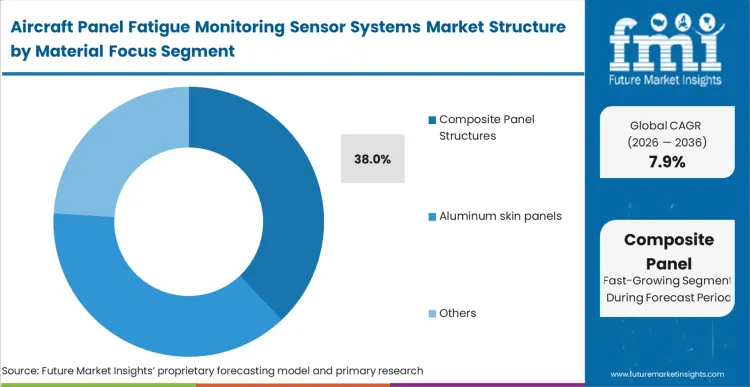
Validating composite aircraft panel strain monitoring requires high-density acoustic emission arrays capable of detecting internal fiber breakage during flight. Based on FMI's assessment, while aluminum skins crack predictably along known stress vectors, composite structures absorb impacts elastically but fail catastrophically without obvious external warning signs. Relying on traditional visual inspections for next-generation composite wing panel fatigue monitoring sensors invites severe safety risks and invalidates massive aircraft ice accretion detection sensors investments. Transitioning away from predictable metallic fatigue behaviors forces aerospace manufacturers to develop entirely new structural diagnostic techniques. Composite panel structures reach 38.0% share in 2026, leading aerospace design engineers face complex challenges because carbon fiber laminates mask internal delamination damage beneath visually flawless exterior surfaces.
- Hidden Delamination Detection: Acoustic sensors register high-frequency energy released when internal carbon fibers fracture. Aerospace design engineers identify subsurface impact damage caused by ground support equipment long before structural integrity degrades.
- Impact Event Localization: Triangulating acoustic signals pinpoints exact damage locations across massive composite barrel sections. MRO operations managers direct repair technicians straight to affected zones, bypassing days of manual ultrasonic scanning.
- Moisture Ingress Tracking: Undetected internal voids allow moisture accumulation, risking severe freeze-thaw expansion damage. Fleet technical directors monitor dielectric shifts within laminates to identify compromised sealing barriers before extensive physical repair becomes mandatory.
Aircraft Panel Fatigue Monitoring Sensor Systems Market Drivers, Restraints, and Opportunities
Aging commercial fleets facing mandatory heavy maintenance checks force airline technical directors to evaluate condition-based monitoring alternatives. Extending operational lifespans requires meticulous documentation proving structural integrity meets strict airworthiness directives. Grounding aircraft for physical teardowns costs carriers immense revenue, driving procurement teams toward permanently affixed airline MRO fatigue monitoring sensors. Implementing continuous tracking algorithms allows engineers to safely push physical inspection intervals outward. Delaying integration leaves operators trapped in escalating labor-intensive maintenance cycles that cripple fleet availability.
Regulatory resistance regarding maintenance credit validation represents severe friction slowing continuous sensor adoption. Aviation authorities demand years of parallel physical inspection data before permitting operators to alter established maintenance schedules. Certification managers struggle to prove novel acoustic emission algorithms offer superior defect detection compared to traditional ultrasonic technicians. This dual-cost burden forces airlines to fund expensive monitoring hardware while simultaneously paying for legacy manual inspections. Until regulatory bodies establish standardized certification pathways for algorithmic structural health analysis, fleet-wide implementations face significant bureaucratic delays.
Opportunities in the Aircraft Panel Fatigue Monitoring Sensor Systems Market
- Predictive Maintenance Monetization: Aggregating fleet-wide structural data allows aircraft OEMs to sell advanced predictive analytics subscriptions. Airline technical directors gain localized failure probability models.
- eVTOL Structural Certification: Novel advanced air mobility platforms require entirely new structural validation paradigms. Aerospace design engineers embedding sensors during initial prototyping accelerate strict urban air mobility certification timelines.
- Military Life-Extension Programs: Defense ministries push aging tactical fighter fleets well beyond original design limits. Air force sustainment commanders utilizing aircraft sensors ensure high-G maneuver safety while deferring costly next-generation platform acquisitions.
Regional Analysis
The aircraft panel fatigue monitoring sensor systems market is segmented into North America, Europe, Asia Pacific, and other regions across 40 plus countries. Global adoption trajectories for structural diagnostic networks diverge significantly based on localized fleet age, manufacturing footprints, and regional regulatory pressures. Fleet operators balance immediate retrofit requirements for legacy airframes against the integration of embedded sensors within next-generation composite platforms.
.webp "Top Country Growth Comparison Aircraft Panel Fatigue Monitoring Sensor Systems Market Cagr (2026 2036)")
| Country | CAGR (2026 to 2036) |
|---|---|
| India | 9.4% |
| China | 9.0% |
| United States | 7.4% |
| Germany | 7.2% |
| France | 7.1% |
| United Kingdom | 6.9% |
| Japan | 6.8% |
Source: Future Market Insights (FMI) analysis, based on proprietary forecasting model and primary research
Asia Pacific Aircraft Panel Fatigue Monitoring Sensor Systems Market Analysis
Severe pressurization cycling from high-frequency short-haul routes accelerates airframe fatigue across Asia Pacific far beyond anticipated global averages. To maintain high dispatch reliability amid rapid capacity expansion, airline engineering teams aggressively prioritize scalable monitoring architectures. FMI's analysis indicates that automated diagnostic hardware becomes mandatory as local MRO infrastructure struggles to support swelling physical inspection requirements.
- India: Expanding at a 9.4% CAGR, domestic carriers leverage predictive structural monitoring to manage massive outstanding narrow-body aircraft orders destined for high-cycle routes. Fleet dispatchers utilize this continuous strain data to optimize heavy maintenance scheduling effectively. Rapidly growing low-cost carriers secure critical operational cost advantages over regional competitors through this early diagnostic technology adoption.
- China: State-backed commercial aircraft manufacturing programs aggressively embed advanced fiber-optic networks directly into novel composite airframe designs. Government aerospace directors mandate indigenous sensor technology integration, pushing adoption at a 9.0% pace as production scales up. Established Western monitoring monopolies face significant challenges as domestic component suppliers secure vast localized production contracts.
- Japan: Constrained defense budgets force aging military transport fleets to require sophisticated life-extension tracking to maintain peak operational readiness. Air force sustainment commanders leverage localized strain data to target repairs precisely, rather than relying on reactive scheduled teardowns. Driving a domestic adoption to 6.8% of CAGR value, comprehensive sensor integration dramatically extends legacy platform utility.
FMI's report includes South Korea and Australia. Regulatory bodies across Asia Pacific increasingly align structural monitoring requirements with established European certification frameworks to streamline international fleet operations.
North America Aircraft Panel Fatigue Monitoring Sensor Systems Market Analysis
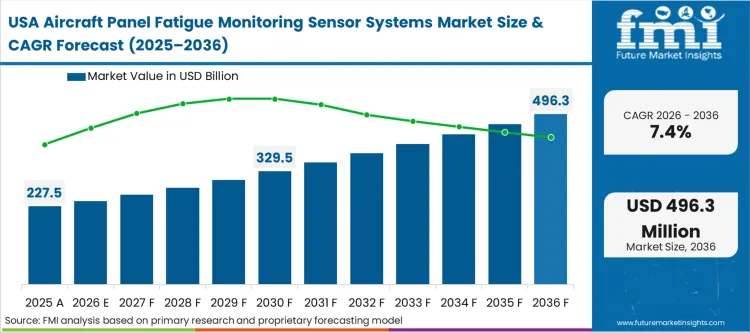
Major passenger carriers operating airframes well beyond twenty years encounter complex multi-site fatigue damage scenarios requiring intense surveillance across North America. To comply with escalating airworthiness directives without grounding critical capacity, fleet technical directors rapidly deploy surface-mounted nodes. According to FMI's estimates, defense modernization programs heavily subsidize fundamental acoustic emission research, which directly accelerates commercial sector spin-off technologies.
- United States: Progressing at a 7.4% CAGR trajectory, condition-based inspection technologies become essential as immense legacy commercial fleets face mandatory heavy checks. Operators maintain high dispatch reliability by utilizing surface-mounted retrofit kits instead of conducting physical teardowns. Airline maintenance directors deploying predictive analytics secure measurable operational advantages over competitors relying strictly on reactive maintenance models.
FMI's report includes Canada. Cross-border aerospace manufacturing supply chains heavily dictate sensor specification standards for next-generation composite business jets assembled across North America.
Europe Aircraft Panel Fatigue Monitoring Sensor Systems Market Analysis
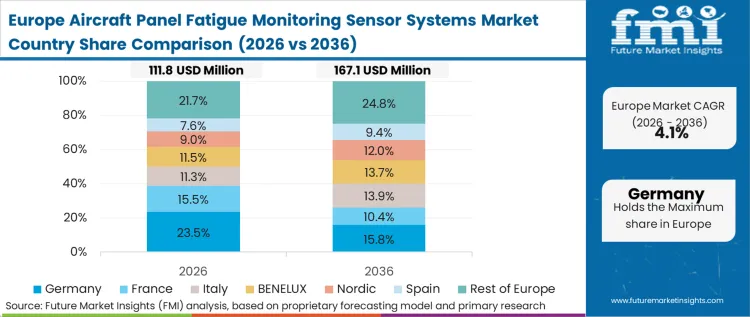
European aerospace consortiums lead global transitions toward fully composite primary aircraft structures, fundamentally altering required defect detection methodologies. Aerospace design engineers embed continuous fiber-optic networks deep within laminate layups during initial factory assembly to establish structural baselines. Based on FMI's assessment, strong regulatory emphasis on carbon-emission reductions pushes manufacturers toward ultra-lightweight airframes, leaving zero tolerance for hidden structural degradation.
- Germany: Deep integration within pan-European commercial aircraft manufacturing supply chains pushes Tier-1 aerostructures suppliers to adopt embedded sensor technologies aggressively. Quality assurance directors utilize the resulting validation data to streamline complex composite manufacturing processes, driving a 7.2% expansion. Local composite manufacturers cement critical competitive positioning by mastering these embedded optical systems early in the design phase.
- France: Final assembly line requirements for next-generation wide-body passenger aircraft dictate widespread optical strain gauge adoption across domestic aerospace hubs. Aerospace design engineers mandate strict component monitoring to satisfy stringent European certification requirements directly. By pushing continuous hardware deployment to 7.1% of CAGR, embedding these sensors directly addresses severe structural validation bottlenecks facing new aircraft programs.
- United Kingdom: Advancing at a 6.9% rate, extreme structural performance tracking capabilities become mandatory for defense contractors developing sixth-generation tactical fighter platforms. Military engineering directors embed acoustic emission nodes specifically to monitor complex high-stress geometries during extreme flight envelopes. This continuous influx of next-generation sensor data fundamentally alters how defense ministries calculate long-term platform lifecycle costs.
FMI's report includes Italy and Spain. Collaborative military aerospace development programs mandate standardized structural health data formatting to ensure interoperability across allied electric aircraft onboard sensors platforms.
Competitive Aligners for Market Players
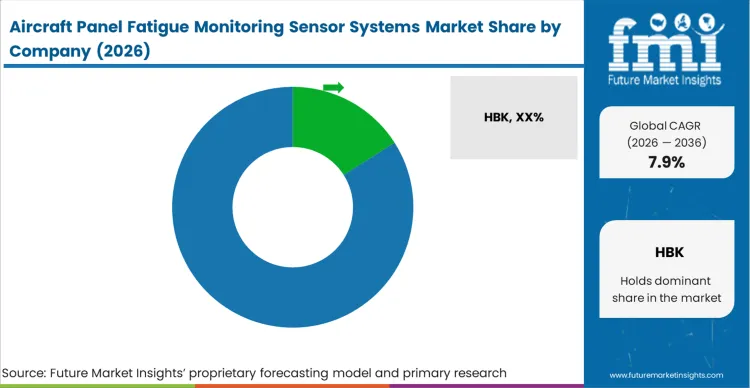
Securing a dominant footprint in the aircraft panel fatigue monitoring sensor systems market requires more than technical precision; it demands the navigation of rigorous airworthiness certification pathways that often act as the ultimate barrier to entry. TE Connectivity and Curtiss-Wright maintain a formidable presence by leveraging expansive historical flight-hour data to satisfy complex regulatory requirements. Since uncertified hardware holds zero commercial value for extending physical inspection intervals, airline procurement teams consistently prioritize aircraft fatigue monitoring sensor suppliers who can demonstrate a clear, proven roadmap to supplemental type certificate approval.
Strategic engineering alliances with primary airframers allow incumbent leaders to embed diagnostic hardware directly into the foundational composite manufacturing process. Luna Innovations, Acellent Technologies, and HBK utilize these deep-rooted partnerships to gain exclusive insights into proprietary structural load models. Without access to such massive historical stress datasets, emerging aircraft SHM sensor manufacturers find it nearly impossible to train predictive algorithms that accurately distinguish between benign operational vibration and the critical initiation of structural failure.
Technical directors at major carriers are increasingly pushing back against closed, proprietary data architectures that threaten to trigger long-term vendor lock-in. Vishay Precision Group / Micro-Measurements and Opsens Solutions are navigating a landscape where sophisticated buyers mandate standardized data output protocols to ensure interoperability across mixed fleets. While some hardware providers attempt to build guarded ecosystems, the top aircraft fatigue sensor companies are those moving toward open-source software interfaces that integrate seamlessly with existing airline MRO fatigue monitoring sensors and wider maintenance management platforms.
Key Players in Aircraft Panel Fatigue Monitoring Sensor Systems Market
- HBK
- Vishay Precision Group / Micro-Measurements
- TE Connectivity
- Curtiss-Wright
- Luna Innovations
- Acellent Technologies
- Opsens Solutions
Scope of the Report
| Metric | Value |
|---|---|
| Quantitative Units | USD 0.5 billion to USD 1.0 billion, at a CAGR of 7.9% |
| Market Definition | Diagnostic hardware arrays permanently affixed to airframe structures to quantify cumulative strain, detect micro-fractures, and continuously track material degradation across operational lifecycles. |
| Segmentation | Sensor technology, Installation architecture, Aircraft platform, Monitoring mode, Material focus, and Region |
| Regions Covered | North America, Latin America, Western Europe, Eastern Europe, Asia Pacific, Middle East and Africa |
| Countries Covered | United States, Canada, Brazil, Mexico, Germany, France, United Kingdom, Italy, Spain, Poland, Russia, China, India, Japan, Australia, South Korea, GCC Countries, South Africa |
| Key Companies Profiled | HBK, Vishay Precision Group / Micro-Measurements, TE Connectivity, Curtiss-Wright, Luna Innovations, Acellent Technologies, Opsens Solutions |
| Forecast Period | 2026 to 2036 |
| Approach | Annual commercial aircraft delivery schedules crossed with MRO heavy-check volume forecasts. |
Source: Future Market Insights (FMI) analysis, based on proprietary forecasting model and primary research
Segments
Sensor Technology:
- Strain and fiber-optic fatigue sensors
- Piezoelectric sensor arrays
- Acoustic emission sensors
- Comparative vacuum monitoring sensors
- Hybrid multi-sensor nodes
Installation Architecture:
- Surface-mounted retrofit kits
- Embedded composite layup integration
- Bonded patch sensor networks
- Wireless edge nodes
Aircraft Platform:
- Fixed-wing commercial transport
- Military fixed-wing aircraft
- Rotorcraft
- Business jets
- Advanced air mobility / eVTOL demonstrators
Monitoring Mode:
- Scheduled onboard fatigue tracking
- Continuous real-time monitoring
- Event-triggered inspection support
- Ground-download post-flight analytics
Material Focus:
- Composite panel structures
- Aluminum skin panels
- Titanium-intensive hot sections / adjacent structures
- Hybrid laminate structures
Regions:
- North America & Latin America
- United States
- Canada
- Mexico
- Brazil
- Argentina
- Chile
- Europe
- Germany
- United Kingdom
- France
- Italy
- Spain
- Asia-Pacific
- China
- Japan
- South Korea
- India
- ASEAN
- ANZ
- Middle East & Africa
- UAE
- Saudi Arabia
- South Africa
Bibliography
- Ballarin, P., Macchi, M., Roda, I., Sala, G., Baldi, A., & Airoldi, A. (2024). Economic Impact Assessment of Structural Health Monitoring Systems on the Lifecycle of a Helicopter Blade. e-Journal of Nondestructive Testing, 29(7).
- Ogunleye, R.O., et. al. (2024). Advanced sensors and sensing systems for structural health monitoring in aerospace applications: A review. Advanced Engineering Materials
- European Union Aviation Safety Agency. (2024). Aviation Authorities’ Research Agenda 2024. European Union Aviation Safety Agency.
- Scarselli, G., Nicassio, F., et al. (2025). Machine Learning for Structural Health Monitoring of Aerospace Structures: A Review. Sensors, 25(19), 6136.
- Wang, C., et al. (2024). Fast and robust strain signal processing for aircraft structural fatigue monitoring. Journal of Aerospace Intelligence.
- Yassin, M. H., Farhat, M., et al. (2024). Fiber Bragg grating (FBG)-based sensors: a review of technology and recent applications in structural health monitoring (SHM) of civil engineering structures. Discover Civil Engineering, 1, 151.
This bibliography is provided for reader reference. The full FMI report contains the complete reference list with primary source documentation.
This Report Addresses
- Aircraft panel fatigue monitoring integration strategies across global legacy commercial passenger fleets.
- Fiber-optic strain gauge deployment parameters within next-generation composite aircraft manufacturing environments.
- Surface-mounted retrofit kit certification requirements governed by primary international aviation regulatory bodies.
- Acoustic emission sensor utilization maximizing dispatch reliability during high-cycle short-haul flight operations.
- Operational maintenance cost reductions achieved via localized structural delamination detection algorithms.
- Data extraction protocols replacing labor-intensive physical ultrasonic structural inspection requirements.
- Airline technical director procurement dynamics favoring open-architecture predictive fatigue analytics.
- Component supplier positioning strategies reliant upon complex supplemental type certificate approvals.
Frequently Asked Questions
What are aircraft panel fatigue monitoring sensor systems?
Aircraft panel fatigue monitoring sensor systems comprise specialized diagnostic hardware arrays permanently affixed to airframe structures to quantify cumulative strain, detect micro-fractures, and continuously track material degradation across operational lifecycles.
How do aircraft fatigue monitoring sensors work?
Software algorithms process localized stress data and acoustic anomalies captured by these devices to track micro-strain accumulation and predict precise crack propagation timelines before catastrophic structural failure occurs.
Where are fatigue sensors installed on aircraft panels?
Engineers install sensor networks directly on critical high-stress zones like pressurized fuselage sections and wing-root attachment joints using either surface-mounted retrofit kits or embedded continuous fiber-optic networks integrated deep within laminate layups.
Can fatigue monitoring sensors reduce aircraft inspections?
Implementing continuous tracking algorithms allows aerospace engineers to safely push physical inspection intervals outward, preventing the need to ground aircraft for labor-intensive manual ultrasonic scanning.
Are aircraft fatigue monitoring systems FAA compliant?
Aviation authorities permit operators to utilize certified-for-credit SHM systems to adjust maintenance intervals only after securing complex supplemental type certificates backed by years of parallel physical inspection data.
What is the difference between SHM and NDT in aircraft?
Conventional Non-Destructive Testing requires grounding the aircraft and deploying technicians to manually scan for flaws, whereas Structural Health Monitoring utilizes permanently affixed sensors to continuously track fatigue accumulation automatically without physical disassembly.
Compare fiber optic and piezoelectric sensors for aircraft fatigue monitoring.
Fiber-optic arrays multiplex dozens of measurement points along single glass strands for extreme electromagnetic interference immunity, while piezoelectric arrays utilize acoustic emission principles to register high-frequency energy released during subsurface impact damage.
Why are airlines adopting panel fatigue monitoring sensors?
Maintenance directors face acute pressure to safely extend legacy fleet operational lifespans while minimizing the unscheduled ground time and severe commercial disruptions caused by traditional physical inspection teardowns.
Who are the leading suppliers of aircraft fatigue monitoring sensors?
Prominent aircraft fatigue monitoring sensor suppliers competing on regulatory compliance pathways and algorithmic integration capabilities include HBK, Vishay Precision Group / Micro-Measurements, TE Connectivity, Curtiss-Wright, Luna Innovations, Acellent Technologies, and Opsens Solutions.
How does aircraft composite health monitoring alter maintenance schedules?
Tracking dielectric shifts and acoustic emissions allows fleet technical directors to identify compromised sealing barriers or impact damage immediately, routing degrading airframes toward appropriate MRO facilities during planned downtime instead of suffering unscheduled failures.
What structural difference splits North American and European adoption?
North American adoption centers on extending legacy aluminum airframe lifespans via surface-mounted retrofits, whereas European aerospace manufacturing consortiums focus on embedding continuous fiber-optic networks deep within next-generation composite laminates during initial factory assembly.
How do aviation suppliers secure competitive positioning?
Component manufacturers secure competitive advantages by demonstrating proven regulatory compliance pathways and securing complex supplemental type certificates rather than simply marketing raw technological specifications.
Why do fleet managers resist proprietary interrogation hardware?
Sophisticated procurement teams mandate open-source software interfaces capable of aggregating structural data across mixed vendor platforms to avoid being locked into expensive long-term tooling contracts.
What commercial outcome awaits delayed monitoring integration?
Failing to instrument aging commercial fleets forces operators into highly disruptive physical teardown schedules that decimate dispatch reliability, inflate labor costs, and surrender critical competitive cost advantages to early adopters.
How do optical sensors impact lightning strike survivability?
Avionics integration managers eliminate heavy metallic shielding requirements from critical wing-box zones because glass optical fibers carry zero electrical current, rendering measurement networks completely immune to lightning strikes.
What role do maintenance credits play in procurement?
Airlines procure advanced tracking systems specifically to extend physical inspection intervals outward, transforming sensor hardware from supplemental safety measures into direct operational cost-reduction tools.
How does high-cycle fatigue affect monitoring specification?
Airline maintenance directors utilize continuous strain data to predict exact crack propagation timelines before structural failure occurs on short-haul domestic flights subjected to frequent pressurization cycles.
Why do military life-extension programs accelerate sensor development?
Sustaining high-G maneuver safety requires localized strain tracking to target repairs efficiently, allowing air force sustainment commanders to push aging tactical fighter fleets well beyond original design limits and defer costly next-generation platform acquisitions.
What hidden risk accompanies adhesive retrofit sensor applications?
Maintenance planners must implement secondary inspection routines to verify sensor attachment integrity over extended operational lifespans because harsh environmental cycling slowly degrades the bonding agents securing external nodes.
How do new aerospace entrants overcome historical data deficits?
Challengers partner directly with progressive low-cost carriers to accumulate massive flight-hour metrics, allowing new software integrators to train predictive acoustic emission algorithms accurately against established incumbent databases.
What specific capability drives hybrid multi-sensor node adoption?
Structural engineers eliminate false-positive damage alerts by cross-referencing disparate localized measurement methodologies, such as combining acoustic emission sensing with comparative vacuum monitoring to validate complex structural anomalies simultaneously.
How does moisture ingress tracking prevent composite damage?
Fleet technical directors monitor dielectric shifts within laminates to identify compromised sealing barriers before undetected internal voids allow moisture accumulation and trigger severe freeze-thaw expansion damage.
Preview the report firsthand - request a free sample
Get SampleGet the brochure for pricing and purchase details.
Get PDFTable of Content
- Executive Summary
- Global Market Outlook
- Demand-side Trends
- Supply-side Trends
- Technology Roadmap Analysis
- Analysis and Recommendations
- Market Overview
- Market Coverage / Taxonomy
- Market Definition / Scope / Limitations
- Research Methodology
- Chapter Orientation
- Analytical Lens and Working Hypotheses
- Market Structure, Signals, and Trend Drivers
- Benchmarking and Cross-market Comparability
- Market Sizing, Forecasting, and Opportunity Mapping
- Research Design and Evidence Framework
- Desk Research Programme (Secondary Evidence)
- Company Annual and Sustainability Reports
- Peer-reviewed Journals and Academic Literature
- Corporate Websites, Product Literature, and Technical Notes
- Earnings Decks and Investor Briefings
- Statutory Filings and Regulatory Disclosures
- Technical White Papers and Standards Notes
- Trade Journals, Industry Magazines, and Analyst Briefs
- Conference Proceedings, Webinars, and Seminar Materials
- Government Statistics Portals and Public Data Releases
- Press Releases and Reputable Media Coverage
- Specialist Newsletters and Curated Briefings
- Sector Databases and Reference Repositories
- FMI Internal Proprietary Databases and Historical Market Datasets
- Subscription Datasets and Paid Sources
- Social Channels, Communities, and Digital Listening Inputs
- Additional Desk Sources
- Expert Input and Fieldwork (Primary Evidence)
- Primary Modes
- Qualitative Interviews and Expert Elicitation
- Quantitative Surveys and Structured Data Capture
- Blended Approach
- Why Primary Evidence is Used
- Field Techniques
- Interviews
- Surveys
- Focus Groups
- Observational and In-context Research
- Social and Community Interactions
- Stakeholder Universe Engaged
- C-suite Leaders
- Board Members
- Presidents and Vice Presidents
- R&D and Innovation Heads
- Technical Specialists
- Domain Subject-matter Experts
- Scientists
- Physicians and Other Healthcare Professionals
- Governance, Ethics, and Data Stewardship
- Research Ethics
- Data Integrity and Handling
- Primary Modes
- Tooling, Models, and Reference Databases
- Desk Research Programme (Secondary Evidence)
- Data Engineering and Model Build
- Data Acquisition and Ingestion
- Cleaning, Normalisation, and Verification
- Synthesis, Triangulation, and Analysis
- Quality Assurance and Audit Trail
- Market Background
- Market Dynamics
- Drivers
- Restraints
- Opportunity
- Trends
- Scenario Forecast
- Demand in Optimistic Scenario
- Demand in Likely Scenario
- Demand in Conservative Scenario
- Opportunity Map Analysis
- Product Life Cycle Analysis
- Supply Chain Analysis
- Investment Feasibility Matrix
- Value Chain Analysis
- PESTLE and Porter’s Analysis
- Regulatory Landscape
- Regional Parent Market Outlook
- Production and Consumption Statistics
- Import and Export Statistics
- Market Dynamics
- Global Market Analysis 2021 to 2025 and Forecast, 2026 to 2036
- Historical Market Size Value (USD Million) Analysis, 2021 to 2025
- Current and Future Market Size Value (USD Million) Projections, 2026 to 2036
- Y-o-Y Growth Trend Analysis
- Absolute $ Opportunity Analysis
- Global Market Pricing Analysis 2021 to 2025 and Forecast 2026 to 2036
- Global Market Analysis 2021 to 2025 and Forecast 2026 to 2036, By Sensor Technology
- Introduction / Key Findings
- Historical Market Size Value (USD Million) Analysis By Sensor Technology , 2021 to 2025
- Current and Future Market Size Value (USD Million) Analysis and Forecast By Sensor Technology , 2026 to 2036
- Strain And Fiber-Optic Fatigue Sensors
- Piezoelectric sensor arrays
- Others
- Strain And Fiber-Optic Fatigue Sensors
- Y-o-Y Growth Trend Analysis By Sensor Technology , 2021 to 2025
- Absolute $ Opportunity Analysis By Sensor Technology , 2026 to 2036
- Global Market Analysis 2021 to 2025 and Forecast 2026 to 2036, By Installation Architecture
- Introduction / Key Findings
- Historical Market Size Value (USD Million) Analysis By Installation Architecture, 2021 to 2025
- Current and Future Market Size Value (USD Million) Analysis and Forecast By Installation Architecture, 2026 to 2036
- Surface-Mounted Retrofit Kits
- Embedded composite layup integration
- Others
- Surface-Mounted Retrofit Kits
- Y-o-Y Growth Trend Analysis By Installation Architecture, 2021 to 2025
- Absolute $ Opportunity Analysis By Installation Architecture, 2026 to 2036
- Global Market Analysis 2021 to 2025 and Forecast 2026 to 2036, By Aircraft Platform
- Introduction / Key Findings
- Historical Market Size Value (USD Million) Analysis By Aircraft Platform, 2021 to 2025
- Current and Future Market Size Value (USD Million) Analysis and Forecast By Aircraft Platform, 2026 to 2036
- Fixed-Wing Commercial Transport
- Military fixed-wing aircraft
- Others
- Fixed-Wing Commercial Transport
- Y-o-Y Growth Trend Analysis By Aircraft Platform, 2021 to 2025
- Absolute $ Opportunity Analysis By Aircraft Platform, 2026 to 2036
- Global Market Analysis 2021 to 2025 and Forecast 2026 to 2036, By Monitoring Mode
- Introduction / Key Findings
- Historical Market Size Value (USD Million) Analysis By Monitoring Mode, 2021 to 2025
- Current and Future Market Size Value (USD Million) Analysis and Forecast By Monitoring Mode, 2026 to 2036
- Scheduled Onboard Fatigue Tracking
- Continuous real-time monitoring
- Others
- Scheduled Onboard Fatigue Tracking
- Y-o-Y Growth Trend Analysis By Monitoring Mode, 2021 to 2025
- Absolute $ Opportunity Analysis By Monitoring Mode, 2026 to 2036
- Global Market Analysis 2021 to 2025 and Forecast 2026 to 2036, By Material Focus
- Introduction / Key Findings
- Historical Market Size Value (USD Million) Analysis By Material Focus, 2021 to 2025
- Current and Future Market Size Value (USD Million) Analysis and Forecast By Material Focus, 2026 to 2036
- Composite Panel Structures
- Aluminum skin panels
- Others
- Composite Panel Structures
- Y-o-Y Growth Trend Analysis By Material Focus, 2021 to 2025
- Absolute $ Opportunity Analysis By Material Focus, 2026 to 2036
- Global Market Analysis 2021 to 2025 and Forecast 2026 to 2036, By Region
- Introduction
- Historical Market Size Value (USD Million) Analysis By Region, 2021 to 2025
- Current Market Size Value (USD Million) Analysis and Forecast By Region, 2026 to 2036
- North America
- Latin America
- Western Europe
- Eastern Europe
- East Asia
- South Asia and Pacific
- Middle East & Africa
- Market Attractiveness Analysis By Region
- North America Market Analysis 2021 to 2025 and Forecast 2026 to 2036, By Country
- Historical Market Size Value (USD Million) Trend Analysis By Market Taxonomy, 2021 to 2025
- Market Size Value (USD Million) Forecast By Market Taxonomy, 2026 to 2036
- By Country
- USA
- Canada
- Mexico
- By Sensor Technology
- By Installation Architecture
- By Aircraft Platform
- By Monitoring Mode
- By Material Focus
- By Country
- Market Attractiveness Analysis
- By Country
- By Sensor Technology
- By Installation Architecture
- By Aircraft Platform
- By Monitoring Mode
- By Material Focus
- Key Takeaways
- Latin America Market Analysis 2021 to 2025 and Forecast 2026 to 2036, By Country
- Historical Market Size Value (USD Million) Trend Analysis By Market Taxonomy, 2021 to 2025
- Market Size Value (USD Million) Forecast By Market Taxonomy, 2026 to 2036
- By Country
- Brazil
- Chile
- Rest of Latin America
- By Sensor Technology
- By Installation Architecture
- By Aircraft Platform
- By Monitoring Mode
- By Material Focus
- By Country
- Market Attractiveness Analysis
- By Country
- By Sensor Technology
- By Installation Architecture
- By Aircraft Platform
- By Monitoring Mode
- By Material Focus
- Key Takeaways
- Western Europe Market Analysis 2021 to 2025 and Forecast 2026 to 2036, By Country
- Historical Market Size Value (USD Million) Trend Analysis By Market Taxonomy, 2021 to 2025
- Market Size Value (USD Million) Forecast By Market Taxonomy, 2026 to 2036
- By Country
- Germany
- UK
- Italy
- Spain
- France
- Nordic
- BENELUX
- Rest of Western Europe
- By Sensor Technology
- By Installation Architecture
- By Aircraft Platform
- By Monitoring Mode
- By Material Focus
- By Country
- Market Attractiveness Analysis
- By Country
- By Sensor Technology
- By Installation Architecture
- By Aircraft Platform
- By Monitoring Mode
- By Material Focus
- Key Takeaways
- Eastern Europe Market Analysis 2021 to 2025 and Forecast 2026 to 2036, By Country
- Historical Market Size Value (USD Million) Trend Analysis By Market Taxonomy, 2021 to 2025
- Market Size Value (USD Million) Forecast By Market Taxonomy, 2026 to 2036
- By Country
- Russia
- Poland
- Hungary
- Balkan & Baltic
- Rest of Eastern Europe
- By Sensor Technology
- By Installation Architecture
- By Aircraft Platform
- By Monitoring Mode
- By Material Focus
- By Country
- Market Attractiveness Analysis
- By Country
- By Sensor Technology
- By Installation Architecture
- By Aircraft Platform
- By Monitoring Mode
- By Material Focus
- Key Takeaways
- East Asia Market Analysis 2021 to 2025 and Forecast 2026 to 2036, By Country
- Historical Market Size Value (USD Million) Trend Analysis By Market Taxonomy, 2021 to 2025
- Market Size Value (USD Million) Forecast By Market Taxonomy, 2026 to 2036
- By Country
- China
- Japan
- South Korea
- By Sensor Technology
- By Installation Architecture
- By Aircraft Platform
- By Monitoring Mode
- By Material Focus
- By Country
- Market Attractiveness Analysis
- By Country
- By Sensor Technology
- By Installation Architecture
- By Aircraft Platform
- By Monitoring Mode
- By Material Focus
- Key Takeaways
- South Asia and Pacific Market Analysis 2021 to 2025 and Forecast 2026 to 2036, By Country
- Historical Market Size Value (USD Million) Trend Analysis By Market Taxonomy, 2021 to 2025
- Market Size Value (USD Million) Forecast By Market Taxonomy, 2026 to 2036
- By Country
- India
- ASEAN
- Australia & New Zealand
- Rest of South Asia and Pacific
- By Sensor Technology
- By Installation Architecture
- By Aircraft Platform
- By Monitoring Mode
- By Material Focus
- By Country
- Market Attractiveness Analysis
- By Country
- By Sensor Technology
- By Installation Architecture
- By Aircraft Platform
- By Monitoring Mode
- By Material Focus
- Key Takeaways
- Middle East & Africa Market Analysis 2021 to 2025 and Forecast 2026 to 2036, By Country
- Historical Market Size Value (USD Million) Trend Analysis By Market Taxonomy, 2021 to 2025
- Market Size Value (USD Million) Forecast By Market Taxonomy, 2026 to 2036
- By Country
- Kingdom of Saudi Arabia
- Other GCC Countries
- Turkiye
- South Africa
- Other African Union
- Rest of Middle East & Africa
- By Sensor Technology
- By Installation Architecture
- By Aircraft Platform
- By Monitoring Mode
- By Material Focus
- By Country
- Market Attractiveness Analysis
- By Country
- By Sensor Technology
- By Installation Architecture
- By Aircraft Platform
- By Monitoring Mode
- By Material Focus
- Key Takeaways
- Key Countries Market Analysis
- USA
- Pricing Analysis
- Market Share Analysis, 2025
- By Sensor Technology
- By Installation Architecture
- By Aircraft Platform
- By Monitoring Mode
- By Material Focus
- Canada
- Pricing Analysis
- Market Share Analysis, 2025
- By Sensor Technology
- By Installation Architecture
- By Aircraft Platform
- By Monitoring Mode
- By Material Focus
- Mexico
- Pricing Analysis
- Market Share Analysis, 2025
- By Sensor Technology
- By Installation Architecture
- By Aircraft Platform
- By Monitoring Mode
- By Material Focus
- Brazil
- Pricing Analysis
- Market Share Analysis, 2025
- By Sensor Technology
- By Installation Architecture
- By Aircraft Platform
- By Monitoring Mode
- By Material Focus
- Chile
- Pricing Analysis
- Market Share Analysis, 2025
- By Sensor Technology
- By Installation Architecture
- By Aircraft Platform
- By Monitoring Mode
- By Material Focus
- Germany
- Pricing Analysis
- Market Share Analysis, 2025
- By Sensor Technology
- By Installation Architecture
- By Aircraft Platform
- By Monitoring Mode
- By Material Focus
- UK
- Pricing Analysis
- Market Share Analysis, 2025
- By Sensor Technology
- By Installation Architecture
- By Aircraft Platform
- By Monitoring Mode
- By Material Focus
- Italy
- Pricing Analysis
- Market Share Analysis, 2025
- By Sensor Technology
- By Installation Architecture
- By Aircraft Platform
- By Monitoring Mode
- By Material Focus
- Spain
- Pricing Analysis
- Market Share Analysis, 2025
- By Sensor Technology
- By Installation Architecture
- By Aircraft Platform
- By Monitoring Mode
- By Material Focus
- France
- Pricing Analysis
- Market Share Analysis, 2025
- By Sensor Technology
- By Installation Architecture
- By Aircraft Platform
- By Monitoring Mode
- By Material Focus
- India
- Pricing Analysis
- Market Share Analysis, 2025
- By Sensor Technology
- By Installation Architecture
- By Aircraft Platform
- By Monitoring Mode
- By Material Focus
- ASEAN
- Pricing Analysis
- Market Share Analysis, 2025
- By Sensor Technology
- By Installation Architecture
- By Aircraft Platform
- By Monitoring Mode
- By Material Focus
- Australia & New Zealand
- Pricing Analysis
- Market Share Analysis, 2025
- By Sensor Technology
- By Installation Architecture
- By Aircraft Platform
- By Monitoring Mode
- By Material Focus
- China
- Pricing Analysis
- Market Share Analysis, 2025
- By Sensor Technology
- By Installation Architecture
- By Aircraft Platform
- By Monitoring Mode
- By Material Focus
- Japan
- Pricing Analysis
- Market Share Analysis, 2025
- By Sensor Technology
- By Installation Architecture
- By Aircraft Platform
- By Monitoring Mode
- By Material Focus
- South Korea
- Pricing Analysis
- Market Share Analysis, 2025
- By Sensor Technology
- By Installation Architecture
- By Aircraft Platform
- By Monitoring Mode
- By Material Focus
- Russia
- Pricing Analysis
- Market Share Analysis, 2025
- By Sensor Technology
- By Installation Architecture
- By Aircraft Platform
- By Monitoring Mode
- By Material Focus
- Poland
- Pricing Analysis
- Market Share Analysis, 2025
- By Sensor Technology
- By Installation Architecture
- By Aircraft Platform
- By Monitoring Mode
- By Material Focus
- Hungary
- Pricing Analysis
- Market Share Analysis, 2025
- By Sensor Technology
- By Installation Architecture
- By Aircraft Platform
- By Monitoring Mode
- By Material Focus
- Kingdom of Saudi Arabia
- Pricing Analysis
- Market Share Analysis, 2025
- By Sensor Technology
- By Installation Architecture
- By Aircraft Platform
- By Monitoring Mode
- By Material Focus
- Turkiye
- Pricing Analysis
- Market Share Analysis, 2025
- By Sensor Technology
- By Installation Architecture
- By Aircraft Platform
- By Monitoring Mode
- By Material Focus
- South Africa
- Pricing Analysis
- Market Share Analysis, 2025
- By Sensor Technology
- By Installation Architecture
- By Aircraft Platform
- By Monitoring Mode
- By Material Focus
- USA
- Market Structure Analysis
- Competition Dashboard
- Competition Benchmarking
- Market Share Analysis of Top Players
- By Regional
- By Sensor Technology
- By Installation Architecture
- By Aircraft Platform
- By Monitoring Mode
- By Material Focus
- Competition Analysis
- Competition Deep Dive
- HBK
- Overview
- Product Portfolio
- Profitability by Market Segments (Product/Age /Sales Channel/Region)
- Sales Footprint
- Strategy Overview
- Marketing Strategy
- Product Strategy
- Channel Strategy
- Vishay Precision Group / Micro-Measurements
- TE Connectivity
- Curtiss-Wright
- Luna Innovations
- HBK
- Competition Deep Dive
- Assumptions & Acronyms Used


