

- Industry Size (2025)
- USD 282.9 Mn
- Forecast (2035)
- USD 395.3 Mn
- CAGR (2025 to 2035)
- 3.4%
Cavity Drainage Membrane Market Forecast and Outlook 2025 to 2035
The global cavity drainage membrane market is projected to grow from USD 282.9 million in 2025 to approximately USD 395.3 million by 2035, recording an absolute increase of USD 112.4 million over the forecast period. This translates into a total growth of 39.7%, with the market forecast to expand at a CAGR of 3.4% between 2025 and 2035. The overall market size is expected to grow by nearly 1.4X during the same period, supported by increasing global demand for basement waterproofing solutions, growing adoption of cavity drainage systems in below-grade construction applications, and rising awareness driving professional waterproofing specifications across various residential and commercial building projects.
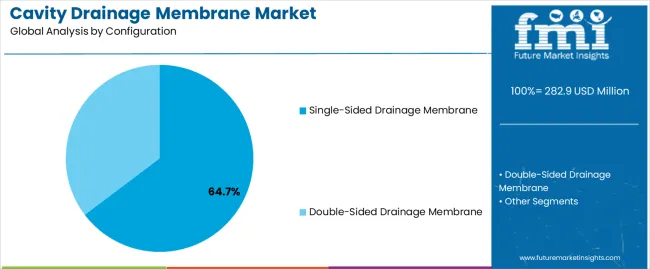
The market trajectory reflects accelerating basement conversion activity, particularly in established urban markets where property owners seek to maximize habitable space through below-grade development. Single-sided drainage membranes continue to dominate residential applications, offering cost-effective moisture management while maintaining installation simplicity. Double-sided drainage systems remain concentrated in heavy-duty applications where hydrostatic pressure and groundwater exposure require enhanced drainage capacity and structural protection.
Quick Stats for Cavity Drainage Membrane Market
- Cavity Drainage Membrane Market Value (2025): USD 282.9 million
- Cavity Drainage Membrane Market Forecast Value (2035): USD 395.3 million
- Cavity Drainage Membrane Market CAGR: 3.4%
- Leading Segment by Configuration (2025): Single-Sided Drainage Membrane (64.7%)
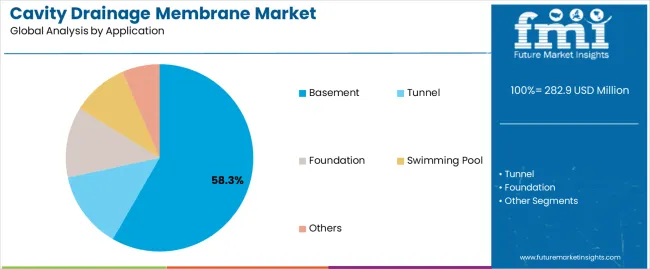
- Leading Segment by Application (2025): Basement (58.3%)
- Key Growth Regions: Europe, Asia Pacific, and North America
- Top Companies by Market Share: Delta Membrane Systems, Newton, Sika
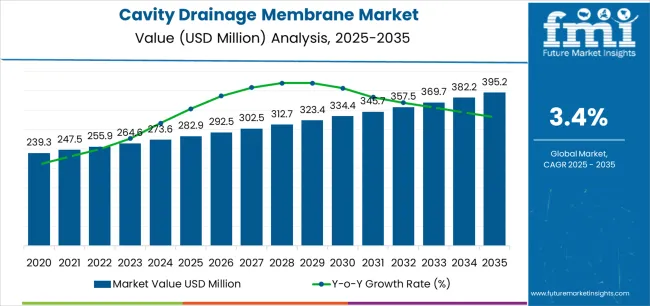
Regional growth patterns demonstrate particular strength in European markets, where aging building stock and basement conversion regulations drive consistent membrane specification. Asian markets maintain steady growth through urban density pressures and underground space utilization, while North American markets show increasing activity in residential basement finishing leveraging favorable building code frameworks. Construction industry professionalization and waterproofing specification standards continue to support demand for certified membrane systems with proven performance records.
Technology advancement in membrane materials, dimple geometry optimization, and drainage channel design continues to improve system performance while reducing installation complexity. The integration of antimicrobial treatments and vapor control layers enhances membrane functionality for diverse below-grade applications. Manufacturers are developing lighter weight products and simplified fixing methods to reduce installation labor requirements and project costs.
Cavity Drainage Membrane Market Key Takeaways
| Metric | Value |
|---|---|
| Market Value (2025) | USD 282.9 million |
| Market Forecast Value (2035) | USD 395.3 million |
| Forecast CAGR (2025-2035) | 3.4% |
Why is the Cavity Drainage Membrane Market Growing?
| URBAN DEVELOPMENT PRESSURES | CONSTRUCTION QUALITY REQUIREMENTS | REGULATORY & PERFORMANCE STANDARDS |
|---|---|---|
| Basement Conversion Growth | Professional Specification Standards | Building Regulation Compliance |
| Continuous expansion of basement conversion activity across urban markets driving demand for reliable waterproofing membrane solutions. | Modern construction requiring certified waterproofing systems delivering proven moisture protection and performance documentation. | Regulatory requirements establishing waterproofing performance benchmarks favoring tested membrane products with technical approval. |
| Below-Grade Space Utilization | Installation Quality Demands | Property Protection Standards |
| Growing emphasis on maximizing habitable space and property value through below-grade development creating demand for drainage systems. | Construction contractors investing in membrane systems offering consistent installation procedures while maintaining project efficiency. | Building survey standards requiring comprehensive waterproofing systems and cavity drainage approaches for below-grade habitable spaces. |
| Urban Density Management | Warranty and Liability Standards | Structural Protection Requirements |
| Superior moisture management characteristics and structural wall protection making cavity membranes essential for below-grade applications. | Certified manufacturers with proven installation records required for comprehensive waterproofing warranty provision and insurance compliance. | Groundwater exposure protection and structural durability standards driving need for engineered cavity drainage solutions. |
What is the Segmentation of the Cavity Drainage Membrane Market?
| Category | Segments Covered |
|---|---|
| By Configuration | Single-Sided Drainage Membrane, Double-Sided Drainage Membrane |
| By Application | Basement, Tunnel, Foundation, Swimming Pool, Others |
| By Region | North America, Europe, Asia Pacific, Latin America, Middle East & Africa |
Cavity Drainage Membrane Market Analysis by Configuration
| Segment | 2025 to 2035 Outlook |
|---|---|
| Single-Sided Drainage Membrane |
|
| Double-Sided Drainage Membrane |
|
Cavity Drainage Membrane Market Analysis by Application
| Segment | 2025 to 2035 Outlook |
|---|---|
| Basement |
|
| Tunnel |
|
| Foundation |
|
| Swimming Pool |
|
| Others |
|
What Are the Key Drivers, Restraints, and Trends in the Basement Conversion Market?
| DRIVERS | RESTRAINTS | KEY TRENDS |
|---|---|---|
| Basement Conversion Activity | Installation Cost Barriers | Antimicrobial Integration |
| Urban property value growth and habitable space maximization driving residential basement conversion across established markets. | Higher system costs compared to basic waterproofing membranes affecting adoption in cost-sensitive residential segments. | Integration of antimicrobial treatments and mold-resistant properties for enhanced indoor air quality and long-term performance. |
| Building Regulation Compliance | Contractor Expertise Requirements | Vapor Control Innovation |
| Building code requirements and habitable space standards mandating cavity drainage systems for below-grade room conversions. | Specialist installation knowledge and proper drainage detailing requiring trained contractor networks limiting market accessibility. | Development of integrated vapor barriers and moisture control layers providing comprehensive below-grade environmental management. |
| Property Value Protection | Maintenance Access Considerations | Lightweight System Development |
| Insurance requirements and property survey standards emphasizing comprehensive waterproofing systems and drainage provisions. | Sump pump dependency and drainage system maintenance requirements creating long-term ownership responsibilities and cost considerations. | Simplified fixing methods and reduced material weight improving installation efficiency and reducing contractor labor requirements. |
What is the Analysis of the Cavity Drainage Membrane Market by Key Countries?
| Country | CAGR (2025-2035) |
|---|---|
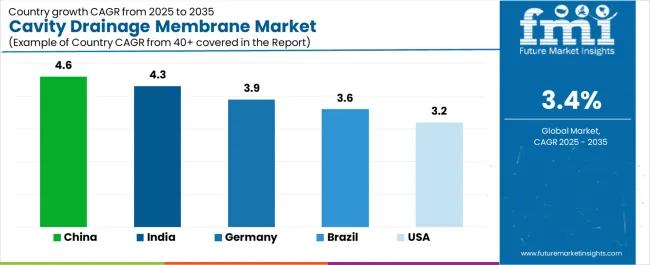
| China | 4.6% |
| India | 4.3% |
| Germany | 3.9% |
| Brazil | 3.6% |
| United States | 3.2% |
Why is China Leading Global Market Growth in Cavity Drainage Membranes?
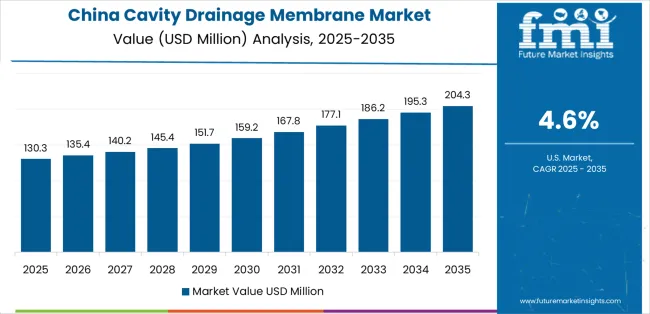
Revenue from cavity drainage membranes in China is projected to exhibit strong growth with a CAGR of 4.6% through 2035, driven by expanding underground space development and comprehensive urban construction infrastructure creating substantial opportunities for waterproofing system suppliers across residential basement construction, commercial underground facilities, and transportation tunnel sectors. The country's extensive urban density management requirements and expanding below-grade construction capabilities are creating significant demand for both single-sided and double-sided drainage membrane solutions. Major construction companies and property developers are establishing comprehensive waterproofing system procurement programs to support large-scale building operations and meet growing construction quality standards.
Underground parking facility development programs are supporting widespread adoption of cavity drainage membranes across construction operations, driving demand for cost-effective waterproofing solutions. Building quality standards initiatives and construction specification development are creating substantial opportunities for membrane suppliers requiring reliable performance characteristics and competitive product pricing. Regional urban development growth and provincial building regulation advancement are facilitating adoption of engineered drainage systems throughout major metropolitan regions.
What Makes India a High-Growth Market for Cavity Drainage Membranes?
Revenue from cavity drainage membranes in India is expanding with a CAGR of 4.3% through 2035, supported by extensive residential construction activity and comprehensive urban development creating sustained demand for waterproofing membrane systems across diverse building categories and commercial property segments. The country's growing construction industry sophistication and expanding waterproofing awareness are driving demand for drainage systems that provide consistent moisture protection performance while supporting cost-effective installation requirements. Property developers and construction contractors are investing in membrane system specifications to support growing project portfolios and building quality requirements.
Urban residential development expansion and commercial property construction capability development are creating opportunities for drainage membranes across diverse building segments requiring reliable performance and competitive material costs. Construction quality standardization and building waterproofing practice advancement are driving investments in membrane supplier relationships supporting moisture protection requirements throughout major urban regions. Building code development and waterproofing specification programs are enhancing demand for professional cavity drainage systems throughout Indian construction markets.
How is Germany Maintaining Leadership in the Cavity Drainage Membrane Market?
Demand for cavity drainage membranes in Germany is projected to grow with a CAGR of 3.9% through 2035, supported by the country's leadership in building waterproofing standards and advanced construction technologies requiring engineered membrane systems for basement and below-grade applications. German construction companies are implementing drainage systems that support comprehensive technical approvals, operational reliability, and stringent quality protocols. The market is characterized by focus on system performance, installation quality, and adherence to DIN standards and technical building regulations.
Construction industry investments are prioritizing membrane systems that demonstrate superior drainage performance and durability while meeting German building protection and environmental standards. Technical approval leadership programs and construction quality initiatives are driving adoption of certified drainage systems that support comprehensive waterproofing approaches and performance verification. Research and development programs for eco-friendly materials are facilitating adoption of environmentally responsible membrane technologies throughout major construction centers.
Why is the United States Expanding Its Cavity Drainage Membrane Market?
Revenue from cavity drainage membranes in the United States is growing with a CAGR of 3.2% through 2035, driven by residential basement finishing programs and increasing waterproofing awareness creating sustained opportunities for membrane suppliers serving both homeowner renovation projects and commercial construction contractors. The country's extensive basement housing stock and expanding property improvement awareness are creating demand for drainage systems that support diverse moisture management requirements while maintaining installation efficiency standards. Waterproofing contractors and building material distributors are developing supply strategies to support contractor networks and homeowner accessibility.
Residential renovation programs and basement conversion activity are facilitating adoption of drainage membranes capable of supporting diverse property protection requirements and competitive installation costs. Building code compliance and moisture management standards are enhancing demand for cavity drainage systems that support operational reliability and warranty provision. Commercial below-grade construction expansion and infrastructure development are creating opportunities for heavy-duty membrane capabilities across American construction markets.
How is Brazil Positioned in the Cavity Drainage Membrane Market?
Demand for cavity drainage membranes in Brazil is projected to grow with a CAGR of 3.6% through 2035, driven by commercial building development and construction quality capabilities supporting urban growth and comprehensive below-grade construction applications. The country's expanding commercial construction sector and growing waterproofing market segments are creating demand for membrane systems that support operational performance and moisture protection standards. Construction contractors and building material suppliers are maintaining comprehensive product availability to support diverse project requirements.
Commercial building development and construction quality programs are supporting demand for drainage membranes that meet contemporary performance and reliability standards. Urban construction growth and infrastructure development programs are creating opportunities for waterproofing systems that provide comprehensive moisture management support. Building regulation development and construction specification enhancement programs are facilitating adoption of professional drainage membrane capabilities throughout major metropolitan regions.
How is the Cavity Drainage Membrane Market Split by Country in Europe?
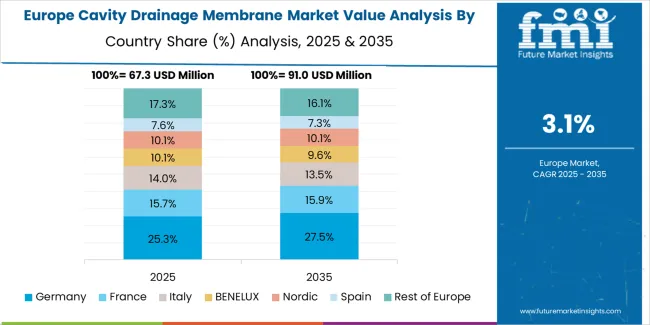
The cavity drainage membrane market in Europe is projected to grow from USD 141.5 million in 2025 to USD 197.6 million by 2035, registering a CAGR of 3.4% over the forecast period. The United Kingdom is expected to maintain its leadership position with a 38.2% market share in 2025, declining slightly to 37.6% by 2035, supported by its extensive basement conversion activity and established cavity drainage system adoption.
Germany follows with a 28.7% share in 2025, projected to reach 29.3% by 2035, driven by comprehensive building waterproofing regulations and construction quality standards. The Netherlands holds a 14.3% share in 2025, expected to reach 14.8% by 2035 due to below-grade construction requirements in low-lying areas. France commands a 10.6% share, while Belgium accounts for 5.1% in 2025. The Rest of Europe region is anticipated to gain momentum, expanding its collective share from 3.1% to 3.6% by 2035, attributed to increasing professional waterproofing adoption in Eastern European markets and Nordic countries implementing basement development standards.
Premium Quality Standards Define Japanese Market Dynamics
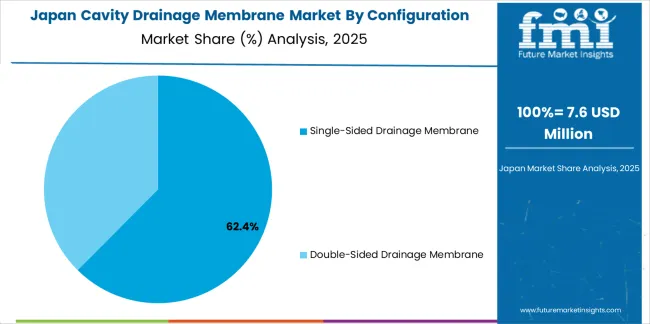
Japanese cavity drainage membrane operations reflect the country's emphasis on seismic construction requirements and groundwater management in dense urban environments. Major construction companies including Kajima Corporation and Obayashi Corporation maintain rigorous waterproofing system qualification processes requiring extensive seismic performance testing, material durability certification, and comprehensive installation documentation. This creates barriers for membrane suppliers but ensures system reliability in earthquake-prone regions.
The Japanese market demonstrates preference for lightweight membrane systems compatible with seismic isolation details and structural movement accommodation. Companies require specific fixing methods that address concrete substrate preparation and membrane termination approaches for seismic joints. Installation protocols differ from Western practices, driving demand for locally adapted system designs and technical support.
Regulatory oversight through the Ministry of Land, Infrastructure, Transport and Tourism emphasizes structural protection and groundwater intrusion prevention standards. The building certification system supports membrane specification through performance verification requirements, creating advantages for suppliers with comprehensive testing data and technical approval documentation.
Market Dynamics Drive Innovation in South Korea
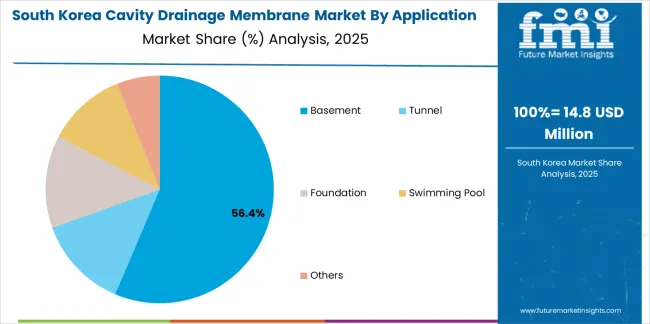
South Korean cavity drainage membrane operations reflect the country's modern high-rise construction practices and underground parking structure requirements. Major construction companies including Samsung C&T and Hyundai Engineering & Construction drive waterproofing system procurement strategies, establishing relationships with certified suppliers to support large-scale residential tower projects and commercial development programs.
The Korean market demonstrates growing adoption of cavity drainage systems in underground parking structures and mechanical equipment rooms where traditional waterproofing methods face maintenance challenges. Companies integrate membrane systems with comprehensive building management approaches, requiring suppliers to provide technical support for complex below-grade applications. This sophistication creates demand for engineered solutions with proven performance records.
Regulatory frameworks emphasize long-term durability and maintenance accessibility standards. Korea Institute of Construction Technology oversight establishes waterproofing system testing protocols that favor cavity drainage approaches for accessible below-grade spaces. This benefits suppliers with comprehensive warranty programs and local technical support capabilities.
What is the Competitive Landscape of the Cavity Drainage Membrane Market?
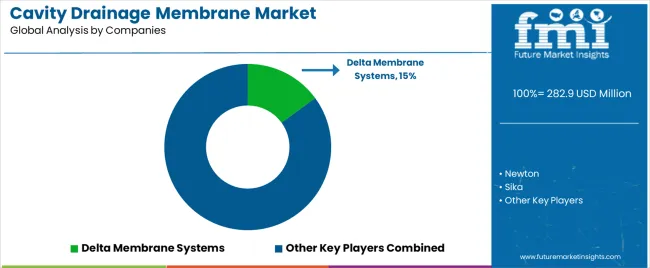
Profit pools are consolidating around established membrane manufacturers with technical approval documentation and proven installation track records. Value is migrating from basic dimpled sheet products to engineered system solutions offering integrated drainage channels, vapor barriers, and technical support services that reduce installation risk and improve contractor confidence. Several archetypes set the pace: European technical specialists defending share through building regulation compliance and architect specification relationships; diversified waterproofing manufacturers offering cavity membranes within broader product portfolios; regional distributors providing contractor training and technical support services; and material innovators developing enhanced dimple geometries and antimicrobial treatments for performance differentiation.
Switching costs remain moderate due to product standardization and contractor familiarity with installation procedures, creating competitive pressure on pricing and distribution coverage. Technical approval requirements, architect specifications, and contractor training investments create barriers for new entrants lacking established market presence. Building regulation compliance and warranty provision favor suppliers with comprehensive testing documentation and insurance backing.
Consolidation continues as larger waterproofing companies acquire regional membrane specialists to expand product portfolios and geographic coverage. Distribution partnerships accelerate market penetration in fragmented contractor networks where technical support and product availability determine supplier selection. Digital resources for installation guidance and specification writing are becoming important for reaching architects and contractors directly, requiring content investment that pressures smaller manufacturers.
Market dynamics favor suppliers who can demonstrate system performance through building regulation approvals, offer comprehensive technical support for complex applications, and maintain distribution networks that ensure product availability for contractor purchasing. Price competition intensifies in residential segments where membrane functionality is standardized, while commercial and infrastructure applications offer opportunities for premium positioning through enhanced performance characteristics. Establish architect specification relationships with technical approval documentation and case study portfolios; develop contractor training programs and installation support services for market penetration; invest in antimicrobial treatments and vapor control integration for product differentiation.
Key Players in the Cavity Drainage Membrane Market
- Delta Membrane Systems
- Newton
- Sika
- Visqueen
- Wykamol
- Platon (Triton Systems)
- Safeguard
- ABG (Alphamin Builders Group)
- RIW
- Biokil Crown
Scope of the Report
| Items | Values |
|---|---|
| Quantitative Units | USD 282.9 million |
| Configuration | Single-Sided Drainage Membrane, Double-Sided Drainage Membrane |
| Application | Basement, Tunnel, Foundation, Swimming Pool, Others |
| Regions Covered | North America, Latin America, Europe, Asia Pacific, Middle East & Africa |
| Country Covered | United Kingdom, Germany, Netherlands, China, India, United States, and other 40+ countries |
| Key Companies Profiled | Delta Membrane Systems, Newton, Sika, Visqueen, Wykamol, Platon (Triton Systems), Safeguard, ABG (Alphamin Builders Group), RIW, Biokil Crown |
| Additional Attributes | Dollar sales by configuration/application, regional demand (NA, EU, APAC, LATAM, MEA), competitive landscape, residential vs commercial adoption, installation methodology integration, and product innovations driving waterproofing performance, installation efficiency, and long-term durability |
Cavity Drainage Membrane Market Segmentation
By Configuration
- Single-Sided Drainage Membrane
- Double-Sided Drainage Membrane
By Application
- Basement
- Tunnel
- Foundation
- Swimming Pool
- Others
By Region
- North America
- Europe
- Asia Pacific
- Latin America
- Middle East & Africa
Frequently Asked Questions
How big is the cavity drainage membrane market in 2025?
The global cavity drainage membrane market is estimated to be valued at USD 282.9 million in 2025.
What will be the size of cavity drainage membrane market in 2035?
The market size for the cavity drainage membrane market is projected to reach USD 395.2 million by 2035.
How much will be the cavity drainage membrane market growth between 2025 and 2035?
The cavity drainage membrane market is expected to grow at a 3.4% CAGR between 2025 and 2035.
What are the key product types in the cavity drainage membrane market?
The key product types in cavity drainage membrane market are single-sided drainage membrane and double-sided drainage membrane.
Which application segment to contribute significant share in the cavity drainage membrane market in 2025?
In terms of application, basement segment to command 58.3% share in the cavity drainage membrane market in 2025.
Preview the report firsthand - request a free sample
Get SampleGet the brochure for pricing and purchase details.
Get PDFTable of Content
- Executive Summary
- Global Market Outlook
- Demand-side Trends
- Supply-side Trends
- Technology Roadmap Analysis
- Analysis and Recommendations
- Market Overview
- Market Coverage / Taxonomy
- Market Definition / Scope / Limitations
- Market Background
- Market Dynamics
- Drivers
- Restraints
- Opportunity
- Trends
- Scenario Forecast
- Demand in Optimistic Scenario
- Demand in Likely Scenario
- Demand in Conservative Scenario
- Opportunity Map Analysis
- Product Life Cycle Analysis
- Supply Chain Analysis
- Investment Feasibility Matrix
- Value Chain Analysis
- PESTLE and Porter’s Analysis
- Regulatory Landscape
- Regional Parent Market Outlook
- Production and Consumption Statistics
- Import and Export Statistics
- Market Dynamics
- Global Market Analysis 2020 to 2024 and Forecast, 2025 to 2035
- Historical Market Size Value (USD Million) Analysis, 2020 to 2024
- Current and Future Market Size Value (USD Million) Projections, 2025 to 2035
- Y-o-Y Growth Trend Analysis
- Absolute $ Opportunity Analysis
- Global Market Pricing Analysis 2020 to 2024 and Forecast 2025 to 2035
- Global Market Analysis 2020 to 2024 and Forecast 2025 to 2035, By Configuration
- Introduction / Key Findings
- Historical Market Size Value (USD Million) Analysis By Configuration , 2020 to 2024
- Current and Future Market Size Value (USD Million) Analysis and Forecast By Configuration , 2025 to 2035
- Single-Sided Drainage Membrane
- Double-Sided Drainage Membrane
- Y-o-Y Growth Trend Analysis By Configuration , 2020 to 2024
- Absolute $ Opportunity Analysis By Configuration , 2025 to 2035
- Global Market Analysis 2020 to 2024 and Forecast 2025 to 2035, By Application
- Introduction / Key Findings
- Historical Market Size Value (USD Million) Analysis By Application, 2020 to 2024
- Current and Future Market Size Value (USD Million) Analysis and Forecast By Application, 2025 to 2035
- Basement
- Tunnel
- Foundation
- Swimming Pool
- Others
- Y-o-Y Growth Trend Analysis By Application, 2020 to 2024
- Absolute $ Opportunity Analysis By Application, 2025 to 2035
- Global Market Analysis 2020 to 2024 and Forecast 2025 to 2035, By Region
- Introduction
- Historical Market Size Value (USD Million) Analysis By Region, 2020 to 2024
- Current Market Size Value (USD Million) Analysis and Forecast By Region, 2025 to 2035
- North America
- Latin America
- Western Europe
- Eastern Europe
- East Asia
- South Asia and Pacific
- Middle East & Africa
- Market Attractiveness Analysis By Region
- North America Market Analysis 2020 to 2024 and Forecast 2025 to 2035, By Country
- Historical Market Size Value (USD Million) Trend Analysis By Market Taxonomy, 2020 to 2024
- Market Size Value (USD Million) Forecast By Market Taxonomy, 2025 to 2035
- By Country
- USA
- Canada
- Mexico
- By Configuration
- By Application
- By Country
- Market Attractiveness Analysis
- By Country
- By Configuration
- By Application
- Key Takeaways
- Latin America Market Analysis 2020 to 2024 and Forecast 2025 to 2035, By Country
- Historical Market Size Value (USD Million) Trend Analysis By Market Taxonomy, 2020 to 2024
- Market Size Value (USD Million) Forecast By Market Taxonomy, 2025 to 2035
- By Country
- Brazil
- Chile
- Rest of Latin America
- By Configuration
- By Application
- By Country
- Market Attractiveness Analysis
- By Country
- By Configuration
- By Application
- Key Takeaways
- Western Europe Market Analysis 2020 to 2024 and Forecast 2025 to 2035, By Country
- Historical Market Size Value (USD Million) Trend Analysis By Market Taxonomy, 2020 to 2024
- Market Size Value (USD Million) Forecast By Market Taxonomy, 2025 to 2035
- By Country
- Germany
- UK
- Italy
- Spain
- France
- Nordic
- BENELUX
- Rest of Western Europe
- By Configuration
- By Application
- By Country
- Market Attractiveness Analysis
- By Country
- By Configuration
- By Application
- Key Takeaways
- Eastern Europe Market Analysis 2020 to 2024 and Forecast 2025 to 2035, By Country
- Historical Market Size Value (USD Million) Trend Analysis By Market Taxonomy, 2020 to 2024
- Market Size Value (USD Million) Forecast By Market Taxonomy, 2025 to 2035
- By Country
- Russia
- Poland
- Hungary
- Balkan & Baltic
- Rest of Eastern Europe
- By Configuration
- By Application
- By Country
- Market Attractiveness Analysis
- By Country
- By Configuration
- By Application
- Key Takeaways
- East Asia Market Analysis 2020 to 2024 and Forecast 2025 to 2035, By Country
- Historical Market Size Value (USD Million) Trend Analysis By Market Taxonomy, 2020 to 2024
- Market Size Value (USD Million) Forecast By Market Taxonomy, 2025 to 2035
- By Country
- China
- Japan
- South Korea
- By Configuration
- By Application
- By Country
- Market Attractiveness Analysis
- By Country
- By Configuration
- By Application
- Key Takeaways
- South Asia and Pacific Market Analysis 2020 to 2024 and Forecast 2025 to 2035, By Country
- Historical Market Size Value (USD Million) Trend Analysis By Market Taxonomy, 2020 to 2024
- Market Size Value (USD Million) Forecast By Market Taxonomy, 2025 to 2035
- By Country
- India
- ASEAN
- Australia & New Zealand
- Rest of South Asia and Pacific
- By Configuration
- By Application
- By Country
- Market Attractiveness Analysis
- By Country
- By Configuration
- By Application
- Key Takeaways
- Middle East & Africa Market Analysis 2020 to 2024 and Forecast 2025 to 2035, By Country
- Historical Market Size Value (USD Million) Trend Analysis By Market Taxonomy, 2020 to 2024
- Market Size Value (USD Million) Forecast By Market Taxonomy, 2025 to 2035
- By Country
- Kingdom of Saudi Arabia
- Other GCC Countries
- Turkiye
- South Africa
- Other African Union
- Rest of Middle East & Africa
- By Configuration
- By Application
- By Country
- Market Attractiveness Analysis
- By Country
- By Configuration
- By Application
- Key Takeaways
- Key Countries Market Analysis
- USA
- Pricing Analysis
- Market Share Analysis, 2024
- By Configuration
- By Application
- Canada
- Pricing Analysis
- Market Share Analysis, 2024
- By Configuration
- By Application
- Mexico
- Pricing Analysis
- Market Share Analysis, 2024
- By Configuration
- By Application
- Brazil
- Pricing Analysis
- Market Share Analysis, 2024
- By Configuration
- By Application
- Chile
- Pricing Analysis
- Market Share Analysis, 2024
- By Configuration
- By Application
- Germany
- Pricing Analysis
- Market Share Analysis, 2024
- By Configuration
- By Application
- UK
- Pricing Analysis
- Market Share Analysis, 2024
- By Configuration
- By Application
- Italy
- Pricing Analysis
- Market Share Analysis, 2024
- By Configuration
- By Application
- Spain
- Pricing Analysis
- Market Share Analysis, 2024
- By Configuration
- By Application
- France
- Pricing Analysis
- Market Share Analysis, 2024
- By Configuration
- By Application
- India
- Pricing Analysis
- Market Share Analysis, 2024
- By Configuration
- By Application
- ASEAN
- Pricing Analysis
- Market Share Analysis, 2024
- By Configuration
- By Application
- Australia & New Zealand
- Pricing Analysis
- Market Share Analysis, 2024
- By Configuration
- By Application
- China
- Pricing Analysis
- Market Share Analysis, 2024
- By Configuration
- By Application
- Japan
- Pricing Analysis
- Market Share Analysis, 2024
- By Configuration
- By Application
- South Korea
- Pricing Analysis
- Market Share Analysis, 2024
- By Configuration
- By Application
- Russia
- Pricing Analysis
- Market Share Analysis, 2024
- By Configuration
- By Application
- Poland
- Pricing Analysis
- Market Share Analysis, 2024
- By Configuration
- By Application
- Hungary
- Pricing Analysis
- Market Share Analysis, 2024
- By Configuration
- By Application
- Kingdom of Saudi Arabia
- Pricing Analysis
- Market Share Analysis, 2024
- By Configuration
- By Application
- Turkiye
- Pricing Analysis
- Market Share Analysis, 2024
- By Configuration
- By Application
- South Africa
- Pricing Analysis
- Market Share Analysis, 2024
- By Configuration
- By Application
- USA
- Market Structure Analysis
- Competition Dashboard
- Competition Benchmarking
- Market Share Analysis of Top Players
- By Regional
- By Configuration
- By Application
- Competition Analysis
- Competition Deep Dive
- Delta Membrane Systems
- Overview
- Product Portfolio
- Profitability by Market Segments (Product/Age /Sales Channel/Region)
- Sales Footprint
- Strategy Overview
- Marketing Strategy
- Product Strategy
- Channel Strategy
- Newton
- Sika
- Visqueen
- Wykamol
- Platon (Triton Systems)
- Safeguard
- ABG (Alphamin Builders Group)
- RIW
- Biokil Crown
- Delta Membrane Systems
- Competition Deep Dive
- Assumptions & Acronyms Used
- Research Methodology


