

- Industry Size (2026)
- USD 14.5 Bn
- Forecast (2036)
- USD 25.0 Bn
- CAGR (2026 to 2036)
- 5.6%
Cookie Dough Market Size, Market Forecast and Outlook By FMI
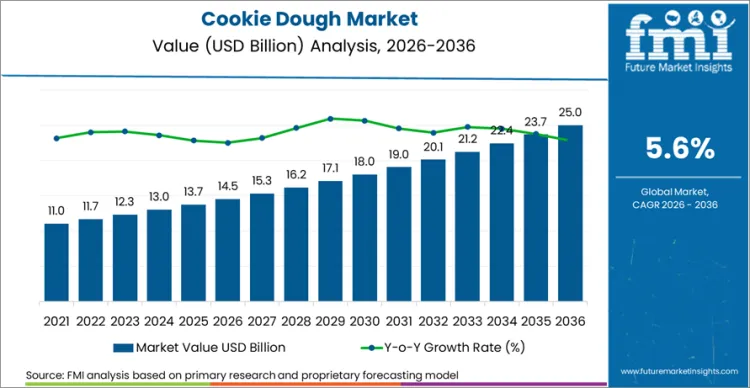
The cookie dough market is expected to expand from USD 14.5 billion in 2026 to USD 25.0 billion by 2036. The market is anticipated to register a 5.6% CAGR during the forecast period as refrigerated dough gains retail space. Organic formats are likely to lead with around 58% share in 2026, and wheat-based products are projected to represent 70% to 75% share across ingredient segmentation.
Summary of the Cookie Dough Market
- Demand and Growth Drivers
- At-home indulgence is expected to lift refrigerated dough purchases as consumers seek easy desserts with familiar flavors.
- Safe-to-eat raw dough formats are likely to expand usage beyond baking into everyday snacking occasions.
- Premium flavors and larger portions are anticipated to raise value as brands convert indulgence into repeat purchases.
- Product and Segment View
- Organic cookie dough is expected to lead nature segmentation as shoppers favor clean-label ingredients and allergen-aware options.
- Wheat-based products are likely to dominate ingredient segmentation through low cost and broad acceptance in baking.
- Chocolate chip and double chocolate variants are anticipated to attract repeat buying across household and foodservice demand.
- Geography and Competitive Outlook
- North America is expected to lead by value as refrigerated dough already has deep supermarket penetration.
- Europe is likely to expand steadily as premium bakery formats gain space in modern grocery channels.
- Asia Pacific is anticipated to record faster adoption as Western-style desserts reach more urban consumers.
- Analyst Opinion
- Nandini Roy Choudhury from FMI offers this view as Principal Consultant for Food and Beverage: “Cookie dough is expected to gain value as brands reposition refrigerated formats from home baking items into snackable indulgence products. Companies with strong retail execution and safer edible dough formulations are likely to build stronger repeat purchase behavior.”
- Cookie Dough Market Value Analysis
- Cookie dough is evolving from a home baking product into a year-round indulgence platform for households.
- Demand is likely to rise as edible raw dough broadens use across snack cups and frozen bites.
- Retail adoption is expected to improve as supermarket chains allocate more chilled shelf space to premium dough formats.
- Spending is anticipated to be backed by portion upsizing and gourmet flavors across branded refrigerated ranges.
Key Takeaways, Market Size, and Forecast
- The global cookie dough market is expected to reach USD 14.5 billion in 2026 as retail demand improves.
- By 2036, the global cookie dough market is projected to reach USD 25.0 billion across retail and foodservice channels.
- From 2026 to 2036, the market is anticipated to expand at 5.6% CAGR through stronger refrigerated dough adoption.
- Organic cookie dough is likely to account for around 58% market share in 2026 amid clean-label demand.
- Wheat-based products are expected to account for 70% to 75% share in 2026 across ingredient segmentation.
- North America is projected to lead by value through established refrigerated dough shelves and strong baking habits.
Summary of Cookie Dough Market
What Is Growth Outlook for Cookie Dough Market as per Future Market Insights Projection?
Future Market Insights projects the cookie dough industry to expand at a CAGR of 5.6% from 2026 to 2036, increasing from USD 14.5 Billion in 2026 to USD 25.0 Billion by 2036.
FMI Research Approach: FMI proprietary forecasting model based on refrigerated dough retail scan data and at-home baking frequency surveys.
How Do FMI Analysts Perceive Cookie Dough Market to Evolve?
FMI analysts perceive the market evolving toward dual-occasion consumption where cookie dough functions as both a baking ingredient and a ready-to-eat snack, with premiumisation driving value growth through oversized formats, gourmet flavours, and cross-category brand extensions.
FMI Research Approach: USDA Economic Research Service food expenditure analysis and IRI/Circana retail scan data methodology.
Which Country Holds Largest Share in Global Cookie Dough Market?
The United States holds a significant share of the global cookie dough market by value which is supported by the dominance of refrigerated dough in American home baking culture and the scale of its retail distribution infrastructure.
FMI Research Approach: FMI country-level revenue modeling by refrigerated dough shelf space allocation and per-capita consumption indices.
How Large Will Cookie Dough Market Be by 2036?
The global cookie dough market is projected to reach USD 25.0 Billion by 2036.
FMI Research Approach: FMI long-term revenue forecast derived from at-home indulgence trend curves and retail channel expansion projections.
What Is Definition of Cookie Dough Market?
The cookie dough market includes commercially produced refrigerated, frozen, and shelf-stable dough products designed for home baking or direct consumption as ready-to-eat snacks, covering branded, private-label, and artisanal formats sold through retail, e-commerce, and food service channels.
FMI Research Approach: FMI market taxonomy and inclusion-exclusion framework.
What Are Globally Unique Trends Shaping Cookie Dough Market?
Globally unique trends include the premiumisation of portion sizes with bakery-style oversized formats, cross-category brand extensions such as KitKat Cookie Dough and Pop-Tarts Cookie Dough, and the FDA's 2025 revocation of 52 obsolete Standards of Identity enabling ingredient innovation.
FMI Research Approach: FDA Federal Register notices and CPG brand extension tracking.
Cookie Dough Market Key Takeaways
| Metric | Details |
|---|---|
| Industry Size (2026) | USD 14.5 Billion |
| Industry Value (2036) | USD 25.0 Billion |
| CAGR (2026 to 2036) | 5.6% |
Source: Future Market Insights (FMI) analysis, based on proprietary forecasting model and primary research
Shifts in the Landscape from 2021 to 2025 and Future Trends 2026 to 2036
Between 2021 and 2025, the cookie dough market experienced a rise in demand for edible raw dough and ready-to-bake, fueled by indulgence and convenience trends. Health-oriented consumers drove growth in gluten-free, vegan, and high-protein products, while direct-to-consumer and e-commerce brands increased their presence. Sustainability also emerged as a driver, with brands emphasizing clean-label ingredients and environmentally friendly packaging.
Between 2026 and 2036, the industry will grow with innovation in functional and protein-fortified products for fitness-oriented consumers. AI-powered personalization and smart kitchen integrations could improve home baking experiences. Carbon-neutral production and sustainable ingredient sourcing will be industry norms.
Growth will be driven by emerging industries, especially in Asia, as Western-style baked foods become increasingly popular. Moreover, food safety technology advancements will continue to drive the raw, edible cookie dough market forward, making it safer to consume without affecting taste or texture.
A Comparative Shift Analysis (2021 to 2025 vs 2026 to 2026)
| 2021 to 2025 | 2026 to 2036 |
|---|---|
| Home baking and decadent consumption surged in the industry, particularly during the COVID-19 epidemic when people were cooped up at home and in need of comfort food. | The trend will be snacking, with cthe product being a convenient snack option rather than used as a dessert component. Premium and customized flavorings willbe in greater demand. |
| The industry responded to rising health consciousness by introducing vegan, gluten-free, and organic brands. | The low-calorie, low-carb, and high-protein dough trend will continue to grow. To appeal to fitness fanatics, brands will encourage product formulations that include functional ingredients like collagen, probiotics, and plant proteins. |
| Luxury flavors, premium chocolate, and organic vanilla extracts have grown in popularity as a result of consumers' rising interest in gourmet and artisanal dough. Companies sold the product in tiny batches. | With businesses selling do-it-yourself flavor kits and websites where customers can choose the mix-ins, textures, and ingredients they want, personalization will be a major differentiation. Flavors with ethnic and exotic influences will likewise be well-liked. |
| With the rise in e-commerce and DTC sales, availability was increased. | The sales in supermarkets, specialty store and convenience store will increase, while food delivery apps and subscription-based models also become popular. Companies will also expand into Asian-pacific and Latin American retail market to reach emerging customers. |
| The dough was mainly used in bakery products, ice cream, milkshakes and desserts. Many ice cream brands are using cookie dough pieces to add extra texture and innovate different flavours. | The dough will expand beyond desserts, appearing in breakfast items, protein bars, and even beverages. |
| Brands started focusing on sustainable sourcing of ingredients, such as ethically sourced chocolate and organic flour. | Biodegradable and recyclable packaging will be the norm. Brands will increasingly make carbon-neutral production a commitment, with plant-based ingredients and sustainable agriculture to reflect concerns for the environment. |
| North America and Europe dominated the market due to high consumer demand for indulgent and premium dough products. Asia-Pacific was growing moderately with Western-style desserts gaining popularity. | The market would expand significantly in Asia Pacific and Latin America as a result of increasing disposable income as well as urbanization. Western dessert culture will penetrate even deeper, promoting demand for ready-to-bake and frozen products. |
Impact of Pricing on Customer Loyalty & Repeat Purchases
Price points of Cookie dough: Cookie dough market is segmented, and the final positioning will affect the cookie dough pricing strategy. Refrigerated products from high-volume brands like Nestlé Toll House or Pillsbury commonly retails USD 3.50-USD 6 per tub (16 oz.); premium brands (think the gourmet and organic types) range from USD 7-USD 12 per tub. Niche options such as keto or CBD-infused cookie dough can go for USD 12-USD 18 per tub, thanks to the higher price of specialty ingredients.
Products made from organic, high-protein or other specialty ingredients command a twenty to forty percent premium consumer are willing to pay. Doughs that are keto-compliant, generally made with almond or coconut flour and sugar substitutes, can cost as much as double their regular counterparts. CBD-infused product is still a niche but high-margin category, and customers familiar with CBD pricing can stomach a 30-50% premium.
At greater price points, significant brand differentiation is needed to maintain a loyal customer base. Consumers who experience better taste, clean ingredients, and/or dietary benefits are retained at high levels even at premium prices. Frequent promotions along with subscription models (e.g., USD 30 monthly cookie dough clubs) can blunt price sensitivity and encourage repeat purchases. Multi-pack discounts and exclusive flavors, competitive pricing strategies, all keep incoming demand and brand loyalty high.
Product Line Innovation to Target Multiple Adjacent Markets
The cookie dough market is witnessing product extensions aimed at multiple consumer segments. Consumer product companies are introducing hybrid products, which include cookie dough and ice cream hybrids inspired by Ben & Jerry’s as well as pre-baked frozen bites for on-the-go snacking and protein-rich products for fitness-focused individuals looking for indulgence combined with nutrition.
In the children’s space, brands are launching nut-free, dye-free products to quell parental fears of allergens and artificial ingredients. For kids, there are even DIY kits, complete with mix-in toppings and decorating packs for an interactive experience.
Even the luxury and gourmet segment is growing, with all their limited-edition flavors like saffron pistachio, truffle-infused, and birthday cake with edible gold flakes targeting high-end customers. The dough in small-batch, handcrafted varieties, with limited availability in upscale bakeries and specialty food shops, also boosts exclusivity and aims to redefine the treat as a more sophisticated indulgence.
End User Purchasing Trends
| Key Factors | Details |
|---|---|
| Key Buyers | Key consumers are millennials, Gen Z, and families. Higher-income households gravitate toward gourmet or health-driven options, while middle-income buyers focus on affordability and indulgence. |
| Emotional Drivers | Consumers buy the product for indulgence, nostalgia, and convenience. Health-conscious customers want protein-rich, keto or organic varieties. |
| Baking vs. Snacking | A growing percentage of consumers eat the product raw as a snack rather than baking it. Pre-portioned, edible dough formats are gaining traction. |
| Brand Loyalty vs. Switching Behavior | Legacy brands (Nestlé, Pillsbury) still hold market share, but indie brands attract health-focused buyers. Consumers value clean-label ingredients, but bundling strategies (e.g., cookie dough + ice cream) enhance retention. |
| Preferred Sales Channels | Grocery and specialty food stores dominate, but e-commerce and direct to consumer (DTC) channels (Amazon, brand websites, subscription boxes) are the fastest growing. Purchasing choices are greatly influenced by social media trends on TikTok and Instagram. |
Segment-wise Analysis
By Nature
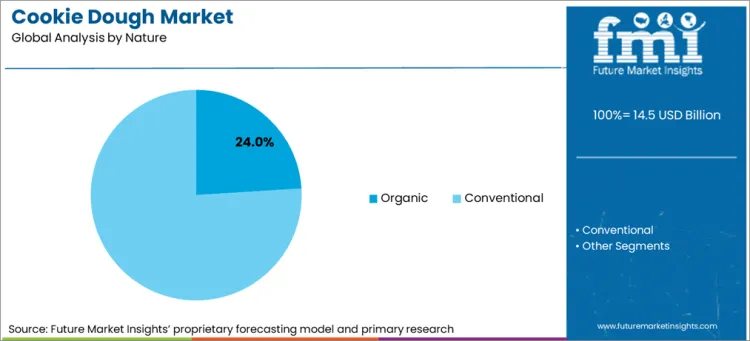
Increasing demand for healthy snacks is a key factor fueling the growth of the global organic segment, a sub segment of the larger organic food industry. The segment's share is expected to reach around 58 percent of the total market by 2026, driven by increasing consumer preference for natural and high-quality ingredients. This is further propelled by the inclination towards plant-based, allergen-free, and clean-label formulations in the organic segment. While North America and Europe dominate this segment owing to region-specific developed organic food industry, Asia-Pacific is on a trench as one of the growing regions as organic and sustainable food products are fast gaining popularity.
In 2026, the conventional segment is anticipated to harbor over 42% market share of the overall industry owing to the increasing demand for convenient and indulgent snack food options. It is fair to say that it is an all-time favorite for people of all age groups, and its predominant use in retail and foodservice applications contributes to its reach.
North America and Europe hold the largest share in the conventional market thanks to the high consumption of packaged and frozen baked foods in both regions, while Asia-Pacific is emerging as a major growing area with urbanization, growing disposable incomes and the popularization of western-style desserts.
By Ingredients
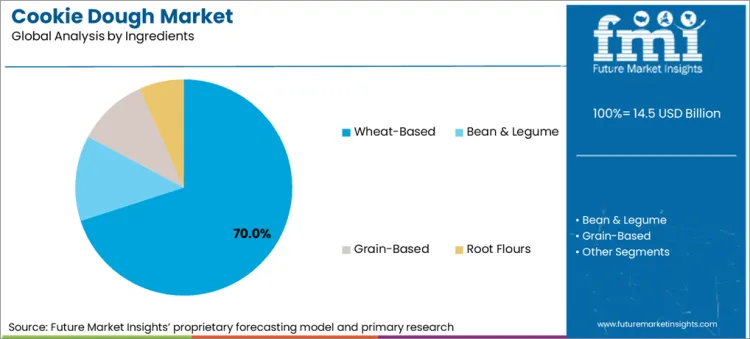
Wheat-based product is expected to lead the industry owing to its convenient usage, low cost, and high acceptance among consumers. This segment will account for a substantial share of 70%-75% by 2026 and is expected to grow steadily till 2036. Ingredion describes wheat-based ingredients as a mainstay for several applications, including baked goods, snacks, and cookie dough. Increasing demand from developing markets such as Asia-Pacific and Africa, supported by urbanization, increasing disposable income and dietary changes impacted by Western eating habits.
Growing health awareness among consumers is also leading to their shift towards whole-grain and fortified wheat-based options creating perspectives for growth in healthy formulations. Notably, innovations in fortified and high-protein wheat-based products along with robust demand in developing regions make this segment credibly positioned to remain an industry leader in the coming decade, despite these challenges.
EMEA includes bean and legume-based products, which is a pioneering segment gaining an uptick as it caters health-conscious and specialty diet consumers. Chickpeas, lentils and black beans are increasingly being used as replacements for traditional flours, said the report, with higher fiber and protein content and appeal to gluten-intolerant and vegan consumers.
Long term (2026 to 2036), growth of this segment is likely to be driven by growth of plant-based diets and growing interest for functional foods with health benefits beyond basic nutrition. This segment is dominated by North America and Europe as they have established markets for healthy and alternative baking ingredients, whereas Asia-Pacific is experiencing significant growth, driven by rising awareness of plant-based nutrition and the ongoing incorporation of this nutrition into traditional diets.
Country- wise Analysis
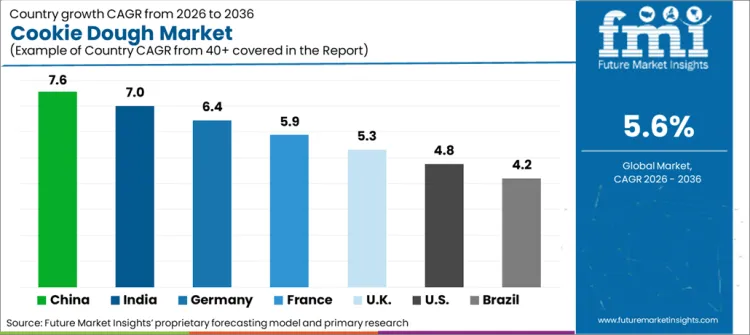
USA
The USA industry is developing exponentially based on its convenience, versatility, and nostalgic appeal. The product is being valued by the consumer as an instant dessert item that may be eaten raw, baked, or used as an ingredient. Health trends have propelled the availability of vegan, gluten-free, organic, and low-sugar versions, extending its popularity even further.
Growth in the foodservice segment, such as restaurants and bakeries, has also stimulated demand for the product as an anytime dessert ingredient. Availability of premium and artisanal forms and the emergence of e-commerce websites have also extended this dough's availability, further fueling popularity and industry growth.
Growth Factors in the USA
| Key Factors | Implications |
|---|---|
| High Demand for Ready-to-Eat Snacks | Customers love convenience, so promoting the sale of cookie dough to eat. |
| Strong E-Commerce & DTC Growth | Direct-to-consumer companies and internet retailers increase industry reach. |
| Health-Conscious Trends | Expansion in organic, vegan, and gluten-free products. |
| Innovation in Flavors & Ingredients | Firms launch new flavors and protein types. |
| Large Retail & Supermarket Presence | Convenient on-shelf availability at retail stores such as Walmart, Target, and Costco. |
UK
The UK industry is growing with the rising demand among consumers for indulgent, easy-to-consume desserts. The dessert cafe and foodservice unit trend with cookie dough desserts has also grown in popularity. Its growth has also been driven by expanding e-commerce and high-end products, leading to its consistent industry growth in the UK.
Growth Factors in the UK
| Key Factors | Implications |
|---|---|
| Rise in At-Home Baking Culture | Increased demand for refrigerated and frozen products. |
| Growing Preference for Clean-Label Products | Consumers seek organic, preservative-free, and natural ingredients. |
| Premium & Artisanal Offerings | Growth in gourmet, hand-made brands. |
| Expanding Online Grocery Market | Convenience results in higher online buying of the product. |
| Increasing Vegan & Dairy-Free Demand | More plant-based and allergen-free options. |
Germany
The industry in Germany is growing due to increasing demand for convenience desserts and growing international food trends. German consumers are adopting this dough as a treat that can be consumed raw, baked, or used in desserts. The industry is also being driven by health-oriented innovations, including vegan, organic, and gluten-free foods, which find traction with Germany's healthy and green consumers.
Influence of American cuisine, coupled with a growing inclination towards indulgent and novel desserts, has also contributed to it becoming more popular. Development in the e-commerce sector and dessert cafes also contributes to the surging demand for the product in Germany.
Growth Factors in Germany
| Key Factors | Implications |
|---|---|
| Strong Organic & Natural Ingredient Preference | Consumers prioritize high-quality, non-GMO, and organic products. |
| Growth of Vegan & Gluten-Free Market | Rising demand for health-conscious and allergy-friendly options. |
| Expansion of Specialty & Artisan Bakeries | Local bakeries and premium brands drive market growth. |
| Strict Food Regulations | Companies must comply with high food safety and ingredient standards. |
| Increasing Popularity of Eco-Friendly Packaging | Sustainability influences product packaging decisions. |
India
Indian economy is expanding at a fast rate because of changing consumer needs and increasing popularity of Western food trends. Urbanization, higher disposable incomes, and sugary craving for ease are fueling its demand. Younger consumers in specifically are drawn to the product because of its heaviness and versatility, it can be eaten raw, baked, or incorporated into new recipes.
With the growing consumption culture being low-sugar, vegan, gluten-free, and health-oriented, new products have emerged targeting Indian consumers. The growth of online industries and dessert cafe culture has facilitated greater penetration and demand for the product in India
Growth Factors in India
| Key Factors | Implications |
|---|---|
| Growing Urbanization & Western Influence | Rising exposure to Western desserts increases demand. |
| Increasing Disposable Income | Consumers willing to spend on premium and imported products. |
| Growth of QSRs & Cafés | Chains like Starbucks and McDonald’s drive industry expansion. |
| Digital Food Delivery Boom | Online platforms like Swiggy & Zomato make the product more accessible. |
| Demand for Eggless & Fusion Flavors | Local preferences shape new product innovations. |
China
The industry in China is expanding due to the expanding influence of Western food culture and rising demand for rich, convenient desserts among urban consumers. Health-conscious newer product lines in plant-based and lower-sugar versions also appeal to China's health-conscious growing population. Sudden expansion of online platforms and dessert shops also drive its demand and availability.
Growth Factors in the China
| Key Factors | Implications |
|---|---|
| Expanding Bakery & Café Culture | Western sweets make it popular in city centers. |
| Strong E-Commerce & Social Commerce | Sites like Alibaba & JD.com dominate online revenues. |
| Preference for Premium & Imported Products | They prefer international and good quality brands. |
| Regulatory & Taste Adaptation Challenges | Companies need to localize taste and follow regulation. |
| Increasing Interest in Low-Calorie & Healthy Options | Growing demand for healthier, sugar-free, and protein-based alternatives. |
Market Concentration
The industry is competitive, though moderately concentrated, wherein a few multinationals own extensive distribution systems and brand values. Tier 1 companies rely on advanced manufacturing capacity and advanced packaging, format, and flavor innovation to dominate the space, meeting the evolving consumer need for indulgence and convenience.
These leaders utilize strategic alliances, robust supply chain management, and direct-to-consumer marketing to expand reach and deepen customer loyalty. Their smaller rivals are not able to match the size, resources, and technological capabilities of these leaders, further solidifying their position at the top of the industry.
Competitive Landscape
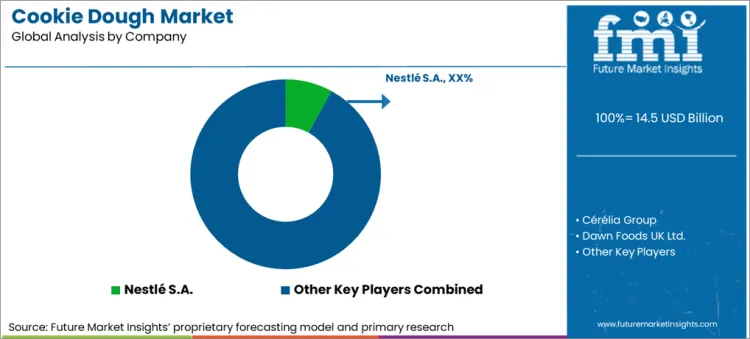
The competition in the industry is characterized by the presence of several industry players with varying growth strategies aimed at the acquisition of industry shares and shifting consumer demands. The major industry players-General Mills Inc., Nestlé S.A., Cérélia Group, Dawn Foods, UK Ltd., and Rhino Foods Inc., have well-established their respective footprints in the cookie dough industry.
These companies conduct product innovation and the diversification of their portfolios in the health-conscious category by offering gluten-free and organic doughs to align with the consumer trend toward healthier indulgences. More marketing opportunities are worked upon to create a platform for enhancing consumer engagement and loyalty.
In order to stand out in the highly competitive environment, new brands such as Crumbl Cookies have their unique mechanisms for setting themselves apart. Founded in 2017, Crumbl has been on a mission to sell cool and interesting cookie flavors and in so doing has grown to over 1000 outlets across the nation in a very short time, about five years, creating novel experiences for the consumer. Heavy reliance on social media platforms especially TikTok, has played a phenomenal role in maximizing visibility and consumer engagement, thus ensuring quick growth.
Likewise, a bunch of companies including Sweet Loren's, have targeted health-conscious consumers by offering all-natural options for clean label products. These strategies demonstrate the fast-paced, flexible approach that firms are adopting to prevail in the ever-changing industry.
Recent Developments
- In May 2025, Pillsbury (General Mills) introduced BIG COOKIES refrigerated dough in three gourmet flavours: S'mores, Chocolate Chunk Salted Caramel, and Double Chocolate Cherry, targeting the premiumisation trend with portions three times larger than classic cookies.
- In February 2026, Nestle UK integrated cookie dough into the KitKat brand for the first time, launching a Cookie Dough KitKat variant that bridges confectionery and baked goods categories.
- In October 2025, Kellanova reintroduced Pop-Tarts Frosted Chocolate Chip Cookie Dough to retail shelves after a three-year hiatus, responding to sustained consumer demand for the flavour.
Key Company Insights
Nestlé S.A.
Deploys artificial intelligence for swift product development, resulting in a remarkable five-fold reduction in the time taken to enter the market.
Mondelez International
Uses the power of AI to facilitate the innovation of snack recipes which expedites product launches while improving overall responsiveness to the markets.
Crumbl Cookies
Focuses on fast development of franchise locations and massive social media presence, resulting in over 1,000 locations and massive publicity for the brand.
Sweet Loren's
It forms part of an ever-increasing selection of all-natural, plant-based cookie dough options for health-conscious consumers while extending its reach to over 25,000 supermarkets.
Arnott's
Extending its investment in gluten-free products to attract health-conscious consumers and gain greater market share.
Key Players
- General Mills Inc.
- Nestle S.A.
- Cérélia Group
- Dawn Foods UK Ltd.
- Dough-to-Go Inc.
- Rhino Foods Inc.
- Neighbors LLC
- Gregory's Food's Inc.
- & Co. Do-Biz Foods LLC
- Mo's Ltd.
- Foxtail Foods
- Michael's Bakery Products LLC
- George Weston Limited
- Wewalka
- Sara Lee Bakery Group
Market Definition
The cookie dough market represents revenue generated from the manufacture and sale of commercially prepared cookie dough products in refrigerated, frozen, and shelf-stable formats. The market measures the value of ready-to-bake dough, ready-to-eat (safe-to-consume raw) dough, dough-based ice cream inclusions, and cookie dough baking mixes sold through retail, e-commerce, and food service channels.
Inclusions cover refrigerated dough logs and tubs, break-and-bake pre-portioned dough, frozen cookie dough pucks, edible cookie dough snack cups and bites, dough-based confectionery inclusions, and premium baking mixes. It includes variants such as chocolate chip, sugar cookie, peanut butter, oatmeal raisin, and seasonal limited-edition flavours. Gluten-free, vegan, and allergen-free cookie dough products are also included.
Exclusions include flour, butter, sugar, and other raw ingredients sold separately for scratch baking. Finished baked cookies, biscuit products, and cookie bars sold as ready-to-eat confectionery are outside the scope. Industrial dough supplied in bulk to commercial bakeries for in-store baking is excluded unless sold under a branded retail format.
Scope of Report
| Items | Values |
|---|---|
| Quantitative Units (2026) | USD 14.5 Billion |
| Product Type | Refrigerated Dough, Frozen Dough, Edible/Ready-to-Eat Dough, Baking Mixes |
| Flavour Type | Chocolate Chip, Sugar, Peanut Butter, Double Chocolate, Seasonal/Limited Edition |
| Retail Channel | Supermarket/Hypermarket, Convenience Store, E-commerce, Specialty/Artisanal Retail, Food Service |
| Regions Covered | North America, Europe, Asia Pacific, Latin America, Middle East and Africa |
| Countries Covered | USA, UK, Germany, Canada, Australia, India, and 40+ countries |
| Key Companies Profiled | General Mills (Pillsbury), Nestle (Toll House), Kellanova, Legacy Bakehouse, Doughlicious, My Better Batch, Tiff's Treats |
Segmentation
The industry has been studied based on various segments, including nature, ingredients, flavor, end use, sales channel, and region.
By Nature:
In terms of nature, the industry is bifurcated into conventional and organic.
By Ingredients:
By ingredients, the industry is divided into wheat-based, bean & legume, grain-based, root flours, nut-based, multi-grain, and others.
By Flavor:
By flavor, the industry is divided into chocolate chip, double chocolate, snickerdoodle, peanut butter, oatmeal raisin, ginger snap, lemon zest, mint chocolate, and others.
By End Use:
By end use, the market is divided into food, bakery, confectionery, dairy, food service, and household/retail.
By Sales Channel:
By sales channel, the market is divided into direct/B2B, indirect/B2C, modern grocery retailers, hypermarkets/supermarkets, discount stores, specialty retail stores, wholesale club stores, traditional grocery, and online retailers.
By Region:
Regionally, the industry is divided into North America, Europe, Asia Pacific, Latin America, and the Middle East & Africa.
Bibliography
- United States Department of Agriculture, Economic Research Service. (2024, November). Food Expenditure Series. USDA ERS.
- United States Food and Drug Administration. (2025, July). Revocation of 52 Standards of Identity for Food Products. FDA Federal Register.
- General Mills, Inc. (2025, May). Pillsbury launches BIG COOKIES refrigerated dough. General Mills Newsroom.
- Nestle UK and Ireland. (2026, February). Have a Break with cookie dough: Cookie Dough joins the KitKat family. Nestle UK Press Releases.
Frequently Asked Questions
What is the current global market size for Cookie Dough?
The global market is valued at USD 14.5 Billion in 2026, driven by the dual consumption occasion of baking ingredient and ready-to-eat snack and the premiumisation of refrigerated dough formats.
What is the projected Compound Annual Growth Rate (CAGR) for the market over the next 10 years?
The market is projected to grow at a CAGR of 5.6% from 2026 to 2036.
Which regions are experiencing the fastest expansion?
North America leads by absolute value, while Europe and Asia Pacific are the fastest-growing regions driven by the introduction of cookie dough as a snacking format and cross-category brand extensions from established confectionery brands.
What are the primary market drivers?
Portion premiumisation (oversized, bakery-style formats), cross-category brand extensions (KitKat, Pop-Tarts), and the FDA's deregulation of food Standards of Identity enabling ingredient innovation are the primary growth catalysts.
Who are the leading suppliers in the industry?
General Mills (Pillsbury), Nestle (Toll House), Kellanova, Legacy Bakehouse, and Doughlicious are key players, differentiating through flavour innovation, retail distribution scale, and emerging direct-to-consumer channels.
Preview the report firsthand - request a free sample
Get SampleGet the brochure for pricing and purchase details.
Get PDFTable of Content
- Executive Summary
- Global Market Outlook
- Demand-side Trends
- Supply-side Trends
- Technology Roadmap Analysis
- Analysis and Recommendations
- Market Overview
- Market Coverage / Taxonomy
- Market Definition / Scope / Limitations
- Research Methodology
- Chapter Orientation
- Analytical Lens and Working Hypotheses
- Market Structure, Signals, and Trend Drivers
- Benchmarking and Cross-market Comparability
- Market Sizing, Forecasting, and Opportunity Mapping
- Research Design and Evidence Framework
- Desk Research Programme (Secondary Evidence)
- Company Annual and Sustainability Reports
- Peer-reviewed Journals and Academic Literature
- Corporate Websites, Product Literature, and Technical Notes
- Earnings Decks and Investor Briefings
- Statutory Filings and Regulatory Disclosures
- Technical White Papers and Standards Notes
- Trade Journals, Industry Magazines, and Analyst Briefs
- Conference Proceedings, Webinars, and Seminar Materials
- Government Statistics Portals and Public Data Releases
- Press Releases and Reputable Media Coverage
- Specialist Newsletters and Curated Briefings
- Sector Databases and Reference Repositories
- FMI Internal Proprietary Databases and Historical Market Datasets
- Subscription Datasets and Paid Sources
- Social Channels, Communities, and Digital Listening Inputs
- Additional Desk Sources
- Expert Input and Fieldwork (Primary Evidence)
- Primary Modes
- Qualitative Interviews and Expert Elicitation
- Quantitative Surveys and Structured Data Capture
- Blended Approach
- Why Primary Evidence is Used
- Field Techniques
- Interviews
- Surveys
- Focus Groups
- Observational and In-context Research
- Social and Community Interactions
- Stakeholder Universe Engaged
- C-suite Leaders
- Board Members
- Presidents and Vice Presidents
- R&D and Innovation Heads
- Technical Specialists
- Domain Subject-matter Experts
- Scientists
- Physicians and Other Healthcare Professionals
- Governance, Ethics, and Data Stewardship
- Research Ethics
- Data Integrity and Handling
- Primary Modes
- Tooling, Models, and Reference Databases
- Desk Research Programme (Secondary Evidence)
- Data Engineering and Model Build
- Data Acquisition and Ingestion
- Cleaning, Normalisation, and Verification
- Synthesis, Triangulation, and Analysis
- Quality Assurance and Audit Trail
- Market Background
- Market Dynamics
- Drivers
- Restraints
- Opportunity
- Trends
- Scenario Forecast
- Demand in Optimistic Scenario
- Demand in Likely Scenario
- Demand in Conservative Scenario
- Opportunity Map Analysis
- Product Life Cycle Analysis
- Supply Chain Analysis
- Investment Feasibility Matrix
- Value Chain Analysis
- PESTLE and Porter’s Analysis
- Regulatory Landscape
- Regional Parent Market Outlook
- Production and Consumption Statistics
- Import and Export Statistics
- Market Dynamics
- Global Market Analysis 2021 to 2025 and Forecast, 2026 to 2036
- Historical Market Size Value (USD Million) Analysis, 2021 to 2025
- Current and Future Market Size Value (USD Million) Projections, 2026 to 2036
- Y-o-Y Growth Trend Analysis
- Absolute $ Opportunity Analysis
- Global Market Pricing Analysis 2021 to 2025 and Forecast 2026 to 2036
- Global Market Analysis 2021 to 2025 and Forecast 2026 to 2036, By Nature
- Introduction / Key Findings
- Historical Market Size Value (USD Million) Analysis By Nature , 2021 to 2025
- Current and Future Market Size Value (USD Million) Analysis and Forecast By Nature , 2026 to 2036
- Organic
- Conventional
- Organic
- Y-o-Y Growth Trend Analysis By Nature , 2021 to 2025
- Absolute $ Opportunity Analysis By Nature , 2026 to 2036
- Global Market Analysis 2021 to 2025 and Forecast 2026 to 2036, By Ingredients
- Introduction / Key Findings
- Historical Market Size Value (USD Million) Analysis By Ingredients, 2021 to 2025
- Current and Future Market Size Value (USD Million) Analysis and Forecast By Ingredients, 2026 to 2036
- Wheat-Based
- Bean & Legume
- Grain-Based
- Root Flours
- Wheat-Based
- Y-o-Y Growth Trend Analysis By Ingredients, 2021 to 2025
- Absolute $ Opportunity Analysis By Ingredients, 2026 to 2036
- Global Market Analysis 2021 to 2025 and Forecast 2026 to 2036, By Region
- Introduction
- Historical Market Size Value (USD Million) Analysis By Region, 2021 to 2025
- Current Market Size Value (USD Million) Analysis and Forecast By Region, 2026 to 2036
- North America
- Latin America
- Western Europe
- Eastern Europe
- East Asia
- South Asia and Pacific
- Middle East & Africa
- Market Attractiveness Analysis By Region
- North America Market Analysis 2021 to 2025 and Forecast 2026 to 2036, By Country
- Historical Market Size Value (USD Million) Trend Analysis By Market Taxonomy, 2021 to 2025
- Market Size Value (USD Million) Forecast By Market Taxonomy, 2026 to 2036
- By Country
- USA
- Canada
- Mexico
- By Nature
- By Ingredients
- By Country
- Market Attractiveness Analysis
- By Country
- By Nature
- By Ingredients
- Key Takeaways
- Latin America Market Analysis 2021 to 2025 and Forecast 2026 to 2036, By Country
- Historical Market Size Value (USD Million) Trend Analysis By Market Taxonomy, 2021 to 2025
- Market Size Value (USD Million) Forecast By Market Taxonomy, 2026 to 2036
- By Country
- Brazil
- Chile
- Rest of Latin America
- By Nature
- By Ingredients
- By Country
- Market Attractiveness Analysis
- By Country
- By Nature
- By Ingredients
- Key Takeaways
- Western Europe Market Analysis 2021 to 2025 and Forecast 2026 to 2036, By Country
- Historical Market Size Value (USD Million) Trend Analysis By Market Taxonomy, 2021 to 2025
- Market Size Value (USD Million) Forecast By Market Taxonomy, 2026 to 2036
- By Country
- Germany
- UK
- Italy
- Spain
- France
- Nordic
- BENELUX
- Rest of Western Europe
- By Nature
- By Ingredients
- By Country
- Market Attractiveness Analysis
- By Country
- By Nature
- By Ingredients
- Key Takeaways
- Eastern Europe Market Analysis 2021 to 2025 and Forecast 2026 to 2036, By Country
- Historical Market Size Value (USD Million) Trend Analysis By Market Taxonomy, 2021 to 2025
- Market Size Value (USD Million) Forecast By Market Taxonomy, 2026 to 2036
- By Country
- Russia
- Poland
- Hungary
- Balkan & Baltic
- Rest of Eastern Europe
- By Nature
- By Ingredients
- By Country
- Market Attractiveness Analysis
- By Country
- By Nature
- By Ingredients
- Key Takeaways
- East Asia Market Analysis 2021 to 2025 and Forecast 2026 to 2036, By Country
- Historical Market Size Value (USD Million) Trend Analysis By Market Taxonomy, 2021 to 2025
- Market Size Value (USD Million) Forecast By Market Taxonomy, 2026 to 2036
- By Country
- China
- Japan
- South Korea
- By Nature
- By Ingredients
- By Country
- Market Attractiveness Analysis
- By Country
- By Nature
- By Ingredients
- Key Takeaways
- South Asia and Pacific Market Analysis 2021 to 2025 and Forecast 2026 to 2036, By Country
- Historical Market Size Value (USD Million) Trend Analysis By Market Taxonomy, 2021 to 2025
- Market Size Value (USD Million) Forecast By Market Taxonomy, 2026 to 2036
- By Country
- India
- ASEAN
- Australia & New Zealand
- Rest of South Asia and Pacific
- By Nature
- By Ingredients
- By Country
- Market Attractiveness Analysis
- By Country
- By Nature
- By Ingredients
- Key Takeaways
- Middle East & Africa Market Analysis 2021 to 2025 and Forecast 2026 to 2036, By Country
- Historical Market Size Value (USD Million) Trend Analysis By Market Taxonomy, 2021 to 2025
- Market Size Value (USD Million) Forecast By Market Taxonomy, 2026 to 2036
- By Country
- Kingdom of Saudi Arabia
- Other GCC Countries
- Turkiye
- South Africa
- Other African Union
- Rest of Middle East & Africa
- By Nature
- By Ingredients
- By Country
- Market Attractiveness Analysis
- By Country
- By Nature
- By Ingredients
- Key Takeaways
- Key Countries Market Analysis
- USA
- Pricing Analysis
- Market Share Analysis, 2025
- By Nature
- By Ingredients
- Canada
- Pricing Analysis
- Market Share Analysis, 2025
- By Nature
- By Ingredients
- Mexico
- Pricing Analysis
- Market Share Analysis, 2025
- By Nature
- By Ingredients
- Brazil
- Pricing Analysis
- Market Share Analysis, 2025
- By Nature
- By Ingredients
- Chile
- Pricing Analysis
- Market Share Analysis, 2025
- By Nature
- By Ingredients
- Germany
- Pricing Analysis
- Market Share Analysis, 2025
- By Nature
- By Ingredients
- UK
- Pricing Analysis
- Market Share Analysis, 2025
- By Nature
- By Ingredients
- Italy
- Pricing Analysis
- Market Share Analysis, 2025
- By Nature
- By Ingredients
- Spain
- Pricing Analysis
- Market Share Analysis, 2025
- By Nature
- By Ingredients
- France
- Pricing Analysis
- Market Share Analysis, 2025
- By Nature
- By Ingredients
- India
- Pricing Analysis
- Market Share Analysis, 2025
- By Nature
- By Ingredients
- ASEAN
- Pricing Analysis
- Market Share Analysis, 2025
- By Nature
- By Ingredients
- Australia & New Zealand
- Pricing Analysis
- Market Share Analysis, 2025
- By Nature
- By Ingredients
- China
- Pricing Analysis
- Market Share Analysis, 2025
- By Nature
- By Ingredients
- Japan
- Pricing Analysis
- Market Share Analysis, 2025
- By Nature
- By Ingredients
- South Korea
- Pricing Analysis
- Market Share Analysis, 2025
- By Nature
- By Ingredients
- Russia
- Pricing Analysis
- Market Share Analysis, 2025
- By Nature
- By Ingredients
- Poland
- Pricing Analysis
- Market Share Analysis, 2025
- By Nature
- By Ingredients
- Hungary
- Pricing Analysis
- Market Share Analysis, 2025
- By Nature
- By Ingredients
- Kingdom of Saudi Arabia
- Pricing Analysis
- Market Share Analysis, 2025
- By Nature
- By Ingredients
- Turkiye
- Pricing Analysis
- Market Share Analysis, 2025
- By Nature
- By Ingredients
- South Africa
- Pricing Analysis
- Market Share Analysis, 2025
- By Nature
- By Ingredients
- USA
- Market Structure Analysis
- Competition Dashboard
- Competition Benchmarking
- Market Share Analysis of Top Players
- By Regional
- By Nature
- By Ingredients
- Competition Analysis
- Competition Deep Dive
- Nestlé S.A.
- Overview
- Product Portfolio
- Profitability by Market Segments (Product/Age /Sales Channel/Region)
- Sales Footprint
- Strategy Overview
- Marketing Strategy
- Product Strategy
- Channel Strategy
- Cérélia Group
- Dawn Foods UK Ltd.
- Dough-to-Go Inc.
- Nestlé S.A.
- Competition Deep Dive
- Assumptions & Acronyms Used


