


Ecotourism Market
The Ecotourism Market is segmented by Product, Accommodation, Activity, Traveler, Booking Channel, and Region. Forecast for 2026 to 2036.
Historical Data Covered: 2016 to 2024 | Base Year: 2025 | Estimated Year: 2026 | Forecast Period: 2027 to 2036
Ecotourism Market Size, Market Forecast and Outlook By FMI
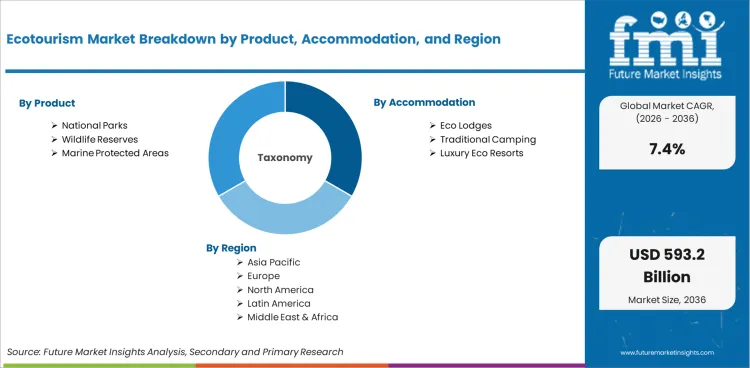
The ecotourism market was valued at USD 270.5 billion in 2025. Industry is forecast to reach USD 290.5 billion in 2026 and expand at a CAGR of 7.4% between 2026 and 2036 to reach USD 593.2 billion by 2036. International tourists are expected to dominate with a 52.0% traveler share, and online travel platforms are projected to lead the booking channel segment with a 46.0% share.
Summary of the Ecotourism Market
- Demand and Growth Drivers
- Protected-area travel strengthens ecotourism spending as park visits require guided access and planned local services.
- Wildlife trips reinforce paid nature travel as guides improve safety and interpretation for travelers.
- Eco lodge demand rises as travelers compare lodging claims against energy use and local employment records.
- Product and Segment View
- National parks are expected to lead the product segment with 34.0% share in 2026 as travelers prefer recognized protected destinations.
- Eco lodges are projected to account for 41.0% of accommodation revenue in 2026 through preference for lower-impact stays.
- Wildlife viewing is expected to capture 38.0% of activity bookings in 2026 as guided sightings add value to nature trips.
- International tourists are anticipated to hold 52.0% of traveler spending in 2026 through higher purchase value for packaged experiences.
- Online travel platforms are projected to represent 46.0% of booking channel sales in 2026 as travelers compare reviews before purchase.
- Geography and Competitive Outlook
- China is expected to record a CAGR of 8.6% by 2036, backed by large domestic travel volumes.
- India is projected to expand at 7.8% CAGR through 2036 as nature travel gains stronger state-level promotion.
- France and Germany reflect mature destination bases with steady expansion across parks and rural lodging.
- Companies combining conservation travel depth with digital booking reach are building stronger booking positions through 2036.
- Analyst Opinion
- Ronak Shah, Principal Consultant at FMI, says, “Ecotourism now works as evidence for travelers seeking nature access with local benefit. Protected-area access supports service plans while trained guide capacity and site carrying limits shape longer travel contracts under park fee pressure.”
- Ecotourism Market Value Analysis
- The ecotourism market is shifting from simple nature travel toward planned experiences with protected-area access and lodge verification.
- Traveler interest in guided wildlife trips and destination-level conservation records is raising use across ecotourism services.
- The market is gaining from wider use of sustainable tourism across nature-based travel planning.
- Credible trip records carry more weight as travelers compare access details and conservation claims before booking. Operators with documented services can defend trust and pricing.
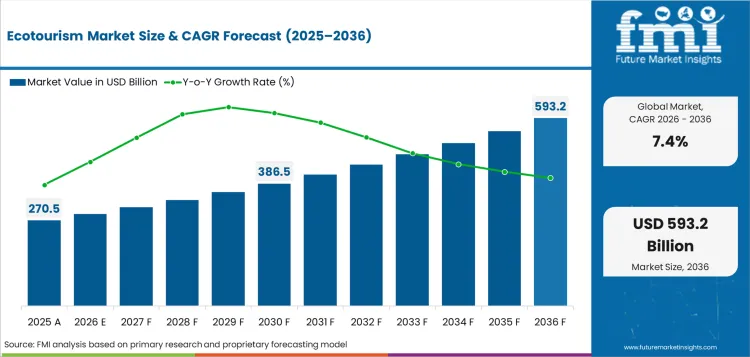
Nature-based destinations face a clear pressure as more visitors can create income but also damage the places that attract them. GSTC’s December 2025 standards guidance shows why ecotourism is moving from loose green language to measurable criteria used for policy, evaluation and certification. That helps operators prove that nature claims are controlled. The April 2024 Nature Positive Travel & Tourism in Action report adds operational direction because it focuses on reducing impacts and protecting nature.
Destination managers therefore need practical systems for waste, biodiversity and visitor conduct. UNCTAD’s 2024 investment guidance connects tourism to quality employment and local communities. That matters because ecotourism works best when residents see direct economic value. UN Tourism’s 2026 data also shows pressure on sites because international arrivals reached about 1.52 billion in 2025. Operators with certification, visitor management and local sourcing are better placed to grow without eroding destination value.
Ecotourism Market Definition
The ecotourism market includes paid travel experiences centered on natural areas with conservation value and local community benefit. Services cover guided trips, eco lodges, national park travel, and wildlife viewing programs. Scope includes national parks, wildlife reserves, marine protected areas, and conservation learning trips. Mass resort tourism and unmanaged outdoor recreation are outside the scope.
Ecotourism Market Inclusions
Market scope covers commercially traded ecotourism services by product type, including national parks, wildlife reserves, marine protected areas, forest reserves, and other nature-based destinations. Accommodation includes eco lodges, traditional camping, and luxury eco resorts. Activities include wildlife viewing, nature photography, cultural immersion, adventure activities, and conservation research. Traveler type includes international tourists, domestic tourists, and student researchers. Booking channel includes online travel platforms, direct booking, and travel agencies. Revenue scope covers 2026 to 2036. Stakeholders include ecotourism operators, eco lodge owners, travel agencies, online travel platforms, conservation organizations, park authorities, destination managers, local communities, hospitality providers, tour guides, transport partners, investors, and regulatory bodies.
Ecotourism Market Exclusions
Scope does not include cruise-only holidays, conventional hotel stays, mass beach travel, theme parks, business travel, or unmanaged nature recreation.
Ecotourism Market Research Methodology
- Primary Research: FMI analysts interviewed tour operators, eco lodge managers, park travel planners, destination managers, and online travel sellers in priority markets.
- Desk Research: Analysis combined public tourism statistics, protected-area data, company trip portfolios, and destination-level travel programs.
- Market sizing and forecasting: Forecasting added trip value across product groups, accommodation types, activity demand, traveler mix, and booking channels.
- Data validation: Forecasts were cross-checked against international arrivals, park visitation, domestic trip activity, and company service coverage.
Why is the Ecotourism Market Growing?
- Travelers are adding guided ecotourism earlier in trip planning to reduce access risk around protected areas.
- Tour operators are packaging wildlife viewing with trained guides as travelers seek safer nature interpretation.
- Lodging partners matter more as eco claims require records on energy use and local employment.
International trip recovery is predicted to expand the customer base for nature-led travel programs. UN Tourism recorded 1.52 billion international tourist arrivals in 2025, nearly 60 million above 2024. Large cross-border travel flows helps ecotourism operators sell longer park packages and guided wildlife itineraries. Operators with reliable access planning can convert international interest into higher-value bookings.
Park visitation creates steady activity for guided walks and nature interpretation. Strong visitor flow makes crowd control and entry timing important for ecotourism operators. Firms with trained field staff and disciplined booking systems can protect customer experience during peak seasons.
Market Segmentation Analysis
- National parks are estimated to account for 34.0% of product demand in 2026 with strong use across protected-area itineraries.
- Eco lodges are expected to account for 41.0% of accommodation demand in 2026 with higher use across nature-based stays.
- Wildlife viewing is expected to account for 38.0% of activity demand in 2026 with direct use across guided trips.
- International tourists are estimated to account for 52.0% of traveler demand in 2026 with higher package value.
- Online travel platforms are expected to account for 46.0% of booking channel demand in 2026 because travelers compare certified trips.
The ecotourism market is divided into five segment groups based on product, accommodation, activity, traveler, and booking channel. Product includes national parks, wildlife reserves, marine protected areas, forest reserves, and others. Accommodation includes eco lodges, traditional camping, and luxury eco resorts. Activity includes wildlife viewing, nature photography, cultural immersion, adventure activities, and conservation research. Traveler includes international tourists, domestic tourists, and student researchers. Booking channel includes online travel platforms, direct booking, and travel agencies.
Insights into the National Parks Product Segment
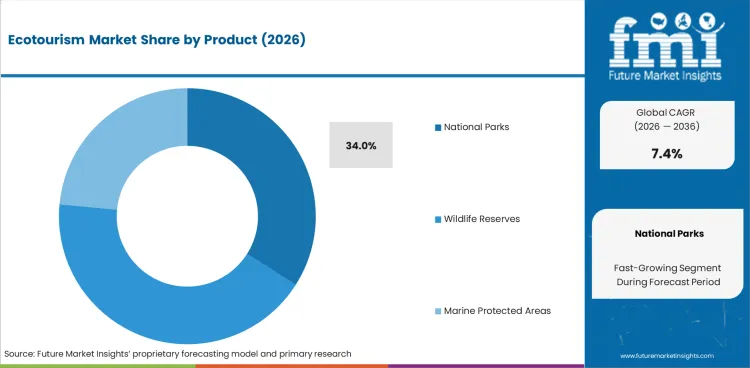
- In 2026, national parks are expected to account for 34.0% of the product segment as travelers prefer recognized protected destinations.
- Official access systems and visitor rules support packaged tours across national parks. Operators can manage permits and visitor timing more effectively.
Insights into the Eco Lodges Accommodation Segment
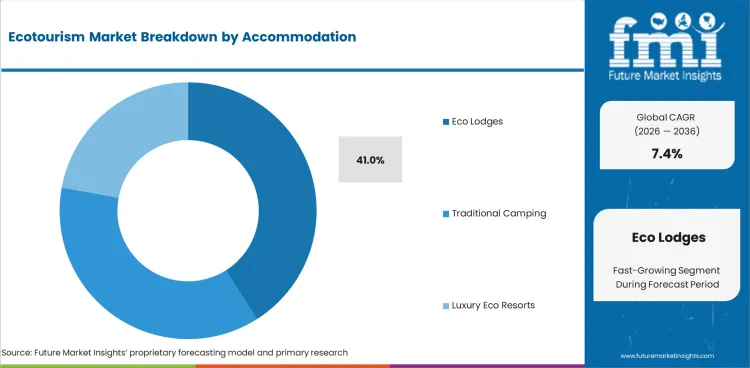
- Eco lodges are projected to account for 41.0% of the accommodation segment in 2026 as travelers seek lower-impact stays near nature destinations.
- Traditional camping and luxury eco resorts serve selected traveler groups. Their value is clearer in budget trips and premium conservation stays.
Insights into the Wildlife Viewing Activity Segment
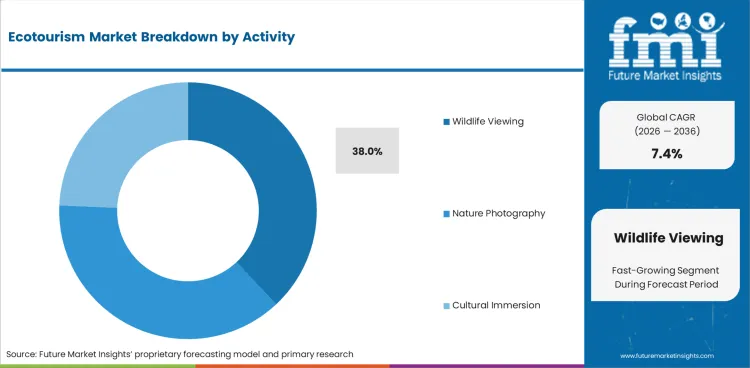
- In 2026, wildlife viewing is expected to account for 38.0% of the activity. Guided sightings carry strong value across nature trips.
- Nature photography and cultural immersion address travelers seeking more detailed destination experience. Guide quality helps operators protect safety and visitor trust.
Insights into the International Tourists Traveler Segment
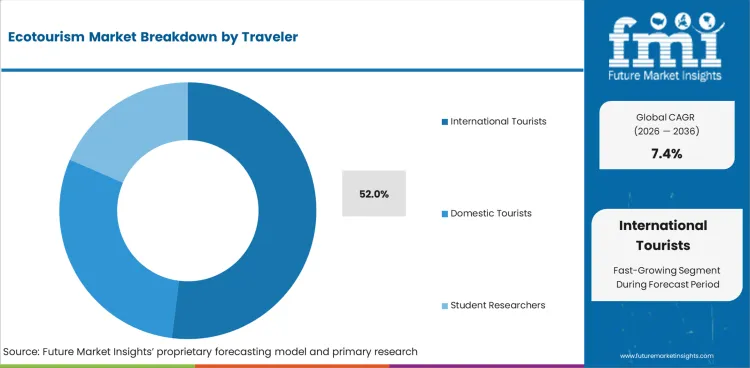
- International tourists are projected to account for 52.0% of the traveler segment in 2026. Long-haul visitors usually spend more on packaged nature trips.
- Domestic tourists support shorter seasonal visits near protected areas. Student researchers add demand for conservation programs and structured field learning.
Insights into the Online Travel Platforms Booking Channel Segment
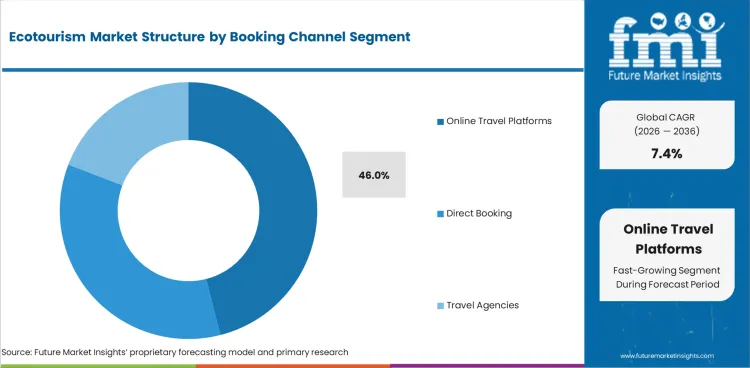
- In 2026, online travel platforms are anticipated to contribute 46.0% of the booking channel segment. Digital comparison helps travelers review certified nature trips.
- Direct booking favors specialist lodges and repeat travelers. Travel agencies serve complex itineraries requiring permits and local coordination.
Ecotourism Market Drivers, Restraints, and Opportunities
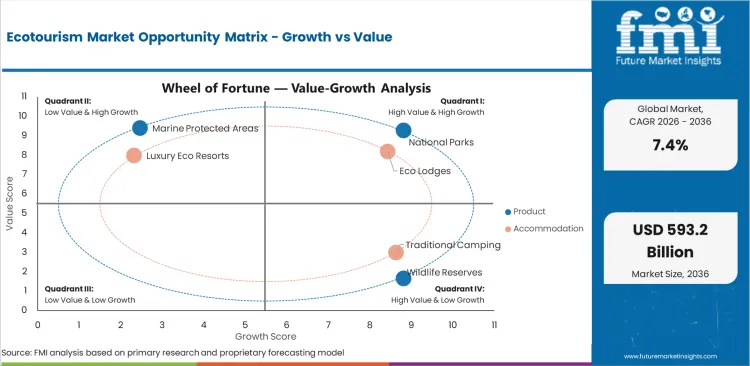
- Protected-area access planning creates structured demand for tour operators with permit knowledge and visitor timing discipline.
- Remote lodging costs increase pricing pressure for eco lodge operators using off-grid systems and trained local staff.
- Conservation travel creates opportunity for companies combining community income with repeatable wildlife viewing standards.
Ecotourism services keep expanding because travelers need credible nature experiences and guided access near protected areas. Site carrying limits and higher operating costs can slow adoption. Expansion continues through eco lodges and wildlife viewing packages.
International Nature Travel Is Repricing Upward
As per UN Tourism’s January 2025 report, international arrivals reached 1.4 billion in 2024, up 11% from 2023. Tourism receipts reached USD 1.6 trillion, up 3% from 2023 in real terms. For the ecotourism market this points to firmer pricing for protected area itineraries and certified guides because capacity cannot expand quickly. The pricing effect is selective instead of uniform because premium operators can defend higher rates when access and conservation quality are central to the offer. Generic green packages face stronger value scrutiny.
Gateway Demand Is Raising Local Trip Costs
In September 2025, the National Park Service reported 331.9 million recreation visits in 2024, with visitors spending USD 29.0 billion in local gateway regions, up 10% from 2023. Lodging captured the clearest pricing signal, with USD 11.1 billion in direct output, followed by restaurants at USD 5.7 billion. For ecotourism providers this means destination pricing is shaped outside the park gate through accommodation and food services that influence visitor expectations. Buyers should expect higher bundled package prices in gateway communities because limited lodging and seasonal staffing make last-minute nature travel more expensive.
Analysis of Ecotourism Market By Key Countries
.webp "Top Country Growth Comparison Ecotourism Market Cagr (2026 2036)")
| Country | CAGR |
|---|---|
| China | 8.6% |
| India | 7.8% |
| France | 6.9% |
| Germany | 6.4% |
| UK | 5.7% |
| USA | 5.2% |
| Japan | 4.8% |
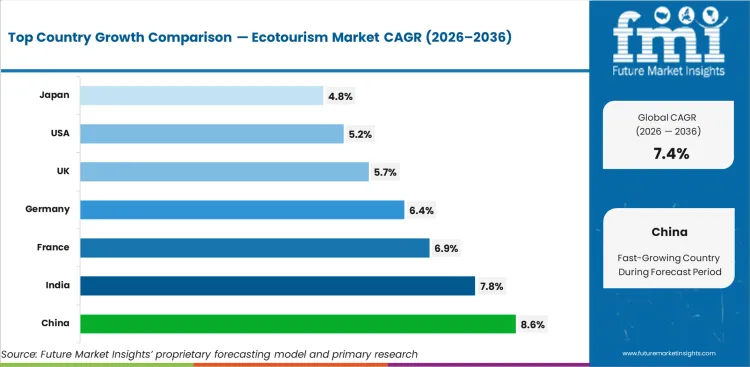
Source: Future Market Insights, 2026.
Ecotourism Market CAGR Analysis By Country
- China is projected to record 8.6% CAGR as domestic travel scale pushes more visitors toward protected-area itineraries.
- India’s 7.8% CAGR is backed by state tourism programs and stronger wildlife circuit development across national parks.
- France is forecast at 6.9% CAGR with inbound travelers adding depth to rural and nature-based destinations.
- Germany is expected to advance at 6.4% CAGR as domestic travel stays steady and eco-certified accommodation gains acceptance.
- Countryside tourism and outbound nature packages place the UK at 5.7% CAGR as demand broadens across travel formats.
- National park traffic positions the USA at 5.2% CAGR as domestic outdoor travel spending sustains paid nature experiences.
- Japan is projected at 4.8% CAGR as visitor dispersal programs draw inbound travelers toward nature destinations.
Demand for ecotourism is forecast to rise at 7.4% CAGR from 2026 to 2036. Country-level analysis covers major markets contributing to this forecast, with the markets listed below.
Demand Outlook for Ecotourism Market in China
China’s ecotourism industry is projected to record a CAGR of 8.6% through 2036. Domestic travel scale makes up a strong base for forest parks and heritage villages that support steady expansion in protected area visits across the country. China recorded over 6.5 billion domestic trips in 2025, keeping nature trips relevant for short breaks and regional travel. Local operators can gain from itinerary planning around crowd control and verified rural stays.
- Large domestic trip volumes reinforce booking depth for national parks and forest reserves.
- Rural tourism programs favor stronger use cases for eco lodges and guided local experiences.
- Digital platforms can improve trip selection as travelers compare access rules and lodging claims.
Sales Analysis of Ecotourism Market in India
India’s ecotourism sector is expected to expand at a CAGR of 7.8% during the assessment period. National parks and wildlife reserves create a strong activity base for safari and conservation travel. India recorded 90.2 lakh foreign tourist arrivals during January to December 2025. This inbound base helps operators package wildlife circuits and eco lodge stays for higher-value visitors.
- Tiger reserves and forest destinations enhance repeat use for guided wildlife viewing programs.
- State tourism boards are improving destination promotion around nature and heritage circuits.
- Eco lodges can gain from travelers seeking local stays near protected areas.
Demand Outlook for Ecotourism Market in France
The ecotourism industry in France is forecast to grow at a CAGR of 6.9% by 2036. Rural regions and coastal nature areas create a broad base for low-impact travel. France welcomed 102 million international tourists in 2025 and recorded 743 million overnight stays across commercial and non-commercial accommodation. Visitor scale helps rural destinations capture higher-value nature travel.
- Rural lodging and protected landscapes make a strong ground for eco lodge packages.
- International arrivals help nature destinations attract travelers beyond major city circuits.
- France’s mature tourism base makes certification and visitor management more important.
Opportunity Analysis of Ecotourism Market in Germany
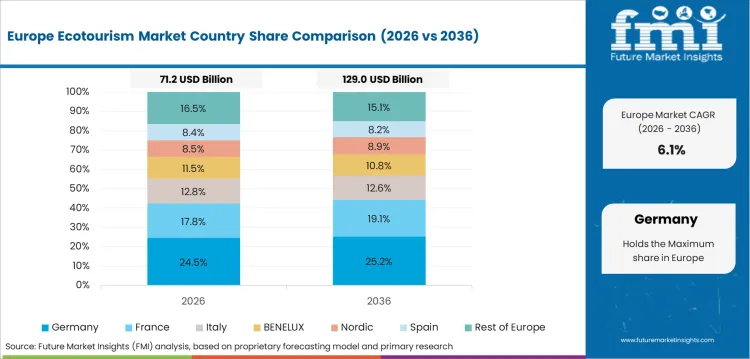
Germany's ecotourism industry is expected to advance at 6.4% CAGR through 2036. Domestic travel habits raise steady demand for forest trips and low-impact accommodation. Germany recorded 497.5 million overnight stays in 2025 according to Federal Statistical Office data cited by DRV. Stable lodging use gives operators room to build nature-focused packages with reliable occupancy.
- Forest reserves and rural accommodation lead to a practical base for weekend ecotourism trips.
- German travelers value certified lodging and nature access with transparent environmental records.
- Operators can use Germany ecotourism positioning across domestic and cross-border itineraries.
Future Outlook for Ecotourism Market in the United Kingdom
The UK ecotourism industry is forecast to post 5.7% CAGR through 2036. Countryside travel and outbound nature holidays keep ecotourism relevant across travel planning. VisitBritain estimated 43.6 million inbound visits in 2025 with visitor spending of £33.4 billion. Travel sellers can build nature itineraries around rural stays and guided outdoor experiences.
- Countryside travel supports demand for low-impact stays and guided outdoor trips.
- Inbound visitor spending makes space for premium nature itineraries in rural destinations.
- UK travel sellers can link UK ecotourism products with nature and heritage travel.
In-depth Analysis of Ecotourism Market in the United States
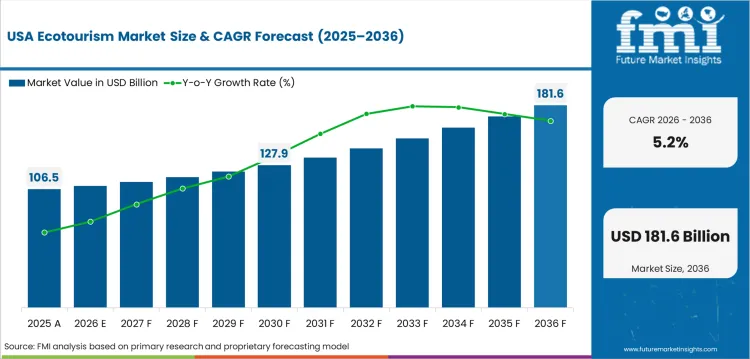
The USA ecotourism industry is forecast to record 5.2% CAGR by 2036. National park visitation raises demand for guided trips and overnight nature travel. The National Park Service recorded more than 323 million recreation visits in 2025, including more than 13 million overnight stays. High visitation makes permit planning and crowd control central to paid ecotourism services.
- National parks boost steady need for guided interpretation and timed access planning.
- Domestic outdoor travel keeps wildlife viewing and eco lodge packages commercially useful.
- Operators connected with adventure tourism can package nature access with activity depth.
Demand Analysis of Ecotourism Market in Japan
Japan’s ecotourism industry is expected to expand at 4.8% CAGR through 2036. Inbound tourism creates pressure to move visitors beyond the busiest city corridors. JNTO estimated 3,618,900 visitor arrivals to Japan in March 2026 alone. Nature destinations can gain from better visitor dispersal and regional itinerary design.
- Mountain areas and national parks favor practical prospects for nature-based regional travel.
- Visitor dispersal programs can help operators build trips outside major city destinations.
- International arrivals strengthen activity demand for guided walking and nature photography.
Competitive Landscape and Strategic Positioning
Ecotourism Market Analysis By Company
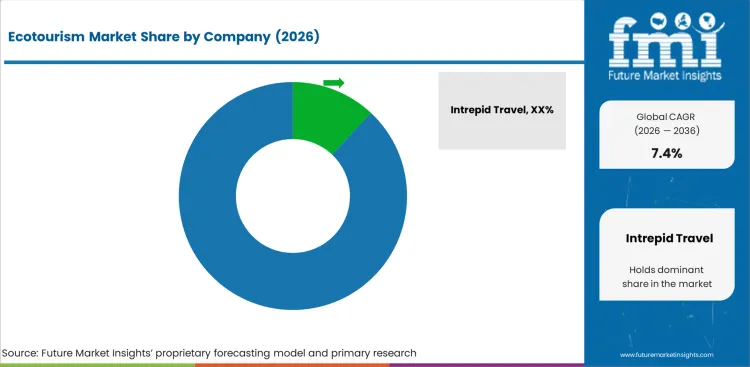
- Intrepid Travel leads through small-group coverage and conservation-focused itinerary design across active nature travel programs.
- G Adventures emphasizes community travel depth as Natural Habitat Adventures builds strength in specialist wildlife access.
- Specialist players focus on lodge-based safari travel and screened local operator networks for travelers seeking credible nature trips.
Competition in ecotourism reflects itinerary depth and verified access to protected destinations globally. Intrepid Travel holds a strong position through small-group trips across active nature travel programs. G Adventures emphasizes community-based travel with accessible group formats for mainstream nature travelers. Natural Habitat Adventures serves travelers seeking wildlife expertise and conservation-focused trip design.
Wilderness Holdings and &Beyond add lodge access and safari depth across African destinations. Responsible Travel uses screened local operators and lower impact trip curation for travelers comparing local credentials. Park access limits and remote operating costs create barriers for smaller operators. Companies with trained guides and credible lodging records are best placed to win repeat travelers and destination partnerships.
Key Companies in the Ecotourism Market
Global companies active in the ecotourism market include:
- Intrepid Travel, G Adventures, and Natural Habitat Adventures have broad itinerary coverage for small-group travel and guided wildlife trips.
- Wilderness Holdings, African Travel Inc., and &Beyond serve travelers through safari lodging depth and high-value nature access.
- Responsible Travel holds a specialist position through screened local operators and lower-impact travel packages.
Competitive Benchmarking: Ecotourism Market
| Company | Conservation Trip Depth | Protected-Area Access | Digital Booking Reach | Geographic Footprint |
|---|---|---|---|---|
| Intrepid Travel | High | Strong | Strong | Global coverage across 100+ countries |
| G Adventures | High | Strong | Strong | Global coverage across 100+ countries |
| Natural Habitat Adventures | High | Strong | Moderate | Africa, Polar regions, Galapagos, Asia, and Americas |
| Wilderness Holdings | High | High | Moderate | Africa-focused safari destinations |
| African Travel Inc. | Medium | Strong | Moderate | Africa-focused luxury safari destinations |
| &Beyond | High | High | Moderate | Africa, Asia, South America, and Antarctica |
| Responsible Travel | Medium | Moderate | Strong | Global destination marketplace across Europe, Asia, Africa, and the Americas |
Source: Future Market Insights, 2026.
Key Developments in Ecotourism Market
- June 2025, Intrepid Travel announced a National Parks Conservation Association partnership with a USD 50,000 donation to protect USA national parks.
- October 2025, Intrepid Travel launched 28 new active trips across six continents for nature-focused travelers.
- December 2025, Wilderness Rwanda opened Magashi Peninsula as a private safari retreat in Akagera National Park.
Key Players in the Ecotourism Market
Major Global Players:
- Intrepid Travel
- G Adventures
- Natural Habitat Adventures
- Wilderness Holdings
- African Travel Inc.
- &Beyond
- Responsible Travel
Specialist Players:
- Audley Travel
- Responsible Travel
- Steppes Travel
Report Scope and Coverage
Ecotourism Market Breakdown By Product, Accommodation, And Region
| Parameter | Details |
|---|---|
| Quantitative Units | USD 290.5 billion to USD 593.2 billion, at a CAGR of 7.4% |
| Market Definition | The ecotourism market encompasses paid nature travel services used to visit protected areas with conservation and local benefit. |
| Regions Covered | North America, Latin America, Europe, East Asia, South Asia and Pacific, Middle East and Africa |
| Countries Covered | USA, UK, Germany, France, China, India, Japan, South Korea, and 30 plus countries |
| Key Companies Profiled | Intrepid Travel, G Adventures, Natural Habitat Adventures, Wilderness Holdings, African Travel Inc., &Beyond, Responsible Travel |
| Forecast Period | 2026 to 2036 |
| Approach | Hybrid bottom-up and top-down methodology starting with trip value and verified tourism use patterns. |
Source: Future Market Insights, 2026.
Ecotourism Market by Segments
Ecotourism Market Segmented by Product:
- National Parks
- Wildlife Reserves
- Marine Protected Areas
- Forest Reserves
- Others
Ecotourism Market Segmented by Accommodation:
- Eco Lodges
- Traditional Camping
- Luxury Eco Resorts
Ecotourism Market Segmented by Activity:
- Wildlife Viewing
- Nature Photography
- Cultural Immersion
- Adventure Activities
- Conservation Research
Ecotourism Market Segmented by Traveler:
- International Tourists
- Domestic Tourists
- Student Researchers
Ecotourism Market Segmented by Booking Channel:
- Online Travel Platforms
- Direct Booking
- Travel Agencies
Ecotourism Market by Region:
- North America
- USA
- Canada
- Mexico
- Latin America
- Brazil
- Chile
- Rest of Latin America
- Europe
- Germany
- UK
- Italy
- Spain
- France
- Rest of Europe
- East Asia
- China
- Japan
- South Korea
- South Asia and Pacific
- India
- ASEAN
- Australia & New Zealand
- Rest of South Asia and Pacific
- Middle East and Africa
- Saudi Arabia
- Other GCC Countries
- South Africa
- Rest of Middle East and Africa
Research Sources and Bibliography
- Flyr, M., Stockmoe, E., Cullinane Thomas, C., Koontz, L., & Huber, C. (2025). 2024 National Park Visitor Spending Effects: Economic Contributions to Local Communities, States, and the Nation (Science Report NPS/SR-2025/353). National Park Service.
- World Tourism Organization. (2025). World Tourism Barometer: January 2025 (excerpt). World Tourism Organization.
- UN Tourism. (2026, January 20). International tourist arrivals up 4% in 2025 reflecting strong travel demand around the world.
- The State Council of the People’s Republic of China. (2026, March 7). China’s domestic travel hits record highs in 2025: official.
- Ministry of Tourism, Government of India. (2026). Annual Tourism Snapshot 2025.
- Ministry of Economy, Finance and Industrial and Digital Sovereignty, France. (2026, February 19). Bilan touristique de l’année 2025.
- Deutscher Reiseverband. (2026, March). The German travel market: Figures and facts 2026.
- VisitBritain. (2026, February 5). 2026 inbound tourism forecast.
- National Park Service. (2026, March 13). Public interest in national parks remains strong as visits top 323 million in 2025.
- Japan National Tourism Organization. (2026, April 15). Number of visitor arrivals to Japan in March 2026.
This Report Answers
- What is the current and future size of the ecotourism market?
- How fast is the ecotourism market expected to expand between 2026 and 2036?
- Which product segment is expected to lead the market by 2026?
- Which accommodation segment is expected to account for the most demand by 2026?
- What factors are driving demand for ecotourism globally?
- How are protected areas influencing adoption of structured ecotourism services?
- Why are international tourists the main demand base for ecotourism services?
- How are online travel platforms creating demand for verified ecotourism packages?
- Which countries are projected to record faster expansion through 2036?
- What is driving market expansion in China and India?
- Who are the key companies active in the ecotourism market?
- How does FMI estimate and validate the market forecast?
Frequently Asked Questions
What is the global demand for the ecotourism market in 2026?
In 2026, the global market for ecotourism is expected to be worth USD 290.5 billion.
How big will the ecotourism market be in 2036?
By 2036, the market for ecotourism is expected to be worth USD 593.2 billion.
How much is demand for the ecotourism market expected to expand between 2026 and 2036?
Between 2026 and 2036, demand for ecotourism is expected to expand at a CAGR of 7.4%.
Which traveler segment is likely to be the leading traveler segment globally by 2026?
International Tourists will make up 52.0% of the traveler segment in 2026.
What is causing demand to rise in China?
China’s ecotourism market is projected to record 8.6% CAGR through 2036, backed by domestic travel scale.
What is causing demand to rise in India?
India’s ecotourism market is projected to expand at 7.8% CAGR through 2036, backed by wildlife circuit development.
What does this report mean by ecotourism market definition?
The ecotourism market includes paid nature travel used to visit protected areas with conservation and local benefit.
How does FMI make the ecotourism market forecast and check it?
Forecasting models use a hybrid bottom-up and top-down approach, starting with trip value and tourism use patterns.
Table of Content
- Executive Summary
- Global Market Outlook
- Demand to side Trends
- Supply to side Trends
- Technology Roadmap Analysis
- Analysis and Recommendations
- Market Overview
- Market Coverage / Taxonomy
- Market Definition / Scope / Limitations
- Research Methodology
- Chapter Orientation
- Analytical Lens and Working Hypotheses
- Market Structure, Signals, and Trend Drivers
- Benchmarking and Cross-market Comparability
- Market Sizing, Forecasting, and Opportunity Mapping
- Research Design and Evidence Framework
- Desk Research Programme (Secondary Evidence)
- Company Annual and Sustainability Reports
- Peer-reviewed Journals and Academic Literature
- Corporate Websites, Product Literature, and Technical Notes
- Earnings Decks and Investor Briefings
- Statutory Filings and Regulatory Disclosures
- Technical White Papers and Standards Notes
- Trade Journals, Industry Magazines, and Analyst Briefs
- Conference Proceedings, Webinars, and Seminar Materials
- Government Statistics Portals and Public Data Releases
- Press Releases and Reputable Media Coverage
- Specialist Newsletters and Curated Briefings
- Sector Databases and Reference Repositories
- FMI Internal Proprietary Databases and Historical Market Datasets
- Subscription Datasets and Paid Sources
- Social Channels, Communities, and Digital Listening Inputs
- Additional Desk Sources
- Expert Input and Fieldwork (Primary Evidence)
- Primary Modes
- Qualitative Interviews and Expert Elicitation
- Quantitative Surveys and Structured Data Capture
- Blended Approach
- Field Techniques
- Interviews
- Surveys
- Focus Groups
- Observational and In-context Research
- Social and Community Interactions
- Stakeholder Universe Engaged
- C-suite Leaders
- Board Members
- Presidents and Vice Presidents
- R&D and Innovation Heads
- Technical Specialists
- Domain Subject-matter Experts
- Scientists
- Physicians and Other Healthcare Professionals
- Governance, Ethics, and Data Stewardship
- Research Ethics
- Data Integrity and Handling
- Primary Modes
- Tooling, Models, and Reference Databases
- Desk Research Programme (Secondary Evidence)
- Data Engineering and Model Build
- Data Acquisition and Ingestion
- Cleaning, Normalisation, and Verification
- Synthesis, Triangulation, and Analysis
- Quality Assurance and Audit Trail
- Market Background
- Market Dynamics
- Drivers
- Restraints
- Opportunity
- Trends
- Scenario Forecast
- Demand in Optimistic Scenario
- Demand in Likely Scenario
- Demand in Conservative Scenario
- Opportunity Map Analysis
- Product Life Cycle Analysis
- Supply Chain Analysis
- Investment Feasibility Matrix
- Value Chain Analysis
- PESTLE and Porter’s Analysis
- Regulatory Landscape
- Regional Parent Market Outlook
- Production and Consumption Statistics
- Import and Export Statistics
- Market Dynamics
- Global Market Analysis 2021 to 2025 and Forecast, 2026 to 2036
- Historical Market Size Value (USD Million) Analysis, 2021 to 2025
- Current and Future Market Size Value (USD Million) Projections, 2026 to 2036
- Y to o to Y Growth Trend Analysis
- Absolute $ Opportunity Analysis
- Global Market Pricing Analysis 2021 to 2025 and Forecast 2026 to 2036
- Global Market Analysis 2021 to 2025 and Forecast 2026 to 2036, By Product
- Introduction / Key Findings
- Historical Market Size Value (USD Million) Analysis By Product , 2021 to 2025
- Current and Future Market Size Value (USD Million) Analysis and Forecast By Product , 2026 to 2036
- Urea Formaldehyde Resins
- Urea Formaldehyde Concentrates
- Urea Formaldehyde Resins
- Y to o to Y Growth Trend Analysis By Product , 2021 to 2025
- Absolute $ Opportunity Analysis By Product , 2026 to 2036
- Global Market Analysis 2021 to 2025 and Forecast 2026 to 2036, By Application
- Introduction / Key Findings
- Historical Market Size Value (USD Million) Analysis By Application, 2021 to 2025
- Current and Future Market Size Value (USD Million) Analysis and Forecast By Application, 2026 to 2036
- Wood Adhesives
- Plywood Manufacturing
- Surface Coatings
- Wood Adhesives
- Y to o to Y Growth Trend Analysis By Application, 2021 to 2025
- Absolute $ Opportunity Analysis By Application, 2026 to 2036
- Global Market Analysis 2021 to 2025 and Forecast 2026 to 2036, By End Use
- Introduction / Key Findings
- Historical Market Size Value (USD Million) Analysis By End Use, 2021 to 2025
- Current and Future Market Size Value (USD Million) Analysis and Forecast By End Use, 2026 to 2036
- Furniture Industry
- Residential Furniture
- Commercial Furniture
- Furniture Industry
- Y to o to Y Growth Trend Analysis By End Use, 2021 to 2025
- Absolute $ Opportunity Analysis By End Use, 2026 to 2036
- Global Market Analysis 2021 to 2025 and Forecast 2026 to 2036, By Distribution Channel
- Introduction / Key Findings
- Historical Market Size Value (USD Million) Analysis By Distribution Channel, 2021 to 2025
- Current and Future Market Size Value (USD Million) Analysis and Forecast By Distribution Channel, 2026 to 2036
- Direct Sales
- Manufacturer To Industry
- Distributors
- Direct Sales
- Y to o to Y Growth Trend Analysis By Distribution Channel, 2021 to 2025
- Absolute $ Opportunity Analysis By Distribution Channel, 2026 to 2036
- Global Market Analysis 2021 to 2025 and Forecast 2026 to 2036, By Formulation
- Introduction / Key Findings
- Historical Market Size Value (USD Million) Analysis By Formulation, 2021 to 2025
- Current and Future Market Size Value (USD Million) Analysis and Forecast By Formulation, 2026 to 2036
- Low Emission Resins
- E1 Grade Resins
- E0 Grade Resins
- Low Emission Resins
- Y to o to Y Growth Trend Analysis By Formulation, 2021 to 2025
- Absolute $ Opportunity Analysis By Formulation, 2026 to 2036
- Global Market Analysis 2021 to 2025 and Forecast 2026 to 2036, By Region
- Introduction
- Historical Market Size Value (USD Million) Analysis By Region, 2021 to 2025
- Current Market Size Value (USD Million) Analysis and Forecast By Region, 2026 to 2036
- North America
- Latin America
- Western Europe
- Eastern Europe
- East Asia
- South Asia and Pacific
- Middle East & Africa
- Market Attractiveness Analysis By Region
- North America Market Analysis 2021 to 2025 and Forecast 2026 to 2036, By Country
- Historical Market Size Value (USD Million) Trend Analysis By Market Taxonomy, 2021 to 2025
- Market Size Value (USD Million) Forecast By Market Taxonomy, 2026 to 2036
- By Country
- USA
- Canada
- Mexico
- By Product
- By Application
- By End Use
- By Distribution Channel
- By Formulation
- By Country
- Market Attractiveness Analysis
- By Country
- By Product
- By Application
- By End Use
- By Distribution Channel
- By Formulation
- Key Takeaways
- Latin America Market Analysis 2021 to 2025 and Forecast 2026 to 2036, By Country
- Historical Market Size Value (USD Million) Trend Analysis By Market Taxonomy, 2021 to 2025
- Market Size Value (USD Million) Forecast By Market Taxonomy, 2026 to 2036
- By Country
- Brazil
- Chile
- Rest of Latin America
- By Product
- By Application
- By End Use
- By Distribution Channel
- By Formulation
- By Country
- Market Attractiveness Analysis
- By Country
- By Product
- By Application
- By End Use
- By Distribution Channel
- By Formulation
- Key Takeaways
- Western Europe Market Analysis 2021 to 2025 and Forecast 2026 to 2036, By Country
- Historical Market Size Value (USD Million) Trend Analysis By Market Taxonomy, 2021 to 2025
- Market Size Value (USD Million) Forecast By Market Taxonomy, 2026 to 2036
- By Country
- Germany
- UK
- Italy
- Spain
- France
- Nordic
- BENELUX
- Rest of Western Europe
- By Product
- By Application
- By End Use
- By Distribution Channel
- By Formulation
- By Country
- Market Attractiveness Analysis
- By Country
- By Product
- By Application
- By End Use
- By Distribution Channel
- By Formulation
- Key Takeaways
- Eastern Europe Market Analysis 2021 to 2025 and Forecast 2026 to 2036, By Country
- Historical Market Size Value (USD Million) Trend Analysis By Market Taxonomy, 2021 to 2025
- Market Size Value (USD Million) Forecast By Market Taxonomy, 2026 to 2036
- By Country
- Russia
- Poland
- Hungary
- Balkan & Baltic
- Rest of Eastern Europe
- By Product
- By Application
- By End Use
- By Distribution Channel
- By Formulation
- By Country
- Market Attractiveness Analysis
- By Country
- By Product
- By Application
- By End Use
- By Distribution Channel
- By Formulation
- Key Takeaways
- East Asia Market Analysis 2021 to 2025 and Forecast 2026 to 2036, By Country
- Historical Market Size Value (USD Million) Trend Analysis By Market Taxonomy, 2021 to 2025
- Market Size Value (USD Million) Forecast By Market Taxonomy, 2026 to 2036
- By Country
- China
- Japan
- South Korea
- By Product
- By Application
- By End Use
- By Distribution Channel
- By Formulation
- By Country
- Market Attractiveness Analysis
- By Country
- By Product
- By Application
- By End Use
- By Distribution Channel
- By Formulation
- Key Takeaways
- South Asia and Pacific Market Analysis 2021 to 2025 and Forecast 2026 to 2036, By Country
- Historical Market Size Value (USD Million) Trend Analysis By Market Taxonomy, 2021 to 2025
- Market Size Value (USD Million) Forecast By Market Taxonomy, 2026 to 2036
- By Country
- India
- ASEAN
- Australia & New Zealand
- Rest of South Asia and Pacific
- By Product
- By Application
- By End Use
- By Distribution Channel
- By Formulation
- By Country
- Market Attractiveness Analysis
- By Country
- By Product
- By Application
- By End Use
- By Distribution Channel
- By Formulation
- Key Takeaways
- Middle East & Africa Market Analysis 2021 to 2025 and Forecast 2026 to 2036, By Country
- Historical Market Size Value (USD Million) Trend Analysis By Market Taxonomy, 2021 to 2025
- Market Size Value (USD Million) Forecast By Market Taxonomy, 2026 to 2036
- By Country
- Kingdom of Saudi Arabia
- Other GCC Countries
- Turkiye
- South Africa
- Other African Union
- Rest of Middle East & Africa
- By Product
- By Application
- By End Use
- By Distribution Channel
- By Formulation
- By Country
- Market Attractiveness Analysis
- By Country
- By Product
- By Application
- By End Use
- By Distribution Channel
- By Formulation
- Key Takeaways
- Key Countries Market Analysis
- USA
- Pricing Analysis
- Market Share Analysis, 2025
- By Product
- By Application
- By End Use
- By Distribution Channel
- By Formulation
- Canada
- Pricing Analysis
- Market Share Analysis, 2025
- By Product
- By Application
- By End Use
- By Distribution Channel
- By Formulation
- Mexico
- Pricing Analysis
- Market Share Analysis, 2025
- By Product
- By Application
- By End Use
- By Distribution Channel
- By Formulation
- Brazil
- Pricing Analysis
- Market Share Analysis, 2025
- By Product
- By Application
- By End Use
- By Distribution Channel
- By Formulation
- Chile
- Pricing Analysis
- Market Share Analysis, 2025
- By Product
- By Application
- By End Use
- By Distribution Channel
- By Formulation
- Germany
- Pricing Analysis
- Market Share Analysis, 2025
- By Product
- By Application
- By End Use
- By Distribution Channel
- By Formulation
- UK
- Pricing Analysis
- Market Share Analysis, 2025
- By Product
- By Application
- By End Use
- By Distribution Channel
- By Formulation
- Italy
- Pricing Analysis
- Market Share Analysis, 2025
- By Product
- By Application
- By End Use
- By Distribution Channel
- By Formulation
- Spain
- Pricing Analysis
- Market Share Analysis, 2025
- By Product
- By Application
- By End Use
- By Distribution Channel
- By Formulation
- France
- Pricing Analysis
- Market Share Analysis, 2025
- By Product
- By Application
- By End Use
- By Distribution Channel
- By Formulation
- India
- Pricing Analysis
- Market Share Analysis, 2025
- By Product
- By Application
- By End Use
- By Distribution Channel
- By Formulation
- ASEAN
- Pricing Analysis
- Market Share Analysis, 2025
- By Product
- By Application
- By End Use
- By Distribution Channel
- By Formulation
- Australia & New Zealand
- Pricing Analysis
- Market Share Analysis, 2025
- By Product
- By Application
- By End Use
- By Distribution Channel
- By Formulation
- China
- Pricing Analysis
- Market Share Analysis, 2025
- By Product
- By Application
- By End Use
- By Distribution Channel
- By Formulation
- Japan
- Pricing Analysis
- Market Share Analysis, 2025
- By Product
- By Application
- By End Use
- By Distribution Channel
- By Formulation
- South Korea
- Pricing Analysis
- Market Share Analysis, 2025
- By Product
- By Application
- By End Use
- By Distribution Channel
- By Formulation
- Russia
- Pricing Analysis
- Market Share Analysis, 2025
- By Product
- By Application
- By End Use
- By Distribution Channel
- By Formulation
- Poland
- Pricing Analysis
- Market Share Analysis, 2025
- By Product
- By Application
- By End Use
- By Distribution Channel
- By Formulation
- Hungary
- Pricing Analysis
- Market Share Analysis, 2025
- By Product
- By Application
- By End Use
- By Distribution Channel
- By Formulation
- Kingdom of Saudi Arabia
- Pricing Analysis
- Market Share Analysis, 2025
- By Product
- By Application
- By End Use
- By Distribution Channel
- By Formulation
- Turkiye
- Pricing Analysis
- Market Share Analysis, 2025
- By Product
- By Application
- By End Use
- By Distribution Channel
- By Formulation
- South Africa
- Pricing Analysis
- Market Share Analysis, 2025
- By Product
- By Application
- By End Use
- By Distribution Channel
- By Formulation
- USA
- Market Structure Analysis
- Competition Dashboard
- Competition Benchmarking
- Market Share Analysis of Top Players
- By Regional
- By Product
- By Application
- By End Use
- By Distribution Channel
- By Formulation
- Competition Analysis
- Competition Deep Dive
- BASF SE
- Overview
- Product Portfolio
- Profitability by Market Segments (Product/Age /Sales Channel/Region)
- Sales Footprint
- Strategy Overview
- Marketing Strategy
- Product Strategy
- Channel Strategy
- Hexion Inc.
- Bakelite Synthetics
- Allnex
- Metadynea
- BASF SE
- Competition Deep Dive
- Assumptions & Acronyms Used
List of Tables
- Table 1: Global Market Value (USD Million) Forecast by Region, 2021 to 2036
- Table 2: Global Market Value (USD Million) Forecast by Product , 2021 to 2036
- Table 3: Global Market Value (USD Million) Forecast by Application, 2021 to 2036
- Table 4: Global Market Value (USD Million) Forecast by End Use, 2021 to 2036
- Table 5: Global Market Value (USD Million) Forecast by Distribution Channel, 2021 to 2036
- Table 6: Global Market Value (USD Million) Forecast by Formulation, 2021 to 2036
- Table 7: North America Market Value (USD Million) Forecast by Country, 2021 to 2036
- Table 8: North America Market Value (USD Million) Forecast by Product , 2021 to 2036
- Table 9: North America Market Value (USD Million) Forecast by Application, 2021 to 2036
- Table 10: North America Market Value (USD Million) Forecast by End Use, 2021 to 2036
- Table 11: North America Market Value (USD Million) Forecast by Distribution Channel, 2021 to 2036
- Table 12: North America Market Value (USD Million) Forecast by Formulation, 2021 to 2036
- Table 13: Latin America Market Value (USD Million) Forecast by Country, 2021 to 2036
- Table 14: Latin America Market Value (USD Million) Forecast by Product , 2021 to 2036
- Table 15: Latin America Market Value (USD Million) Forecast by Application, 2021 to 2036
- Table 16: Latin America Market Value (USD Million) Forecast by End Use, 2021 to 2036
- Table 17: Latin America Market Value (USD Million) Forecast by Distribution Channel, 2021 to 2036
- Table 18: Latin America Market Value (USD Million) Forecast by Formulation, 2021 to 2036
- Table 19: Western Europe Market Value (USD Million) Forecast by Country, 2021 to 2036
- Table 20: Western Europe Market Value (USD Million) Forecast by Product , 2021 to 2036
- Table 21: Western Europe Market Value (USD Million) Forecast by Application, 2021 to 2036
- Table 22: Western Europe Market Value (USD Million) Forecast by End Use, 2021 to 2036
- Table 23: Western Europe Market Value (USD Million) Forecast by Distribution Channel, 2021 to 2036
- Table 24: Western Europe Market Value (USD Million) Forecast by Formulation, 2021 to 2036
- Table 25: Eastern Europe Market Value (USD Million) Forecast by Country, 2021 to 2036
- Table 26: Eastern Europe Market Value (USD Million) Forecast by Product , 2021 to 2036
- Table 27: Eastern Europe Market Value (USD Million) Forecast by Application, 2021 to 2036
- Table 28: Eastern Europe Market Value (USD Million) Forecast by End Use, 2021 to 2036
- Table 29: Eastern Europe Market Value (USD Million) Forecast by Distribution Channel, 2021 to 2036
- Table 30: Eastern Europe Market Value (USD Million) Forecast by Formulation, 2021 to 2036
- Table 31: East Asia Market Value (USD Million) Forecast by Country, 2021 to 2036
- Table 32: East Asia Market Value (USD Million) Forecast by Product , 2021 to 2036
- Table 33: East Asia Market Value (USD Million) Forecast by Application, 2021 to 2036
- Table 34: East Asia Market Value (USD Million) Forecast by End Use, 2021 to 2036
- Table 35: East Asia Market Value (USD Million) Forecast by Distribution Channel, 2021 to 2036
- Table 36: East Asia Market Value (USD Million) Forecast by Formulation, 2021 to 2036
- Table 37: South Asia and Pacific Market Value (USD Million) Forecast by Country, 2021 to 2036
- Table 38: South Asia and Pacific Market Value (USD Million) Forecast by Product , 2021 to 2036
- Table 39: South Asia and Pacific Market Value (USD Million) Forecast by Application, 2021 to 2036
- Table 40: South Asia and Pacific Market Value (USD Million) Forecast by End Use, 2021 to 2036
- Table 41: South Asia and Pacific Market Value (USD Million) Forecast by Distribution Channel, 2021 to 2036
- Table 42: South Asia and Pacific Market Value (USD Million) Forecast by Formulation, 2021 to 2036
- Table 43: Middle East & Africa Market Value (USD Million) Forecast by Country, 2021 to 2036
- Table 44: Middle East & Africa Market Value (USD Million) Forecast by Product , 2021 to 2036
- Table 45: Middle East & Africa Market Value (USD Million) Forecast by Application, 2021 to 2036
- Table 46: Middle East & Africa Market Value (USD Million) Forecast by End Use, 2021 to 2036
- Table 47: Middle East & Africa Market Value (USD Million) Forecast by Distribution Channel, 2021 to 2036
- Table 48: Middle East & Africa Market Value (USD Million) Forecast by Formulation, 2021 to 2036
List of Figures
- Figure 1: Global Market Pricing Analysis
- Figure 2: Global Market Value (USD Million) Forecast 2021-2036
- Figure 3: Global Market Value Share and BPS Analysis by Product , 2026 and 2036
- Figure 4: Global Market Y-o-Y Growth Comparison by Product , 2026-2036
- Figure 5: Global Market Attractiveness Analysis by Product
- Figure 6: Global Market Value Share and BPS Analysis by Application, 2026 and 2036
- Figure 7: Global Market Y-o-Y Growth Comparison by Application, 2026-2036
- Figure 8: Global Market Attractiveness Analysis by Application
- Figure 9: Global Market Value Share and BPS Analysis by End Use, 2026 and 2036
- Figure 10: Global Market Y-o-Y Growth Comparison by End Use, 2026-2036
- Figure 11: Global Market Attractiveness Analysis by End Use
- Figure 12: Global Market Value Share and BPS Analysis by Distribution Channel, 2026 and 2036
- Figure 13: Global Market Y-o-Y Growth Comparison by Distribution Channel, 2026-2036
- Figure 14: Global Market Attractiveness Analysis by Distribution Channel
- Figure 15: Global Market Value Share and BPS Analysis by Formulation, 2026 and 2036
- Figure 16: Global Market Y-o-Y Growth Comparison by Formulation, 2026-2036
- Figure 17: Global Market Attractiveness Analysis by Formulation
- Figure 18: Global Market Value (USD Million) Share and BPS Analysis by Region, 2026 and 2036
- Figure 19: Global Market Y-o-Y Growth Comparison by Region, 2026-2036
- Figure 20: Global Market Attractiveness Analysis by Region
- Figure 21: North America Market Incremental Dollar Opportunity, 2026-2036
- Figure 22: Latin America Market Incremental Dollar Opportunity, 2026-2036
- Figure 23: Western Europe Market Incremental Dollar Opportunity, 2026-2036
- Figure 24: Eastern Europe Market Incremental Dollar Opportunity, 2026-2036
- Figure 25: East Asia Market Incremental Dollar Opportunity, 2026-2036
- Figure 26: South Asia and Pacific Market Incremental Dollar Opportunity, 2026-2036
- Figure 27: Middle East & Africa Market Incremental Dollar Opportunity, 2026-2036
- Figure 28: North America Market Value Share and BPS Analysis by Country, 2026 and 2036
- Figure 29: North America Market Value Share and BPS Analysis by Product , 2026 and 2036
- Figure 30: North America Market Y-o-Y Growth Comparison by Product , 2026-2036
- Figure 31: North America Market Attractiveness Analysis by Product
- Figure 32: North America Market Value Share and BPS Analysis by Application, 2026 and 2036
- Figure 33: North America Market Y-o-Y Growth Comparison by Application, 2026-2036
- Figure 34: North America Market Attractiveness Analysis by Application
- Figure 35: North America Market Value Share and BPS Analysis by End Use, 2026 and 2036
- Figure 36: North America Market Y-o-Y Growth Comparison by End Use, 2026-2036
- Figure 37: North America Market Attractiveness Analysis by End Use
- Figure 38: North America Market Value Share and BPS Analysis by Distribution Channel, 2026 and 2036
- Figure 39: North America Market Y-o-Y Growth Comparison by Distribution Channel, 2026-2036
- Figure 40: North America Market Attractiveness Analysis by Distribution Channel
- Figure 41: North America Market Value Share and BPS Analysis by Formulation, 2026 and 2036
- Figure 42: North America Market Y-o-Y Growth Comparison by Formulation, 2026-2036
- Figure 43: North America Market Attractiveness Analysis by Formulation
- Figure 44: Latin America Market Value Share and BPS Analysis by Country, 2026 and 2036
- Figure 45: Latin America Market Value Share and BPS Analysis by Product , 2026 and 2036
- Figure 46: Latin America Market Y-o-Y Growth Comparison by Product , 2026-2036
- Figure 47: Latin America Market Attractiveness Analysis by Product
- Figure 48: Latin America Market Value Share and BPS Analysis by Application, 2026 and 2036
- Figure 49: Latin America Market Y-o-Y Growth Comparison by Application, 2026-2036
- Figure 50: Latin America Market Attractiveness Analysis by Application
- Figure 51: Latin America Market Value Share and BPS Analysis by End Use, 2026 and 2036
- Figure 52: Latin America Market Y-o-Y Growth Comparison by End Use, 2026-2036
- Figure 53: Latin America Market Attractiveness Analysis by End Use
- Figure 54: Latin America Market Value Share and BPS Analysis by Distribution Channel, 2026 and 2036
- Figure 55: Latin America Market Y-o-Y Growth Comparison by Distribution Channel, 2026-2036
- Figure 56: Latin America Market Attractiveness Analysis by Distribution Channel
- Figure 57: Latin America Market Value Share and BPS Analysis by Formulation, 2026 and 2036
- Figure 58: Latin America Market Y-o-Y Growth Comparison by Formulation, 2026-2036
- Figure 59: Latin America Market Attractiveness Analysis by Formulation
- Figure 60: Western Europe Market Value Share and BPS Analysis by Country, 2026 and 2036
- Figure 61: Western Europe Market Value Share and BPS Analysis by Product , 2026 and 2036
- Figure 62: Western Europe Market Y-o-Y Growth Comparison by Product , 2026-2036
- Figure 63: Western Europe Market Attractiveness Analysis by Product
- Figure 64: Western Europe Market Value Share and BPS Analysis by Application, 2026 and 2036
- Figure 65: Western Europe Market Y-o-Y Growth Comparison by Application, 2026-2036
- Figure 66: Western Europe Market Attractiveness Analysis by Application
- Figure 67: Western Europe Market Value Share and BPS Analysis by End Use, 2026 and 2036
- Figure 68: Western Europe Market Y-o-Y Growth Comparison by End Use, 2026-2036
- Figure 69: Western Europe Market Attractiveness Analysis by End Use
- Figure 70: Western Europe Market Value Share and BPS Analysis by Distribution Channel, 2026 and 2036
- Figure 71: Western Europe Market Y-o-Y Growth Comparison by Distribution Channel, 2026-2036
- Figure 72: Western Europe Market Attractiveness Analysis by Distribution Channel
- Figure 73: Western Europe Market Value Share and BPS Analysis by Formulation, 2026 and 2036
- Figure 74: Western Europe Market Y-o-Y Growth Comparison by Formulation, 2026-2036
- Figure 75: Western Europe Market Attractiveness Analysis by Formulation
- Figure 76: Eastern Europe Market Value Share and BPS Analysis by Country, 2026 and 2036
- Figure 77: Eastern Europe Market Value Share and BPS Analysis by Product , 2026 and 2036
- Figure 78: Eastern Europe Market Y-o-Y Growth Comparison by Product , 2026-2036
- Figure 79: Eastern Europe Market Attractiveness Analysis by Product
- Figure 80: Eastern Europe Market Value Share and BPS Analysis by Application, 2026 and 2036
- Figure 81: Eastern Europe Market Y-o-Y Growth Comparison by Application, 2026-2036
- Figure 82: Eastern Europe Market Attractiveness Analysis by Application
- Figure 83: Eastern Europe Market Value Share and BPS Analysis by End Use, 2026 and 2036
- Figure 84: Eastern Europe Market Y-o-Y Growth Comparison by End Use, 2026-2036
- Figure 85: Eastern Europe Market Attractiveness Analysis by End Use
- Figure 86: Eastern Europe Market Value Share and BPS Analysis by Distribution Channel, 2026 and 2036
- Figure 87: Eastern Europe Market Y-o-Y Growth Comparison by Distribution Channel, 2026-2036
- Figure 88: Eastern Europe Market Attractiveness Analysis by Distribution Channel
- Figure 89: Eastern Europe Market Value Share and BPS Analysis by Formulation, 2026 and 2036
- Figure 90: Eastern Europe Market Y-o-Y Growth Comparison by Formulation, 2026-2036
- Figure 91: Eastern Europe Market Attractiveness Analysis by Formulation
- Figure 92: East Asia Market Value Share and BPS Analysis by Country, 2026 and 2036
- Figure 93: East Asia Market Value Share and BPS Analysis by Product , 2026 and 2036
- Figure 94: East Asia Market Y-o-Y Growth Comparison by Product , 2026-2036
- Figure 95: East Asia Market Attractiveness Analysis by Product
- Figure 96: East Asia Market Value Share and BPS Analysis by Application, 2026 and 2036
- Figure 97: East Asia Market Y-o-Y Growth Comparison by Application, 2026-2036
- Figure 98: East Asia Market Attractiveness Analysis by Application
- Figure 99: East Asia Market Value Share and BPS Analysis by End Use, 2026 and 2036
- Figure 100: East Asia Market Y-o-Y Growth Comparison by End Use, 2026-2036
- Figure 101: East Asia Market Attractiveness Analysis by End Use
- Figure 102: East Asia Market Value Share and BPS Analysis by Distribution Channel, 2026 and 2036
- Figure 103: East Asia Market Y-o-Y Growth Comparison by Distribution Channel, 2026-2036
- Figure 104: East Asia Market Attractiveness Analysis by Distribution Channel
- Figure 105: East Asia Market Value Share and BPS Analysis by Formulation, 2026 and 2036
- Figure 106: East Asia Market Y-o-Y Growth Comparison by Formulation, 2026-2036
- Figure 107: East Asia Market Attractiveness Analysis by Formulation
- Figure 108: South Asia and Pacific Market Value Share and BPS Analysis by Country, 2026 and 2036
- Figure 109: South Asia and Pacific Market Value Share and BPS Analysis by Product , 2026 and 2036
- Figure 110: South Asia and Pacific Market Y-o-Y Growth Comparison by Product , 2026-2036
- Figure 111: South Asia and Pacific Market Attractiveness Analysis by Product
- Figure 112: South Asia and Pacific Market Value Share and BPS Analysis by Application, 2026 and 2036
- Figure 113: South Asia and Pacific Market Y-o-Y Growth Comparison by Application, 2026-2036
- Figure 114: South Asia and Pacific Market Attractiveness Analysis by Application
- Figure 115: South Asia and Pacific Market Value Share and BPS Analysis by End Use, 2026 and 2036
- Figure 116: South Asia and Pacific Market Y-o-Y Growth Comparison by End Use, 2026-2036
- Figure 117: South Asia and Pacific Market Attractiveness Analysis by End Use
- Figure 118: South Asia and Pacific Market Value Share and BPS Analysis by Distribution Channel, 2026 and 2036
- Figure 119: South Asia and Pacific Market Y-o-Y Growth Comparison by Distribution Channel, 2026-2036
- Figure 120: South Asia and Pacific Market Attractiveness Analysis by Distribution Channel
- Figure 121: South Asia and Pacific Market Value Share and BPS Analysis by Formulation, 2026 and 2036
- Figure 122: South Asia and Pacific Market Y-o-Y Growth Comparison by Formulation, 2026-2036
- Figure 123: South Asia and Pacific Market Attractiveness Analysis by Formulation
- Figure 124: Middle East & Africa Market Value Share and BPS Analysis by Country, 2026 and 2036
- Figure 125: Middle East & Africa Market Value Share and BPS Analysis by Product , 2026 and 2036
- Figure 126: Middle East & Africa Market Y-o-Y Growth Comparison by Product , 2026-2036
- Figure 127: Middle East & Africa Market Attractiveness Analysis by Product
- Figure 128: Middle East & Africa Market Value Share and BPS Analysis by Application, 2026 and 2036
- Figure 129: Middle East & Africa Market Y-o-Y Growth Comparison by Application, 2026-2036
- Figure 130: Middle East & Africa Market Attractiveness Analysis by Application
- Figure 131: Middle East & Africa Market Value Share and BPS Analysis by End Use, 2026 and 2036
- Figure 132: Middle East & Africa Market Y-o-Y Growth Comparison by End Use, 2026-2036
- Figure 133: Middle East & Africa Market Attractiveness Analysis by End Use
- Figure 134: Middle East & Africa Market Value Share and BPS Analysis by Distribution Channel, 2026 and 2036
- Figure 135: Middle East & Africa Market Y-o-Y Growth Comparison by Distribution Channel, 2026-2036
- Figure 136: Middle East & Africa Market Attractiveness Analysis by Distribution Channel
- Figure 137: Middle East & Africa Market Value Share and BPS Analysis by Formulation, 2026 and 2036
- Figure 138: Middle East & Africa Market Y-o-Y Growth Comparison by Formulation, 2026-2036
- Figure 139: Middle East & Africa Market Attractiveness Analysis by Formulation
- Figure 140: Global Market - Tier Structure Analysis
- Figure 141: Global Market - Company Share Analysis


