

Horticulture Film Market Size and Share Forecast Outlook for 2025 to 2035
It is very well-growing in the horticulture film industry with the increasing demand for more advanced agricultural solutions that raise crop yield and reduce its impact on the environment while generally contributing to sustainability in agriculture practice. Big players are innovating biodegradable UV-resistant films, which are multi-functional and meet various agricultural needs.
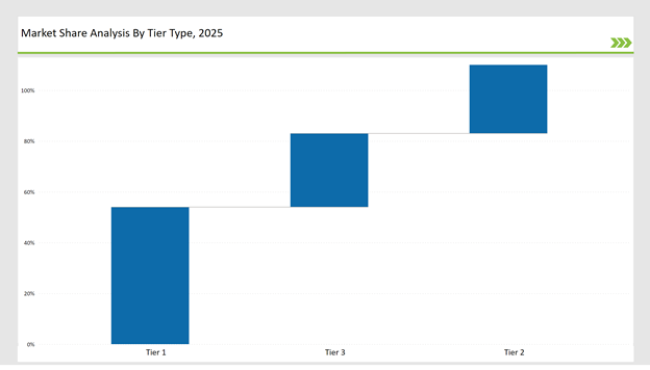
Tier 1: Dominant firms such as Berry Global, RKW Group, and Armando Alvarez Group control 54% of the market with advanced material science, robust distribution networks, and eco-friendly production methods.
Tier 2: Companies like Ginegar, Polifilm, and Trioplast account for 27% of the market, concentrating on specialized film solutions such as light-diffusing, anti-fog, and mulching films.
Tier 3: Specialized and regional manufacturers focus on tailored greenhouse films, advanced silage covers, and crop protection solutions, comprising 19% of the market with a strong emphasis on sustainability and efficiency.
Vendor Performance Evaluation in the Global Horticulture Film Market
Global Market Share by Key Players (2025)
| Category | Market Share (%) |
|---|---|
| Top 3 (Berry Global, RKW Group, Armando Alvarez) | 22% |
| Rest of Top 5 (Ginegar, Polifilm) | 18% |
| Next 5 of Top 10 (Trioplast, Plastika Kritis, Coveris, Novamont, AB Rani Plast) | 14% |
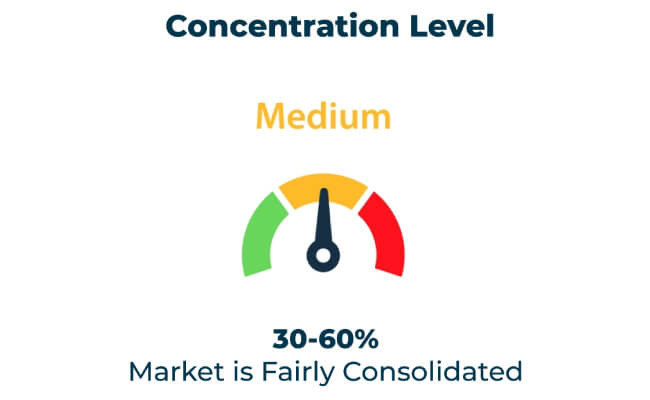
Market Concentration Outlook for 2025 by Film Type and Application Use
Horticulture Film Market by Film Type, Thickness, Material, Application, and Region
Key Industries Driving Demand
- Greenhouse Farming: Increasing adoption of UV-resistant and diffused-light films for improved crop yields.
- Mulching Applications: Growing demand for biodegradable mulch films to enhance soil health and moisture retention.
- Silage & Crop Protection: Expansion in silage covers and tunnel films for enhanced agricultural productivity.
Vendor-Driven Product Categories
- UV-Resistant Greenhouse Films: Maximizing light transmission and temperature control.
- Biodegradable Mulch Films: Supporting sustainable farming and reducing plastic waste.
- Silage Covers & Bunker Films: Protecting fodder and ensuring longer storage durations.
- Smart & Thermo-Regulated Films: Enhancing climate control for optimal crop growth.
Key Contributors Who Shaped the Horticulture Film Industry Through Innovation
In order to maximize agricultural performance and minimize environmental effect, industry professionals are creating recyclable, multi-layered film solutions for horticulture applications that enhance sustainability, energy efficiency, and durability.
Year-on-Year Leaders
- Berry Global: Expanded biodegradable mulch film production.
- RKW Group: Developed high-durability silage covers.
- Armando Alvarez Group: Launched climate-responsive horticulture films.
- Ginegar: Strengthened portfolio of light-diffusing films.
- Polifilm: Introduced high-performance greenhouse coverings with anti-fog properties.
Strategic Recommendations for Suppliers and Agri-Tech Film Producers
- Sustainability Focus: Invest in recyclable and biodegradable film technologies.
- Automation & Efficiency: Implement AI-driven film production for cost-effective solutions.
- Customization & Performance: Develop multi-layered films with UV and climate adaptation features.
- Regional Growth Strategy: Expand in high-growth markets such as Asia-Pacific and Latin America.
Tier-Wise Vendor Classification in the Horticulture Film Market (2025)
| Tier Type | Example of Key Players |
|---|---|
| Tier 1 | Berry Global, RKW Group, Armando Alvarez Group |
| Tier 2 | Ginegar, Polifilm, Trioplast |
| Tier 3 | Plastika Kritis, Coveris, Novamont, AB Rani Plast |
Key Company Initiatives Around UV Stability, Light Diffusion, and Biodegradable Films
| Manufacturer | Latest Developments |
|---|---|
| Berry Global | Launched a compostable mulch film (March 2024). |
| RKW Group | Expanded silage film production for enhanced crop protection (August 2023). |
| Armando Alvarez Group | Introduced climate-responsive smart horticulture films (May 2024). |
| Ginegar | Developed UV-stabilized, high-light transmission greenhouse films (November 2023). |
| Polifilm | Enhanced anti-fog and thermo-regulating properties in horticulture films (Feb 2024). |
Vendor Insights on Global Reach, Customization, and Climate-Adaptive Films
- Berry Global: Leading innovator in biodegradable and recyclable agricultural films.
- RKW Group: Specialist in durable silage covers and crop protection solutions.
- Armando Alvarez Group: Focuses on smart and climate-adaptive horticulture films.
- Ginegar: Advances in UV-resistant and light-diffusing film technology.
- Polifilm: Expertise in greenhouse films with high optical clarity and anti-fog coatings.
Future Roadmap for Horticulture Films with Focus on Smart Farming and Circular Solutions
Future developments in precision farming, biodegradable solutions, and climate-adaptive films will have an effect on the horticultural film sector. Businesses' innovative investments in next-generation materials, IoT-enabled film performance tracking, and AI-driven monitoring are enhancing agricultural sustainability in previously unheard-of ways.
Top Segments Studied in the Horticulture Film Market: Film Type, Thickness, Crop Type, Application, and Region
Key Industries Driving Demand:
- Greenhouse Farming
- Mulching Applications
- Silage & Crop Protection
Vendor-Driven Product Categories:
- UV-Resistant Greenhouse Films
- Biodegradable Mulch Films
- Silage Covers & Bunker Films
- Smart & Thermo-Regulated Films
Frequently Asked Questions
1. What are the key drivers of growth in the horticulture film industry?
Rising demand for sustainable farming practices, improved crop protection, and precision agriculture.
2. Who are the leading players in the horticulture film market?
Major players include Berry Global, RKW Group, Armando Alvarez Group, Ginegar, and Polifilm.
3. What are the emerging trends in the horticulture film industry?
Smart greenhouse films, biodegradable mulching films, and climate-adaptive film solutions.
4. Which regions are seeing the highest growth in demand?
Asia-Pacific, Latin America, and North America.
5. How is sustainability being addressed in horticulture film technology?
Companies are developing recyclable, compostable, and multi-functional films to minimize environmental impact.
Preview the report firsthand - request a free sample
Get SampleGet the brochure for pricing and purchase details.
Get PDFTable of Content
- Executive Summary
- Market Overview
- Vendor Performance
- Market Concentration
- Segment Analysis
- Industry Innovations
- Year-on-Year Leaders
- Recommendations for Technology Suppliers
- Tier-Wise Vendor Classification
- Key Company Initiatives
- Vendor Insights
- Future Roadmap
- FAQs


